Unjustly forgotten in the US of A, overrated by many European 'intellectuals,' Van Der Graaf Generator made a career out of alternating a wonderfully interesting and idiosyncratic brand of prog with music that has made even some prog fans rue the day that Ian McDonald ever penned the first chords of "Epitaph." I know of more than a few people, who have nothing against prog rock as a genre and like a lot of it, that consider VDGG the point where their toleration of prog excess and self-indulgence ends, and even if I don't necessarily agree (seeing as this has tended to come after exposure to H to He Who am the Only One, which I consider a minor masterpiece), I can definitely see where they're coming from. I enjoy the hell out of this band at times (the parts of their catalogue that I like are some of the songs in my entire collection that I listen to most), but my moments of frustration with the group are just as numerous and absolutely maddening.
I guess the best way to explain my ambiguous feelings towards the group is to say that, for me, Van Der Graaf Generator are the fathers of "mediocre prog." (This should not be taken as me saying that VDGG themselves were mediocre, because I don't really believe that). As I've said many times on other pages on the site, I have nothing against prog rock as a whole, mainly because I refuse to buy into the notion that all the extra trappings prog brings to rock music are intrinisically incompatible with "the true spirit of rock and roll" (my personal least favorite phrase relating to rock music). Complexity, discord, "sophisticated" lyrics, non-traditional instrumentation etc are all perfectly fine by me, and the number of art-rock/prog-rock albums to which I give very high ratings on this webpage should aptly reflect that.
However, for all this tolerance, there is a catch: I tolerate and love these aspects so long as they are an augmentation of and not a replacement for traditional musical creativity. I know that for many prog fans, memorability is something to be shunned, and that an increase in atmosphere and complexity and impenetrable imagery at the expense of "traditional" music values is greatly desired. For somebody like myself, though, for whom prog is only one genre that I enjoy (a genre I enjoy a lot in comparison to some others, but only one genre nonetheless), this is a very shaky approach to prog, and one that (unfortunately) VDGG uses quite a bit. I actually have somewhat the same problem with mid-period Jethro Tull - I'm totally in love with them through Thick as a Brick (as well as the Chateau D'Isaster tapes), but from A Passion Play onward, except for some isolated cases, there are far too many stretches of what my ears hear as "prog for the sake of prog" for me to be that enthused.
So why should I include this band on my site if I'm so irritated by so much about them? Because, dagnabbit, even the "bad" periods often have some positives, and the good moments are so stunningly moving and entertaining that it would be a travesty not to devote some of my webspace to them. Lead singer/songwriter/lyricist Peter Hammill may not, within the context of this group, have always put his talent to what my ears consider its best use, but that doesn't mean the talent wasn't always there. First and foremost, Peter is simply one of the best male vocalists I've ever heard in all of rock music - his range, both in octaves and emotive capabilities, is incredibly wide, giving him the chance to make some lyrics come alive that would simply have no chance in the hands of anybody else. He's also, at times, a fantastic lyricist - sometimes he tries a bit too hard to be "shocking" in his imagery (not in a kinky way, but more in a "too academic" way), and sometimes his lyrical fantasies go so over the top that it seems he himself forgets what they're supposed to be about, but the times when he doesn't let himself cross the line are a real pleasure. And finally, as much as it bugs me that he uses atmosphere as a replacement for music too often, he is nonetheless extremely gifted in creating said atmospherics, and from that perspective it's not hard for me to see why so many atmospherics buffs go nuts over this band.
Even though Peter is the main attraction and creative force of the band, this doesn't mean the others should be neglected. The most unique thing about the group was their instrumentation, which notably lacked a full-time guitarist (though Robert Fripp played in the studio at times) but instead featured a saxophonist/flautist (Dave Jackson), an organist (Hugh Banton), and of course a bassist (Keith Ellis at first, Nic Potter later, and then Banton himself after Potter left) and drummer (Guy Evans). Of course, none of these players were supermen on their respective instruments, which is somewhat of a problem given that they would often indulge in looooong discordant jams, but nevertheless all were quite competent, and more importantly provided an instrumental texture that nobody else could lay claim to. Besides, they have their moments - check out the wild sax soloing of Killer, for instance.
Overall then, I give the band an overall rating of 2/5, which isn't bad by any means (again, for those who are new to the site, I don't review groups that I wouldn't give at least a 1/5 to), but isn't indicative of the band becoming one of my all-time favorites any time soon. The talent was there, but even so, there are too many times when Peter's voice (which I consider the band's number one asset) isn't given the prominence it deserves, often muffled and blurred with the rest of the sound, and even on the band's better albums, the instruments go into too many jams that few but diehard fans can enjoy. Still, there's quite a good amount of solid prog rock to be found amongst their albums, and I'd happily recommend a couple of their albums (H to He and Godbluff, if you must know) to any prog liker, even if that liker will (from my experience) make faces and complain about getting bored by them, and subsequently throw in some Super Furry Animals to wake themselves up.
What do you think of Van Der Graaf Generator?
Dave Bennett (ben.vendetta.fsnet.co.uk) (12/31/04)
Without doubt the most original of the 60s/70s progressive rock bands.
And my all-time favourite!
(later)
Well, my favourite is Pawn Hearts as that was the one that came out about
the same I first saw the band at Southampton Guildhall in (I think) October
1971. There's not a duff bit on the whole album. Pivotal stuff and still
sends a shiver down the spine 33 years on - can it really be that long?.
Godbluff is my next fave and again relates to my second experience of them
live at Plymouth in 1975. But all the albums have their moments although I
was not so keen on the Van der Graaf phase. Couldn't quite get the violin
from Mr Smith. But there are some great tracks still on the albums they
released.
Of the Hammill albums all the early ones are superb with Silent Corner,
Chamleon and Over being notable favourites. Haven't bought many of his more
recent releases as I have found them a little samey. However, I can't wait
for the new VdGG album and (hopefully) a DVD of the reunion gig. Yes, I'd
love a ticket but that's not possible now it's a sell-out. The day after I
go on holiday as well!
Keep up the good work.
Dave
SolomonsOther.aol.com (03/15/05)
Ah, here we go... an all and out, 'WE ARE PROG!!' type band. I'm a
little annoyed that there's only one comment here, so I'm going to
say something about them, even if I'm not exactly enchantd by them.
Killer is one of the ten greatest prog songs to come out of the
seventies that was not written by Genesis, ELP, Yes, OR King
Crimson... okay, yeah, it's possible Robert Fripp had a hand in it,
but back then, it was sort of hard to name a prog record that DIDN'T
have him playing something on it.
That's all I can think of. I lost their stuff years ago, but H to He
etc. or Godbluff are the ones I remember as getting the most out of.
jessica saacks (jessicasaacks.yahoo.com) (11/15/05)
As a drummer and lover of creative music, I think that they stand out
in a crowd along with some other prog rock of their time. This is
because they keep the music interesting. A lot of people want their
music easy to swallow so that they don't have to think about
it, almost like it could be background noise if need be(their brain
does not need to interact with it). Also, some prog and
jazz-rock(fusion) from the 70s sounds dated and this music does
not.....to me. I even like some of that dated stuff, but VDGG falls(
for me ) into the category of Art Rock...with Genesis, Yes, and Rush
albums like 2112, Hemispheres, Moving Pictures. All good Prog/Art
Rock has great singing, effective tempo changes, odd timing, use of
counterpoint and lyrics that make me want to find out more about what
they are saying. I am attracted creatively(finding inspiration as a
drummer) to jazz and rock from the late 60's and early 70s mostly.
gsolman6 (gsolman6.yahoo.com) (12/02/07)
No these guys aren't my favorite band of the genre but damn they are
somehow quite indispensable. Peter is the only vocalist in prog that
can deliver dark cathartic moments that just bowl you over. Someone
who grew up listening to Husker Du and Joy Division can find
similarities between their approach and Hammil's which is why there
is more cross genre appreciation with VDGG. And listening to
Hammill's lyrics you will rarely find straight out science fiction
but themes that are much more personal and earth bound. He does seem
pretentious at times but he somehow balances it out so as not to
scare me off. In interviews he is very down to earth and only
scholarly sounding when necessary. As a matter of fact he does remind
me of Peter Gabriel quite a lot: maybe that's why Genesis is my No. 1
and VDGG my No. 2. Okay Keith Reid is probably the best lyricist is
prog. rock but as far as vocal delivery and unbridled enthusiasm in
singing his parts Hammill has no peer. As weird as it sounds to some
that the virtuoso in a prog. band would not actually play an
instrument, but be the vocalist, it was something I understood almost
from the start. That the band lacked a guitarist did not bother me in
the least. For one Genesis never had many guitar parts when they were
at their artistic peak and taking a slightly more modern example
Morphine got along quite well with just bass, sax and drums.
Okay I do agree that Pawn Hearts was a failure, but that doesn't mean
I don't enjoy listening to it. Yes I think Hammill finally pulled an
inside joke in what we call Lighthouse, but there is nothing
insincere about Man-Erg. And that leads me to the second "mature"
phase of Godbluff to World Record. This string of albums impresses me
not for the memorable melodies or great playing but that finally a
prog. group learned how to change and refine their approach into
something which packed a good punch, but was wisely restrained at the
same time. Godbluff especially only included dissonance when
necessary and never allowed the music to get too complex or too
simple, but just right. When you have a powerful vocalist like PH you
don't want too much to detract from his performance. Interludes and
intros are nice but instrumental sections longer than a minute or two
would work against the product as a whole. Yes it is a good thing
that PH never sang Firth of Fifth. That would be like a shakesperean
performance when all you wanted was acting for a prime time hospital
show. Anyway I can see why VDGG are controversial though I'm just
glad there was a vehicle for Peter cause his solo efforts are not
nearly as thrilling as his group efforts.
"Nick Reed" (erfinagerfin.hotmail.com) (04/13/11)
I know what you want to read; another lengthy email about Van der Graaf Generator.
I just want to say - my music tastes were very influenced by people like you,
Starostin, Prindle, and the guy who did capnmusic.org years ago. I got into VdGG
because I ran out of Yes, KC, and Genesis albums to buy, thinking that "well, they
won't be as good, but it's something". Lately I've come back to them and I realized
that they are really a lot better than these sites gave them credit for. I realize
that KC, Yes, and Genesis all kind of fit together. If you like one you'll probably
like the other two. I don't want to say you're wrong about Van der Graaf, but I
think what's happening with guys like you and Starostin is that you sort of slag
them because they don't really fit your 'ideal' of prog music. These guys were not
Yes, but you could easily flip that around. It's true that VdGG didn't really have
the chops or a real guitar player, but they didn't need 'em. To me they relied more
on brute force and tension along with tons of atmosphere. It's easy to listen and
ask, "where are the hooks?"; well believe it or not I get the music from Least We
Can Do stuck in my head all the time. I know that "Killer" totally rules and you
wish all their songs could be like that, but if that's the ideal maybe this isn't
the band for you. All I can say is that re-listening to all my prog discs I have
found the Generator to be the most worthwhile ones, and the ones with the most legs
(aka replay value), and all I had to do was stop comparing them to Yes or King
Crimson so much. I know the temptation...you're a web reviewer, you love to be able
to pigeonhole acts into their own categories - I know because I'm a web reviewer too
and I also love to do that. Yes, VDGG were prog, but their strengths lie in totally
different things. I have a lot of friends who like them but don't really care for
the other prog groups. For what that's worth. Personally, I like them mostly
because I find Hammill so entertaining...he is so intense in everything that I
cannot help but love it. BTW I'm not saying you're wrong on your assessment. They
are a tough band to like. But I would suggest clearing your mind and trying to
listen to, say, Pawn Hearts again and see if it sounds any different to you now.
This band did not suffer from excess...they WERE excess. And as far as I'm
concerned "Lighthouse" has as many memorable parts as "Supper's Ready".
"Madan Mohan" (madwiz.gmail.com) (06/13/11)
"for me, Van Der Graaf Generator are the fathers of "mediocre prog." "
"I tolerate and love these aspects so long as they are an *augmentation of* and
not a *replacement for* traditional musical creativity."
Whoa, whoa! That is exactly what I think about VDGG. I have never heard a
hardcore prog rock fan say that (and I am supposed to be one!) and I don't
exactly worship at the altar of Rolling Stones either, so I wonder what on
earth is wrong with me! I guess I am demanding both on the counts of
memorability AND sophistication/intrigue, for various reasons. Yes, VDGG
are complex, ambitious and they even kick a good deal of ass for being so
organ-oriented. But, they are tediously unmemorable and established their
trademark sound so early in their discography (H to He) that it becomes a
chore to listen to their subsequent albums for me. And as much as I respect
Peter Hammill's undeniable talent as a singer, his overwrought delivery
really stretches my threshold of tolerance. For me, he evokes the not so
edifying side of Rob Halford and the general style of Bruce Dickinson and
it's really not something I can penetrate beyond a point. Pity, they were
so developed and so evocative of the archetypal prog approach by H to He and
I really do respect them for that but it's just not my cup of tea, when all
is said and done.
Best song: Running Back or Aquarian
A couple of the tracks, in fact, are among my favorites that Peter and the band would ever put out. "Running Back" is related to a "normal" song subject, a man's feelings towards a woman, but it's done in a dark, stately manner unlike most any other 'love' song I've ever heard. From the somber bass and acoustic lines the piece is built around, to the moody vocal melody (and incredibly well-formed lyrics for a love song), to the dark shadow of Peter's singing, to the alternately happy and melancholy flute lines in the mid-song instrumental passage, this piece is a virtually ideal snapshot of everything I like about the band, with basically none of the bad. Similarly, "Aquarian" showcases Peter's singing and melody-writing abilities extremely well, even as Peter moves into bizarre whacky land with his lyrical imagery. Come on, is there any chance of getting that "Now we look to the sun in every direction" chorus out of your head after hearing it? The rest of the band does fine too, though - the thumping bass sound is killer, and the minimalistic piano lines are perfectly placed.
There's other good stuff to be found as well, most notably from the opening "Afterwards," which shows that the band could have been perfectly successful working in the "conventional" formulas they would avoid in the rest of their history. The vocal melody is memorable and non-trivial (ie my definition of "catchy"), Peter gives a warm vocal performance (while singing a somewhat chilly vocal melody), the low-key wah-wah's give a strangely uplifting feel in the midst of the moodiness of the rest, and the electric piano solo in the middle is very pretty and moody. What else could be wanted? Oh yeah, lyrics like "the pedals that were blooming are just paper in your hands."
The album also has three other short tracks, which is definitely something not to be found on later VDGG albums. "Necromancer" is a fine energetic piece, with "spacey" keyboard and guitar parts helping out a bunch of energetic vocal lines about, well, being a "Necromancer" (not to mention that funny part where Peter wails up and down on the word "blaaaaaaaaaaack"). The other two short tracks are insubstantial, but cute nonetheless - the title track is a goofy fake jingle, and "Black Smoke Yen" is a minute-and-a-half of bass, drum and piano jamming that works more as an introduction to Aguarian than anything else.
The remaining three tracks are more or less ok, but unfortunately not particularly interesting in the context of the album. The two parts of "Orthenthian St." are each fairly pretty as background noise, but aside from the great sound of Peter's voice, and maybe one or two memorable lyrics, I'll be damned if, even after a ton of listens, I can describe much about it. "Into a Game" is a bit more aggressive, but except for parts of the chorus, " " Finally, fans might like "Octopus," since it comes closest to the classic VDGG style than anything else here, but except for the downward organ swirls, I'm not too impressed with Peter's hysterical ramblings or with the instrumental parts or whatever (though the moody organ chords in the middle do kinda rule in their own way). It's pretty danged far from the worst thing VDGG has ever done, though, and I do like the feeling of desperation in the last couple of minutes, so it's not an album killer.
In short, this album shows a band with quite a bit of talent but that occasionally has trouble getting that talent put on record. In other words, a quintessential VDGG album. Quite good, though.
Best song: Refugees
At least the remastered version helps a bunch. The best example is in the opening "Darkness," which I wanted to like so much but just couldn't until the 2005 remaster came out. In the original version, I couldn't get over how Peter's voice, the band's greatest attribute, didn't do anything interesting. My impression was that he'd start off quietly singing something he might as well have been mumbling; that when he started singing "normally," his voice was pasted against the back of the sound without standing out; and that, when he's start singing an "intense" part, he was just holding extended rising notes, without the dark angel-of-death sound he'd successfully pull off a million other times. Meanwhile, the organ and sax interplay was so drastically minimalistic and unexciting that I just can't get into the atmosphere it was creating. After all, if you want to provoke, you have to evoke, and for all that could theoretical succeed, little of it did. Well, the remaster was a revelation. Peter's voice has all the atmospheric power it needs (and is given proper place in the sound), especially given the awfully interesting lyrics, and there's a strong kick to the keyboards and to the sax parts that creates a tension in the minimalist noodling that creates proper dramatic effect. The original was a disappointment; the remastered version is a career highlight.
"White Hammer," unfortunately, is much worse, even in the remaster. I have nothing against Peter singing about the historical event on which these lyrics are based, but the song sounds far too much as if the band thought that singing about such a deep, obscure historical topic, backing it with their standard (piss-poorly-produced) atmospheric instrumentation playing whatever short note sequences struck their fancy, was enough. Perhaps for you that is enough - for me it's not. Sure, there's also an "angry" coda, and it's nice to listen to, but overall I feel so malnourished at the end of the track that I can't take it. Hey, you wanna know what I consider to be a great song that has a lot of the VDGG melancholy, gloomy atmosphere, as well as a rousing, "evil" coda, but also has tons of interesting riffs and melody twists? Genesis' "Twilight Alehouse," that's what, which my brain has always considered a properly done version of this track, even if lyrically the two have nothing in common.
Lessee, on side two we have "Whatever Would Have Robert Said?," a piece dedicated to, you guessed it, Robert Van deGraaf. These lyrics are great! I just wish the "verse" parts didn't just feel like beat poetry over the standard VDGG instrumentation lazily providing texture. There's a nice bassline in the slow parts, and the fast part that Peter and Co. break into from time to time is amusing, but overall the music in the main parts sounds dreadfully cut-and-paste to my ears. And hey, the mid-song "jam" has some good parts, like the aggressive angry wah-wah guitars near the end - I just wish the slow, mechanical noodling at the beginning entered fast noodling sooner, and that the fast noodling had more damned energy to it. Man, if this is how Tales From Topographic Oceans sounds to other people, I guess that explains why so many people hate it so much (of course, my feelings towards Tales haters are about the same as lovers of this album are probably towards me, but let's not go there).
Ah, and then there's the closing "After the Flood." There's definitely positives; a nice acoustic intro (and occasional reprise), a GREAT apocalyptic "chorus" melody, some nice instrumental textures to simulate the melting of ice as precursor to flooding, whatever. On the other hand, the mid-song jam sounds like a cross between subpar Jethro Tull and subpar King Crimson, the attempt of Peter to add drama by encoding his "ANNHILATION" scream is incredibly stupid and cheezy (screw subjectivity, I'm claiming this as objective fact), and the track just feels so stretched out that I'm begging for the end when it finally comes (even though the end is an extended version of the part I like so much, heh). Somebody may think that something like "Yours is no Disgrace" or "And You and I" is overlong, bloated prog - well, for me, this is overlong, bloated prog. I guess I enjoy it a little more than I don't, but much of that enjoyment is ironic.
Fortunately, while what I've written so far is the description of a 6 (or worse) album, the other two tracks are enough to make me knock the rating up. "Refugees" is possibly the most beautiful song to come out of the VDGG catalogue, as Peter uses his lyrical talent to eloquently express a very down-to-earth emotion, a longing for a time and place where old friends could be found ("West is Mike and Suzy, West is where I love"), combining it with an absolutely gorgeous vocal melody and a pretty flute background. Even the other instruments have their moments - the major key (a contrast to most of the rest, to be sure) organ part around 3:30 to 3:45 has to be one of the most brilliantly cathartic moments in all of the VDGG catalogue, and everybody else does their part well (damn I love those flutes). A lesser track is "Out of my Book," which is lovely nonetheless - what can I say, I'm a sucker for good singing and a catchy vocal melody and lovely flutes.
Overall, though, this is frustrating. I can see the talent even in the tracks I don't much like, but as you can guess, I generally listen to individual tracks from here more often than I listen to them in sequence. Let's just say that I'm incredibly glad the band was able to put out full albums that I like way more than this.
andreascg.aol.com (02/13/09)
I absolutely do NOT agree with your rating of "Quiet Zone" (yes, it
probably is more like a Peter Hammill solo album) or "Pawn Hearts",
but I'm with you on "The Least..". I haven't actually heard "Aerosol
Grey Machine", but there seems to be a parallel with Yes and
Genesis's second albums, in the sense that they figured out what they
want to be, but hadn't gotten up to speed. Honestly this is the only
VDGG album I bought and then sold again. "Darkness" and "After the
Flood" are decent enough, but not enough to cary the album. Clearly
Hammill hadn't hit his stride yet lyrically (he would dramatically
improve by the next album). "Refugees" is a favorite for many
people, but for me it is cringe-inducingly sappy and corny. "White
Hammer" is just kind of amateurish. Hammill would get much better at
weaving themes of history, science, religion, etc. together, but this
one is just like a straight narration of events, which begs the
question "so what?". The rest is OK, but just that.
And speaking of Peter Hammill, when are you going to review some of
his albums? All his albums from "Chameleon" through "And Close As
This", plus the last 3 solo albums are worth checking out. The late
80's & 90's stuff is spotty at best.
KiddAbout.aol.com (10/13/10)
I was looking at your review on "Darkness (11/11)", and it turned my
attention to a video of the band performing the song on the Beat Club TV show a
couple of months after the album's release. The band performs the song with
an enthusiasm that was lacking on the original, with David Jackson's twin
saxophone playing benefiting the most. After being disappointed with my
first VDGG purchase (The Aerosol Grey Machine, which as grown on me), seeing
that video convinced me to give this group a second chance.
As for the rest, "Refugees" and "Out Of My Book" are highlights. "After The
Flood" is good, though it could use the same spit-and-polish treatment
they gave "Darkness". I've only heard the Beat Club version of "Whatever Would
Have Robert Said?". It's good, but too short. Once again, spit-and-polish.
That leaves "White Hammer". I like this one a lot, though lyrically it
might be a bit too straightforward to some. Hammill would improve in this
department in the next album with "Pioneers over c."
Overall, it's a good album, but I get the impression that it's one of those
albums where the material is improved overtime.
My rating: 8(11)
Jason Lewis (britishcavalry.yahoo.se) (06/13/15)
Hello, I found your site while searching for info on VDGG. Wanted to say that White Hammer is one of my faves. While I respect that you appreciate it less, I think the following sentence in your review is a bit odd:
".....playing whatever short note sequences struck their fancy, was enough. Perhaps for you that is enough - for me it's not".
I don't perceive the song in this way. For me these short note sequences serve the song well and strike my own fancy in a very pleasing way. You do not otherwise appear to equate complexity with superiority, but here you do.
It obviously comes down to the quality of the emotions evoked and in this case, for me those emotions are very good. Unfortunately there is currently no reliable way of knowing whether those emotions are better or worse than those experienced by yourself when listening, for instance, to one of your favourite Genesis tracks.
White Hammer is actually one of my favourite VDGG tracks.
....oh and one of the cleverest people I know is a big Brian Adams fan and not a prog fan (he does actually like Led Zep and Queen, to be fair). Not because prog is "too much" for him, but because he likes Brian Adams' music more.
All the best and thanks for the reviews
Jason
Best song: Killer or the sung parts of Lost
It also helps that the band kicks the album off with possibly its greatest track ever (always a great way to be introduced to a band). "Killer" is absolutely outstanding, a brilliant display of all of the band's strengths and, dare I say it, NONE of the weaknesses. The lyrics are among Hammill's best (albeit in his typical goofy way), a treatise on loneliness presented in the form of a fish that is compelled to kill anything that comes near it. Yet it is the music itself that makes this track THE alltime VDGG classic - the main grumbly sax-organ riff is absolutely outstanding, as is the main vocal melody, and that's not even including the terrific melody during the "death in the sea" part in the middle. Furthermore, there's a relatively simple (but absolutely perfect for the context) six-note motif that pops up repeatedly in the lengthy instrumental passage, providing a frame for some of the best VDGG playing you'll ever hear. Discord abounds, sure, but it's fast, unsettling discord, and just as it seems the band is running out of steam, Dave Jackson starts playing an absolutely wild saxophone solo over the band's repeated hammering on the "death in the sea" melody. Now THAT'S what I want out of VDGG. Of course, performance-wise, Hammill comes through splendidly as well - his intentional over-dramatization of the lyrics he sings is perfect, not to mention the way he lets his voice freak out at the end of each line in the main verse melody. An amazing bit of prog, this is.
The next track finds VDGG doing a "simple" piano-based ballad, but that's definitely not an insult. "House with no Door" shows amply that restraint and the band's style are not inherently contradictory, as Peter's magnificent singing (of more magnificent lyrics in another magnificent vocal melody) is framed by some extremely pleasant piano lines and a bunch of nice flute and saxophone parts. Kinda like the Moody Blues, but with a distinct VDGG flavor, thanks to Peter's ability to gradually build the level of pleading and desperation in his voice over time, capped off with his burst into a lovely falsetto during the last run of the chorus.
Unfortunately, the album hits a little bit of a standstill with the next track, entitled "The Emperor in His War-Room." Strangely enough, it's Peter that bothers me the most on this track - the lyrics cross the thin line into banality that Peter often would walk (usually coming out on top), and Peter's usual overdone delivery hurts rather than helps this time. "As your heart is kissed by the lips of death" is a typically dippy line, and the echo effect he puts on his voice when he sings "..the GARBAGE IN YOUR MOUTH" approaches the depths of "ANNHILATION" from the last album. On the other hand, though, the music itself more or less rules; the slow parts may be a bit overlong, but the way the beautiful lovely flute parts alternate with the "majestic" parts is quite fascinating, and the faster part, featuring some Fripp meanderings over a solid bassline, is extremely enjoyable. Heck, even Peter's singing works better in the fast part, so whatever. Point is, the track has some flaws that just come with the fact that we're talking about Van Der Graaf Generator, but the good parts are very good, so no, I don't dislike this track. Heck, I'll even admit that, if English isn't your first language (which in turn means that the lyrics probably won't be as immediately bothersome to you as they are to me), it would be very easy for you to consider this the best track on the album.
And then we have "Lost." Frankly, I feel that the instrumental parts of this track let it and the album down quite a bit. Except for a couple of bits, like the moody sax playing before the "I wore my feelings..." part, or the "rhythmic countdown" somewhere near the end, too much of the playing seems to me like the band went with whatever discordant themes (or variations on the vocal melodies) first popped into its collective head, without worrying whether or not they fit moodwise with the rest of the track (frankly, I don't think they do at all). But while the playing may fail a bit, this is more than made up for by Peter. On ALL COUNTS. The vocal melodies are great, giving Peter a chance to engage in lots of entertaining vocal gymnastics. The lyrics? "If I could just frame the words that would make your fire burn, all this water that's now around me could be the love that should surround me." Enough said. Above all, though, is the delivery. The range of emotions and singing approaches that Peter absolutely nails, from the relative playfulness of the beginning to the sheer majesty of the "I know we'll (I'll) never dance..." lines to the INCREDIBLE operatic majesty that he pulls off in so many other places (holy cow, how anybody in this world could pull off the "...but I'm dead inside as I stand aloooooooooooone (aloooooooooooooooooooooooooone)" part the way he does absolutely boggles my mind) completely confirm for me that Peter was one of the greatest singers ever to have the fortune to be recorded. One of the most crushing love songs I've ever come across, to be sure, and all because of Peter.
Finally, there's "Pioneers over c," where Peter and Co. go into the subject of space travel. The lyrics are good ("Doomed to wander in a living death, living antimatter-antibreath"), but as if to make up for the awkward breaks of the last track, the actual music is what steals the show. Several themes dominate the piece, one a slowly rising repeated nine-note bassline (with good textural counterpoint from time to time), another a cool bass/sax riff that pops up in the best places, another a brief atmospheric part with Peter singing such cool lines as, "The universe is on fire, exploding without flame," another a cool organ-driven theme ... man, there's so many cool things that happen in this track. My favorite moment, surprisingly enough, is relatively near the end, where Dave plays a quiet, totally dissonant sax solo (literally solo, the band stops) that works for me because the solo reminds me so much of the last moments of a flickering candle, before it disappears and the Hammond organ leads a brief, interesting and SOOOO ATMOSPHERIC theme. Holy cow, this is the same band that did "White Hammer???!!!"
And there's your album. Several people I know hate this, but I cannot empathize with this at all. Let it be known that that is an EXTREMELY high C - on days when the flaws of "Emperor" and "Lost" don't bother me as much as they usually do, my brain enjoys this as much as any D (and sometimes beyond) album, and I really see no good reason to not feel the same way.
Adam Kaddoura (akad678.hotmail.com) (06/23/06)
I really love this album. It's the only VdGG record I have so far, as I'm a
bit scared off by your evalution of most of the rest of their work.
"Killer" rules in every way, and it's my favorite song on the album, goofy
lyrics and all. Peter Hammill's vocals on "Lost" are good enough to make me
forget about the stupid meandering of the instrumental parts. And "Pioneers
Over c" is a truly frightening song, especially given the subject. It makes
me wonder what it would be like, trapped outside of existence itself.
Still, I can see how someone would hate this album. First, Hammill's
vocals, which I love but which are also extremely theatrical, might put
people off. Peter Gabriel doesn't even get this dramatic on early Genesis
records. Also, the dissonance of the second side is sort of hard to get
used to. It took me much longer to get into "Lost" and "Pioneers" than with
the first side tunes. Not to mention that the first time I listened to
"Pioneers", I had my headphones on and the volume up and the dissonant
saxophone blasts at the end of the song nearly BROKE MY EARDRUMS. Thanks,
Dave Jackson. Anyway, I have no problem giving H To He a 13 on your scale.
It's a shame that this album is pretty much forgotten.
Pete Anderson (pete.distantearlywarning.info) (12/13/09)
This strikes me as structurally very similar to In the Court of the Crimson
King, and it's hard to shake off the feeling that Peter Hammill and company
consciously modelled H to He after King Crimson's debut. However, I feel
that it's an improvement in many ways: no "Moonchild", no meaningless Peter
Sinfield lyrics, not to mention that Peter Hammill is my favourite vocalist
ever.
The best number here, in my opinion, is the incredibly gorgeous "House with
No Door", which I love for the reasons you outlined in your review. "Lost"
is probably the weakest song, with its needlessly convoluted musical
structure, but it's still great thanks to Peter.
Anyway, with the exception of John Lennon / Plastic Ono Band, this
is definitely my favourite album of 1970, and possibly one of the most
underrated albums ever recorded. 10(13).
Best song: Parts (I repeat, PARTS) of A Plague Of Lighthouse Keepers
That said, I do not want to give the impression that the album is worthless, because that's simply not what I think. You see, each of these three tracks has something I like a lot, and to be perfectly honest, on some days I like this album slightly more than I do Least (even if it gets a lower grade here). It's just that built around these ideas is a whole ton of material that simply irritates the hell out of me. Many repeated listens (I've definitely listened to this album more times than I have any other album with a comparable or worse grade) have brought the positive features clearly to the forefront of my mind, and I've always liked a few parts of the suite that makes up side two, but certain parts have only gotten worse and worse for me as the number of listens I've given this has gone up.
At first, track number one, entitled "Lemmings," actually gets the album off to a fairly promising start. The "soft" vocal melody that Peter sings is quite cute, and I particularly enjoy it because the little spike up in the middle of each repetition easily brings to mind the image of little lemmings jumping up off a cliff and then tumbling to their dooms. The harder riff, with a vocal melody sung in unison, is also intriguing - I'm bugged by the echo on Peter's voice, but the riff is very interesting, and Peter really sounds majestic as he sings lines like "We have looked upon the high kings." Of course, every time he breaks the vocal melody from mirroring the riff, he starts to fall back into declamation instead of a singing mode, but still, it's tolerable. Unfortunately, while the track works until about 3:20, the remaining eight minutes of the piece make it very difficult for me to stay focused, and don't forget, I can keep my mind laser focused while listening to Yes' "The Remembering." The noodling just keeps going and going, Peter occasionally reprises the beginning vocal melodies but mostly just mirrors the jamming, and basically the sound loses all of its apocalyptic tension by making itself so freakin' low key and boring (well, except for a fairly brief passage where the band goes into an extremely angry-sounding bit). I mean, I really don't see how I can keep myself from falling asleep during the last minute of quiet sax/keyboard noodling.
Up next is "Man-Erg," which starts out as a piano-ballad in the vein of "House with No Door," but while the atmosphere is quite nice, Peter has trouble here matching the majestic approach of his singing with an equally resonant and memorable vocal melody, and that hurts quite a bit. The sound is nice, but it's getting mushy again, which I'd hoped they fixed once and for all with H to He. The "I'm just a man ..." section, reprised several times, has some strong emotional power, and would have worked well as an actual climax, but it feels rushed to me, without enough buildup to make it work as any kind of real climax. Anyway, the song also features a fairly cool mid-section with some fierce sax/organ jamming, along with some solid Fripp guitar lines. Peter's singing sounds especially dumb during this part, but while the instrumental parts kinda veer towards the pointlessness that bugged me so on Least, they're also very fast in parts, so whatever. Of course, Peter comes back and starts singing another soft part, this time using cliches like "acolytes of doom," and it doesn't do much to raise my opinion of the track too much. Concluding with the initial melody, along with the mid-section popping up amidst it from time to time, does give the track a nice epic sweep, but when the individual parts don't impress me that much, it shouldn't be difficult to guess that I'm not totally thrilled.
And then there's "A Plague of Lighthouse Keepers," which those who hate the band often use as Exhibit 1 of why they hate it so. Strangely enough, though, I've actually come to enjoy several parts of it, though I doubt I'll ever go sufficiently loony to consider it the peak of VDGG, like many fans do. The general gist of the piece, best as I can tell, is that it's about a lighthouse keeper going nuts from a combination of loneliness and all of the ghosts, real and imagined, that are are inherent to the mythology of sea travel. He goes batty, jumps into the sea to kill himself and escape the madness, and muses over various philosophical things. Fine, decent concept, whatever. What does matter to me, though, is that there a few parts that I enjoy a great deal, even though I consider the suite as a whole to be a moderate failure. I actually think the opening "Eyewitness" section is incredible, combining decent lyrics with an eerie vocal melody and a gloomy atmosphere that sets the lighthouse backdrop well. Furthermore, the lyrics also do a fine job of establishing the gradual paranoia of the protagonist - I particularly like the line, "When you see the skeletons of sailing-ship spars sinking low You'll begin to wonder if the points of all the ancient myths
are solemnly directed straight at you..." I don't even mind the occasional dissonant backing harmonies as Peter sings the melody - they do a good job of depicting the various ghosts fluttering around.
So that's part one. Alas, the next couple of minutes, entitled "Pictures/Lighthouse," are devoted to a bunch of "atmospheric" blaring sax noises over blaring keyboard noises, followed by some atmospheric organ chords. Enough said. Part three is a reprise of part one melodywise (and thus is also called Eyewitness), and depicts the protagonist reaching the very edge of his sanity. Just as it seems things are starting to get obnoxiously repetitive, we enter section four, "S.H.M.," where images of sea spectres start assailing the protagonist's mind. I actually find the lyrics here quite image-laden, despite the nonsense that appears at first glance when one glosses over a line like, "'Unreal, unreal!' ghost helmsmen scream and fall in through the sky, not breaking through my seagull shrieks ... no breaks until I die: the spectres scratch on window-slits - hollowed faces, mindless grins only intent on destroying what they've lost." Call me nuts, but it's not difficult at all for me to imagine a nightmare to go with this passage; a bunch of translucent ghosts whirling all around me, screaming seeming nonsense, set upon my destruction solely because they themselves have been destroyed. So anyway, as the lyrics go on, the protagonist is leaning on the wall to support his wilting self, looking out upon the sea and seeing ghosts of ships long gone, crashed upon the rocks. Not bad so far.
Unfortunately, in part five, divided into "The Presence of the Night" and "Kosmos Tours," the suite starts to come unraveled. The first part works nicely, a quiet reprise of the S.H.M melody with appropriately epilogue-ish lyrics, and the later sorta-jazzy melody that comes up after some noodling is amusing (though the hooks aren't very sharp), but then the rest of the part goes into a bit of self-parody. Hammill's screams go with a melody that really strikes me as jerky discord for its own sake, a bit of a vocal freakout for no good reason other than having a bit of a vocal freakout. It ends with the hero jumping out of the lighthouse, presumably into the sea, but while I might have cared for his fate before, the detachment presented immediately before this managed to preemptively undo any resonance I might have had from this. And what's with that random dissonant keyboard-layers part that pops up after that cold melody has finished? This sucks, Beavis.
The next section, "Custard's Last Stand," tries to be one of the band's cathartic anthemic ballads, but the melody is so flaccid that it doesn't warm or inspire me at all. Just Pete's voice with lots of echo and not approaching the grandeur of "House with no Door." Then we have "The Clot Thickens," where everything just goes nuts - it's actually fairly amusing, since it's insane and twisted and weird beyond recall, but given that it uses an "ANNHILATION"-like trick when Peter sings "..one more haggard DROWNED MAN," it's not about to get a total free pass from me. Whatever.
At least the piece ends on a nice note. "Land's End" and "We Go Now" actually base their majesty around a lovely piano chord sequence instead of seemingly random organ splurts, and despite the amount of crud I've just waded through to get here, I actually feel a twinge of catharsis listening to this. Plus, let's be fair, the majestic guitar parts coming through the layered vocal and keyboard harmonies (as well as all the sputtering radio static, which works well as a symbol of the protagonist slowly slipping out of his life conciousness), had they come with a better overall piece, would be recognized as near the same level (though in a different way, since this is Robert Fripp and not Steve Hackett) of the brilliant instrumental passages at the tail-end of Genesis' "Supper's Ready." Go Robert!
(note: I learned many years after first writing this that, while Fripp has credits in "Plague," he does not play in this section. The ending passage is, in fact, Hugh making his organ imitate a Fripp solo, which is kinda awesome in its own right).
So there you go - a loooooooong review given that this is only gets a 7 from me. It's just as I said in the band's introduction - even the songs that are dreadfully flawed overall still have chunks of solid quality, and it takes a lot of effort and explanation to separate those chunks from the overall chaff. In any case, Hammill apparently decided he couldn't do anything else with the band at that time, so they broke up for a few years. It's just as well - I shudder to imagine how a 1972 followup would sound.
Ross Dryer (dryerross.yahoo.com) (07/13/16)
I'd like a remaster of this album, sure, but I also think that the cold, forced hugeness of the sound contributes to an atmosphere I haven't seen on any album previous to this- it's unique, but more than anything, it's spooky. This album sends some actual chills down my spine, and for 1971 I think that's pretty neat.
I really like each of these tracks, though I can clearly see why each (especially you-know-what) splits the music-listening world down the middle. I wish "Lemmings" wasn't as long...actually, I totally love the song (especially the "I know our ends may be soon..." verse and the delirious, head-spinning sax solo that follows, oooh, this is one creepy track) up until the very end. Lop off that last minute, and I'll adore the track completely. I don't know why it couldn't have just ended after the "What course is there left but to try try try?", especially since they could have put other stuff on the side instead... Yeah, I know it ruins the "shocking three-track-album aesthetic", but have you heard "Theme One"? It's an instrumental written by George Martin that ended up between "Lemmings" and "Man-Erg" on the US and Canadian releases of the album, and it provides such a huge energy boost (and catchy melody) that it singlehandedly makes the whole album seem about eight zillion times better in my mind. And I see what you're saying about "Man-Erg". But, you know, I really like it.
As for "A Plague of Lighthouse Keepers". I understand why this track is so controversial, but I have come to respect and enjoy just about every single part of it, even if I didn't before. Firstly, the lyrics aren't that difficult. Lighthouse keeper, he's lonely, his wife Guinnevere died some time back, one night he forgets to turn on the lighthouse, a ship crashes, he's eaten alive by shame and guilt and solitude and fear of a pointless life until he eventually drowns himself. No Bible Code necessary, and this is coming from someone who still has a lot of trouble deciphering The Lamb Lies Down on Broadway. Ooh, and some of the lyrics are pretty cool, too; I'm a particular fan of "On the table lies blank paper/And my tower is built on stone/I only have blunt scissors/I only have the bluntest home."
Now bear with me for a second. This may sound like total BS, but here it is: I hear this as just about the closest thing popular music has to the Expressionism of the Second Viennese School, and maybe even a tribute. Sound crazy? Everything's there, isn't it? The idea in every part of the music of this track is to depict exactly what's going on in the protagonist's head, with no filters or objectivity. Occasional angular, unvocal melodies abound (in all of the instruments), going completely atonal in some spots. There's emphasis on the depiction of fear. There's even some Sprechstimme, as Hammill doesn't exactly sing all the way through (maybe that's a little reaching, but still). And "Pictures" comes close to Klangfarbenmelodie. Why can't this be some sort of cute little homage to "Pierrot lunaire" or "Wozzeck"? Once I made this connection, I was able to enjoy "Kosmos Tours" and "The Clot Thickens" so much more than I had before. Ooh, and this whole suite is so cold, but then again, I can't really imagine anything colder than "Wozzeck".
Just one more thing. "Pictures" established itself as my least favorite movement of this little program symphony (too far? Nah) on first listen, but eventually I stepped back and realized exactly what was going on in that track. The protagonist is asleep, and he's forgotten to turn on the lighthouse, but the scene that happens outside while he's asleep somehow works its way into his dream. The attention to detail in this thing is unbelievable; you've got the sea represented by the undulating organ chords, you've got gulls represented by the little bits of flute, you've got the ship coming in represented by the blaring sax noises, you've got the crash on the rocks represented by the drum set, and above it all is this blanket of white noise shrouding everything in dream. Once I picked all of this out, I was never able to unhear it, and now I just close my eyes and it doesn't take a whole bunch of work. The guy wakes up slowly in "Lighthouse", which is whatever, but at least the minor-minor seventh chord it ends on is REALLY COOL.
I don't know, then, if I can say I love this suite as a whole (although I can say more about that than, say, "Pierrot lunaire" again), but I've come to respect it at an extremely high level. The fact is that a ton of work went into this, and it's never actually pointless (okay, I've never really understood why the drums need to go so crazy in "We Go Now", but whatever). I mean, as far as musique concrete goes, I've never ever gotten anything of note out of "Revolution 9", but "Pictures", wow, once the image sets in, it really sets in. Whatever. Cool stuff. (I also think it's cool that Peter Hammill pronounces the word "alone" at the end of each of the freakouts in "Kosmos Tours" in the exact same manner that Robert Plant pronounces the same word at the end of the first line of the ending monologue of "Good Times Bad Times".)
Best song: The Sleepwalkers
Related to this, the band has gone back to the coffee-shop sound of H to He (as opposed to the icky, pseudo-universalist sound of the albums surrounding it), yet even more stripped down - the overall sound is very low-key and meditative, yet there are some parts that manage to rock harder than anything in the band's catalogue to that point. As strange as it seems, this is the kind of album that makes me understand why Johnny Rotten liked this band - the band really "comes back to earth" with this album, much as punk rock brought "normal" rock music back to earth for so many people. The band's style is the same, yes, but the senseless "atmospheric" noodling is (mostly) gone, and the result is that the same combination of players that often seemed so befuddling before (largely because there were too many layers of each player - not that I have anything against overdubs in general) manages to kick a good amount of ass in more than a few spots on the album. Whodathunkit?
So anyway, the album is four tracks, all of them good. "The Undercover Man" surprised me quite a bit the first time I heard it, if only because I couldn't totally believe that VDGG could exercise such a drastic amount of restraint over an extended period of time as shown here. For almost twenty seconds, it's just a VERY quiet repeated flute note flipping from channel to channel, with a quiet repetition of a cymbal tap and a keyboard note after a bit - no "atmospheric" wind noises like on "Darkness," just a musical whisper. And then Peter starts singing, almost in a whisper himself, with no special effects whatsoever (THANK. YOU.). It all slowly gets louder (with the band basically holding the same minimalistic groove) over time, with an ever-growing obviousness as one listens that Peter's singing lyrics that are actually worth listening to (I think the point of them is that we each have a hidden side that we hide only because of our own stubborness and fear, and that if we're not careful, that hidden side will someday need to reach out to somebody, but nobody will be there - I think, though I could be way off), yet never abandons pleasantness for abrasion. And so it goes, with Peter using the power of his voice as only he can, while the band supports him but never overshadows him. Of course, one can point out one little nitpick (from a "regular" music standpoint) for the track - on a formal level, the vocal melody is really just one giant verse sung twice, a kind of massive musical run-on sentence. Frankly, though, I don't care here - in terms of entrancing somebody, putting somebody under a spell, however you want to phrase it, I've heard very few who can match Peter's ability in this department (the one person I would put ahead is another Peter, he of Gabriel fame), and his skills are on full display here.
"Scorched Earth" slightly recalls the bad sides of the first incarnation of VDGG, if only because Peter comes a little close to his bag-of-banal-tricks a couple of times in his delivery ("It's far too late to turn, unless it's to stone" bugs me a bit, as does "He's walking right into a *traptraptraptrap...*"), but I don't really mind, as the primary riffs of the song tend to knock me into next week. I get somewhat tired of the track around the five minute mark (which is a problem given that it's 9:48), as it goes into a bit too much of VDGG-noodle mode in parts and drives the great riffs a bit too much into the ground in others, but that just means I don't adore the track, not that I at all hate it (which I do not). This is not a crime, so don't flame me like it is one.
Flipping over to side two, we come to "Arrow," which starts with a minute-and-a-half of what sounds to my plebian ears like free jazz, before a phased guitar line quietly comes in and the other instruments slowly build up around it in a gloriously anthemic fashion. Finally, about 3:10 into the track, we get Peter growling out some solid apocalyptic lyrics to what turns out to be an extremely catchy vocal melody, full of impressive buildups and climaxes that each end with him bellowing the word "ARRROOOOOOW." The most delightful surprise comes about 5:25 in, where the band manages to seriously and legitimately rock for the first time in as long as I can remember - it's mostly a stately, simple saxophone phrase played repeatedly in different ways, with a solid rhythmic foundation, but holy cow it rocks like mad, before Peter comes back to do his thing some more. And oh how he does his thing some more - the tension and fear, crossed with the maddening sense of inevitability leading to the end, capped off with "How strange my body FEEELS IMPAAAAAAAAALED UPON THE ARRROOOOOOOOOOOOOOW" is probably the single greatest vocal passage on an album full of great vocal passages.
After the band gradually brings "Arrow" to a close after Peter's shining moment, we come to the best of the four, "The Sleepwalkers." The lyrics are some of Peter's best, yet as tends to happen in my favorite VDGG tracks, it's the music that mostly steals the show. The main organ-sax riff is instantly recognizable as prog-rock because of how involved and untrivial it is, yet it's almost, I dunno, goofy, if goofy can be used for a song as gloomy as most of this is. I say most because the song also features one of the most gloriously macabre sections I've heard in prog rock,
a slight Vaudeville pastiche (built around Peter's vocal melody for the rest of the track) that, for whatever reason, strikes me as the perfect smart-alleck soundtrack to watching a bunch of sleepwalkers (or undead zombies, for that matter - hey, the only difference between the two is that one is technically alive). But other than that, it's all sorts of doom and gloom in the music, all to great effect. The quiet keyboard flourish when Peter sings, "but soon the dream is ended," which also pops up at the very end, combined with the terrific hard-rock groove the band goes into at the five-minute mark (a mode in which the rest of the piece stays, including after Peter comes back in with the vocals) is enough to make me easily put this in my top 5 VDGG tracks. Honestly, the album is worth buying for this track alone.
To wrap it up: yes, the album is a tough nut to crack, and yes, I can see where many people would not want to expend the energy to try and crack it beyond a couple of listens. Yes, there are some parts that remind me why it is I only gave VDGG **. But dang it, this album has grown mercilessly on me over the months and years, and while I don't think it will grow much further, I nevertheless happily recommend it to all music fans the world over. Heck, even somebody who thinks they hate VDGG could enjoy this.
Michel Forbes (michel.forbes.gmail.com) (08/13/13)
Hi John,
For me GodBluff is the pinnacle of their art.
binary_star_ii.yahoo.com (10/13/15)
Is it just me, or does the instrumental midsection of Scorched Earth (the one early on) sound like it belongs on A Passion Play? (Not that I dislike it or anything, just throwing this out there)
Best song: Pilgrims
The end result is that, while all of the tracks on Godbluff entered my good graces, only the first two tracks here
particularly make me want to hear them again when the album is done. Not because they're particularly enlightening from a
standard music sense, but because Peter's performances on each are at an exceptionally high level. "Pilgrims" does the run-on
sentence thing again, just like "Undercover Man" on the last album, yet may be even better than the Godbluff opener, as
Peter runs the gauntlet of emotions in his lyrics and delivery in possibly his best anthemic display yet (a standard which
gets higher and higher with each passing album). "Still Life," on the other hand, is nothing but depression, an amazingly
gloomy take on the emptiness of life and existence, ending with you entering the state of death along with your wife. Man,
I may not buy into this kind of emptiness philosophy, but there's something to be said about a song that can have as
brilliant a stanza as: "What chance now of holding fast the line, defying death and time - Everything we had is gone?
Everything we laboured for and favoured more than earthly things reveals the hollow ring of false hope and of false
deliverance." $%&*%&$()#*$!& excuse me while I go shoot myself. It has a brilliant low-key delivery, too.
The next two tracks don't really measure up for me, though. It's not just that I can't remember heads or tails for them - I
can't really do that with most of mark-2 VDGG anyway, and I still like this incarnation of the band. The problem is that
Hammill's performances don't resonate enough with me to cause me to have a lingering emotional memory after they're over.
That doesn't mean they're totally unentertaining when on, of course; Hammill's too clever to allow that. Aside from
remembering that "La Rossa" features Peter kinda pissed, and "My Room (Waiting for Wonderland)" features him kinda emotional, I
can't remember much of what was triggered at all. "La Rossa" does have a decently energetic groove near the end, and "My Room" is pretty when on, but they're not highlights in the band's career.
The last track, however, is a winner. My impression of "Childlike Faith in Childhood's End," the first dozen or so times I
heard it, was that it was kinda bombastic but kinda uninteresting, except for a hard-rock groove (popping up twice, first in
the "As anti-matter sucks and pulses ..." part) that nonetheless felt like a pale imitation of the similar groove of
"Sleepwalkers." The catalyst for making me appreciate fully was sitting down and watching 2001: A Space Odyssey again
(which also changed the movie from a bore into one of my very favorites), as well as reading the book from which the song
takes its name (thus giving me a feel for the philosophy that informs what Hammill is going for here). Yes, the song is
pompous in some ways that make me a little uncomfortable (and man, there's just something a little too dorky about a song
that contains the lyric, "Let us make computations of the stars," even if it fits in perfectly), but it has true epic
power going on, and I end up finding the last two minutes every bit as absorbing as I think Peter wanted them to
be.
While the album starts and ends strongly, though, the middle is mushy enough that I can't really give this a higher grade.
Get Godbluff first, and then proceed here with caution.
Best song: When She Comes or A Place To Survive
The album gets off to a slightly deceptive start with "When She Comes," as the first half minute or so is dominated by seemingly random overdubs of various Jackson woodwinds, but a nice groove slowly fades in and takes precedence over the dissonance, and soon the introduction is nothing but a memory. Peter's vocal tone is a bit odd (which I guess could throw some fans), but that's about the only complaint I could lodge, as Peter's singing is well-supported by some great guitar and sax texture in parts, and a FABULOUS organ line in others. Even the mid-song instrumental break works - some moody, pleasant (not discordant for its own sake) sax soloing, some slightly dated synth sounds (not horrible, though), some jamming around the "main" themes, and none of it sounding essentially pointless to my ears. I might shorten the song by a couple of minutes, but other than that, I can hardly think of anything about which it would be worthwhile to complain.
"A Place to Survive" is probably even better, though, if only because it manages to stay in a fabulous groove for more or less the entirety of its ten minutes. It sounds a little Steely Danish, but while some may consider that a fatal flaw (like the commentator mentioned in the first paragraph), I would say that if it took a Steely Dan influence to make this combination of the usual VDGG elements so irresistable for so long, then so much the better. The quiet yet powerful intensity of this track is truly a wonder to behold, especially in the parts where Peter blares out his lines in such an "ugly" yet fascinating way (I LOVE the way he sings "place to surVIIIIIIIIIIIIIIIIIIIIIIIIIIVE"), with the band sorta using those parts as a launchpad for their intensity afterwards. Of course, ending the track with such a blatant nod to the end of King Crimson's "Schizoid Man" is a bit of a cheat, but that's hardly worth worrying about.
The other three tracks don't measure up to the first two (surprise), but they're at least more impressive to my ears than the last three tracks of Still Life, so that's at least something. "Masks," the side-one closer, has an extremely pleasant, melancholy opening, but the music basically consists of repeating the opening several times while Peter sings his usual high quality lyrics with an average quality performance (except, of course, for the "m m m masochistic m m m mumble of his act") part. In other words, ok, but not really an essential part of my musical diet. The album closer, "Wondering," tries to be a massive bombastic anthem, and despite the (as before) slightly irritating synth noises, it almost succeeds with me. At least, it works fairly well as a potential career closer (which I wish it would have been), in my humble opinion.
Sandwiched between these two tracks is a track whose very existence and character seemingly makes it an inevitable source of debate amongst VDGG listeners. "Meurglys III (The Songwriter's Guild)" is a 20+ minute behemoth that (on the plus side), unlike "A Plague of Lighthouse Keepers," doesn't require a copy of The Bible Code at hand to be deciphered, but (on the minus side) is based around a small number of themes that are noodled into the ground. I like it, though. The lyrics are freakin' GREAT, a brilliant treatise on self-isolation (come to think of it, most Hammill songs are about that in some way or another) that starts with "These days I mainly just talk to plants and dogs - all human contact seems painfuly, risky odd. So I stay acting god in my own universe ..." and only builds from there. And the music, well, the themes are nice, even if they are repeated seemingly ad nauseum. The sound never gets mushy, there's a lot of guitar (I love how it plays along with the saxes in the part after Peter sings "There's nothing else but my guitar ... I suppose he'll have to do"), and it even turns into a reggae jam in the last third! That this reggae part stays almost exactly the same for seven minutes is a bit irritating, but that hardly makes it unlistenable.
In short, this may be slightly uneven (WHAT ELSE IS NEW), but the high points are very high, and I'd gladly recommend the album to anybody not afraid to have to exert a little effort when listening to music. Unfortunately, this would turn out to be the last VDGG album of the 70s - Hugh Banton took off (maybe he was mad that Peter asked his keyboard parts to make sense, who knows), and the band came to an end. It did, however, reform for one more album, albeit with a different name and slightly different approach.
Matti.Alakulju.upm-kymmene.com (08/16/07)
Maybe it's just my imagination, but I think that the melody from 8.20 to
11.20 on Meurglys III is a sort of variation of Revealing Science Of God
around the 15 minute mark. What do you say?
Best song: Lizard Play? Who knows
After putting a lot of work into trying to extract pearls from the album (more work than I like to put into a given album, honestly), I can say there are some tracks with enough worthwhile elements to make them returning to. The opening "Lizard Play" is awfully clattery, but I definitely feel a strong twinge when I hear Peter sing, "...in the land where the lizards plaaaaay," so that's something. "The Habit of the Broken Heart" milks the vibe from that repeated electric violin sound for all it's worth, and the up-tempo parts are pretty ear-perking, so it can stick around. "The Siren Song" has a very pleasant atmosphere, and even if there's nothing remotely memorable (lyrically or musically) aside from parts of the main piano melody and the violin on top of it, those elements are just enough to save it. Oh, and "The Sphinx in the Face" (with its accompanying reprise, "The Sphinx Returns," which starts off with the a capella harmonies that end "The Sphinx in the Face"), has some great drive from the rhythm section, and the groove settled into during the last couple of minutes is probably the standout portion of the album.
There's a lot of other material, though. Aside from the moody violin/bass introduction to "Last Frame," there's pretty much nothing else on the album that I enjoy at all. I can see where hardcore prog fans would enjoy a lot of it, what with the various adventurous excursions into nowhere, but these tracks might as well not exist for me. Overall, then, while this album is often rated very highly by fans, I can't give it a strong recommendation at all. No wonder this version of the band didn't last.
ubu (qanran.gmail.com) (06/13/13)
It's not often that something gets past you and George, but Cat's Eye/Yellow Fever (Running) is strong and urgent in parts and
relaxed and melancholy in others. It's the best thing on this disc and was released as a single in Sept '77. And the live versions
are even better.....
Best song: Medley: Plague Of Lighthouse Keepers/The Sleepwalkers
Well, I don't quite hate it, and I kinda like it in spots. I actually quite like the medley of "A Plague of Lighthouse Keepers" and "Sleepwalkers" that concludes the first half; the editing process eliminates some of the aspects I like of each track (the hard-rock groove of "Sleepwalkers" is nowhere near as powerful as before), but it also gets rid of a lot of the bad in "Plague," and the final product is one I basically find enjoyable. Plus, I feel like the violin is a great addition to the arrangement of "Plague," one that adds a lot of atmosphere.
The other familiar tracks have ups and downs, to say the least. "Still Life" trades the low-key intensity of the original (which only hinted at full fury at times but never remotely approached it) for a louder, screamier intensity, with grumbling guitars and violin that feels a bit like a pest at times. Still, while there's nowhere near the same depressing stomach-punch effect that the original provided in its best moments, I find there's a weird charm in the overpowered bass, over-thumped drums and over-dramatic violin parts of this one. It won't convert somebody who's never heard the original, but somebody who likes the original but doesn't feel a tight connection with all of its little details could like this one.
Of the other two familiar tracks, "Last Frame" never impressed me much beyond its introduction, and this one is about the same, while "Pioneers over c" is, well, an acquired taste that might not be worth acquiring. The original was fantastic, but this is 17 minutes long (much longer than the original) and obliterates most of the atmosphere of the original, replacing it with a lot of screaming and grumbly guitars and a lot of out-of-control loud fuzz-bass. The basic skeleton of the piece is more or less the same, and I have enough residual familiarity with and love for the original that I can find some enjoyment in grooving along the various parts, but I like the original way more.
Of the other tracks, the best of the lot is definitely the closing "Nadir's Big Chance," the excellent title track of the excellent 1975 Hammill solo album, and it turns out to be a good fit for an ensemble best suited (based on their other performances) for making a lot of artsy punkish racket. The other tracks are definitely artsy punkish racket, with jazzy elements thrown in (especially on "Urban," which incorporates snippets of "Killer" during the mid-section and is thus labeled "Urban/Killer/Urban"), but they ramble a lot without leaving much of an impression (other than some nice riffs in "Ship of Fools" and "Urban"). The general approach and combination of instruments is novel enough that I wouldn't mind hearing this material again once in a great while, but something to hold onto beyond style and interesting timbre would be nice.
As with Quiet Zone, listening to this leaves me with little surprise that the band broke up as soon thereafter as it did. For whatever good that's in here, the final product sounds like a tense novelty at best, and it should say something that, as somebody who overrates prog-related live albums as easily as I breathe, I have to struggle a bit to pull out bits that I like. Buy it at your own peril.
Best song: Every Bloody Emperor
Amazingly enough, though, it's actually really decent. Instrumentally, the band sounds like it's lost nothing at all (though the band had never relied on amazing technical skills to make its best music in the first place, so I guess it's not surprising), and Hammill is in fine form given his age. The band's central shtick is, of course, basically the same as it's ever been; Hammill rambles on and over-emotes (not meant in a bad way) with his "intellectual" lyrics while the band stomps and clomps behind him in a sorta structured manner. One thing that's slightly different than usual is that there's a lot of guitar here, more than on any VDGG album except for World Record. The track where guitar makes its most notable appearance is in the "short" "Abandon Ship!," which gives Hammill a chance to ramble about getting old and losing your mental grip. It's also a key ingredient in the texture of the following "In Babelsburg," which has a rather perverse intensity as Peter bellows what I guess are decent lyrics about post WWII Berlin. The delivery is actually kinda muffled in that one, truth be told, and I'm not crazy about the song, but I like it.
The opening "Every Bloody Emperor" is the album's major highlight, of course. It's particularly timely for 2005 (and beyond), of course, when slowly but surely the free nations of the world morph into empires by stripping away one freedom at a time. It also helps that it has Hammill's best and clearest vocal delivery of the album, with a rather enjoyable, if slightly rambling, melody (kinda like "Pilgrims") that has only grown on me over time. And let us not forget the absolutely lovely flute work that Jackson graces this track, bringing great beauty before he eventually switches back to his saxes. I could take or leave some of the random bits of discord in the second half of the song, but I guess they're nice to have in the sense that they provide an extra reminder that, "Holy cow, this is a new Van Der Graaf Generator album in 2005!"
Unfortunately, the other three tracks on disc one (more on disc two later) don't quite make it for me. "Boleas Panic" is the band's first instrumental since (I think, unless I'm forgetting something) "Black Smoke Yen" on Aerosol Grey Machine, and while it's certainly no difficult burden on the ears, it's not something I'll want to come back to any time soon. The problem, as I hear it, is that Jackson is trying to cross his "regular" VDGG sax work (with the rest of the band following suit) with mellowness and "maturity," but in the end he kinda makes it just a slightly longer, slightly more discordant version of "smooth jazz." Maturity is all well and good, but when it gets applied in this manner, and for almost seven minutes to boot, it's not something I'm about to praise.
The closing "On the Beach" is also a little too close to adult contemporary for my comfort, and though it's obvious that they were shooting for some diversity with a track like this, this just largely proves my assertion that the band was/is largely incapable of branching out beyond its general niche. I mean, let's face it: can any good come out of a song that involves Peter Hammill calling out, "surf's up!" ? I think we all know the answer to that question.
The remaining track, "Nutter Alert," rates a little higher in my eyes than those two others, but I still can't quite give it a thumbs up. Simply put, I just can't get past feeling bothered by the title and the way it's used during the song; I feel like Peter penned one of the verses, kinda stumbled at the end, and jotted down the first combination of words (about something vaguely relating to paranoia) that ended with an "-ert" sound that popped into his brain. I guess I just have to ask; what is the Nutter Alert? Is it a feeling? Is it a frightening object? What is it exactly? I dunno, I just keep getting more and more bothered by that each time I listen to the track, even if it's a fairly stupid gripe. This is actually quite a shame, since I rather like the central theme around which the track ends up being formed, and can enjoy the other instrumental passages as much as I do any other average Jackson-led passage.
So that's disc one. Disc two is a collection of instrumental improvisations by the band (as Banton wrote somewhere, listening to them is like being locked in a room with Van Der Graaf Generator), which is a concept that so frightened me that I waited a good week after first listening to disc one to start listening to any of disc two. I mean, if VDGG's written material was so discordant, what kind of monstrous noise would they come up with while making stuff up as they go along?? Well, it turns out that my line of thinking was incorrect, because I like this disc quite a bit. It's actually revelatory in terms of where the band came up with so many of their ideas, because an awful lot of this sounds just like the sort of thing that would go into the "written" sections of their songs (in other words, the improvised bits weren't cleaned up that much), only with more of the energy that naturally accompanies trying to play off others without a serious clue of what's going on. I have some I like more than others ("Architectural Hair" stood out to me in particular, though I don't remember why), and it'll be a long while before I feel the urge to listen to these tracks again, but they're certainly all decent, and that's a victory.
So that's the band's comeback. It's everything I could reasonably hope for from such a venture, and I wouldn't hesitate to recommend it to a serious fan of the group. If you live and die by the VDGG sound, this is nearly as essential as Still Life.
mike noto (thepublicimage79.hotmail.com) (12/13/07)
John sez: "I don't know off the top of my head if the four of them
ever appeared together on any subsequent solo Hammill releases."
All the members of Van der Graaf Generator frequently appear on
Peter's solo albums, to the degree that it's often hard to tell the
difference between the two - except that Hammill's solo albums are
often considered to be better than Van der Graaf Generator's albums.
I don't know Hammill's solo career at all, but this seems to be the
consensus.
Best song: Something
There's just one major problem. Hammill's vocals at this concert are absolutely, unremittingly bad. Yeah, I know that he had throat surgery a couple of years prior to this concert, and of course there was the natural passage of time, but even accounting for those factors, Hammill comes close to ruining what's otherwise a perfectly good performance. I can understand taking an aggressive approach to singing things like "Darkness" or the aggressive parts of "Lemmings" and "Man-Erg," but yelling tunelessly during "Refugees" and "Childlike Faith in Childhood's End" (which is DESTROYED by Hammill) and pretty much every track on here is something else entirely. Lots of the time he doesn't even approximate singing, instead choosing to growl out his lines like a rabid dog. I mean, I knew from others' accounts that live VDGG performances were very noisy back in the day, but I still didn't expect that the singing here would pretty much ruin everything.
The end result is that, despite good performances otherwise, I don't really want to hear anything from this album again. The band is enthusiastic and happy to be together, and I'm sure this was a hoot to see in person, but it's torture. Recommended only for completists.
PS: I am rather amused by the way Peter directly shatters the illusion that song requests from the audience would even be considered, as he says early on that they'd already decided what they would play and would not deviate.
Addendum: I originally gave this a 7, but while I still find the vocals in "Refugees" and some other parts pretty iffy, I found that they don't bother me as much as they used to, so I bumped this up a notch.
Best song: The Hurlyburly or All That Before
Honestly, they compensated shockingly well on this album. I had expected that the sound would be uncomfortably empty, but that isn't the case at all. There are very few moments on the album when I feel that some saxophone noodling would be the most logical way to complement the other instruments, and these moments are adequately filled by rather satisfying guitar textures. This is by far the most guitar-heavy Van Der Graaf Generator album to this point, and by the end I start to find myself wondering if, just maybe, relying on Jackson's woodwinds all of those years had been an impediment for the band, not a boost. Banton still relies heavily on his Hammond and on other "traditional" rock keyboards, and Guy Evans bashes about just as strongly as he ever did. This is a loud, noisy album (with some quieter tracks) that sounds like quintessential Van Der Graaf Generator, and that feeling seems less and less miraculous with each listen.
I don't think the songs are all amazing or anything, and the album is longer than I'd prefer from something in this style, but the album is a very intriguing listen, and quite well structured. For one thing, I think that sticking "The Hurlyburly," kind of a futuristic surf instrumental, at the beginning of the album was an incredibly good idea. I think the band knew that any serious fan of the band was going to come into this album with the question in the back of their heads as to whether or not the band could survive with this instrumental combination, and what better way to quash those doubts than with an effective instrumental? It's not complex or profound or anything like that, but it highlights the band's guitar/organ/drum interplay very well, and that's enough to make it work for me.
Another major highlight is "All That Before," which mixes heavy guitar riffs with prominent Hammond riffs in a way that almost reminds me in parts of late 90's Deep Purple, while Peter sings (surprisingly well) decent lyrics about feeling overwhelmed by the technological world around him (I guess). It's a little overlong (like most of the songs on the album), but I don't mind it too much while I'm listening. Among the softer tracks, then, my favorite is probably "Lifetime," if only because of some quiet guitar bits in the middle that are incredibly simple but incredibly moving (the rest of the song is quite nice too). "The Final Reel" threatens to get a bit adult contemporary-ish in the beginning, but it becomes more recognizable as a VDGG track later on, and turns out pretty well.
If there's a clear weak spot on the album, I'd say it's probably the 'epic' 12-minute "Over the Hill." There are certainly some moments that conjure up memories of the better parts of "Childlike Faith in Childhood's End," but there's a lot of the kind of noodling that reminds me why I only gave VDGG a ** rating in the first place. I suspect that some fans will like it a lot, but it doesn't thrill me a lot.
The other songs are pretty good, but not so much that I can think of anything interesting to say about them, so I'll wrap this up. This isn't one of the most amazing albums I've ever heard, but it is as amazing as I could imagine an album from VDGG at this time and under these circumstances. Plus, it kinda beats the snot out of the non-improv half of Present. Fans should definitely seek this out.
Best song: Place To Survive or Meurglys III
Instrumentally, the main trick of the band is for Hammill's guitar to take a more central role than before, with his parts sometimes mimicking Jackson's old woodwind parts, and sometimes providing a level of noisy chaos that matches the general chaos Jackson's parts had provided. In terms of vocals, Hammill doesn't actually sound any better in tone and approach here than he does on Real Time, but the key here is to fill the setlist with material that doesn't require the kind of delicacy that he couldn't really provide in upper registers anymore. The only quiet ballads of the set are "Lifetime" (from Trisector) and "Every Bloody Emperor," and they're low-key enough (except for some angry moments near the end of the latter) and in a low enough register that there aren't any problems to deal with. The rest of the album consists of the kind of noisy material that is only helped by Peter's yelps and growls and half-singing. Plus, forcing Peter into a lower register has a major positive effect on one track: "Gog," from Peter's In Camera album, always seemed a little awkwardly pompous to me with Peter singing in the angelic higher range of his youth, but in a lower voice, the opening line of, "Some men have me Satan, others have me God..." suddenly becomes menacing as hell, and his voice generally gives a heft that wasn't present in the original.
The album has a lot of good material, but the major highlights come from World Record. Both "Place to Survive" (10 minutes to 7 minutes) and "Meurglys III" (20+ minutes to 16) are slightly abbreviated from before, but the shortening isn't really noticable, and they both exemplify all of the best aspects of the "power trio" VDGG. Trust me, you won't miss the saxes; the guitars give a dirty and sloppy edge that had always been slightly present in the studio versions but now become one of the best parts of the songs.
Look, this isn't one of the very best live albums I've ever heard (whatever weaknesses were in the studio versions of these tracks don't suddenly disappear completely), but it's definitely one of the most shockingly revelatory live albums I've ever heard. When I listen to a a live album, I always hope for a few sonic surprises (which this album definitely has) and a few renditions of tracks that will make a case for being my favorite rendition of that track (aside from these being my preferred versions of the two World Record tracks, this also has my favorite "Lemmings" and my favorite "Scorched Earth"). If you're a fan of the band and you're not a diehard Jackson fan who refuses to acknowledge anything from after he left, you absolutely must get this album. More than anything else from this era, it cements late-period VDGG as having one of the very best late-period stages of any significant prog rock band.
Best song: Highly Strung or All Over The Place
When I saw the album title and glanced at the track names, the thought occurred to me that they might have actually made a math-rock album about math (for instance, I thought "Highly Strung" might be about string theory), but only a couple of the tracks reflect my initial assumption. One of them, unfortunately, is one of the lowest points in the VDGG catalogue. Understand: I was a Math major (in addition to my Finance major) and while I didn't have the acumen to pursue it beyond my undergrad (I ended up steering in more of an applied math sort of direction), I have a deep love and appreciation for the field in general. I can take square roots by hand. I can derive the explicit formula for the n'th entry in the Fibonacci sequence. When I get bored, one of my choice doodles is a derivation of the fundamental theorem of calculus. I know how to derive the Pythagorean Theorem on a cocktail napkin. For all this, I can think of few worse ideas for a chorus than the one to "Mathematics," where Peter solemnly sings/declares, "e to the power of i times pi plus one is zero." It's a great fact! A teacher once suggested to me that this was the closest thing to a mathematical proof of the existence of God, and I'm not sure I disagree. But it's a TERRIBLE CHORUS. The only justification I can think for it is that the formula is often considered a sort of poem, and perhaps Peter wanted to substitute this abstract form of a poem in for a more "typical" poem that would go into a chorus. Well, it's a noble effort then ... but in the service of a track that absolutely fails the "Could I play this in front of anybody else and not feel terrible embarrassed" test.
The rest of the album's pretty good, though it works better in whole than it does in individual parts. Only a handful of tracks really stand out: "Highly Strung" is a surprisingly effective straightforward (except in the typical moments of rhythmic spasm) anthemic rocker, and the closing "All Over the Place" builds off a nice foundation of Banton on harpsichord and (I presume) Peter on piano, playing a mildly goofy theme before the track turns a bit gloomy in the middle. The opening "Your Time Starts Now" (aside from the brief sci-fi synths at the beginning) could have fit in well with the moody anthemic organ ballads on Trisector: it's just really interesting to hear the band's approach to sounding old without sounding old, if you get me. "Snake Oil" is probably the closest thing to a "memorable" slow song on the rest of the album, and it's rather pleasant, while "Embarrassing Kid" is a decent companion to "Highly Strung" in the rocker category. Oh, and "Smoke" has to be one of the most weirdly memorable tracks I can remember hearing from VDGG.
The rest is the rest (there are also a couple of brief instrumentals, and they're ok, but they don't make a strong impression). I would say that I could easily understand somebody loving this album (It's so moody! There's so much rhythmic complexity between the keyboards, the sparse guitars and the drums!) but could also easily understand somebody hating it (They sound so OLD! There's nothing classic in the ways they used to make classics! I miss the reeds!). Here, I fall solidly in between with a slight lean towards the like side of things, with an understanding that this was probably the absolute best the band could do at this point. And you know what? There are much worse things. If you liked Trisector, you should get this.
Best song: Lifetime or Childlike Faith
The band's choice of material to pick for inclusion strikes me as pretty decent overall; there might not be a live version of "The Hurlyburly," but there isn't a live version of "Mathematics" either. "Lifetime" feels more and more like a top-10 track from the band each time I listen to it, and it's a great inclusion here, giving an oasis of quiet calm and contemplation in the noisy bluster of much of the rest of the set (the same can be said, to a slightly lesser extent, about "Your Time Starts Now"). The opening "Interference Patterns" benefits strongly from from the live vibe, and it helps that there's a clear differentiation in sound between the keyboards Banton and Hammill play here. "Bunsho" and "Mr. Sands" had struck me as part of the non-memorable chunk of Numbers in their studio versions, but there's enough energy and passion in these performances to make them sound every bit as inspired as anything else the band had done in this incarnation. "Over the Hill" still has a lot of the flaws of the original, and it gets frustrating to listen to some of the seemingly endless noodling after a while, but the best and most anthemic moments translate very well to live performance, especially in the climax of "...then we'll see each other over the hill." And finally, "We Are Not Here" is another instance of me realizing that I like a track from this era more than I thought I did; that nagging keyboard riff is really something.
For the old-time fans, the band breaks out three crowd-pleasers: a 14-minute version of "Lemmings" (done more or less in the same manner as on Paradiso; the part where the main guitar riff starts growling its way to the surface from out of the chaos is terrific), a standard 12-minute closing version of "Man-Erg," and a 12-minute version of "Childlike Faith in Childhood's End" (here called just "Childlike Faith"). Before buying this album, the presence of this in the tracklisting caused me some concern, mainly because I never entirely got over Peter's reckless vocals in the Real Time version, but also because I just couldn't figure out how this one could survive the loss of the woodwinds. Well, I shouldn't have worried, because this is one of my favorites of this set. Peter reins himself just enough to not accentuate the deterioration of his voice, but not so much as to reduce the intensity necessary for the piece to work, and the more keyboard-heavy and guitar-heavy approach to the track sounds fantastic.
I briefly thought about bumping this up a grade, but there's not quite the same degree of "Wow, I can't believe this sounds so good" that I repeatedly experienced on Paradiso (even if there's a little bit, such as with "Bunsho" or "Mr. Sands"), so I'll leave the grade where it is. Anybody who likes the band's studio albums from this era should like this just fine.
Best song: Repeat After Me
This is an all-instrumental album, and that need not have been a bad thing. The band had done something similar back in 2005, filling the entire second disc of Present with instrumental improvisations, and in that case the result was pretty impressive and even entertaining. With that in mind, I had approached this album with some optimism, and in small doses it seemed fairly promising. Listening closely and with purpose, however, ultimately soured me on the experience, and I found myself wishing, for the first time since his departure, that David Jackson was around. The band had adapted itself well in its life as a trio, making the guitars more prominent and frequently using dueling keyboard parts, but in this context, the presence of so many blaring keyboard sounds where a saxophone might have provided a more natural and organic sound ended up kinda souring me on the experience. Furthermore, over and over I felt disappointed in the scope of a given improvisation here; if it's short, I found myself wishing that it was longer and developed into something greater (such as with "Extractus," featuring a decent guitar line emerging from the drums), and when it's long, I found myself getting impossibly tired of it (such as with "Colossus" or the closing "Dronus").
There are some aspects that make me like it more than I might otherwise. "Repeat After Me" is a fairly impressive use of 7:39, featuring a rambling electric piano line over low-key bass and interesting drumming (it's interesting to me to hear Evans work out on the fly what the appropriate use of his drums would be in a case like this), and this is the one piece on here that I feel could have made it onto a regular late-period VDGG album as is and would have been a standout. Elsewhere, I do like "Extractus" even if it leaves me hanging, and I do enjoy hearing Evans beat the crap out of his kit on "Mackerel Ate Them,' and generally most of the pieces have an aspect or two that I would have enjoyed hearing worked into a proper VDGG song. As a whole, though, this album strikes me as a pretty odd misstep, and it's definitely the worst of their career.
Best song: ehn it's probably Lifetime
But, of course, the standard live material for this era, however decently it might have been performed in the June 2013 shows from which they were taken, is not what would potentially draw somebody here. For this particular tour, the band decided to take a risk it hadn't taken in this era of the band, and that risk was to revive not one but two 20-minute pieces for live performance. Yes, the band finally decided to reinvent "A Plague of Lighthouse Keepers" for the trio era, but it also decided to reinvent "Flight," a piece from Hammill's solo career that David Jackson had performed on but that neither Evans nor Banton had touched previously. The greatest interest for fans, of course, will ultimately center on "Plague," and I must say, the band did a good job tackling it. not only given the gaping lack of Jackson but also that the piece didn't really fit in with the typical profile of the type of material the band had revived to this point. Naturally, I still don't love the piece start to finish, and there are still a lot of places where I get impatient and wish for the stuff in it that I do like, but the parts I do like sound great, especially "Eyewitness," "S.H.M.," and "Land's End"/"We Go Now," which gets capped with a fine coda that lets it close off strongly rather than with a fade. Plus, the force with which Hammill sings "Over the ledge I FALL" in "Kosmos Tours" makes it more entertaining than in the original.
While "Plague" got the bulk of the attention from audiences, the band also wanted to ensure that audiences paid attention to "Flight," which was why it opened their shows and opens this album. The original version of "Flight" has its charms, but it sounds pretty ridiculous overall, not least because the arrangement and production choices, which used the latest in contemporary 1980 choices that would were ideally suited for short New Wave pop songs, were completely inadequate for use in a 20-minute suite, and the song doesn't really work on the whole. On this album, it's still loose and rambling and still not especially awe-inspiring in its totality, but the transformation of the song into matching the band's current aesthetic is pretty impressive (lots of organ, lots of noisy drumming, lots of vocal belting etc.), and if I still don't really get the song overall (hopefully I'll have a better grip on it once I eventually get around to close examination of the second tier of solo Hammill), I nonetheless find that there are multiple individual passages here where I get sucked in.
Only hardcore fans need this live album, and they'll probably like it for different reasons than I do (my ever-growing irrational love for "Lifetime" continues on this release), but if you've made it so far as to consider whether it's worth hearing this album, then you're probably at that level anyway. Any additional live albums beyond this one would be kinda crass, but this one's just fine.
Best song: Forever Falling
I don't feel like I'm exaggerating terribly when I say that much of the album is fundamentally the same. The details differ, of course, in terms of specific musical ideas or lyrical themes, but most of the songs here leave me wanting to summarize them in a very similar manner; two or three main ideas, which sound fairly nice in the moment and have a strong emotional punch to them, are shuffled and fragmented and interspersed with rhythmic and harmonic turbulence in a way that lets the band retain its prog cred, while Hammill declares a series of insightful observations on the nature of life. Mind you, I don't want to give the impression that summarizing the material in such a glib way means that I dislike it (I mean, I like it more than Pawn Hearts for sure), because I don't; I've seen comparisons to the sort of material Rick Wright would contribute to Pink Floyd as he got older, and I think there's definitely a grain of truth there, even if the arrangement details differ from the typical material of The Division Bell. In a way, what much of the album also kinda reminds me of is the modal jazz of Kind of Blue, in particular the more static passages of "Flamenco Sketches," though not demonstrating the same skill in arrangement. This doesn't translate especially well in making, say, the opening "Aloft" fundamentally different from much of the material that comes after it, nor does it make it extremely gripping, but it does make it at least a somewhat pleasurable listen.
Aside from the 2:30 instrumental "Shikata Ga Nai" (which is basically two keyboards hovering around each other and isn't the worst thing in the world), I'd say that three of the nine tracks depart enough from the main style of the album to merit particular mention. "Forever Falling" once again shows the skill that this incarnation of the band had at making relatively straight rockers, though even this one has its own fair share of weirdness in the middle to show the band couldn't really help itself. "Oh No! I Must Have Said) Yes" bases around itself a big fat hard rock riff, but it too goes off in unlikely directions, culminating in a long mid-song jazzy noodle with a lot of guitar bending that I kinda enjoy on the whole. And finally, the closing "Go" is almost ambient music (with sparse vocals), with no attempts to depart from the main slow keyboard part for its own sake, and it makes for a surprisingly moving end to the album.
Again, I generally like the rest; it's just that, even after so many listens and attempts to come up with specific reasons that I like "Aloft" or "Brought to Book" or "Almost the Words," I just can't come up with the words for them, and there comes a point in such things where additional effort would just be wasted. And yet, the fact that I can't properly express why I'd enjoy them doesn't mean I don't enjoy them; once again, old age seems to fit this band well. I would certainly not come straight here from the band's 70s work, but if you like the trio era generally, then you will probably like this.
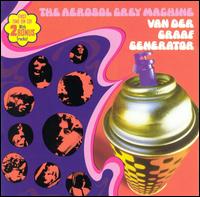
The Aerosol Grey Machine - 1969 Fontana
9
(Good)
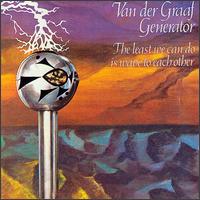
The Least We Can Do Is Wave To Each Other - 1970 Virgin
8
(Good / Mediocre)
Best Tracks: "Darkness (11/11) (Beat Club Version)", "Refugees", "White
Hammer", "Out Of My Book"
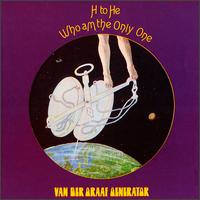
*H To He Who Am The Only One - 1970 Virgin*
C
(Very Good / Great)
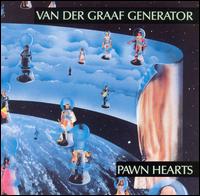
Pawn Hearts - 1971 Charisma
7
(Mediocre / Good)
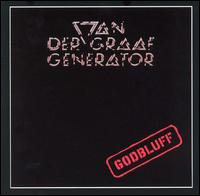
Godbluff - 1975 Charisma
B
(Very Good)
thanks for those excellent review of VDGG album.
Concerning Sleepwalker, I always been intrigued by the vaudeville part...
My opinion is that section is inspired by the music of Nino Rota (who composed music for Fellini), the sound of the organ sound as
a Farfisa organ (used a lot by Rota) and the overall section sound a little bit like a circus music to me.
I like a lot also the reggae part in Meurglys III.
Still Life - 1976 Charisma
9
(Good)
World Record - 1976 Charisma
A
(Very Good / Good)
The Quiet Zone / The Pleasure Dome (Van Der Graaf) - 1977 Charisma
6
(Mediocre)
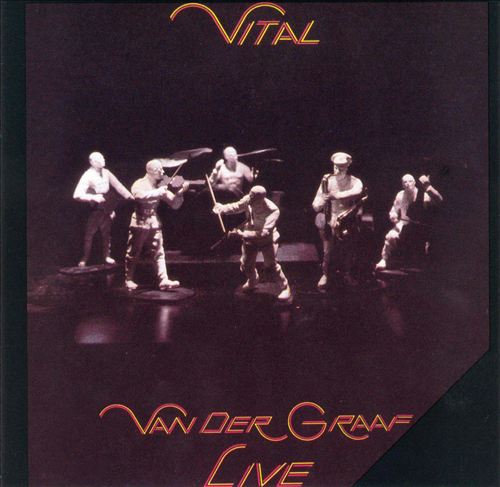
Vital (Van Der Graaf) - 1978 EMI
7
(Mediocre / Good)
Present - 2005 Charisma
8
(Good / Mediocre)
Real Time - 2007 Fie!
8
(Good / Mediocre)
Trisector - 2008 EMI
9
(Good)
Live At The Paradiso 14:04:07 - 2009 Voiceprint
A
(Very Good / Good)
A Grounding In Numbers - 2011 Esoteric
8
(Good / Mediocre)
Live At Metropolis Studios 2010 - 2012 Salvo
9
(Good)
ALT - 2012 Esoteric
5
(Mediocre / Bad)
Merlin Atmos - 2015 Esoteric
8
(Good / Mediocre)
Do Not Disturb - 2016 Esoteric
8
(Good / Mediocre)