Jethro Tull is one of those weird bands that is simultaneously
famous and almost completely unknown. They actually do get a fair amount
of radio play, with Aqualung contributing its fair share of
standards to a station's playlist, and it's not that unusual to hear a 5
minute, condensed version of Thick as a Brick. Plus, there quite a
few people in this world who own the Original Masters compilation,
and heck, I read somewhere that Ian Anderson is the richest rock musician
in the world (though that might be more due to his catfish farms than to
record sales). Despite this, however, there really aren't that many
hardcore Tullers in the world (which may be for the better, judging from
the demeanor of some of the fans I've come across on the net). And this is
where things start to get complicated.
If one were to ask 100 Joe Schmo classic rock buffs what they thought of
when they heard the name "Jethro Tull," virtually every single one would
mention the menacing opening riff to the title track of Aqualung.
The thing is, while "Aqualung" is a great song (as is most every song on the
album), it is certainly not the group's finest moment. And this is where
hardcore prog-rock fans come in with all their might. Perhaps as a
retaliation to the popularity of "mainstream" and "mindless" rock songs
such as "Aqualung" and "Locomotive Breath," many have taken the approach that
the "true" Jethro Tull does not begin until Thick as a Brick and
A Passion Play. They claim that the high-brow proggy albums of the
remainder of the 70's are the band's most important legacy to the musical
world and pretty much dismiss the group's early stuff as too simple. Well
... I'm a pretty big fan of prog rock myself, but I would have to say
pretty definitively that this viewpoint is as far from the truth, if not
further, as to merely associate Tull with Aqualung.
The main problem I have is that trying to pigeonhole Jethro Tull as prog
rock only does a major disservice to the band, mainly becase they can't be
pigeonholed as ANYTHING but simply 'Jethro Tull.' I mean, there's a reason
you don't hear about too many Jethro Tull cover bands - the style they
created is simply inimitable. Some folk, a smidge of classical, a touch of
hard rock and a pinch of blues, all mixed just right with the unusual
personality of frontman Ian Anderson. Besides being a songwriting genius
(sometimes), his style of flute-playing, combined with his bouncing around
the stage on one leg prattling on about goodness-knows-what, created an
image that was always exciting to watch and often enjoyable to hear. For a little while, anyway, it was VERY enjoyable to hear, at least to my ears; I can honestly say without exaggeration that 1969 for Jethro Tull is one of my favorite years for any band ever, and a compilation I made for myself containing Stand Up and all the A and B-sides from that year is one of my most listened-to CD's. It's not as if Ian only had one year of glory in him, though; as he became more serious, he managed to create in Aqualung and Thick as a Brick (as well as the Chateau D'Isaster tapes) some of my favorite albums ever, especially TAAB, which is a worthy candidate for one of the five greatest achievements in the history of prog rock.
Unfortunately, around 1973, Anderson crossed the line he had successfully walked on TAAB, and the result is that, as far as I'm concerned, an alarming amount of the band's output for the rest of the decade is either tediously boring or unlistenably crappy (and that's made worse by the fact that he came out with a new album every year). He became much more concerned with flooding the world with poetic manifestations of his views on God, organized religion and how much critics hated him than with making the kind of entertaining music he had been able to do before ... no, wait, I need to take a step back on the "entertaining" statement. This era of the band certainly falls into the category of prog rock, which is more than willing to accept mystical lyrics and an overall bombastic nature than "regular" rock does, but it's certainly not the case that I dislike this era on an overall level because of the fact that it's prog rock (in case you didn't notice, this page is linked from John McFerrin's Rock and Prog Reviews). The problem I have is that he decided to do prog rock in exactly the way I don't like (but a way that apparently many fans prefer): consciously avoiding "conventional" song-writing approaches, i.e. memorability and cohesive melodies, and using complexity and atmosphere as a substitute. Thick as a Brick is as great as it is because, among other things, the raw materials (which are then pasted together using experimental structures and wildly entertaining instrumental breaks) are solid songs in their own right, with terrific hooks and solid riffs and the same kinds of gifts that Ian showed he had in spades in his heyday. From Passion Play onward, though, way too much of Tull's output gets away from those materials, instead leaning as much as possible on Ian's philosophical musings (which I don't have an opinion on either way), his "atmospherics" (which aren't his greatest gift) and complex (the trait always mentioned in defense of them) instrumental breaks that aren't really more complex than his best pre-'73 moments (though some of the textures are at least theoretically intriguing; theoretically, mind you) but that manage to strike me (on the whole) as dull and tedious. If you can get your rocks off with them, more power to you; as for me, no thanks.
There's also the unfortunate fact that (with a couple of exceptions, of
course) his post-seventies work ranges from mediocre to outright garbage,
as he dabbled first in electronics and then moved to generic heavy-metal,
where he pretty much stayed ever since. BUT, the amazing quality of the
band's output through '72, plus the fact that they were (and are, to an
extent) an amazing live band and that Ian _did_ pull out a couple of very
good albums after the band's peak guarantees the group a rating of four
out of five on my scale. Just remember, though - BE CAREFUL when buying a
Jethro Tull album. Just as many, if not more, of the group's albums are
mediocre or bad as are very good or great.
But hey! That's why I'm here - to tell you which albums I think are the good
ones.
What do you think about Jethro Tull?
Jamie Anthony (jaony.lineone.net)
Well, I'm a hardcore Jethro Tull fan, and you got my Tullian philosophy
pretty right. The album-orientated Tull sound emerged around 1972, with
Thick As A Brick. Before that, they released a bunch of fantastic,
light-hearted pop singles which can mostly be found on Living In the
Past (10/10 for that one).
It's true that Jethro Tull are also one of those bands which are massive
in a way, and yet hardly anyone you meet on the street will even know who
they are (like Yes, or Crimson, or, well, almost any Prog band) - I guess
that's what's called a "cult" band - they have a limited following, but
boy, that limited following is a devoted following.
It's also funny how many people I've met who have heard of Jethro
Tull
who seem to share your views on them - a good band who did too much. I
don't think they did enough, personally.
Still, I've always thought that when it comes to art (or music), it's
better for some people to love it rather than everyone to
like it.
Jan Vooribj (jvoorbij.kabelfoon.nl)
My opinion? Tull rules!
Sam Thirouin (scthir.1st.net)
Probably one of the most eclectic rock (if you want to categorize it
somewhere) groups in history, Jethro Tull have always been my favorite in
all the years I have known of them (1971, with Aqualung). For one
thing, there's always a Tull album that reflects the listening mood I'm
in, thanx to the diversity of each album. I am one to listen to lyrics
also, and Ian Anderson's lyrics are some of the most intelligent and
thought-provoking I've heard.
I know quite a few people that either hate, or love, Jethro Tull. And
only a handful that just like them. Tull are just one of those groups
you have to love or hate. And No, they can't be loved by everyone. They
don't do that MOR stuff everyone loves to hear. They won't do that
Pop/Soft rock stuff that makes the girls swoon to the floor. The can't
abide by everyone else's wishes and put out music every year like
clockwork. They are Jethro Tull. And Jethro Tull do things in an
out-of-the-ordinary way. Always have. Probably always will. We can
only hope.
Becky Alex (balex1.tampabay.rr.com)
I agree with some of what you say in your review of the various Tull
albums. However:
1. All of the songs on the Benefit album are outstanding. Teacher
is
your best song. You have been listening to too much classic rock &
roll radio.
2. APP is a great album, period. You seem to be stuck on melody,
try three blind mice. By the way The Lamb album, Genesis... now
that's boring!! Where are they now, touring with Yes, making Disney
songs, or propping up Donny Osmand's career?
3. SFTW, HH, and SW all excellent. Nothing bad here
except a couple things off of SW. Although the I disagree with you
on the best song on SW. I think it is Flying Dutchman, without
doubt.
4. Crest, Nightcap, Roots, and .com are all
good albums. Granted not
as
good as earlier material, but far better than the crap I here on radio in
Tampa Florida, that I can guarantee you. Maybe you haven't gotten around
to listening to them, but if you think that Tull's last good album is
Broadsword... wow your missing some very good music.
Tull is a great band, somebody must like them there going on thirty-two
years of music. Tull is in the middle of a US tour just after completing a
European tour. I saw them for the first time and was impressed. One
thing they are not a that is a band hanging on to the hits from the past
like some many of the bands touring these days. I've got to give them
credit for that! I enjoyed reading your reviews (your humor is pretty
good too) and appreciate the work you put into your site.
RHennHouse.aol.com
Minstrel, Too Old to Rock n' Roll..., and Songs From the
Wood. While I
love all three, I find it hard to figure out why you rated Too Old
highest. I would have ranked them completely opposite of you. I would
imagine that you get some angry messages, being the way some Tull fans are
very loyal, to say the least. I've come to the conclusion that you and I
are going to disagree on almost everything Tull. Oh well. That's the way
it goes. Locomotive Breath is your favorite song off three different
albums?! They have so much more to offer.
(author's note): Well, I would first definitely agree that there is
much more to Tull than Locomotive Breath. But I can't help it if, on both
of the live albums I own of the group, LB kicks so much ass.
As for angry messages ... well, not really. All readers comments I've
gotten on the site have been posted, and they're not that venomous.
And as for my thoughts on "classic" Tull albums like Minstrel or
Songs ... well ... I think I've said everything that needs to be
said.
And besides, don't forget that for all of the band's many, many flaws, I
still love and respect them enough to grant them a rating of 4/5 stars,
which is NOT bad at all.
David B (davbo6.hotmail.com)
Hi
Good site, and a pretty good assessment of Tull's career.
I tend to agree with a great deal of what you say.
1982 was a turning point for me as a fan of the band. Some of their albums
up to then were absolutely fantastic. I agree that 'Stand Up' is a
great album, and one which I listen to regularly.
Importantly, though, even the crappier Tull albums had some redeeming
features on it. A decent couple of tracks, maybe. A nice lyric. Perhaps a
good guitar solo. But from 'Under Wraps' onwards things were,
simply, terrible. Imagine being a Tull fan, looking forward to the next
release with great anticipation, hoping for a return to the better days.
Instead, after buying each new release, there comes the realisation that
Ian Anderson has served up yet another almighty pile of poo.
And I'm sorry, but I don't buy the theory that Tull has gone through some
kind of musical renaissance that started with 'Roots to Branches'
and has continued with 'J-Tull.com'. These albums are BAD. Their
only positive point is that there are not as unremittingly dreadful as
those that have come before -- and this is, I think, why they've been
slightly more positively received.
All in all, though, I feel a great deal of affection for Tull. I love alot
of their stuff up to and including Broadsword. I just wish Ian
Anderson would recognise that many of his fans would prefer him to stick
to the fish farming....you're never disappointed with a nice slice of
smoked salmon, whereas you're always disappointed with a new Tull album.
Philip Maddox (slurmsmckenzie.hotmail.com)
Ahhh, good old Jethro Tull. I don't think that there's a band out there
than splits critcal opinion quite like Tull. There are people who think
that only their albums up through Aqualung are worthwhile, there
are people who think they didn't hit their stride until Thick As A
Brick, and people who like a few albums from each era of the band. I'm
going to just type out my comments on each Tull era (or at least what I
think the eras are):
The really early years (This Was) - They hardly even sounded like
Tull here. Mick and Ian wanted the band to go in separate directions. The
album they produced was good, but it certainly doesn't sound like Tull as
everyone know them. Tull as everyone knows them doesn't really start
until...
The early years (Stand Up - Aqualung + Living In The
Past) - Ian started to flex his muscles here, getting Abrahams out and
starting to write more unique music. These albums are all pretty distinct,
and I like all of them a lot, especially Stand Up (which is one of
my all time favorites, and I'd give it that 15 you almost gave it). This
evolved right into...
The extremely progged out yeares (Brick - Play) -
Brick, with it's beautiful melodies and great lyrics, is my
favorite album, period. An easy 15. Play wasn't a bad follow up
(I'd give it somewhere between an overall 10 or 11), but it certainly
didn't hit the majesty of Brick. Side 2 pretty much rocked, though,
and I ADORE the "I am the overseer over you" bit. Side one kinda lagged,
though. They gave up on the long song format and moved on to...
The prog-pop years (Warchild - Too Old) - Good years for the
band. Warchild, though my least favorite Tull album of the
seventies (for the same reasons you gave for it), has some good tunes
regardless, and I dig it. I really like Minstrel, too, WAY more
than the overall 7 you gave it (it's a 13 from me). I think the melodies
and lyrics on that one are tops. Too Old is a good rock album and a
highly underrated one by most people and hardcore Tull fans. As much as I
loathe "Bad Eyed 'n' Loveless", it's a really good album, probably worth
an overall 10, maybe an 11. After that, it's...
The folk-prog years (Songs - Horses) - With the exception of
Brick, this is the prettiest music the group ever produced, and I
like both of them a whole lot. Very, very pretty music. Great discs to pop
in any old time.
Stormwatch - Doesn't fit into any particular era, but I like it's
dark atmosphere and dark atmosphere, and "Dun Ringill" and "Elegy" are
among my favorite Tull tracks. Unfortunately, it was time for...
Electro-Tull (A - Under Wraps) - Broadsword and the
Beast had some fantastic melodies on it, despite its electronic
nature, and in my opinion, ranks among Tull's best. Though it isn't all
that good, I still like Under Wraps more than you, something like
an overall 8 - some of the melodies, like on the title tracks, are good,
but the electronics smothered it. And as for A... "Black Sunday"
might be my favorite Tull song, and a couple of others are listenable, but
most of this is nearly unlistenably crappy. Electronics and Tull wasn't
quite a match made in heaven. Then, after a break, you get...
Generic hard rockin' Tull (Crest - Catfish) - I've never
heard Crest, but Rock Island was, with a couple of mild
exceptions, never really awful, but almost unforgivably boring.
Catfish, although it was better and actually has a few decent
tracks, isn't THAT much better. C'mon, generic hard rock? From JETHRO
TULL? Who needs it? Not me. Now, though, I think we've got...
Comeback Tull (Roots - Dot Com) - Roots was, in my
opinion, the best Tull album since Broadsword. By losing the
generic hard rock and twidlling around like they used to, they made what I
consider to be a pretty decent album, with a few great tunes on it. Dot
Com, though, is one helluva comeback, because I really like it,
possibly enough to give it a 12. The return of the melodies, Ian's voice
is getting better, and the filler is at a minimum.
Well, that's about it. I'd recommend the outtakes album Nightcap if
you ever see it, because the original draft of Passion Play is WAY
better than the final product, and most of the outtakes on the second disc
are better than the albums they were supposed to be on (despite a couple
of less than stellar Broadsword outtakes). I might get to
commenting more on the individual albums later, but that's all I've got
time for now.
venkatanarayan ramasubramanian (stambi.yahoo.com)
I just wanted to say that you were being a bit harsh with the later stuff
of jethro tull. I agree a 100% that under wraps and A were terrible
terrible albums but I personally liked the mid-late 70's stuff that they
did. I dont understand how you dont like budapest...i thought it was a
masterpiece especially the flute section. Also, in crest of a knave, the
flute sound became more refined and sounded clearer than it had ever
sounded before. That's one reason I liked the album so much... I also
liked roots to branches...there were some good arrangements on it e.g.
beside myself!!
Finally I liked j-tull dot com..glad we agree on that.
The thing about hard core fans is that there is always one band you hold
dear...and even if some stuff is mediocre or down right bullshit, you
force yourself to like it!!
I noticed you liked master of puppets....I am a big fan of metallica
too!!
David Koukol (dops.mail.com) (8/15/01)
I've been a Tull fan for 21 years and am also a person who
loves friendly debate and a variety of opinions on subjects
such as this. I've read your website with interest and, while
I disagree with much of the content, I found it all the more
interesting because of it.
I may be unusual for a Tull fan as I tend to prefer their later
work over the earlier material. Oh, I love Stand Up, Thick As
A Brick, Songs From The Wood, Heavy Horses, etc...but the
stuff I listen to the most often is from 1987-the present.
I was just a kid (ten years old) in 1979 when I first heard
the Songs From The Wood album and asked for it for my
birthday. I don't recall exactly what my contemporaries
were listening to (Kiss, I think) but I was certainly the odd
one out. As I grew up, I eagerly purchased each new Tull
album and saw them on tour - and the same holds true to
this day - in fact I'm going to see them in concert next week
as I write this on August 8, 2001. And yet Tull are not like
the stuffed toy from my youth that I could never bring
myself to throw away; Ian Anderson's writing has grown up
with me, and I'm constantly amazed by the depth of
invention and creativity he can still, produce, play, and
record (Roots To Branches and Ian's recent solo album, The
Secret Language of Birds, are masterpieces in my mind).
I've read pop cultural studies which claim that, for many
people, favorite songs are those that they grew up with and
a certain level of nostalgia is associated with people's
tastes in these matters. Well, I discovered Tull early and
while they are still my favorite band, my appreciation for
their fresh material outstrips that which I feel for the
albums I "grew up with." For me, Tull is not a band that is
"Living in the Past," but rather living WITH the past while
living IN the present...and the future. Dare I say it, but I look
forward to the next album!
I realize that my opinions might be untypical (but not
unique, as I have discovered), but I feel they are worth
adding to the sampling of opinions herein. Keep up the good
work with your website.
Rex M Ramsay (quietlistener.lycos.com) (8/21/01)
My comments about Jethro Tull would start out first by saying that if you want
to know the bands' music never listen to reviews of someone that would
call any of the albums or music, "garbage". How amusing to read your words
about the band and yet you seem to profess to be a 'casual listener'.
Since following the group since 1972 I have to state that yes, I am a true
Tull follower. However, it is the attempt to personalize, reflect and paint a
musical storytelling that makes the music interesting to me and hardly what I
would call garbage. Each album is in fact (at least up to Crest') an attempt to
come up with a new sound different to the ones before. Does this mean that I
would call each album a success? Well no and yes.
Regardless of the style of any given album, it could be given a 3 of 5 rating
merely on originality, musicianship, and lyrics. A 4 or 5 rating would then be
reserved for the ones or songs that have a sort of majic that sets them apart
from the others in a clearly distinct way. Each album has at least 3 or 4 songs
that would fit into this quailfier. Then the invidual listener is bound to have
or
be able to find an album that fits into a style of music that would be
considered
a favorite. Which albums do I not like or like the least? Well that would be
'A'.
This was an album that was never intended to be a Tull work anyway. The real
treat of the album is having Eddie Jobson on keyboards and violin.
I have never found it necessary to give up on any of the albums. In fact, the
album that is always fascinating to listen to now and again is 'Under Wraps'.
To
readily dismiss this album is to miss some very interesting layering of
instrumentation not found on any Tull efforts since.
My problem with the band
since Crest' is that they have or seem to have developed a safe marketing
formula that supplies or responds to the diversity of Tull listeners musical
ears.
It is a fact that Ian Anderson did some serious marketing research before the
release of Crest'. Sort of a 'as fans, what is it that you like or want to
hear'?
The musicianship continues to satify, the lyrics, the songs, can't really be
faulted. But having listened to every album being totally different in sound to
the previous ones, at least through Wraps', it would seem that a certain level
of comfort has befallen the efforts since. To understand this is not to leave
out
the reality of the music buis' and the costs involved throughout the total
process of production, sales, touring, etc... Not to mention the fact that
Ian's voice has been forced to adapt to it's injury in 84'.
Treat every album as a unique attempt to reinvent itself. How many bands have
done this or have even tried? It is perhaps the best fact about J-TULL
that they really have never have played crappy music that could be called
similar to any other music. To be able to enjoy their music means you have to
develop a musical ear to hear what they are trying to accomplish. It's funny,
but the same ear I have also allows me to be able to hear the nuances of the
various musical styles that have influenced them and thus allowed me to
appreciate those influences even more. ANY music that successfully peaks or
challenges you cannot be considered garbage.
So, 'prick up your ears' my
friend, before you 'rehearse your loudest cry'.
Steven Knowlton (knowstev.med.umich.edu) (10/19/01)
I find it hard to believe that Ian Anderson is richer than Paul McCartney, who
regularly gives million pound donations to his favorite charities.
Chris Federico (drummerboy_91.yahoo.com) (3/15/02)
In general, I agree with you that Jethro Tull was a
better band in the past than during their latter
years. However, my love for their music extends a bit
further ahead in time than yours -- well into the
Heavy Horses album, in fact. By the way -- just so you
know -- "anyway" is not a word. Please don't take
that remark too personally. I'm just a stickler for
that sort of thing. Also, I think that rating an album
with a number is ridiculous. Your text is detailed and
opinionated enough to not require a general numeral
rating, which is a futile, utterly subjective item.
Thomas Griffiths Wainewright (gavemegasoline.earthlink.net) (3/25/03)
I find this band completely exasperating. I don't like Prog Rock, I wasn't
alive when they were productive, but every once in a while I develop a
fascination with them, in part because they were just so fucking weird, in
part because, as you say, they started out SO great and then began to suck
SO bad. One actually starts to feel a bit betrayed. Here's four random
thoughts on this eternal puzzle.
1)Tull is an idiotic band. Has been since they started doing impersonations
(Too Old to Rock and Roll, SONGS FROM the WOOD [which is fun, BUT...])
2) All the music produced up until, say, '73 is great. The band feels
alive. LIVING IN THE PAST is tremendous, because you realize that before Ian
tried to say so much, he actually had a lot to say (Alive and Well, Nursie,
Singing all Day). The hooks are great, and they were generally an amazing
singles band and an amazing blues/fusion band. And the production on their
singles was much better than the production on those early albums, which is
always either flat (Aqualung & the concept albums) or soupy (Stand up)
3) And then somehow Anderson just lost his way. Talent flared out, I don't
know . The rot starts to set in around Aqualung, and everything's gone with
TOO OLD, because this is where Ian's imagination just bottoms out
altogether. From there on in, it's just impersonations of this style or
that, observations on this trend or that (environmentalism, farm subsidies,
.COM [please]), posture-striking of this sort or that (Country Squire, Rock
Star, Gremlin, SPY for chrissake), all combined with that irritating
willingess, visible from Aqualung on, to reduce ANYTHING (train rides,
crossword puzzles, circuses, BLAH BLAH BLAH) to a facile metaphor for life
itself. This is actually why I like Minstrel--it's just nakedly, honestly
bitter. What a relief. A personal voice. Haven't heard that since the
acoustic cuts on Aqualung.
4) You can also track the band's decline via the thinning of IA's voice and
IA's hair. And the decline of his visual invention. Teasing your hair and
Wearing a plaid overcoat over tights and a codpiece is weird & cool and Rock
& Roll: like some kind of homeless/Jesus/minstrel thing . Dressing yourself
like you're out of a renaissance fair is just lame.
5) Preferred albums for me would be LIVING IN THE PAST, The Carnegie Hall
concert, one particular bootleg from '68 with Martin's Tune on it, and
--strangely--the Chateau D'Isaster recording, which would have sounded just
as lousy as Passion Play if they'd actually finished it back then. It
sounds vast and symphonic now because by the time he released it Anderson
had discovered reverb. Also because he's not SINGING--and here's what you
realize when you listen to it: the longer the band went on, the more
Anderson started to write vocal lines in terms of his instrument; so what
sounds magisterial when played on flute on NIGHTCAP just sounds crap when
sung on Passion Play
there you go, for what it's worth. I'm going back to my White Stripes album
now.
-Tom Wainewright.
Howard (benetth.telus.net) (5/20/04)
Best song writer is his time. His singing...well...I got used to it.
Howard Bennett
andreascg.aol.com (12/31/05)
I'm not knocking Ian Anderson AT ALL, let me clarify, but I would
like to point out that, while Ian Anderson's flute playing is very
innovative in the context of a rock band, the style and many of the
"shtick", such as vocalizing thru the flute, are actually copying
what was done earlier by the great Rahsaan Roland Kirk. I'm sure Ian
Anderson is a fan of Kirk's, especially since Tull covered "Serenade
to a Cuckoo". Anyone who appreciates Ian Anderson's flute playing
should check out Rahsaan Roland Kirk. On the album "I Talk to the
Spirits" he plays only flute (he was also a great sax player) and you
can compare his version of "Serenade".
rudge rodgers (rudgeraok.yahoo.com) (06/07/07)
jethro tull is one of the longest running rock'n'roll bands ever.
I pass up Rolling Stones concerts right and left but rarely miss
Jethro Tull when they come to town. Long live Ian Anderson.
rosemary.ca.inter.net (09/13/2009)
I am 51 years old woman, have been a Tull fan since 1969-70. I grew up in Windsor,
Ontario, heard Tull on a Detroit rock station , Wheels, I think, fell in love with
the music 5 notes in. Favourite Song has to be "Warchild", but I also love "The
Third Hurrah", "Beethoven's 9th" right through the current stuff. Bought Thick as a
Brick and Passion Play even when I couldn't afford them. Fell in love with Ian
Anderson's looks, voice and accent...no small wonder my current partner looks and
sounds like him, too. Though Tull came to Detroit, my eastern European parents
forbade me to go to any of his concerts. I locked myself in my bedroom one weekend
and swore to my folks that I would see Tull perform live before I died. Meanwhile,
moved to Toronto. My 50th birthday gift to myself was a ticket to see Tull perform
at Massey Hall, Toronto, in November 2007. I got the second last ticket in the
house! Tull performed to a full house, all ardent, even closet, fans. It was a
night I never wanted to end. On the drive home to Newmarket, I popped in my Thick as
a Brick CD in my car player, drove up Hwy 404 home to Newmarket. The last note faded
just as I pulled into my driveway at midnight. "Now I can die happy," I said to no
one in particular. My 3 teen sons bought me a Tull DVD for my 50th birthday -- the
best present, EVER! "Warchild" is the first song I copy to every MP3 player I own,
I play that song almost every day of my life. I will love Tull until the day I die.
"WaterTech" (steve.watertechcapital.com) (07/13/10)
I grew up on the rock and roll of the early 70's and Jethro Tull is one of
the most underrated and potentially could have been one of the mega bands
commercially if not for the 'different' sound which, in my opinion, was
ahead of the time. Listen to the Benefit album start to finish. It is a
remarkable piece of work.
iaincrinson (iaincrinson.btinternet.com) (03/13/12)
Thanks for the blog – it makes very interesting and informed reading. I am 54, went to a grammer school in leafy Surrey (England)
in the early seventies so of course Prog rock was the only music I was aware of at the time (together with Biggles, Monopoly and
all the other references on TAAB). Jethro Tull were always my favourite band in this period, with Benefit my favourite album.
I returned to listening JT after nearly 40 years purely by chance catching of recording of ‘living in the past’ at a 1979 concert
video as my 12 year son was randomly scrollling through YouTube. It brought back that freshness and energy that I remember from
when I was 14/15/16. I recalled getting the Thick as Brick L.P the week it came out, and the endless reading of the attached spoof
newspaper while listening to the vinyl spinning. I then recalled how I became gradually turned off from J.T following a concert at
the Wembley Arena in 1973 which was largely material from the then recently released ‘Passion Play’ album which I still remember a
being facile and uninspiring. After that gradually got into Jazz-Rock (Return to forever, Weather Report) and then into the real
thing (the eternal Miles Davis!). However, following the viewing of that Youtube video, ordered a vinyl copy (still very much into
vinyl recording where I can get them) of ‘living in the past’ LP and it was even better than first time around! When I was a
teenager of course I had missed all the blues and jazz references that abound in their music of that period (1968-72). Have re-
purchased TAAB on CD (sadly my original vinyl disappeared many years ago), what a listening pleasure, but the band should have
ended it there and then!
Mikhail Radyshevtsev mradysh.mail.ru (09/13/12)
Hello John,
While I couldn't agree with some of your statements on Jethro Tull (I think, for instance, The Minstrel deserves at least 7 for
melodies mastery and Songs From The Wood should be ranked equally to Heavy Horses for having Velvet Green and not having No Lullaby
:)) that's all a matter of personal taste. However, I think you could have paid some attention to Anderson's solo works, of which
you have reviewed only the last one. Though they could hardly be named classics, it seems to me, all of them are above the average
JT material of the time when they were written.
1. "Work Into Light" (1983) is an electronic album, recorded in collaboration with John Vettese. This album is not bombastic as
"Broadsword" was in good way; it is a totally inoffensive and light venturing into synth-pop territory. There is nothing really
original apart from flute in such a context, but it is mostly pleasant, especially the opener ("Flight By Night"). "Trains" is
probably the only boring song there. I wish it had stayed in it's own right, out of shadow of the disastrous "Under Wraps". Among
Tull's 80s it's definitely second to "Broadsword" (if we don't count "A Classic Case").
2. "Divinities: Twelve Dances Of God" (1995). Anderson goes instrumental. The result is an album of background music, but this is
pleasant, highly artistic, though a bit monotonous background music with strong Oriental flavour. No electric guitar, thus even
monotony can be enjoyable. Besides this, there is at least one brilliant tune (At There Father's Knee) which Tchaikovsky could have
used for his Nutcracker.
3. "The Secret Language Of Birds" (2000). It is all acoustic, in the stile of "A Gift Of Roses", with world music influence. Just
very pleasant, may be a bit too long, I never needed bonus tracks here.
4. "Rupi's Dance" (2003). Sorry, if I overrate this one, but I love it. I think, it's the best thing Ian did since, may be, Thick
As A Brick. It is totally unpretentious, just a strain of songs with catchy melodies, beautiful instrumentations and sincere
feelings.
5. "Ian Anderson Plays The Orchestral Jethro Tull" (2005). I can only assume it can be a pleasant addition to "A Classic Case",
which I've never heard, as the track list of the former is mostly different from the later.
Alfred Zoppelt (alfred.zoppelt.aon.at) (10/13/14)
Hello John!
I live in Vienna (Austria) and I am fan of Jethro Tull since the
Songs from the Woods album back in 1977.
I am sorry that Jethro Tull no longer exists. I miss Martin Barre.
Chuck Dade (cdade.chuckdade.com) (10/13/15)
minstrell in the gallery is very good, War Child is great and so is Songs of the Wood
But he lost me with too old to rock and roll.
Alan carpenter (mealanc1.gmail.com)
I assume this email is still "live" and you are still using it.
This email is just a "thank you" for your web site and album reviews, particularly for your Jethro Tull reviews.
I must be honest and admit I have only just discovered Jethro Tull after all these years and I am gradually going through their back catalogue.
I am not really sure why Jethro Tull passed me by. I am over 60 years old and live in the UK (home of Jethro Tull !). I "grew up" during the Beatles era and have wide ranging music taste (I was in to Cream, Hendrix, Dylan, Yes, Doors, Love, Pink Floyd, Steely Dan and many other 60s and 70s groups).
I like what I call "intelligent rock" (The Yes album "Close to the Edge" is one of my favourite albums) but for some reason I had a blind spot about Jethro Tull. Apart from the Living in the Past single (which was a hit single in the UK) I hardly knew another Tull song or album.
However a few months ago I was searching the web for new albums to listen to (going on to those "100 best rock albums" web sites) and "Thick as a brick" kept appearing.
I found it on YouTube and listened to it and I thought it was STUNNING (it has a similar feel to the "Close to the Edge" suite on that Yes album - I am not saying it sounds the same, but that it has that feel where everything was just RIGHT and the songs/movements just flow in to each other).
I began to play "Thick as a brick" over and over and then decided to explore more Tull albums and I found your web site which was invaluable in guiding me to the best albums.
However being presented with a whole lifetime of Tull albums (from 1968 - when I was 19 - to albums from just a few years ago) has been hard to cope with - following all the ups and downs of the band, the comings and goings of members (I have put a spreadsheet together of who played on which album to help me), the change of style, the good albums and the bad albums and so on.
I have listened to all 21 studio albums (some more than others) and have to say "Thick as a brick" is still my favourite.
And I have to say "Stand Up" is probably my second favourite (I know you are a big fan). Stand Up is a "simpler" album than many of the others (more of a basic "rock" album). In that way it reminds me of Disraeli Gears by Cream (again, not the same sound but the same "feel" of an album that just "works" and flows).
And like you, I love the songs "Nothing is Easy" and "For a Thousand Mothers" on Stand Up. When they wanted to this band could really "rock".
However there were times when Anderson could become very pretentious and, for example, I have yet to listen to Passion Play all the way through. I start to listen to it, and after a while I decide I would actually rather listen to Thick as a Brick for the 30th time than "Passion Play" for the first time.
As I type this email I am listening to Benefit, and like you, I find it a little bland (particularly after Stand Up).
Anyway, back to my original point, a thank you for doing all your reviews and keeping the web site going. There may be times when you wonder if it is all worth it but I for one have found it very useful.
George Smith -Smyth (rainbowgeorgeGeorgeSmithSmythrainbowgeorge.outlook.com) (08/13/17)
Hi thanks,
My God, I did my chops, dues, Jethro Toe was not Ian. He got me through my exams in music, cos everything was a concept album, on a theme by J S Bach, whom I was studying, for my o level in music 1985. And thick as a brick, maybe bachian, after all, he had David sorry Dee, cos whilst I had written hundreds of complicated four part harmony pieces, followed by huge amounts of lonely hours of library study, frightening feelings of not being good enough enforcement by a psychotic music master teacher who was evil. But, thanks to that Ian and David Palmer, formerly and his ability to read Sanskrit musical chaos and turn it all into written, wonderful stuffI was actually already decided that I loved a passion play. I don't know if you know enough, in that you don't give a shit about leaving fame behind, after going through the hell of primary 369 contrapuntalness of vaguely chops, from the madman Bachian art of fugue with a theme? No, but this is me. And I. Have not told him. He's too pc. Me too. But he got me through all the bigots because it was his words along with the familiar chords, and I. Am because he is famous and has to kiss loads of arses so I don't have to.
It's a musical thing...you don't get it. Fool!
Georgina Walker
Best song: Beggar's Farm
Anyway, at the time, they were one of the many eccentric blues acts popping
up around London, differentiated only by Anderson and his already
incredible flute playing (a neat trick given that, supposedly, he'd only taken up the instrument a few months beforehand, and didn't even know proper fingerings). The rest of the band was decent, though. The
guitarist was one Mick Abrahams, who was primarily responsible for the
band's bluesy direction. The drummer was Clive Bunker, who could actually
make a legitimate claim to being the best drummer the group would ever
have. And finally, the bassist was Glen Cornick, a decent fellow who was
at least competent, though nowhere near as good as the later ones.
So, anyway, we have this collection of ten tracks (well, nine - I still
don't know the point of the closing "Round," which is only a minute long),
and while none of the tracks are really bad, there's quite a bit of filler
if you ask me. For instance, side two has a pair of instrumentals which,
quite frankly, serve no purpose but to take up space. The first is a drum
solo entitled "Dharma for One," and, well, it's a drum solo. I don't like
drum solos much at all. There's also the five-and-a-half minute "Cat's
Squirrel" (Cream covered it on their debut too) that's even MORE pointless
- just some random jamming from a band that wasn't exactly packed with
virtuosos at all.
Even some of the 'normal' songs aren't that great. The five-minute "It's
Breaking Me Up," wedged betweened the previously mentioned instrumentals,
strikes me strongly as nothing but an imitation of Cream's "Sleepytime
Time," and while I like the original, this is just kinda ehn. There's also
a composition by Abrahams on the first side (the ONLY time in
Tull's discography that Ian didn't write a song himself), and it's little
more than a generic lounge-jazzy number with some odd orchestration
occasionally. Thankfully, it's only two minutes, so it's tolerable, but
still ...
The rest of the album, though, is good stuff. The highlight is "Beggar's
Farm," the first instance of Ian completely taking over a song with his
amazing flute playing. It has a good riff throughout, but it is definitely
the flute that makes it the best song on the album. And closing out the
first half is a cover of the Roland Kirk (the man from whom Ian largely, er, borrowed his general instrumental and compositional style) instrumental "Serenade to a
Cuckoo," an extremely pleasant six-minute number that never gets boring and
leaves you wanting more at the end. Good stuff.
There's even some good 'generic' blues on here too. The opening "My Sunday
Feeling" is solid, with nice
flutework and a peculiar, stop-and-go rhythm with good Anderson singing
over the top of it. The following "Someday the Sun Won't Shine For You" is
also good, not so much for the melody (it's generic blues, after all), but
for the interesting and cruel lyrics about how "I'll leave your mother
too." Plus it features the first instance of an unexpected and enjoyable coda on a Tull song.
And finally, there is the single, the bizarre "A Song For Jeffrey," with a
somewhat bluesy motif, but with Anderson contributing a great flute and
harmonica riff and singing through something that makes his vocals
completely undecipherable. It's catchy, though, and extremely clever if
you ask me. I think it was a minor hit for them too, so that's good.
Anyway, the album is decent enough, but I think it's obvious that the
band didn't have much of a future doing blues, even in a tweaked form like this. So Anderson took
control, and things started going really well ...
bsitting.mail.math.ucsb.edu (2/19/03)
An entertaining debut! None of these tracks sound bad at all, though one can
immediately see that Jethro Tull couldn't just stay restrained to the blues
forever. "My Sunday Feeling", "Beggar's Farm", and the very jazzy "A Seranade
to a Cookoo" are my highlights from this album. 8(11)
German Gonzalez (ggonzalez6.austin.rr.com) (01/13/13)
Nobody is a Jethro Tull fan. I am though just because it played on our FM rock station in the early 80's in South Texas. I just got
This Was on vinyl today and have to say: Godamn boy, it is a great album to just kick back and sip a few, smoke and just relax.
Roger Worton (rogerworton.btinternet.com) (12/13/15)
Re: Song for Jeffery
Love the driving rhythm and the 'lost' vocals. Great!
trfesok.aol.com (07/13/16)
I had resisted this one for a while because the old Rolling Stone Record Guide reviewed it as a blues album. They said it was the only good Tull album (!), so I thought it would be boring. But I remember hearing “A Song for Jeffrey”, “A Christmas Song” and “Love Story” a lot on the radio back in the day (although I suspect that’s because they’re on LiTP), plus I became acquainted with some of the others on via remixes and live versions, so I finally succumbed.
My opinion pretty much coincides with yours. I also find “It’s Breaking Me Up” to be rather dull. “Round” is a peculiar bit of noodling. “Move on Alone", of course, is really an Abrahams solo song. It sounds more like Blood, Sweat & Tears than Tull. “Dharma for One”, oddly enough, is the song from this album that generated the most cover versions! Probably because it provided a platform for early 70’s bands to take off on wanking guitar and/or drum solos. The original is tolerable because it’s short, but I don’t think I could bear listening to the LiTP version..
“Cat’s Squirrel” (originally recorded by a Delta/Detroit blues musician named Dr. Ross) is OK, but it doesn’t add a lot to Cream’s version. This one is totally Mick, since he redid it 1996 with the same rhythm section and doubled its length in 2003 with Blodwyn Pig. The first time that I heard "Serenade to a Cuckoo" was on the 1987 tour, believe it or not, and it still holds up. I really like the harmonizing between Ian and Mike on "Some Day the Sun Won't Shine for You". The 25th Anniversary box has a solo acoustic version which doesn’t work quite as well. I really wish that Ian hadn’t sent his voice through a megaphone (or whatever) on "A Song for Jeffrey" – I’d like to hear the words (the first of a set of naïve, childlike lyrics he’d write referring to Jeffrey Hammond-Hammond ) too! The 25th.. box has a live version from the Catfish Rising tour without any vocal processing -- but he should have used it in this case, because we get to hear it sung in a hideous late 80’s/early 90’s croak. That box also remixed the studio version, adding more drum reverb, which doesn’t help, either.
“My Sunday Feeling" is a loud blues with dark lyrics that stand in very interesting and powerful contrast to the music. (Also remixed for the 25th.. box, and also rerecorded there with the then-current version of the band, with more bad singing). I also really like “Beggar’s Farm”, with an ominous feel very much unlike the rest of the album – sort of a precursor to “Back to the Family” and “Son”.
I have the 2001 version, which adds three more singles, the last things recorded with Abrahams. The 1st is the British B-side of “.Jeffrey”, “One for John Gee” (also on the ..20 Years of.. box), a jazzy thing written by Abrahams, distinguished by Ian’s flute. The follow-up UK single was the great rocker “Love Story” and the “Christmas Song” B-side. Actually, is Mick actually on this one? It has mandolin and a very scary, string arrangement by D. Palmer that is most un-blues like. The ..20 Years of.. box also has three songs with Mick from the BBC – a cover of T-Bone Walker's “Stormy Monday Blues”, “A Song for Jeffrey and “Love Story”. The latter doesn’t sound like a new recording – it sounds like a mono remix, perhaps with a new lead vocal.
Ian’s instincts to move beyond this sounds, of course, turned out to be spot on. The British blues-soul-rock bands on the scene during this period either had to adapt and evolve (Tull, Cream, Fleetwood Mac) or fade away (Spencer Davis Group, Elton John’s Bluesology, Blodwyn Pig).
Best song: Bouree
The first major difference between this and This is the guitarist.
Due to various creative differences, Mick Abrahams left the group to
bounce around various small bands for the rest of his career. After a
short stint with future Black Sabbath axe-man Tony Iommi, the group picked
up the terrific Martin Barre. This guy really is incredible - extremely
versatile, with a full, rich tone, his very presence would bring a
serious rock element to the band for the first time. Heck, he even
played flute on a couple of tracks - what a cool guy.
The second difference, which is even more important, is that Ian finally
discovered that he had an incredible songwriter within him. Of course, as
a corollary to this, he became a complete despot from this time onward,
and in later years it would've been nice to have an additional writer in
the band to help out when Ian's talents began to wane, but for now it's
all good. There are ten tracks on here, each one a gem, with only a small
quibble here and there on my part. Furthermore, the sound of the album is just amazing, showcasing all of the best aspects of what I described in the band's introduction with none of the bad aspects.
Three of the tracks on here are complete and total classics, and are
easily among the very best songs the group ever did. The first, the opening
"A New Day Yesterday," is a blues song, but it's better than any blues on
This Was if for no other reason than that it has a simply terrific riff accompanying it. My
personal favorite part of it is the way Martin does that neat little
slide at the end of each riff repetition, but it also includes a solid
middle jam (featuring both great guitar and flute solos, with a badly needed sense of 'looseness' that would tend to get lost in later years), good lyrics, and a nice coda (something that a lot of songs on here have, by the way). The second, the best
song on the album, is a rock, blues and classical fusion of a Bach number
entitled "Bouree." Even if you've heard the original (and you probably have,
even if you don't realize it), this cover version will simply blow you
away (and the jazzy section in the middle will drop your jaw at how utterly wrong it is, as will the bass solo). And it's got another great coda, with Ian panting the same note on
his flute over and over again until the band closes together. And finally,
there's the first song of side two, "Nothing is Easy." WHY this is not
playing on every classic rock station in the country every day simply
blows my mind. The vocal melody rules, the jams between verses are great,
and that coda is AWESOME. I do admit that I can see finding it a little cheezy; it's the kind of "rev up and rock it to the max" coda that has become a staple of live shows for thousands of rock bands around the world, and thus hearing it in a studio setting might seem offputting. Then again, Tull deserves a lot of credit for coming up with this kind of coda in the first place, and there is a terrific build of energy and intensity up to the very end of it, so I'll probably never get sick of it. I can say is that there is nothing in this world like banging your head to a
flute and guitar jamming the same note again and again until it all stops (especially after it had been built up like this).
Don't forget the rest of the album, though. For instance, there's a couple
more terrific rockers, "Back to the Family" and the closing "For A Thousand
Mothers" (with a great album-ending jam following it). The former starts off alternating between a simple electric folksy-bluesy shuffle (with lyrics about being bored with family life) and a more intense bluesy section where Ian sings over loud repeated Barre power chords, with an exciting flute part in the breaks, and then accelerates into a frantic flute-and-guitar jam for a coda. Here's a tip; listen to the coda jam while crusing down the highway one day, and if you don't feel the pure creative energy and excitement that comes from this album in that moment, then you and this album just aren't compatible. And then there's the closing track, which has a GREAT riff, although the production leaves
something to be desired. The lyrics are among my favorite on the album, about getting to sneer at those who tell you you can't do something when you then do it, and my favorite moment is when Ian sings, "It was they who were wrong and for them is a song," followed by a brief, aggressively sneering flute line.
Hey, there's even a couple of great ballads! Of course, "Look Into the Sun"
and "Reasons For Waiting" do sound a bunch alike, but they're still simply
gorgeous, and they're easily the best slow ballads that Ian would ever
write (though a small number come close). The latter is also the first instance of David Palmer's association
with the band, as he arranged strings for it in a wonderful way. Keywords for these are: rich vocals, crisp tender vocal melodies, logical chord progressions, gorgeous fluting. There's also a nice introspective quiet number called "We Used to Know," which has the chord progression the Eagles would use on "Hotel California" (it's impossible not to notice it every time once you notice it once). The best part of it, though, is that Barre does his best Clapton imitation, turning on the wah-wah and pulling off a simply wonderful solo. I've seen it accused of being the first power ballad, which I guess isn't something to be proud of, but it's an amazing song nonetheless, so whatever.
Finally, there's also a couple of relatively silly tracks, and while they're weaker than
the other songs of the album, they're still fairly well-written, and don't
lower the album's rating too much (though they did cost it a perfect score, to be
fair). The first is a bizarre balalaika-driven number called "Jeffrey Goes
to Leicester Square," and while it's amusing, I'm glad that it's only two
minutes long. The other is an Indian-tinged song called "Fat Man," where Ian
laments about being, well, fat. The lyrics are hilarious, though, no
matter which way you look at it.
So there you are. In my esteemed opinion, no decent rock collection is
complete without this. And since it (like the rest of Tull's discography, which fully came back into print in the late 90's) is easy to find at basically any store, you have no excuse for not going out and buying it asap.
Thought09.aol.com
This album is vastly underrated, agreed. However, I got a copy of a '1969
- the greatest year in rock' guitar magazine from '99 and stand up was one
of the 15 or so albums they praised. In fact, it tells this little story
of how this guy came up to Ian at a tull concert freaking out about how he
listens to stand up every night before he goes on stage and
stuff....Ian at the time just thought he was some crazed freak, but it
turned out to be Eddie Vedder of Pearl Jam!! Quite entertaining that was.
Anyway, Stand Up is definately my fav Tull album by far and is
prob. in my top 20 albums of all time...
Daniel
Clmnts5.aol.com
It did my heart good to see somebody recognize the beautiful Stand Up.
My favorite album of the late 60s - early 70s and one of the best ever, I
think. Tull's best WITHOUT QUESTION, in my mind.
Kathy Fisher (klfisher.webtv.net) (9/10/01)
Till this day I still keep a tape of Stand-Up in the car to put meself
in the right frame of mind. I find the music keeps me from gettin out
the car and clobberin someone! Know what I mean?
Right,knew you would.
ALPH1217.aol.com (1/28/02)
John:
Couldn't agree with you more regarding this absolute gem of an album.
Although the early seventies were the height of Tulls popularity with
Aqualung and Thick As A Brick enormously well received, this record is the
best work Ian has ever come up with in my opinion. I've spent endless hours
all through the years listening to this band and can readily proclaim myself
as a 'hard core fan'. This does not mean however that I've enjoyed everything
I've heard. Like any other group they don't always get things right.
Nevertheless Ian's song writing and durability all through the years never
ceases to amaze me.
I enjoy reading your reviews . . agree with you on some things, disagree on
others but what the hell!
Cheers,
ALPH
Chris Federico (drummerboy_91.yahoo.com) (3/15/02)
I completely agree with you. This is an
underrated, absolutely gorgeous album. However, if you
listened a little closer to "Reasons For Waiting," you
wouldn't say it sounded nearly identical to ANY other
tune (even its very tempo is unique on the album). How
some people can listen (on purpose, even) to Bob Dylan
and not consider this superior band's superior '69
album an absolute, definitive '60s classic is beyond
me.
bsitting.mail.math.ucsb.edu (8/27/02)
Before I read yours and George's review for this album, all I knew is it won
Best Album cover for some magazine that year. But, the album itself... is good!
I knew I was in for a treat when I heard "A New Day Yesterday". The riff is
killer, and the drums just bash away! Sometimes in the past, I'd hear "Bouree"
here and there. But, hearing it here, it made me realize how much energy was in
that track! I could comment on every song here, but for brevity, all
the 'rockers' have something special to offer, and the acoustic ballads are
actuall memorable to me. This is a surprise for me! 10(14) it is!!
NOTE: To sweaten the pill further, the newer edition contains four singles from
that era, including "Sweet Dream" and "Living in the Past". Now, we're talking!
Greg.Goldman.ci.austin.tx.us (5/15/05)
Thank you John for turning me on to this album after years of writing off
Tull. I know everyone loves 'Bouree' but my vote for best track is 'We Used
to Know' while my favorite extra track is 'Sweet Dream.'
I have gotten used to Ian's voice now in the same way I got used to
Hendrix's - it's a process of gradual accommodation. Now is sounds
authoritative and commanding and makes the tracks sound more epic.
Jason Kuykendall (tullite.yahoo.com) (6/11/05)
Sorry man, but to a true enthusiast you come across as musically
trite. Had to stop reading at SU, because you praised the stale FM
classics and failed to exalt the living beauty that is We Used To
Know
Trfesok.aol.com (01/30/07)
Agreed, really, really good. Diverse, intelligent music. Actually, I
think the least interesting ones are two that you think rule -- "A
New Day Yesterday" and "Nothing is Easy." These two are pretty
popular and turn up on a lot of anthologies, but while they're nice
enough, I think they are less innovative and interesting than the
other songs. "Bouree" is pretty fun and amusing, and "Fat Man"
sounds Indian without actually using any Indian instruments. Bongos,
mandolin and flute carry the song. The one that pushed me to get it
was "Look into the Sun," which actually used to turn up on radio
every once in a while around here. A totally gorgeous ballad that I
have to play more than once whenever I play the album. The rest is
all really nice, too. Not an unlistenable filler track in the bunch.
I have the remaster with the four single sides, which is the only
place that you can find all of these, now that the Living in the Past
and 20 Years Of.. collections have disappeared. They don't really fit
in, but no one can deny that "Living in the Past" and "Sweet Dream"
are classic songs. "Driving Song" sounds like Ian was already sick of
touring by that point. "17" seems to be a reminiscence of a teenage
romance, but is far less melodic than all of the other songs on the
CD.
Best song: Teacher
Ok, I guess I'm being a little harsh on the man. See, it's obvious that Ian was going for a darker, more mysterious sound than he had previously had, and in that way he succeeds well. But, in my opinion, he put so much effort into the general atmosphere that he largely forgot about writing interesting melodies. There are a couple of exceptions, of course. The hard-rockers "Son" and (when I'm in the mood) "To Cry You a Song" are pretty decent. The opening "With You There to Help Me" pulls off the mystical mood of the album far better than any other track on here, and it's actually pretty great; the closing jam used to seem overlong to me, but it's seriously grown on me over time, as Ian's flute creates noises amidst the structured guitar chaos that must have seemed mindblowing back in the day (and still sound it now). And there's also a pretty 'pop ditty' called "Inside" that would later wind up on Living in the Past (and which I suppose came from around the SU sessions, seeing as it was the B-side of the marvelous "Witches Promise"). As far as songs with the ability to pull me out of a bad mood go, this is on the short list for the best.
But that's about it as far as I'm concerned. "Sossity; You're a Woman" does almost nothing to register itself in my mind, as does "For Michael Collins, Jeffrey and Me," "A Time For Everything?" (at least in the verses; there's at least a little bit of uplift in the chorus, I guess), and the already mentioned "Play In Time." Aside from "PIT," these all just bland, soft pieces of acoustic strumming that don't hold a candle to "Reasons for Waiting." And even in the 'rockers', Barre doesn't really do
anything I find interesting, which is pretty much the death-knell for "Nothing to Say" and (to a lesser extent) "To Cry You a Song;" the instrumental passages are much stiffer and more rigid than the ones from SU (even if the riffs in these two songs are pretty good), and it's the kind of stiffness that bugs me about a lot of later Tull instrumental passages. I do kinda like Ian's singing in these, but that's not enough to make the songs great to me. They're definitely good, though.
But wait! After all my complaining about this album, I gave it a 9! Yup, that's because the version of the
album that I own contains what I feel is the absolute best Jethro Tull song of all time, Teacher. It starts with a descending guitar/piano riff with Ian singing this terrific vocal melody. Then it speeds up in the latter half of the verse, and then we have THE riff. I tell you, that 12-note riff is GENIUS! GENIUS, I tell you! Ian and Martin each play it simultanously a few times, then they go back to the verses, then the riff comes back, and then they jam. Whoopee! And then we get that verse melody again, and then the riff, again and again, as the song fades out. It doesn't sound at all like any other songs on the album, but that's for
the better.
Get the album if only for "Teacher" (and "Inside" and "With You There ...," too); it preserves the feel and greatness of Tull as I love them most, and that's always a major positive in my eyes. And who knows, you might discover that you actually like the darker side of Tull, even though I'm just kinda ehn about it.
Chris Federico (drummerboy_91.yahoo.com) (3/15/02)
I agree that it's not as good as Stand Up!,
and that the best song is "Teacher." That riff's a
hell of a lot better than "Aqualung"'s Beethoven-like
intro. I think "Inside" is terrific, however, and "For
Michael Collins, Jeffrey and Me" deserves your extra
attention. Try listening to it ouside the context of
the rest of the LP. Its verses are lovely -- poignant,
even -- and its chorus is pretty damn catchy. It's
about Ian wanting to be in the LEM spacecraft during
the first moon landing (a staged event, if you ask me,
but that's a different topic). Michael Collins is the
astronaut who had to stay in the Module when the
others were out jumping around. Jeffrey is Ian's old
friend and Tull's future bass player (1971-75, I
think).
bsitting.mail.math.ucsb.edu (2/19/03)
Apart from the excessive psychedelic noises in the middle of "Play in Time",
nothing is particually bad here. BUT, that doesn't mean that everything else
comes out smelling like roses. Enough cliches, much of this album I can't
recall to save the life of me! From the proper album itself, only "With You
There to Help Me" and "To Cry You a Song" I can remember, and both of these are
quite good. The first song has a nice atmosphere about it (partly due to the
way Ian Anderson plays the flute), though a tad long (like many songs on this
album. That's what primarily mars "Nothing to Say". I'll avoid any obvious puns
here.). "To Cry You a Song" has a good overall structure, nice riff based on
what I think are triplets.The six minute running time doesn't bother me either
this time.
Special mention should go to (three of the four) additional tracks. These are
more memorable (and possibly better) than the entire album itself! I like the
light-hearted way "Singing All Day" goes about. It's hummable, unlike some
other stuff earlier. "Witche's Promise" is another nice folkish piece. Finally,
there's "Teacher". Though it may be not my favorite Tull song, it's up there
somewhere (too bad it's not on "Original Masters"!). With these tracks
included, this is about a 7(10), maybe a low 11.
KiddAbout.aol.com (05/13/10)
This was the album that got me into Tull. Yeah, I heard Aqualung and Songs
From The Wood before this, but it wasn't until hearing Benefit that I
became a Tullhead. Looking back, I don't consider it as good as the
aforementioned two albums or Thick As A Brick or even Stand Up, and the reasons were
similar to the points you made. On my first go on the album, I almost fell
asleep on the first track ("With You There To Help Me") for Gerald's sake!
Eventually, the songs finally sank in (much faster than on Passion Play and
Minstrel anyway) and now dukes it out with Warchild and Too Old To Rock And
Roll: Too Young To Die! for a spot in my top 5 Tull.
I'd like to jump to the defense for "Sossity; You're A Woman"; that one
registered in my head faster than about half of the other tracks on my first
go. It's one of the most beautiful songs Ian penned and - along with a lot
of the other tracks on here - sowed the seeds of Ian's talent as a lyricist,
which fully blossomed on Aqualung and Thick As A Brick. I'd also like to
defend "Play In Time"; in my opinion, I think the backwards guitar noises
rule and the quote of the intro to Dvorak's "New World Symphony" (known for
being the basis of the Jaws theme) adds to the weirdness.
I do admit that...
a) Anderson perfected the ideas on Benefit when he wrote the songs for
Aqualung. And yes, there was a point where I though Benefit was the better
album because Aqualung was more commercial....yeah, real smart thinking >_>...
b) The bonus tracks on the 2001 edition gives this album a much needed
shot in the arm. While the previous two albums could hold out on their own,
the presence of "Teacher", "Witches Promise" and "Just Trying To Be" gives
the listener some much needed breathing room (assuming you assimilate them
into the main album first).
So, here's my final ratings (based on your scale).....
Original: 7(10)
Best Tracks: "With You There To Help Me", "Son", "To Cry You A Song", "A
Time For Everything?", "Play In Time", "Sossity; You're A Woman", "Witches
Promise", "Just Trying To Be", "Teacher".
"matt faris" (7headedchicken.gmail.com) (12/13/10)
Well, I have to "stand up" for this album, as all here seem to agree that it
is kinda sub-par. I disagree. I think it's nearly as good as the album
that came before it, just very different sounding. Some of my favorite
lyrics from Ian Anderson are on this album and the two that bookend it. And
I quite enjoy the heavy pychedelic sound myself, especially those flutes at
the beginning on "With You There To Help Me." Aren't there two versions of
this album with different songs? The one I'm familiar with is the vinyl
that contained "Teacher." If I'm remembering correctly, I think that's the
U.S. version. Of course, the CD does kind of a combine both versions type
of thing, but I still recall fondly those days of making breakfast on the
record, and letting the turntable get it's daily recommended value of
intelligent hard rock.
trfesok.aol.com (09/13/16)
I think some of the problem with this album is more than with the production, rather than the songs themselves. Three of the songs are on the Live at Carnegie Hall 1970 album, and they sound more powerful without all the studio trickery.
The songs are a rather strange combo of lighter and whimsical (“Inside”, “For Michael Collins, Jeffrey and Me”, "A Time for Everything?") and much heavier stuff. At the other extreme is the exceptionally bitter “Son”, the angriest, most vicious song Tull had ever recorded. I mean, wow – what was sort of obscured on “Thick as a Brick” is laid bare to hear here! “Inside” was the track I heard most on the radio (except for one), and it is a delightful song. “Alive and Well and Living In.." (removed from the US version) is a sort of jazzy thing, but not nearly as cool as “Bouree”. “To Cry Me a Song” has Martin and Ian playing that fun riff together. On the whole, though, I have to agree that the original album is not quite as strong as the two that bracket it.
My version came with four bonus tracks, which Ian says were recorded just a few weeks before the album – and they are mostly better. “Witch’s Promise” is indeed a classic single. That one got remixed for the 25th Anniversary Box Set with the flute and piano brought more forward in the mix (good) and the mellotron mixed back (bad, bad Ian!). “Singing All Day” is very silly, but too catchy. I drove my wife and son crazy singing the chorus around the house for a while. “Just Trying to Be” fits in with the more whimsical pieces on the album.
And then there’s “Teacher”, which has a bit of history behind it. It was first the UK B-side of “Witch’s Promise” – but in an entirely different version. (It was on the 20 Years of.. box)This version has no flute, Ian playing electric rhythm guitar and is a bit longer. This is because it degenerates into a rather half-assed jam at the end. Fortunately, they decided to rerecord it in the tighter, more rocking version that we all know. On the copy that I have, it’s labeled the UK mix”, but it doesn’t sound any different than the version that they put on the US album. This also got remixed for the 25th Anniversary Box Set. There is better stereo separation in this mix, but they also added echo to the vocal and obnoxious 90’s reverb to the drums. Nonetheless, I have to agree that it’s the best track Tull track form 1970.
Best song: My God
Too bad about these blights, because the rest of the show is pretty terrific. A little sloppy in places, sure, but sloppy in the sort of way that brings an edge to the performances, especially since it comes from the band glorying in its gritty hard-rock base, mixed in with just enough other elements to make things really interesting. The best and most passionate performance is of the then unreleased "My God," with the band (especially Barre) sounding absolutely monstrous in its crunchy might, and Ian's flute performance in the middle sounding out-of-this-world fabulous. You can practically feel the tension of the audience, taking in what must have been the first public mass-exposure of one of the most biting criticisms of organized Christianity to that point, and I have to suspect that a lot of people who didn't know Tull beforehand went out and bought Aqualung largely because of that performance.
Other major highlights are the opening "My Sunday Feeling," which is given (surprise) much more of a hard-rock feel than in the jazz-blues original, the energetic blast of "Nothing is Easy," and of course the ever-wonderous "Bouree." "To Cry You a Song" is done decently, and the closing pair of "We Used to Know" and "For a Thousand Mothers" are both less effective here than on Stand Up but terrific nonetheless, and ... that's it. Man, it's amazing how little gets played in an hour when you WASTE TEN MINUTES ON A PIECE WITH A DRUM SOLO. It is for that reason, then, that this can only get a 9, even though I really like listening to most of it. And needless to say, it's heartily recommended for any Tull fan.
Nick Pulliam (nickpulliam.resonetics.com) (03/12/06)
I think it was still Clive Bunker who inserted the offensive drum
solo at this point in Tull's career. I agree with your review though
on every other point.
trfesok.aol.com (10/13/13)
Although this is surprisingly listenable (and on the DVD you get to see what a maniac Ian used to be in live performance), I think
a better bet is the Carnegie Hall show from November of that same year. Two pieces of it (the bad parts) were originally on Living
in the Past, while the rest of the show was included as a disc in the 25th Anniversary boxset. Now, the whole show is is on a
bonus disc reissue of Stand Up, although most of Ian's stage patter is cut out. The setlist is almost the same as IoW -- they
dropped "Bouree" (bummer), but added "A Song for Jeffrey" and a medley of "Sossity, You're a Woman" and "Reasons for Waiting".
The lyrics of "..Jeffrey" are actually comprehensible, while "Sossity".. is definitely better than the studio version, without that
weird, dark production. The sound quality, not surprisingly, is stronger than IoW, and the band performance is just as fierce.
Unfortunately, you still get the piano solo; the drum solo which wrecks the otherwise Santanaesque "Dharma for One"; and a somewhat
unfocused eight minute guitar solo from Martin . Nonetheless, this is the best recording of the young, hot Tull that's available
legally, so I say go for it (especially if you don't have Stand Up already!).
Best song: Locomotive Breath
Despite all appearances, there isn't technically a purposeful concept on this album, and Ian stressed this a lot in subsequent years. I guess, though, one could say there's an implied, incidental concept: Man created their own definition of God so that they might have a method
by which they could put down the impoverished class, referred to in this
album as Aqualungs. Then again, even this thread of a concept only connects about half of the material; the rest would fall outside of this concept. But while Ian's snide lyrics certainly shine through
at all times, he was kind enough to the public to realize that he still
had to write good, entertaining songs. They're complex and lengthy, but
filled to the brim with solid riffs and good melodies. Add that to the
fact that with the addition of keyboardist John Evans and bassist Jeffery
Hammond-Hammond, two of the best at their instruments of anybody in the
70's, and your experience can only be delectable.
You probably know the opening title-track from the radio, and it's a fully
deserving classic. It starts with this great riff with a menacing vocal
melody, then goes into a brisk acoustic part, then gets faster, goes back
to the riff, and then Barre is given a chance to tear the roof off the place. Then you get
"Cross-Eyed Mary," which starts with this ominous flute line over Evans'
mellotrons before moving into a solid rocker with a GREAT riff. After the
first of the three acoustic links, you then move into the amusing "Mother
Goose," which isn't really about anything, but it's catchy, and it has an
interesting drum sound in the middle. And then, following the second link,
the pretty "Wondering Aloud," we close the side with "Up to Me," with yet
another great, driving melody with a caustic edge. Again, I ask - how can anybody (especially a Tull fan) NOT like
this album? This is one of the best LP-sides of Tull ever (the best, of course, is the first half of Thick as a Brick, but that's for later)!
The second half of the album focuses more on the religion aspect of
Anderson's concept, and kicks off suitably with the lengthy "My God." It
drags at times, with the emphasis clearly on the lyrics, but it also has
that great flute jam in the middle with all sorts of Russian chanting in
the background while Ian goes nuts. This type of jamming by the band wouldn't always bear the greatest fruit, but it makes for a great song.
Then we have the catchy piano-driven "Hymn 43," with Anderson further
denouncing the hypocrisies of organized religion, but also with a great
vocal melody.
After link number three, we have the best song of the album, even
better than the title track. I'm speaking, of course, about "Locomotive
Breath." It starts off with this ultra-majestic piano part from Evans, with
occasional hints of guitar, then it starts to speed up, and then the
cleverness begins. The riff purposely imitates a locomotive speeding down
the tracks, and it RULES. Not to mention that it has an awesome flute solo
near the end, and a terrific vocal melody, as usual (with fine lyrics as well). It's certainly the
'crowd-pleaser' of the group, the equivalent of "Stairway to Heaven" or
"Another Brick In the Wall," and daggnabbit, it fully deserves that status. The last
track is no slouch either, though. "Wind Up" is Anderson striking back at
the church-oriented education he received growing up, but the melody is
decent, and dang it, the riff in the fast portion of the song is great!
Heck, I might like it even more than the train riff. Well, maybe not, but
it's close. There's a lot of really lovely piano in it, too.
This album is great. Even if you have no intention of becoming an in-depth
Tull fan, there is no excuse for not having this album in your collection.
This is the most 'hard-rocking' that concept rock has ever been, and that
is enough to make it a classic.
PS: Am I the only person who notices that Ian's voice has seriously changed between Stand Up and Aqualung? Before, it sounded just kinda weird, whereas here it's become the sneering, somewhat unpleasantly disagreeable tone that would be Ian's staple until he needed throat surgery more than fifteen years later. Not that that's a bad thing, of course; his vocal tone fits the lyrical and atmospheric tone of the album perfectly.
PPS: The 2010 remaster may be the best remastering job of an old album I've ever heard. If you haven't heard it, you need to; it gives a sense of clarity and kick to the album I never quite knew could exist before.
RHennHouse.aol.com
Cheap Day Return, Wond'ring Aloud, and Slipstream space fillers?! Where I
used to think Locomotive Breath and Aqualung and Hymn 43 were the best on
this album, after listening to it for the last 29 years, I've learned that
the acoustic songs are what really make Ian Anderson the best songwriter.
That I know of, anyway. For someone to think that those songs are fillers
is really missing out. I believe even Ian called them fillers when the
album came out, but I think he knew better and is very proud of them.
(author's note): Well, I didn't call them 'filler', per se. But I
don't think anybody would want to say that they are "primary" material on
the album. They're quite pretty, and very well-written, but there is
little question that they mostly serve as "plot-setters" for the "main"
songs.
Chris Federico (drummerboy_91.yahoo.com) (3/15/02)
I agree that saying something is "too
accessible" is pretentious, irrelevant, and in fact
restrictive to the extent of being non-musical.
However, your apparent dismissal of anything and
everything that endeavors to be progressive or
artistic beyond mere catchiness could be construed as
equally limiting.
(author's note): This can only be a possible interpretation if this is the only one of my pages you read. Let it be yelled out loud and clear that I LOVE well-done progressive rock. It just so happens that, and I'm serious here, I consider most of Tull's progressive efforts to be mediocre at best and unlistenable at worst. Prog-rock can be incredibly good, but most of Tull's efforts in this department (aside from Brick) are not sufficiently engaging as to keep my attention.
The most moving songs on this album
are "Mother Goose," "Up To Me" and "Wind-Up." If only
the production (surprisingly not much improved in the
'98 remaster) were decent. The material's consistently
fantastic, but the sound quality's awful. Ian's dry,
high-end vocal sound and the too-quiet level of the
"Wind-Up" intro are just two instances of Island
Studios' shortcomings. Could you imagine this album
with the sound quality of (the Ian-produced) Benefit?
WOWZERS! The three acoustic "links," as you call them,
are lovely and shouldn't be discounted just because
they're not super-long. I'd rather hear these short
interludes than "Aqualung" or "Locomotive Breath"
anytime. (Face it -- they're the closest we get to the
Stand Up! motifs.)
bsitting.mail.math.ucsb.edu (8/27/02)
For some reason, I don't enjoy this album nearly as much as I should. Pretty
much from start to finish, the songs are very solid. And, of course, the
classics (Aqualung, Cross-Eyed Mary, and Locomotive Breath) are well deserved
of their status. Perhaps, it's that none of the other songs blow me away as the
aforementioned do (Wind-Up gets close, though). At any rate, this album gets a
low to solid 9 out of 10.
Paige Anderson (paigea.silcom.com) (11/17/03)
In my humble opinion, Aqualung is not only the best effort put forth by
Tull, it is one of the best rock albums of all time. For me, Aqualung
represented a dramatic change in the bands direction. Stand Up, This
Was and benefit are pretty much all alike. With the entry of Aqualung,
we see Tull at it's very best. It was a brief moment of brilliance
from the mind of Ian Anderson. Despite Ian's denial that it is a
"concept" album, I am convinced that it turned out that way...even if
by accident. There is not a single song on this album that is bad. I
am in the habit of listening to it only in the order for which it was
originally presented. As far as the acoustic songs go...they are
critically important to the overall tone of the presentation. The
juxtaposition of the lighter songs book-ended by the more popular
"heavy" material is (in my opinion) a purposeful move on the part of
Ian. By far, the most brilliant cut from the album is "My God." It is
like a concerto of beautiful sounds and meaningful lyrics...it is a
masterpiece of music. The flute section in the middle with the choir
in the background is absolutely the high point of the offering. Listen
to it on headphones and tell me that this is not a stroke of musical
genius. The way this section moves back into the song never fails to
move me. I do not consider Jethro Tull a true "progressive" rock band.
In fact, I think that they defy definition. They were and still are
one of the most original bands in rock history.
Trfesok.aol.com (09/29/07)
Certainly, Ian was starting to get darker on the last album, and now
he goes full tilt. It's a good thing that he balanced it with the
lighter acoustic stuff. Still, the sense of humor that showed up
earlier ("Fat Man") and later (the next album) is pretty much absent.
"Hymn 43" is the angriest one -- and they released it as a single!
How could they think a song with lyrics like "If Jesus saves/then he
better save Himself/from the gory glory-seekers/that use His name in
death." would make the Top 40? But it's great. Nowadays, though,
there are several Tull albums that I'd rather listen to.
I also have the remaster, and it does, unfortunately, emphasize the
fact that the album wasn't really recorded well in the first place.
As bonuses, there are three BBC tracks from the This Was and Stand Up
periods; an OK album outtake called "Lick Your Fingers Clean" which I
think is way overrated by fans; and an alternate version of "Wind Up"
that was originally on the quadraphonic LP. It's not as good as the
original, with a cruder production and Ian singing them in a
register too high for himself.
A couple of remixes also have shown up elsewhere. The MU collection
has a remix of the title track with the distortion removed from Ian's
vocal on the acoustic bridge, which makes the track less annoying.
The 25th Anniversary Box also has a mix of "Cross-Eyed Mary" was does
the typically irritating 90's thing of adding reverb to the drums and
bringing them forward. In this case, though, that's done at the
expense of the very cool flute/piano/mellotron arrangement.
Oh, and the remaster also has 13 minute interview with Ian about the
making of the album. He doesn't discuss the lyrical content, though,
which is a shame. He also says that he thinks that "Budapest" is a
better example of Jethro Tull than anything on this album! Bet you
like that!
Bob
dottony1.gmail.com (12/13/11)
Locomotive breath is one of my favorite rock songs for several reasons. I believe that the way Ian mixed the song to make the
finished product is near genius. The melody, rhythm, piano intro, Ian’s flute playing and the unique sound of his voice make this a
hauntingly engaging work. But, I have nearly driven myself crazy trying to figure out the meaning of the metaphorical lyrics of
this song. What was Ian trying to say? All I know is that he, himself said in an interview that, the train represented life’s
journey but what about the rest of the song? Any help on this?
timharrington12.gmail.com (10/13/13)
You were discussing the evolution of Ian Anderson s vocals. I always thought he was trying to sound like Jack Bruce.
Best song: heh
Funnily enough, the album was largely created as a parody of prog rock. As on Aqualung, Ian creates the appearance of a concept (this time, it seems to be about the way people are forced to take upon
certain societal roles against their wishes and despite their youthful
promise that they would be different than their parents), but if anything, that mocking tone helps give the album a sense of levity that wouldn't always be around later. But really, I care about this album not because of a concept, but because the music is flabbergastingly stupendous.
Before you feel nervous about listening to such an album (a one-track, 45-minute album), though, you need
to know a few things. First of all, it isn't really one song. Rather, it consists of a number of great 'normal' songs, albeit sometimes not completely fleshed out with "proper" beginnings and endings, connected to each other with instrumental passages instead of having pauses between them, with a few reprises throughout as needed. If you want, think of this as the Abbey Road suite taken to its most bombastic and technically immaculate extreme (that is, the most extreme before losing the fundamental melody strengths of the original). Some people have said (approximately) that this album is essentially just the opening theme and variations upon it, but that frankly makes me wonder if they've bothered to keep track of the other songs that pop up. There aren't that many individual song ideas on this, granted, but there are certainly enough; any album that can freely shuffle war marches, differently-styled bombastic acoustic ballads and unconventional organ-driven 'rockers' (among other things) with the ease that this album does is going to get a thumbs up from me.
Since (naturally) this isn't an album one can easily dissect into individual sections for analysis, I'd instead like to focus on some of the aspects that really grab my interest and respect. The first thing I really love about this album is how, through the entire first half and most of the second, it never feels like it's just sitting there fiddling its diddle, treading water or killing time until its time for another 'main' theme. Every song has instrumental and vocal hooks out the wazoo, and when the band engages in a lengthy instrumental passage, it makes that passage wild and crazy and (as far as I'm concerned) incapable of sounding boring. There is an exception to this, of course; near the beginning of the second side there's an overlong drum solo (which, granted, is both very fast and very loud, but is still a generic drum solo), as well as a blotch of Zappa-style noises, and this kinda puts a crimp on the immaculate momentum the album has built for itself to this point. Other than that, though, everything feels justified and "in place," if you will; they even make sure to link up the start of the second half to the end of the first half (which seemed to be kinda echoing off into the distance) by dragging it back from the same distant void and acting as if the break was only an illusion. Neat!
I'm also extremely fond of the lyrics, which (a) are an awful lot of fun despite the (theoretically) serious subject matter (they really do a good job of keeping Ian in his 'mischievious little scamp' role that he could pull off so very very well) and (b) do an excellent job of repeating certain themes in just the right way, with just the right variations, to invariably hook in the listener. The "See there a son is born and we pronounce him fit to fight..."/"See there a man is born and we pronounce him fit for peace" split between side one and side two is a good example, as are the repeated allusions to our "comic paper idols" and "Where the hell was Biggles when you needed him last Saturday?" and so on.
And sheesh, I know I mentioned that the instrumental passages are great, but it really cannot be stressed enough. Evans, Barre, Anderson and Hammond-Hammond (Barrow is fine too, though he doesn't particularly stand out) sound like an insane unstoppable machine (is it really true this album was recorded in only three takes? Holy Hell!!), combining tightness and aggression of an unbelievable level with chances for each to have their moments to shine as individuals. The biggest standout is, of course, the terrific flute solo around 37 minutes in, but that's hardly the only standout.
Beyond this, I don't really know what to say. Please buy this album and
appreciate what an amazing musical machine this group was in the good old
days, as well as to see what prog rock is fully capable of before the
pomposity overcomes the music itself. And don't trust the Rolling Stone
Record Guide, which only gave it one star.
Robert Grazer (xeernoflax.jack-the-ripper.com)
Good. Flows perfectly from start to finish.
BEST TRACK: To my knowledge this is going to be the only album on here
that defies my formula. On sing song forty-five minutes and thirty-six
seconds long, and I love long songs. I don't really know how to comment on
this, it's just so good. Even the fact that I don't much care for Jethro
Tull can't stop the fact that this is an absolute masterpiece. My favorite
part probably starts at the "Let me tell you the tale of your life," and
ends with the song. It;s good throughout the entire thing, leaving little
to be desired.
COMPLAINTS: None really....I wish the gap in the middle wasn't ther but I
guess that was unavoidable.
RATING: My Scale: ****** John McFerrin's Scale *10(15)*
Thought09.aol.com
What a good example of intellect in rock. Wow. This album blows the mind.
I don't especially like the turn Tull took here towards a more synthy
sound, but somehow thoughout most of the album the music keeps you
interested. There are parts (musically, mostly) I don't like as much, in
fact that can get outright boring, but the great bits by far make up for
it.....I especially the 'so where the hell was biggles' bit. There was
this dude I met last year while on a travel study trip to Japan that was
your typical 'gen-x culture is all that matters to me' type guy and he
openly admitted to not liking most of the music of the baby boomers. To
my amazement though he started humming part of TAAB!!!! I asked
him about it and he said that some of his older coworkers would play
TAAB on the job and he found that he actually really liked it.
I'm sure it was Ian's great thought provoking lyrics that did the trick
for him.
TheRubberCow.aol.com (1/01/02)
Yes, oh, yes. I was blown away by this album when I got it when after
hearing the 5 minute version on the radio I saw that it was all one song.
But when I got it home and listened to it, it surpassed my already high
expectation. I knew they were good, since my parents' had played their
greatest hits (M.U. - The Best of Jethro Tull), but I had no idea they
were so intelligent! I know a lot of this was due to Anderson's writing,
but you are right about the band sounding very tight. Some sections
remind me of Supper's Ready, like the electric piano part somewhere near
the first stretches (can't remember exactly where), and, that flute solo
at the 37 minute mark is actually a lute. How cool!
bsitting.mail.math.ucsb.edu (8/27/02)
Since last summer or so, I had essentially most of the essential (and well-
reputed) prog albums from the 'principal' prog groups: Yes, Genesis, and King
Crimson (plus "Aqualung" from Jethro Tull). But, the sheer length of this album
scared the living daylights out of me. 20-minute epics are work enough! Oh
well, fast forward to this last Spring. I FINALLY bought this 'bloated'
behomath. It was intriguing from the start (I loved the first half almost
immediately).
Now, with the exception of the notorious beginning of the second half, this
piece rules! Let me explain. All the segments, save the 'Zappaesque' section,
have some sort of catchiness going on, be it the meoldy, or the instrumentation
which is often quite fast and furious, yet tight as a thistle. The "Poet and
the Painter" and "Do You Believe" sections are especially beautiful. Jeffrey
Hammonds' baselines are extraordinary throughout, especially in the "I've come
down from the upper class" section.
Finally, the booklet itself is the other half of the fun. They spent more time
on this than the music!? However, it very well adds cohesion to the
entire 'concept'. And my edition of the CD has a live adbridged version of the
(title) track which burns even more than the studio version, as well as an
interview with the band on the making of this album, filled with hilarious
stories.
Due to the one 'bad' section which still hurts my ears, I can't give this a
ten, but a 9(14) it is! (Almost tied with "Stand Up" as my favorite/best Jethro
Tull album.)
Ken D'Angelo (vze2m7hi.verizon.net) (10/08/02)
Making a song continuous like Jethro Tull did with Thick As A Brick is
just amazing. Ian Anderson, Martin Barre, and Jeffrey Hammond did a
fantastic job. I find some of the lyrics hard to understand, for
example, your sperm's in the gutter, your love's in the sink. However,
the song sounds great since everyone gets their turn to play their
instruments and no one can play a flute like Ian Anderson.
Trfesok.aol.com (03/17/07)
I guess that I have to concede that Tull reached its peak here. My
latest listen was straight through, via headphones, and it's still
amazing. I do think that you underrate Barlow on this album -- his
"solo"in the second half actually had flute and chimes overdubbed on
top, so it becomes more listenable. You can really appreciate his
playing on this album. Evans' playing on his Hammond organ is also
underrated, I think. Otherwise, no real disagreement -- an essential
prog album.
The remastered version also has a 12-minute live version from 1978 -
sort of a "highlights" of TAAB. Although you could argue which
sections they should have left in (I miss the "Where the hell was
Biggles.." part), it's still good. There's also an interview with
Ian, Martin and Jeffrey, where the talk about the music and the album
art. Very entertaining.
Best song: Witches Promise
Of course, there were too many for a single LP, but not enough for a
double lp, so the band and co. did something strange to fill out the third
side - they put on a couple of performances from their 1970 Carnegie Hall
gig. Unfortunately, the choices weren't particularly great. One is a
lengthy piano piece that also contains excerpts from "With You There to
Help Me," and the other is "Dharma For One" with a longer drum solo and the
addition of lyrics. Needless to say, I had to deduct some points from the
rating for that.
And actually, to tell the truth, not all of these recordings excite me,
particularly the ones on the fourth side. "Life's a Long Song" is kinda pretty, and the others have good playing to them, but ... I
dunno, I guess I just expect more from the band (though I guess "Nursie" can stick around, short as it is). But there's a reason for
that - the singles that come before the live performances are GREAT! Screw
the rest of the album - these are why Living in the Past gets a
C.
It kicks off with "A Song For Jeffrey," discussed previously in the This
Was review, then moves into the terrific "Love Song." It has a terrific,
simple riff, a catchy, driving vocal melody (I guess it's technically a blues song, but I don't mind that, and the lyrics are hilarious), and gives a great sign of what was to come on Stand Up. The B-side, "A Christmas Song," is
mostly notable in that it's the first clear instance of Ian's anti-religion and
anti-hypocrisy lyrics, but it has a good melody, as well as a terrific
string arrangement from future member David Palmer.
And then we hit the 1969 numbers, and things get really good. The title
track is extremely famous, with a strange and complex melody,
pseudo-nostalgic lyrics, and a great flute solo closing it out. It should
also be noted that this was the first of three top-ten singles that Ian
would produce in a span of ten months. In any case, the B-side, the
bluesy "Driving Song," has yet another cool riff with neat lyrics of being
forced to keep going even when you're tired. Don't even think of getting
tired of listening to this album, though, because next is the second of
the top-ten singles, the frightening "Sweet Dream" (by the way, all three of
these singles also fall into my personal top ten of Tull songs). It's a
hard rocker at heart, but it is so much more, partially because of the
orchestral arrangements, but as much because of Ian's scary singing and
that ominous chorus. And it's got a really good guitar solo near the end.
I actually hated it for a while, for reasons that currently escape me, but
you shouldn't repeat my mistake. Oh, and as contrast to the menacing
A-side, the B-side is a lighthearted mantraesque number called "Singing All
Day." I can see where lovers of 'serious' Tull would hate it, as the lyrics
aren't exactly deep, but it's catchy and funny, and that's enough for
me.
We then hit 1970, and the third of the top-ten singles and my personal
favorite on the album, the gorgeous "Witches Promise" (the b-side, btw, is
"Inside," from Benefit, making this one of my favorite a-side/b-side pairings). It starts with an explosion of flute, then
turns into an anthem of mystical love, if you will, with a nice chorus and
well-placed strings at the "kissed by a witch" portion of the verses.
I love it to death, and the ending portion is simply to die for.
A great album this is, even if it is a compilation, sort of. In any case,
lovers of early Tull simply require this in their collection, especially
since it's been condensed into one CD.
TheRubberCow.aol.com (1/01/02)
Wow. I cannot believe no one has commented on this one yet. A great
album. Kind of their Physical Graffiti, but almost have more respect for
this one: although I do agree with you Side Three, there is almost no
song on here that don't love immensely. I think my favorite is probably
"Love Story", "A Christmas Song" and one that I have recently starting
liking a lot more, "Life Is A Long Song". I don't know if it's the
melody or the way it builds or what (it seems to build differently than
your average builind song, rather than going from very soft to very big,
it starts at a moderately gentle level and just builds to a sort of
comfortably strong mezzo-forte, and I think that's cool).....could just
be the way it sounds in general. And then there's so many other good
songs on there like "Dr. Bogenbroom" and some others that you have
mentioned......I could go on about them all. A ! very impressive album;
always stunning to listen to.
Chris Federico (drummerboy_91.yahoo.com) (3/15/02)
How you could fail to mention
"Life Is a Long Song," one of Tull's greatest ever, is
beyond me, but we agree on the merits of "Witch's
Promise."
Michael Gray (michael.gray.gza.com) (04/29/08)
Although this song is not on every version of the album that was
released, "Wondering Again" is both rare and as close to a signature
Tull song as you get. The acoustic arrangement, the very beautiful
and introspective lyrics (which have also stood the test of time),
and the Ian Anderson vocal that is melodically one of the band's
best. The only thing it lacks in connection to signature Tull is a
flute part; however, the song is more spare and honest without. This
song stands out for them even on this greatest hits album.
trfesok.aol.com (09/13/16)
I think that you way underrate the songs on the fourth side. I agree with Michael about “Wondering Again”, recorded during the early sessions for Aqualung. The music and very strange lyrics go through quite a few moods in only minutes. What’s interesting is that Ian lifted the prettier part of the song, lightened up the lyrics, and turned it into ”Wondering Again”.
The last five songs turned up on a UK EP that followed Aqualung, titled after “Life Is a Long Song". I think that’s a great song – cool melody, great orchestration - -which really contrasts with the morbid lyrics. “Well, don't you squeal as the heel grinds you under the wheels”? Some dark humor from Ian, indeed. As is “Dr. Bogenbroom”, the hardest rocking track of this bunch. The message on this one can be summed as as “Life sucks, then you die”. “ Up the 'Pool" seems to be a found tribute to Ian’s hometown, but (like the Beatles “Penny Lane”), I sense a sense of sarcasm underneath the happy surface. The instrumental “For Later” unintentionally lived up to its title – this very much points in the direction the band was heading for their next album. Finally, “Nursie” seems to be the song, along with the title track, that appears the most often on anthology or in concerts. My guess it that it was based on the same trip by Ian to see his dad in the hospital as “Cheap Day Return”.
Best song: ...
In any case, virtually everything that I dislike about mid-70's Tull can
be found on this album. The instrumental passages are longer than on
Brick, but they are almost uniformly extremely boring, and lack the
Tommyesque type of repetition that made the Brick ones work.
You know, take a couple of solid musical themes, tweak them, mess with the
rhythm, play them loudly one place and softly another, and bring it all
together in the end. Here, they just keep droning on and on, and when you
factor in Ian's extensive use of synthesizers, which he just couldn't
write for very well (see: "Play In Time"), as well as the way that Martin
just doesn't sound anywhere near as alive as he did on previous albums (in fact, where the hell is he? It almost sounds like he's not even there until the middle of side two),
and you get a fully tedious experience. It also doesn't help that Ian suddenly decided to fill the sound with saxophones almost as much as with flutes, and while he might have been a great flute player, this album certainly gives no indication of great sax abilities.
Worse, though, is that the songs within the long song are usually mediocre
or worse. With one major exception - the "Lover of Black and White" sequence
on side one is top-notch, and also incorporates Ian's most clever use of
background vocals/noise on the album, with John Evans delivering those
bizarre lines that can do nothing but amuse you. But the rest drones and
drones and drones. The 'title track' is decent, with Anderson setting the
ominous tone of the album well, but the melody isn't very good (though certainly not terrible). Meanwhile,
though, the 'take the prize for instant pleasure ...' part, another
chunk of side one, sucks mightily, and the 'along the icey wastes'
part, while not nasty, doesn't do much to help matters either.
To be honest with you, side two is little better. Lots of fans claim that
the final 15 minutes of the album, right after the Hare story, are the
best chunk of Tull ever, but I don't hear it. The lyrics are fairly
interesting, actually, but the music ... *yaaaaaaaaaaawn* (after well over two dozen listens I'll admit some of the parts grew on me a little bit, but that's not really saying much). What's most
frustrating, though, is that by the time the band starts to 'rock out' a
bit, the album is almost over! Ugh! Of course, it doesn't rock that
much, and in fact it sounds quite generic to my ears, but it is nice to
hear some actual electric guitar taking an active role for once. And next
thing you know ... the album is over. Which brings me to my final point.
Regardless of Ian finishing with the 'into the Ever-passion play' lyrics,
the music provides almost no sense of resolution, unlike, say,
Brick. I mean, maybe it's just me, but I think that it's just not a
good sign when you spend a whole album waiting for it to end, and when the
end comes, you go, "That's it?".
Regardless, I give the album a 7, because as annoying as it can be, it's
not actually bad. There are a good number of melodies that I enjoy, after all. Ian's musical skills may have started
their decline with this album, but they didn't disappear overnight, and as
such there is enough good in the album to save it from the trashbins of
history. But it is not a masterpiece. If I want to hear an album that
deals with a soul traveling into hell and facing matters of eternal
perspective, I'll listen to The Lamb Lies Down on Broadway, thank
you very much. Lamb is great - this is not.
PS: When I finally decided that this album should have a place on my iPod despite the fact that I don't like it that much, I ripped it into five tracks. The first is about 9:04 and goes from the initial "Lifebeats" section through "A Reassuring Tune." The second is about 12:30 and goes from "Memory Bank" through "Forest Dance 1." The third is "The Hare Who Lost His Spectacles." The fourth is about 9:30 and goes from "Forest Dance 2" through "Overseer Overture." And finally, the fifth is about 9:37 and goes from "Flight From Lucifer" to the end. While splitting the album doesn't really make it any better, it does make the experience less oppressive, and I find myself more willing to listen to shortened excerpts than I am to listen to the album in one piece (contrast this with Thick as a Brick, which I HAVE to listen to all at once).
TheRubberCow.aol.com (1/01/02)
The Lamb is tough competition, and I don't think it comes very close, but
I don't think this is that much worse than Thick As a Brick. I'm not too
picky about sounds in general when it comes to the 70's, so I don't have
a problem with the synths, and I'm just happy to hear intelligent music
with synths in it, or I guess I should say, more intelligent music with
synths, just in case you were thinking of making better recommendations
that I already have listened to a million times. I actually like what
they do to the sound in the part after the story, (and in the story after
"....a bee...") when the acoustic guitar comes in and those soft
pad/leads are playing and panning around it.....it makes me picture a
sunny field of daisies from the 70's. I don't really see what people are
talking about with the last 15 minutes either. I think it's the most
boring part. But possibly my favorit! e is the part that was extracted
as a "single" for the M.U. comilation, the part that starts with "Colors
I've none - dark or light, red, white or blue." I'll tell you, getting
that song stuck in my head from hearing my parents listen to that
greatest hits and going through it in my head while cutting the grass
must have done a lot for my comositional appreciation and writing
influence....it was easily the first progressive thing I had been exposed
to besides the jazz-fusion of Jeff Beck, and it is some very intelligent
writing and arranging.
ALPH1217.aol.com (2/05/02)
Your rating for this album might actually be a bit too generous! I can
remember purchasing the record in 1973 with eager anticipation only to be
let down enormously. Although it indeed went to number one on the charts
(on the coat tails of the previous albums) it did not capture the
imagination of the buying public who were expecting so much more.
Saxophones, synthesizers, weird lyrics, uncanny starts and stoppages . .
. phew!! Repeated listenings didn't help any and the music critics were
unmerciful as I recall. It's worth mentioning that no part of this
particular album has been played in the live set for many many years
which speaks volumes. This was a clunker.
Chris Federico (drummerboy_91.yahoo.com) (3/15/02)
WHAT?!?? You people don't have very
open ears. This is an adventurous drama of music that
changes tempo and melody before you can really grab
any "hooks," which strikes me as a brilliant way of
pulling off a monstrous project like this. The story
about how humans are not meant to be either purely
good or purely evil is wonderful (your comment "or
something" goes to show how little you really listened
to this album); and this is one of those albums that,
once you've listened to it maybe three times, hurdles
past its "weird" effect and becomes incredibly
addictive. "Progressive Rock" or any such label is
immaterial to me; it's just good music. Granted, this
one's not as immediately accessible as, say,
"Teacher," but remember, you yourself said...ah, never
mind. Now for something you won't like: Genesis has
always been mind-bogglingly dull.
bsitting.mail.math.ucsb.edu (9/02/03)
This is a tough album to talk about. After my initial listen, I was left quite
bored, having purchased this a few weeks after "Nightcap". The captivating jams
in the "Chateau" tapes seemed absolutely devoid of fire when presented here.
And, there was a sax (and synths!). But, I've listened to this enough times
until I can see some sort of overall view of the entire work.
And, I must admit that though this is a drop from TAAB, it wasn't as much as I
initially thought. The sax brought an interesting flavor to the proceedings. As
for the occasional synths, they are a bit unnecessary (stick to the
organ/piano!). Although perhaps unsatisfying as a whole, unlike TAAB, most of
the music here is at least good. Most of the second side is very good, though
not the best of Tull's history. And, I have grown to like some of side one,
once the shock after listening to "Nightcap" wore off a bit (especially, the
beginning jam, and "the lovers of the black and white" sections). Much of this
probably has to do with Jeffrey Hammond's base playing (much more prevalent
here than on "Nightcap"). Oh, and his "Hare" story is quite amusing!
As for the ending, it definitely does not tie things together after a few
really good sections before hand. But, maybe it ends that way, as one doesn't
know what the eventual fate of the character (with his new life, if I
understand the 'story'...). That's my theory if there is any justifiable reason
for the "puttering out" ending.
Rating: This is tough! In sections, much of this works, but many of the
transitions are very rough or even a bit artificial to my ears. And there are
melodies, though nowhere as striking as those on TAAB overall: 7(11).
Jack King (jack.cfl.rr.com) (1/08/04)
Hello,
I have been a Tull fan for the past 33 years.
It is my opinion, The Passion Concert was the best show they ever did.
I can understand most folks being luke warm towards the recording. But
many who saw the show can appreciate the record in a unique and wonderful
way.
Jack
Langas de los Langas (putolangas.hotmail.com) (7/21/05)
Take my advice: keep listening to 'A Passion Play'. Give it a try,
then another one, and yet another one. For a long time I HATED it
(partly because I was expecting another 'Thick as a Brick', I guess),
and now I consider it one of Tull's most brilliant and underrated
works. It's extremely dark and hard to listen, but it deserves extra
attention (the instrumental intro may be my favourite Tull moment,
tied with another instrumental passage in 'Brick'). If you don't get
to like it, then... I guess it's not suitable for everyone.
daniel moore (dan65536.hotmail.com) (02/13/14)
I was first exposed to APP 27 years ago, and I think it has taken all the intervening years to fully APPreciate this complex album.
Forget for the moment that, at that time, I had limited funds and pretty much had to get all the meat out of every music purchase.
Even so, despite the fact that liking "Thick As A Brick" had come without any effort, my first listen of Passion Play mostly just
evoked a "WTF" response....
Likewise, I believe most critics of the time didn't give new records very much time to yield their rewards: A couple spins gave
them all of the first impressions they needed, as well as the time to write a dismissive but entertaining review. But isn't it
true that the best music (outside of bubble-gum pop) must somehow confuse our sensibilities in a way that provokes serious thought?
Maybe critics' jobs are just to tell us what we can best expect from "first impressions"...
Be that as it may, once I recovered from my initial reeling confusion with what I'd heard, it didn't take too long to realize what
Mr. Anderson was up to. It would have been the easiest thing possibly, after TAAB, for Tull to record more of the same likeable,
riff-based folk rock, accompanied by a stage act that appealed just as well to an audience's yen for absurd Tullian/Pythonian
humor. To his credit however, he didn't. He melted down a few of the nuggets from "Chateaux D'Isaster", forged them into a pithy
little kernel of art-rock, and took it on the road.
Well done, I say, Mr. Anderson. And it is an album that rewards repeated listening, as long as you give yourself enough time and
(cranial) space to absorb it. And as far as giving "Thick As A Brick" a true sequel, well he took himself a lot of time (decades
in fact!) to follow through on that one, didn't he?
Reed Knight (reed.d.knight.comcast.net) (10/13/15)
Everyone declares that TAAB was the pinnacle, and APP was a weak also-ran. Back in the day, I listened to APP first and preferred it to TAAB, so I wondered if the order had made the difference. I actually put this to a test recently when I dug out the back catalog after about 20 years and slowly listened through. TAAB had always felt over-reliant on martial rhythms, which weakened the musicality (even if it strengthened the theme). I always thought of it as oversynthesized and tedious at parts, although quite awesome in others. After recent listens, I like it more but still find that it descends into drabness.
APP always felt like the brighter album, but my first couple of recent listens revealed it to be thin and jarring. I wondered why I had liked it so much in the past. But I kept listening, and fell in love with it all over again. I’m not fond of the noodly vocals at the beginning, but after that, there’s just… so much stuff. Surprises and change-ups throughout and a musicality to the lyrics that makes Anderson’s singing even more of a complement to the instrumentation than usual. The limited repetition is a strength to me, and while it’s sometimes frustrating to hear certain sublime passages cut off too soon, I’d rather have too little of a good thing, compared to TAAB’s too much. From the jolting sting of the guitar that starts Magus Perde to the end, it is indeed one of the best Tull passages I can think of. I’ll admit, I think the lyrics are a bit ‘teen poet’ but I’m mostly here for the music, so I don’t mind so much.
As for The Hare, I love the lush orchestration that illustrates the scene. I can hear what I’m supposed to be seeing, and it may be kind of obvious in that way, but it’s still wonderful.
Thanks for your site. I come here after working through every album to see what people think of it.
Best song: Bungle in the Jungle
To be honest with you, half of this album blows worse than anything on
APP. The middle 60% of side one, for instance, is a total
wasteland. "Queen and Country" just sounds dumb to me, with Ian trying to sound all
pompous and such but failing to resonate at all. "Ladies" is a first-rate
bore, and "Back-door Angels" is an inordinate pain to sit through. The
playing is very good, of course, but there's virtually no rhyme or reason
to it, as it just keeps going and going and going while Ian blurts out
lyrics about his disgust with people who rely on blind faith to get them
through. All well and good, but where's the melody Ian? And failing the inclusion of strong melody, where's the groove? There are some busy instrumental parts that might seem attractive, but they just strike me as stiff and rather uninteresting.
The last two tracks aren't very good either. "The Third Hoorah" is a
dance-style reprise of the title track (discussed later) and just takes up
space, and "Two Fingers," no matter how many times I listen to it, simply
refuses to stick in my ears. Now do you understand why I called this 'a
great band wasted'? Once again, the playing is fine, but ... UGH!
FORTUNATELY, the other five tracks are all great. We kick off with the
title track, with Ian adopting an atmosphere never before heard on a Tull
album, as well as producing a fairly interesting chorus. The best stuff,
however, is sandwiched between the two stretches I mentioned before - kind
of an oasis of good tuneage in a desert of no melody. "Sealion" starts off
sounding like it's just going to be a generic fast Tull number, but the
verse melody is good, and it has a simply delectable chorus about
"balancing the world on the tip of your nose." Good stuff.
And, of course, the next two tracks are simply wonderful. "Skating Away on
the Thin Ice of a New Day" has a charming acoustic atmosphere, as well as
more of Ian's terrific lyrics about it sometimes seeming that you're just
a spectator in the play of life. The next track, meanwhile, might not seem
like too much when heard on a greatest hits album, but here, with all of
the other crap on the album, it just seems fabulous. "Bungle in the Jungle"
has a great, driving rhythm, all sorts of animal noises, yet more
interesting lyrics ("Did he who made kittens put snakes in the grasses?" is a really eye-opening line), and a catchy chorus that even my mother remembers,
even though she was never a heavy Tull fan by any means. It's simply a
great song.
Oh, and as a followup, we get a hilarious acoustic number called "Only
Solitaire." If you suspected that Ian might have felt a little angry and
resentful towards all of the critics who mocked his last few conceptual
albums, well, this song proves that you were right. It is completely
self-referential, but the attacks he musters on members of the press are
simply hysterical ("who the hell can he be if he doesn't even sit on
toilet seats?"). It's definitely worth a few listens - you should get a
chuckle from it each time.
So, all in all, this is either a good album marred by some awful garbage,
or a bad album lifted up by bits of good tuneage. Personally, my vote is
towards the latter, and I feel perfectly justified in only giving this
album a 7. Although, to be fair, it's not as bad as it could have been ...
Richard Savill (dreklind.btinternet.com)
Warchild is high point for Jethro Tull. The fact the CD is
currently
out-of
print shows that I am clearly in the minority-that's okay. I still like
it.
I believe you are far too critical towards this album; I agree it really
is
rebellious towards living in modern society. But isn't Tull always
throwing
dirt at this or that? Most of their songs seem to have been written from
the
point of view of what happens to people when they get stuck in grubby
'boys
only' schools.
This album though has a great line/theme:
Warchild, dance the day and dance the night away.
If these words don't mean anything to you, then this album won't interest
you.
My father was a child during the blitz of London. A warchild himself.
Children who experience the war become outsiders and misfits when they
grow to adulthood. They never escape the bonds of war throughout their
life. Thus he consoles himself with every war movie that comes on
television. The memories of war seem to fill his character. I think he's
gone nuts in fact. He hates me because I've never condoned his
nationalist, racist and other extreme right wing views. Most people would
consider him a dinosaur. I would agree that he is.
He could never take the advice Jethro Tull seems to offer in these
songs.
I am fascinated by the way this album seems to capture the day in the life
of post-war people. The theme is certainly not tight and I don't think it
was meant to be. The long guitar solos in Back Door Angels caused my
younger
brothers to turn their heads, refusing to believe that it was an old
Jethro
Tull album.
Oh well, I accept your taste and I do see where you are coming from, but
sheesh to use the word 'crap' in your review is really inexcusable.
(author's note): Fine, it's been replaced with 'garbage'. The
sentiment remains the same.
TheRubberCow.aol.com (1/01/02)
I like Richard Savill's review better. The Third Horrah is a very joyous
romp! And you do like the classic, "Skating Away" but failed to mention
that one it's best attributes is how it keeps adding instruments every
other line until it is has I think 9,000 instruments in there, all played
by Ian Anderson. Though I might be somewhere in between you two on this
one: I will admit that some of the songs are a little generic-tull
sounding. But there is some good stuff on here.
Nick Pulliam (nickpulliam.resonetics.com) (11/13/02)
Love your site,
Your Warchildreview has one glaring inaccuracey that I thought I would
mention before a real Tull nut sees it and goes ape. The song "Solitaire"
was actually recorded before a Passion Play during the infamous Chateau
Disaster sessions. Ian was still the critic's darling at that point and
consequently left with no axe to grind. Your overall review for this
album is on target except you short change the Third Hurrah, one of the
best songs on the disk, IMHO.
Best Regards,
Nick Pulliam
bsitting.mail.math.ucsb.edu (9/02/03)
I can definitely tell this was made after APP. But, the song topics are often
more whimsical (thank goodness!) and the songs are shorter. The songs overall
aren't as melodic as TAAB and back, but most still are enjoyable to listen to
(after expecting the sax and accordion) though not quite as memorable overall.
Only "Back Door Angels" strikes me as truly bad, with its very jarring
(musically) lyric section and a rather pointless jam. I enjoy the 'hits' from
this album, along with "Queen and Country" even! Rating: 7(10).
Notes: 1)Apparently even "Bungle in the Jungle" dates back from the "Chateau"
sessions, according to Ian's liner notes.
2)Also, having obtained the remastered edition, this also has some bonus
tracks including "Paradise Steakhouse", "Sealion 2", "Quartet" (these I've
already commented on with "Nightcap"), "Warchild Waltz" (ok), "Rainbow Blues"
(a pretty good track from the old "MU" compilation).
Trfesok.aol.com (04/29/08)
If APP wasn't enough to convince people that the crash and burn of
Chateau D'isaster had discombobulated Ian's melodic sense, then just
have them compare the 4 tracks here that predated APP ("Skating
Away..", "Bungle..", "Two Fingers", "Only Solitaire") with the rest
of this stuff. The first five tracks mostly lack catchiness and fun,
seeming like pointless rambling. Plus Ian continued to use his
discordant, annoying sax in the arrangements. Yuck. I do like the
Celtic-jig style "Third Hoorah", a lot more upbeat and interesting
than the title track. "Two Fingers" is actually a rework of an
Aqualung outtake called "Lick Your Fingers Clean". Although most
people seem to think this version is inferior, I like it better. It's
less jokey, flows better and rocks harder. And ("Skating Away..",
"Bungle.." and "Only Solitaire" further prove that Ian made a serious
mistake when scrapping Chateau D'isaster. Still, having to dredge up
old material for half of the album indicates that Ian had a ways to
go before he'd recover.
With the exception of "Warchild Waltz", all of the bonus tracks had
previously made it to various collections. "Quartet" is sort of an
interesting "variations on a theme" sort of instrumental. However, I
can't stand the alternate version of "Sealion", another bit of
stupidness along the lines of "The Hare Who Lost His Spectacles."
"Saturation" (from 20 Years of..) would have, unfortunately, fit
right in the first half of the album, sharing the same lack of
coherence. On the other hand, "Rainbow Blues" and "Glory Row" (from
the second Best of.., called Repeat), are strong mid-tempo rockers
that would have been a lot better than "Back Door Angels" and the
title song. The latter also has sax playing better than any of the
album tracks. Excluding them from the album was yet more evidence
that Ian's musical judgement was still impaired at the time.
Ross Dryer (dryerross.yahoo.com) (04/13/13)
I feel as though the only person who really appreciates this album, fully, in its entirety, is Richard Savill. But there aren't
many reasons for that other than sentimental values.
I also feel that this album is definitely "decent". It has three great songs, two really good ones, and five that I don't hate.
See, I have this thing where, if I like the SOUND a song has, I cannot hate it, no matter how primitive or badly written it is.
(The inverse isn't true, though- even if I can't stand the sound of a certain song, I can still like it or even love it if it's
really well-written.) That comes out to...well, probably an 8 or a 9 on the hexadecimal scale. The best songs are really awesome,
truly, and so are the arrangements (love that David Palmer orchestration!).
"Warchild" is certainly one of the two really good ones, and the way it starts is fascinating- sirens, "Would you like a cup of
tea, dear?", and random war noises, noting the intrusive-into-daily-life nature of war. Plus, the saxophone has gotten better since
"A Passion Play". I also like the verse melody of the track quite a lot (although it did take quite a few listens), and the same
for the confusing disco-martial-dissonance chorus, which I can finally sing along to.
Next up is "Queen and Country". I certainly don't hate this track like all of you people do. I love the accordeon, and I just think
the whole thing sounds so dumb that it's wonderful. It may be the most primitive Jethro Tull song yet, and it bears some strong
resemblance to some Uriah Heep track (Starostin), but it's fun. It's fun! It's really stupid! Even if it's lyrically quite
intelligent.
"Ladies" may start with some REALLY unnecessary drinking noise, but the acoustic pattern at the beginning is really cool, and the
melody, while not really memorable, is completely listenable. Plus, the sound is lovely. But one thing I don't like is the
completely unnecessary "rocking" jam at the end. Why?
"Back Door Angels" is next. The vocal melody is not good at all (what is this?), but the jams are pretty neat. The stupid false
endings, though. They're frustrating and I don't like them. I still like the sound of the track, though. Like I said, it's arranged
well.
"Sealion"--Ah! FINALLY! The first great track of the album. Fantastic lyrics, a cool melody, some awesome riffs, a funny spoken
chorus, some great arrangements (as usual), the works. What else could be asked for?
"Skating Away" is one of my favorite Tull songs, and the best on the album, and the way it starts is just wonderful, paralleling
between sides with, "Would you like another cup of tea, dear?" But the song is just incredible. Everything about the song is just
so CLEAR, from the melodies to the lyrics to the buildup to the sound (SERIOUS kudos to Ian for the production), and that's not
even to say how well-written it is. I love the "Meanwhile back in the Year - One...", and the "real" verse melody, and especially
the chorus! "Ska-ting away-e-ay..." I could sing that for hours. I consider it up there with "One White Duck" and "Look into the
Sun" (nothing's gonna touch "Reasons for Waiting", IMHO), but much happier and cuter!
And "Bungle"? I actually consider it infierior to "Skating Away", because I will almost always prefer beauty to rocking (i.e.,
"Julie with..." to "King's Leads Hat"), but that doesn't mean much. This is a great song, and though you said most of it already, I
think that verse melody is much better than the chorus. The chorus, however great and catchy it is, is kinda primitive, but the
verse melody is really something!
"Only Solitaire" is that fun jaunty funny biting acoustic tune, but isn't it fantastic how it suddenly gets a lot slower and louder
at that one point in the middle?
"The Third Hoorah"? Well, I don't see the point of this track, or why it is the third-longest song on here. The new main riffs are
really nice, but if we really just wanted to "reprise" "Warchild", couldn't we have had maybe one verse and one or two instances of
the chorus? This is such obvious filler! It doesn't even sound militant and serious like the "original" did! Sounds really cool,
though, if you just listen to it kinda skim-over-the-toply.
And finally, "Two Fingers". I have to admit I haven't heard the original "Lick Your Fingers Clean", but if it sounds like this, I
don't think I really want to listen to it. This track is just a mid-tempo bore (the second-longest song on the album, too--isn't it
weird how the three worst songs are the longest? Ugh!), though the riff is nice, I guess, and the accordeon is interesting. Sigh.
Hey, wouldn't the album have been A LOT better if "Rainbow Blues" had been on it, instead of "Two Fingers" or "Back Door Angels"?
It's a wonderfully catchy cross between blues and pop. But the problem is obviously that, though he was getting to be pretty
fantastic producer/arranger, but a worse songwriter.
DISPROVEN BY THE NEXT ONE!
Best song: Minstrel in the Gallery
It's amazing, really. This still sounds exactly like we'd expect Jethro Tull to sound. The instrumentation is still the intriguing mix of flute, acoustic guitar, electric guitar and whatever else that put the band on the map, and the playing is still terrific. The song structures are just as complex and theoretically interesting as ever. The album makes a strong effort at fusing Elizabethan music (or at least the Jethro Tull interpretation of it) with rock. And finally, it has some of the most introspective lyrics that Ian would ever put to tape. So where could this have gone wrong?
Well, what went wrong is that, on the whole, the songs drag and drag and draaaaaaaaaag.
I have nothing against introspective 'soul-searching' albums in general - Peter
Gabriel's Us, Lennon's Plastic Ono Band, and Dylan's
Blood On The Tracks (to name some that come to mind quickly) are all albums that I love, and they're analogous to this one in terms of emotional content. And yet, when I look at the song list, and when I listen to the album, I always find myself unimpressed on the whole.. Even the title
track, unquestionably the best song on here, only strikes me somewhat above
average here. The opening acoustic parts are good, of course, and the
electric guitar playing of Barre is solid, but I continue to feel that it's little more than
technique flashing at its most obvious, if you ask me (I enjoy his playing but kinda hate myself for doing so). Still, at least it
has a good amount of energy, and even if it definitely shouldn't be 9 minutes long, it's a really good opener. For what it's worth, I adore
the Bursting Out version, since on that live album almost all of
the fat is trimmed away and the listener is left with a terrifyingly
powerful rocking monster.
The rest of the songs have their ups and downs, more tilted towards the latter. On side one, at least "Cold Wind to Valhalla"
has an interesting chorus that invokes various Nordic images, and the spastic frenzy of the acoustic guitar in the verses makes the song pretty interesting (there are also some fun wailing noises from the guitar). But "Black Satin Dancer" is a stately bore,
regardless of some of the more interesting and passionate flute/vocal noises coming from Ian and
the occasionally emotional guitar work of Martin. As for "Requiem" ... ehn. I
mean, it's pretty while it's on, with only Ian and his acoustic, and I
somewhat like it when I hear it, but for the life of me I CANNOT remember
how it goes, not only in terms of tune but also in terms of specific emotional impact. If Ian Anderson wants to present me a downbeat acoustic ballad, then Ian Anderson had better make it have a decent tune, not like somebody tuning his guitar. I guess it meant something to Ian, but I've never felt any resonance from any aspect of it.
Side two is also mixed. "One White Duck," regardless of the depth of the
lyrics (having one white duck is a symbol of being divorced, if I recall
right), is basically just pleasant, mildly memorable atmosphere in the first half, but I seem to recall days when Tull ballads went beyond pleasant atmosphere. That said, the song contains a second half, "Nothing At All," that's awfully lovely, with a rousing set of acoustic riffs under a vocal delivery that's both gentle and punchy, and if it's not quite worthy of the band's best acoustic material, it nonetheless comes close.
I'm still not really down with the seventeen-minute "Baker St. Muse," which seems to fall right around that point in my tastes where prog rock starts to become sound and fury, signifying little. The lyrics are built around In giving a tour of the streets of London, and the track contains a lot of ideas and sections that show a lot of care and thought thrown into them. There are lots of Tull-style hard rock jammy groove bits, there's a recurring line that functions as a thematic link, there are moments of beauty, there's a big thematic sweep in the end, and there's a funny gag with Ian unable to get out of the studio at the end. And yet, after listening to this track more than a few times over the years, I've never really been able to get to a point where I find that all of these pieces congeal into something that interests me. There are many bits and pieces (mighty guitar solos, the "one foot in the gutter" piece, some others) that I'd like to have been extracted and put to use in other tracks, but I find that the piece isn't one that holds together through the power of cohesive atmosphere or thematic unity, nor is it one that works based on the effect of a bunch of distinct ideas colliding into each other. It just kinda goes and goes for 17 minutes, and then it's done. Is this how the tracks on Tales From Topgraphic Oceans sound to other people? What a depressing thought. At least the closing "Grace," all 36 seconds of it, is as charming an unfinished orchestrated acoustic fragment as one could ever expect from Ian or anybody else, so that's something.
Most Jethro Tull fans like this album a lot, and it's right for them to do so. All of the raw elements are there to make somebody who enjoyed the previous few albums enjoy this one, much more so than Too Old does, and even though I don't like the album, I could very easily have written a (completely fraudulent) positive and convincing review of this. And yet, I feel like this album showed the band in a pretty unsettling autopilot mode, content to rely on stale reapplications of approaches that had once sounded so glorious, and it's definitely not one I've ever considered an important part of why I like Jethro Tull as much as I do. If you're a Tull fan, you probably already own this, but if you're getting into the band, I strongly advise getting a few others first.
TheRubberCow.aol.com (1/01/02)
Well, I am not offended by your review in general; you are entitled to
your own opinion, and it sounds like you will never like this album. The
only thing that is offensive is that you say one would only need this
album if you judge off of complexity alone. I think there is much more
to this album than complexity. I guess I hear melodies that you don't.
"One White Duck" and the main part of "Baker St. Muse" are stuck in my
for the whole rest of the day any time I listen to this album. Granted,
I don't like it as much as Thick As a Brick, but I think it's a damn good
album.
Chris Federico (drummerboy_91.yahoo.com) (3/15/02)
WHAT???!!!??? This album's
beautiful, hard-rocking, poetic,
fantastic...everything "Too Old..." is NOT. The
"Little Light Music" rendition of "One White Duck" is
better than this version with its strange vocal
effects, but other than that, I just can't get enough
of this masterpiece album. For you to suggest that
"One White Duck" has "no semblance of melody" simply
means that you've never given it a chance, or maybe,
indeed, that you haven't listened to it more than
once, so maybe I'm being too hard on you. But at least
give "Cold Wind To Valhalla" two or three listens,
forgetting for the moment about what might be, for
you, the overwhelming musicality of the other stuff,
like "Baker St. Muse" (maybe you have to be a composer
to appreciate some of this stuff...not that I'm much
for ego, but this is definitely Tull music for those
who might've outgrown the ordinary).
bsitting.mail.math.ucsb.edu (9/02/03)
Prog. rock with Elizabethan overtones sure sounds intriguing, at least on
paper. But, there are even fewer melodies on this album than the last two
subtracted (instead of combined)! This includes the title track (which despite
that, I still enjoy) and "Cold Wind to Valhalla" (still an okay song). After
that things get more interesting. Other than "Black Satin Dancer" containing a
nice Barre solo, there's not much more to say. Most of it is very unmemorable,
though inoffensive when on. And, "Baker St. Muse" just goes on and on... . This
is sad to say, especially since the group jams aren't too bad (very tight, but
ultimately not really going anywhere). Rating: About 5(8), since nothing is
truly offensive.
Trfesok.aol.com (01/30/07)
Well, I enjoy it a little bit more than you do. Martin's playing, I
think, reaches a peak here. Tight, powerful, even if it does get to
be a bit much. You call the late 80's Tull "heavy metal", but this, I
think, is the hardest the group ever got. On the other hand, John
Evan gets almost nothing to do, which is a minus.
The weakest parts are some of the mix-and-match sections of "Black
Satin Dancer" and "Baker Street Muse," which do sound quite
discordant and disjointed in places. Still, I do enjoy these tracks
more than big portions of the previous two albums. I really like the
gorgeous, moving ballad "One White Duck/Nothing At All," too. I would
say that the album is good for an occasional listen, but they did
better, both earlier and later.
The remastered version has some bonus stuff, too. The are versions of
"Minstrel in the Gallery" and "Cold Wind to Valhalla" which are
billed as live, but are really working versions of the acoustic
intros that were broadcast on the BBC. But you also get a gorgeous
instrumental called "Pan Dance" which was played on the tour, and
eccentric ballad called "March, the Mad Scientist" and an even better
ballad called "Summer Day Sands" which really should have been on the
original album. If you hear the remaster, you might bump the rating a
point or two because of these songs.
KiddAbout.aol.com (04/13/10)
This album isn’t as bad as you make it to be; there’s nothing on here that
’s the equivalent of farting on one’s face. The title track and “Cold
Wind to Valhalla” rule and wouldn’t sound too out of place on Warchild. “One
White Duck/Nothing At All” is an underrated gem, with a nice Dylanesque feel
to it. And “Baker Street Muse” has some good parts when it gets going. “
Black Satin Dancer” is also good, I guess.
Still, as good as it is, I can’t help but feel if it’s missing that final
spark that makes me consider it a masterpiece. Think of it like to the
Nintendo game The Legend of Zelda: Twilight Princess, where there’s some
really cool parts, but compared to other games in the franchise, it goes
through paths that were already done well by its predecessors and lacks the key
components that make the game a true standout and therefore, falls short.
Same with Minstrel. A good album, but compared to most of the other Tull
albums or albums with Minstrel’s vibe such as Nico’s Chelsea Girls, Donovan’s
For Little Ones, King Crimson’s Islands, or Tull’s own Benefit, it’s just
there. Look at “Requiem”. It’s pretty, but “Wondering Aloud” and “The
Chequered Flag” were more memorable. Same with “Black Satin Dancer” when
compared to “New Day Yesterday” or “My God”. Still it’s worth your clams, but
get it after the bulk of Tull’s other works.
My rating: 7(10)
Best Tracks: “Minstrel In The Gallery”, “Cold Wind To Vallhalla”, “One
White Duck/Nothing At All”, “Baker Street Muse”
David Sheehan (davidasheehan.gmail.com) (07/13/11)
Well, I've listened to this album time and time again, and I still haven't ever heard what you seem to be hearing. I guess having
read only your review and George's prior to listening to it caused me to set my expectations really low, because I was very
pleasantly surprised the first time I heard it, and I still haven't lowered my opinion of it with subsequent listens. I give it an
8(11) with no hesitation at all. The only track that actually want to skip at times is 'Requiem', which is just flat-out boring.
Not bad really, but it just seems so half-assed. Everything else, though, is pretty darn good, even 'Baker St Muse' which to me is
more exciting than three quarters of Tales from Topographic Oceans ('The Revealing Science of God' excluded, of course), and
honestly neither 'Baker St' nor the title track seem long to me while they're playing. I generally agree with your reviews of Tull
to within a point or so, but with this one I really take exception. *shrugs*
Ross Dryer (dryerross.yahoo.com) (04/13/13)
I have spent long, long hours trying to figure out why you and Starostin don't like this album AT ALL. And I think I know the
answer. You both just have busier lives than I do. You both have more to think about, like jobs and families and whatever else
adults have to deal with. Y'all just have too much on your plates. THAT is the primary reason you say, for most of the melodies on
here, "I can't remember this at all." Because I can remember a whole lot of them FINE! So, either I just have a better memory (or
sense of hearing) than you guys and therefore am not really trustworthy in this situation, or you guys just have other things to
worry about and other songs to listen to in your heads. Which is it?
What I find interesting is that this is BOTH Tull's most rocking album ever ("Minstrel", "Valhalla", "Dancer", "Muse"), it's
simultaneously Tull's most acoustic album ever ("Minstrel", "Valhalla", "Requiem", "Duck", "0^10", "Muse", "Grace"). The playing is
just fantastic all throughout the album. And the lyrics rule, with one exception. And--and you won't agree with me about this--so
do the songs.
"Minstrel in the Gallery" is one fantastic eight-minute number. After the very funny intro, we have an awesome acoustic ditty with
a memorable melody that transports us right back to the Renaissance. Perfect so far, right? Well, after that, we've got a REALLY
cool transition, which is basically the acoustic guitar melting into the electric, the electric going for like ten seconds before
it forms a cascading riff, then rocking out slowly and greatly for a minute or so before getting a bit faster, than going back,
discovering all sorts of fantastic riffs on the way. And then, exactly four minutes into the track, we finally hit into the main
martial groove of the song, and boy, isn't it wonderful! The riff is simply gorgeous! And when we have a verse, we just kinda do a
slow punkish guitar-drums thing, with the other instruments coming in on their own times. The melody, too, is an extreme variation
of the original, but not much less memorable and much more rockin'.
"Cold Wind to Valhalla" might be even better, though. I just get chills when that guitar pattern starts in, and the riff is tons of
fun! I really like the verse melody--what's wrong with it? If I had the lyrics sheet with me, I'd be able to sing it just fine! And
the chorus is awesome-- "...cold wind to Val-halllll-LAAAAAAA!". And when the song starts to rock, it REALLY rocks. The drumming,
especially, is fantastic. I have no idea how Barriemore Barlow didn't just drop dead after playing this song. (Wait, didn't
somebody say that about Ian Paice on "Space Truckin'" on "Made in Japan"? Goshdangit, I wish for once that I had some of my own
ideas!)
"Black Satin Dancer"? Okay, well, you got me there--the opening is kind of cool, but the song itself is not good at all and is as
schlocky and draggy as you say the album is. The melody will eventually stick in your head if you let it (it'll be the last,
though), but goshdangit if I'm going to listen to THOSE lyrics very often; it should be a federal crime to use the phrase "Tongue-
nipple teasing" EVER, especially in a song. But the good thing is--the midsection rocks! It's based on a very very good riff, over
which there's good soloing from everybody, and the quiet parts, which would normally bore the heck out of me, are often saved by
Ian's flute playing and vocal noises. And then there's a twist--there's ANOTHER midsection which has a couple MORE great riffs and
playing from everyone. And then the song just kinda ends and you realize that, even though the midsection was really cool, it's not
going to lift the song out of the absolute doldrums. My least favorite song on the album, and look how I still raved about it!
"Requiem"...oh, "Requiem". I just love this song; it's so intimate and pretty, and the lyrics are gorgeous. Plus, I find bits like
"Well, I saw a bi-i-i-i-rd today..." and "And taken in the mo-o-o-o-o-orning..." to be in my head quite often. And you can't
remember a single thing about it? REALLY?
"One White Duck" is much better, though. I have adored this song since first listen. The simple acoustic guitar melody reminds me a
bit of "Desolation Row" (which is obviously a compliment), and the melody... "There's a haaaze on the sky-y-line...to wish me on my
way... And there's a nooote on the telepho-o-one...some roses on a tree... And the motorway stretchi-i-ing, right out to us all...
As I pull on my old wi-i-ings, one white duck on your wall... Isn't it ju-u-ust too d*** re-e-eal?" It just breaks my heart and
smashes it on the ground. The thing that really made me notice the song first, though, was the "One white duck on your wa-ha-ha-
ha-ha-ha-ha-ha-ha-ha-ha-ha-ha-ha-ha-ha-ha-hall..." with the pizzicato strings in the background.
Attached to "One White Duck", like a conjoined twin, is "0^10=Nothing At All". What most people (including you) don't acknowledge
is that these are two COMPLETELY different songs. That's why you think "One White Duck" "has virtually no semblance of
melody"...because "0^10" is the one that's fresh in your mind (or, um, NOT fresh in your mind). And, indeed, it's A LOT closer to
what you describe (especially if you just judge by the stupid ending), but again, the overcomplex melody will eventually shine
through if you let it. I mean, I personally consider "So, fly away Peter, and fly away Paul..." and "'Cause I'm-up-to-my-deaf-
ears..." to be major hooks after about a dozen listens. It's just an inaccessible/acquired taste number, whilst "One White Duck" is
SUPER-accessible/commercial. I think they're conjoined for contrast. Also, the lyrics to "0^10" are quite funny.
"Baker Street Muse", though. The main song ("Baker Street Muse", of course) is built around one of the best "classic Tull" (i.e.,
containing lots of ascending/descending the scale by one whole tone at a time) melodies around ("Windy bus stop, click, shop-
window, he-he-he-he-he-he-he-heel."), a HUGE hook in "You can call me on another line", a FANTASTIC chorus "Didn't make her...
[dziiiiiiiiiiiiing]...with my Baker Street Ruse! [Bang bang bang! Bang bangbangbang! Bang bang...bang!]", a simply beautiful build
throughout, a jam that predicts DISCO, a short bit that goes, "Walking down the gutter thinking, 'How the heck am I today?' Well, I
didn't really ask, but thanks all the same.", and after that, we hit metal territory, with a guitar double-solo that will make you
go YEAH! "Baker Street Muse", the song, therefore HAS to be considered its own song, and it HAS to be considered one of the best
Tull songs ever.
Suddenly, this becomes "Pig-Me and the Whore", which has an interesting melody that is SLIGHTLY based on the "Muse" one, but that's
much less memorable. And the lyrics of this section aren't that good. But then, we get "Nice Little Tune", which is basically an
ADORABLE little melody ("Nice Little Tune" indeed) played on chimes over a martial rhythm. And after THAT, we get "Crash-Barrier
Waltzer", which has another really good tune going on, and the most gorgeous Ian vocals since...um, since...since "Requiem".
And after THAT, we have a watery flutter of flutes, until we go into a very, VERY classically influenced section, with a gorgeous
"revelation" mood happening. And still after THAT, we have "Mother England Reverie", with yet another lovely melody, yet another
lovely atmosphere, up until something different happens. The "There was a little boy stood on a burning log" part is much
different, and you eventually realize that this is the "sum-up" part of the album, what with the "One day I'll be a minstrel in the
gallery" and all that, which builds into a power ballad, until suddenly--"I'm just a Baker Street Muse!" Though the "Indian
restaurants..." bit comes out of nowhere, we basically reprise the main theme, kinda stripping it down, kinda building up, and
there's so much tension...
The ending is beautiful, with everyone building up the same F# Major chord, then dropping out, then just Anderson quickly strumming
one F# Major, then quickly changing to minor, and bringing some others back in with him. WOW.
And then, of course, Anderson can't get out of the recording studio. How beautifully symbolic!
"Grace"--"Hello, sun. Hello, bird. Hello, my lady. Hello, breakfast. May I buy you again tomorrow?" Need I say more?
Like, dang. I wouldn't make you listen to this again if you don't want to (even I start kinda drooping in the classical bit of
"Crash-Barrier Waltzer"), but work on memory skills! Why is it that I can remember so many of these wonderful melodies without
having to listen to them again, but y'all are having issues remembering ANY of them? I don't understand!
Steven Highams (10/13/13)
I think the problem here is that it never lives up to the promise of the fabulous title track. I’ve always had this thing about
anything mediaeval, so Jethro Tull always fascinated me even before I was a fan and I think Tull do that whole folk/hard rock
hybrid thing better than Led Zeppelin (I suppose the flute helps: look how ‘Stairway to Heaven’ was enhanced by those woodwinds).
Their tenuous link with Steeleye Span is not as incongruous as you might think: Steeleye could rock fairly hard for a band rooted
in traditional folk and their Below the Salt album is rooted in fabulous mediaevalism. ‘Minstrel in the Gallery’, the song, has
this wonderful folk thing going before it hits that fabulous groove. Never has a flute bedded in so well within a hard rock
framework.
This is a whole different take on the ‘soul-searching’ album concept, like Ian has stepped outside himself to wander alongside his
own form and play the minstrel, commenting on the proceedings, like an out-of-body experience. The melodies are never as strong
after that superb opening, but I find that ‘One White Duck’ certainly stays in my head and I really like it. I love ‘Cold Wind to
Valhalla’ too, from the acoustic guitar, through the flute to the eerie and evocative melody. ‘Black Satin Dancer’ opens
beautifully, but I agree that it quickly loses its direction and it doesn't deserve to take up almost seven minutes of your time.
Plenty of lovely touches here though; I am I alone in finding the occasional hint of Procol Harum in here? ‘Requiem’ and the brief
closer, ‘Grace’, are really beautiful, both musically and lyrically.
I enjoy ‘Baker St Muse’, though it’s not up to the standard of ‘Thick as a Brick’, ‘Supper’s Ready’, ‘Close to the Edge’ or ‘Song
of Scheherazade’, but what good are such comparisons? I agree that there does seem to be an element of complexity for complexity’s
sake in places and I defend you, John, against any accusation that you, of all people, cannot handle complexity; anyone who reads
this site ought to know better than that. But I think this is a better and more coherent album than War Child, even if it isn't
quite as melodic. Good album – could be better – from a good year, 1975
Oh, yeah, “… up the wazoo”? Brilliant! Reminds me of Colonel Potter in the wonderful M*A*S*H. What a difference an Atlantic
Ocean makes. Fabulous. I’ll have to put in a few Yorkshire words for you some time, though I can’t top wazoo or caboose. I do
love those!
Stefan Banz (stefan.banz.tv) (06/13/14)
In 1974 I bought my first Jethro Tull record (I was 13 years old). Then for many years Thick as a Brick, Aqualung and Stand up were my favorite
albums, then Heavy Horses and Songs from the Wood. Later I liked also The Broadsword and the Beast and Crest of a Knave. But sometimes in the
80ies I started to listen carefully to Minstrel in the Gallery, which I bought right after when it came out in the 70ies, but nearly never
listened to it. And suddenly it took me completely. Since 30 years it’s the only Jehtro Tull record which I listen regularly, and it’s still
becoming better and better. For me, it’s far the best record of this great band: It should become more than an E in your rating!
From the records of the 60ies and 70ies I never liked Stormwatch. And with Too old to Rock’n’Roll and Benefit I’m was never very enthusiastic
either, but This Was I think is a very good album. It doesn’t matter that it is more bluesy and jazzy than rocky! And A Passion Play is much
better than it’s critics.
I think, from the 80ies on they did less good albums in general. It’s still good music but does not have an inventive input anymore. Anderson has
become very classical in a way, little bit conservative. A is not so bad, like you think, but I agree that Under Wraps maybe is Jethro Tull’s
worst Album, mainly because of the lack of a drummer and because of too many synthesizers. All the others – Catfish Rising, Rock Island, A Little
Light Music, The Secret Language of Birds, Thick as a Brick 2 or Homo Erraticus etc. – are quite okay. But since Heavy Horses we still wait for a
new revelation of this master mind! I love Minstrel in the Gallery, I would fdefinitively take this record on a lonely island ...
Christophe Dony (christophe.dony.free.fr) (12/13/14)
First of all thanks for this interesting and well informed page.
Best song: Too Old to Rock and Roll, Too Young to Die
Anyway, this is a concept album, but this time the concept exists because
the album was meant to be a soundtrack for a film that never got made. The
story can be found in the liner notes and on all sorts of other websites,
so I won't bother with it here. Suffice it to say, though, that the story
is heavily based around 'rock and roll,' which means that Ian had little
choice but to go along. The result is a collection of tunes which, while not always spectacular, tends to consist of actual melodies, good riffs and good guitar work. No, this isn't Tull returning in any way to the rip-roaring days of "Nothing is Easy," but there's a lot of punch and efficiency to the moments that are actually supposed to rock, whereas in some other instances of 70's Tull attempting to rock the result was a cacophonous bore
The classic of the album is, of course, the title track, which has a
particularly interesting guitar intro, a terrific vocal melody, and
eventually speeds up to become a 50's-style piano-driven boogie-woogie
tune. Neat, and anthemic to boot. The more 'rocking' tracks are relatively generic, but "Quizz Kid" is able to satisfy me with its good amount of distorted riffage, "Big Dipper" has several decent hooks (I also like the small contrast in the verse instrumental feel vs the chorus instrumental feel), and "Taxi Grab" has a terrific rhythm to it.
There are also a couple of ballads which, as far as I'm concerned, are miles above the more "intimate" numbers on Minstrel. I see no reason "From a Dead Beat to an Old Greaser" should be seen as any less tender than "Requiem," not to mention that this has a logical melody and a nice David Palmer saxophone solo to boot. And, man, if "The Chequered Flag (Dead or Alive)" isn't one of the most glorious odes to the power of great music to transcend time and mortality, especially with that beeeeautiful, low-key electric piano under the strings, then I just don't know what's what.
There's not a tremendous amount else to say about the album; nothing else on the album really stands out as terrific, but there's also definitely nothing I'd consider a lowlight. As far as I'm concerned, where a hardcore Tuller might think I'm a complete moron, my take is that (a) it's fun to listen to when it's on, (b) the melodies are consistently above average and (c) there's tons more energy here than on Minstrel. And that, as far as I'm concerned, is enough.
baba dz (cirobl70.yahoo.se) (04/29/08)
I totaly agree with you. Too Old To Rock n Roll...is a very good and
underrated album.
KiddAbout.aol.com (04/13/10)
Much better than Minstrel; the spark that was missing there is back here
in full force, resulting in Tull's best album since Thick As A Brick. I find
it funny that one of Tull's more overrated albums is sandwiched between
two of it's more underrated. Dunno why this isn't up there with the fanbase.
It's diverse, catchy, and fun. I guess the change of sound was too jarring
for some; never mind that it paved the way for the next album, Songs From
The Wood, which they like. Oh well.
My rating: 9(13)
Best Songs: "Quizz Kid", "Crazed Institution", "Taxi Grab", "From A Dead
Beat To An Old Greaser", "Big Dipper", "Too Old To Rock 'N Roll, Too Young To
Die!", "Pied Piper", "The Chequered Flag (Dead Or Alive)".
BTW, Tull did a T.V. special for this album around the time of its release.
It's a real gas.
trfesok.aol.com (09/13/16)
Actually, this wasn’t intended to be a movie (that was War Child), but a stage musical. Unsurprisingly, Ian wasn’t able to find outside financial backing for either project. Such impresarios obviously would not find our British madman’s eccentric ideas exactly mainstream.
Of the group’s entire 70’s output, this is the one that seems to have fallen through the cracks, except for the mock-anthemic title track. I can guess why. Given its original intention, it’s the least heavy album, both musically and lyrically, that they had yet released. To the fans that had gotten into Tull because of prog and/or hard rock, this didn’t do at all.
I also agree with you that this is underrated , however. Given the subject matter, Ian had to get more accessible lyrically and catchy musically. Of the rockers, I also like the somewhat Who-like “Taxi Grab” and the hilarious lyrics of “Crazed Institution”, Ian’s not-so-veiled commentary on the industry that he works in. “Pied Piper” is very repetitive and seems to go on way too long, even if it’s only 4 minutes. I also find the lyrics (in which the hero picks up school girls for rides on his motorcycle) pretty creepy.
I was familiar with a couple of the ballads before I acquired the album. “Salamander” is also on the 20 Years of.. box. I like it a lot, but who or what the salamander is supposed to be is beyond me. I first heard "From a Dead Beat to an Old Greaser” on ALLM. This original version sounds just as much like Pink Floyd, with the lyrics, sax solo and strings, but Ian also harmonizes very nicely with himself on the vocals. “Bad-Eyed and Loveless" is a return to bluesy acoustic Tull, but is also kind of swampy, which they hadn’t really done before.
The other tracks I can take or leave. While I don’t think this really works at all as a concept album, it’s a good collection of songs. I had heard before the two bonus outtake that are on the remaster . "Strip Cartoon" was also on the 20 Years.. box. It’s a very lighthearted, silly track (even by the standards of the album), but I can’t figure where (or even if) it fits in the album’s plot. On the other hand, “A Small Cigar” (from Nightcap) provides an amusing contrast between the acoustic music and yet more sarcastic lyrics about show business. It does have a touching ending, however. My guess that it fits in the storyline just before “Pied Piper”.
Best song: The Whistler
Unfortunately, this seemingly shows, once again, that I'm not a real
Jethro Tull fan. An enthusiast, for sure, but not a fan. There are two
main problems I have with this album. The first is that, regardless of his
newly-found medium of musical expression, Ian too often took the same
approach to writing the tunes on here that he did on APP and
Minstrel - filling them with droning, never-ending (though complex
and technically flawless) guitar, flute and organ jams. And the second
problem is that even when he stays in 'pure' folk territory, the interest
level that I can muster for them is hit-or-miss at best. Then again, when he hits, it's a pretty solid impact
The first quarter of
the album is actually very nice. The opening title track starts with a
beautiful folkish melody with all sorts of cool harmonizing before going
into one of those jams that I mentioned earlier, but here it's quite
enjoyable. The jam is well structured, and I especially love the booming
drums at the beginning before Ian and Co. take off. And most of all, it's
fairly short. Good boy, Ian!
Immediately following are a pair of 'pure' folk numbers, and they're both
perfectly enjoyable. "Jack in the Green" is a pretty flute-and-guitar
driven with Ian prattling on about some nature guy who lives in the forest
and does things like drink from an acorn cup. I enjoy it, and I'm glad it found its way into the live set. Following is another pretty song,
entitled "Cup of Wonder." The verse melody is decent enough, and the chorus
is even catchy in its own way! I especially like the way he goes
"...cup of crimson wonderererererer" at the end of each pass through the
chorus.
Unfortunately, the album starts to get pretty boring from this
point onward. "Hunting Girl," regardless of its brisk tempo, is an extremely
dull attempt at a rocker that just goes and goes on. It sure has a lot going on, but every time I hear it, I feel like it's doing an awful lot for a track that doesn't really do anything. The following "Ring
Out Solstice Bells," which was actually a hit for the band, has a decent
chorus, but the verse melody is amazingly difficult to remember even 5
seconds after it's over. And then we have "Velvet Green," which continually COMPLETELY
escapes my mind, except for the nice harpsichord at the very beginning.
Strangely enough, though, it seems to be the choice of many Tull fans as
their favorite song by the group ever, so what do I know.
Fortunately, the following song, a Celtic-style ballad entitled "The
Whistler," is simply great. It has a terrific melody, filled with flutes
and all sorts of 'exotic'-sounding instruments over a brisk rhythm
section. It's truly an awesome song (though I'm betting Ian directly
stole the melody from an actual Celtic ballad), and one of my favorite Jethro Tull songs.
Unfortunately, the album ends on a down note. Well, not so much for the last one, "Fire at Midnight,"
which is merely another one of the semi-dull acoustic numbers (but with a predictable "generic Tull" instrumental section in the middle as well) on the album. It's kinda sorta lovely, though, so I don't dislike it. Unfortunately, "Pibroch (Cap in Hand)" is exactly what I was
talking about when I mentioned the never-ending jams near the beginning.
The playing is impeccable and grand, but you have no idea how much that "look at me, I am mighty and bombastic and great!" guitar line irritates me as it gets repeated ad nauseum, and the other instrumental breaks don't grab me either. And it's almost
nine minutes long. And it's BORING. *twitch*
Ok ... as much as I respect Ian's attempt to try something slightly
different, he just didn't pull it off in the songwriting department here,
if you ask me. Still, this album deserves a noticably above-mediocre grade, though maybe not much more than that. On the plus side, though,
Ian's next attempt at 'folk-prog' is much better ...
NYGiants30.aol.com (9/03/01)
You know this is there best album.
It is so versatile.
Pibroch has some great folkish crap on it.
this is there beast since........well,its just there best!!!!!!!!!!
TheRubberCow.aol.com (1/01/02)
Well, even though you dissed my baby, this review was more fair than than
the previous one. I do love this album, but I can kind of see what
you're saying about "Pibroch" and I have always thought "Fires At
Midnight" was a little dull. But besides that, the songs that are on
here are great, and the whole sound/cover art is nice. Before I heard
it, judging from the title and cover art, I was expecting a very folky,
almost all acoustic album, which I would have enjoyed, but was pleasantly
surprised to find a very warm blend of this outside, folky sound with a
great deal of electric guitar and rockiness. Kind of like you're out in
the woods, but someone started a fire.
Chris Federico (drummerboy_91.yahoo.com) (3/15/02)
Ian didn't go in this direction
because of the lack of commercial success on the part
of the largely awful "Too Old..." LP, as you imply. If
you'll notice, EVERY Tull album is different than all
the others (well, Warchild and Too Old... might be
identically dull, but still...). Songs From the Wood
is their last excellent studio album, I'm afraid. It's
a breath of fresh air in ANY climate, and it really
takes one away -- like "Mayhem, Maybe" on the 20-year
collection -- if one allows it to. Unbelievably
gorgeous. However, you don't have to say that you're
"not a real Tull fan" (sarcasm acknowledged). You like
what you like. It's all valid. That's the great thing
about music -- everyone's taste is different. There's
no right or wrong.
bsitting.mail.math.ucsb.edu (9/02/03)
This time, it sounds like Ian Anderson is trying to make some memorable music
again! This is definitely more prog than folk overall (unlike "Heavy Horses"),
but the prog jams are well crafted, and to the point! And, there are some
synths, instead of orchestration (sigh...). Though these may not go into my
all-
time classic Tull bag, some come close, like the title track, "Cup of Wonder"
(nice flow to this song!), and "Hunting Girl". Most of the ballads are quite
nice too. Only "Pibroch" (intentionally?) sounds bad (mainly the bagpipe-
imitating guitar lines). And, "Beltrane" (a bonus track) is quite good.
Overall, an 8(11).
(watta502.yahoo.gr) (7/25/04)
Hey John, did you ever think that the intro from the Jethro
Tull song "Songs From The Wood" sounds very similar to the
intro of "The Advent Of Panurge"? Seems like Jethro Tull had
listened to Gentle Giant before they recorded this song.
Trfesok.aol.com (10/13/07)
I am one of the fans that disagrees with you, yes -- this is a
wonderful album. Although I'm not 100% familiar with all the mid 70's
albums, I think that this is the best one since TAAB. Melodic,
lighthearted, playful and humorous, without the sarcasm (TAAB) ,
(Aqualung) or childishness (APP) some of the other stuff. Played as
well as usual. The title track is cool, with all those multitracked
Ian harmonies. "Pibroch" is the low point, but I don't hate it as
much as you do -- it certainly lacks in melodicism when compared with
the other songs, but I really like the varied instrumental sections.
My only small nitpick is D. Palmer's overreliance on the ARP synth,
which does give the album a bit of a dated 70's feel. Still, it's
still in the top tier of Tull for me.
The remaster contains two bonuses - -an outtake called "Beltane", a
rocker that rocks a bit harder than the songs on the album proper.
Ian sings it a rougher voice, too, closer to his style on the next
album. There's also a BBC live version of "Velvet Green" which isn't
all that different from the studio version. The 25th Anniversary box
also contains a remix of the title track which puts the guitars in
sharper relief, without overdoing it on the drums, unlike some of the
other remixes.
KiddAbout.aol.com (09/13/10)
Oh, come on! This album is boring? Well okay, you said half of it, but
still. I agree with your assessment that Passion Play is a mess and that
Minstrel In The Gallery can be a snoozefest to some, but this? Yeesh.
The only track I agree on about the droning jams is "Pibroch". On paper, it
could be a good song, but the riff just repeats itself over and over and
OVER! Mr. Barre could've just done the riff once between the first and
second verses instead of two, and could've done it twice instead of FOUR.
FREAKING. TIMES! in between Evans, Palmer and Barlow's piano/synth/marimba
section and Anderson's flute solo - in fact, they could've done away with it
completely and just had Evans play some silly, five second piano piece to
bridge the two together.
So there ya go. Good album. One of Tull's best, up there with Stand Up,
Aqualung, and Thick As A Brick.
My rating: 9(12)
Best Tracks: Anything not titled "Pibroch"
P.S. Haven't heard much from Heavy Horses, but the stuff I did hear ("And
The Mouse Police Never Sleeps", "Moths", title track), I liked a lot. So
I'll take up your challenge on Heavy Horses being the better album. In fact,
I just got it today. Whoopie! :D
Steven Highams (rawdon.lilly@gmail.com) (02/13/13)
I love prog rock and I love folk music, so I can never resist this concoction, though I think they do it more successfully on Heavy
Horses.
There is some great stuff on here, like the title track, ‘The Whistler’, ‘Jack In The Green’ and ‘Ring Out Solstice Bells’. I can
remember Tull appearing on Top Of The Pops at Christmas 1976 with ‘Solstice Bells’, which had been released as the lead track of an
EP; it was a hit, but a very minor one. I was just a little too young to be a Tull fan at the time though. I think ‘Fire At
Midnight’ is the perfect close to this rustic and mysterious album. The only jarring note as far as I'm concerned is ‘Pibroch’,
simply because that guitar does go on a bit (sorry, Martin). Even I can see that.
Forgive me for sounding like an old hippie, but I love Songs From The Wood and I buy into all its patented mystery every time.
What can I do? I’m under its spell, for better, for worse…
Best song: Heavy Horses
Not that the album is perfect, of course, but even the boring stuff is
more tolerable than before. "Acres Wild" and "Journeyman" aren't highlights by any means, but they don't deserve the "filler" tag I was once fairly eager to slap on them (and besides, "Journeyman" has that neat driving bassline throughout) and
manage to not wreck the general flow of the album. Meanwhile,
the seven-minute "No Lullaby" is actually a pretty good song, except for the fact
that Ian decides to repeat the entire song from start to finish and drag
it out almost four minutes longer than necessary (the extended introduction is way way too drawn out, in an obnoxious "Pibroch" sort of way). Too bad - as Live:
Bursting Out demonstrates, it's a good number when done correctly.
But that's the full extent of the filler (only three "lesser" tracks on a
mid-period Tull album? Wheee!). The rest is filled to the brim with
clever, catchy and mostly pretty ideas that prove definitively that Ian
really did still have his old songwriting capabilities. For instance, the
opening number, "The Mouse Police Never Sleeps," is a short and brisk folksy
song that is far better than, say, "Jack in the Green." The best part of it,
though, is the awesome coda. To imagine it, do the following - split the
title into two halves, "The Mouse Police" and "Never Sleeps." Picture Ian
and co. saying each of these halves over and over again, at the same
time, with one half in each speaker. Disorienting and so clever it
hurts.
A few tracks later, we get a beautiful acoustic ballad entitled "Moths." Of
course, the lyrics are somewhat morbid, with Ian sadly singing about the
suicidal love that "Moths" have for bright lights, but my goodness the
melody is simply gorgeous. But don't think the album turns sad, though. A
couple of tracks later, we get Ian singing from the standpoint of a dog
(at least, that's what I think it is - I could be wrong) with the great
"Rover." It has a solid introduction, a good verse melody, it's brisk and
catchy, and it's neat to hear Ian yell out, "cos I'm the Rooooouuuuuver."
In any case, the next track, the pretty "One Brown Mouse," is also quite
charming. Ian sings coyly about a pet mouse who gets to sleep a bunch and
run on a treadmill in a cage while his master takes tea and watches
him.
And, of course, we have the title track. It opens with a majestic guitar
line, slowly winds its way to the verses while giving a hint of the
eventual chorus, and then Ian begins singing his passionate ode of love
towards horses. And let me tell you, the lyrics are good. He sings
about how we will need them when 'the oil barrels have all run dry' and
about getting a horse a philly to pass on his 'brown stallion seed' and
hiding them in the back to keep people from laughing at how hung he is. It
also has a simply terrific chorus, and it even turns into a jig at the
four-minute mark before eventually coming full circle to the guitar lines
of the beginning as the song fades out. Man oh man, why couldn't Ian write
songs like this more often??!! Alas, this is the last truly great Tull
song ever (at least, the last one to make my top ten list).
Oh, and the closing Weathercock is quite good as well. The best part is
the lyrics, with Ian musing as to whether the weathercock can control the
weather as opposed to just reflecting it, but the melody is decent too.
Plus, the arrangement is nice and bombastic, and provides a good finish
for the album.
Indeed, this is a simply terrific album. It was once nearly impossible to find - when I first reviewed this, I'd seen only three copies of it in my life, including mine - but that's no longer the case. Try to get it into your collection if at all possible.
AveryMBW2.aol.com
Hi there,
I'm a Canadian Tull fan of about 17 years, and I just wanted to mention
that I have two original vinyl copies of Heavy Horses in my
posession. And to think I took their worth for granted!
Jonathon Avery.
Joel Larsson (joel.larsson.privat.utfors.se)
Jethro Tull is is always placed in the 'prog' category. But not because
of this one, and that's for sure. This is more "heavy folk."
But it's good, VERY good. Whenever I starts to work with my own review
site this will probably get a 10.
Chris Federico (drummerboy_91.yahoo.com) (3/15/02)
I love "One Brown Mouse" and "Rover."
Two of their best. The rest of the album sounds --
like everything from Stormwatch all the way through to
Tull.Com (with the exception of the wonderful "A
Little Light Music") -- like a bunch of very mellow
men trying in vain to play decent heavy rock music.
This is also the first of their dated-sounding
releases, a trend that fortunately stopped upon the
release of the reasonably listenable Roots To
Branches. Contrasting later Tull are the gorgeous
Divinities album and the incredibly fantastic Secret
Language of Birds collection. These solo Ian outings
are vastly superior to most everything Tull released
after Songs From the Wood.
bsitting.mail.math.ucsb.edu (8/27/02)
What a pleasant surprise! These songs have a very charming down-to-earth
atmosphere. Who would of thought of 'folk-prog'? At least, it's not overdone
here. None of the songs here really blow, though "No Lullaby" is a bit long
(does anyone see any irony in the title?).
By far, the crowning track here is "Heavy Horses". Not because it seems to be
everyone's favorite, or that I was born on the Year of the Horse on the chinese
horoscope (ha-ha!), for being a 'prog'-styled track, it is so very well-
written. Nothing is really unnecessary in the track. Even the solos (guitar,
violin) have connections with the main melodies which pop up at the right
moments. Plus, Ian Anderson is singing very passionately throughout.
In short, your score (again...) seems to be on target!
Trfesok.aol.com (04/29/08)
I remember hearing this back in the day and not liking it very much.
What did I know? This is another really nice album. I don't think
it's all that better than the last one, but I liked that one more
than you did, so it evens out! It fairly different in a number of
ways. Musically, the keyboards seem to be less prominent, although D.
Palmer gets some lovely string arrangements in on the title track and
"Moths." More disconcerting is Ian's rougher singing tone -- were his
infamous voice problems starting here? This becomes apparent, oddly
enough, when comparing the original "Weathercock" with the
..Christmas Album version - Ian's actually sounds smoother in the
newer recording.
The lyrics are less whimsical and more down to earth than the last
album, for the most. This actually results in some very touching
songs like "Moths", the title song and "One Brown Mouse" (that last
one comes off quite nicely on Bursting Out). Perhaps Ian's most
mature effort up to this point, this album is more overlooked than it
should be.
Two outtakes have been added to the remaster. "Living in these Hard
Times" (from 20 Years of.. ) is a fun rocker that may have been a
little bit too cliched lyrically, but it's good. "Broadford Bazaar"
(on Nightcap) is a more acoustic number about shopping (1) -- maybe
too mundane a subject for the album, but nice.
A couple of remixes also were released at one point. For some reason,
Ian remixed "Moths" for 20 Years of.., pushing both the lead vocals
and strings farther back in the mix. The 25th Anniversary box had a
remix of the title track with some drub reverb added (only slightly)
annoying and seemingly more emphasis on the low frequency end of
things. One wonders what Ian was thinking when he tried things like
this.
KiddAbout.aol.com (09/13/10)
Just finished listening to this one. It's not significantly better than
Songs From The Wood as you and Starostin claimed, but you've convinced me
that this is the best album from Tull's late 70's period; at least none of the
tracks have a "Pibroch".
A note about "No Lullaby" - cutting the track in half, wasn't the only way
they improved the song; in the band's performance at Madison Square Garden
during the tour for this album, they put in an instrumental rendition of
the popular Christmas carol "God Rest Ye Merry Gentlemen" where they would
usually repeat the song. It's quite charming and recalls the violin jig from
Thick As A Brick. Why Anderson didn't use a similar rendition for the
album is beyond me. Maybe he couldn't get the rights. Maybe it would've
detracted from the message - he's telling his son about the dangers of the world,
instead of singing about some trite subject like mockingbirds or diamond
rings. Maybe he thought he was beyond doing covers - if that's the case, I
call B.S., since he was still capable of writing solid originals to the point
that putting in a cover wouldn't have damaged his credibility as a
songwriter. Oh well.
My rating: high 9(13) or low 9(14)
Best tracks: "And The Mouse Police Never Sleeps", "Acres Wild", "No
Lullaby", "Moths", "Rover", "One Brown Mouse", "Heavy Horses"
David Sheehan (davidasheehan.gmail.com) (07/13/11)
Aw...I'd give this an easy 13. In fact, I think the only problem to speak of on the entire record is 'No Lullaby' being too long,
and even that's easily overlooked since it's basically a good song. Otherwise, I like everything on here A LOT. 'Mouse Police...' ,
'Acres Wild' and 'Rover' are all exciting and energetic (not to mention the great melodies in all of them), 'Moths', 'One Brown
Mouse' and 'Weathercock' are all beautiful and rather sad even. 'Journeyman' has a solid groove and good guitar work, but
admittedly it is probably the second weakest track here. The title track is indeed the best track from all of the albums around
this one, and maybe even my favorite Tull song of all. It is one of the few moments for me that I can hear genuine emotion in Ian's
delivery and the lyrics are really good too. I can't really add anything else, except that (maybe I'm imagining this) it seems like
Ian is purposely imitating Roger Waters's "whooo" from Pink Floyd's 'Pigs' on 'Acres Wild', while Martin Barre is aping Gilmour's
dirty riffing from 'Pigs' in 'Journeyman'. Weird, but it's extremely unlikely that this was intentional.
Steven Highams (rawdon.lilly@gmail.com) (02/13/13)
This is a wonderful album and my favourite Jethro Tull record. I can listen to this one in any frame of mind or mood. They had
always been leading up to this record if you think about it, sonically at least: ‘Witch’s Promise’, ‘Life Is A Long Song’, the
opening section of Thick As A Brick, parts of Aqualung, Minstrel In The Gallery and most of Songs From The Wood. That side of the
band comes to its fruition here…
I don’t think there’s a weak link on this LP, though ‘No Lullaby’ comes close (not bad, but a little bit of a sore thumb in my
opinion, be it ever so humble). ‘… And The Mouse Police Never Sleeps’, ‘Acres Wild’, ‘Rover’, ‘Weathercock’, the epic title track
and the beautiful ‘Moths’ are all fabulous, with the remaining tracks not all that far behind.
Not much sounded like this in 1978, take it from me. It was actually a little dated for its time, but like all great music, it
would come around again and it easily transcends time. It would be nice if they had continued in this style for a while longer,
but maybe it was better to leave us wanting more…
Any fans of folk-rock should try the Albion Band's Rise Up Like The Sun, which was released around the same time as Heavy Horses.
Best song: Flute Solo Improvisation or Locomotive Breath
There are a number of factors which guarantee this album such a
good rating. First of all, the song selection is virtually perfect. The
only weak track in the whole set is "Hunting Girl," which bores just as much
as ever. Too bad, really - if they had included Heavy Horses instead, you
just might be looking at a perfect score here.
The second factor, and just as important as the first, is that whatever
restrictions that Ian may have placed over his crew in the studio are
totally lifted here. Everyone benefits, but ESPECIALLY Martin Barre. His
playing in the studio may have always been impressive, but he almost never
seemed to be going full out (at least, after Thick as a Brick).
Here, though, his energy level is absolutely through the roof. Add this to
the fact that his guitar tone is louder and fuller than ever, and you get
an absolutely amazing listening experience.
After the PA system introduces the audience to the evening's attraction,
you are absolutely jarred out of your seat by what almost sounds like an
explosion coming from Martin's guitar. The band starts jamming, including
Ian and his flute, before slowing down into a terrific rendition of "No
Lullaby." It's weird, really - this song was almost a throwaway in the
studio, but here it sounds completely in its place. And the show doesn't
let up from there. I won't go through every song, but I will point out
some major highlights. First of all, in the middle of the show, Ian breaks
out of "A New Day Yesterday" and begins a simply massive flute solo in the
way that only he can. I swear, noises like that should not be able to come
from a flute. In this solo, he goes all over the place, but also breaks
into a pair of songs that get the crowd completely going - "God Rest Ye
Merry Gentleman," of all things, and later a sweet snippet of "Bouree." And
finally, it ends.
Also, many of the songs have been rearranged a good amount. "Songs From the
Wood" is shortened to a mere two-and-a-half minutes, with the majority of
the ending jam simply removed. "Thick as a Brick" is even done here, but
only a 12 minute extract of it. It's really, really good, though, as
Martin's guitar is practically on fire throughout. Later on, "Too Old ..."
has an interesting addition to its coda - a boogie-woogie style saxophone
solo! Cool! Even better, though, is what happens to "Minstrel in the
Gallery." First of all, it's reduced from nine minutes to about six, which
is a MUCH more reasonable length for it. Second, the part where it stops
being an acoustic number and turns into a vicious rocker is far, FAR more
convincing here than in the studio. It's all about energy level, my
friend, it's all about energy level.
Oh yeah, we also have the Aqualung cuts at the very end. "Cross-Eyed
Mary" is as great as ever, with Ian's flute simply going mad as the song
comes in and goes out. Encore #1, "Aqualung," is also wonderful, actually
sounding somewhat heavier than the original and Evans providing a majesty
with his pianos that was lacking in the first version. And finally, we
have the second encore, the song that must be played at every concert -
"Locomotive Breath." Evans' piano part at the beginning is as beautiful, if
not more so than before, and then we get, of all things, a loud train
whistle! Whee! The group starts winding up for the song, with Martin's
guitar simply flying all over the place, and then the main chunk begins.
The riff isn't as distinctive as before, as the 'locomotive' seems to be
heading down the tracks at a much more break-neck speed than in the
original, but it's still terrific. Everybody is ridiculously tight, the
crowd loves it, and the band fades out of the song with "The Dambusters
March/Medley" before Ian brings out a short "Aqualung" reprise to bring a
sense of closure to the matter.
All in all, absolutely exquisite. I should also note that the version I originally owned and reviewed was a 1-CD edit of the original 2-CD set. I have since upgraded to the 2-CD set, and I'm glad that I did, for the 2-CD version contains a ROARING rendition of "Sweet Dream" as well as a couple of fine instrumental jams (drum solo excluded, of course) from the band, not to mention all of Ian's stage banter, uncut. It's expensive, as are all 2-CD sets, but it's definitely worth your while to pick up this version instead of the older 1-CD version. That said, the 1-CD version is the album that really got me into the band in the first place, so take this as you will.
bsitting.mail.math.ucsb.edu (9/02/03)
What a live album!! Nothing but tight, energetic performances throughout. Sure,
some of the songs were shortened, but that was a good idea overall (except
TAAB, but who'd want to perform the entire thing by this point?). Concerning
the flute improv., Ian Anderson even quotes a bit of "Quartet" (which was able
to appreciate, due to "Nightcap" :) .) This is a nice summary of 'classic'
Tull (too bad there was no "Heavy Horses", but then who'd play the
fiddle/violin?).
I purchased off Amazon the 2-CD edition, and though a bit pricy, it was worth
it! I was glad to hear "Sweet Dream", one of my favorite early Tull singles
with Barre's riff in the front (yeh!!), and his two instrumentals were quite
tight and enjoyable. And, the drum solo wasn't too bad! And, of course, Ian's
often funny stage banter... . Overall, a 9(13), agreed!
trfesok.aol.com (09/13/16)
The only advantage that Live at Carnegie Hall has over this is that you get more of the raw energy that is inherent to a young, raw band just starting out. However, here you get more professionalism and stronger musicianship. I can’t imagine the original rhythm section playing some of this material. As on the concurrent studio albums, it also seems that Evans’s parts get buried under those of the technically superior Palmer. Maybe that’s because of the sound mix. Barlow doesn’t sound as powerful as they reputation he had obtained by this point. Even the drum solo sounds a bit flat - - I think that he should have been more emphasized in the mix.
None of this, though, really detracts from the performances. I agree that the repertoire was really good on this tour. In the liner notes, Ian says that this was the complete setlist. If so, I find it odd that only two numbers from HH are here, considering that was the album they were promoting!
A few random thoughts:
I don’t get why you find “Hunting Girl” so dull! It’s fun! This isn’t the dud of the set. For me, that’s "A New Day Yesterday". But I do think this one is actually better than the studio version, because Ian’s lead vocal isn’t affected.
Speaking of vocals, Ian’s voice isn’t quite as good as it was 10 years earlier. I think his vocal problems were a gradual decline, not as sudden as they would appear 10 years later.
This was the first “Sweet Dream” that I ever heard. I drove myself at bit crazy at thev time, trying to figure what studio album it was on.
"Cross-Eyed Mary", I think, may have been dropped after this tour – at least, as a regular inclusion in concerts. *Sigh*. I never got to hear it live.
“Minstrel in the Gallery” is performed in an equivalent to the single edit. I like the crashing guitars of the album version, but there’s only so much room in a live show.
It looks like Tull reached some sort of peak with the release of the album. No one I know really talked much about them afterwards.
Oh, and I agree that the stage banter is hysterical. I’m glad that D. Palmer was able to “give it a good shake” at the time. That hasn’t been the case for quite a number of years now..
Best song: Elegy
As you can see, though, my opinion has improved, though I still think a couple of tracks on here suck like mad. Not surprisingly, these both fit the "bad generic Tull" description well, and given that they're the longest tracks on here, it's no wonder that the rating must suffer. "Dark Ages" is nine minutes of Ian jumping out of his skin trying to sound epic and ominous, with ridiculous over-dramatic instrumental blurbs between the sung parts, and breaks into a "rocking" midsection that adds nothing to all of the other flute-guitar jams the band had come up with over the years. And "Flying Dutchman" is almost eight minutes of awkwardly alternating 'beauty' and 'beast' passages in the exact way that bugs me about too much about 70's Tull. And thus passes away more than a third of the album.
Shockingly, though, I've grown to like most of the other eight numbers, whereas I only really cared about, uh, three of them before. I originally dismissed the opening "North Sea Oil" and "Something's on the Move" as 'rocking' bores of the same ilk as "Dark Ages," but now I wouldn't think of it. "North Sea Oil" has actual solid hooks over a neat rhythmic instrumental groove, with flute-guitar interplay that actually sounds fresh in its own way, and "Something's on the Move" combines a TERRIFIC heavy guitar riff with one of the best hooks in the chorus that Ian has written in forever. I also dismissed "Orion" as typical quasi-majestic filler, but doggone it, it actually has some power to it, seeing as it has a decently memorable vocal melody to go with the alternation between the slower heavy section and the brisker, soft section.
Elsewhere, I've also grown fond of the ballad "Home," which has good use of strings and some nice electric guitar work that manages to avoid going into monster ballad territory, which I get the feeling could have easily happened (it also helps that the song is less than three minutes long, so it doesn't have time to go "exploring" into such dangerous territory). For some reason, I've also grown to like the goofy instrumental "Warm Sporran," which if nothing else lightens the excessively "serious" tone of the rest of the album.
Aside from another track that still hasn't grown on me that much ("Old Ghosts"), there are a couple of excellent tracks near the end of the album that I've always enjoyed. The closing instrumental "Elegy" is amazing, with some beautiful acoustic guitar lines in the beginning and Ian's flute complementing things nicely as the strings provide a nice
backdrop. There's also a sorta Celtic ballad called "Dun Ringill," which builds an effective low-key tension in the verses that culminates in a brilliant use of echo in the line "goodbye, Dun Ringill." And once again, Ian doesn't let the song even come close to overstaying its welcome (if anything it's much too short).
Man, this is a nice little album. I'm glad that I forced myself to relisten to it years after my initial review, because as easy as it might seem at first to dismiss, there's quite a bit to recommend here. Look for it cheap, but look for it.
Oh, by the way - this is the last album of the 'classic' Tull era, and not
just because it was their last of the 70's. After this album, the group
effectively dissolved, thanks in part to an untimely death (John
Glascock), apparent boredom with the whole thing (Barlow), and
the circumstances which would surround the next Tull album ...
Joel Larsson (joel.larsson.privat.utfors.se) (7/25/01)
Um, this album actually fits my tastes. It's of course heavier than ever
before, but that only added something new to the classic Tull formula.
The instrumentals are my favourites on this one, "Elegy" is a kind of
chamber music, but I like it far more than the classical chambermusic,
the sort Mozart and so many others often wrote.
"Warm sporran" is very moody, reminds me of a rogue caravan with that
vocal harmony.
A 12 works well, I actually like this one as much as I lie Aqualung
(read: quite a lot, though it's not their best).
BTW, cant you put an author's note on this comment? I hope there's
nothing offensive with this comment, so it'd be fun to see what you can
find to argue about...
(Author's note):*FART*
brian.math.ucsb.edu (5/12/04)
It is interesting that this album is sometimes mentioned as being part of
a 'trilogy' of albums beginning with "Songs From the Wood". Perhaps this holds
thematically, but music-wise much of the folk is gone.
Yes, the "Tull formula" is back, but this time there are actual melodies in all
these songs (including the two long tracks, which are nowhere as aimless
as "Baker Street Muse"). However, at the same time, they are not nearly as
memorable as most of the songs from the previous two albums. To contribute
something different here, it seems that although still mostly enjoyable, Martin
Barre's guitar is losing some of its distinctive edge (maybe it is partially
from switching guitars).
That said, I particularly enjoy "Something's On the Move" and "North Sea Oil"
("Dun Ringill" is pretty good as well). "Elegy" gets my vote for the best song
on this album, hands down. Very pretty and bittersweet instrumental.
As I have the remastered edition of this album (released a few weeks ago),
there are a few bonus tracks. Most noteworthy are "A Stitch in Time" and
especially "King Henry's Madrigal". This may lend even more proof that Jethro
Tull were very good at these "medieval" instrumentals!
Overall, I see this album being rated at about 7(10) [11, counting the bonus
tracks above].
Pavel L. Urusov (red_cucumber.mail.ru) (8/11/05)
Hello, John.
Well, I think that you extremely underrated this album, which is really
good. I also didn't like it at first listen, but later it has grown on me.
And I don't know who the man must be to say that 'North Sea Oil' is rocking,
but unmelodic :) It obviously DOES have a decent melody. And 'Old Ghosts' is
very good too, especially these violin passages in the beginning and in the
middle. 'Elegy' is a very, very catchy instrumental (do you know that it was
written by David Palmer, not by Ian?) and 'Dun Ringill' ranks among ten best
ballads the band ever did. 'Home' is a little bit silly, and it's not like
anything Tull did before and after that, but it is very pretty, I think. And
even 'Orion', although I don`t feel wonderful about this song, is somewhat
interesting.
As for 'Dark Ages' and 'Flying Dutchman', they are filler, of course, but
even they are much better than 'Pibroch (Cap In Hand)' or, dare I say it,
'Baker St. Muse'.
The only thing that marres otherwise great album is sound production. It is
ull beyond all words, and arrangements are not as good as they could be.
That's why you need to listen to Stormwatch thoroughly at least three or
four times to appreciate it.
(author's note): This comment was made when the rating was 5(8)
Nick Pulliam (nickpulliam.resonetics.com) (01/23/06)
I think your new score is probably about what I would give this, but
I think you and others here don't give Flying Dutchman its fair due.
The lyrics in this song alone make it far from filler, and the
atmosphere this song creates is melancholy tinged with hope. It
dosn't drag for me and works very well (I also like the "jig"
bridge).
trfesok.aol.com (09/13/16)
This one has been billed as “the third album in a folk rock trilogy”, but I’ve never really gotten behind that, either. It’s more of a return to the sound of TOtR&R (although much darker) than a continuation of the folky sounds of the previous two. The opening track, “North Sea Oil” is this folky/rocky/poppy thing that is very catchy and happy, making going to drill for oil sound fun. Pretty odd. “Flying Dutchman” sounds at first likes it’s going to be another “Pibroch”, but it isn’t quite as dull and overbearing. “Something on the Move” sounds very ominous and is the best of the rock songs. “Home”, “Warm Sporran” and “Elegy” show once again the positive influence D. Palmer had on the Tull sounds. Of course, that’s not too surprising, since “Elegy” is the first Tull studio track not written or co-written by Ian since the first album. The song I was most familiar with initially was “Dun Ringill”, since it’s on the 20 Years of... box. But it’s a live version from the Crest... tour, which means that it’s sung with that deteriorated late 80’s voice. I like hearing it with good vocals instead. The rest, like a lot of TOtR&R, is not particularly memorable, but listenable enough not to skip. I would rather it the same as that album, instead of raising it a notch like you did.
The four bonus tracks on the remaster were also on that same box. “A Stich in Time” was actually recorded and released as a UK single the year before. Like “Teacher”, this lighthearted tune plays with well-worn clichés quite sardonically. “Crossword” is a so-so rocker that doesn’t fit into the album at all lyrically. Neither does “Kelpie”, another song about a mythological creature like “Jack-in-the Green”. Finally, there’s a track from a UK EP led off by “Home”, "King Henry's Madrigal", Palmer’s delightful arrangement of the English traditional tune "Pastime with Good Company". On the whole, the bonus tracks are a lot more fun than the album itself, where humor (at least, intentional – I’m not sure “North Sea Oil” was supposed to be funny) was not allowed.
Best song: Black Sunday
Of course, if you ask me, they were probably grateful for not having to
take part in this garbage. The general concept this time is about being on
nuclear alert, though that doesn't really come up very much. What IS a
common theme throughout this album is that Ian suddenly embraced
electronics to a greater degree than ever, and the results sucked.
Absolutely sucked. Even ignoring Ian's songwriting weaknesses at the time,
the types and placements of sounds that are strewn throughout are
absolutely intolerable. For instance, "Flyingdale Flyer" is actually a
decent song by itself, a jolly number about death and nuclear war (in the
grand tradition of Pink Floyd's "Free Four," in that that is also a morbid
song set to a happy, bouncy melody), but as soon as I hear those awful
keyboard sounds in the beginning, the track is simply ruined for me.
There are a few decent songs, of course. One of them could actually be
considered great - the six minute "Black Sunday." At first, it doesn't seem
like much, but then you discover that it has a fantastically catchy verse
melody, with great lyrics ("today is the one day I would change for a
Monday ...") and you're hooked. Unfortunately, nothing else on the album
really comes close. Not to say that there are no other passable songs -
"Working John Working Joe" is pretty decent, with another solid chorus, and
even the aforementioned "Flyingdale Flyer," crappy synths and all, is still
pretty good.
But that's it. Period. The melodies are almost non-existent, the song
structures ridiculously boring, and those KEYBOARDS WON'T SHUT UP. I
refuse to discuss them in detail - that would require me having to listen
to this album for a fourth time in detail, and seeing as almost nothing
stuck the first few times, I'm not in the mood to be put through this much
torture. Just pretend this one never existed and move to the next one.
Philip Maddox (slurmsmckenzie.hotmail.com)
"Black Sunday" is unbelievably fantastic, quite possibly my favorite Tull
song. That creepy atmosphere, the breathy flute playing, the sad lyrics...
it's nearly a perfect song, and probably in my very top songs ever
recorded by anyone, ever. The rest of this one is extremely rocky going,
though. A lot of it ("Uniform", "4WD", "Crossfire") is unbelievably awful,
and most of the rest ("Protect And Survive", "And Further On", "Working
John, Working Joe") is merely unremarkable, with no need to ever hear them
again. "Fylingdale Flyer" is pretty damn cool, though. I'd give it a low 3
if not for "Black Sunday", but that pulls it up to a high 4(7). I hate
when groups bury their best songs on crappy albums, but that's how it goes
sometimes.
Kathy Fisher (klfisher.webtv.net) (9/10/01)
Why did I buy this album,oh I know Why so Can sell it on Ebay for 15.00$
if I' m lucky!
TheeRubberCow.aol.com (12/23/03)
WARNING: Long, review-like response ahead. I read your review of this
album before I heard it, and the first thing I thought after listening
was, "wow, that John McFerrin guy really closes his ears when the
keyboard alarm goes off." I know it's all subjective, but if you wanna
know what I think, there's nothing that bad wrong with the keyboard
sounds in here, except for maybe that nagging solo in "Batteries Not
Included" or the fake piano, which is a little iffy. (I kinda like that
piano sound if used in the right place, though......Genesis did
sometimes) But even the aforementioned song has an attention getting
verse with an abrupt chord change by heralding organ, bass/drum/guitar
crashes, and an urgent, if very simple melody. Come to think of it, all
of these songs get stuck in my head, except the instrumental, which I
should like, but seems out of place. I guess that's why I liked the
album, initially. It was finally something different. I haven't heard
Stormwatch yet, but I think they were starting to run over the same
squirrel too many times with Heavy Horses. Not to say it wasn't good,
just kinda redundant. No, this album sounds pretty good to me. And the
writing hasn't slipped an inch. "Crossfire" is one of my favorite
intro's to an album......As soon as the vocals come in, I want to pick up
the tonearm and start it over again, but I never do 'cause everything
that happens after it keeps me listening closely. I think the vocal
effects in Flyingdale Flyer could have been less obstructive to the
quality of the song. And this is also the track where the fake piano
sounds weakest. But I love that break close to the end with that
smoothfunky bass and the sparkly keyboards. Another thing I like about
this album is that Ian is singing these songs with a lot of passion, most
notably in "Working John - Working Joe" (great lyrics), Anderson sounds
like he's genuinely disgusted at the situation. What a wonderful job he
did of squeezing his complaints about all parties invlolved into so few
lines while making them flow not only effortlessly, but so
entertainingly. Black Sunday is good, too, but I don't see what's that
much better about it than the rest. Just another great song on a great
album. I like the keyboards and chord changes in "Protect and Survive",
and the lyrics aren't that bad either when you consider the importance of
the main line. "Batteries Not Included" and "4.W.D." are headscratchers.
(I'm hoping maybe the former's actually song about a demented 4 year old
who kills himself after his parents give him a toy that doesn't work, but
I'm pretty confident 4.W.D is just about buying a car and nothing else.
HA! He made the music catchy and well constructed anyway.) So this
turned out to be a really long response. Oh well, in my opinion the
album deserves it. 9(13)
Ross Dryer (dryerross.yahoo.com) (04/13/13)
I have to say, I don't feel anywhere NEAR the hatred that you feel for this record, but I can understand and agree with a lot of
it. This record has problems all over the place. Firstly, what I've discovered is that keyboards/technocracy have the ability to
make a good song great and a great song better, but if they're backing a BAD song, you get a pile of horse manure. And while there
is some really good stuff on here, there are also some of the worst songs I can imagine.
Another hindrance is that the bass is mixed WAY too loudly. It tries throughout the record to be funky and New Wavish, but mostly
it fails and is just distracting.
Yet another detriment is that Ian sounds like an absolute wimp. I don't care what TheeRubberCow says; the only song on here where
Ian has any power in his voice is "Working John, Working Joe". No others, not even "Batteries Not Included"! His voice is meant for
FOLK-PROG, not this synthy New Wave crap.
Now, onto "main song impressions". See, for a long time, I was missing "Protect and Survive", "Batteries Not Included", "Uniform",
and "4WD" from my collection, so I only had the other six, and those are great songs. So I thought, "How could the others really be
so bad? So far, this is one of my favorites in the Tull canon!"
Well, I was wrong. I was wrong wrong wrong wrong wrong. Those four songs are just AWFUL, and I knew that from the first time I was
able to listen to the album straight through. Just ugly, pointless, electronic, chaotic idiocy that managed to be dissonant and
stupid and embarrasing AND extremely dull at the same time. UGH!
Well, I did listen to them again a few times so I could find anything- ANYTHING- good about them. And I'm glad I did, because there
ARE little things here and there, like the "lyrics" of "Batteries", or the abscence of keyboards and the good tritonic violin line
in "Uniform". But the ATMOSPHERE, the FEELING I get, is just plain hideous.
Take "Protect and Survive", for example. While some might consider the opening riff catchy (played on flute, violin, cheesy synth,
and everything else), I can never remember any of it. And what the HECK is this melody? "They-said-pro-tect-and-you-suuuuur-
vive..." It's not good. That melody is openly BAD. I also utterly despise the awkward "funky" groove of every verse, and I don't
know what the amelodic bridge is supposed to achieve. Okay, actually, the bridge ends well, with that super-cheap "go up the scale"
thing, which somehow seems to add a bit of power to a track that had NEGATIVE power. It's still a bad song, because the feeling I
get is, "UGH. POINTLESS. UGLY. STUPID. SKIP TRACK."
But that feeling only gets worse for the next track, "Batteries Not Included". This is quite possibly the worst Jethro Tull song
ever. No other Tull song up to that point, not even "Pibroch", not even "Dark Ages", not even "Back-Door Angels", not even "Black
Satin Dancer", not even ANYTHING reaches the depths this track reaches. Like I said, I like the disturbing lyrics (although I don't
know why Ian chose this topic and title- everyone knows the best "Batteries Not Included" was the Sparks one), but EVERYTHING ELSE
about the song SUCKS. The awkward "intense" synth opening with the awfully cheesy "spooky" synth riffs that pop up everywhere in
the track SUCK. The sampling of a child's voice is not only incredibly tasteless, it also SUCKS. The parts where the "main" riff
piles up against the rising synth voices SUCK. But worst of all, the lowest blow ever, is that the MELODY SUCKS. What the HECK is
this "siren-imitating" melody? What the HECK is this "Six-o'-clock-in-the-mor-ning..." which is basically one note over and over
blaring super-loudly? Are you joking me, Ian? ARE YOU KIDDING ME?
Good thing that track ends, and we have..."Uniform". Like I said, I like the tritonal violin line, and the fact that the only
keyboards that happen in the song are the two or three notes at the very end, but the verse melody is incredibly uncomfortable and
awful to me as well, especially when Ian does the super-cheap "go up the scale" thing and it doesn't work a second time. And the
worst thing- THE WORST THING- is when Ian says the title in the blandest manner he possibly can. There are some good instrumental
things going on, but Ian COMPLETELY ruins it for me.
Not as badly as he ruins the next one, though. "4WD (Low Ratio)". This is the OTHER worst track up to that point. First of all,
what the HECK are these lyrics? WHO CARES THAT YOU BOUGHT A CAR, ANDERSON? There is not even a sci-fi twist, like on "Red
Barchetta"! The CRAP! Second of all, what's this ULTRA-AWKWARD "funk-blues" groove going on? It's HORRIBLE! But not as horrible as
the actual sung parts. Go listen to that verse melody and tell me it's well-structured and catchy. Actually, go tell me it's got a
structure AT ALL. It's just an awful, disjointed thing. And the chorus is even WORSE- did Ian REALLY think it was a good idea to
electronically encode LOW vocals to create a chorus that goes like, "Four- wheel- drive... (low ra-ti-o) Four- wheeeel- drive..."?
WHAT WERE YOU THINKING, IAN?
GOOD THING the other six songs are so AWESOME! First of all, there's "Crossfire", which is a great song. Yes, it has a Casio
electronic piano, and it has a couple of other notes of some other unobtrusive synth, and it's technically disco, but that
shouldn't be distracting. The keyboard opening riff is really cool (if a bit alarming in its leap from "Elegy"), but the chord
change into the verse is so screwed-up it's PHENOMENAL. Love that first chord of the verse! And the way the verse ends is great
too. But the vocal melodies aren't slouching either, especially that chorus. Great chorus! Great song!
Next is "Fylingdale Flyer", which is even better. Firstly, that opening keyboard riff that everyone seems to hate is one that I
just LOVE. I think it works extremely well as a riff, and I really like the part where the two main riffs of the song are
superimposed onto each other. By the way, the more folkish riff that pops up is really really nice, especially during that part of
the song that TheeRubberCow was talking about, with the super-sparkly Casio and whatnot. And the melodies- oh, the melodies! If
only I had the guts, I could EASILY sing this at a karaoke bar or something, because it's WONDERFULLY catchy. I also love the
syncopated "hitting" rhythm in the second verse. Basically, everything about the song is extremely attractive to me. I fail to see
how it isn't (completely) to you.
"Working John, Working Joe" is another really good song. It has some sort of acoustic guitar effect that sounds like it's a cross
between a sitar and a mandolin playing (which is good), and though the synths may be considered annoying, they're offering a
fantastic catchy riff every few seconds and even get quite a good solo. And, once again, the verse is good, and that chorus- be
still my heart! The way it ends is just BEAUTIFUL! Wonderful song!
And then there's "Black Sunday". I don't think there's much I need to say about this song, but I'll say it anyway. This is one of
the best Tull songs, and it really hearkens back to "Stormwatch", if only you replaced all of the synths with guitars. Pretty much
everything about the track is great (especially the Casio solo near the middle of the song, and the various riffs Ian comes up
with), and it ends one of my favorite Tull sides.
After the stupid, faith-ruining next four tracks, we get a breath of the freshest air ever with "The Pine Marten's Jig". One of
exactly two songs not to feature keyboards at all (the other is "Uniform", but it's not like that really makes the song any
better), it's a lovely catchy folksy jig with a lot of violin and mandolin and flute (HEY! Just what we needed!) and a random
violent guitar solo and a really catchy bassline at one point. Not a fantastic song, but it's really really nice, and if it weren't
right after those four streaks of hideousness, my mood after listening to the album would be A LOT worse.
Finally, there's "And Further On". I know the song is cheesy (and way overlong), but it's got an excellent verse melody; plus, I
can stomach this kind of thing because I've always been a fan of corny power ballads. Even though this song would be beaten
MERCILESSLY by "Slow Marching Band", it's still a nice closer.
So, yes. It seems to me that there's no middle ground on these songs, that you either have to love them or hate them. The bass is
too loud. The keyboards control the universe now, and NOT the guitar. And four of the songs are worse than the dickens. But two of
the songs are decent, and four are flat-out amazing. So I think this gets a 7 on the hexadecimal scale. Decent?
trfesok.aol.com (09/13/16)
I’m rather baffled over why this album turned out the way it did. The band encountered Jobson when his prog band UK (also including John Wetton and Terry Bozzio) opened for them the previous year. UK was supporting their second release Danger Money. It’s a very solid album. The sound can be summarized as “ELP circa 72-73 with an electric violin”. Big, powerful keyboard sounds from Hammond organ, synths and piano.
So, here, why do we get these, thin wimpy new wave synths and an overly noodly, Tony Banks type Yamaha synth piano instead? Ian obviously wanted to experiment on what was going to be his first solo album. Of course, bringing Martin Barre along didn’t exactly make his case for not marketing it as a Tull album, even if the guitar is undermixed on a lot of it.
Of course, even if the keyboard choices weren’t question able, Jobson needed good songs to work with, and Ian didn’t always come through here, to say the least. For, instance "Working John, Working Joe”, which was inexplicably chosen as the single. I actually did hear it on the radio, but I wasn’t impressed then and am not now. What a klutzy song.
Then there’s that three song stretch on the second side which hits the pits like nothing since the worst on War Child or Minstrel.. : “Batteries Not Included", "Uniform", and "4WD" The first has a the cheesiest synths and the most embarrassing silliness on the album; the second has an annoying violin solo that makes it sound like a latter day Kansas song ; and the third, despite some guitar that you can actually hear, is totally unmelodic and forgettable.
Some other songs worked have worked better if they had been recorded for a different album. “Crossfire” is a good rocking opener, but again, that piano is unnecessarily busy. “Fylingdale Flyer" tries the opening a-capella multitracked harmonies thing like “Songs from the Wood”, but they also throw an irritating vocoder into the mix. The closer “And Further On” is a nice ballad, but the synth orchestration takes the power away from it. D. Palmer could have really done something with it.
Of course, the two tracks which are pretty much as fine as they are throwbacks. "The Pine Marten's Jig" could use a better mix, but stands out like a sore thumb among all this. And I have to be predictable and also choose “Black Sunday” as the best song. The synths are pushed way low in the mix, the guitar and the rhythm section rock hard, and we get some disturbing, apocalyptic lyrics, too. The proggiest track on the album, no doubt. This is one of the few songs that actually improved by being remixed for 25th Anniversary Box Set. Everything except the keyboards is toughened up even more.
You might think that "Protect and Survive" is totally unsalvageable, but that isn’t quite true. Also on the box is a solo remake as an instrumental by Martin Barre, with nothing but overdubbed acoustic and electric guitars. And, Mr. Meyer, you discover that this song does have a melody! More proof that the arrangement and production of the album is more of a problem than the songwriting.
One would also think that Ian would have been done with synths after the relative failure of this album, but noooooo…
Best song: Broadsword
Strangely enough, though, most Tull fans regard this as very, very poor. A
large reason for this is that there are just as many electronics here as
on A (mostly courtesy of new keyboardist John Vettese), if not
more, and as such many view this as the preview of the horrid Under
Wraps, which would come out a couple of years later. But here's the
kicker, and why I don't dislike this album at all - the keys (at least to my ears) aren't AT ALL
annoying. In fact, they mostly help things out - in many cases, the music
sounds like the backdrop of a typical medieval video RPG, and since this
album is called Broadsword and the Beast, after all, this is only
fitting.
More important than any electronic traits, though, is that there isn't a
single song on here without a good melody. Not a one! Of the nine tracks (a
tenth, the closing "Cheerio," is less than a minute long, and somewhat
dippy), only "Sealdriver" resembles filler, with hints of traditional Tull
jamming throughout, but even that song isn't really bad at all. And the
good stuff, hoo! The best of the lot is the Viking-ish epic "Broadsword,"
with Ian passionately calling for those around him to bring him his
broadsword so that he might go do battle and defend the women and
children, but many others come close to the standard. Side one boasts
the amazing total of three solid up-tempo numbers - "Beastie" (where we find
out about the fear that this creature strikes into the hearts of man),
"The Clasp," with an ominous flute and synth intro, and "Flying Colours,"
which is actually somewhat slow for a 'rocker', but it still works.
There's also a fantastic 'epic anthem' on side one, entitled "Fallen on
Hard Times," that (to my ears) beats stuff like "Pibroch," "Flying Dutchman" and "Baker St.
Muse" into the ground, because it's bombastic while being completely and
totally catchy. And it doesn't drag! Side one closes with a
gorgeous (albeit slightly overblown) ballad called "Slow Marching Band." This one does drag a
little bit here and there, but there's just something about that, "walk on
slowly, don't look behind you" line that just makes it all worth it.
Side two doesn't fall short of the standard either. Apart from the already
mentioned "Broadsword," "Sealdriver" and "Cheerio," there's a pair of simply
terrific songs. The first, "Pussy Willow," is absurdly catchy, with good use
of echo on Ian's voice in the chorus ("runs from the train (train train
train)") that prolongs the best parts for a tasty while longer. The other
is an ode to paranoia, the great "Watching Me Watching You," which talks
about one guy near a train rail, watching trains and related things pass
by, while another guy ... watches him. And creeps him out. I think it really rules
- Ian could be quite clever at times.
So, anyway, I think this is a really good album, in case you can't tell.
Admittedly, the songs are more generic than usual (by that I mean
'generic' generic, not 'Tull' generic), and they really don't sound much
like anything the group had ever done before. But that's for the better,
if you ask me. The melodies are completely solid, the guitar work is good
throughout (and this is also the last album which would have Martin
playing in a completely 'classic-rock' mode, as opposed to incorporating
heavy metal, as would begin soon after), the keyboards are always a nice
touch, and Ian's singing is quite good. In short, a solid-buy, and the
last really good album for the group for more than 15 years.
Philip Maddox (slurmsmckenzie.hotmail.com)
Like you said, this is an EXTREMELY underrated album, and is, in my
opinion, amog the most unfairly overlooked albums of all time. There are
tons of classic tunes on here, especially the first 2 tracks on each side
- they really get things going in a major way. "Flying Colours", as the
All Music Guide was kind to point out, almost sounds like latter day Moody
Blues, though it's much better than anything on, say, The Other Side Of
Life. "Slow Marching Band" is absolutely gorgeous. The only tracks
that are less than great are the still decent "Watching Me Watching You",
which sounds like it was straight off of Under Wraps, and the too
long "Seal Driver". Despite the keyboards (which actually don't hurt this
much), I couldn't give this any less than a 9(13). I've heard all of the
outtakes from this album, and if they had replaced "Seal Driver" with
"Jack Frost And The Hooded Crow" and "Watching Me Watching You" with "The
Curse" (which is equally dorky and electronic, but with a stronger
melody), this would be a 14. I actually think this could have been a
strong double album. There's at least an album's worth of dumb dumb dumb
tunes, but there's another album of tunes of the quality that actually
made this album.
"matt faris" (7headedchicken.gmail.com) (01/13/11)
HA! If there ever was a video game called Broadsword and the Beast that had
the music from this album as the soundtrack, I would probably play it all
the time! You do intelligence well by picking "Broadsword" as the best
song, but I think I would go with "Flying Colours", myself. The lyrics on
that one are very strong, and the instrumental break is all it's own. The
music for that track in general is also very exciting, as with "The Clasp."
"Slow Marching Band" is also another standout for me. The CD contains many,
many bonus tracks; some of them are not as good as those that made the
original album, and some of them are. All, though, should be of interest to
serious Tull fans.
trfesok.aol.com (09/13/16)
Actually, I think the story behind the album is a bit different. Eddie Jobson wasn’t about to stay subservient to Ian forever, so he and Mark Craney split after the 1980 tour. The remaining three recruited drummer Gerry Conway, and, in March and April 1981, recorded nine tracks with Ian on the synths as well as his usual instruments. Then, they brought Peter-John Vettese aboard and recorded the album and six more outtakes. The pre- Vettese tracks weren’t used at all, although they eventually surfaced on Nightcap, as bonus tracks on the remaster and/or the 20 Years of.. box. Only a few of them – “I’m Your Gun”, "Mayhem, Maybe”, “Overhang" – could have fit into the album’s concept.
Despite the cover art, I never thought the album’s original concept was meant to be taken literally. I may have even read something at the time about this. I thought that the “Beastie” was evil corporate capitalism or society trying to keep down the little guy who’s “Fallen on Hard Times”. His only hope is to “Clasp” together with his brethren who use their collective power (“Broadsword”) to fight the “beastie” and keep hope alive, despite their world slipping away (“Slow Marching Band”). Then again, like all of those Aqualung freaks, I may be reading into something that was never there in the first place!
I get the impression that, of all the people that were ever in the group, the name of Peter-John Vettese is cursed the most. This is primarily because he was the primary collaborator on Ian’s next two disasters, I would imagine. However, he’s kept in check here. There are a couple of reasons for this. For the most part, it seems that Ian put the songs first, rather than the instrumentation. So, the synths are not the main focus, but used as just another element to color the sound. The other instruments are once again on an equal footing – especially the drums. Conway was a very nimble player who really toughened up the sound – and why Ian replacing him with drum machines was one of the many reasons his next two albums would be so inferior.
Secondly, this is the only Tull album not produced by Ian. For some reason, he decided to hire Paul Samwell-Smith, the Yardbirds’ founding bassist who went on to production fame, his most famous client being Cat Stevens. It’s clear that he kept Ian from going too far overboard.
So, yes, it’s the last Tull where all of the elements of the sound (including vocals) are still intact. I find a couple of the songs weak. "Flying Colours” doesn’t leave much of an impression at all. “Seal Driver” (which Ian would introduce as a song about a relationship with a ship being like one with a woman – oh, really?) is a bit of a dull retread of stuff from 74-75.
On the whole, though, the album is full of great traditional Tull songs - the great rock ballads “Slow Marching Band” and “Pussy Willow”; rockers that combine synths and guitar effectively ("Clasp", “Fallen on Hard Times”). “Broadsword” uses the synths to create the doom-and-gloom atmosphere perfectly. This was another one that got remixed for the 25th Anniversary Box. There, some echo was added, which enhances the atmosphere even more. "Watching Me, Watching You" succeeds where “Batteries Not Included" totally failed – using a cyclic synth pattern to successfully invoke images – in this case, running trains.
I first heard “Cheerio” as the final song of a Tull concert. I don’t recall it having a hokey vocoder there. On that same box, Dave Pegg does a solo instrumental version where he plays all of the instruments – bass, drums, a very low key synth and some sort of Hawaiian sounding guitar. Very nice!
However, out of all the things that came out of these sessions, my absolute favorite is the outtake "Jack-A-Lynn", an epic love song. I would guess it was originally left off because it sounds somewhat similar to “Pussy Willow”, but I think it’s even better. Since it was originally on the 20 Years of.. box, Ian did it live on the RI tour, where I fell instantly in love with it. Ian evidently agreed, because he remade it twice – a totally acoustic version on a 1991 EP, and a new band version on the 25th box. Unfortunately, Ian voice had significantly deteriorated by then. The expanded remaster is worth picking up just for the original version of this song.
Best song: Under Wraps #2
But still, this is pretty damn bad. Ian apparently spent some time
listening to pop radio, because he finally completely fell in love
with electronics. So he went to his home studio, wrote a bunch of songs,
set them to generic 80's electronic-musical backing, and let Martin add
a few generic metal solos and Dave add a smidge of bass. The result, as
you may have gathered from the rating, SUCKED. ABSOLUTELY SUCKED. It's
almost as if Ian used up his last iota of creativity putting together
Broadsword, and as a result we have a bunch of sub-par melodies set
to horridly dated and obnoxious disco-style noise. Throw in the fact that,
out of nowhere, Ian had developed a fascination with the Cold War and the
espionage that accompanied it, and decided to base most of his lyrics on
these ideas in the most banal way imaginable, and you get ... well, you
get this album.
That being said, there are a couple of short blurbs that help things out
at least a little bit. There are two versions of the title track on here,
and while the first is smothered in electronics, the second is purely
acoustic, and it's quite pretty. It's also short, unlike the first version
of the track that is twice as long as it should be. There's also the
opening number, a decent (though computer-infested) and even half-way
melodical number called "Lap of Luxury." The lyrics are crap, of course, but
still better than most of the rest on the album.
But beyond that, there is nothing to laud. Not at all. The only moments
that stand out are the most annoying ones ("don't wanna be no saboteur"
over and over, for instance), while the rest is a nearly continuous
onslaught of numbers that take on the worst sides of 70's Tull melody-wise
but don't have solid guitar work or grandiose piano to save them. Do you
want your Tull to just be a drum machine and cruddy melodies? I didn't
think so. Don't buy it. It came back into print eventually, but I prefer to pretend it doesn't exist, and recommend the same to you.
And for that matter, pretend that the next few years of the band don't
exist either ...
Barry Schnorr (jpmorgan.imsa.edu)
I'd just like to comment on the non-availability of Under Wraps...I
haven't actually heard it, probably fortunately, but I can say that out of
3 music stores (all in the Rockford, Illinois area) all 3 had Under
Wraps, out of print or not, and none had Stand Up (which I was
looking for.) If somebody who's barely heard of Jethro Tull and wants to
try them out wanders in and picks up a CD at random...needless to say,
this is grim news.
Philip Maddox (slurmsmckenzie.hotmail.com)
This album actually grew on me somewhat, though I certainly understand why
more than a few people would loathe it. Those keyboards are a bit
difficult to escape. After quite a few listens to it, though, I actually
like a few songs on here, and the only one that really strikes me as awful
is "Paparazzi", which is one of the absolute worst songs Tull ever wrote.
Still, I think both of the title tracks are great. The electronics can't
really hide the great melody there. "Astronomy" has a cathy chorus, and I
like the uneasy feeling throughout the song. I like "Tundra" a whole lot,
too. Very weird. "Nobody's Car" has a very creepy melody, and I actually
like it quite a bit (though it pales next to the excellent live version on
the 25th Anniversary Box Set). "Heat" is a bit too long, and a couple of
the others are kinda annoying, but this really isn't as bad as it's made
out to be. If these songs were recorded sans keys, it might even be great.
As it is, I'd give it a 6(9) because, even though it proves what horrid
taste I really have, this isn't bad. It's better than A, at least.
Joel Larsson (joel.larsson.privat.utfors.se) (7/25/01)
I though Calling all stations also is among your worst records...
heh heh, I yet haven't had the misfortune to buy one of your worst ones,
though I gotta check out this and a couple of others in a distant future
- I'm always interested in extremely bad records by fabulous artists...
Trfesok.aol.com (10/27/06)
Ooh boy, I'm glad my copy was free! It's pretty bad, but I don't
think it's quite as bad as you do. For one thing, I do think that the
lyrics are very interesting. The problem, I think, is more with the
arrangements and production. The title track proves that if a some
these songs were recut with more traditional Tull production --
acoustic guitar, flutes, piano, REAL drums -- they could work.
"European Legacy", for example, is an acoustic guitar song smothered
by electronics. But Vettese's tacky synths, those even tackier drum
machines and annoying effects make this a rough listen. The low point
for me is the stuttering delay thing on "Apogee". (I HATE stuttering
in rock songs! "Gemini Dream", anyone?). As it is, it sounds like a
demo to a Jethro Tull album instead of the real thing. And if you
hate this, don't even think of getting what came out the year before
-- Walk Into Light, Ian's first solo album, with more of the same,
but without Martin Barre's guitars.
Mikhail Radyshevtsev (mradysh.mail.ru) (07/13/14)
This is the period the band reaches the lowest point. While "A" has some decent material, I totally agree with the view that this is rather Ian's
first solo effort sold under Tull's name. I also agree that the "Broadsword…" is a solid Jethro Tull album, only done in a different style. It
suffers a bit from the inconsequential closer and, being a good one, is not an album for frequent listening, but it deserves attention. "Under
Wraps" is simply unlistenable to me (apart from the acoustic "Under Wraps 2") and the two others are plagued with filler. I would be glad if the
band had published just one studio album instead of three, including the next songs: 1. Farm On The Free Way ; 2. The Whaler's Dues; 3. Rock
Island; 4. Under Wraps-2; 5. She Said She Was A Dancer; 6. Budapest; 7. Another Christmas Song; 8. Strange Avenues.
Best song: Jump Start
The most important thing that happened in the three years previous to this one is that Ian realized that electronic-based music was an absolute dead-end for the band. So the band largely turned to the style of its past, while also updating a few things to defy categorization as an oldies act. In particular, Martin Barre changed his guitar style a lot, and not for the better. This album shows Martin adopting all sorts of heavy metal stylistics, both in approach and in tone, and it was these aspects that largely provided justification for the band even to have eligibility for the best hard-rock/heavy-metal Grammy that they won. In terms of turning to the past, the lyrics show a lot of the philosophical introspection that categorized so much of 70's Tull, and more importantly, there is a heavy return in emphasis on the flute-guitar sparrings that made up so much of those albums. Basically, the band didn't sound exactly the same as they had 10+ years earlier, but they probably sounded closer to their classic approach than any other 70's prog bands were sounding in 1987, and that's somewhat of a plus. The end result is kind of a cross between classic Tull and Dire Straits, and that's certainly not the worst thing in the world.
The thing is, there are aspects here that bother me a lot. Lots of people are fine with the change in Martin's playing style, but I find it a major step down from what he had done before. All of the "metal" aspects that get grafted in are basically metal-by-numbers, and they reduce Barre, one of my favorite guitarists of the 60's and 70's (for all of my complaints about the kinds of passages Ian would ask him to play, I still think he was a master in the classic rock/prog rock crossover world), to a decidedly lesser version of his former self. He still plays quite a few bits that are quintessential classic Tull, but man there's a lot that isn't.
A second thing that bothers me a great deal is Ian's singing. Ian had some significant throat trouble around the Under Wraps tour, eventually leading to Ian having throat surgery, and the result is that Ian's singing on this album is really really bad. I had always kinda liked Ian's singing (however it might have been maligned by others), but on this album his vocals are so creaky and thin that I find them incredibly distracting. A lot of people are more or less ok with his singing here, only considering it a mild problem, but for me it's close to a fatal flaw.
A third thing has to do with the lengthy instrumental passages that dominate a lot of the album. I know that it must seem utterly mind-boggling to many fans that somebody could claim to like Jethro Tull without loving the lengthy instrumental jams that make up so much of their catalogue, but hey, I've never claimed that my tastes should make perfect sense to other people. To a lot of people, it will simply be enough that these instrumental passages are here; personally, I just can't get past how boring so many of these passages are on this album. They're not offensively bad, for the most part; they're just very, very dull.
Still, as much as I can complain about things on a general level, I have to admit that, when I look at the track listing, there aren't many tracks that get my blood boiling at how bad I think they are. There are quite a few that I find kinda boring, and there's certainly not a track on here that I consider incredibly great (though one kinda comes close), but that's not enough to consign this album to "remarkably bad" status. If I had to single out tracks that I consider really bad, the list would probably be limited to the opening "Steel Monkey" (somewhat catchy, but featuring an incredibly awkward combination of rhythmic drum/keyboard noises and metallic guitars) and the interminable boredom that is "Mountain Men" (in which not a single interesting thing happens for over six minutes). Coming close, though not reaching those depths, would be two ballads that have disturbingly similar subject matter: "She Said She Was a Dancer," which at least lasts a reasonable amount of time, and "Budapest," which at 10 minutes does not. It should also be noted, as many others have pointed out, that the topic of these two songs (Ian lusting after younger foreign women, one from Moscow, one from Budapest) really suggests that Ian had morphed from a youthful scamp into a bit of a dirty old man. Still, these two songs have a somewhat pleasant mood to them, and the only major problem with the latter (aside from the lyrics) is the over-over-overlong instrumental break.
The other tracks aren't exactly wonderful, but they're not headsmashingly bad either. The best track, "Jump Start," is also the one that rocks the hardest, as there are parts where the band establishes a really solid heavy groove, and some of the lengthy instrumental breaks really kick ass. Another success in the hard-rocking world is the closer, "Raising Steam." I mean, it wouldn't make my top 50 Tull songs or anything, but it does a good job of leaving a nice taste in my mouth. I used to hate it, but ehn, it's mediocre at worst.
The three remaining songs are mostly of the slower variety, and they're ... ehn ... vaguely passable on the whole, though not all bad. "Dogs in the Midwinter" is a cheerful hoot, filled with hooky flute lines that give the album a badly needed dose of levity; the synths sound kinda clunky, but at least they're not distracting. "Farm on the Freeway" starts off kinda pretty and moody, but the flute/guitar sparring goes at least twice as long as I'd have liked, so it doesn't get a thumbs up from me. And finally, "The Waking Edge" is very much in line with the kinds of pleasant, mostly hookless balladry that kept popping up in the 70's; it's a really mediocre song, but again, not horrendous.
So ok, it's not one of the absolute worst albums I've ever heard, and it's not worse than, say, A. Still, it's not an album I'd be eager to listen to on a regular basis. I know that a lot of Tull fans may feel aghast that I'm hostile towards this while praising Broadsword, but frankly I don't see much of a contest. Yes, I can understand enjoying this album from the perspective of "Ian is older and wiser, what he has to say is relevant, and he delivers his message with well-worn passion." And yes, I could understand thinking that there's a lot more "dignity" to be had on this album than on one where the first track is about fighting a dragon (or whatever the "Beastie" is). But frankly, I've never really cared deeply about Ian's lyrical messages; I've always enjoyed him far more in the context of a clever guy singing about "simple" things than as some sort of wise sage with a good grasp on philosophy and what not. And I sure as hell don't care about the band showing "maturity:" I'd definitely rather hear a goof off like "Fat Man" than something "serious" like "Farm on the Freeway" or "Budapest." And, again, I'm not somebody who will go wild for an album full of flute/guitar sparring just because those spars are there.
But regardless, somebody who considers themselves a hardcore Tull fan should probably buy this. Even if it in no way, shape or form deserved to beat out ...And Justice for All, however flawed it might have been.
Autull.aol.com
Whew! You really butchered one of my favorite Tull albums!!! Everyone has
his
own opinion, which should be respected, and I have mine.First of all I
think
"Budapest" is one of Tull's absolute best. It is a brilliantly
structured/layered and complex piece of music without losing the average
listener like myself. "Steel Monkey" is one of the hottest songs I've EVER
heard Tull do in the studio or onstage, simply put....IT ROCKS!!! Also
"Farm
on the Freeway" has great lyrics and a good message to boot and the
progressions/time changes, et al, are classic Tull and hard to beat. "Jump
Start" is another solid piece and a "torcher". At any rate, I don't think
this is the best representative of Tull's work to win a Grammy but it
surely
did beat the other nominations that year. Even when Tull is not at the
very
top of the game they are much better than ANYTHING on the radio and they
still put the great majority of rock bands, pat or present, to shame.
Philip Maddox (slurmsmckenzie.hotmail.com)
Most fans think this is a big step up from Wraps. I don't. I think it's
worse. Under Wraps wasn't exactly great, but at least it had some ideas and
some memorable song structures (though whether or not they're GOOD ideas and
song structures is a matter of opinion). Not here. This is a retreat to
genericness, and though it isn't as bad as Rock Island, it isn't much more
interesting. 3 songs are "pretty good" ("Jump Start", "Farm On The Freeway",
and yes, even "Budapest" are all decent, slightly memorable listening
experiences with some cool bit buried within; "Jump Start" is actually close
to being very good), and everything else is OK. Not good. Not bad. Just OK.
While that doesn't make for a PAINFUL listening experience, it makes for a
dull one. I'd give this a 4. Electronic Tull was more interesting - I'd
rather hear a refinement of Under Wraps than a totally generic rock record.
And, as much as I love Tull, this beating ...And Justice For All for the
hard rock Grammy was a joke. C'mon, does anything on this record come CLOSE
to "One", "Blackened", "...And Justice For All", "Harvester Of Sorrow", or,
well, anything else? I'd say my favorite song here ("Jump Start" is still
inferior to the worst song there ("The Shortest Straw").
rick (rick.jps.net)
I think you've fallen into a trap allot of Tull listeners do
................. expecting to hear a "particular" sound. If you go into
each new album with an open mind, you'll come away with allot more.
The
other mistake that listeners make is trying to decide if they like a song
or album after hearing it once or twice.
Most of the Tull songs I like
best, are not the ones that immediately "jump" out at you. Tull songs
aren't the Top 40, and contain allot more complexity than a typical song.
That's why each album of theirs can delight many listeners,
yet dissapoint just as many.
The emotional, strong music, and lyrics of
Crest of a Knave (particularly Budapest and Farm on the Freeway), are
exceptional for those who can feel and hear the passion
..... for others
it's too much rock (maybe that's you, since your favorite is album
"Too Old To Rock and Roll, Too Young To Die"
........ maybe your "Rock"
days are truely behind you ............... and maybe you should sit in
front of the fire with cookies, milk, and a John Denver CD ............
and leave the Tull concerts and reviews to us ...................
Kathy Fisher (klfisher.webtv.net) (9/10/01)
I tried so hard to love this Album ! I really did . That was the year
I finally got to meet Ian.but I did not bring Crest with me to be
signed,I did bring HEAVY HORSES,STAND UP AND MINSTREL, I did
however, leave AQUALUNG home because I was ashamed of the covers
condition! these were albums worthy of getting grammys,not Crest!
ALPH1217.aol.com (2/09/02)
Well, I don't agree at all with your assessment of this album but everyone is
certainly entitled to their opinion. This is actually a firm favorite of mine
and it was good to see it make a respectable climb up the charts. There's a
'bluesy feel' throughout much of the record which I really like but it's
actually Martin who delivers big time. With Ian being the main focal point of
the band since its inception it was great to see one of the most underrated
guitar players in rock music come up with the goods. I saw Tull in November
of 1987 just after the release of this record in a packed Byrne Arena in New
Jersey. It really was a terrific show all the way around with the new songs
from 'Crest' played to perfection.
Lars Tängmark (lars.tangmark.swipnet.se) (7/23/02)
Crest of a Knave is great! I must admit it's the only Tull album I've
listened to a lot. It just happened to be lying around when I was 14
(around the time of its release I guess) and I played it to death. Older
Tull records haven't impressed me much (and later LPs have too
much "roots"). Steel Monkey sounds like and artschool version of ZZtop. I
find that concept attractive, but I guess it's not everyone's cup of
tea.
trfesok.aol.com (02/13/09)
I also have to disagree with you on this one. This is a huge step up
from the last one in terms of melodies and arrangements, for the most
part. The lyrics are never less than interesting, although Ian's
understading of the concept of evident domain in "Farm on the
Freeway" is about 40 years out of date. "Jump Start" and "Steel
Monkey" are at least clever and fun, lyrically, although I also have
to agree that "Said She Was a Dancer" and "Budapest" are quite
redundant. Musically, the techie opening (much as the Moody Blues
opening Strange Times with "English Sunset" was) of "Steel Monkey"
was quite jarring. Ian admits in the liner notes to the remaster that
he modeled it on what ZZTop was doing at the time. "Dogs in
the Midwinter" is probably the weakest song melodically, but "The
Waking Edge" is actually quite moving. The long instrumental section
of "Budapest" probably qualifies as filler, but it's at least
listenable.
I also think your labeling of this phase of Tull as "heavy metal"
is unfair. They won that Grammy, but they were hardly comparable to
Metallica here. Hard rock, certainly. What you overlook is what many
others have pointed out -- that most of the songs strongly resemble
Dire Straits' work at this time, in the melodies, guitar sounds, even
lyrics and vocals. Intentionally or not, Dire Straits was hardly a
metal band.
Where I really agree with you is on the issue of the vocals. Ian's
deteriorated, croaking voice here is hard to listen to. He would
eventually adjust his songwriting to accommodate his lessened vocal
range, but this hadn't happened yet. I first saw the group on this
tour, and while the band's performance and Ian's stage presence were
great, the singing was pathetic on the classic material. You can hear
examples from the tour on the 20 Years of.. boxset, four songs from a
London show (the show opener, "Songs from the Wood"; "Wondering
Aloud"; "Dun Ringill"; and six minutes of "Thick as a Brick") and two
songs from Philadelphia ("Living in the Past" and "Farm on the
Freeway"). I wouldn't search out the box just for these, though.
After Ian got back from the tour (in March, 1988), a couple of
new songs were recorded. "Part of the Machine" is a terrific number
along the lines of the album' sound, with great lyrics that evidently
refer to American politics. This first got to that boxset, but it's
also been added to the album remaster. I'm pretty sure that "Man of
Principle" (from Nightcap) was also recorded in that session,
although that one has a bit too much of a thudding 80's sound to me.
In the liner notes to the remaster, Ian reiterates his opinion that
"Budapest" is "the ultimate Jethro Tull song." Bet that sticks in
your craw!
Best song: Another Christmas Song
Not here, though. Most of these tracks feature Tull on auto-pilot like never before. The emphasis is (as usual) clearly not on the melodies, which are incredibly crappy and unmemorable, but on the extended instrumental passages. This, of course, wouldn't be so bad, were it not for pretty much all of them consisting of the same flute-guitar sparring we've heard a million times, only over monotonous plodding drums. Naturally, the guitars follow the same pattern as on Crest, but the novelty is largely gone this time around, and I'd be hard-pressed to identify a single guitar part that kept my interest for more than a minute after it was over (there is one flute part, which I'll mention later). When Ian does sing, he makes his lyrics as generically pompous as they've ever been and more (in fact, the album seems to be more-or-less conceptual, not that it makes any positive difference). In short, it would be difficult for me to think of many albums where there's been a greater distance between the results the band was shooting for (this has many of the airs and trappings of a big, awe-inspiring experience) and what the band was able to pull off (an incredibly uninteresting, disjointed mess).
There are two songs that redeem this album a smidge. The first, "The Rattlesnake Trail," is fairly terrible and typical of the album otherwise, but it does have a pretty humorous (albeit seemingly unintentionally) chorus, what with Ian singing, "The rattlesnake trail, WHOO!!!." The other one, "Another Christmas Song," is basically a sequel to that glorious song from so long ago, and as such it's not extremely original (musically or lyrically; Ian had used similar themes in both these areas a few times before), but it's very lovely. The drums are probably too loud for what's supposed to be a tender ballad, but I don't find myself noticing that as much as I notice the most tender and inspired flute-based melody of the album. It's basically the only time on the album where Ian actually bothers to write a start-to-finish melody, and it sticks out like a sore thumb among the rest of the tracks.
Otherwise, this album is sheer boredom. The "rockers" and "ballads" alike make me regret all of the minutes of my life wasted on this album, and I really don't know why anybody except a seriously hardcore fan would even bother with it. If you can hunt down "Another Christmas Song," do it, but avoid this like the plague otherwise.
Philip Maddox (slurmsmckenzie.hotmail.com)
Oh so boring. I finally heard Crest, and actually liked it, but
this just sounds like a generic rip off of that album, with less new
ideas, worse lyrics and vocals, and no worthwhile melodic ideas. "Another
Christmas Song" is at least pleasant, and "Ears Of Tin" has a very pretty
verse melody before the chorus turns generic, and the fast parts rips off
"Kissing Willie", which wasn't that good to begin with. Nothing here is
really horrible (except "Big Riff" and "Rattlesnake"), and it's
occasionally pleasant, but why would I ever want to listen to it? Maybe a
high 3(6), a REALLY low 4(7) on a good day.
trfesok.aol.com (09/13/16)
Despite the problem with Ian’s vocals, I did enjoy Crest.. and the tour, so I was looking forward to this one. But then they released "Kissing Willie" as the lead single. This was the STUPIDEST single they ever released. Not clever and bawdy, just juvenile and dumb, dumb, dumb. The music is the hack hard rock that you accused Crest.. of being. That song and the tour (which I’ll get to) actually turned me off Tull for several years!
As for the rest of the album, I didn’t miss much at the time. None of the other songs are as outright bad as “KW”, fortunately. But where the last album has some variety, they are surprisingly uncreative here. The next four songs have the SAME arrangement, with almost inaudible synths and the SAME dull, generic Martin guitar sound. I hadn’t really noticed the drums until you mentioned them, but yes – Doane Perry doesn’t do anything. The vocals are even worse than those on Crest..; and the lyrics aren’t nearly good enough to compensate for the weak music.
The title track is trying to be another “Budapest”, but becomes even duller when they extend that generic arrangement out to seven minutes. The second side improves a bit, but that’s only because most of the lyrics are better. “Heavy Water” has a repetitive sequencer pattern like “Steel Monkey”, but sounds flatter. I don’t remember “The Whaler’s Dues” sounding this boring at the concert, but it must have been. "Big Riff and Mando" has a very interesting storyline and somewhat better music, but ”Strange Avenues" doesn’t register at all. The sessions also produced one outtake, “Hard Liner” (on Nightcap), another utterly generic rocker. So, in the end the album is a huge disappointment and undid Tull’s comeback permanently.
The three live bonus tracks (also on LwtP) were recorded as a three piece backstage in Zurich on the tour. They sound like rehearsals for ALLM, even though that was three years away!
As for the concert – well, I’m convinced that, except for “KW”, the band was miming to all of the new songs! Suspicions things were happening: the lack of ambient arena echo when they were being performed; endings that were way too clean and abrupt; Ian playing the flute and “singing” into a mike attached to the flute without taking a breath (“The Whaler’s Dues”). This seems to be corroborated by the fact the “KW” is the only song from the album and tour to be included on the 25th Anniversary box. This felt like a real rip-off, although the setlist was pretty good, otherwise (“My God”, “Mother Goose”, “Steel Monkey”, “Bouree”, “Cheap Day Return” , your favorite, “Budapest”, and the marvelous “Jack-a-Lynn”). However, like I said, after this, I thought I was pretty much done with Tull.
Best song: Rocks on the Road or This is Not Love
There's also a fairly solid 'blues-epic' in the first half of the album,
entitled "Rocks on the Road." The melody is undeniable, and the lyrics are
actually fairly intriguing. Of course, in many ways they're just like the
ones on "Baker St. Muse," but hey - this time they're tolerable, since the
music accompanying them actually exists, as opposed to before ...
Unfortunately, there isn't that much else to praise about the album. First
off, Ian's voice hasn't improved much since before, although he's
beginning to shape his songs better to his new vocals. Plus, his lyrics
are going from weird and obscure to just plain dippy ("ain't no gettin'
around it, this girl was tall, and I mean tall" is a good example). In
addition, Ian has finally discovered the CD format, which means that not
only is he throwing almost every song that he writes onto the CD, but he's
also painfully extending them to fill the space that much more. "Roll Yer
Own," for instance, is pretty, but it's about a minute-and-a-half too long,
which is a problem for a four minute song. And the last four songs don't
really do anything at all (plus, "White Innocence" is a Budapest re-write,
though with better singing), though I think the lethargy of "Sleeping with
the Dog" was actually intended, so that's a plus.
Still, I get some kicks while the album is actually on. "Thinking Round
Corners" is almost a country (!) song, and that in itself makes it pretty
amusing. "Doctor to My Disease" is yet more metal crap, but darn it, it's a
guilty pleasure. It's so fast and stupid, and yet with a short and catchy
chorus, that I can't help but enjoy it. Oh, and "Sparrow on the Schoolyard
Wall" is decent too.
So, anyway, this is not that great an album, but it does betray glimpses
of Ian's talent that we haven't seen in a while. And the two best tracks
are very good, so that should be some degree of incentive there. Buy it if
you see it cheap.
trfesok.aol.com (10/13/13)
Seeing a show on the RI tour sort of left a bad taste in my mouth, so I pretty much ignored this album when it came out. But,
listening now, it's it isn't bad at all. There isn't a bad song here as far as songwriting and performance goes. There is nothing
as stupid as "Kissing Willie" here, that's for sure.
The most interesting thing about the sound is that this is the most guitar centered album since MitG (with a lot of mandolin thrown
in for good measure, too). There still was no full time keyboardist, which turns out to be a good thing. The extended jams on
songs like "Budapest" were also made tedious by the over use of ordinary synths. Here, there's only the barest of keyboard
presence.
I agree that "This is Not Love" and "Doctor to my Disease" are fun hard rockers (I still wouldn't call this stuff heavy metal).
"Rocks on the Road" and "When Jesus Came to Play" have intriguing, rather strange storylines. "Roll Yer Own" and "A Tall Thin Girl"
are nice mid tempo songs with rather naughty lyrics (especially the former). And they venture back into the blues and jazz with
"Sleeping with the Dog" and "Sparrow on the Schoolyard Wall", respectively, which they hadn't done in a long time. And I happen to
like "Still Loving You Tonight" (which I first heard live on the 25th Anniversary box) , although it seems to get a lot of abuse
from the fans. It's a straightforward love song, but Ian has done this sort of thing so rarely ("Wondering Aloud", "Fire at
Midnight", "Summerday Sands" and "At Last, Forever" are the only others that come to mind) that it sounds really sincere when he
does do it, like here.
A couple of the songs don't do much for me. "White Innocence" drags on in the sort of way the stuff on RI did. And while Ian's
vocals still sound hideous, the only place where they absolutely ruin a song is 'Thinking Round Corners", which is demolished by
the singing, despite being an OK song.
Two outtakes have surfaced. "Truck Stop Runner" is a a minor rocker with more naughty lyrics which ended up on Nightcap. A B-side,
"Night in the Wilderness" (now on the remaster) is not about camping - - rather it's about having dinner was a most tedious
companion. Hilarious lyrics. Another B-side was a terrific live version of "Jump Start", from a 1987 Philadelphia show (which also
produced versions of "Living in the Past" and "Farm on the Freeway" for the 20 Years of.. box). It's nice to have this, since this
was a big highlight of the Crest..
tour.
Best song: Locomotive Breath
There are a couple of things which, for better or worse, particularly
distinguish this album. First of all, there are a number of instrumental
renditions of the older stuff. Sometimes it works well ("Under Wraps" is
very pretty, done in the '#2' version, while "Pussy Willow" is phenomenal),
and sometimes it doesn't ("Living in the Past" loses much of its charm,
while "Look Into the Sun" is mostly unmemorable), but it's at least
interesting. Plus, in "Too Old ..." and "A New Day Yesterday," the sung parts
are greatly reduced, as Ian and company decide to extend their jamming.
Unfortunately, the jamming in the latter is nowhere near as entertaining
as in the original, but again, it's novel.
Second, the song selection and performances are extremely solid. With the
exception of one duffer ("One White Duck"), every song on here was good or
better in its original incarnation. Ian is even kind enough to restore my
faith in two of the Living in the Past singles that escaped me
before ("Nursie," "Life's a Long Song"), as well as throw in a 'rare' number,
"John Barleycorn." There's even a This Was song ("Someday the Sun
Won't Shine for You"), done admirably. Throw in good renditions of the two
songs from Catfish that I liked so much, a terrific "Bouree" that may
exceed the original, and a fantastic metallized "Locomotive Breath" (with an
acoustic guitar and Ian's flute taking the place of the piano, and the
bass line coming across even better than in the original) and you have
aural bliss.
Third and finally, Ian's stage banter on here is simply awesome. Whether
discussing the sex lives of Martin ("Martin Barre has over two hundred
women in his bed every night ... excuse me, over two hundred women in his
mind every night ...") or Dave Pegg ("Christmas ... is not a time
for casual sex with farm animals, that is right out of the question! Be
warned, David Pegg"), or being frank about the rich lifestyles of his band
members ("Martin just got back from the Caribbean, where he was spending
your money ...") or about the band's Under Wraps debacle ("Back in
'84, I think it was, we toyed with the world of synthesizers and
technology ... then decided it was better just to keep Dave") you will be
laughing yourself silly throughout the entire disc. I tell you, the banter
alone justifies the cost of the album. Which you should definitely pick
up, given the chance.
Trfesok.aol.com (07/13/12)
This album could have only been recorded in Europe. Americans wouldn't have put up with a lot of instrumentals, particularly of old
standards such as "Living in the Past". That one, in particular, is a good performance -- that's the one song where they change
quite a bit from tour to tour. Even on "Locomotive Breath", they have to be a bit creative with the arrangement, since there's no
keyboardist on deck. The only tune they totally demolish is what they call "Look into the Sun" here. This one really annoys me.
They take one my favorite ballads and wreck it by using only a couple of tiny riffs from the actual song and then stick a stupid,
out of place blues jam in the middle. Bleah! "John Barleycorn" is a bit of a surprise. It doesn't beat Traffic's version by any
means, but it is interesting, sounding like yet another Dire Straits-with-flute number.
On another level, it's a good thing that there are a lot of instrumentals, because Ian's voice is still off in that throaty/nasal
croak with almost zero range. It's a shame, because, especially, it would be nice to hear "Rocks on the Road" and "Rocks on the
Road" with good vocals. On the lower key numbers it works a bit better. By far, the most obscure selection hear is "From a Dead
Beat to an Old Greaser". I don't know the original version, but here, the limited vocals are somehow effective. The number almost
sounds like Roger Waters, when you add in the nostalgic, yet melancholy, lyrics.
Despite the vocals, the album is an interesting one for Tullheads, both in setlist and peformances which depart from standard Tull
live.
Best song: Critique Oblique
Apparently, there are more than a few Tull fans who dislike this disc more than a bit, and this is as good a symbolism as any of the differences in opinion between myself and others as to what constitutes the greatness of Jethro Tull. Many fans are miffed with the overly "lightweight" nature of several of the tracks - the first half is largely devoted to a rather whimsical look at the lives of animals (an idea Ian would later revive for the great Heavy Horses), and only the second half gets in the least bit philosophical, with Ian doing some subtle bashings on critics and later some vague musings on deity. The point is, there is no deep, overriding lyrical concept to let listeners make themselves feel smart - in fact, a little over half of the album is instrumental, and as such there are fewer chances than many Tull fans might like to ruminate over the lyrics and try to discern all sorts of subtle nuances or whatever. There are also a number of complaints saying that there's no large-scale "scope" to the pieces, as there would be on APP - in other words, it's not sufficiently prog for a lot of people.
Frankly, it amazes me that such a mental approach could even exist. EVERYTHING I like about early Tull can be found on this disc; clever but not self-conciously "clever" lyrics, a strong sneering vocal delivery, catchy and compact melodies and themes, and energetic and ferociously tight flute/guitar-led jamming. I mean, for me, this album is what Passion Play would sound like if it were good; there are a few themes here that would end up on APP, but they're all themes that I liked on the album, and they're attacked in such a way that I can't help but be mesmerized all the way through. The greatest passage for me is "Critique Oblique," where the "Lover of the Black and White" chunk (which has always been my favorite part of APP by far) serves as the basis for nine-plus minutes of unbelievably incredible PRIME TULL jamming. Add in the next track, "Post Last," which is essentially an extension of the jam (with some other PP themes), and you have a long long period of some of the greatest Tull ever.
Of course, there's more to the disc than just this 14-minute stretch. The first three tracks are nice instrumentals, all with nice melodies, and then we hit "Look at the Animals," an undeniable Tull classic. Totally unpretentious (yet clever as hell), with lyrics about animals either out looking for food or waiting to use the communal toilet, all ultimately centered around an ant who starts the song getting swallowed by a sparrow and ends getting thrown up by an elephant (don't. even. ask.), it also has yet another one of those catchy-yet-nontrivial-to-the-max melodies that Ian was such a master of once upon a time. Then "Law of the Bungle" pops up, an ode to tigers and what it's like for them to be the master badasses of the jungle (and ending with Ian reciting sardonic lyrics that make me laugh every time), followed by its instrumental sequel, which rules immensely and even features Martin Barre reciting the following lines: "Hello. This is `Law of the Bungle Part II'. By the way, I'm Martin Barre; but sometimes I'm an owl, and my feathers are really smooth, and when I feel romantic I like to dress up in men's clothing.''
Add in the last stretch of tracks, where the conceptual seeds of APP are found, yet which are delivered and delivered without an out-of-place added note and which have lyrics that rule way more than those of that '73 thing, and you have an album that, were it released on its own, would easily be in my top 5 Tull albums and possibly in my top 100 overall. Instead, Ian decided this wasn't good enough, and this really represents a turning point. I mean, this album is a perfect symbol of everything that made me like early Tull, and that Ian was willing to discard this in favor of that which I find only intermittently entertaining is likewise symbolic of my frustration with mid-70's Tull. So much musical talent was focused so well, yet Ian decided he had to focus more on making grandiose statements and that solid music would just "get in the way" or something, I guess. Sigh.
Oh, there's a second disc too, a bunch of unreleased tracks from the mid 70's onward. Most of it's kinda mediocre (there's a lot of late 80's/early 90's stuff here), but then quite a bit is definitely worthy of a listen, and as such I'm not gonna penalize the rating too fiercely. One that caught my ear was "Quartet," an interesting instrumental that I realized I'd actually partially heard before in a slightly different form during Ian's "Flute Solo Improvisation" on Bursting Out. Amongst the "real" songs, the major highlights are "Paradise Steakhouse" (mid-70's), "Sealion 2" (funny that the Warchild sessions had such solid outtakes while "Back-Door Angels" made it on instead), "A Small Cigar" (a nice nostalgic ballad that's a bonus track on my CD-version of Too Old ...) and, er, one of the last tracks that's from the metal period. Ok, so there isn't that much great stuff here, but whatever. The first disc is where it's at, and where it's at should be in your Tull collection.
bsitting.mail.math.ucsb.edu (9/02/03)
It's interestng that I bought this about a week before you put up your review
on this. And, your review more or less summarizes my thoughts on this album:
The "Chateau CD" is really good, while the second CD isn't so hot, though most
of the stuff from the 70's is at least alright.
The "Chateau D'isaster Tapes", to me, are a projection of the early 'raw'
bluesy Tull sound onto the progressively-oriented Tull (up through TAAB). This
means that I enjoy practically every track on here. The 'animal'-themed tracks
are hilarious. Perhaps after TAAB and Aqualung, these lyrics wouldn't hold up
to public expectations, but it shows the very whimsical side of Jethro Tull.
[It probably would've been something to see the live TAAB shows from this era.
But, I would not be born for at least another five years...] Back to the music.
The two instrumentals, starting with "Animalee" would be perfect "medieval"
rock, especially with the harpsicord (in the first of these), and of course the
flute, as they flow at a nice laid-back speed. "Law of the Bungle 2" has that
hilariously strange intro. from Barre, but with another solid jam following.
Then, comes the more overtly "A Passion Play" stuff. Even this is good! It more
or less follows from my claim at the beginning of this paragraph. Too bad the
last two tracks are not part of the actual APP, since they're really good (even
if these are not exactly "polished"). And, Martin Barre gets some nice riffing
and a solo in "No Rehearsal". (I read somewhere that this latter song even made
it into the live set at the time!)
Perhaps it was unwise of me to get this before APP, as the vibrant jams on this
CD sounded a bit limp and at places made a bit overly complicated in APPitself! The cruel fates...
As for the second album, "Paradise Steakhouse", "Sealion 2" (Jeffrey Hammond
makes this version a classic!), and "Quartet" are amongst the obvious
highlights. And, for some reason, most of the '80+ stuff doesn't really do much
for me at all. So, your overall rating seems reasonable. BUT, for just the
first CD alone, I'd give it a 13 ( a 14 would not be out of the question were
this material polished (just a wee bit) as a followup to TAAB), as my #3
favorite Tull album, just barely ahead of "Aqualung" (not counting "Live:
Bursting Out").
Trfesok.aol.com (03/17/07)
Yes, Ian did make a fatal mistake in discarding the "Chateau"
material. He certainly would have stayed in everyone's good graces a
bit longer. Melodicism and musicianship both still intact. While I
recall "Crtique Oblique" being as intolerable as the rest of APP,
here, it's surprisingly enjoyable. (And a live version of that chunk
is also on the 25th Anniversary Boxed Set, so Ian evidently figured
out it was the best section). A lot of the other music, supposedly,
had lyrics written for it, but Ian was smart enough to realize that
trying to overdub his croaking 90's voice onto it would be totally
incompatible. So, he and Martin put in new flute and guitar lines
instead. The lyrics of the first half are lighthearted and fun,
revealing Ian's penchant for scatology, and the drama of the
concluding stretch, "Scenario/Audition/No Rehearsal" (which also
appeared on the 20 Years Of.. box), is frightening. Again, this could
have been another TAAB, but its failure most have put Ian in a darker
mood...
The second disc is all over the place, but I like it well enough,
except for the dumb "Sealion 2." Hearing Ian sing the 70's stuff and
comparing his 80's-90's vocals is pretty depressing, but the songs
and lyrics themselves are OK, if more interestingly straightforward
on the later songs. Tull fans should definitely find it if they liked
TAAB, APP, Stand Up and/or Aqualung.
(majordivit.comcast.net) (04/29/08)
I think the song 'Left Right' is one of the greatestt unknown Tull
songs. How that song never made it onto Passion Play or one of the
many Tull box sets is beyond me. The song features one of, if the
not best, Martin Barre head splitting riffs that rocks like there is
no tomorrow. The middle 8 portion is catchy too, considering this
song is pure prog rock mixed with heavy rock.
Best song: Roots to Branches
The biggest problem I have with this album is that it takes advantage of the CD format in exactly the way I don't want it
to. Once again, there are quite a few songs, and once again the bulk of them are stretched out further in the instrumental
jams than I'd prefer. Ian's flute playing has probably never been better (it's not as energetic as it once was, but it's
definitely more polished), so that's a positive, but his playing is once more buried amongst acres of rote metal riffage,
and it doesn't end up as a somewhat wasted virtue on me. The lyrics are often quite good (as usual), but the accompanying
music just isn't enough to grab me on a consistent basis. There are some majestic keyboard sounds that we haven't heard much lately, so I guess that's a good thing as well, but I don't love them or anything.
There are a small number of tracks I find nice. The opening title track is a definite highlight: it has a clearly
discernable riff, and Ian sings the lyrics in an atmospheric way that's not usual for him.
"Beside Myself" manages to resonate with me more than a bit, as does "Stuck in the August Rain," and "Out of the Noise" has a
refreshingly light feel to it (breaking the monotony a bit). Beyond this, though, while I can listen to most of this as
background noise, I don't hear much that adds to the Tull legacy. I almost considered upping this to a 7 after repeated
listens, but subsequent listens to that made me remember why I'd been down on it previously. A 6 it is.
Autull.aol.com
I feel that this is one of Tull's most underrated efforts. You almost gave
the title cut its due & did not mention the beautiful and poignant "Beside
Myself" which is undeniably great music as is "Rare and Precious Chain".
"Dangerous Veils" is also excellent musicianship and "This Free Will" is
equally popignant as "Beside Myself". Ian is very interested in Indian
culture, food, etc., and the impact of this interest is reflected in this
work.
David Koukol (dops.mail.com)
I've been a Tull fan for 21 years and feel that the "Roots To
Branches" album is the culmination of the Tull experience.
Ian Anderson's writing and musicianship are at their peak
and the band's contributions are fully-integrated and
inspired. If I had to choose only one album to take with me
to the proverbial desert island, it would be "Roots To
Branches."
trfesok.aol.com (02/13/09)
Hearing "Beside Myself" -- which I also think is a fantastic song --
convinced me to purchase the album. The rest of it doesn't live up to
the song, but I don't regret it. The songs don't instantly grab you
at first, but most of them really grow on you over time. The playing
is terrific, particularly Andrew Gibbings' command of keyboard
textures. Ian's flute solos lift up the songs also, even a so-so
number like "Wounded, Old and Treacherous". I do concede that some
of the tracks -- particularly "Wounded.." and "At Last Forever"
-- could have been edited down considerably without missing much.
"Another Harry's Bar" is another nice number which, once again,
sounds like Dire Straits hired a flautist. Ian has gotten better at
writing songs that now fit his limited vocal range, but he still
sounded hopelessly croaky singing old stuff on the tour. The lyrics
are really good, also, with actual emotional resonance showing up in
"At Last, Forever" and "Bes ide Myself." A 4 is way too low,
overall.
Best song: Hard to say, but for once that's a good thing!
Why the sudden improvement? Well, for starters, Ian's voice has finally
gotten, dare I say it, pleasant. To be fair, hearing such a soft
and soothing voice is a little unsettling when hearing him over the harder
tracks, but it's at least novel, and doggone it, the ballads sound
terrific. But it's not just the singing - all of a sudden, the metal the
band is producing is filled with solid, interesting riffs. In fact, I
would say without a doubt that the three hardest numbers on here are
easily the best metal tracks the band has ever done. The opening
"Spiral" has both a good riff and a good vocal melody, "Hunt by Numbers" has a
GREAT riff and a decent vocal melody, and "El Nino" is nothing short of
awesome, especially in the chorus with the guitar imitating a heavily
blowing wind. There's also "Awol," which, while not as overwhelming as some
of the others, is still at least fairly interesting (the extended jamming is actually pretty gripping). It's a keeper, either
way.
And the 'lighter' songs kinda rule. "Dot Com," regardless of the stupid, stupid
lyrics, has a terrific melody, with extremely pleasant fluting,
well-placed female backing vox, and a completely welcoming atmosphere.
"Wicked Windows" (along with its opening instrumental, "Nothing @ all") is
another highlight, with tasteful orchestration, much better than anything
on Roots. A couple of others are slightly weaker ("Bends Like a
Willow," "The Dog-ear Years"), but the former is somewhat catchy and moody, while the
latter is quite amusing, to be sure. And it all tops off with an
accordion-laced pop song, "A Gift of Roses," and it rules! The chorus is
terrific, no questions asked, the vocal melody is bouncy and catchy, and
does a great job of leaving a good impression of the album as a whole in
your mind.
So anyway, if if you really want to own an album from the metal period of
Tull, this is the one to get. If it had been cut down to ten tracks and
fourty or so minutes, the grade would have been even higher. But hey, that's why we have skip buttons.
Autull.aol.com
One thing I truly love about the CD format is MORE music. If it's good,
which
"J-Tull.Com" is, then I simply cannot get enough of it.
TheRubberCow.aol.com (5/24/02)
This is one catchy-ass album. I don't think there's anything I don't
like about it, except "Mango Surprise." I could kind of put up with the
vocal part on "Hot Mango Flush" since the music itself is so good, but
the reprise was completely unneccessary. There are some standouts on
here to me, "El Nino", "Dot Com", "Awol", and "Bends Like a Willow." I
do really like the fulte playing here. But you know, I can't understand
why this is considered heavy metal. I haven't heard any of their other
"metal" albums, but if the qualities that make this metal are the same
ones that make those other ones metal, I'd have to disagree. I would say
some of the songs are metal-influenced, but as a whole sound more like
some older Jethro Tull.
trfesok.aol.com (09/13/16)
This one does continue with the Indian sounds (“Dot Com” and “El Nino”, for instance) that Ian brought back on the last album, but also rocks harder. So, it strikes me as being somewhere between CR and RTB.
We also get more Dire Straits type guitar (title track, again; “AWOL”), but also some really heavy, but non-generic playing from Martin, as well ("Hunt by Numbers", “Black Mamba”). “Bends Like a Willow” has a U2 sort of rhythm and echo effect, which he hadn’t really tried before. There are, as on the last album, more great keyboards from Andy Giddings throughout the whole thing. Ian singing, as you said, had actually improved noticeably. It’s also important to know that, for the first time since at least War Child, Ian hasn’t extended the songs beyond unnecessary lengths. No song is over five minutes long! In the past, songs like “El Nino” or “Wicked Windows” would have probably gone on at least two or three more minutes to show the band’s “prowess”. You might think that the album’s too long, but I’d rather have a dozen good three-to-five minute actual songs than 7 or 8 that include a bunch of tedious jamming.
The main thing that’s missing from the usual Tull mixture of sounds is Ian’s folky acoustic style. He must have gotten that out his system with his third solo album “The Secret Language of Birds”, which was recorded the year before, but wouldn’t come out until the year after (my copy has the title track appended as a bonus track )
As for the lyrics, I have to agree that the title track and “Black Mambo” are pretty goofy. And I do have to go with the consensus of choosing “Hot Mango Flush/Mango Surprise” as the lowlights on the album. The phrase – especially repeated over and over like that – is very annoying, and I don’t really care what Ian did on his island vacation. Those of us who are in the baby boomer age range will find "Wicked Windows" (which makes having to wear glasses sound ominous) and “The Dog-Ear Years” quite funny. It’s too bad the latter has Ian’s weakest vocals on the album.
So, yes, we’ve got great melodies and playing, very good lyrics and decent vocals resulting in the album as a whole to have been his most solid overall in a long time. However, I think other albums have a few peaks that outreach any song here. There isn’t a knock-one-out of-the-park track like latter day highlights “Jack-a-Lynn”, “Jump Start” or “Beside Myself” on the album.
The album sessions produced a UK EP B-side called "It All Trickles Down" that hasn’t ever resurfaced. It combines all of the best elements of the album.
Best song: Nothing Is Easy
Alright, alright. This is a bit of an odd live album, not drawing just from different tours but from three different decades of live Tull. The majority comes from a 2001 Apollo Hammersmith show, giving a broad outline of the show, while the rest is a hodge podge from odd sources. One's from a '99 Paris show, some are miscellaneous sessions from 2002, 1999 and 1989, and one even features a brief reunion of the This Was lineup! How about that?!
The Apollo material, as expected, is quite good, though it lacks the power and spontaneity of, say, Live Bursting Out. Some of it consists of "standards" that might make one roll one's eyes and say "pffft, who needs another 'Locomotive Breath,'" but the majority is actually fairly inventive for a 2002 Tull live album. "My Sunday Feeling" sounds odd (but interesting) with Barre's heavy guitar tone, "Roots to Branches" shows a bit of life not found on the studio version, there's a couple of random unreleased tracks, there's a solid rendition of "Sweet Dream" (for those who have the 1-CD version of Bursting Out), there's a random unexpected brief instrumental snippet of "Protect and Survive" (which isn't amazing, but whatever), and they even close out with "Cheerio!" Not bad!
The other stuff isn't worse, though. There's a BITCHIN' version of "Nothing is Easy" from the Paris show, which would be better with Ian's late 60's voice but still has a bit of raw power that the rest of the album could stand to have. There's a bunch of good (if not spectacular) of various acoustic songs from LITP and Aqualung, a better version of "Dot Com" than before, a good runthrough of "Fat Man" (with an amusing Ian intro), and we get to hear the original lineup play "Some Day ..." In other words, the actual material is pretty dang good.
If any major complaint can be issued, it's that there's not enough "naughty fun" on the album. In other words, WHERE'S THE STAGE BANTER??!!! It's not like Ian suddenly became boring in his old age; for instance, there was a FABULOUS gag in the middle of "Hunting Girl" on the 2000 tour that I would have loved to have on CD. Ian is just as naughty a scamp as he's ever been, if slightly more predictable, but none of that shows up on the album. Just straightup professionalism is what you'll find here.
Not that that's bad, though. Tull live albums can't help but be decent, after all.
David Koukol (dops.mail.com) (5/29/02)
I always find your comments on Jethro Tull intriguing (particularly when I
disagree with them, which is often, and I'm all in favor of constructive
debate), and was very surprised to read your generally positive remarks
concerning their new live album. I agree that "Nothing Is Easy" is a great
track, but have to differ with you as regards its "rawness as a source of its
"power." I have never listened to Tull for "rawness" (and have been a fan for
23 years now), though I acknowledge that their 1960s material was rough-hewn.
I prefer the more refined Tull of today, with more accomplished musicianship
(listen to Ian Anderson's superlative flute playing on the live version of "In
The Grip Of Stronger Stuff," with he originally wrote and recorded for his solo
instrumental album, "Divinities"). It goes back to what I wrote in an earlier
Email to your site: Ian and they guys have matured as musicians, not having
stood still and rested on their laurels. I'd be very worried if the!
y still sounded as "raw" as they did when they were twenty years old! The
refined Tull of today can still pack a punch, though, as this CD's version of
"Living In The Past" ably demonstrates; it has vast amounts of infectious
energy to spare.
Trfesok.aol.com (07/13/12)
Yes, it's a pretty good selection of material, overall. Some is predictable, of course -- they just can't get away without
including "Aqualung", "LB", and "Living With the Past". The first two get their typical outings (no reinventions like those on ALLM
here). But "Living.." gets yet another delightful rearrangement. I have live versions from 1987; another from October, 1992 that's
different from ALLM (plus a remix of the original and a totally acoustic remake, also from '92), and this one is just as good.
(An aside: when I saw the band for the first time in 1987, Ian introduced this song by saying, "This is from a long time ago, when
we were pop stars in England" -- and then proceeded to scamper away from the mike in a most fey manner. This looked especially
funny, as he was dressed in his country squire outfit).
Ian's voice is still pretty hopeless on the rocking stuff from the first five albums. But on the lower key stuff, as on the
Christmas Album, he has improved a lot over ALLM. I really like the 1999 stuff, "Jack in the Green" and "Life is Long Song". Andrew
Giddings' work in reproducing the orchestration on synths on that one and "Sweet Dream" is quite impressive. By the way, there is
nothing that was unreleased at the time. As David already stated, "In the Grip.." is from Ian's second solo, Divinities, and "The
Habanero Reel" (more good vocals) is from the third, The Secret Language of Birds. I think these (as well as the fourth, Rupi's
Dance) are well worth your time if you like these two selections.
So, most of songs make the album very worthwhile, if you can accept that Ian's voice will never sound good again on stuff like
"Nothing is Easy".
By the way, the 1989 version of "A Christmas Song", recorded backstage in Zurich, was originally issued as a B-side, if I'm not
mistaken. Since then, it, along with quick, ALLM type runthroughs of "Cheap Day Return", "Mother Goose" and "LB" recorded at the
same time are now bonus tracks on the remastered Rock Island. I bet this little tidbit of info will make run right out and get it
so you can reassess the album.
Best song: who knows
The first half of the show is rather nice, but very sedate on the whole. Mild surprises (well, they would be if I hadn't heard them when I saw the band in 2000) include "With You There to Help Me" and "Hunting Girl" (which I still don't love but which does at least provide some representation of post-Aqualung 70s material), as well as "Eurology" (a jaunty flute-driven instrumental from Ian's then upcoming solo album Rupi's Dance) and "Empty Cafe" (a jazzy acoustic-guitar-based number probably written specifically for the festival), while the rest of the disc is either repeats of material from LWTP ("Someday the Sun Won't Shine for You," "Life's a Long Song," "Dot Com," "Fat Man") or material from the then upcoming Jethro Tull Christmas Album ("Bouree," "Pavane," "God Rest Ye Merry Gentlemen"). The second half is a good deal livelier, and while it starts ("Living in the Past" followed by "Nothing is Easy") and ends ("Aqualung" followed by "Locomotive Breath," which immediately segues into a snippet of "Protect and Survive" before finishing up with "Cheerio") on predictable notes, the middle is rather unpredictable. Where LWTP had a spirited rendition of "Roots to Branches" that preserved the atmosphere of the original but improved it in terms of energy, so this album has a similar rendition of "Beside Myself," which comes across in this context as a minor classic, largely thanks to unburying the noisy Barre lines from the mix. "My God" is another nice surprise; as much of a classic as it might be, it had only gotten a full rendition on the Nothing is Easy album, and it's fun to hear it presented in its entirety here. The biggest surprise, though, isn't really one that thrills me; Ian had often stated that he considered "Budapest" the band's best song, and this tour found him putting his money where his mouth was by sticking it in the final quarter of the show, which should typically contain great material. I still don't like the lyrics at all, but the mid-song instrumental passage is more enjoyable and energetic here than in the original, and that helps things considerably.
I do like this album quite a bit, but I'm a little sad that it eventually revealed itself as a bit of a background noise sort of album rather than as any sort of important late-period live document. Still, while this may lack much of the spunk and energy that had featured in Jethro Tull's live shows through the years, that energy does manifest from time to time ("Nothing is Easy" is every bit as raucous here as in the last album, for instance), and the album still sounds fine even when it doesn't. This is hardly a necessity for Tull fans, but at the very least it's worth hearing once.
Best song: God Rest Ye Merry Gentlemen
Indeed, one would hardly expect somebody as rabidly anti-Organized Christianity to suddenly go recording an album of cheap Christmas carol covers or reveling in other such banalities as one would find on your average, everyday Christmas album, and Ian definitely avoids such blights like the plague on this album. Instead, Ian chooses to focus on the non-religious aspects of the Christmas season, such as family getting together, people going to parties, and the air being cold and crisp and frosty with snow everywhere. He's also smart enough to not try and completely reinvent the wheel in doing so; of the sixteen tracks on here, seven are re-recorded versions of previously written/released Tull songs (one of which, "Jack Frost and the Hooded Crow," was a Broadsword outtake), five are instrumental arrangements of various "traditional" numbers, three are completely new Ian numbers, and one is a Barre-penned instrumental that isn't so great but isn't offensive either.
The six "familiar" Tull songs are all re-done in a vein that could best be compared to what Songs from the Wood sounds like on tracks like "Jack in the Green" and "The Whistler" (and not on "A Hunting Girl" or the middle jam portion of the title track), and they're nice. A couple of them are predictable inclusions ("A Christmas Song," "Another Christmas Song"), what with being about Christmas and all, and throwing in "Ring Out, Solstice Bells" makes a lot of sense (I still don't love the song, but it sounds ok in this context), but the other three wouldn't have jumped out at me as automatic locks for inclusion. On the other hand, "Fire at Midnight" always fit in arrangements-wise (except for some of the middle instrumental passage of the original, redone here), "Weathercock" was about navigating through winds (and doesn't winter throw out some cold flurries when you're trying to get home?), and "Bouree ..." well, who really needs an excuse to have a re-recording of "Bouree?" I'm actually quite surprised that Ian is able to take this track, whose Stand Up version I've listened to a bazillion times, and tweak it just enough to make it sound like an essential addition to the Tull canon.
Of the instrumentals, "Holly Herald" is a medley adaptation of "The Holly and the Ivy," first, and "Hark the Herald Angels Sing" second; "God Rest Ye Merry Gentlemen" is given a rousing reading, with lots of lovely flute, guitar and piano passages (and even a brief moment where the metallic Barre is given a chance to creap out); "Pavane" is an old classical piece that isn't technically a Christmas song but fits in very well; "Greensleeved" is an adaptation of, well, "Greensleeves," and "We Five Kings" is a nice rearrangement of (you guessed it) "We Three Kings." Maybe they'd pass me by on other albums, but all together, in the context of this album, they work magnificently. And finally, as for the originals, "Birthday Card at Christmas" is a neat way to open things, "Last Man at the Party" is a great ditty about the joy of Christmas parties, and "First Snow on Brooklyn," while not as good as the very best stuff on Dot Com, would have been a definite highlight on any of the albums between Broadsword and Dot Com.
In the end, this is just a really nice listen, even when the Christmas season is well past and the snow is melted. I can't give it a higher grade due to there being so many rearrangements of old material, but this is still an awfully nice listen, and I completely recommend it to any and all Tull fans.
Langas de los Langas (putolangas.hotmail.com) (03/26/06)
I was wondering when would you review this album, which I listened to
a year and a half ago, just a week before my first Tull concert (an
amazing show, by the way; it was performed in an old Arab castle in
Murcia - 250 miles away from my home in Madrid - and I don't mean in
a hall inside the castle, no , I mean an open air stage arranged at
the top of the castle, with Ian and his pals performing like a band
of medieval minstrels)... and I must say I agree with your rating,
and even with the choice for best song! (which is very strange
indeed, since you almost never pick my favorite one) I absolutely
ADORE "Last man at the party", but "God Rest Ye Merry Gentlemen" is
just gorgeous... I would especially remark Jonathan Noyce's terrific
work at bass in that one. I think the fact that there is so much old
material is actually a positive aspect of the album, since it
provides a full view of Tull's career, like a 'Greatest Hits', only
better. And in some cases the new recordings overcome the
originals: I had never paid much attention to 'Weathercock' in its
original form - now it's one of my favorites!
Trfesok.aol.com (12/16/06)
I don't think we're in Aqualung land anymore, Toto. Not only is the
concept a big surprise, but so is the quality. A side by side
comparison of the original versions with the remakes don't
necessarily show improvements -- "A Christmas Song" isn't nearly as
menacing without the strings, and there's no way that Ian could
replicate the original backing harmonies on "Jack Frost.." It doesn't
matter, though, because the material, both old and new, fits together
perfectly with these low key, mostly acoustic arrangements. The
instrumentals are a lot of fun, if a bit irreverent, especially "We
Five Kings." The lyrics, of course, tend towards the sentimental
(especially for Ian), but it is Christmas. One of the best rock
Christmas albums ever.
Best song: I guess the Old School Song / Wootton Bassett pairing
On the plus side, Ian had to know all of this himself, and this is probably the reason this album didn't happen sooner (people had been pestering him for years, but it wasn't until a conversation with Derek Shulman, formerly of Gentle Giant fame, that he was persuaded to give it a go). On this album, Ian does his very best to walk the tightrope inherent in the project, and quite honestly the final product is about as good as it was probably going to get. Within the flawed framework, there is a reasonable amount of *wink*/*nod* references to the original; enough to justify the connection to the original, but not so many that they become too obnoxious. Surrounding these references are a good mix of (a) nods to the kind of general approach Ian took to writing music in the 70s (for better or worse) and (b) the kind of music Ian would have been writing anyway in 2012 if he wasn't doing this project. There are some ridiculous cheese moments that come from the nods to the past (like the ending nod to the original that ends with, "And your wise men don't know how it feels to be thick as a brick ... 2"), but there are nice ones as well, like the opening sounds that hearken back to the side 1 end/side 2 beginning from the predecessor, or the menacing alteration of a familiar theme at the beginning of "Old School Song." Plus, it's really nice at a gut level to hear Ian writing songs around the same kinds of instrumentation that he would have used way back when.
The concept of the album centers around Gerald Bostock, concerning 5 possible paths his life could have taken and imagining the consequences, before going off into various philosophical tie-ins about these possible lives. The different lives each span multiple tracks, but the multiple tracks in each life are best listened to in groups (this is how I ripped them for iPod listening). From the introductory tracks that set the scene (a pleasant nostalgic jaunt that moves into enjoyable instrumental passages before resolving in a slightly silly spoken passage), we see these paths in the groups "Gerald the Banker," "Gerald Goes Homeless," "Gerald the Military Man," "Gerald the Chorister" and "Gerald: A Most Ordinary Man." If I had to target one of these as having the best music, it would probably be "Gerald the Banker," as the "Banker Bets, Banker Wins" track has some great angry stretches. Unfortunately, a lot of the lyrics in this section are a little eye-rolling; these might sound better 40 years down the road, but I'm not really counting on it. If lyrics and music are considered together, I'd pick the "Gerald the Military Man" group, consisting of "Old School Song" (which, as mentioned, is in the same style of march as the most famous one on TAAB, and would probably have been a highly regarded outtake had it been recorded then) and "Wootton Bassett," which basically sounds exactly like older Tull with slightly updated keyboard patches (with a melodic reprise of "Banker Bets"). The other groups all have their good and bad sides, but they're enjoyable in aggregate.
The album kinda loses steam for me in the last twenty minutes, though, once we're done speculating on Gerald's life paths. There's nothing especially wrong with "A Change of Horses" (other than being a mildly pleasant excursion into latter-day flute/guitar dialogues that should not last 8 minutes) or the "Confessional"/"Kismet in Suburbia" combo or the closing "What-ifs, Maybes and Might-Have-Beens," and I'd be willing to listen to them individually again from time to time, but when put in a row they make me feel a little sleepy and distracted. Ian makes a good stab at tying everything back together and recovering the momentum in the last track, but by then it's a little too late.
In the end, while I wouldn't recommend this album to anybody who doesn't already love Thick as a Brick, this gets a more hearty recommendation to Thick as a Brick lovers than I originally feared I could give. I'd be perfectly happy if it didn't exist, and I'll continue to seek out the original about ten times as often as I'll seek out this one, but it could be a lot worse.
trfesok.aol.com (09/13/16)
I think Derek Shulman might have been an executive in Ian’s record company at the time, so he had a vested interest in making this happen. (Of course, this ended up being Ian’s best-selling solo album by a huge margin). Pay no mind if this actually made any artistic sense at all.
What really bugs me if a sequel is made to something, the original is assumed to have some sort of plot. The first TaaB never struck me has having an actual storyline. It seems to me to be more of a series of observations, couched in surrealism, of course. (Of course, the next album did have a plot, but no one was looking for a sequel to that!).
A good idea might have been for Ian to take off from the spoof cover story on the original, with poor little Gerald having to deal with the consequences of composing the “epic poem”. Instead of something like that, we get these parallel life stories, which are interesting in and of themselves. But the ending is confusing. Which one is supposed to have actually happened? Any of them? Or are they all figments of Gerald’s imagination? The only conclusion one might draw is that poor Gerald is suffering from multiple personality disorder in his middle age.
All that aside, it’s an OK album, if you can ignore what’s it’s supposed to be and take it on its own. Although this is Ian fifth (studio) solo album, it’s the first to reembrace Tull’s rock sound. Of course, given the subject matter, there wasn’t really any choice. Ian’s band inevitably doesn’t have the power of Tull in its prime, and Ian’s voice is showing signs of failing once again.(On the tour, he added another vocalist to help). But all of the music is pretty good, and the only cornball moment I can’t stand is the endless chanting of “thick as a brick” during “Pebbles Instrumental”. If only it really was – we know what you want us to think this is, Ian, so shut up, please
.
Otherwise, it’s certainly listenable, but there aren’t any powerhouse moments that blow the listener away like the original still can. I actually prefer to listen to the whole thing at once, because I don’t think any part of it works outside the context of the complete album.
As you may already know, Gerald returned in a bigger (and IMHO, much better) way on Ian’s next album..
Vancouver

This Was - 1968 Chrysalis
8
(Good / Mediocre)
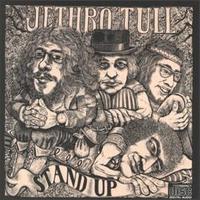
Stand Up - 1969 Chrysalis
E
(Great)
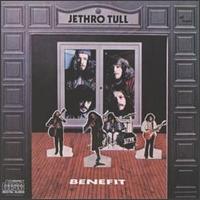
Benefit - 1970 Chrysalis
9
(Good)
2001 Edition: 8(12)
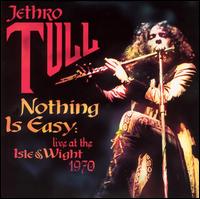
Nothing Is Easy - Live At The Isle Of WIght 1970 - 2004 Eagle
9
(Good)
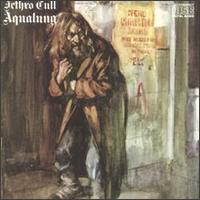
Aqualung - 1971 Chrysalis
D
(Great / Very Good)
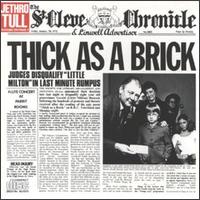
*Thick as a Brick - 1972 Chrysalis*
E
(Great)
Living In The Past - 1972 Chrysalis
C
(Very Good / Great)
A Passion Play - 1973 Chrysalis
7
(Mediocre / Good)

Warchild - 1974 Chrysalis
7
(Mediocre / Good)
Minstrel in the Gallery - 1975 Chrysalis
6
(Mediocre)
Your comment on "Minstrell in the Galery" is the mistake in your gallery of evaluations.
I could understand it if you did not like Jethro Tull, but it clearly appears this is not the case :-)
Well, to make it short, I globally entirely agree with the positive comments already made on this blog about "Minstrell ..." and I add
my "+1".
Tous les goûts sont dans la nature.
Cheers
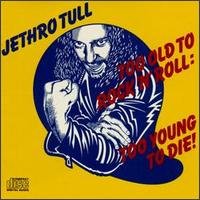
Too Old to Rock and Roll, Too Young to Die - 1976
Chrysalis
9
(Good)
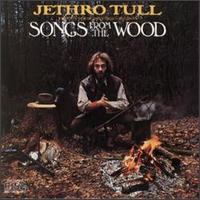
Songs From the Wood - 1977 Chrysalis
8
(Good / Mediocre)
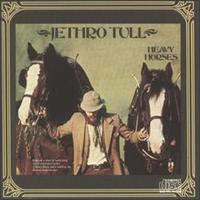
Heavy Horses - 1978 Chrysalis
C
(Very Good / Great)
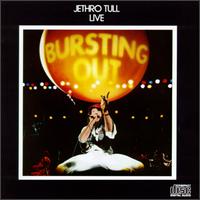
Live: Bursting Out - 1978 Chrysalis
D
(Great / Very Good)
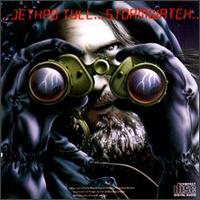
Stormwatch - 1979 Chrysalis
8
(Good / Mediocre)
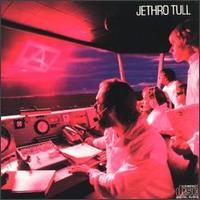
A - 1980 Chrysalis
4
(Bad / Mediocre)
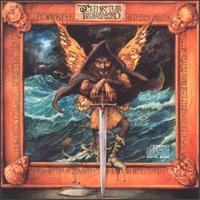
Broadsword and the Beast - 1982 Chrysalis
B
(Very Good)
Under Wraps - 1984 Chrysalis
3
(Bad)
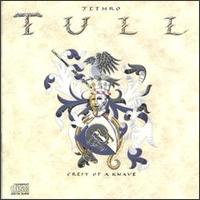
Crest of a Knave - 1987 Chrysalis
5
(Mediocre / Bad)
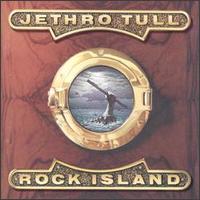
Rock Island - 1989 Chrysalis
3
(Bad)
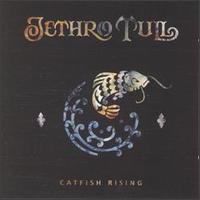
Catfish Rising - 1991 Chrysalis
6
(Mediocre)

A Little Light Music - 1992 Chrysalis
A
(Very Good / Good)
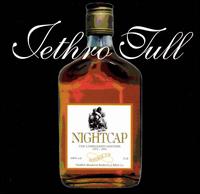
Nightcap - 1993 Chrysalis
B
(Very Good)
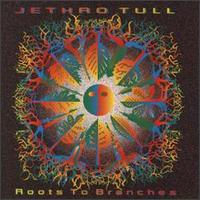
Roots to Branches - 1994 Chrysalis
6
(Mediocre)
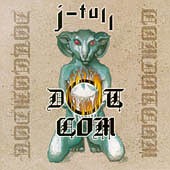
J-Tull Dot Com - 1999 Fuel 2000
8
(Good / Mediocre)
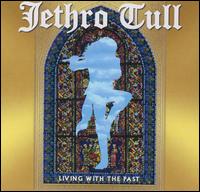
Living With The Past - 2002 Fuel
A
(Very Good / Good)
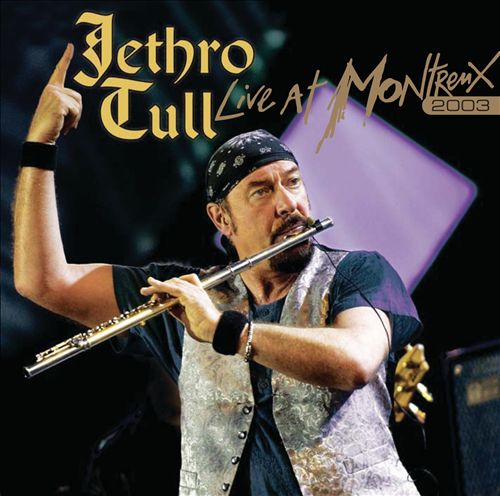
Live At Montreux 2003 - 2007 Eagle
9
(Good)
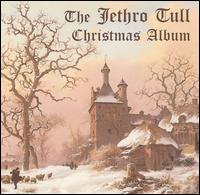
The Jethro Tull Christmas Album - 2003 Fuel
A
(Very Good / Good)
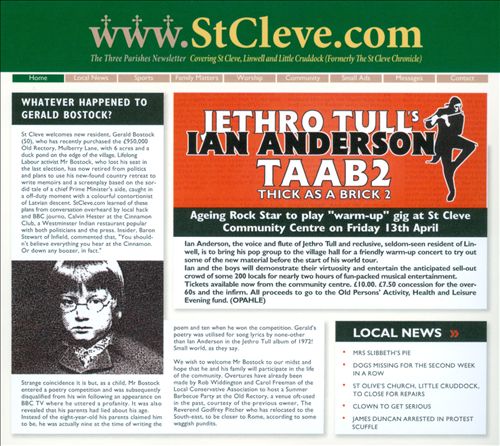
Thick As A Brick 2 (Ian Anderson) - 2012 Chrysalis
8