I cannot think of any band that has been done a greater disservice by the music critical establishment (particularly, ironically, Rolling Stone) than the Rolling Stones. Of course, this is not because the group is hated by the establishment, not by a long shot. Rather, it's because the Stones are presented, more often than not, in one and only one light - simplistic, "down-to-earth" roots rockers and generic rock'n'rollers that had a good formula but couldn't be successful outside of this paradigm. The implication of this, then, is that this is a band for the lowest common denominator, a band that just plays regular rock'n'roll better than anybody else (of course, it IS true that they play regular rock'n'roll better than anybody else, but hopefully you see my point) and doesn't do anything else. As a result, this is a good band for the lowly, uneducated "working man," but for anybody who demands some degree of intelligence and sophistication, it's a band to be dismissed almost outright.
I can say this because, just as with the Beatles and the Who, I started out thinking I hated this band for these exact reasons. And just as with the Beatles and the Who, when I actually started buying albums and not relying on what I'd heard on the radio and what I'd read, I quickly learned that I was more wrong than words could express. At this point in time, the Stones are only one of four bands/artists that I would even consider giving a 5-star rating to, beating out such art-rock giants as Yes and Genesis (and if you know me, you know that says a lot), and leaving them on the same level as the Beatles, the Who and Bob Dylan.
So what would cause such a change of attitude on my part? Well, to answer this question, one must first examine the basic line that is spun about the Stones by the musical press, and to do that, one must examine the various eras of the band. Best as I can figure, the band's history can best be divided into the following six epochs:
With all due respect, I have more than a few issues with that line of thinking. My take is more like this: with (1), the Stones did indeed establish themselves as a great cover band of proto-rock and blues numbers. By December's Children, however, this formula had begun to run dry for the band, and to head off stagnation the band veered in a new direction. But where many would tell you that this was a mistake, I can only say that it was the best thing that the band could have done. During (2), not only did Jagger and Richards gain a firm mastery of hooks and melody-writing, they also learned the importance of using the studio as an ally, both in production and in variation of arrangments. These lessons would prove to be utterly invaluable as the band moved into (3), the "classic years" (I should emphasize, though, that this era of the Stones was hardly just a training ground - it is my belief that the Stones were one of the finest pop bands on earth at this time, as will be evidenced in the album ratings). The center of the band's sound was "roots rock," sure, but this couldn't be any 'normal' roots rock, not after the band's pop training. Drawing upon all sorts of sources for inspiration, as well as messing around in the studio in all sorts of ways, the band created two absolute classics in Beggar's Banquet and Let it Bleed, before replacing Brian Jones (RIP) with Mick Taylor and creating two more classics in Sticky Fingers and Exile. Of course, Exile was more of a 'pure' roots rock album, but by this time the band had an utter mastery of riff and melody-writing, so it was ok.
As for the post-Exile eras, I won't lie and say I love all of their work from then, but I would never dismiss all of the band's experimentation outright. After all, one could easily compile a 90-minute tape of post-Exile tracks and name it one of the best compilations ever, and such an album would contain everything from disco to cheezy pop to punk to psuedo-ambient! Hell, it wouldn't be an incredible stretch for me to give post-Exile Stones an overall rating of four (though it would probably settle at a three), even if some of their albums did kind of blow ... But that's for later.
Now for the members of the band themselves, all of whom have gained some level of infamy through the years. In case you aren't from this planet, I guess I should mention that the lead singer is one Mick Jagger, whose great sense of vocal hooks and commercial saavy have been a huge part of the band's success through the years. Not to mention that he is one of the most incredible showmen alive, shamelessly promoting himself as an androgynous sex machine (thank you, oh thank you to the reader on the Starostin site who used that phrase) even in his old age (and even pulling it off now, to some degree). But if Mick was the sex in Sex, Drugs and Rock'n'roll, then Keith Richards was certainly the drugs. Unfortunately for him, Keith has, in many cases, become best known for his heroin addiction, not to mention the legends that surround it (like the story that he needs to get a complete blood transfusion every couple of years to live). This is a shame, because this obfuscates the notion (which I stand by) that Keith was one of the greatest songwriters of the 20th century. Nobody, and I mean NOBODY in rock'n'roll had a better mastery of writing solid riffs, the basis for any decent song of that type. He's also boasted one of the greatest guitar tones ever (especially in the band's prime), a tone that just screams "ROCK AND ROLL!!!" with every chord, as well as the ability to pound out crisp, exciting rhythms on his guitar with the greatest of ease.
The other three positions have been filled by people who aren't quite as famous as "the glimmer twins" but are famous nonetheless. Most important has been drummer Charlie Watts, a man whose sense of rhythm could put any metronome in the world to shame. He's not particularly fancy in his approach, but that's ok - although he mostly plays in "standard" key signatures, I cannot think of a single instance where his drumming merely "plods" along. A similar statement could be made about bassist Bill Wyman (who left before the Voodoo Lounge sessions) - he's also not a fancy player by any means, but as far as chugging along underneath the guitars and keeping the rhythm of the piece together (and, yes, coming up with small revolutions of his own when needed), one would be hard pressed to find somebody who would be a better fit for the band.
The position that has seen substantial turnover in the group's long history, of course, is that of "lead guitarist." Originally, the slot was filled by one Brian Jones, who was initially a very traditional blues and r'n'r guitarist. Eventually, he got the band into drugs as well as more diverse approaches to music writing, which of course was the key to the band's pop successes. Unfortunately, he drowned in a swimming pool in '69, which opened the door for Mick Taylor. Taylor was by far the most virtuostic player the band ever had, bringing in wonderful guitar solos that could elevate (and in cases like Goat's Head Soup, sometimes rescue) the band's compositions to all new levels of enjoyment.
Alas, during his time with the band, Taylor developed a bad drug habit, and as a result he left in '74. His replacement was ultimately Ron Wood, with whom the band went back to a "guitar interplay" sound rather than a definite split between rhythm and lead. He's not a great player, but he has an interesting tone that works well in conjunction with Keith, so I'm happy. I can tell you this, though - Ron brings a very debauched and decadent feel into his playing, and that in itself seemingly elevates his parts into something more than they might seem on the surface. Maybe that's why he's so entertaining ...
On with the reviews.
Ogdensgoneflake.aol.com (8/25/01)
I disagree completely with one of your last lines, Ron Wood is a great
player, no Mick Taylor mind but he is a wonderful slide player. You have
to
hear Ronnie's solo stuff (especially 'Slide On This and Slide On Live')
to
truly appreciate him though. Plus having been with The Birds, The
Creation,
Jeff Beck Group, The Faces, he stands as one of rocks most important
historical figures.
Joseph Spaulding
Debashish Burman (8/25/01)
Excellent point, that, about the Stones' sound. Certainly, Ruby
Tuesday and Satisfaction are quite sufficient to show that.
But, lets face it, you and I wouldn't feel the way we do about the Stones
without the classic '68 - '72 stuff, so I can understand why people say
what they say. Among the non-peak albums, I'd pick the rawer, more
energetic early R&B stuff over the newer albums. Save, maybe, Tattoo
You .
Pat D. (blppt.hotmail.com) (8/25/01)
I like Charlie Watts. Hes far from a technical genius, but man, the guy
always seemed to have killer snare tone. And Keith? What can i say. The
man has one hell of a library of riffage, as John no doubt mentioned.
However, i hate Mick Jagger. Hes a moron. Everytime i see the guy on
stage i just want to go up there and kick him in the head. Hes a pompous
asshole, plain and simple. Maybe thats one of the reasons the Stones are
still badass nowadays. I dunno. I just cant stand the man.
Robert Grazer (xeernoflax.juno.com) (8/25/01)
I'm not the biggest fan of The Rolling Stones (actually I hate them), for
the usual reasons, mostly. Richards' riffs get worn out easily, Jagger
can't sing, many of their songs are generic, they're full of themselves
and so on. I have tried to appreciate their music (and I do, at least
more than I used to) and I don't mean just their singles. Album after
album I sat through, with reactions that would range from actually
enjoying a song or two to straining to keep my eyes open to looking up
and praying for God to take me now. But I still don't see what everyone
else does in The Rolling Stones. To me they are no more than just
overrated jerks who write melodically dead emotionally dry music. The
most overrated band I know of, actually. The Rolling Stones receive way
too much praise and credit for everything from influence to the quality
of their hooks. I'd give them a one at best. That said, there are a bunch
of Stones songs that I do like (even a couple that I love) and I can
easily say Beggar's Banquet is a really good album, but for the most part
they really leave me cold. Sorry, this is just how I feel.
LeMysterioso.aol.com (1/08/02)
I actually got into the Stones very late in my musical quest. I've always
had it in my mind that this band was an inferior one, being that I am a
graduated Beatle fanatic. And I could never understand why people would
actually put them on the same level as the Beatles. Now five years later,
out of total boredom, I began getting all these Stones songs and lo and
behold, I got hooked. I couldn't help but find all these wonderful
connections between what the Stones did and everything that came after
them. They are an UNBELIEVABLY influential band (of course I'm talking
about their 1964-1972 period) For me, it is the December's Children -
Between the Buttons period that did it for me. I still think they were
never anything near The Beatles, but they certainly deserve a spot in the
highest echalon of rock and roll.
Raghavan RANGANATHAN (S3046624.student.rmit.edu.au) (06/07/03)
hi John
Don (donsr923.comcast.net) (1/08/04)
Cool site. Ive been to alot of Stones sites and
I don't think I have ever seen "High Tides and Green Grass"
mentioned, which was my first Stones album. Why is it ignored?
Alfred Gismondi (AGismondi.dawestchester.org) (4/29/04)
unfortunate but the stones have never releassd their live
performance from 1972 and especially 1973 with mick taylor.
these performances are the stones' at their live peak
Anthony Stewart (sweetblackangel.speedfactory.net) (6/12/04)
Hiya John, I just stumbled upon your site. I spend an inordibate amount of
time on the Net yakking about the Stones, dealing Stones, listening Stones
etc
I love the Stones.
Hats off to an excellent site. Your essays and reviews are very good writing
and thinking. Even if I don't agree with some opinions here and there I like
to see views that I respect. You put a lot of work into this place.
jascha herdt (jrok78.hotmail.com) (8/24/04)
I drifted into your Stones site and found it to be interesting. Let me ask
you this: Why in the hell do you post a message from some of these people
that hate the Stones? In fact, here's the bigger question: What are they
doing in a fans website if they hate the band? They should go get a life,
because it pisses me off that they are even in the conversation. They are
just mindless twits who are probably incapable of creating anything.
Shannon Carey (kissing_daylight.hotmail.com) (11/05/05)
I am a 17 year-old aspiring music journalist and I am incredibly fond of you
website. I love classic rock music more than I am able to put into words
and I discovered the WRC a little over a year ago (I know, so late into its
life on the 'net!) I have been pouring over countless reviews ever since.
To start off with, I would like to commend you on the general quality of
your entire website. I am a big fan of at least eight of the sites in the
WRC and I have to say that I find your site one of the most refreshing and
intelligent from a writing stand point. I have often purchased a new album
and immediately ran over to your site to see what your opinion is on the
opening song or the sequencing or some other obsessive thing. I can't say
that we always agree, but I have complete respect and appreciation for
everything you write.
This email does have a specific purpose (other than just me rambling on and
on about how much I enjoy your site for pages on end). The Rolling Stones
are my joint favorite band of all time, along with the Beatles. I have seen
them live two times and I am nearing the completion of my Stones collection.
Like all the people who read sites in the WRC, I pay closest attention to
the reviews of artists and albums that I am particulary fond of. I took a
different approach with your site than usual, saving my own favorite artists
until last for my reading pleasure. I already knew you were an excellent
writer with a unique talent for casting a light on what exactly makes a song
or album great. I loved all of reviews I read, even if I had not yet heard
the album in question. In fact, your reviews even convinced me to go out
and buy some Moody Blues, Talking Heads and Frank Zappa (thanks for that by
the way!)
Oh, there I go again with the rambling. Let me get right down to the point.
After reading all of the other reviews on your site, I finally buckled down
and spent a good three hours with your Rolling Stones page last night. I
was completely blown away. Of course, the Stones have yet to get the
complete shaft on any of the WRC sites, but it has never seemed like any of
the reviewers love and respect this band as much as I do. As I began your
introduction, I found myself actually shouting "Yes!" in complete agreement
with you. You seem to understand this band better than any other reviewer
in the WRC. Each new album review revealed another layer of the band and
painted mesmerizing and thoughtful descriptions of songs as far-reaching in
quality and style as one can imagine. When I finally read the last sentence
of the "Live Licks" review, my fingers itched to click away on a keyboard
for a little while and send you my serious thanks.
I won't bore you with the details of my own relationship with the Rolling
Stones (but just for the record, my favorite albums are indeed the Big Four,
along with the criminally overlooked "Black and Blue," the precise "Tattoo
You" and the enchanting "Between the Buttons"). I didn't ALWAYS agree with
you, of course. For instance, I actually quite like "Emotional Rescue" and
would give it a higher rating, but that isn't the point (plus, fandom has
played a dirty trick on me and I find it hard to give any Stones album
anything lower than a 6). I just wanted to commend you on being the first
reviewer I have yet come across who has really captured the mesmerizing
quality, depth, diversity, drive, emotion, vision and tremendous intensity
of this band. I simply cannot understand how someone could dislike the
Rolling Stones and I curse their stereotypical "rock and roll, dude" label
every day. Thanks again, John, for being honest and fair of your
assessments of this band and still hitting the nail right on the head. It's
writers like you that make me want to be a music journalist.
Sincerely,
P.S. I haven't read your Beatles page yet, so be prepared for another
endless gushing email in the near future. :-)
Ricky Flahive (therickyman.hotmail.com) (01/13/09)
The Stones are the most overrated band in history. There's nothing at
all great about them. How they can even begin to compare to The
Beatles is truely beyond me. Saying that they're a band for the
lowest common denominator is an insult to all who fall in that. This
band SUCKS, and you're simply a bandwagon jumper for giving them a
*****.
Mick Jagger is the worst singer in history of rock. It cannot be
expressed into words how disgustingly strained he sounds whenever he
tries to sing a note. In Sympathy for the Devil, by far the only
truely great song the band ever did, Mick sounds like he's trying to
take a huge crap while being castrated at the same time. It's awful,
horrible, truely repulsing. On top of this we have by FAR the most
overrated guitarist in rock, Keith Richards. What is so great about
this man? WHAT?!? Not only is he a terrible lead guitarist, (as
evidenced by his solo in Sympathy, perhaps the worst guitar solo I've
ever heard by a major band) but he's constantly being held as the
greatest master of the riff. From what? That stupid riff in
Satisfaction? (a song completely ruined by Jagger's vocals) That's
stupid fanboy praise.
Some comment on your Who page rambles on that The Who barely beats
out The Stones as the most overrated band in history, and that is one
of the dumbest things I've ever heard in my life. The Stones aren't
tenth of the band The Who are. Mick Jagger sounds like William Hung
compared to Roger Daltry. Pete Townshend is a million times better of
a guitarist than Keith. His mastery of the power chord and loud dirty
sound and complimenting it with crystal clear solos completely blows
away Keith and his supposed 'genius riffage'. And can you honestly
sit there and tell me that The Stones no-name rythem section that do
indeed "plod along" is better than John Entwhistle and Keith Moon? No
way in hell.
The Who (or Pete Townshend, rather.) created some of the greatest
albums of all time. Can you really say that this 'roots-rock' that
The Stones were supposed masters at is better at an album length than
the vast aray of emotions that Pete manages to produce with
Quadrophenia? No way. Even the great arena rock of Who's Next is tons
more well written and performed than anything The Stones ever did.
I know you're a firm believer that it's not about the talent within
the band, but rather what they do with the talent. The Stones had no
talent to begin with, and they just recorded crap anyway, so it
wouldn't have mattered either way.
gymowner (gymowner.comcast.net) (07/13/12)
My favorite rock and roll band in the world, I saw them twice .sat with Bianca. They are the best showmen and have the heaviest
motivational show in the world. It’s a retrospective to a time when you either were there or not. It don’t make sense to a yuppie,
more to a gearhead.
spacestation (spacemail01.gmail.com) (01/13/13)
I see that this post is still going way back from 2001. Wow! Anyhow, would agree with most of your points. However Brian Jones did
more for the Stones than they did without him. I don't think they would have went much anywhere if it wasn't for Brian's style,
grace, and attitude. In the end the Stones keep the spirit of RnR. RnR is not this big fancy thing you want to make it out to seem.
It is a backyard, garage, speak easy, warehouse, or just house on the front porch music. It's a peasants, field worker, farmers
music. This music was not created in the city. The problem with everyone and music is that they don't understand the history or
roots of it. They are always taking credit or giving it where it's not due. Ya I agree they are totally over rated as a "authentic"
RnR group. But for some English white boy's from uptown, in commercial sense have an authentic and true sense of the attitude as
the true RnR greats. Howling Wolf, Chuck Berry, John L Hooker, and many others.
That's, "We are gonna do our thing and have a good time, and we don't care what you say!"
This is not your's, or your dad's, mom's, grandma's, grandpa's, baby joe or sue's RnR. It's for the individual.
And in the end that's all that matters. Who cares what you really think or anyone else.
"I am gonna do my thing and have a good time, and I don't care what you say!" (God willing).
The Elliotts (htelliott.ruraltel.net) (12/13/14)
I grew up with the Rolling Stones, I loved the Rolling stones, In high school i wore flaminco style boots, shag hair cut and a nazi
jacket in honor of Keith! BUT you opinions seemed dead on. listening to their newer work is just sad! Like watching road kill's dying
twitch before it gives up the ghost!
Filip Devreese (Filip.Devreese.florealgroup) (12/13/16)
A few facts: the Stones are rock-pioneers. They’ve remained one of the most successful rock bands to this day. They are instantly recognizable; they have a strong musical identity. The reason for this is surely not because they are technical, well-trained and educated. No, they’ve created their own style through bad habits. Charlie is technically perhaps the worst professional drummer on the planet, but his “self-made” approach works for the band. Both guitarists are sloppier than most, but again this is what makes the Stones the Stones ! And Mick’s voice is what it is: raw, dirty, limited in range, but convincing. This is one way of playing rock ‘n’ roll and it works. You can also get fine results if you do it the AC/DC way: simple, but very tight and with a focus on powerful vocals and guitar onslaught. You choose !
Best song: I'm A King Bee
The musical world was substantially different in 1964 from today. Rock'n'roll was gaining a following among rebellious teenagers, of course, but from a "serious" perspective, it had little going for it. It was a laughable 'phase' that most thought would pass, and there were reasons for that. For one thing, musical competency was highly lacking in most bands of the day - virtually anybody who was skilled at their instrument was in Motown, not wasting their time with r'n'r. If a band was aggressive in their approach, then they were almost certainly sloppy; if they were careful, then they were boring as hell. And, of course, there was the problem of song selection - simply put, most bands didn't write most of their own music. Instead, they would write maybe one or two songs themselves and then fill out the album with numbers from a relatively small collection of Chuck Berry, Buddy Holly and other songs.
Now, by this time in 1964, the Beatles had at least partially broken down the last barrier (two albums composed of a majority of originals, one album containing nothing but originals), but even they had failed to conquer the musical competency hurdle. Not that they were bad instrumentally, per se, but even when they went "full throttle" in their playing the intensity and excitement wasn't always that high. So who was going to break the "a band is either aggressive and sloppy or restrained and boring" rule? Yup, the Rolling Stones.
That said, when I speak of the instrumental skills of the Stones, I don't mean that they were in any position to compete with Yes of ten years later, or with Metallica or anybody like that. But skills of that calibre weren't at all necessary, namely because the numbers they were covering weren't in any position to accomodate "shredding" or anything like that. No, when I speak of instrumental skills, I merely mean that not only was each person sufficiently skilled to not sound amateur, they were able to be fast, aggressive and tight all at the same time. And THAT, in and of itself, was enough to make this album a huge smash in Britain upon its release.
Of course, many people scoff at this album today, dismissing it as a mere artifact of a distant and irrelevant past. "It's just 50's mediocrity and boring blues covers! Why in the hell should anybody care about this primitive stuff when music has advanced so far since then?" If you feel a bias against all proto-rock and roots-rock, then of course you'll hate this album, but if you can learn to at least tolerate (heck, I'm not exactly a 50's aficiondo, and I like this album) music from that era, you are sure to get your kicks out of this album. Why? BECAUSE NOBODY DID THESE SONGS BETTER.
Well, ok, I would make one general exception to that statement - anything Motownish done by the band. There are three Motown-like tracks on the album, and two of them, "You Can Make it If You Try" and "Can I Get a Witness?" blow (a third, "Honest I Do," was actually a Blues song originally; odd that the band would choose to do it in a manner like this). And just as annoying, they throw in an instrumental counterpart to the latter called "Now I've Got a Witness" - it's not a total throwaway, as I appreciate the chugging bassline throughout, but I'd hardly call it a highlight.
However, every other cover on the album smokes. Wyman and Watts are tight as a thistle throughout, the guitar interplay is terrific, and Jagger complements his singing with some really enjoyable harmonica playing in places. The highlight of the album (as shown above) is "I'm a King Bee," mainly because of Jones' great slide work that imitates a buzzing bee, while Richards contributes some "stinging" guitar lines over it. But none of the rest of the covers are significantly worse, especially the opening "Not Fade Away" and the closing "Walking the Dog" (I LOVE those backing vocals and whistles).
There's also a couple of originals to be found here (well, one of them was co-written with Phil Spector), and while they hardly rank with the very very best numbers of the band, they're cumulatively good. "Little by Little" is a bit throwawayish, but "Tell Me" is a great little pop ditty with both a catchy chorus and vocal melody, not to mention the way they echo up the production to make the acoustic guitar sound almost like a mandolin. Who ever said the band didn't experiment until 1966??
So yeah, this album is as essential today as it ever was. If you're cynical, it won't sound like much, but you try and play these numbers better and tighter then the Stones did!
Robert Grazer (xeernoflax.juno.com) (8/29/01)
It's one of the most important debuts for the whole "we are bad boys"
thing they started, but it's definitely not one of the best debuts I've
heard. Quite the opposite, actually. I hate this album, probably the
worst of all of the Stones release I've sat through. "You Can Make It If
You Try," "Carol," and "I Just Want to Make Love To You" all strike me as
some of the worst songs I've heard. Even so I'll say that Hitmakers has
its highlights. "Tell Me" is okay, and I can't see your problem with "Now
I've Got A Witness," which is such a catchy instrumental and easily my
favorite song on the album. It's just such a catchy instrumental, and I
don't have to hear Jagger's annoying voice! It still can't save the album
(which I'd probably give a high 2) at all, but it provides a nice break
from the boring blues covers.
"Benjamin Burch" (bbgun_301.yahoo.com) (03/13/11)
I agree here, even if it's one of my least favorite albums by them, it's still
miles better than whatever albums were out in 1964. Considering that the stones
were a singles band at this point, I guess it's easy to forgive. I like all the
songs (except maybe "Honest I Do"), but my main complaint for this album is that
the stones were obviously aiming for hit singles around this time. That probably
explains why "Not Fade Away," is by far the best song on this album. Not a bad
album at all, but it's probably more of a marking time album (like a lot of
albums from this period were).
majora27.gmail.com (02/13/13)
I have the British version of this album. It's almost the same except Mona from "Now" replaces Not Fade Away. This is a very fun
album that never bores me. The only problem I have is that a couple of songs just fall on their face. Most notably, You Can Make It
If You Try. Using your scale, I'd probably give this album a "B"
Best song: It's All Over Now
The biggest problem with the Stones' second album is the presence of a whopping five original compositions. Sure, within a couple of years, Richards and Jagger would be songwrighting mastuhs, but right now they didn't quite have the hang of it. Only the terrific "Grown Up Wrong" even registers as a minor classic, with a cute little vocal riff that pops up the whole two minutes while Richards throws in some little Berry licks here and there. The rest of them, alas, are sloppy attempts at writing something in a blues-rock style, but without any kind of memorable hooks ("Empty Heart" is a particularly low point) or, in the case of "2120 South Michigan Avenue," another dippy instrumental that doesn't do much at all. As a result, the amount of filler on the album seems astronomically higher than on the debut, and this hurts the rating considerably.
A couple of the covers also fail to interest me much. Not coincidentally, both are covers of pop songs, and since that wasn't yet the band's forte, it should be no surprise that they stink a bit. Well, ok, I can understand how somebody might get some guilty pleasure out of "Under the Boardwalk," but the group's cover of Wilson Pickett's "If You Need Me" annoys me to the point of insanity, much more so than even "You Can Make It If You Try."
The question should now, of course, be why I'm then giving this album as high a grade as I did. Well, that's because the other five songs, all covers, absolutely rule, easily surpassing the quality of most of the numbers on Hitmakers. Chuck Berry's "Around and Around" (with some of Keith's best playing yet) and someone else's "Confessin' the Blues" are a terrific one-two opening combo, with Jagger chipping in some great vocals over the already classic numbers. After the lousy "Empty Heart" comes an even more famous number, though, the gospelish "Time is on my Side." Of all the non-bluesy and non-rock songs the band covered, this is arguably the best, as the group's backing harmonies are of high quality (for once), not to mention that it's hard to wreck such a classic melody in the first place.
The generally acknowledged best song here, though, is the Bobby Womack cover "It's All Over Now." In addition to some of the 'raunchiest' lyrics yet found in a Stones song, as well as Keith's very best Berry imitation yet, it also features a hella interesting echo effect in the fadeout, creating a sort of bombast not really found in any recording to that point. And again I ask - "Who ever said the band didn't experiment until 1966??"
Oh, and the album ends with a stellar runthrough of "Suzie-Q," a classic r'n'r number in its own right. What else do you want me to say about it? Just because something is great doesn't mean I can write a long essay about it! Well, ok, CCR did a longer, more famous cover of the number - there's your piece of information - but one shouldn't minimize this runthrough at all.
So all in all, the album aptly demonstrates that, at this point, the band was still quite limited in what they could do well. Blues and proto-rock? The band couldn't be topped. Most anything else? Forget about it. Fortunately, though, the band probably knew it themselves, and got back to the "basics" on their next release ...
Robert Grazer (xeernoflax.juno.com) (9/02/01)
Better. Well, there's "If You Need Me" which is absolutely atrocious, but
there are quite a few songs on here that I really like, most notably the
instrumental "2120 south Michigan Avenue" which for some reason I find
catchy enough to become my favorite song on the album. Other than that
"Around and Around" is a strong opener, and I do enjoy "Suzie Q" as well.
I can see how you could call "It's All Over Now" the best song on the
album (though I wouldn't) as it's an interesting song. For early Stones
anyway. The rest of the album (other than maybe "Congratulations," which
I like more than I should) is nothing worth mentioning at all as it seems
to me like just the same old boring covers that may be catchy but offer
nothing else.
Ben (benburch500.hotmail.com) (09/13/12)
This isn't as good as the debut, but it's still pretty good. There's better early stones out there, and aside from this worthless
version of "Under the Boardwalk" (which I used to like) and the boring "Good Times Bad Times" I can't really find anything bad
about this album. It's just that future releases by Mick and the boys have completely overshadowed this one over the years. Even
the "Love You Live" version of "Around and Around" is better than the studio version here. For some reason I like this version of
"Time is on My Side" better than the one on all the greatest hits albums... and of course I like "It's All Over Now", especially
the guitar solos at the end.
Best song: Down Home Girl. Maybe Little Red Rooster
Better, and how! On their third release, while not completely eschewing softer, poppier influences, the group seemingly remembered that it was stuff like "Carol" and "Around and Around" that had made them famous, not stuff like "You Can Make It If You Try" and "If You Need Me." Hence, the band re-emphasized the basics - straightup rock'n'roll and blues. Of course, the cynical among us could consider this a regression of sorts, but I don't really mind - if anything, the group just sounds like a more mature, more confident version of the band that had taken Britain by storm a year earlier. There's just as much grit and energy as ever, just with a little more control over them.
The result, then, is that the first three tracks may be the best stretch of covers the band ever undertook. The opening "Everybody Needs Somebody to Love," running over five minutes (despite the fact that my liner notes clock it at under three) finds Mick hilariously preachin' it over the simple but genial bassline to great effect (and don't forget the great harmonies in the chorus!). "Downhome Girl," my favorite of the album, grooves along mightily thanks to the guitar interplay, and the coarse production values help give the song a slightly eerie vibe not normally expected from the early Stones (and, of course, there's plenty of sweet sweet Jagger harmonica). Likewise, "You Can't Catch Me," the classic Chuck Berry cover from which John Lennon stole lyrics for "Come Together," thunders along with Keith repeatedly outdoing the master.
Three of the other covers also grab me in a substantial way. "Mona (I Need You Baby)" sounds weird here, especially because of the odd guitar tone that Richards employs (which is made all the stranger by the production), not to mention that crossing Bo Diddley rhythms with Berry-esque guitars is a strange venture anyways. And what's that I hear from time to time in that song? Is that ... a divebomb? In 1965??!! Where else could you hear something like that this early? But I digress - "Down the Road Apiece" is even better, smoking in a manner that we haven't heard since the debut (I just love the way it seems like Mick and Keith are trying to outdo each other as they alternate their position as focus of the song).
And of course, there's the fabulous cover of Willie Dixon's "Little Red Rooster." I'm a big fan of the way the beat of the piece so easily creates the image of a rooster strutting his stuff around the farm, not to mention the "barking" guitar part after we hear "dogs begin to bark," but of course those are not the most important features of the song. No, those would be (a) Jones' fabulous slide guitar work and (b) Jagger's cocky-as-hell vocals that pop up intermittently. And this was released as a single?? Man, these guys had brass ones ...
Of course, not every cover on the album is all that hot (both "Pain in My Heart" and "Oh Baby (We Got a Good Thing Goin'") bore me significantly). Fortunately, this is at least partially compensated by the presence of original compositions that, while not not quite on the genius level that would distinguish the band in years to come, are at least better than the sludge from 12*5. "Heart of Stone" is certainly a blatant attempt to write something Motownish, but at least it has a nice guitar solo in the middle. "What a Shame," though, is a bit better to me, especially because I dig the bassline and the "shooting" slide riff that pops up from time to time. "Off the Hook" is mostly distinguished by (a) the fact that the song is at least a bit amusing in nature and (b) there's actually a decent hook in the song! And finally, while the band could have chosen a better number to close with than "Surprise, Surprise," they sure as heck could have chosen worse - I dig the hook here even more than the one in "Off the Hook."
Regardless of what slight gripes I may have about the album, then, I'm VERY pleased with the ending result. Although Hitmakers may have been more important historically, if you plan to get into the earliest period of the Stones, this is the place to start. Never again would the cover-tune version of the Stones sound this tight and convincing from start to finish.
Robert Grazer (xeernoflax.juno.com) (9/06/01)
Hey, there isn't a complete piece of crap on here! "Pain in My Heart"
comes close, but is still no where near as bad as "You Can Make It If You
Try" or "If You Need Me" in my opinion. Though I don't see what you do in
"Little Red Rooster." That track really annoys me. But even then it's got
a few redeeming qualities. But there's "Surprise, Surprise," which a fun
catchy little tune. And then there's "Down Home Girl" and "What A Shame,"
another pair of highlights. And "Heart of Stone" friggin' rules. Easily
hits my top 5 Stones tracks. It should hit yours too. It's everything
good about the early Stones stuffed into one track, and the best thing
they'd do until December's Children. The other songs are your typical
early stuff. Boring. Not a good album at all, but not without some good
songs.
Charles Oliver (charles.cfs.com.au) (10/11/01)
Although I am familiar with the 'Americanized' Stones recordings (ie. the
first 5 albums which were actually made up from 3 UK albums plus some hit
singles plus a couple of EPs), I much prefer to listen to their
early recordings in the format in which they were originally released.
The Rolling Stones Now! comprises of roughly 50% of The Rolling Stones
No. 2 album. Mona, as you pointed out, sounds weird here probably because
it was lifted from their 1st album. I guess this album is most notable
(to my ears, anyway) for the 3 stereo tracks which appear on it - 'Heart
of stone', 'What a shame' and the smokin' 'Down the road apiece'. The
latter being my favourite song on the album. The biggest crime with Now!
was the ommission of 'I can't be satisfied', which can be found on More
Hot Rocks - check it out. As usual, the UK versions have more of an
'album feel' about them but, you don't get to hear their great hit
singles unless you buy a hit's compilation (ie. Hot Rocks) as well. Try
making a CD of Rolling Stones No. 2 and see what I mean - you'll need
Now!, 12 X 5 and More Hot Rocks to do this.
benburch500.hotmail.com (06/13/13)
Another good one. You basically made every point I was going to make about this album. It's a shame that "Oh Baby" and "Pain in My
Heart" 'bore you significantly'. Those (along with "Surprise Surprise") are my favorites here. In fact the only one here I don't
like is "Down Home Girl", which didn't need to drag on for four and a half minutes. Thee years ago I saw the Allman Brothers in
concert, and they did a much better version of "Heart of Stone" than the one here.
Best song: Satisfaction or The Last Time
Oh oh oh. I have a feeling I'm gonna spark some controversy with this one. See, the consensus held by most is that with this album, the Stones finally made the "big jump" that established them as a full-fledged songwriting unit, not just as a really good cover band. And on the surface, that makes sense - not only does the album feature a full seven original compositions, it contains three superb singles (one of which is their most famous song ever). So everything's great, right?
Nope, it's not. See, while I'd be the last to deny the greatness of the "big three" on this album, I am not AT ALL bowled over by the other four group numbers here. Where are the hooks? Where are the memorable riffs? "The Under Assistant West Coast Promotion Man" and "The Spider and the Fly" are regarded by many as minor classics, but why? The latter's kinda amusing in places, but I still can't tell you anything else about it after five listens (which is a problem when you're dealing with shorter songs like those the Stones would write). Likewise, "TUAWCPM" has done NOTHING to stick in my head, no matter how hard I've tried to make it do so. And "One More Try?" A complete, utter mess (albeit with some nice harmonica). And finally, "I'm All Right," although it has a decent riff, is obfuscated horridly by screaming girls and murky-as-hell production.
An even worse blow is that the covers have started to slip a bit. Not that they're bad, of course - the opening "Mercy Mercy" is tight as anything they'd done to that point (love that introduction, too), and Jagger puts in another solid vocal performance. Likewise, although "Hitch Hike" is a bit wussier than I'd like (man, I guess they used up all the toughness on Now!), it has a nice, quiet solo in the middle, so I can't complain too badly. But the rest are, for lack of a better term, very routine. And that's not a good thing for somebody who isn't in love with proto-rock as a whole, but who liked the early Stones covers for providing a spark of excitement and energy (combined with solid playing) not otherwise found among others of the day.
Ah, but who cares about those? There are three reasons to buy this album, reasons that would give the album an 8 even if the rest of the album was painfully mediocre (oh wait, it is painfully mediocre). First in line: the incredible, simply INCREDIBLE pop-rocker "The Last Time." Featuring one of the greatest pop riffs ever constructed by a mortal man, not to mention some pretty harmonies when necessary, this is almost undeniably my favorite song of the early Stones era, a number with impeccable construction in every possible way.
Of course, in a perfect world, that would be the song that everybody in the universe knows, but 'tis not so. Not that the alternative is a bad one, of course. Say what you will, but as far as riff-rock goes, it's hard to find any song that beats this. Combining another one of the most amazing riffs EVER with some of the greatest young-man angst lyrics ever, a cool vocal delivery and slightly rough production values, it certainly deserves to be one of the main benchmarks against which all rock songs should be judged. Yup, good song. "Magnifcation," I think it's called (no, wait, that's the name of a late-period Yes album. Oops).
The third is slightly less well-known, but certainly no worse than the other two. "Play with Fire" is most notable in that it's the band's first song to have a really dark aura around it, what with the low-key vocal delivery combined with sneering lyrics and the "world's most cheerless harpsichord" (thanks Jeff!). But it also has one heck of a great melody, so it's not like it's just getting by on vibe alone.
And there's your album. For some, this is a masterpiece. For me, this is a woefully inconsistent and ultimately mediocre (not bad, just ok) album buoyed by three incredible songs. Do you need it? I dunno - if you're a completist you do, but otherwise, well, that's what MP3's are for.
Robert Grazer (xeernoflax.juno.com) (9/10/01)
Hey, by Stones standards "The Spider And The Fly" and "The Under
Assistant Premonition Man" are minor classics. Catchy little
Stones tunes that can get stuck in your head for hours -- what more do
you want from the early years of this band?
(author's note): Just wanted to point out that my problem with them is that, while it is likely a problem on my end, I CANNOT get these songs to stick in my head! At all! I don't understand why!!
But my vote for favorite song
on the album goes the "The Last Time," and while I disagree with you
about it being the best early Stones song, or even in the top five, it's
certainly the best thing they did here, with a cool riff and such. Then
there's that other riff... You know, that song where The Rolling Stones
proved themselves to be really bad boys by hiding the word "pregnant" in
it, and it became one of the three or so most acclaimed singles ever? I
hate "Satisfaction." A lot. If you ask me, the first real good version of
that song that I'm aware of was recorded in 1986 by The Residents. Now
THAT'S a great tune. But the best thing that ever grew out of it, was, of
course, "(I Can't Get No) Cooperation" from the Sesame Street folks.
Classic. Unlike the bore on this album, which sums up pretty much
everything mediocre about the Stones' early years. The riffs that just
repeat until they completely wear themselves out and Jagger with his ugly
voice, and so on. Overall I find the album to be for the most part dull
(like the three before it), but I won't complain too much. Especially
with December's Children around the corner.
benburch500.hotmail.com (06/13/13)
Probably the best of the early stones albums (the British version is even better). Forget "The Last Time" and "Satisfaction", as
much as I loved them at one point in time, due to hearing them way too many times, I can't stand to hear them any more. The best
song here is by far "Mercy Mercy" mainly for the riff (which Jimi Hendrix played on the original). The vocals are great too (that's
one of the only times I can say that about a stones song). Other highlights include "I'm Alright" (again because of the riff),
"Under Assistant", "Spider and the Fly", "One More Try" and "Play with Fire" (Phil Spector plays bass on this one). The only song
here I skip over (aside from the first two I named) is "Hitch Hike", which sounds like its from the first album or something. Murky
production and annoying handclaps don't help it much either.
Best song: Get Off Of My Cloud
Blah, and I do mean blah. I mean, this album isn't bad, not by any means (even if we consider the fact that it has no right to exist). But ... but ... it's been done! Except for the random live versions of "Route 66" and a Hank Snow number called "I'm Moving On" (both of which rule, even with the screaming girls abounding), none of the cover songs on here excite me or get my blood pumping. And the originals, while showing some artistic progress, aren't anywhere near as brilliant as the three gems of the last album (well, ok, with a couple of exceptions that come close). If it weren't for the fact that not a single song on here is truly nasty, I'd probably hate the album - as is, I just find it alright.
Details, ask ye? The album kicks off with four straight cover tunes, none of which rank among the band's best work. If I had to sum it up, it's like the Stones are trying too hard to be the Stones, you know what I mean? Well, ok, "She Said Yeah" is certainly different (very short, a sort of jazz/proto-metal hybrid) from anything the band had ever tried, but the other three? "Talkin' About You" (a very, very average Chuck Berry runthrough), "You Better Move On" (an ok motownish piece) and "Look What You've Done" (a very, very average blues cover) - get the idea? Haven't we already had better? And is there any chance I'll stop asking questions and start writing sentences?
Ok, I'm better now. The originals are certainly the better half of the album, but still spotty. The most famous, and probably best, of the lot is the pot anthem "Get Off of My Cloud," which at least boasts a memorable chorus, an interesting verse melody and weird lyrics (good drumming too). Equally interesting, though slightly sappy, is the string-laced ballad "As Tears Go By." With a gentle, swaying melody, it's VERY different from anything the band had tried before; a ballad that isn't heavily motownish, and provides a slight forshadowing of the poppy material that the band would show such strength at in '66 and '67.
The other four originals, alas, are only so so. Not bad, again, but nothing special. Just non descript. "The Singer not the Song" is a bit clumsy, but memorable nonetheless, which I wish I could say for "Blue Turns to Grey." "I'm Free" is a nice pop song, with a nice singalongly chorus, but "Gotta Get Away" is just kinda blah. The melody is ok, but very predictable, and in an annoying way at that.
Of course, again, it's hard to really blame the Stones too much here. This album is practially a compilation, made up of some singles and some older outtakes, and it shows. Clocking in at less than half an hour, it's hardly worth the $15 that stores where I live charge for it (if they have it at all), and it really shows that by this time, the Stones' potential in their initial form had been practically exhausted. Even though the album's at least decent. Were they still good? Sure. Were they yet anywhere near the level of the Beatles? Not really (though, in my opinion, the Beatles also stagnated a bit on their fifth album ... but that's another page).
But that would change. Thank goodness.
Robert Grazer (xeernoflax.juno.com) (9/14/01)
What you call stagnation and exhausted potential I call (at last) a
little bit of artistic maturity. They finally figured out how to make
some decent music! Three of the songs here rank among their best ever. I
mean, "As Tears Go By" not only gets my vote for the best song on the
album, it's also my all-time favorite Rolling Stones song. Period. It
isn't often Jagger can squeeze out a good vocal performance, and at the
same time have a beautiful melody to back it up. Slightly sappy? No way!
If you want to say that then we can begin to make a list of Beatles songs
that can be classified as quite sappy as well (wow, I'm sounding like a
real Stones fan here). And why does everyone hate "Blue Turns To Grey" so
much? I love that song. The vocal melody may seem somewhat weak, but the
overall mood is quite effective. Finally, we all know that "Get Off Of My
Cloud" absolutely rules as well, with one of the greatest choruses I've
ever heard in a while. You see? Three great songs on one Stones album!
That's progress. Unfortunately the album isn't without its many flaws,
"You Better Move On," being the worst thing they've done since "If You
Need Me," and there's a few other missteps along the way, but who cares
about that? If I were to focus on everything I don't like about The
Rolling Stones we could be here all day. In my opinion it's the best of
the early Stones albums, and that says enough.
LeMysterioso.aol.com (1/08/02)
I know this isn't the most consistent Stones album, but I also don't see
it as such a clumsy effort. Actually, I see this album as a sort of
"coming-out" party for the Stones. heh heh. I think this is the first
album the Stones did to challenge the Beatles throne. Some of the songs
just kick maximum ass. "She Said Yeah" is probably the most deliberately
loud proto-punk song to be released at the time, almost sounding like a
Stooges song (only the The Kinks and The Who could match it); the same
goes for "Get off My Cloud" which just rocks!. I think the Stones proved
that the Beatles could never rock as hard as they could. And if that is
just one stone (pardon the pun) that could be thrown at The Beatles, then
it means that this album is a success in that aspect. The rest of the
songs are all great, but I think it could've done without the live
covers. But it's still a great album.
benburch500.hotmail.com (06/13/13)
"Get off of My Cloud" is a pot song? Considering how much I've heard that song (which is my favorite here) I never made that
connection.
This album is a drop from the last one, and you made a good point about how the songs aren't as memorable. Funny how they go from
"She Said Yeah" (the second best song here, what a guitar solo...) to "As Tears Go By" on the same album (or London Records
executive cash in, whatever). The live tracks are great though, the better of the duo being "I'm Moving on". Lets see... I never
liked "I'm Free" that much (sounds like they're trying to rip off the Beatles, "Eight Days a Week" to be specific). Speaking of the
Beatles, I have a bootleg of them doing "I'm Talking About You" that's better than this version (which I never had a problem with).
Best song: Paint It Black
The Rolling Stones' Rubber Soul, in more ways than one. For the first time, not a single cover song can be found - more than that, though, is that there isn't a single duffer amongst the original numbers, not a one. Not to mention that the stylistics have changed - after all, Chuck Berry covers were so two years ago. Whereas the previous albums (for the most part) had found the band sticking to a fairly conservative blues and proto-rock shtick, with more or less the same instrumentation in every song, Aftermath saw the Stones bringing in marimbas, sitars and dulcimers to their aid. In short, the band had suddenly leapt forward artistically.
The most amazing thing about all these additions, though, is that the band doesn't really betray its roots. Sure, there's all sorts of exotic instrumentation about, but most of these songs, at their heart, are still rock songs. Richards' guitar still plays an important role, it's just that the tone is slightly subdued and the method of attack restrained, serving more as an anchor and foundation for the songs rather than as the driving force. Conversely, though, Wyman becomes an absolute beast on this album, creating a pounding, lumbering tone that provides a fascinating counterpart to the "fancier" instruments. And that dichotomy alone makes Aftermath a truly unique part of my collection - no other album provides such a strange balance between artistry and sheer basic Rawk.
This sense of artistic schizophrenia is best shown in the most well-known and most incredible number of the album, the exquisite "Paint it Black." Sure, its most immediately noticable feature is the terrific sitar part (yay Brian!), but heck, Rubber Soul (great an album as it is) had lots of sitars, and it sure as heck didn't have ANYTHING that rocked this hard. The melody is ominous as hell, the "hmm hmm hmm"'s are eerie beyond words, and while you may need headphones to tell, Bill and Charlie are walloping up a storm underneath it all. And the lyrics, well, the lyrics have to be among the darkest, most twisted texts ever dreamed up in rock music, at least pre-Doors.
"PIB" is hardly the only highlight of the album, though. "Under My Thumb" is another absolute Stones classic, driven forward by a great bassline (with marimbas sprinkled darkly on top) while Jagger sings some of the most incredibly misogynistic lyrics to date. And the vocal melody is great, not to mention that Mick's vocal asides from time to time and and at the end give the song another sick twist (like it needed any more).
Misogyny makes another appearance in the hilarious "Stupid Girl," with an exciting organ line underpinning some of the most amusingly juvenile lyrics I've heard in a while. But heck, could ANYBODY sing about how much women suck better than Mick?? Nope, can't think of any. Fortunately, though, Mick had some other talents up his sleeve other than just complaining about girls, as is demonstrated in the lovely "Lady Jane." If you've never heard it, you'd hardly believe it was the Stones - it's as close as one can come in rock music to an authentic 16th century ballad (complete with dulcimers, and lacking drums), with a startlingly beautiful melody whose potential could only have been hinted at with "As Tears Go By." Of course, you might complain that Mick sounds fake and cheezy sounding here, but no matter, I doubt anybody could pull off such an unusual singing task 100% successfully.
After the deluge of the first four tracks, the album settles down a bit, and as such none of the songs (with one weird exception) quite make it to the classic level of "PIB" and "UMT." But they're all interesting nonetheless. "Doncha Bother Me" (with a jolly upwards guitar riff) and "High and Dry" are both vaguely country-western numbers - in fact, the latter sounds like the band will break into a square dance any moment. Think is slightly weaker, but that's mostly because it seems to me that the band was trying too hard to make the song like it would belong on Rubber Soul - except for the Keith's guitar lurking to the side, it just seems like a slightly-darker-than-normal Beatles track.
As for the other three "normal" tracks, "Flight 505" is cool, if only for the funny lyrics about a plane crash (although I must say that given what happened earlier this week, they're not quite so funny) and the amusing vaudeville-style piano part at the beginning (not to mention more cool bass work). "It's Not Easy" is even better, though, as Bill distorts his bass in a way never before heard on record while Mick whines and occasionally declares, "It's haaaaard" (after which Keith chimes in with "It's not easy." Cool, huh?). And as for "I Am Waiting," well, while I do appreciate the middle-8 chunk, the bulk of the song has never particularly excited me. It's interesting to hear the band play something with this sort of weird vibe, and the melody is ok, but ... I dunno.
Ah, but let's forget about these last few tracks for a second, and turn to a really tasty bit. "Going Home" seems like an absolute waste of time to many, a blues jam that seemingly rambles on and on to no good effect. That's bull. The reason it lasts so long is that Jagger makes a point to throw in TONS of lyrical and intonational twists and turns, while Keith follows suit and Brian blows the hell out of his harmonica. I mean, do you really want to tell me that the way the band transists from the beginning chunk to the "She make me feel alRIGHT alRIGHT alRIGHT alRIGHT" is conventional? If you do think so, well, you're gonna hate all blues music (not that I love all blues music, but you get the point). For me, though, the effect is such that I can't help but enjoy the piece almost from start to finish, simply because it's probably the most comical blues jam I've ever heard. I NEVER skip it when listening to this album, and in fact I look forward to it heavily whenever I put on the album. So there.
And that's your album. At long last, the Stones as we know and love them, the brilliant fusors of traditional rock and roll to all sorts of other sources, arrived, and the result is the first of many, MANY great studio albums...
Charles Oliver (charles.cfs.com.au) (9/28/01)
John,
Great reviews, I keep checking back now and then to see how far you've
got through the Stones catalogue. Aftermath is one of their best in my
humble opinion although, it's worth seeking out the original British
release which you can still get secondhand on CD. It's on the LONDON
label and has 14 tracks ALL in glorious stereo. The cover picture is also
different this one being a 'purple' picture of the band. The original
track listing was :- Mother's little helper; Stupid girl; Lady Jane;
Under my thumb; Doncha bother me; Goin' home; Flight 505; High & dry; Out
of time; It's not easy; I am waiting; Take it or leave it; Think; What to
do.
This version of the CD 'flows' a little better than the currently
available Abkco release & sounds a great deal better. Best
track? Probably 'Under my thumb' although honourable mentions to
'Mother's little helper' & 'Out of time'.
Wouldn't it be nice if, AlanBloodyKlein Co. could release the original
album in stereo plus additional bonus tracks ie. Paint it black, Sittin'
on a fence, Who's drivin' your plane etc.?
Robert C Grazer (xeernoflax.juno.com) (10/02/01)
Not really better than December's Children, but it's still
alright. "Paint It Black" rules, "Under My Thumb" is nice and so on. The
album falls flat toward the end, until they hit "Going Home," which is
probably the worst Stones song they'd done up until that point. One
interesting note about it, though. I've long wondered how many of the
people who say they love it would still enjoy such a stupid jam if it
weren't done by The Rolling Stones. That name brings out a bias in
people, and I bet there's plenty of people who wouldn't have given
it a second thought if it were done by a band that was held on the level
of Styx or Kansas. As for someone like me who holds the Stones as at best
a one star group, I can tell you that it isn't worth a second listen, no
matter what the crazy fans say.
LeMysterioso.aol.com (1/08/02)
This is easily my favorite Stones album. It captures a moment in which I
think the Stones' sound was at its best and most interesting: slightly
entering Brit-pop but still very bluesy. For that reason I can listen to
this album alot more than any other Stones album. And the songs: They are
just great! Absolutely classic! "Lady Jane" is such a beautiful song, my
favorite. Even such obscurities like "Out of Time", "I Am Waiting" and
"What to Do" are great.
benburch500.hotmail.com (06/13/13)
Their first album that was quite different to what came before it. "Paint it Black", "High and Dry" and "Flight 505" are what made
this album for me. "Flight 505" should have been a single. Sure there are other good ones (basically every song except "Lady Jane",
and "Under My Thumb" sounds a lot better live).
Best song: Fortune Teller
Unfortunately, the band first decided to give us this not-so-great live album. It's not bad, of course - the only song that is played horridly is "The Last Time," which ruins the tight pop riff of the original (it's done too quickly and sloppily for my tastes). But the album is an absolute train wreck upon the ears - in addition to the expected rough production of a mid-60's live album, half the time it seems that the highest mixed sound is the screaming girls. I mean, did we really need proof of this nature to know that there were hordes of *ahem* "women of mediocre virtue" throwing themselves at the band during concerts? I would've taken their word for it!
That said, though, while the album is also annoyingly short, the energy level is incredibly high, and helps make the album far more enjoyable than it would otherwise be. "Under My Thumb" suddenly becomes a classic hard rock song (with aggressive vocals from Mick, even more so than in the studio), "Not Fade Away" is FAR more intense than before, "Satisfaction" rules as much as usual ... basically, every track benefits from the heightened energy and emotion. Except maybe "Lady Jane," which doesn't quite sound right without the exotic instruments or with a drum beat in the background. But that's ok, because as a special treat, we get a live performance of the Aftermath-era single "19th Nervous Breakdown" (with another one of those special riffs that make us so giddy).
Oh, and setting a precedent for all future Stones live albums, the band throws in a pair of covers that didn't ever make it onto studio albums. "I've Been Loving You Too Long" kinda sucks, but "Fortune Teller" is a GREAT cover of Benny Spellman's classic. Compared to some, I don't find this version that much better than the one the Who did on Live at Leeds (c'mon, George, there's nothing wrong with the slower intro!), but it's driving throughout (and I like that sorta Easterny intro).
Er, and there's not really a lot more to say about this album. If you can get past the horrid sound and get to the energy and enthusiasm, you'll have a blast - if not, well, you definitely won't.
Best song: Let's Spend The Night Together or Ruby Tuesday
This is pop! Yeah yeah! If you're a "Stones purist," it's possible you won't like it - this album is NOTHING like anything the band had ever done before, as the band took a further step away from roots rock and the like. In other words, if you only know and love the Stones from your Hot Rocks collection, you'll probably dismiss this album as just a goofy experiment. But if you don't need for music to be in a particular form in order to enjoy it, you'll have an absolute blast. Simply put, this is one of the very very best pop albums I've ever heard in my life, and only proves just how much Jagger and Richards had advanced in their melody-writing and hook creating.
So what makes the biggest difference? Well, it's simply that this album was made in 1967, one of the absolute peak years for creativity and quality in the history of rock music - as such, the Stones simply had to pick it up a notch to keep up. Now most people, when they think of 1967, think of trippiness and psychedelia and all of that. Between the Buttons has none of that, but that hardly means it isn't a product of the epoch. In fact, it was released very, very early in 1967, and this time in rock music was heavily devoted not to psychedelia per se, but rather unfettered experimentation and a willingness to tackle any genre imaginable to make a quality album. So the Stones merely followed suit by creating a British music hall album with occasionally Dylanesque lyrics mostly devoted to ... trashing women. Hmm, I guess they didn't change that much ...
Ah, but let's put that aside for a second and concentrate on the cool pop melodies. The hooks on here are STRONG in every track, and by themselves would be enough to make this album an utter classic. Of course, the only two songs on here that you've ever heard on the radio are "Let's Spend the Night Together" and "Ruby Tuesday," but there's plenty more than those two completely genial ditties. I can only imagine that they were a nightmare for "true" Stones fans back in '67, but hopefully they came to their senses. "Let's Spend the Night Together," with one of the most enjoyable piano parts imaginable underpinning the intro while the band chirps in with "fa la la la buh buh buh duh duh" (or whatever) backing vocal parts is an absolute pop masterpiece, with a melody that any band in the world would kill for. And dig that organ holding down the fort during the rest of the song, why don't ya!
"Ruby Tuesday" sure isn't any worse, though - Brian has finally gotten ahold of a mellotron, and as a result we get some absolutely gorgeous flute and violin parts while Mick sings the most beautiful ballad of the band's career. Of course, it takes a little bit of time to get used to Jagger singing a sissy pop song (I know it did for me, and in fact that's one of the things I'm not wild about wrt the Stones' pop era), but that's the only complaint one could even vaguely give. Verse and chorus, all are gorgeous in ways that cannot be expressed properly in words.
But there's more, oh so much more to this album! For one thing, the production is stunningly good, an incredible breath of fresh air in comparison to the early albums. The Aftermath fiesta of including all manner of instruments continues here, and while some may regret another slight reduction in Richards' guitar volume, Watts and Wyman are still quite busily doing their thing while Brian tinkles on a piano or mellotron or whatever. Plus, they have all sorts of fun with the production effects on this album, tossing backing vocals and other things from channel to channel.
The one drawback of the album, though, is that it's a bit samey. The style RULES, but, well, there's only so much sarcastic Brit-pop that one can take at one time. Honestly, though, that's just a complaint that knocks the rating of the album down one point. Song by song, I can't gripe at all. The major highlights are the closing "Something Happened to Me Yesterday" (with Keith singing in the chorus!), a funny little ditty (complete with horns and an amusing clarinet here and there) that's probably about using drugs for the first time, and the Dylanesque "Who's Been Sleeping Here" (with Jagger even making a concerted effort to sound like Bob, not even mentioning the lyrics), but they're all goodies. Only a couple of them really rock out at all ("Connection," "My Obsession," and especially "Miss Amanda Jones"), but whoever said that a song must necessarily a rock song to be enjoyable? "Yesterday's Papers" and "She Smiled Sweety" are lovely, lovely ballads (if you're into misogyny, of course), and "All Sold Out" (I LOVE that hook) and "Complicated" are great pop rockers - great songs can be any virtually any form, dagnabbit!
Likewise, great albums can take all sorts of forms. The album hasn't the slightest thing to do with a person's typical impression of the Stones, but that definitely doesn't take away its significance in the band's catalogue. For the first time, the Stones demonstrated that they could write songs with the best of them, with NO filler whatsoever, and as such the band needed to be taken seriously as legitimate artists for the first time. But definitely not the last time.
Matt Reyes (No1Yanks23.aol.com) (10/7/01)
Between the Buttons is so underated. I give it a perfect 10, it's better then
Beggar's Banquet, there's no doubt in my mind about it. But I guess most
would like to think of the Stones as just a roots rock type of band, while
they ignore this stuff. Oh well, and Let's Spend the Night Together is one of
the best 60s pop songs. Classic stuff.
Trfesok.aol.com (06/07/07)
Jagger thinks this one is overrated, and I agree. "Let's Spend the
Night Together"/"Ruby Tuesday" is indeed a classic single, but these
songs far surpass anything else on the album. The rest sound to me
like they were thrown together way too quickly, like they only had a
week to put it together. It seems to me that they really needed more
time to work them up properly. (Then again, they had almost a year to
put together TMSR, and that didn't necessarily help..). The most
interesting thing is, as you have astutely noted, is the Bob Dylan
influence, particularly on "She Smiled Sweetly" and "Who's Been
Sleeping Here?" (The B-side of "Have You Seen Your Mother..", "Who's
Driving Your Plane?", would have fit in really well along side of
these). And "Something Happened.." is a bit of goofy fun. Still,
while the album certainly isn't unlistenable, it just seems to be
rather minor, not an all time classic. Cool photo on the cover,
though.
benburch500.hotmail.com (06/13/13)
No filler here? I never really understood how this album got to be so popular. In fact, this is one of like two (maybe three)
stones albums I can go the rest of my life without hearing again. Aside from four great songs here ("Connection", "Who's Been
Sleeping Here?", "Lets Spend the Night Together" and "Miss Amanda Jones") there's nothing here that really stands out. I especially
never liked "Ruby Tuesday" (too sappy) or "Something Happened to Me Yesterday". For the most part they were trying too hard to
follow the swinging London trend here. Tracks like "All Sold out", "My Obsession" and "Complicated" sound like they could have been
written by anybody.
marc white (marcwhite29.icloud.com) (05/13/16)
The UK version of this disc doesn't have "let's spend the night together " or "ruby Tuesday" and I feel the album really suffers for it.
Best song: A tough one. Maybe Backstreet Girl, maybe Mother's Little Helper
The sissification of the Stones continues! I mean, come on - the name of the album is FLOWERS?? What were people supposed to think when this album came out rather than that the Stones had completely lost their wits?? "Ooooh, look at Keith and Mick! They're so cyooooooooot!"
Ok, enough kidding around. Flowers, from a musical standpoint at least, hasn't the slightest connection to the normal image one gets of the Stones. This is pop music to the nth degree, with even fewer uptempo, 'rocking' songs than on Buttons. And speaking of Buttons ... "Let's Spend the Night Together" and "Ruby Tuesday" are on here too (along with "Lady Jane" from Aftermath). See, the managers of the Stones decided to make an album of tracks that were only on British releases of the last couple of albums, but in order to make the album longer they decided to sort of make it into a compilation, which in turn brought on some outtakes as well as the pieces we're already acquainted with. No matter, though - while the album certainly shouldn't exist, there's just not getting around the fact that the songs on this album rule mercilessly. In fact, and I'm utterly serious about this, THIS was the album that convinced me that the Rolling Stones might be a not-so-bad band after all.
Indeed, even if we disregard the presence of the three aforementioned classics, which certainly haven't ceased to rule, not a single track on here falls short of excellent. The band's pop instincts are FIRMLY in place by this time, and the only factor which hurts them at all (though not as often as it could) is Jagger's singing. He tries very, very hard to pull off the vocal stylings of a conventional pop star, but in more than a few places, he comes close to being severely irritating. "Out of Time," for instance, almost has an absolutely PERFECT pop melody marred by the strident noises oozing from the speakers when Mick sings "out of t-i-i-i-me" - fortunately, I've been able to mostly block it out, and just focus on the hooks.
There's a couple of other very sissyish numbers on here, but they're hardly as bad as many make them out to be. The Stones' cover of "My Girl" (yes, you read that correctly) is almost universally hated, but what the hell - at worst, it's funny, and at best, the melody rules as much as it ever did, while the backing vocals are perfectly pleasant and enjoyable. There's also "Take It Or Leave It," with another insanely strong pop melody augmented by "O la la la ta ta ta ta la la la la"'s in the chorus - as you might imagine, most fans who've heard it hate it like mad, but whatever. It's a nice little ditty.
Not everything's purely sissyish, though. The managers, in their great wisdom, decided to include some bizarre hard-rocking experimentation on this album, and both tracks are delightfully enjoyable. One is the long-awaited studio version of "Have You Seen Your Mother, Baby, Standing in the Shadow?," previously available only as a live track on Got Live. Sure enough, it's even more bizarre in the studio than had been previously hinted - within the first ten seconds, we're greeted with distorted sitars (I guess ...) and a semi-in-tune horn part before Mick starts singing a gloriously catchy vocal melody with difficult-to-understand lyrics (they're purposely obfuscated in the mix). But hey, it also has a great bass line underpinning it all, not to mention that Keith is given the chance to throw in some feedback at the end. And speaking of Keith, he gets to throw in a Bo-Diddleyesque riff (!) in "Please Go Home," which might have sounded at home on the band's early albums if it weren't for the incessant experimentation (effects on Jagger's voice, weird feedback experiments, etc). Great stuff, yes it is.
The closing pair of numbers are also a great set of ditties, each with a more-or-less similar vibe and lyrical topic (how women keep hurting men). "Ride on Baby" does a fine job of combining harpsichord and marimbas with a beautifully efficient pop melody (GREAT chorus too!) while Mick sings brilliant lines like, "I could pick your face out in an FBI file - you may look pretty but I can't say the same for your mind." "Sittin' on a Fence" is slightly weaker to my ears, but that's probably only because of the less complex arrangements (just acoustic guitar this time around). The melody is another utterly brilliant tune, incredibly efficient, not to mention that it's neat to hear a line like "They just get married 'cos there's nothing else to do" accompanying such a wonderful number.
Oh, oh, but I haven't yet gone over the best parts. First of all, there's "Backstreet Girl," one of the most horrifyingly misogynistic tales ever fused with an incredible pop melody. Basically, it's about a member of high-class society who likes to sleep with a peasant woman but prohibits her from sharing any part of his life otherwise (and makes sure to make it clear how far "below" him she is - what a *ahem* wonderful guy). If that weren't enough, there's a perfectly lovely accordion part as one of the main features, augmenting the pretty acoustic melody - the total effect makes the number seem rather French, for some reason, and helps to hammer in the whole nobleman vs. peasant culture (at least, it does for me).
Oooh, and there's "Mother's Little Helper." Lyrically, it's Jagger's observations about women who are addicted to happy pills and tranquilizers, but that's sure as heck not the only cool feature. Aside from another great main melody (not to mention a positively genial middle eight), the arrangements may be the best of the whole album. Aside from the irresistable Watts work, Richards contributes a nice stinging guitar line (or is that Brian on sitar?) here and there, and Wyman ... man, WYMAN. If you had to choose one track, just one track, to symbolize the genius Bill brought to the Stones in the 60's, this would have to be it. The line isn't that complicated, but how can ANYBODY resist the upwards *whooooooo* that pops up every couple of beats and that would serve just fine as the primary hook of any other songs???
So yeah, in case you can't tell, this is another absolutely incredible Stones album that has no connection to the Stones as most think of them. I'd prefer it if "Backstreet Girl" had made it to the American Buttons (which would have given that an F) and if "Mother's Little Helper" had made it onto the American Aftermath (which would have given it an E for sure), but ... Well, you can't always get what you want, but if you try some time, you'll find you get what you need.
John Schlegel (john_schlegel.hotmail.com) (1/22/03)
Funny how John (the popular one) mentioned how this album started him
down the road to becoming a Rolling Stones fan. This was the first
Stones album that I (the obscure John, I guess) remember hearing, along
with 'Big Hits', as my mother played these tapes in the car back when I
was in the fifth grade. And, until very recently, I considered the
mid-'60s "pop" era to be my favorite period of the Stones' career! Can
you believe that?! Well, I'm massively into the great "roots rock" era
now, and I admit that what was once my favorite Stones album, this one,
has lost some of its magic over time. But it's obvious that 'Flowers'
still had a considerable impact on me once. And I still think it hangs
today as a worthwhile summary of the band's excursions into pop and
psychedelic. Any classic rock fan should be pleased to know that the two
major hits from 'Between the Buttons' are here, once again; but you also
get the groundbreaking "Mother's Little Helper," which is one of my
all-time personal favorite Rolling Stones songs. That bass, the chorus,
that sitar -- I mean, MAN, what a great song!! Definitely my favorite
here, and one of the few of this bunch I distinctly remember hearing as a
kid. The noisily galloping "Have You Seen Your Mother Baby" is also a
minor radio hit and a highlight. The neo-'50s "Out of Time" and somber
"Backstreet Girl" are both absolutely beautiful, of course. "Lady Jane"
has sort of a medieval feel about it; I'm not as crazy about this one as
are many Stones fans, but it's still pretty good. I think the most
overlooked track is definitely the very melodic -- and deceptively simple
-- "Sittin' on a Fence." That's actually the other song on here I'm sure
I remember hearing in my youth (well, and "Ruby Tuesday," come to think
of it). In my opinion, the album has some filler -- "My Girl" and
"Please Go Home" do very little for me, for instance. But 'Flowers' has
a great overall flow about it nonetheless, and it plays very much like a
regular album, instead of the semi-compilation that it is. If you like
the Stones' pop period at all, this one is a must. 8/12.
Trfesok.aol.com (06/07/07)
Well, the purists be damned, I say! Yes, I know it's not a real
album, cobbled together by London Records for the U.S. when they were
taking too long with the next album, and it repeats tracks. This
doesn't matter, for sometimes (like with Meet the Beatles), the
result of record company meddling turned out great. I'd even say
that it's the best pre-1968 album the band has. It might be missing
"Paint it Black" and "Under My Thumb", but it doesn't have any dumb
throwaways like "Connection" or "Stupid Girl" or boring time-wasters
like "I'm Going Home." I guess a few of the songs were on the UK
versions of the previous two albums, but it's like they were saving
the best songs for this one!
I always think of the first side at the "singles side" (even though,
technically, this version of "Out of Time" wasn't a single, and "My
Girl" was never a single by the Stones, of course), because it's so
solid from beginning to end. Diverse, innovative, and catchy. Keith
actually thinks that the wrong mix of "Have You Seen Your Mother.."
was issued by mistake, but it's still great. ( I wonder if it holds
the record for the longest title of a Top 10 single). "My Girl" is
Andrew Oldham acting out his Motown/Phil Spector fantasies rather
than a real Stones track, but the vocal is great, I agree. The second
side has a couple of weaker songs -- "Take it or Leave It", and I was
never in love with "Mother's Little Helper" -- but it's almost as
solid as the first. It is very interesting how they use pretty
instrumentation - - the accordion on "Backstreet Girl", harpsichord
on "Ride On, Baby", dulcimer on "Lady Jane" -- contrasted against
some incredibly vicious, misogynistic lyrics. I think "Please Go
Home" is great, combining the Bo Diddley beat with reverbed vocals
and a theremin drifting in and out (someone was listening to "Good
Vibrations"). If the singles "Who's Driving Your Plane?", "We Love
You" and "Dandelion" were added to the collection, the album would be
even better. As it is, though, I think it's the next logical stop
after a greatest hits collection.
benburch500.hotmail.com (06/13/13)
I'm not as crazy about "Back Street Girl" as everyone else seems to be. It's essentially "Lady Jane" but not as bad. Calling it the
best song here is ridiculous. For me, the obvious choice is "Have You Seen Your Mother"? which is one of the best songs they did in
the sixties. As much as I hate "Ruby Tuesday", I admit I'm a sucker for their "My Girl" cover and "Take it or Leave it" (although
they could have dropped the "la-la-la" parts). Other highlights are "Let's Spend the Night Together" (which sounds a lot better
live), "Out of Time" (probably the closest to the Beatles they ever got), "Sitting on a Fence" and "Ride on Baby".
majora27.gmail.com (10/13/14)
You may already know this but the version of Out of Time here is different and (I think) inferior to the British Aftermath version. It's
not only longer but it has a different mix. The vocals are buried in more and it's easier to hear all of the instruments. Some of them
are not even noticeable in the "Flowers" version. Because your least favourite part of the song is the vocals I can assume you will
agree with me.
Best song: 2000 Light Years From Home
The Stones go psychedelic. For those fans who hate "all that Beatles garbage" and psychedelia in general, this could be nothing short of a nightmare. "The Stones have ripped off Sergeant Pepper! This is the greatest disaster ever!" is, more or less, the general consensus. But you know, quite honestly, everybody who says that is either nuts or hasn't actually listened to the album (and on a related note, in case you're one of those PMRC types, there's nothing in the least bit satanic in the actual music content, unless you think mellotrons are the devil's workshop). Aside from the funny album cover and the closing "On With the Show," this album couldn't possibly be further from Pepper as far as stylistics are concerned. If anything, it's closer to MMT, as that delved deeper into psychedelia than Pepper ever did, but even then the comparisons are a stretch at best.
Indeed, if you want to make any strong comparisons for this album, it would be to 60's Pink Floyd. The beautiful irony of this, of course, is that while some of it can be attributed to Floyd's debut, The Piper at the Gates of Dawn, parts of the album also seem like they themselves influenced Pink for their second album, A Saucerful of Secrets. But regardless of all this, Satanic stands in a class of its own, a delving into dark, mystical psychedelia not really matched by any other bands that year (well, there was The Doors, but their psychedelia was different).
The darkness manifests itself best in what I consider, naturally, the top track of the album. "2000 Light Years From Home" must have been an absolute shock back in 1967, and still sounds cool today - it is one of the very first delvings into space-themed, sci-fi rock (only "Astronomy Domine" comes to mind as coming first), and the Stones pull it off splendidly. The crashing piano sounds do a great job of "welcoming" you into the depths of space, the dissonant mellotrons creep you out even more, and Jagger sings an interesting, economical melody that does a great of reminding you just how far you are from home.
None of the other tracks are as immediately dark and striking, of course, but most of the tracks have at least some tinge of ominous creepiness in them. Even the opening "Sing This All Together," bashed by many as just a (figures) ripoff of the title track of Pepper, greets us with deep sounding pianos and off-kilter horns, and while the melody is slightly bouncy, it sure isn't exactly happy. As for the reprise, the eight-minute "Sing This All Together (See What Happens)," while it's certainly overlong, it's hardly a total waste of space - I for one dig the Jagger breathing and chanting in the second minute a lot, and Charlie does a great job of keeping the listener interested while more and more effects are poured on top.
There's also "The Lantern," which has an incredible "arabian" feel to it . The introduction has an ominous effect in the guitar tone, and Jagger does an incredible job of intonating in such a way as to make the silly lyrics come to life at least a bit. And hey, there's some decent electric licks thrown in here and there, and they make the song that much tastier.
Hey, and speaking of electric licks, how about the awesome "Citadel?" Sure, it's made into a trippy psychedelic number with random high-pitched noises from a mellotron, but hell - that's gotta be the best hard-rock riff Keith had come up with in a long time. And the tone - you can REALLY tell that Keith was starting to get tired of always being quiet and subdued, and it should be no surprise that within a year's time, he was able to start having his way again ... but that's for later.
The ballads are also at an extremely high level. "In Another Land" features Wyman on vocals, and it's made that much neater by a "shaking" effect put on his voice. The slight "windy" noises in the background don't hurt much either, though, and the chorus (I LOVE Jagger's vocals in that chorus) is pure dynamite - in other words, Wyman's first songwriting credit turns out to be a score (and don't forget the snoring at the end! It's hilarious!). Likewise for Jagger's "She's a Rainbow" (with strings arranged by future Zep-ster John Paul Jones) - after we are greeted with some seemingly random noisemaking, as well as some chattering in the background, a pretty piano part pops up, and the song only gets better from there. There's some almost Lennonish backing vocals, the main melody is extraordinarily catchy and uplifting in a typical 1967 fashion, and the piano part gets to expand upon itself in the middle, becoming pretty in ways that tickle me pink each time I hear it. And don't forget the noisemaking bits near the end (another wonderful side effect of 1967).
Ok, I'd better wrap up this review soon, as I'm about to completely fall asleep - there's a nice pop ballad in "2000 Man," while "Gomper" and "On With The Show" mostly bore me throughout (the sitar part in the former only holds my attention for a little while). But those two songs are just the exceptions that prove the rule - for the most part, this album RULES, and I have no qualms about giving it such a high grade. BUT, seeing as the Summer of Love would be over in a few months, and most of the bands that had decided to dabble in psychedelia would veer violently away from it, it was apparent that The Stones would need to switch gears soon. Their pop era was utterly brilliant, one of the great 4-album stretches around, but let's face it - by this time, it had mostly served its purpose. It was now time to move onto bigger and better things...
TheRubberCow.aol.com (01/08/02)
hey, thanks for reviewing this album. I've been interested to know what
it sounds like, and now my interest is up even more. I'll have to check
it out.
Robert Grazer (xeernoflax.juno.com) (01/12/02)
Before listening to this album I thought to myself that maybe I could like this
one, and maybe it was truly underrated. I like underrated albums. Of course
upon actually hearing it any hope of that flew fright out the window, but I
won't deny that there are some fine songs on here. Of course there's the
complete bore of "Sing This All Together (See What Happens)," and some of the
other songs are far from good, but this is no worse than the albums that came
before it. On the other hand, I like "She's A Rainbow" and "2000 Light
Years From Home" quite a lot, and there are some other catchy moments
throughout. And I hate to defend the Stones, but "On With The Show" is
underrated by a lot of people. One of my absolute favorite Stones songs. So
it's a Beatles rip-off, that's probably why it's so good. It's so damn
melodic and catchy that I really don' see why practically everyone out there
hates it. All in all Satanic is still a Stones album, but I don't see what
makes it so much worse than the others.
Trfesok.aol.com (06/23/07)
Andrew Oldham didn't really want to go along on the psychedelic ride,
so the Stones got rid of him and decided to produce this thing
themselves. That's why the album didn't turn out quite as good as it
could have been. I really don't think it should get a 9. For thing,
the recording quality and mixing aren't all that great -- the Stones
weren't ready to deal with such elaborate arrangements. But, more
importantly, an outside producer would have imposed some discipline
and curtailed the excess. Of course, I'm speaking of the endless jams
that comprise "See What Happens" and the coda of "Gomper." King
Crimson, these guys ain't -- they simply did not have the musical
chops for extended, unstructured improvs. These cacaphonous noises
drag the album down more than anything else.
Otherwise, though, the songs aren't bad, really. Some of them aren't
as much a departure from the usual Stones fare as people think, when
you take a closer look. The theme of alienation is revisited again in
"2000 Man", "Citadel" and "2000 Light Years From Home", even if it's
expressed in sci-fi or fantasy lyrics. "2000 Man" and "The Lantern"
play around with country sounds as well as psychedelia. The poppy
singles "She's A Rainbow" and "In Another Land" are fun, too. "In
Another Land" sounds quite a bit like "Lucy in the Sky With Diamonds"
to me, with those languid verses and the upbeat chorus. I also pick
"2000 Light Years From Home" as the best tune, though -- the
mellotronic atmosphere is perfect.
The album at the time was really bashed, you're right, as a Beatles
rip-off. If they had had a George Martin at the helm, though, I think
the album could have been one of the classic psychedelic works. As it
is, though, its failures mask its successes. Of course, within a year
this kind of music would become less fashionable, anyway.
david holmberg (david_holmberg.ihug.co.nz) (10/13/13)
Just read your review and I must say, finally a critic who gives this album the kudos it deserves. Personally this is probably my
favourite Stones album, due to the wimsical psychedelic flavour (which as you so rightly pointed out has leanings toward Barrett
era Floyd (not just Piper but the singles as well). I would also mention there is an unofficial mono CD ("The Mono Edition" on
Mecca!) circulating which adds singles from these sessions, "Child of the Moon" and "Dandelion" as well as various out-takes and
also goes some way to addressing the poor sound quality on the stereo edition, (highly recommended).
Best song: Sympathy For The Devil
At last, the Stones reach their FULL potential. As much I've gushed about the pop era, and as much mastery I feel Jagger and Richards had in the genres they tackled over the past couple years, there's also little argument that they weren't particularly "at home" in those departments. They were showing stretches of incredible genius, but it wasn't an ingrown genius, you know what I mean? Well, maybe you don't know what I mean, but just smile and nod and I'll be able to get on with this review.
The thing is, the first few times I listened to this album, I HATED it. Seriously. I couldn't begin to figure out why this was almost unanimously considered one of the greatest albums ever, and certainly one of the Stones' peaks. Part of the reason deals with themes I discussed in the introduction, mainly a developed aversion to "commoner" music like that found in roots rock. To my ears, this was just a conventional collection of generic classic rockers and silly country-western - in other words, music for hicks, I guess.
Fortunately, as my anti-Stones bias began to crumble bit by bit and my head came out of my butt (*SHPLOOOOT*), I realized what a fool I was. I had fooled myself into considering this album a simplistic, uninventive, unmitigated bore, when nothing could be further from the truth. The songs are certainly roots rock at the core, but they are so VERY VERY VERY much more than that when you actually sit down and listen to them. See, the most important thing to keep in mind when listening to this album is that the band did NOT under any circumstances forget what it had learned the previous two years. Sure, the band made a huge stylistic right turn - the songs, at their core, are closer to what the band had done in its cover years than what it had done recently. But the positives the band had picked up since Aftermath - diverse instrumentation and instrumental techniques, stylistic mixing, inventive use of production techniques, etc. - remained, and made the band stronger than ever.
This becomes much more apparent when we break down the album song by song. First, let's examine the five more "rocking" songs of the album. All five are superb, and only one of them can be called even remotely "conventional." Not that "Parachute Woman" is bad in any way, shape or form, though - it may be based around a more or less standard blues pattern, but it still manages to rock like a mother for two primary reasons. First, there's the slightly coarse production (unlike anything else on the album, mind you) that makes the drums thump and pound that much more while the acoustic rhythm manages to sound simultaneously tight and loose. And second, Richard's guitar tone ... man, it's just so RAW and GRUFF, and he manages to make an almost trivial line come to life each and every time it comes up.
The other four rockers, though, are about as conventional as I am punctual with my updates. I mean, come on, can you even remotely call "Sympathy For the Devil" normal? It has BONGOS for crying out loud! And a piercing guitar solo, and HOO-HOO's and interesting (though probably cliched) lyrics from the perspective of the Devil ... ah, I don't need to say anything about it, you've probably heard it a zillion times. But you might not have heard "Jigsaw Puzzle," which closes out side one. It's a rock song to be sure, but it also contains the most heavily Dylan-influenced lyrics to ever come from Jagger, as well as the whackiest abuse of slide guitar you'll ever hear in your life. Whether this is the product of Richards not knowing how to properly play slide or the result of Brian being stoned out of his brain has not been answered satisfactorally for me, but no matter - the part is just as entertaining either way.
And then there's "Street Fighting Man," a deceptively incredible number. At first, I just regarded it as a more-or-less normal riff-rocker with standard protest lyrics, but I was an imbecile. "SFM" is not just a really cool hard rock number, but is also an outstanding example of sound layering in a manner that I can only refer to as acoustic overdrive. See, this song rocks with an absolute vengence, and that is made all the more incredible by the fact that, with the exception of Wyman's bass, EVERY instrument in the mix is acoustic. Richards plays his opening guitar riff into an old tape player (which gives it a nearly incomparable sound), Watts pounds on his drums, and other instruments are added layer by layer until you have an absolute sonic deluge which fades out with a beautiful rolling piano line. Now that's a rock song!
"Stray Cat Blues" is even better, though. This is the point where Jagger's lyrics start to become more transparent in their sexual innuendo, but I can forgive that because of the incredible arrangement. There's a freaking MELLOTRON in the chorus! It doesn't belong at all, but it's there! Of course, that's not the only positive - Keith's guitar tone rocks harder than anything else on the album, and it's only helped by the pounding piano in the chorus that makes the whole effect rock like a mutha. And the pounding drums and gruff rhythm in the verses, well, they go without saying.
The other songs on the album mostly fall into the realm of acoustic ballads (with one gospelish number), and all five are absolute winners. "No Expectations" especially bored me the first time I heard it, but again, I was stupid, head up butt, etc. It strikes me as very slightly bluesy, but only in lyrical feel and structure - otherwise, it's an absolutely GORGEOUS ballad that is brought to a whole new level with the incredibly rich slide guitar work of Brian. Not to mention that Jagger puts on his tenderest, lovliest vocal performance yet - no strained or forced vocals this time around.
Three of the other songs are comedic in nature, and provide the listener a great chance to relax his brain after the intensity of the rockers. "Dear Doctor" is a country waltz (ha!) about a man about to get married and who's nervous beyond words. Fortunately, the bride runs off with his cousin, and he's able to cry what appear to be tears of sorrow but are really "tears of relief." Later, there's "Prodigal Son," which is a HILARIOUS retelling of that particular New Testament parable - the hilarity is key for me, as I don't normally care for NT tales set to music, as they usually take themselves seriously in a nauseating fashion. But anyways. "Factory Girl" comes near the end, a rather simplistic but still catchy and funny ditty about, er, a girl who works in a factory. Works for me.
And then there's "Salt of the Earth." A populist ode parody. It pretends to be gospelish and anthemic, but Jagger and Richards can't even pretend to really care about the people they're singing about, and as first mentioned in a really really good comment on the Starostin site, that's the point. I won't go into the major details - Jeff said it better than I could. The melody is really pretty, though, making the satire that much more biting.
And THAT, my friends, is how you build a masterpiece. The ultimate roots-rock casserole - the song quality would be topped by a whee bit on the next album, but the level of diversification in arrangements and style would never again be approached by the Stones. Or, really, by anybody else.
Matt Reyes (No1Yanks23.aol.com) (10/11/01)
Beggar's is very cool, but come on a perfect 15? No way! a 9 (14) is better
for me. Are you gonna tell me factory girl is good? Worse then Between the
Buttons, but still a classic style that just got better in the coming
years....
Robert Grazer (xeernoflax.juno.com) (01/12/02)
I originally dismissed this as just another Stones album, with a couple
highlights and a bunch of crap. For some reason it's been the only one that
actually left me with a strange desire to relisten to it a few months later,
and since then I can't see this as anything other than their best album. By
far. I mean, I actually like it as an album; it's a consistent set of good
songs from The Rolling Stones, something I never thought I'd hear. I even like
the stupid silly stuff like "Dear Doctor" on here. And "Factory Girl" is an
amazing addition as well. But past that, this album ROCKS. I mean, sure
there's "Sympathy For The Devil," which I like just as much as anybody, but
songs like "Stray Cat Blues" floor me like nothing else they've done.
"Street Fighting Man" is a bit too short (a complaint I thought I'd never
have with a Stones song), but it's great all the same. My personal favorite
here, though, has got the be "Jigsaw Puzzle," another of my favorite Stones
tunes. I never understood why people complain about it being too long. It's fine the way it
is. If anything, I could take another ten minutes or so of a tune that great,
and for ones I can enjoy the lyrics too. Twenty-thousand grandmas? Cool! So in
short, this is the only Stones album I see as really worth getting, without a
single bad song here, and several that are really, really, good.
Trfesok.aol.com (06/23/07)
Actually, I'd pick this one as the best Stones album, overall. For
one thing, with the possible exception of "Dear Doctor" (which I also
like, adding a needed dose of humor to the album), none of the songs
are filler. And while everyone was getting rootsier again at this
time, you're right, they just don't strip everything away. Producer
Jimmy Miller deserves a lot of the credit, giving the Stones the
clearest sound they ever had. Jagger isn't pulling any punches,
either. He doesn't place the nasty misogyny of "Stray Cat Blues" in
any pretty pop melody like "Back Street Girl.", for instance. You
certainly picked up on the point of "Salt of the Earth", but not
everyone did. When Judy Collins covered it, for example, she left out
the third verse about choosing between cancer and polio (although she
printed all the lyrics), trying to turn the song into a tribute to
simple folk instead of the intened, very sarcastic piece. "Factory
Girl" and "Prodigal Son" are a lot of fun. "Street Fighting Man" took
a long time to grow on me, but I finally got to like it, with its
sort of rootsy/psychedelic sound. Jagger actually does seem to
actually get personal, though, on "Jigsaw Puzzle" and the gorgeous
"No Expectations." Still, I also have to go with "Sympathy for the
Devil" as the best song. More intense, and unique, than any of the
other songs. Now just add the "Jumping Jack Flash/Child of the Moon"
single (also recorded during these sessions) as bonus tracks, and you
just about have the perfect Stones album.
majora27.gmail.com (02/13/13)
My first Stones album. All of the songs are great. The best ones being Sympathy (Duh), Street Fighting Man, Jigsaw Puzzle and...
well the rest. I agree with the "F".
Best song: Gimme Shelter, but really ...
Even better, and that says a lot right there. Not that Banquet really had any weaknesses, but Bleed still manages to top its predecessor almost start to finish. The basic ebb and flow of the album is almost identical to BB, which could be the only slightly annoying thing, but I don't really care - the pattern of songs is similar, but not a single song on here can really be called a ripoff of its predecessor, and that's a feat right there. And all this is made even more incredible when we realize that Brian Jones is a virtual non-factor on this album - he was finally on the verge of a complete mental breakdown, and he would in fact drown around the time of the album's release. And yet, despite the loss of one of the band's most powerful creative forces, Jagger and Richards (well, mostly Richards I'd bet) banded together to come up with nine of the strongest tracks ever found on a classic rock album, and one of the greatest albums of all time.
After all, it would be difficult to come up with a better album opener than "Gimme Shelter." The way Richards layers his guitar parts is absolutely frightening - a commentator on another site once wrote, and I quote, "but were Ludwig van alive rockin' on guitar with the Stones I think his score would have looked much like this
soundscape Keith creates." and I could not possibly agree more. The intensity created by this track is virtually unparalleled in the rock world - one could make a comparsion to Yes' "The Gates of Delirium," but even then I'd say "Shelter" wins the intensity battle, if only because it's able to do so with fewer notes and more of an "edge" than Yes' masterpiece. And everything else in the song follows suit remarkably - Mick's singing and periodic harmonic bursts do an impeccable job of adding to the impression of the "storm threatening my very life today," and the vocal interlude from Mary Clayton ... wow wow wow.
All that said, though, there is an officially released version that tops the original, taken from the Bridges to Babylon tour. No, I'm not talking about the version found on the live album of that tour, I'm talking about the version on the tour video. Regardless, though, this song is an utter masterwork, and quite possibly the peak of the Stones' career.
Even then, though, it's not a runaway winner for best song on the album, nor even for creepiest song. "Midnight Rambler," which kicks off the second half, actually somewhat bored me the first few times I heard it - I guess I thought it was just an average classic rock number about a burglar. Whee. But egads it's so much more, so very much more. The guitar lines are "crisp" and "jagged" (for lack of better terms) in a way they've never been before, Jagger's lyrics manage to tackle the subject in such a way as to not sound cliched, and then there's the middle and end parts. There's a GREAT slow duet between the guitar and harmonica in the middle (which is an interesting contrast to the interaction in the first chunk of the piece, not to mention the ever speeding-up transition to it, filled with "Don't you do that" cries), which in turn slowly speeds up a bit and builds in intensity as the "Midnight Rambler" breaks down doors and smashes windows before killing you. Yay!
And the other rock songs, well, those are just fine and dandy. "Live with Me" and especially the title track often get short shrift, but they shouldn't - these are, quite possibly, the ultimate musical expression of sleeze, and I mean that in a good way. The bassline of the first (played by Richards, no less) sucks the listener in like mad, and as layer upon layer of trashy lyrics and scummy saxophone work and guitar licks bending up and down are added, the effect becomes only that much stronger. And the title track? Well, once again, the lyrics are absolutely slimey, as Jagger's metaphors are becoming more and more thinly veiled (though I gotta tell you, they're still quite clever), but they're not the whole of the piece. The vocal melody is bouncy, the main acoustic line is funny, and most importantly, slime drips off of every note from start to finish. Which is of course the point.
And then there's the hidden gem of the album. I know many would argue with me, but I can only make my stand here - "Monkey Man" is, for all intents and purposes, a PERFECT rock song. The opening quiet piano lines are positively gorgeous, and the slow buildup of Keith's guitar lines into a full-blooded riff-fest is utterly brilliant. And the main riff, well, it's Ron Wood's favorite Keith riff for a reason (it's in my top 5, no question). The lyrics, often derided by critics of the band, are just an amusing psychedelic diversion, and they in no way take away from the overall greatness of the piece. But even if they did, well, there's no way that a song with such a gorgeous mid-section, what with the piano lines merging with Keith's parts, could be considered anything less than a classic.
The rockers aren't the only great feature of this classic album, though. "Love in Vain," the followup to "Shelter," must surely be considered one of the most stunningly beautiful ballads in the entire Stones catalogue. Originally, it was just a standard Robert Johnson blues cover, but here it becomes even more. Jagger's vocals might, might grate slightly, but this is all made up for by the guitars. Richards' acoustic line is pretty, there are nice "weepy" electric sounds here and there, and best of all is the mandolin! Yes, by itself, this would be a nice, slightly mature blues cover, but with the mandolin it becomes something more. A great, great, highly emotional experience, that's what this is.
Its followup isn't a highly emotional experience, but dangit, and I know I'm the only one here who does, I LOVE "Country Honk!!!" "Honky Tonk Women" may be a great generic rock'n'roller, but this has a fiddle! A fiddle! The whole effect is utterly hilarious, and when I come down to it, I have to confess that I ultimately prefer this track to the "classic" version that everybody knows and loves. Now flame away.
Hey, even Keith gets to take lead vocals on this album, first time ever, and he responds with one of his two or three best "solo numbers" ever. "You Got the Silver" may strike one as just an average countryish ballad at first, but c'mon - it has an effortlessly flowing melody, a structure that actually makes sense, an impassioned vocal, so what else could you possibly want? Some may see it as filler, but that could only be if taken from a "philosophical" perspective, which even then would be foolhardy (Keith is always the most "impassioned" person in the band, after all).
Oooh, and then there's the grand conclusion, the lengthy, gospelish "You Can't Always Get What You Want." It actually manages to preserve the BB "pattern" I mentioned before (call me crazy, but I've always thought of the introduction as more of a tacked-on thing, corresponding to "Factory Girl," than an integral part of the song), but the main part of the song is even better than "Salt of the Earth." The chorus is one of the most wonderfully catchy melodies I've ever come across, the verse melody is cute, the lyrics are funny ... what else can I say about it?
Indeed, what else can I say about the album as a whole? Not many of the songs (except the bookends, obviously) really scream out "LOOK AT ME! I AM SO GREAT! I AM CLASSIC!" the way, say, "Brown Sugar" does, but all are fabulous. And that's enough to convince me that this is the pinnacle of the Stones, and one of the greatest rock albums ever to grace our world.
Janet Schiller (tschille.earthlink.net) (10/23/01)
The most intense version of Gimme Shelter in existence, IMO, is the
version that closes the film of the same name.
"Fernando H. Canto" (sirmustapha.ig.com.br) (02/26/03)
This might shock you.
Okay, Gimme Shelter is a simply fantastic song, a well deserved masterpiece for
generations to come, if only because of that tight rhythm and the thick
guitarwork. And both Monkey Man and Midnight Rambler are excellent, too. But...
aside from that, I don't see much on this album. Love In Vain is quite
beautiful, but it's the only stand out here. I've never seen anything appealing
on both Live With Me and Let It Bleed. Nothing, really. I don't care if they're
"the ultimate musical definition of sleeze". I've seen better. And
Country Honk, while funny, doesn't amuse me anymore after 5 or so listens. You
Got The Silver is alright. But You Can't Always Get What You Want annoys the
hell out of me. The melody is fine, but that's no excuse to repeat it 30 times
in the same song, and those choirs are like a sword slowly crossing my brain
until is reaches the other side. It's long, too. Blah. Gimme Shelter, Monkey
Man, Midnight Rambler and maybe Love In Vain is all I can salvage from here. I
wouldn't give this album more than a 7 (10). If this is the best the Stones have
to offer me, I'm sorry, but I'll jump into Roger Waters's lap and ask him to be
my daddy, thank you. :-)
Trfesok.aol.com (01/19/08)
I don't quite get it. You and George both rate this one higher than
the last one, but I must disagree. Thanks to the Hot Rocks
collection, the opening and closing tracks have been established as
true Stones classics. "Shelter" upgrades "Street Fighting Man" to a
more universal, frightening message, while "You Can't Always Get What
You Want" is the best "epic" the Stones ever recorded. I love the way
it just builds and builds. Both of these rival "Sympathy for the
Devil" on the last album.
However, the "other" tracks on the album don't rival the "other"
tracks on BB. "Midnight Rambler" comes close, but as, you point out,
the live version is better. "Love is Vain" isn't as interesting a
cover as "Prodigal Son." "You Got the Silver" is pleasant enough,
but lacks the poignancy of "No Expectations". "Monkey Man" can't
decide if it wants to be threatening or funny, but in the end, it's
hilarious. So is "Live With Me" -- the narrator trots out his
most disgusting attributes in order to attract somebody? Quite
clever. However, "Country Honk" sounds pretty goofy when compared
with the "Honky Tonk Women" single. You really can't take these last
three songs seriously, which one couldn't say about most of BB.
Finally, sorry, but I really hate the title track. The punning in the
lyrics is really stupid, and the music is really monotonous. I never
play this one. I do enjoy the rest of the album a lot, but it doesn't
blow me away like the last one can.
The "Honky Tonk Women" single was indeed recorded during these
sessions and belongs here as a bonus track. There's plenty of room!
I actually work with someone who tells me that "Monkey Man" is her
favorite song. Not her favorite Stones song, but her favorite SONG,
ever! It takes all types to make our planet turn, doesn't it?
Trung Doan (trungtamdoan.gmail.com) (1/13/12)
I absolutely love the song "you can't always get what you want" and I don't think " one of the most wonderfully catchy melodies
I've ever come across" can really summarise it, To me the greatness of the song was confirmed at the intro where it completely
hooked me.
the song starts off with just plain acoustic guitar strumming (yeah I do agree the choir intro is a bit tacked on but it sounds
nice though) with Jagger painting a bleak picture about the woman life (ok reading the lyrics, nothing about it seems bleak but the
way he sings the line gives it a melancholy and bleak feel). Then Jagger starts singing "You can't always get what you want" and
then the organ appears and there is this gorgeous descending piano line and than Jagger sings "But if you try sometime you find,
You get what you need" and then the song explodes into music that is filled with joy.
Now what's so great about the intro you may ask?
I'll just mention that although I'm not a buddhist, I do come from a family with a strong buddhist background. One of the key
tenants of that religion is the idea that happiness can't be fulfilled by external forces and the environment as it is out of your
control. People desires and want can never be fully satisfied and the only way to reach happiness is by accepting that "you can't
always get what you want" and be happy despite the environment (sort of the idea of being unconditionally happy). To me this song
completely captures that message perfectly.
So when Jagger starts singing "you can't always get what you want" and the organ and the descending piano line appears. To me the
organ and piano signifies an almost religious epiphany that you finally discovered "the truth", that you get what you need by
realising that you can't get what you want. After realising the basic truth that true happiness can only occur when accepting that
you can't get what you want the song explodes into one of the most joyful and soulful music you can ever hear signifying the shear
joy of realising that you can't always get what you want. The rest of the song carries that joyful feeling.
To be honest, I'm not too sure if that meaning I posited was really what Jagger/Richards were intending. In all honestly, I'm not
too sure reading the lyrics of the songs other than the verse whether it matches what I interpreted the song to be but that's what
I got out of the song and everytime I hear that entrance of the organ and the piano line, I just get this almost religious joyful
and soulful experience (that says a lot considering I'm an atheist).
People may criticise this song for being a Stones copy cat analogue of "Hey Jude" but as great as Hey Jude was, this song blow it
away with the shear emotional resonance of it.
In any case, that's probably my favourite "intro" of all time and a great demonstration of using dynamic changes for emotional
resonant and to signify emotional changes like I previously mention in my Beatles comment before. I think this song pretty much
encapsulates what I love about The Rolling stones in general. When I think of the concept of emotional resonance, I generally think
of depressing and melancholy and dramatic and epic songs and sometimes aggressive and kick arse songs. Those were the types of song
that "touches my soul". However The Rolling Stones were the first band that were emotionally resonant and :touch my soul" in an
uplifting way and they do that very consistently. No band can create a joyful atmosphere as good as the stones can (in fact, I
think the stones are one of the most atmospheric band of all time).
It's song like this, that makes me have a more emotional fondness towards the Stones compared to The Beatles despite recognizing
that Beatles were probably more accomplished songwriters in a technical sense (The beatles were probably more consistent and are
much better at having well-paced and efficient songs).
marc white (marcwhite29.icloud.com) (05/13/16)
I couldn't agree more with your review. This is one of (if not thee) most solid rock n roll album of all time. The Stones have so many essential albums, but this is the best in my opinion.
Best song: Midnight Rambler
Ah yes, Ya-Ya's. For years, this has been a critical favorite, consistently regarded as one of the two best live albums ever (Live at Leeds the other one), and while its star has dimmed slightly, for the most part people still hold it up as a great example of a classic rock live album. BUT, in the "web-reviewer" community, there's a slightly more frequent occurance of dismissing it almost outright. Mark Prindle slammed it especially, giving it a 6/10 and brushing it off as (I'm paraphrasing here) a bunch of half-hearted guitar jams. The thing is, while I love it to death and would happily go on forever extolling the virtues of this album, I COMPLETELY understand that initial dismissal. AT LEAST the first ten or fifteen times I listened to this album, I found this album decent, but nowhere near the classic it was made out to be. And here is why:
I honestly do not know how to completely explain it, but depending on how your brain and ears are wired, this album can seem ridiculously sluggish at first. The closest analogy I can make is to "Fight Fire with Fire," off Metallica's Ride the Lightning - in that song, Hetfield sings slightly against the main beat, and as a result the actual up-tempo briskness of the piece can be misheard as a VERY plodding thud-thud-thud. Likewise with Ya-Ya's - for whatever reason, the songs sounded very slow, mechanical, rigid, and BORING to me. The vaunted guitar interplay didn't seem at all energetic, the drumming had no bounce, and the overall effect was to make my head droop like mad. Not to mention that I didn't care for the mix - I didn't think Keith was loud enough, there didn't seem to be any bass, and so forth.
Fortunately, for whatever reason, my brain was eventually able to sort out the mess and correct the problems my ears thought were there, and suddenly the album ruled. And I mean absolutely RULED, to the extent that, were it not for the annoyingly long time it took me to appreciate the album, I'd probably give it a top rating no question. "Jumping Jack Flash" suddenly went from lumbering to a hard-rock MONSTER, the two Chuck Berry covers ("Carol," "Little Queenie") all of a sudden had a brisk pace in the guitar work (punctuating an interesting reinvention of the songs), "Street Fighting Man" all of a sudden had Keith pounding the hell out of his guitar while Mick Taylor soloed up a storm .... man, it suddenly became a masterpiece.
Oh yes, I didn't give Mick Taylor his proper introduction yet. Mick would go on to give some great performances in the studio, but never would he quite outdo the magic he pulled out of his hat for this album. It's hard to describe what exactly he does on this album that is so great - seemingly every note is picture perfect, his tone rules and the way he plays off Keith is sheer, uttter genius. And speaking of Keith ... man, did I ever originally underestimate his performance on this album. His playing is so gruff, so aggressive, so frighteningly powerful that I'm practically at a loss of words - of course, I wish the production would have done a better job of emphasizing him in the mix, but that's what good speakers are for.
But back to the album. If you're looking for one track to completely define why this album is so great, and why the guitar interplay of this album should be worshipped, look no further than "Midnight Rambler." Sure, Jagger contributes nicely too, throwing in some great harmonica parts and running the show flawlessly while strutting his bad self. But the guitars ... man, this would be impressive if one guitarist was able to pull this off, but for two guitarists to be able to play off each other so seamlessly is absolutely breathtaking. In particular, there's the middle part where they slow down to a crawl while running a call-and-response duet before Jagger returns with "Well you heard about the Boston .." *SLAM* goes Keith. And so on until the ending climax, where Taylor throws in a perfectly appropriate solo before Jagger brings the whole thing down with the ending lines.
While "Rambler" takes the cake as the best interplay showcase, Taylor's finest solo moments come in the tracks surrounding it, "Love in Vain" and "Sympathy For the Devil." "LIV" does lose the mandolin, and as such becomes a slightly conventional blues number at heart, but Mick saves it completely with some absolutely goregeous "crying" guitar lines that for some reason make me think of weeping willows. Traditional blues, sure, but FABULOUSLY played and arranged traditional blues. As for "Sympathy," well, it's transformed completely, losing the bongos in favor of a Bo Diddley acoustic rhythm, and showcases a lengthy but superbly written and played solo (though it's probable that Taylor overdubbed it in later). I still prefer the original, sure, but if could only listen to this version for the rest of my days instead of its studio counterpart, I wouldn't shed any tears about it.
Keith's showcase, then, comes from "Honky Tonk Women." I honestly don't like the studio version as much as I'm supposed to, but this live version? Yee-haw! What can I say, it feels less contrived, the rhythm is more hypnotic, and Keith gets a nice solo - not stunning from a technical standpoint, but very clean and very entertaining in its simplicity. Nice work.
A couple other tracks are well-played but inferior to their studio versions ("Live with Me" and especially "Stray Cat Blues," which has intense Keith rhythm work and an interesting feel but loses most of the original's aggression), but that's ok. The overall effect of this album is a giant wallop on the head once your brain has figured out how to listen to it. And hey, let's ignore the Live at Leeds comparisons - for all I know, those were half of what messed up my mind in the first place. Ya-ya's is a brilliant gem all its own, the best Stones live album ever, and CERTAINLY the only Stones live album to get if you're just going to buy one.
Gillman (garyg1.ca.inter.net) (1/26/04)
Hi, just a comment that I enjoyed all your Stones albums reviews, I agree
with your judgements in almost all cases, they are very well written too.
Regarding the tempo of Ya-Ya's, it actually adds a lot to the performances,
it gives them a "feel" (raunchy feel perfect to the material) that
compensates for the lack of almost any live CD to equate to the snap of the
original versions.
In fact, the Stones slowed down a fair bit later on in their career (e.g.
in my opinion Tumbling Dice, Start Me Up and It's Only Rock and Roll, the
original studio versions, are too slow, something is missing, ditto
Shattered, a great song but played a beat too slow and with too sparse a
production. I think they were trying to get the same "feel" (that raw live
feel) as on Ya-Ya's, but it is a fine line.. And when they were fast, it
lacked punch - Respectable is a good example. I enjoy much of the Stones
work after '71 but it is not as good as the great late 60's records leading
up to Sticky Fingers. I think most of the earlier studio singles were
faster, or just better songs. (e.g. Honky Tonk Woman, but memory tells me
that the 45 was faster than the album track, ditto Pinball Wizard (more on
the Who below), but I can't prove it).
Now just one quibble - the long solo on Sympathy on Ya-Ya's is almost
certainly played by Richards. There are two solos, and the second, shorter
one clearly is Taylor, it has his melodic bluesy signature. That first
solo is almost certainly Richard's, it has an odd syncopated (picking-like)
metre but really gets rolling, it is one of Keith's best performances ever.
And I have heard too that a lot of the lead work was patched in after -
again I don't know for sure, the only way would be to hear a boot of
Ya-Ya's, but none ever came my way. :)
As to Live At Leeds vs. Ya-Ya's, it is not really in my view a close call.
LAL is so good few other live albums I know can approach it. It has an
intensity and ensemble power that are beyond Ya-Ya's, both in playing
ability and "vision". Not to take away from Ya-Ya's, it is in my top live
five, but the Stones, while very valid on their own terms (more the r&b
Berry/Wolf-derived music) could not in my view reach the kind of power and
"modernity" the Who did on LAL. But you know what, the Who themselves
never again could equal LAL! I have all their stuff and while I admire
much other live work they did (e.g. Dreaming From The Waist on the 30 years
video is pretty hot, Pete is flying and on the money on every chord, ditto
on the live perforamnce of that song issued on the By Numbers reissue,
ditto on some of the Chicago '79 performances on that video) LAL was and
remains unique even within the Who universe.
I first heard LAL shortly after it was recorded and marvelled at how great
it was, I knew it was an immediate landmark. This was especially so
because Pete does not generally rate amongst the very well-regarded
guitarists (he's not considered in the leauge on the blues-influenced group
like Page, Beck, Clapton, etc.), but at Leeds in 1970 he rose to the
challenge, and if his chops (the single note leads) occasionally were a
little ordinary (e.g. that almost one note solo in Summertime Blues) he
more than made up for it in amazing dynamics.
Gary, Toronto.
Damien Browning (damienbrowning.hotmail.com) (09/13/12)
rolling stones get your ya ya's out(stupid title by the way) is one of the best live albums by anybody, along with the romantics
live album called king biscuit flower hour.Which the all music guide raves about, as i'm sure you might already know. It's just as
good as live at leeds by the who.I'd say those three are essential to just about any music collection.
Damien Browning (damienbrowning.hotmail.com) (01/13/13)
The thing is with get your ya ya's out by the stones is that it takes a while for it to sink in, so apparantly after you get used
to it , then it sounds pretty great.I don't really know if it was over dubbed at all, however.
trfesok.aol.com (06/13/17)
I have to agree that this is slightly overrated. I can think of at least three other live albums besides ..Leeds (..Isle of Wight, Live Bullet, Live Rust) that at least rival it. In retrospect, it’s also obvious that this was a contractual obligation release so that the Stones could buy time to escape from the clutches of Decca and Allen Klein.
Nonetheless, this is by far the best Stones live album by a long shot. The band is at its tightest and fiercest. Plus most of the song selection is not to be argued with. My personal favorite is the guitar-only rearrangement of “Sympathy..”, which is a total knockout. While I don’t agree that “Midnight Rambler” is the best song, this version (which became better known, thanks to Hot Rocks) blows away the studio track. The former sounds like the lead vocal and harmonica are encased in the backing track. Here, the whole band sounds like they’re on the prowl.
The two Berry covers are the weakest things here. Unnecessary. “I’m Free” and “Satisfaction” were the encore, and I’d rather have them on the album. It’s interesting to note that while their studio version of “Carol” is incredibly fast, they slow down the tempo to closer to Berry’s original. Still, these two tracks don’t overly mar the album, by any means. The one RS live disc to get, if you have to have only one.
Best song: Brown Sugar (Though I friggin' LOVE Dead Flowers ...)
The Stones charge into the 70's and hit the ground running. Indeed, the Stones' first studio album of the Mick Taylor era is an absolutely incredible classic, showing a tougher and grittier approach than before in the rockers and more care and diversity in the slower numbers. Add on the best guitar interplay yet found on a studio album (Brian Jones was fine and all, but he had nowhere the technical skill that Taylor brought to the fold), and you have a a perfect experience, right? Right?
Well ... yes and no.
DISCLAIMER: complaints in the next few lines are merely reasons I don't give this album a perfect score - but really, since the difference between an E and an F is so scant, does it really matter? Nah.
See, as much as I like this album and have liked it more or less since I bought it, I always have had a slightly nagging feeling whenever I listen to it. It took a while for me to figure out what it was exactly, but this is as best as I can phrase it. You see, I think that it's perfectly reasonable to look at parallels between this and The Who's Who's Next. Both came out in 1971, and both represented a fairly significant stylistic shift from their classic 60's sound. But also, there's the fact that both albums have a sort of "self-conciously great" feel about them that rubs me the wrong way ever so slightly. It's far more obvious with Who's Next, since the album was originally supposed to be the king of all conceptual albums, and the problem is to a far smaller degree on Fingers. After all, if anything, the Stones approach became less artsy and more geared towards "RAWK" here, with Keith's riffs making you bang your head madly whether you want to or not. But still, and I guess I can't explain it to those who aren't inside my head, but I always get the same vibe listening to this album that I get from listening to Next or, say, Led Zeppelin IV - that it's a classic, but that it was specifically set up to almost resemble a greatest hits album, without too much cohesion in the sound. Of course, please don't start questioning why it is that I then tolerate prog rock albums if I have such a strange bias ...
Of course, there's also the problem that a full three of the ten songs on here don't excite me that much. In fact, one of them, "I Got the Blues," irritates me in a way not really found on any of the band's last few albums - the closest comparison I can give for the vocals is Robert Plant's style on Presence, but for some reason that doesn't bring me much comfort with such a dippy, overblown blues melody. And then there's "Sway" and "You Gotta Move," neither of which I dislike, but neither of which I consider classics. "Sway" does have a mighty guitar solo in the end, and the rhythm work sounds good (which is of note, considering that it's not Keith playing it), but ... I dunno. I guess the slightly lazy feel of the song was intentional, and there's nothing nasty about the song at all, but I've never felt quite "complete" at the end of it. As for "You Gotta Move," well, it's interesting (even great in parts), but that's mostly because of the really really cool acoustic guitar tone. On the band's earliest albums, this would have been a definite highlight - here it just sounds ok.
Indeed, there's a reason that it just sounds ok here. The other seven tracks on here, well, to say they're incredible would be to say nothing. Sure, the lyrics have started to gravitate towards gross at times. But dang it, the music totally lives up to it, and I mean that in a good way - Keith has never rocked harder than he did on this album, Jagger's vocals are aggressive and snide enough to play up to him, Taylor's solos liven things up repeatedly, and the goodness of Wyman and Watts goes without saying.
In other words, as far as Stones' rockers go, you'd be hard-pressed to find an album with a trio that's better than "Brown Sugar," "Can't You Hear Me Knocking" and "Bitch." Of course, you've probably heard all of them on the radio a zillion times, but I contend they absolutely deserve every second of play they get. "BS" has one of the most classic guitar riffs of all time, and Jagger's vocals come through with a zing and energy that even he hadn't been able to create before. As for "Bitch," well, the riff (played sometimes by guitars, sometimes by saxophone and trumpet, to great effect) for this may be even better than the one to "BS," and unless you're a woman, it's hard not to have a part of you that gets a kick out of singing the silly, juvenile lines that pop up in the song. Throw in the tight, tight, tight playing, and what you get is ROCK and ROLL - sure, r&r isn't everything in life, nor is it all that the Stones can do well, but e-friggin-gads they do it well.
And "Can't You Hear Me Knocking," well, words can't really do justice for this one - lyrics to riff to ending jam, it's an absolute classic with few if any counterparts in the rock world.. I just gotta say, though, that I like the production of this one a lot - it's a headphone must. To have absolutely nothing in the left channel while Keith pounds the opening riff hears and feels really weird and disconcerting, and it makes your ear just crave the extra parts that come in. And the guitar interplay while Keyes does whatever during the ending "jam" (it's also cool that the band was able to so abruptly switch from rock mode to latin-jam mode so smoothly without an edit - kinda like Yes suddenly breaking into the "WuRM" coda in "Starship Trooper") is worth the price of the album by itself.
Ah yes, but rockers aren't the only reason to buy this album - in fact, they probably aren't even the primary reason. While one of the five softer numbers sucks, as mentioned before, the other four are almost all undoubtedly among the top ten slow numbers the band ever wrote, which says a LOT. I hadn't listened to the studio version of "Wild Horses" in a long time, as most of my Stones listening had come from my Bridges to Babylon tour DVD, but when I came back to the studio version, I was stunned at how graceful and lovely and just gorgeous the whole thing is. It is absolutely stunning to witness how much Jagger's ballad-singing skills had improved over the years - it is nearly impossible to believe this is the same man whose strained vocals were about the only flaw on Flowers. As for the rest of the band, well, Taylor's solos are naturally subdued (while Keith merely sticks to lovely acoustic work), but that doesn't make them any less beautiful - its tone is mournful and uplifting all at once, matching the rest of the song perfectly.
Then there's the album closer, "Moonlight Mile," a bombastic epic if ever there was one in the Stones' catalogue. It's a Jagger/Taylor collaboration (regardless of the Jagger/Richards credits), and while it doesn't bear any of Keith's playing, that doesn't make it any worse. The string coverings aren't at all out of place, Jagger's vocal delivery works surprisingly well, the melody is gorgeous, and there's even a really really lovely coda to close out the album! What more could you want?
Neither of the other slow songs can really be categorized as ballads, but that makes them just that much more impressive. "Sister Morphine" is nothing short of incredible, and not just because of the lyrics - there is an unearthly sense of disconnect from reality omnipresent during the song, and part of that comes from the fact that Jagger did not actually have experience with being a drug addict in recovery. The guitar solos (courtesy of not Taylor, but one Ry Cooder) are creepy beyond words, and the occasionally tuneless pounding of the piano gives a type of eeriness last found on Satanic (most notably "2000 Light Years From Home").
And then, in complete contrast to "Morphine," is "Dead Flowers." BEST. COUNTRY SONG. EVER. Well, ok, I'm sure it isn't - I've only heard a very very very small amount of country in my life. But I gotta tell you - I have never come across a country song that has simultaneously gotten stuck in my head so much, grossed me out and (most importantly) made me laugh so hard all at once. Sure, it probably wasn't Keith's intention for his nice country melody to receive such grotesquely funny lyrics, but it works out for the best - Jagger's singing style for the song amuses me to no end, and the lyrics, oy the lyrics. "You can send me dead flowers at my wedding, and I won't forget to put roses on your grave!" I LOVE it!
So this is the Stones of the 70's - filled with ass-whupping riffs, beautiful melodies, creative ideas and all sorts of things that make a great album. But while the album doesn't have too much filler, small elements and traces of filler are nevertheless creeping their way into the band. But that's ok - it's still too small to notice, and for their next album, they'd find a way to even make the 'filler' come alive...
John Schlegel (john_schlegel.hotmail.com) (1/22/03)
Well, I pretty much agree with your review. I haven't heard a majority
of the Stones' albums, but I find it easy to believe this is one of the
strongest records they ever cut. I too get that sense that this was so
carefully crafted to be a "classic" that the overall effect is
self-conscious (like you said), but not as deliberately so as with 'Who's
Next' and 'Led Zeppelin IV'. Yes, there are traces of filler here, even
if they don't seriously detract from the enjoyment-level of the album. I
agree with you about "You Gotta Move" and "I Got the Blues." The former
isn't too bad; a plausible little blues excursion that lets you breathe
between two outstanding rockers. But it's not necessarily a -good- song
either, and it definitely sounds like filler. "I Got the Blues" would
have to be my least-favorite track on here, it sounding generic and
bloated, with Jagger trying to be an accomplished soul singer now.
Personally, I'm also not too groovy about "Moonlight Mile" -- it's okay,
once again, but not a stand-out, and it has this pretentious,
"epic-closer" feel about it. Everything else, however, I love. "Brown
Sugar" used to irritate me, believe it or not, but I have recently come
to appreciate the UN-pretentious, feel good rocking effect that song
has. "Bitch" isn't as spectacular, but it sure grooves well, especially
during the chorus (cleverly used only once). If I have a favorite, it's
probably "Can't You Hear Me Knocking," which hooks me with that jagged
riff during the rocking part, and then goes into that funky latin jam. I
used to not like the latin part, but I came around after a few listens.
If that one isn't my fave, then "Wild Horses" is -- affecting lyrics set
to a beautiful chorus melody. I also love "Sway," but that's just me.
"Sister Morphine"? Another one that took a few listens to grow on me,
but now it just sucks me in when the drums start and the groove gets
going. And "Dead Flowers" is an infectiously fun -- and morbid --
country song, of course. So, yeah, I love this album, even though it's a
little overrated. The band continued to get grosser on here, too (I
could do without the picture of the hairy guy in his briefs on the back,
thank you). Still, some unbelievable riffs abound. I'd give it a 9/10,
easily. On a scale of 1-15, I'd give it either a 13 or 14, as I'm still
undecided whether the Stones are a 4 or 5 star band.
Raghavan RANGANATHAN (S3046624.student.rmit.edu.au) (06/07/03)
This is their strongest effort in my opinion. Well, i own "Beggars Banquet" and
"Exile" and others but this is the shit!..Hell, i love every single song here.
i admit i dont like " You Gotta Move" as much as the other songs but even this
ends as soon as it starts boring me. The rest cant be topped. Stones at their
best..
mwk02.hampshire.edu (02/23/05)
great website, interesting thoughts on songs. i thought you might like to know
though that according to mick taylor, keith plays the solo on wild horses.
David Andino (davidandino83.msn.com) (12/02/07)
sticky fingers is one of the most deliciously raunchy rock
albums ever my dad has this on tape as did exile I love the sex stuff
on sticky and on exile I love this cover a lot.
Trfesok.aol.com (01/19/08)
I don't think that the album has any super-peaks that rival those on
the previous two studio releases (I don't think "Brown Sugar" quite
makes it to that level, sorry). On the other hand, there aren't any
real lows like on the last one. So, I'd actually rate this as,
overall, a stronger album. If there is anything this album has over
those two, it's diversity. But I don't agree that the diversity
equals a lack of cohesion. Everyone in the group seems to be on the
same page. "You Gotta Move" isn't much, I agree, but at least it's
short. Most of the rest of the slower numbers are also really good.
I like "Sway" a lot more than you do -- the weariness of being
trapped in "the demon life" (addiction?) really comes through. Jagger
pulls out a gorgeous falsetto for "Moonlight Mile." "Sister Morphine
(actually recorded during the sessions for the last album, along with
the version sung by lyricist Marianne Faithfull) is extremely
harrowing -- drugs didn't turn out to be so happy and trippy for
Marianne or Keith, did they? "Wild Horses" has been sort of ruined
for me by overexposure, but I was really moved by it once upon a
time.
The fast numbers all do it for me. The band totally makes up for the
disaster of "Sing This All Together (Sing What Happens)" with "Can't
You Hear Me Knocking?" This is what an extended jam by the Stones
should sound like. That stinging guitar is killer. Although they had
used the full horn section trick before, pushing it to the front of
the mix with the guitars on "Bitch" makes the song even catchier.
"Brown Sugar" is a fun single, but I wonder where the
African-Americans who got all riled up over "Some Girls" were for
this one? You'd think a #1 single about slavery and interracial rape
would've gotten more notice from them. And I agree totally about
"Dead Flowers". Jagger's country delivery borders on parody
(although nothing like "Dear Doctor"), but the sarcastic, bitter
lyrics are certainly atypical for a "real" country song.
It's too bad they couldn't have pulled out a "Jumping Jack Flash" or
a "Gimme Shelter" for this one, but, otherwise, no one can really
deny that's it's a Stones classic album.
Best song: Tumbling Dice
If you are an astute reader and thinker, a question may have popped into your head by now. "Why," you may ask yourself, "after all the immense experimentation the Stones have done over the years, did they get the tag of roots-rockers and only roots-rockers put on them? Hadn't they yet shown they were so much more with "Paint it Black" and "Ruby Tuesday" and "Sister Morphine" and so many other songs?" This is not a trivial matter - regardless of how idiotic mainstream critics can be, there has to have existed some impetus to shift their thinking into such a drastically erroneous manner. Indeed, to forget all of the experimentation the band had conducted over the years would require not just a pure roots-rock album, but a roots-rock album of sufficient quality to be able to make a justifiable argument of overtaking greats like Beggar's Banquet and Let it Bleed. In other words, this would need to be a rootsy album of a grandiose, epic, encyclopedic character.
Exile on Main Street satisfies all of those criteria to a tee. Yes, it is true that a significant side of the Stones, the fearless experimentors, always on the lookout for new media by which to present their songs, is sorely neglected. But when the final product is so friggin' unbelievably good, what else can I do but give it the highest grade available? True, the fact that it's more "narrowminded" than other Stones albums might be a slight turnoff (and actually, despite what most people think, makes this a slight abberation in the band's catalogue, not really a culmination), but even then, for such a "monotonous" album, it's surprisingly diverse.
Indeed, what immediately strikes the listener about this album is the way it acts as a sort of encyclopedia of all kinds of "black" music - rock'n'roll, r&b, country, blues, gospel, some soul, whatever you can come up with. But this is not just a case of a superficial tribute to the influences that formed the base of the Stones' sound - the band performs every single one of the numbers so convincingly that it becomes very easy to forget that this is the Rolling Stones. Suddenly, Richards becomes Chuck Berry, Taylor becomes Robert Johnson or Muddy Waters or whomever, Jagger takes on all sorts of guises, while Wyman and Watts continue to do their thing and adapt to whatever mode the rest of the band enters into. Throw in lots of piano, gospelish backing vocals and saxophones at different times, and it's no wonder the album is regarded as such a total classic.
It also doesn't hurt that most of the tracks are absolutely fabulous from a songwriting standpoint. Richards obviously dominates the creative processes of this album in a huge huge way, and seeing as how he was an unstoppable beast by this time, that's hardly a bad thing. The rockers all have rip-roaring riffs and uncontainable drive, while the slower numbers almost all have fine acoustic melodies. But don't think Jagger's totally left out in the cold - I strongly suspect that the most gospelish numbers on the album primarily came from him, and they're just fine as far as I'm concerned. I believe he's also responsible for the most controversial number on the album, the Voodoo-tinged "Just Wanna See His Face." Do I love the song? Nah, but it has its charms, if only because it practically takes one inside a southern church that still holds onto older customs ... but I digress.
The playing on the album, as expected, is just super, and I mean it. Sometimes it's enough to lift up a song by itself - "Shake Your Hips" builds into an absolute frenzy near the end, while the later "Turd on the Run" for some reason ends up as an incredibly energetic number instead of pure filler, just because of the energy that exists in Keith's playing. As for Taylor, he's slightly, slightly more restrained than he was on Fingers, but there's still a lot of fun interplay throughout, with good solos from time to time. The best of these, of course, comes in the gospelish anthem "Shine a Light," probably an ode from Jagger to Brian Jones. The song would be a beautiful classic just with the beautiful melody and the FABULOUS organ playing from Billy Preston, but Taylor somehow manages to come up with a great solo that doesn't seem at all tacky. In other words, it's genius.
But back to the other songs. OH the other songs. A couple of them aren't so good, of course - "Sweet Black Angel" is a bit too predictable and annoying, and while "Casino Boogie" manages to recreate the atmosphere of its title quite well, I can quite understand someone feeling slightly bored by it. And, ok, "Torn and Frayed" is a bit too much like the beautiful "Sweet Virginia" (and somewhat inferior too). But all the other songs, even in rare cases where the song can't keep your interest throughout, still have at least something which brings tears to your eyes and makes your brain cry out "genius!" With "Loving Cup," aside from the nice melody, it's the GORGEOUS, simply GORGEOUS Nicky Hopkins piano line that introduces the song and sticks around throughout. With "Let it Loose," it's the backing vocals - a simple addition, sure, but dangit, it gives the song a subtly grandiose feel (yes, don't ask me how that works) that makes me smile everytime.
And the rest ... man. "Rocks Off" and "Rip This Joint," while possibly not the best 1-2 opening punch from the Stones, are certainly the most ferociously rocking opening combo from the Stones. "Rocks Off" has that great opening riff, a GREAT aggressive vocal melody, GREAT trumpet backing, and who can ever forget that trippy bridge with Jagger's distorted vocals? As for "Rip This Joint," well, it would be notable if it were just the fastest Stones song until "Flip the Switch" 24 years later, but it's so good as to be mind-boggling. It takes you straight into a New Orleans nightclub/speakeasy during Prohibition, with drinks flowing like mad while there's manic dancing and musicians on the side sweating their brains out while playing. Did I mention it's good yet?
Of course, those aren't the two most famous songs on here. Number one has to be "Tumbling Dice," a sort of gospel meets rock meets pop number that takes you straight to the craps table while Jagger sings, quite possibly, the best vocal melody the band would ever write. And then there's "Happy," Keith's vocal spotlight, with the best guitar interplay on the album, one of the best riffs around, and surprisingly good singing considering that it's Keith. The lyrics are great also, a basic summary of Keith's entire life philosophy in just a few lines.
The other major, and I do mean MAJOR rocker on the album is the utter classic "All Down The Line." The opening riff is yet another special creation, the vocal melody keeps the energy flowing, and the backing vocals are just something special. "CAN'T SAY YES AND YOU CAN'T SAY NO, JUST BE RIGHT THERE WHEN THE WHISTLE BLOWS." I can't explain what exactly is the power of those lines and the way they are sung, but they make the song an utter classic just by their lonesome.
The two "bluesy" numbers on the album are quite fine as well. "Stop Breaking Down" is actually an old Robert Johnson cover, with Taylor doing his best imitation of the guitar giant of ages past and making the song quite acceptable to my ears. Taylor's self-penned "Ventilator Blues" is FAR better, though, as the riff is surprisingly heavy for a Stones number, and Jagger plays up to it just fine with an angry growling tone in his voice.
And finally, when it's all said and done, it all comes to a head with "Soul Survivor." The song is SO friggin' good, and a perfect capstone to the album. Mick sings an interesting counterpoint to Keith's up-and-down guitar line, with good development, until we hit the "it's gonna be the death of me" line which is followed with one of the most triumphant, naturally epic-sounding riffs imaginable. Sure, the lyrics are about sailing, but somehow (mostly because the vocals are purposely obfuscated) that never comes through to bother the listener. And the closing coda, with Hopkins' piano line accompanying the choral riff of the song, has to be one of the most appropriately anthemic closeouts to an album I have ever heard in my life. In short, the perfect way to close out a masterpiece.
And that's what this album is, filler or no filler. It's not great for any metaphysical reasons, it's not great because it's the "symbol of the Stones' career" or anything else like that. It's great because one would be hard pressed to find on a single CD (which it's been condensed into, since it's only about 67 minutes long) a more complete, thorough, or just entertaining depiction of what American music really is, and where rock and roll comes from. And that's enough.
Federico Fernández (fedefer.fibertel.com.ar) (06/17/02)
I don't enjoy this album too much. I get the feel that it has very
average, weak melodies. I also think the arrangements of the songs are
overblown, distorted, dull and very similar to each other... come on!
Almost ALL the songs here resemble to each other in terms of
arrangements!!! and there are eighteen tracks when there are just three
or four REALLY GOOD ones. I mean; I guess things like "Ventilator Blues",
"Let It Loose" and "Soul Surivor" are OK but they run out if charm really
soon; very very boring stuff here.
The only really good songs are Rocks Off, Tumblin' Dice and Sweet
Virginia. The other traks range from slightly charming to barely
worthwile.
A sad 7 for me.
Nathan (nator9999.comcast.net) (02/24/04)
Yes! Your Exile On Main Street review was perfect. I'm glad to see a
reviewer who isn't constantly bitching about Soul Survivor sucking. What
the hell is so bad about it anyway? It's probably not as good as Shine a
Light, but I like it! All Down the Line is usually forgotten too, which is
quite an injustice. In terms of the Stones' best, I'd put Exile in 2nd
place, tied with Sticky Fingers. Let It Bleed, of course, just kicks the
ass of everything. I'm convinced that Monkey Man is the greatest song ever
written.
Aaron Barth (barthaarNO.SPAMumich.edu) (08/24/04)
I'm very surprised at the lack of discussion on the net about Exile's
production--which is just awful. I should first say that I'm not big
whiner when it comes to this sort of thing, but after the sparkling job
Jimmy Miller and Glyn Johns did on the previous three albums, it's a
travesty. There's very little stereo separation, almost as if it was
recorded in mono on a cassette tape with wool blankets draped over the
mics. Jagger's vocals are so buried in the mix that it's tough to decipher
them without the words printed in front of me. It's especially painful to
listen to on headphones. Some will think I'm spoiled for saying this, but
it *was* 1972 and Let It Bleed was a perfect production three years
previous. I guess we have Keith Richards' basement to blame for all of
this.
Not to say I can't enjoy the album, however--there's some real first rate
material and fun songs, but it'll quite be all it could have been for me.
Amattaway.wmconnect.com (12/01/04)
Hi, John. Fine review of the Stones' R & B tour-de-force Exile On Main
Street, but I have to bring up one song that I think may just be the most
underrated in the Stones' catalog; it's a song I'm mighty fond of: "Let
It Loose". I love that song to death. It's the third-best song on the
album in my mind, with its anthemic outro and that perfect sorrowful
guitar line that Keith (or is it Mick Taylor?) throws down. I don't know
if it's corny to say this, but it's sort of the song that I associate
with the 9/11 attacks simply because of the mood it evokes.
A thing I have to respect about this album is that it's FUN in bunches.
"Torn And Frayed", "All Down The Line", "Rocks Off". All good fun! I like
taking this on long trips on the road. I just have to speed up the car
and enjoy.
A fond 8.5/10
stuart & ute (utestu.theriver.com) (02/12/05)
Shut up and just listen to the music you morons! These tunes and the
manner in which they are gifted to you are a look at the group and people
in it that rarely exists in the sometimes stupidly artificial world of
"rock and roll". Look at the larger picture of the world in 1972 and
realize that this was a flay my skin open and look at my exposed
body sort of risk. Risk is the wrong word. This album might as well
have been done by a bunch of unkown musical geniuses.
Aaron Barth (barthaarNO.SPAMumich.edu) (03/03/06)
Back in August of '04, I'd written about how the production of this album
almost ruined it for me--Jagger's buried vocals, and the muddy, near-mono
mixing of the songs. I still think that's the case, but it's been a
year-and-a-half and time heals ignorance, right? After immersing myself in
the likes of Muddy Waters, John Lee Hooker, et al, I've come to appreciate
the SOUND of these olde tyme bluesman--lo-fi mono. So that said, I'm all
warm and fuzzy with Exile now. I'd give it an 8(13).
As for the songs themselves, two of my favorites are the usually forgotten
"Stop Breaking Down," which is absolutely ferocious with its Mick
Jagger-played (!) rhythm guitar, and "Turd on the Run," which is exactly how
country/blues boogie should be played.
Trfesok.aol.com (06/23/07)
I get why you and a lot of other people think it's fantastic.
Everybody goes "It's so ROOTSY! It's so AUTHENTIC!" Well, sure, the
sound is, that's fine. But, unlike you, I think the actual
songwriting has dropped off from the peaks of the previous three
albums. Even Jagger has admitted that a lot of the songs "aren't
really songs at all." There are feels, grooves, but many are not
fully developed. I don't think the production is as bad as some do,
but the one thing that irks me is that, in many cases, the vocals are
hard to hear. And when you can hear them, many of the lyrics aren't
all that interesting anyway. I find a couple of the songs ("Turd on
the Run" and "Sweet Virginia") to be unlistenable, while the better
ones -- "Happy", "Rip This Joint", "Rocks Off", "Tumbling Dice", "All
Down the Line"-- I'd put in the good-to-very good category. There
certainly aren't any classics like "Jumping Jack Flash", "Sympathy
for the Devil" or "Gimme Shelter" here. I don't mind if it's on, but
Mick thinks it might be overrated, and I definitely think so!
Best song: 100 Years Ago
For an unfortunate number of fans and critics, this album is a disgrace, a complete disappointment after the "career culmination" of Exile. Now, I won't disagree that it's inferior to the last few albums, but that in no way means it needs to be considered a bad album - like all great bands, the Stones' descent from their plateau of excellency acted not as a sudden drop off of a cliff, but rather as a gradual floating down.
The biggest problem for most with this album is that it sounds virtually nothing, and I mean NOTHING like Exile. For those who wish to pigeonhole the band as, again, roots rockers, this is certainly a giant disaster - for them, Exile must be the peak (since, after all, it's nothing but roots rock), and this is obviously a career abberation, and thus a giant error. But for those who love the band and notice their success in virtually all of the genres and styles they touch, this album is just fine. In fact, if anything, I would dare venture to say that this album is MORE in line with the true spirit of the Stones, if only because of the giant increase in experimentation and style variation from the last album.
As a corollary to that fact is another aspect of the album that might bug many - whereas Exile was an absolute Richards paradise, Soup is most definitely centered around the creative ambitions of Jagger. Of course, this shouldn't really surprise anybody - if you look at Richard's face on the back cover, it's quite easy to tell that he wasn't, er, quite all there. But regardless, while Keith is certainly not invisible on the album, his presence is very subdued. In fact, there's only one "typical" Stones rocker on the entire album; the VERY obscenity-laced "Star Star," with lyrics about f*&.#&g movie stars (but a really really good "musical essence" otherwise).
On the plus side, though, Taylor's presence is definitely felt throughout the album - with Keith down for the count, somebody needed to take care of the whole guitar creativity for the band. Hence, Taylor almost certainly gets his biggest soloing showcase this side of Sticky Fingers, not to mention that his creativity comes in to help out the band as much as possible. The best example of this is the gorgeous Jagger/Taylor ballad "Winter," a string-laced anthem with some beautiful guitar work and an ASTOUNDINGLY beautiful vocal delivery from Mick. Cripes it's good - there's some rhythm work here and there, which might be Keith, but most of the parts scream out Taylor, and they work incredibly well in conjunction with the orchestration.
The one number on the album that's actually better than this one naturally features Taylor even more - "100 Years Ago." It's a very interesting number throughout, with Billy Preston on clavinet and winding its way through various slow and fast passages (with interesting climaxes of Taylor's guitar) before taking off into a soloing storm over a midtempo jam. Of course, it probably would have been better live, with Taylor able to run the full course of the solo start to finish. But it's still friggin' cool as is ... As is, to a lesser extent, the funny groove "Silver Train," with some great great slide guitar work and a neat chorus melody that will stick with you for, er, a while.
Over much of the rest of the album, though, the onus of creativity falls almost completely on Jagger. The results of this are slightly mixed, but mostly good. The opening "Dancing with Mr. D." does have a nice riff (probably from Keith), but the rest of the song falls short if only because it seems Mick is trying far too hard. The lyrics are almost painfully straightforward, the atmosphere is so overdone that it's sometimes ridiculous, and only the amusing proto-disco chorus melody stands out significantly.
On the slightly-better-but-not-really-genius-side lies "Can You Hear the Music," an excursion into, um, psychedelia. But never fear - it's a strange kind of psychedelia, certainly unlike anything found on Satanic or even in most such songs of 1967. At the very least it's quite catchy, and the keyboard tones are unfairly hilarious. But never mind all that - on the major-league plus side is "Doo Doo Doo Doo Doo (Heartbreaker)," a sort-of funk-rocker with great wah-wah's from Taylor and a cool-as-hell horn part in the background. It's very little like any rock songs the band had done before, but what's wrong with some experimentation, especially when that's part of what made the band so friggin' great in the first place?
And then there's Keith's songs, which draw a wide range of reactions from fans. Well, sort of - pretty much everybody likes "Angie" unless they're burnt out on it (and yes, it's a Richards song; the lyrics and strings are pure Jagger, but the guitar melody is pure Richards). But then there's "Coming Down Again;" some fans claim this is a spectacular ballad, filled with soulful singing from Keith and deep introspective lyrics, while others claim it's a ballad with soulful singing from Keith and deep introspective lyrics but absolutely no logical melody. I stand in the middle - it IS a precursor to all sorts of less-than-good songs Keith would write over the years, but there's an interesting passion in the song rarely found again in Keith's self-sung ballads, not to mention that it's nice to hear Jagger contributing backup vocals on a Keith ballad (VERY rare indeed).
So overall, despite the presence of some weaknesses (in addition to those said above, I don't really have much use for the Jagger piano groove "Hide Your Love"), there are PLENTY of strengths that make Goat's Head Soup a very solid, very interesting addition to the Stones' catalogue. If anything, it seems to be the last truly "independent" album that the Stones would make in that it's one of the the last albums where they didn't seem to care about living up to the image of the Rolling Stones that others had built up for them.
"Star Star" excluded, of course.
ROB DUFF (esoyoga.hotmail.com) (02/28/07)
Do you know if the sax on Coming Down Again is a duet between Jim Horn and
Bobby Keyes or is it an overdub?
(author's note): Nope. Anyone? Bueller?
Trfesok.aol.com (06/23/07)
I knew someone in college who actually thought that this is their
best album! While I certainly don't agree with that, I enjoy it,
overall, a lot more than the last one, even if it doesn't reach the
heights of the three before that. It's certainly the slickest thing
they had yet released, which quite upset a lot of people who adored
the rootsier stuff. Keyboards are everywhere -- from Ian Stewart,
Billy Preston, even Jagger himself. But I enjoy the greater
diversity in the album. "Angie" goes too over the top in the schmaltz
(and I heard it way too much on the radio, back in the day), but
that's the only song I really don't like. The rest of the ballads are
really nice, although there may be a bit more to "Coming Dowm Again"
than meets the ear ("I stuck my tongue in someone else's pie"?). The
rockers, even if some of them have lightweight lyrics, are catchy.
Even "Hide Your Love" has a fun little groove which should have made
the roots fans happy. I originally bought the album because it has
"Star Star" on it, which I had heard for the first time at my one and
only Stones concert ("Did they just SING what I THINK they sang?").
It's yet another Chuck Berry cop, but it's hilarious, if slightly out
of place in tone with the rest of the record. "Heartbreaker" is at
the other end of the spectrum, social commentary that works and
a great musical track. While this isn't a good first stop for a new
fan ("Angie" put me off from the album, at first), it certainly has a
place in the more open minded fan's collection.
The Elliotts (htelliott.ruraltel.net) (02/13/15)
I have been a stone fan for more years then I care to count. Yes Goat's Head Soup and Its only Rock & Roll Albums are NOT artistic
triumphs!! I like Winter, Angie and StarPlucker from the Goats Head Soup Album. (Yes I know what they really sang it wasnt Plucker!)
Rock & Roll I LOVE Til the next time you say good bye and If you cant rock me!
Yes all in all medioce albums! But damnit those albums were playing when I started college and fell in love!! I remember dancing in
the streets of Farmington Maine on a snowy evening while Till the next time you say good bye played on the radio!
cheers
Brian Jones' Bones
Best song: Fingerprint File
Now this is annoying. I mean REALLY annoying. One gets the distinct impression from listening to this album that, after Soup was trashed into the ground, the band listened to critics and realized that, despite all their successful experimentation, everybody just perceived the band as a rock'n'roll band and nothing more. Or, should I say, it became apparent that that's the only aspect of the band people truly appreciated. So in a bit of panic, the band caved into the expectations of the public and tried way too hard to make the album as "stereotypically Stones" as possible. The result, while not exactly a failure, is almost certainly one of the group's weakest efforts, and definitely their worst album of the 70's.
Now don't get me wrong - a "pure rock'n'roll" album by the world's greatest rock'n'roll band can hardly end up as total garbage. Richards has awoken from his doldrums on Soup, and the result is not only extremely gruff riffage but a reawakening of the great Richards/Taylor interplay of yore. But even there, the result is weaker than before - the tandem does work well and cohesively by normal standards, but there is much more of a gap and separation between the rhythm and solo work then on, say, Ya-ya's.
The other big problem is an annoying feeling of virtually the whole album being kind of half-assed. The few ballads show little of the brilliancy of the past ("Till the Next Goodbye" is boring and predictable) or a sense of having been done before ("Time Waits For No One," which I actually like a lot thanks to the nice Taylor solo at the end, despite the fact that it's rather similar to "Winter"). The attempt at fusing hard-rock with Reggae, "Luxury," is at least slightly novel (saved mostly by Keith's rhythm work), but it predictably falls into a "look at us, we're rock'n'roll!" groove at the end. Their nod to the past, found in the motown cover of "Ain't Too Proud to Beg," is VERY routine and ordinary (much like their motown efforts of the past, come to think of it). Their obligatory "hey, aren't we supposed to be vulgar?" number, "Short and Curlies," is stupid beyond words. And as for the gospelish "If You Really Want to be My Friend," well, let's just say that it's a good thing that the gospel numbers on Exile weren't this annoying - it starts prettily, but holy crud is it overlong and underdeveloped.
So that's, what, 5 out of 10 songs I've had reservations about so far (I like "Time Waits For No One," remember)? And it's not as if the rest of the album can be totally be let off the hook either (though these tracks all are mostly better than not). "If You Can't Rock Me," for instance, pretty much defines everything that's wrong with the album in just the first few seconds - trying too hard to "rock", and Jagger mindlessly screaming whether it belongs or not. BUT, it has a fine riff and good guitar interplay, so it's at least partially excused. And the other two "rockers" are very good indeed. "Dance Little Sister" has absurdly dumb lyrics, but it also has Keith at his absolute peak on the album, so I'll give it a break. And as for the title track, well, it is a VERY intelligent and well-crafted summation of the general attitude and feel of the album, which, er, isn't so intelligent and well-crafted. So although the phrase has mostly been a burden around the neck of the band through the years, I can forgive it since it came from such a great song.
But still, my attitude towards the album has been much more pessimistic than optimistic. So why as high a rating as it gets? Two words, people: "FINGERPRINT FILE." At LAST, the band breaks out of its self-imposed creative restrictions, and the result is an absolute friggin' classic (and almost certainly one of my ten favorite, maybe five favorite, Stones songs). Jagger's vocals on this song alone are enough by themselves to convince me that he was totally half-assing throughout the rest of the album, as his voice shows strength and versatility and character not even hinted at elsewhere here. And the song itself, man, I don't listen to much funk, but I know what I like, and this is it. The bassline is an utter classic, the interplay between gruff rhythm on one hand and those awesome wah-wah's on the other while Jagger does his stuff, and the ending whispering "conversation" should be enough to convince anybody that the band could tackle anything it wanted and still come out on top.
Unfortunately, over the rest of the album, the band didn't exactly show much experimental ambition, and since they had mined the same general ideas that they used on this album again and again, it only figures that the ending product would be weak. At least, by Stones standards - most bands would kill for an album of this calibre, of course.
TheRubberCow.aol.com (1/08/02)
ah, yes. I was hoping you would like "Fingerprint File." Man, the first
time I heard that, I had mixed feelings about the Stones, and had no
desire to get any of their albums, but one day they played this on the
radio, and it really grabbed me. Not 'cause it's profound or anything,
but it's so different. I do know some funk, and this still impressed me.
It just sounds so underground 70's in a good way, and I really do like
that ending.
Anton Jägare (antonjagare.hotmail.com) (10/13/10)
Yep, I agree, their first weak album since their "maturation". Of course a large
part of the problem is their decision to pander to the simplest kind of public (and
critics apparently) who would only appreciate them in their rootsy/rock'n'roll form,
but I really feel the problem is more than just a, um, philosophical misstep.
For the first time since Aftermath I do not get the feeling that I'm listening to an
album made by two (or even one) songwriting genius. There are simply too few new
melodic ideas here, and most which are here are either repeated mercilessly or
partially "borrowed", and not just from the old blues masters, but from their
contemporaries as well. I don't know how come no one ever mentions the title track
as being a total Electric Warrior era T. Rex rip-off, but unless I'm completely
crazy, it is, 'Short And Curlies' takes more than a cue from 'Rainy Day Woman',
'Dance Sister Dance' borrows heavily from Mott The Hoople's 'Drivin' Sister' and
there's probably more examples I didn't think of. And then of course there's their
first bad cover since what, '65. Geez.
I mean by 1974 hard rock had simply changed, taking its cue from the metal scene it
was rocking harder and wilder than ever before, and apparently the Stones wanted to
keep up, but really now, the Stones never knew how to rock in that "crispy" way,
and even when the rockers on here are good they just end up sounding messy and
sloppy. I don't know if it's because they produced it themselves, but take a listen
to any of the rockers on here and say, 'Live With Me' and marvel at the difference
in sound. Heck, even Exile On Main St. had better production than this.
Also, while Richards is indeed good on here, from what I've heard he is also
responsible for a lot of Taylor's work being removed from the album, which
considering the form 'Time Waits For No One' still showed him in, can't have been a
good call.
I don't have a lot to add about the the individual songs except that Jagger should
have done like Stevie Wonder and donated 'If You Really Want Be My Friend' to B. B.
King's To Know You Is To Love You where it would have sounded great (heck, even
here the backing vocals are easily my favourite part of the song) and that yes, I
do love 'Fingerprint File', but probably not as much as most people.
All complaints aside I do get a kick out of the album every time I put it on, and so
can't in good conscience give it any less than a 10/15. And hey, at least Nicky
Hopkins is real good here whenever they let him through. What a cool guy.
He almost rescues 'Till The Next Time We Say Goodbye'.
Random note: Disregarding Exile, this is their longest studio album yet.
Coincidence?
"matt faris" (7headedchicken.gmail.com) (03/13/11)
Your *Steel Wheels* review cracked me up for different various reasons. But
I wanted to talk about this album. This is probably my favorite Stones
album, although there are some dimensions where *Let it Bleed* and *Sticky
Fingers* would qualify. I think *It's Only Rock'n'Roll* defines their
career better than any other of their albums, but I know we're all
different. I disagree with the half-assed remark. I think the album sounds
like *Goat's Head Soup *as it has that murky sound, but toned down to just
the right degree, and I actually think it's more focused. The tracks that
are commonly called "throwaways" are some of their best of this kind. I
just love listening to every song on this album, especially the piano part
and guitar solo on "Time Waits For No One", and I don't understand why
everyone hates "Ain't Too Proud To Beg" so much. I LOVE this version! That
opening drum fill into the first crashing chord and Mick's first line -
that's got to be one the best emoted lines he's ever sang. Even the amount
of silence between it and preceding track is perfect. And while "You Can't
Always Get What You Want" may be the best song they've ever closed an album
with, that guy on your site who said that "Fingerprint File" isn't profound
doesn't know what he's talking about. It's also one of the best
funk-rockers ever. Man, the first time I heard that...
Best song: Memo From Turner
An outtakes album released by Allen Klein without the Stones' permission, this unfortunately isn't as good as one would hope. It picks up steam as the album goes on, leaving me feeling at least somewhat satisfied, but that's not exactly a raging compliment towards the band here. Boy, I'm glad Tattoo You had the band members themselves going through the outtake drawer ...
So anyway, the first side is a major chore to sit through. If you've always thought that big cheezy orchestrations and female backing vocals are just what "Out of Time" needed, this version is for you; otherwise, it's worth only one listen to hear them butcher a minor pop classic. The other alternate version, one of "Heart of Stone," isn't quite as embarrassing, but it's hardly revelatory or an improvement over the original. As for the rest of the first side, except for the wonderfully playful "(Walkin' Thru the) Sleepy City" and "We're Wastin' Time," as well as the sappy (but amusingly subtly mean-spirited lyrically) "I'd Much Rather be with the Boys," there's nothing in particular that can be recommended here. I guess somebody who reeeally loved the band's early covers and wants to hear more of them will be excited about "Don't Lie to Me," but whatever.
The second side is mostly taken from the band's peak era, and it shows. Even then, though, it's not a completely amazing experience; Wyman's "Downtown Suzie," while pleasant, is just a little too hazy and sleepy for my tastes, and "Family" mostly just slides in my right ear and out the left (maybe that's just a function of me not having listened enough times, though). Otherwise, though, there's some really high quality riffage going on on this side, and that helps a bunch. "Try a Little Harder" is a blues-rocker at its base, but the band ends up arranging it like something poppy off of Aftermath or thereabouts, which certainly provides an interesting effect. The band's cover of Stevie Wonder's "I Don't Know Why" is a major treat, with Jagger getting to slowly wail and emote over stinging guitars, as well as a piano playing a riff using the same sort of descending line as "Gimme Shelter." "If You Let Me" could have fit in well on Between the Buttons (which means it doesn't really fit in with this side, but whatever), "Jiving Sister Fanny" is an OUTSTANDING piece of generic r&r boogie, "Memo from Turner" has one of the most incredible raw guitar sounds underpinning it I can imagine (which would probably be enough to give it best song status, even if the rest didn't do much, which isn't a problem here), and the closing "I'm Going Down" has yet another of Keith's Exile-quality riffs. Whee!!
So ok, this isn't essential, and it wasn't exactly a crime for it to remain unreleased on CD forever and ever, but it's still decent. Buy it if you're curious.
Best song: Memory Motel
Almost undoubtedly, this is one of the greatest goof-off albums of all time. Of course, I didn't like it much at first, for most of the standard reasons. You might know them - the tracks are mostly simple grooves and jams that don't really develop much, there's no real "point" to the tracks, etc etc. Not to mention, of course, that this album is far weirder and more diverse than, say, Goat's Head Soup - in other words, it has an incredibly low correlation to the standard notion of the Stones. Don't be fooled, though - the tracks are mostly VERY strong, and while there's no semblance of unity to them due to the level of diversity, the quality of each individual track is high enough to certainly justify such a high rating.
Of course, it doesn't necessarily hurt that the album contains my absolute favorite post-Exile track, the friggin' gorgeous piano-ballad "Memory Motel." Sure, it might be possible to consider the electric piano tones a little cheezy, but no other complaint can possibly be voiced if you have no problem with the Stones doing good songs in any form. The vocal melody is VERY pretty, the lyrics are extraordinarily moving (even if they don't make *total* sense), Richards chimes in with a VERY soulful vocal from time to time, and there are nice electric guitar lines from one Harvey Mandel. And it even successfully pulls off a sort of epic feel! Cool!
Oh yes, I said something about a previously unmentioned guitarist. See, here's the thing - in case you don't know, sometime after IORR was finished, Mick Taylor more or less left on the grounds that he couldn't handle the life of a Rolling Stone (mmm, heroin). Hence, this album is essentially the aural record of the Great Guitarist Auditionfest that involved finding a new lead guitarist. Eventually, Ron Wood won the job (and has his face on the back cover), but Ron is only featured on one of the eight tracks of the album. Over the rest of the album, lead duties are handled solidly by Harvey Mandel, Wayne Perkins and sometimes even Keith himself, and the resulting parts are all quite enjoyable.
Just because Ronnie only gets a spotlight on one track doesn't mean he doesn't make the most of his feature, though. Hey Negrita is a GREAT funk groove, punctuated mostly by an incredible riff from Ronnie (with Richards chugging underneath fiercely - the first instance of really neat-to-listen-to-despite-not-so-much-virtuosity guitar interplay from the two of them) while one Ollie Brown provides some extra percussion and Billy Preston dabbles on keys. Of course, as great as this track is, it's still probably not the best funkish track on the album. Indeed, the opening "Hot Stuff" may seem a little dumb at first, but there's something to be said about a track with such a great riff and tasty guitar parts and psuedo-rapping and a groove so intense that it even makes me want to get up and shake my groove thang. Good good good stuff.
And the rest of the album is hardly any worse. "Hand of Fate" is a sort-of blues/country-western/rock song that still manages to be totally unlike anything the band had done before - Mick introduces the "barking" aspect to his vocals (which would get annoying in about ten years when used excessively but are fun now), and Wayne Perkins gets in some GREAT solos for your pleasure and enjoyment. "Crazy Mama" is a slightly more generic rock'n'roller, but we're not exactly talking "Honky Tonk Women" here - the lyrics are hardly typical Stones, the riff is slightly unusual for the band, and overall it manages to evade any "we've done this before" feel it.
The other three tracks are mostly hated by fans, but they shouldn't be. The most important thing to realize, of course, is that they're all fundamentally jokes (and I don't mean that in a bad way). "Cherry Oh Baby" is a funny caricature of Reggae, "Fool to Cry" is a funny caricature of cheezy adult pop (with a beautiful melody, no less) and "Melody" ... well, ok, I don't love "Melody" too much. I like it, sure, but if anything on the album can be called "overlong" it's this song. That said, though, parts of Jagger's vocal delivery get caught in my head regularly, and I can't say I don't enjoy that, so ...
So yeah, I know that it may seem weird to enjoy this album so much, but if you examine the album more from the perspective of "there's not really anything wrong with it" rather than "it doesn't have enough depth to it" the album suddenly becomes really great. It's not profound or anything, but it's well-produced, well-played, fresh-sounding, not dated at all, and VERY VERY FUN. And that is key - I like when there's "message" or whatever in songs I listen to, but I sure as heck don't have anything against well-done fun. So there.
Addendum: I used to give this a rating of D, but but I eventually decided it didn't have quite enough oomph to justify that high of a rating, so I docked it a bit. It's still terrific, though.
"Ben" (bbgun_301.yahoo.com)
Yes, even I wasn't so crazy about this album until recently. Though I'm not crazy
about the fact that it only has 8 song on it ('Worried About You' would have fit
perfectly on here), all of them turn out to be good.
I personally like the fact that some (not most) of the songs here seem to be more
groove oriented. 'Hot Stuff, 'Melody' and 'Hey Negrita' are great songs, 'Fool to
Cry' and 'Memory Motel' are cool, soulful ballads and 'Crazy Mama' and 'Hand of
Fate' remind us that Keith hasn't lost the touch of writing great rock oriented
riffs. 'Cherry oh Baby' is a cool reggae workout, and it's a shame the stones didn't
do many other reggae songs...
But overall, it is nice to see another good review for this album.
Best song: Brown Sugar
This double live album from the Black and Blue tour is almost universally despised as one of the great letdowns of all time, and I can't necessarily say I disagree with that or with the reasoning behind it. The main flaw throughout this album is an incredible feeling of the band half-assing it, as if they figured that since they were the "world's greatest rock and roll band" they could just show up and great music would automatically come. Hence, while Keith and the rhythm section are mostly alright, Ronnie and ESPECIALLY Mick sound friggin' pathetic on here (well, ok, Ronnie isn't pathetic per se, I'm just trying to make a point). Indeed, this album marks the recorded inaugural of one of the most unfortunate Stones trends - Mick choosing to sort of blubber and spit out the lyrics instead of actually, you know, SINGING. He's gotten better about it in recent years, but it still reeks its ugly head from time to time ...
I mean, don't get me wrong, some of the performances are very good indeed. "Brown Sugar," despite further crappy vocals, becomes very intriguing thanks to its almost punkish tempo, not to mention a really cool (and probably overdubbed) solo from Wood. "Jumping Jack Flash" also comes across surprisingly well (on some days, I prefer this to the Ya-Ya's version, no kidding), and "Sympathy For The Devil" takes on a level of decadence not before seen even on the studio version. The one B&B track on here, "Hot Stuff," is also an awful lot of fun, making you move yer butt just as fiercely as before (GREAT guitar work too). And, uh, I guess "Star Star," "Happy" and "IORR" are all done just fine.
On the down side, some performances are kinda mediocre, and then there are others that are just annoying. On the mediocre side; "You Can't Always Get What You Want" becomes somewhat boring thanks to a lengthy Wood solo that, while not sucking, doesn't quite excite me like it probably should; "Honky Tonk Women" loses virtually all of the tightness that made me love the Ya-Ya's version; both "Tumbling Dice" and "Fingerprint File" are done alarmingly routinely, boring me in a way that scares me considering how much I liked the originals.
On the outright bad side, we have "You Can't Rock Me" paired with "Get Off of My Cloud," both of which are done sloppily as hell, and an absolutely HORRENDOUS version of "You Gotta Move." Whatever beefs I may have had with the Fingers version, it at least had a good amount of tightness - this, on the other hand, is an unprecedented wailing disaster. And that's all I want to say about it.
The absolute saving grace of this album, then, is the third side, which takes the listener into some small-club performances of old blues/r'n'r standards. And it RULES! Suddenly, Mick is singing properly, there's some wonderful harmonica, the band is tight, Keith is having all sorts of fun, and the whole atmosphere of washed-upness seemingly evaporates into thin air. The previously unreleased "Mannish Boy" is probably the highlight, with the aforementioned great harmonica and the glimmer twins tossing "oh yeah" vocal call-and-responses back and forth with great aplomb. As for the rest, well, I have nothing against "Cracking Up," and both "Little Red Rooster" and especially "Around and Around" are done incredibly well. See, THIS is why the band became the World's Greatest Rock'N'Roll band - they actually EARNED that title!
Unfortunately, they don't do a very good job of earning the title on the rest of the album. The atmosphere can be kinda fun, I guess, and the song selection could be a heck of a lot worse, but it's still quite sad to see a band obviously not give a flying fig about giving their all on stage. No wonder the "dinosaur" tag got put on them ...
Best song: Miss You or Respectable
The Stones' infamous foray into punk and disco is overrated, but still very good (hell, great) nonetheless. Needless to say, it provided a HUGE boost for the group's career, if only because it caused them to finally shed the sloppy dinosauric old-fart image that had shrouded them. Indeed, it was replaced with something sleek and fresh and contemporary sounding, without sounding like a complete betrayal of the aspects that had made the band so great in the first place.
Indeed, what I like most about the album as a whole is that the guitar work, for the first time in a long time, is filled to the brim with energy and vigor and rawk, as Richards is at his very best since Exile. The tone and feel of the rockers has moved in a more punkish direction (mostly due the presence of the buzzsaw guitar-tone in places), but rather than hampering Richards, it's seemingly released a youthfullness and power that been lacking for a long time. Add in that Wood works absolute wonders in conjunction with Keith, producing an incredibly addictive form of interplay not seen before with the Stones (I still prefer the Richards/Taylor interplay, but you gotta admit that the style that Ronnie brings to the table is unique), and you have a really neat rock blueprint for the album.
Of course, as cool a formula as this may be, it can't completely make up for lackluster songwriting. Hence, neither "When the Whip Comes Down" nor "Lies" excite me much - they both do a good job of ass-kicking thanks to the new guitar approach, but for me, the need to be punkish and gross seemingly overpowered the need to produce classic riffs and interesting vocal melodies here. The infamous "Shattered" and "Respectable," on the other hand, more than justify their existence on this album. "Shattered," as you probably know, is a sort of rap-punk hybrid about New York City, made into a classic by Jagger's insanely creative vocal delivery. And "Respectable," man, that's a goodie - Keith and Ron are NUTS on this track, the lyrics are gloriously misogynistic in the grand tradition of older Stones songs, and the punkish element (the buzzsaw guitar) is an interesting augmentation without becoming overbearing.
Even Keith sings lead on a track this time around, the first time since Soup, and the first time he's sung a rocker since Happy. It's very good, of course, if you can get past the vocals - it's an autobiographical text based around his drug bust and attempted "recovery" (ha) from his habit, so the passion of the song can't help but make its way into your soul. Plus, the melody is dang good, with lots of drive, so I'm not griping.
Now, the softer songs of course don't delve into punk. The most famous of them, "Miss You," represents a delve into disco (though I gotta tell you, my former suitemate swore, and this is no joke, that he considers "MY" a blues song, not a disco song), and it's absolutely incredible if only for the cool vocal parts Jagger gives throughout; not just the main vocal melody, but the eerie whispering and talking he does from time to time. No WONDER it was still a stage favorite in the 1990's, when disco wasn't exactly, er, popular anymore. Indeed, it's probably not the best disco song ever or anything like that, but as far as older groups suddenly attempting disco, it would be hard to pick one better.
Ok, this review's getting awfully formulaic, so I'm gonna be brief here. "Just My Imagination:" a great cover of a classic song. "Far Away Eyes:" Another incredibly, I mean INCREDIBLY hilarious country song with Jagger taking on a weird accent. "Some Girls:" Decent groove, but the lyrics are stupid and exist only to be obscene. "Beast of Burden:" A beautiful, somewhat traditional ballad that you've hopefully heard a dozen times and love as much as I do, filled with *gasp* some semblance of actual emotion. Unlike most of the rest of the album.
Actually, that's the biggest problem here, and the reason I have so much trouble writing a better review of this album. The songs are almost all very good, even excellent, but for the most part they don't move me at all. And yeah, I know that the Stones aren't exactly the band you first think of to turn to for emotional power, but all throughout their career there have been songs that find a way to dig into your soul and either get your blood pumping or your eyes crying. These mostly don't, and that's why, despite the fact that I have to look hard for things to bash about the songs (and as such, it still gets a very high rating) it's not exactly an album I jump up and down to listen to.
Then again, it could be worse. A LOT worse.
Trfesok.aol.com (01/19/08)
I love this album, but for totally the wrong reason -- I think of it,
mostly, as a COMEDY album. "Far Away Eyes", which I find totally
hilarious, is clearly making fun of rednecks. It may have been the
only song actually intended as a parody, but others come across that
way because of the vocal delivery. For instance, I first heard "When
The Whip Comes Down" live at a concert, and I thought Jagger was
saying something like "Little Lost Dawg!". Totally incomprehensible
at first. Even after buying the album, I thought the song was
hysterical -- impossible to take its sexual imagery seriously (as
opposed to, say, "Stray Cat Blues"). Then there's the campy
falsetto in "Miss You", as well as the silly part about the "Porto
Reecan girls just DYIN' to MEETCHYOU!". The rapid-fire babbling of
"Lies." The babyish way Mick pronounces "Respecta-BULL". The
"shoo-do-bee" background vocals on the sarcastic "Shattered". The
sleazy groove and even sleazier harmonica on the demented title
track. How can anybody take any of this at face value? While the
Stones certainly sounded more "real" and "believable" on earlier
albums, I find all of this quite entertaining and fun. The murky, dry
guitar sound (with Mick actually adding a third guitar on several of
the songs) adds a perfect atmosphere.
A couple of the songs do actually have emotional resonance. Even
Jagger can't erase the naive yearning of the Temptations' original
classic. Mick wrote the lyrics for Keith's track for him, and it does
come off as determined and defiant, but maybe positioning him as the
outlaw hero as opposed to a junkie who got busted in Canada is a bit
dishonest. The only track which has never worked for me is "Beast of
Burden", which I've always found just plain annoying. On the whole,
though, the album has a rather unique appeal that they never could
recapture again.
I saw the band on this tour (4th of July, 1978 - a nice, patriotic
thing to do, see a British band). The band did 8 out of 10 songs from
the album (skipping the title track and "Before They Make Me Run"),
along with a heavy selection from the 1972-1973 albums.
The show concluded with "Brown Sugar" and "Jumping Jack Flash", which
really had the crowd pumped -- but NO ENCORE! They wouldn't come
back, the arrogant jerks - - the only show I've ever seen with no
encore. Otherwise, totally worth the trip.
You show the "reconstructed" cover here. I actually have an original
LP, with the faces of ladies like Lucille Ball, Jayne Mansfield and
Marilyn Monroe peeking out from the wigs along with the band.
Unfortunately, said ladies or their estates threatened to sue, hence
the "reconstruction." I guess I have a collector's item, then,
although it's a pretty ugly one at that.
Huw Powell (one.humanthoughts.org) (03/13/09)
I agree with your former suitemate... obviously, MY *sounds* like disco
because of the beat, but I fell on the floor laughing the day I realized it
is really just an A minor blues with "disco" slapped on top of it.
Best song: She's So Cold
Aaaaaaaaaaaaaaaaaaaaaaaaah! That is the sound you can hear my brain make whenever a group I like, after many great albums, suddenly puts out an absolute stinker. Some Girls may have represented a sort of comeback for the band, but this album is nothing short of an utterly incredible disappointment. Some songs are good, sure, but this is the first album the band has released where, all of a sudden, filler dominates the landscape with occasional moments of quality.
Don't get me wrong, the album isn't completely hopeless. There's a very nice three track stretch near the end (though it REALLY says something when the first good track doesn't come until 60% of the album is done) that lifts up the quality of the album substantially for me. First, there's the surprisingly good generic blues "Down in the Hole," which really takes the listener back to the days when the band could do the blues oh so well. Not that it's one of their best blues attempts, of course, but one still can't help but get the feeling from listening of a sort of "essence of genius" that kinda emits itself. Plus there's some good ole harmonica, and Mick is a good harmonica player, so that's all good. Good good good.
Better than these, though, are the funnier numbers of the album, the title track and the wonderful "She's So Cold." The former may seem kinda stupid, what with that goofy falsetto Mick takes through most of the song, and the lyrics are quite often cringe-worthy. And yet, it has a nice bouncy and entertaining feel to it, not to mention that the vocal melody actually has hooks in it. And, hell, you gotta admit that the falsetto itself is kind of a big hook - it's hard to turn away from it, after all.
And of course, "She's So Cold" should be a favorite of every Stones fan. It's very much a goof-off track, but it's the goof-off of a bunch of geniuses - the vocal melody is INCREDIBLY catchy, the guitar-interplay is oh so fun, and you'd be hard-pressed to find lyrics that simple and yet that effective in getting a point across. It would have fit in well on Black and Blue, actually, giving that album a "traditional" rocker to go along with the various experiments. But heck, I'm glad it's here - this album needs all the help it can get.
Indeed, it says something that the band royally blows the ending impression of the album by, instead of closing with "She's So Cold," closing with Keith's "All About You." Is it pretty? I guess, but where the hell is the melody? A decent chord sequence that you have to concentrate on like mad to even catch while Keith mumbles on and on about being lonely. Didn't he do this already on "Coming Down Again," only to better and more heartfelt effect? What a lame-o.
And the rest of the album, man, the FIRST SIX TRACKS of the album range from mediocre to just horrible. "Dance (pt. 1)" makes you wanna dance, sure, but lemmee let you in on something - ALL DISCO TRACKS MAKE YOU DANCE, THAT FACT ALONE DOESN'T MAKE IT GOOD. Where's the cool riff a la "Hot Stuff" or neat melody a la "Miss You?" People, if you're mad at the band for turning to disco, don't throw your anger at those two tracks - direct it HERE.
The rockers are little better. The punkier rockers ("Summer Romance," "Where the Boys Go") are atrocious, not holding a candle to "Respectable" or even "When the Whip Comes Down." Did the guys really think that having actual melodies would somehow prevent them from reaching the minds of the impressionable punk youth of the day? Of course, this problem also leaks into the more "traditional" rocker of the bunch, "Let Me Go," which never quite "takes off" if you know what I mean.
Elsewhere, "Send it to Me" is a VERY routine and uneventful reggae attempt, vastly inferior even to the oft-hated "Cherry Oh Baby." A whee bit better (and, disgustingly, the best track of this lot) is the politically oriented "Indian Girl," with a Spanishy melody and stupid lyrics about, er, something. Definitely not one of Mick's finer moments, and yet there it is, one of the better tracks on the album. Pathetic.
Indeed, this is a LOW 5 we have here, and easily one of the greatest disappointments in my collection. I had thought after I got used to Some Girls that I could grow to enjoy this album - I was very wrong. Oh well - I guess all runs of greatness must eventually come to an end.
"Ben" (bbgun_301.yahoo.com) (02/13/11)
Looks like you didn't get this one. This is supposed to be a "fun" album, not 'Some
Girls Part 2.' Even Mick himself said it's a fun record that's not supposed to be
taken seriously. I think it would have gotten a much better reception had it not
come directly after 'Some Girls.'
My personal favorite is hands down 'Emotional Rescue,' a song I HATED when I first
heard it, but now it's one of my favorite songs the stones ever did. I also love
every song on here, except 'Indian Girl' (not a bad song, just doesn't match up to
the others) and 'She's So Cold,' which I really don't see anything special about,
just an average generic rocker.
Where 'Some Girls' is more accessible and easy to get into, this one requires a bit
more patience.
Best song: Start Me Up
If only all bands had this much foresight. Because the band had the wisdom to record gazillions of songs that never made it onto record before they hit a creative lapse, they were able to follow up their first truly bad album with one that must surely rate as their best since Exile. Filled with energy, vim and vigor, strong riffs and an interesting level of diversity, it would be hard to imagine a better album possibly coming from the band at this late of a date. Indeed, this is what all "classic rockers" should have been shooting for in the early 80's - strong, clear production, good performances, and most importantly a feel of renewed youth that DOES NOT come across as self-parodic.
Indeed, the first side (the "hard" side, a la Sticky Fingers), is virtually flawless. Do I really need to tell you about "Start Me Up," the infamous Win 95 anthem that somehow many of my friends didn't realize was an old Stones song and actually started off as a reggae number? I sure hope not! But the rest sure isn't much worse, it's just a bit different. "Hang Fire," for instance, is a power-pop/rock ditty leftover from the Some Girls sessions, and it's GREAT, especially the high-pitched "doo-do-do-do doo-do-do-do doo-do-do do-do doo-do-doo-do" vocal line that pops up repeatedly.
Elsewhere, the leftover grooves from whenever are just swell. You know how I called "Live with Me" and "Let it Bleed" the ultimate musical expressions of sleaze earlier? Well, forget it - "Slave" is king and ruler over all. The riff is OUTSTANDING in this piece, the lyrics give an eye-bugging jaw-dropping feel of decadence never before felt in a Stones song, and there are some nice guitar bits here and there. But what positively makes the song is the incognito saxophone, throwing in slightly loose and slightly sloppy parts that take you straight into, er, an S&M dungeon. Or something. Not that I know about that or anything. On a slightly lower but still great level is Neighbors, a great rock-groove in the tradition of "She's So Cold." It's simple, slightly punkish (the barking vocals especially) and stupid, but it's a gloriously intelligent and knowing and with-a-half-smirk kind of stupidity. In other words, it's one of those times when stupidity is genius.
There's also a couple of "normal" rockers left over from previously, and these are both great. "Little T&A" (written by and featuring Keith on vocals) somehow didn't make the cut for Emotional Rescue, a decision that positively drives me batty. But that's ok, it's just as great on this album as it would be elsewhere. The lyrics are slightly gross, of course, but that's kinda par for the course for the Stones at this point in their history. And as far as the actual performance and song go, the main riff is terrific, and Keith puts on a strong singing performance, so what else do you want? As for "Black Limousine," while I'm not exactly giddy about the piece, it has some great harmonica from Mick popping up from time to time, and as such doesn't exactly come across as filler.
And then there's the soft side. Four beautiful ballads and a neat experimental piece, all of which rule mercilessly. Well, ok, "No Use in Crying," pretty as it might be (I like the way they sing "ain'tnouse in cryyyyyyying ...") is a bit underdeveloped, but I can't make any gripes otherwise. "Worried About You" is friggin' GORGEOUS, featuring a beautiful falsetto from Jagger and some nice guitar solos here and there. Both "Tops" and "Waiting on a Friend" apparently came from the Goats Head Soup sessions, and "Tops" even has some of Taylor's guitar featured on it (so of course he gets no credit mentioned in the liner notes). And hey, you can't beat a beautiful shuffling ballad like "Friend," not to mention the nice saxophone solo that lifts it to a whole new level.
"Heaven," then, is quite possibly the oddest track in the entirety of the Stones' catalogue. This is practically ambient music, but it's not really synth driven. Rather, it's filled with lots of processed guitar sound, with enhancements applied to Jagger's voice as well while Charlie drives things forward with a sorta ethnic beat. The lyrics aren't quite understandable, but bits and pieces like "kissing and running, kissing and running away" and "senses re senses repressed" pop up every so often, giving a weird feel to the piece.
What you have from all of this is a GREAT album. Many fans hate it for whatever reason, but I guess these are the same people who hate Black and Blue. Maybe it's because of the fact that much of it is outtakes, I guess, but who ever made a rule that outtakes from various sessions are required to be worse than the album tracks from the same sessions? Not a single one of these 11 tracks strikes me as less than very good, which is a considerable improvement from the last few albums the band had made. Most of the tracks are gems in their own little way, and that should be enough for any listener. It may not be an E-quality album like I used to consider it, but it's as solid a D as any album I have.
Raghavan RANGANATHAN (S3046624.student.rmit.edu.au) (06/07/03)
I must take you to task on this one..this is arguably the least favorite album
of all the Stones albums i own ( not that much, around 10 maybe ) and you rate
it on the same level as "Sticky Fingers" (my fav:)... I just cant understand
it's appeal at all. The only songs i truly like are "slave, tops and waiting on
a friend"..Start me up was ok the first few times but sounds pretty boring now.
I think the same goes for the rest of the first side. Frankly, i think both
"Goats head soup and Voodoo lounge" blow this away in terms of consistensy!...I
mean, the songs really arent that great especially in comparison with the
classic albums..pretty generic and monotonous.
LilBGirl2005.aol.com (08/02/07)
well to me tatto you its the five best album of the stones the best
album is beggars banquet
the second is the soundtrack afterrmath than is let it bleed and
number four is exile on main street
Best song: I dunno, pick one
No album better symbolizes the frustrations with post-Exile Stones than this live album. I mean, they manage to churn out one of the great "comeback" albums of all time, and the follow up live album is this? Tattoo You sounded steady, self-assured and NON-SELF-PARODIC, while this album swings to the opposite extreme in a big way. Instead of matching their stage persona to that of the album, confident veterans that can still school younger bands in how to play rock'n'roll, they decided to try and pretend to be a full fledged punk band. The overall effect of this is ridiculous, and as a result this is easily the worst live album the band ever released.
The biggest problem, of course, is that Mick doesn't even TRY to sing on this album. Well, ok, on the two previously unreleased covers of the album ("Twenty Flight Rock" and "Going to a Go-Go") he does sing decently enough, but elsewhere? I dunno, my best guess is that Mick decided he couldn't be popular or respected by the younger generation if he actually tried to show any talent, but whatever the reason, tonality and intonation are completely irrelevant to him throughout. And that makes the album a MAJOR pain to sit through, even if most of the performances aren't necessarily that bad.
Actually, come to think of it, most of the songs from a purely non-vocal standpoint are quite enjoyable, with an extra dose of energy and adrenaline helping things considerably. For instance, "Let Me Go" suddenly becomes somewhat interesting, if only because it's played at a faster tempo, and "Shattered" becomes even more interesting ... because it's played at a faster tempo. But not just for that reason - Keith ups the intensity as well, and Mick's insane screamings become a source of absolute hilarity (in a good way, mind you).
But the rest is ... er ... ok, I guess. On the plus side, "Under My Thumb" works fabulously in its gruff rearrangement, much like the rendition so many years ago on Got Live but with better production values, and "Just My Imagination" easily lives up to its studio counterpart in enjoyability and energy alike. And, ehn, "Start Me Up" and "Satisfaction" are both done alright, though "SMU" is done far more similarly to the studio version than I would prefer, and "Satisfaction" shows virtually none of the spark that usually makes it so great. And on a side note - why in the heck is there only ONE Tattoo song on here? I would've LOVED to hear what they'd do with "Neighbors" on this album, not to mention that one of the slower songs would have been a nice diversion.
On the minus side, "Let's Spend the Night Together" is massacred in its rearrangement, with generic punkish guitars mostly replacing the piano and Mick's vocals sucking in the manner oh so typical for this album. And as for "Time is on My Side," well, it bugs me that the one time the band manages to acknowledge its "oldness" it overdoes the trick and only emphasizes its current state of patheticness. I know, it's supposed to be symbolic blah blah blah, but couldn't they have done it with better execution, please?
Er, and .. that's it. Which is another thing - there's not enough songs on here! Yeah, I know that given how annoying the album can be in stretches, it's stupid to be asking for more, but I can't help but think that if there was more material on here, at least SOME of it would be good enough to boost the rating. As is - nope. Were it not for mostly good song selection, this might be rated even lower. Truly sad.
Trfesok.aol.com (06/23/07)
A peculiar, pretty pointless filler release. I know someone who saw
them on this tour, and it was supposedly great. But you wouldn't
know it by this album. The movie, featuring more songs, wasn't well
reviewed at the time, either . The song selection on the album seems
pretty haphazard -- too heavy on covers and too light on classics.
The band seems intent on reproducing the dry guitar tones of the
previous three albums, but it ends up sounding rather murky, and it's
hard to hear the rhythm section. "Going to a Go-Go" is a particular
disappointment. The version on the video is very good, very clear,
but here sounds muffled. My favorite songs are the first two. It's
interesting the hear the songs rearranged for more typical Stonesian
guitars as opposed to their original 60's pop sounds. On the whole,
though, the album could use a remix and an 2CD expansion to include
the whole concert.
The B-side to the "Going to a Go-Go single (now on Rarities) was a
version of "Beast of Burden" from the same tour, and it's got the
same sound problems as the album.
Best song: Undercover Of The Night
Ok, here's proof once again that the Stones had more or less blown their wad by this time. Indeed, not counting Tattoo You (which we really shouldn't seeing as few if any of the tracks were written in those sessions), this is the second straight alarmingly weak album from the Stones, with little hope of improvement on the horizon. And why is that? Why, it's because the band (well, Jagger mostly) once again showed that it had little interest in asserting and defending their position as one of the greatest music-making outfits in the business. Instead, it seems they wanted to show two things - that they could still keep up on modern trends, and that they could be just as "shocking" to the public as they had been considered in years past.
Yup, it seems Mick, who had apparently grown tired of trying to be the Sex Pistols and the Beejees, suddenly decided to try and be, I dunno, Prince (who was hitting his prime about now, while Mick, um, wasn't). Of course, just like most of the band's attempts at genre experimentation in the past, it's not a complete failure - just like when the band took on punk aspects, the resulting sound is often more of a weird hybrid of the genre and the more traditional Stonesy approach then just a generic tribute to the genre. Hence, quite a few songs still retain at least some aspects of regular Stones trademarks (gritty guitar interplay, some semblances of rawk). But at the same time, though, these trademarks still manage to seem diluted in an ocean of electronic drums and TOO MUCH RAUNCHINESS FOR ITS OWN SAKE. Look at that stupid album cover for crying out loud! How gratuitous can you friggin' get??!!!
I guess what mars this album most of all (along those lines) is that the lyrics really really really blow. Over and over again, Mick seems to be jumping out of his shorts to make sure to prove to us that as gross and perverted and violent as anybody else in the music business might seem, he can compete with and outdo them. The biggest example of this is the lyrics to "Too Much Blood," which is a shame since I really enjoy the actual music of the piece. It has all sorts of dreamy New-Wave style guitars and a great horn section and Mick pseudo-rapping over the piece (producing a track that has NOTHING to do with the Stones but is amazingly enjoyable nonetheless), but I can't help wanting to vomit every single time I hear those gross lyrics. All this Jeffery Dahmer crap doesn't fly with me, thank you.
None of the other tracks are quite as gross, but most of the time they just sound ... dumb. Not in a good way, either. The only track that taps into the "She's So Cold" type of genial stupidity is "She Was Hot," a piece with more stupid lyrics but that at least seems like a potentially classic traditional Stones rocker. Good guitar interplay will do that for a song, after all. But the rest, except for the nice (but not spectacular) pop-rocker "Wanna Hold You" (Keith's vocal piece of the album), just kinda floats past my brain. "It Must Be Hell" even goes so far as to steal the "Soul Survivor" riff, making it one of the few memorable moments of the album, but not one I'd jump up and down for.
The one ABSOLUTE highlight of the album is the opening track, the kind of classic that can raise any crappy album up a point or two. "Undercover of the Night" has it all musically - a heavily danceable drum pattern (with GREAT programming on the track), great use of fadeouts and fadeins with the guitars and drums, and of course absolutely bitchin' guitar interplay. And hey, the lyrics are kinda violent, but at least they're related to political matters, so the violence doesn't jump out as quite as gratuitous as much as many of the other lyrics on the album. Even the barking doesn't seem out of place here!
But again, there's not a whole lot of other stuff to say about the album. What's above average or better has been mentioned already, and most of the album is at least decent from a musical standpoint (if you lower your expectations that is), but ... Well, let's just say that this album often sounds ridiculous for all sorts of reasons. Maybe the band should've just gone with Richard's more "rocking" material instead of for the electronic raunch jugular...
Trfesok.aol.com (06/23/07)
I got this as a (most inappropriate) Christmas present from my
brother. I played it twice, and have not played it since. There are
few albums in my collection that I hate as much as this one. I will
say that the title song is brilliant -- Jagger captures the
desperation and fear of living in a Latin American police state in
the 80's perfectly. The funky musical track is marvelous, and it's
amazing that this song just missed the Top 10 as a single.
But that's it! While there is nothing wrong the music, the lyrics are
awful. Sleazy sex, violence and combinations thereof that are really
unappealing and unpleasant to listen to. It's not like the Stones
have never dealt with these themes before, of course. But comparing,
say "Midnight Rambler" or "Brown Sugar" or "Stray Cat Blues" with
"Too Much Blood" or "All The Way Down" is like comparing a classic
film like "Psycho" to garbage like "Friday the 13th". Classic,
convincing, frightening performances, as opposed to cheap, gratuitous
and dumb. No subtlety or style, and any humor is sick and leering.
And, as you mention, the hideous cover only adds to the effect. I
wish they could erase the vocals and record new lyrics, because the
music isn't, again, any worse than what else they had been doing at
that time. I really can't imagine the next album being worse, despite
your review. I remember the feeling this music gave me was feeling
SOILED, and that's not a feeling I want when listening to music!
Anybody want a slightly used LP, cheap?
Best song: Had It With You
Ok, I take back my last statement - if THIS is the best material Keith had to offer at the time, maybe Mick was right to ignore him in favor of electronics. Most of the material on here comes from the mind of Keith (mainly because Jagger didn't care in the least bit), and it sucks. I mean absolutely out and out sucks in a way that could only happen in 1986 and to a classic rock band.
Strangely enough, though, the first time I heard this album caused me to initially think that it might be underrated by everybody who's trashed it. The opening "One Hit to the Body," while not great by any means, is at least an acceptably interesting rocker with an almost decent vocal delivery from Mick (and with a Jimmy Page solo, no less). But the rest ... Ok, near the end there's a fun little piece of boogie in "Had It With You," with the band once more goofing off in the genial "She's So Cold" manner (there's harmonica too!). Strangely enough, it turns out to be the best track on the album, which needless to say bodes poorly for everything else.
The main problem, of course, is that Mick didn't want to be recording this album, and it SHOWS. There is absolutely no attempt during most of the album for Mick to come up with decent vocal melodies or variation in delivery - instead, there's virtually nothing but growling and barking, and it gets REALLY tiresome over the course of 40 odd minutes. The worst offender, of course, is "Hold Back" - I nearly vomited laughing the first time I heard this song. The vocals, ugh, the vocals are the product of a man who actively wanted the song to suck in the worst way and succeeded. He just belches and vomits all sorts of grunts and stupid sounds all throughout that will make you run back to your copy of Between the Buttons in a heartbeat.
The rest is barely worth even mentioning. The rockers suck; at best, there's mediocrity ("Dirty Work") and at worst, there's nothing resembling a riff, just a bunch of random "ass-kicking" chords and worthless vocals ("Fight"). The slower songs are just as bad; I guess that the cover of "Harlem Shuffle" is tolerable, but the two Keith-sung tracks are HORRID, and the "danceable" "Back to Zero" has nothing even resembling a hook or any memorability. No thank you, Mick, and SCREW YOU.
Needless to say, the band HAD to break up after this album. This album is the sound of a band completely without focus and completely without any cohesivness between its two primary creative forces, and I'm scared that it would have gotten only worse with time. After all, this album, bad as it is, could be worse, and it almost certainly WOULD have become worse ...
PS: I almost forgot - the best moment of the album is almost certainly the nice tribute to Ian Stewart (the longtime session keyboardist and even original member of the group who had recently died) tacked onto the very end, with some nice piano tinklings for about half a minute. I'll definitely say this - 45 minutes of that on endless loop would be better than what we have otherwise.
Damien Browning (damienbrowning.hotmail.com) (06/13/15)
Dirty Work, by the rolling stones, was the last album that was half way decent. Not good mind you but decent, compared to every album that came out since. The good songs on here are few, but compared to the crap they released after, they don’t seem all that bad. However I don’t really count it as a rolling stones album, the last one I would consider that would be Undercover. And i’m not too fond of that one either.
Best song: ALL O ... er, I mean, whatever
DISCLAIMER: The rating above is meaningless. I mean, I suppose in some metaphysical sense, all my ratings are meaningless, but this is one of those cases where I just throw up my hands in surrender. This is basically a boxset, and further more is essentially a compilation boxset, which makes rating it hard enough. But, you see, it's a Singles compilation, so now I have a dillemma - do I rate it according to the quality of all the songs on here, which includes so many brilliant tracks I've gone over in detail already? Do I rate it solely by the tracks found here and not on the regular studio albums? Do I punish it for the fact that it's so damned expensive? WHO KNOWS. I give it a D because that's my copout for things like this, which not only have great album tracks but also have tons of brilliant rarities.
Anyway, I should note that I don't actually own this (as of this writing) - rather, my suitemate my sophomore and junior years of college owned this, and I gladly jumped at the opportunity to obtain all those tracks that I didn't already have on CD (hey, give me a break - I've already spent over $400 on this band, I don't want to spend another $60 anytime soon). And I'm glad I did, as these tracks all RULE. Well, ok, there's a rarity near the end that kinda blows, a heavily orchestrated version of "Out of Time," but that's the exception that proves the rule. The early epoch is represented by, in addition to a cool alternate version of "Time is on Our Side," two A-sides and their accompanying B-sides that no early fan can live without. "Come On" is a neat Berry cover (even if not on the level of most stuff on Hitmakers), "I Want to be Loved" is a neat piece of harmonica-driven early 60's pop-rock, "I Wanna be Your Man" (penned by Lennon and McCartney specifically for Keith and Mick and Co.) is basically the quintessential representation of early Stones' greatness, and "Stoned," featuring Mick's hilarious blurts of "Stoned" and "Out of My Mind," are too amusing for words.
Then we hit the great mid-60's pop period, and I'd think that the songs here could convince anybody who didn't already believe in the band's greatness during the era that my esteem for their work at this time is not unfounded. The ballads ("Sad Day," "Long Long While") rule, the pop-rockers ROCK and yet have all sorts of hooks ("19th Nervous Breakdown," "Who's Driving Your Plane"), the trippy-as-hell "We Love You" has one of the ultimate piano riffs ever written ... man, these were the NON-album tracks! And hey, there's "Jumping Jack Flash" at the end!!!!! Sure, sure, live versions are better, but this sleek original is still something special. Oooh, and how can I forget "Dandelion," which could easily have done justice to Magical Mystery Tour for crying out laden?? Or "Child of the Moon," which could (and should) have replaced something on Satanic (like the boring "Gomper") and made it even better??!!!
As for disc three, while I'm not as big a fan of the studio version of "Honky Tonk Women" as I should be, it's still a danged great track (the proof is on Ya-Ya's, you see). And hey, I can't stop shaking my groove thang to "Jivin' Sister Fanny," poor sound quality and all. Or stop myself from swaying my body around to the dancable blues (!!!) of "Try a Little Harder." And ... oh man, I don't want to describe everything, even all of the stuff that's otherwise unavailable - I need to leave some semblance of surprises, after all.
In short, it's just brilliant. As a single summation of why the Stones REALLY deserve all the accolades they've been given down through the years, regardless of what you may think of their post-60's work, this compilation is just about flawless. If you have no Stones albums, but would desperately like to learn to like the band, this is your best opportunity ... if you're rich, that is, heh.
PS: I eventually found a used copy of this for about $25. Heee.
LilBGirl2005.aol.com (08/02/07)
its realy the best compilation of the rolling stones ever
Damien Browning (damienbrowning.hotmail.com) (09/13/12)
The thing with this album is that in my opinion the hot rocks albums did a much better job compiling their best songs. i realize
that hot rocks does not have as many rarities as this does however all the rare songs found here are simply not even worth
purchasing. And by the way something i noticed is that this is supposed to be in chronological order, but the problem is that near
the end of the album , more specifically on the last disc a few songs are thrown in from the stones very early period, and they
don't make sense where they are placed on the album. What's so great about the hot rocks albums, is that on more hot rocks they
wisely decided to put all the rarities together at the very end , which makes sense because they all gel together quite nicely, and
furthurmore on More Hot Rocks you get some rare songs, that you cannot find anywhere else, even on the singles collection.Which are
totally worth owning.
Soren (sorenlorensen57.gmail.com) (01/13/13)
It's not meant to compile The Stones' best SONGS, it's meant to compile ALL OF THEIR SINGLES from 1963-1971!
And if there's any inconsistency, it's because they decided FOR SOME REASON to use some stupid singles from Metamorphosis, and NOT
because somebody thinks that this represents the best of The Stones (even though it does).
Best song: Rock And A Hard Place
Not bad! Sure, sure, a 7 isn't much to really get excited about, but have you noticed the scores that the albums (save Tattoo You) have been getting the last decade or so? See, the Stones got back together and apparently realized that if they wanted to make their name not be a giant joke anymore, they'd have to actually, you know, TRY on their albums. Hence, for the first time in a REALLY long time, there's a really serious attempt to create songs that deserved to belong to the Rolling Stones. Mick actually sings (well, there's some barking, but it sounds as if it were planned rather than just set as the default "I hate all of you so I'm not going to try" style), and the rest of the band is mostly in top form. MOSTLY, anyway (more on that later).
Of course, it's one thing to attempt, and quite another to fully succeed. Listening to the album, one gets the idea that the band desperately wanted to show that they could make a "true" Stones album (ie not one that's nothing but trend-following), but it also seems that somewhere along the line they forgot what the "true" band actually was. That's the problem with being as diverse as the Stones were over their whole career - as much as some fans would try to tell you otherwise, there is NO Rolling Stones formula, and as such the band had no giant crutch to fall back upon when they decided to actually take their work seriously. So the band did the next best thing - instead of staking out a single piece of their identity, the band created a sort of "career retrospective" that, if nothing else, PROVES just how diverse the band has been over the years. Of course, it's easy to argue that this approach is just the Stones trying to sound like the Stones, but at least they're trying.
Again, though, trying can only get you so far. While none of the songs truly offend me (though "Hold On to Your Hat" comes close, as it sounds far too much like something from Dirty Work) quite a few almost completely pass me by each and every time. After several listens, I can't tell you a single thing about either "Break the Spell" or "Hearts for Sale" - nothing bad stands out, but nothing particularly good either. And neither "Blinded by Love" nor "Almost Hear You Sigh" do anything to attract me, other than fulfil the longstanding subconscious desire of any decent Stones fan to finally have, you know, some actual BALLADS on a Stones album.
I can say, however, that my general impression of the other seven tracks, as a whole, is mostly positive. Sort of - I can say that I like most of the songs in this chunk, but only love two, maybe three of them. Both "Sad Sad Sad" and the slightly poppier "Mixed Emotions" are ok, but you know as well as I do that it says something when a generic Stones rocker is only "ok." The first is VERY formulaic, actually, showing virtually no new ideas, other than a single really bad one. On this song (and to an extent, the rest of the album), Keith decides to relegate Ron to bass and take all the guitar duties for himself. Including the solos. Now, you know as well as I do that Keith's solos were almost always well done because they were short, to the point, and tasteful. This is good, because Keith has never been and probably never will be a guitar "shredder"; unfortunately, somebody neglected to inform him of this, because all of a sudden he decides he wants to be a generic 80's metal wanker type of guitarist. And he fails MISERABLY.
The other generic rocker of the album, "Rock and a Hard Place" (using the "Soul Survivor" riff again!) is actually substantially better. It is EXTREMELY formulaic, of course, with seemingly every note chosen specifically to fit into what the ear would expect out of one of their rockers at that moment. But what can I do if the Stones ideal rock'n'roll template is absolute perfection? The song is polished to the hilt, sure, and one can definitely argue that there isn't much grit to it, but it's ridiculously enjoyable nonetheless.
Things seemingly get better on the album as we branch off into other avenues of the band's past. "Terrifying" is a Disco number, but it has a fascinatingly dark and, well, terrifying vibe to it that makes it way better than anything on Emotional Rescue could have hoped to be. Actually, as far as mood goes, it's much closer to "Fingerprint File" than anything else - while it misses the wah-wah's and ultra-funky riff of the original, it does have Mick's best vocal performance in a looooooooooong time. Indeed, the chorus of "strange strange strange desiiiiiiiiiires" is enough by itself to make the song worth it.
The most controversial number, of course, is the psychedelic "Continental Drift." Mark Prindle proposed that this is "the most abysmal song they've ever recorded," but I don't see it. Sure, it's 20 years late, but I have trouble understanding why that in itself makes it so bad. Sure, it's not genius, and it's definitely not the best incorporation of mid-eastern music by a rock artist I've ever heard (Passion anybody?), but it's certainly enjoyable. I mean, it's hard not to dig the rises and falls in sound intensity throughout.
The BIGGEST surprise, though, is that Richards sings on two tracks, and BOTH are good. "Can't Be Seen" sounds like what it is - rock'n'roll played by a really old, really drugged up man - but as "sluggish" as it might seem to youngsters, it also has a very nice, memorable yet non-trivial melody. And that should be enough. The closing "Slipping Away," though, is GREAT. Stop the presses everybody! Keith Richards finally wrote a good ballad for himself! Oh sure, sure, I know he's come up with the chord sequences for plenty of good ballads, but whenever it's been him singing it, he hasn't been able to come up with any kinda of decent vocal melody. Here, though, the melody is *gasp* MEMORABLE and pretty, the backing vocals are well-arranged, and there's even a nice horn arrangement! It's shockingly good, and comes quite close to knocking off "Rock&HardPlace" as my favorite of the album.
Alas, though, the song leaves a somewhat deceptive feel in the listener's mind at album's end. It really causes me, at least, to consider the album probably much better than it really is. I mean, as nice as it is to have the Rolling Stones back, they weren't really back yet, and it's hard to like this album much more than what I've shown. But it's a start, and that's good enough. Even if it's also the last studio album to feature Wyman on bass.
Pat D. (pd6941.albany.edu) (12/15/01)
Not much to say here, but i thought "Mixed Emotions" was extremely dated
and embarassing. "Rock and a Hard Place" is a weird rocker that doesnt
really sound like anything i've ever heard from them before. Great rhythm
work (as usual) by Keith on that track. And hey---i even like Mick's
vocals on it. Will wonders never cease?
Trfesok.aol.com (06/23/07)
As I would rate Undercover a lot lower than you do, I'd rate this one
higher. Maybe it just looks better by comparison. It's is, basically,
a generic Rolling Stones album, and is certainly the slickest thing
they had done since GHS. The ballads are a little bit overdone, but
still OK. The Keith tracks, though, sound like throwaways. If Mick
had written some lyrics to these tracks and sung them, they'd be
better, but Keith should really not be allowed near a microphone
again. I like "Continental Drift" a lot, but it does sound like it
wandered in from a Peter Gabriel album by mistake. I'd pick that one
and the very catchy "Mixed Emotions" as my favorites from the album,
although the rest of the rockers are OK, too.
Best song: Miss You
Not bad, considering. The most notable thing about this album, of course, is that it represents yet another transformation in the band's live image; where Love You Live showed the band as sloppy, set-in-success arena rockers, and Still Life showed the band in a pitiful state of trying to imitate punks, Flashpoint shows the band entering a state of old, soulless, somewhat gritless but well-performing nonetheless stadium rockers. The result, of course, is bazillions of backup musicians aiding the effort, not to mention an incredibly huge stage with all sorts of overly decadent decorations. On the other hand, though, it should be noted that the backup musicians only magnify the band's efforts, and do not make any effort to cover them up - it's one thing to have singers helping with the high notes and a brass section, and quite another to need somebody to cover up for Charlie or Bill or the guitarists. The latter never comes up (well, there is one guest appearance from Eric Clapton, but that's the exception), and that says something.
Anyway, the album is definitely alright as a whole. The most puzzling thing about the album, for me at least, is the song listing. On the surface, it seems like the album is trying to be a "greatest hits live" compilation, the surest sign of a bunch of washed-up old bags. Indeed, taking a glance at the album we see quite a few mega-hits - "Start Me Up," "Miss You," "You Can't Always Get What You Want," "Paint It Black," "Sympathy for the Devil," "Brown Sugar," "Jumpin' Jack Flash" and "Satisfaction" all find their way onto the album. To be fair, though, while some of the performances seem slightly perfunctory ("Start Me Up," "Sympathy," "Satisfaction"), the rest of them are all done very well. "Miss You," "Paint it Black" and "Jumpin' Jack Flash," in particular are all MEGA highlights of the album; the first is tight as hell and features great singing from Mick, the second manages to be just as creepy as ever even without the sitar, and "JJF" becomes the ULTIMATE stadium rock song. I don't quite appreciate this reading of it as much as I do the version on the Bridges to Babylon tour DVD, but then again maybe it's because of lack of visuals. In any case, though, both "Sugar" and "You Can't ..." are done relatively faithfully, as the essence of each is preserved with slight cosmetic changes. So yeah, they're alright.
The rest of the setlist is WEIRD, though. Ok, it's reasonable to expect three Steel Wheels tracks, all of which are done decently enough. "Sad Sad Sad" and "Can't Be Seen" aren't any better than before, but they're also definitely not much worse, while "Rock and a Hard Place" turns out to be a terrific number in this live context. Somehow the soullessness and by-the-numbers perfection of the original turns out to seem in place on the album, which makes it that much more enjoyable, not to mention that the sudden ending is cooler than the original's.
But man, what the heck is with the other three tracks on here? "Ruby Tuesday!" "Little Red Rooster!!" "FACTORY GIRL!!!!!!!!!!" If you're looking for any way to argue against that the proposition that this album is just a generic, predictable live album, those three tracks are your best. Of course, all are done well, though surprisingly "Factory Girl" turns out to be the best of the lot (funny how things can turn around in a live environment). But heck, "Ruby Tuesday" will always be one of the most beautiful songs Jagger ever wrote, and "Rooster" has Eric Clapton on it! Of course, it's not as spectacular as I would've hoped for, but whatever.
As far as general observations of the album go, the most notably positive change from before is that, *GASP* Mick has decided to start singing again! Yup, I guess he finally realized that people were coming to hear his fabulous voice, NOT to hear his attempts to prove through barking and not caring about tonalities or whatever that he's young and hip to what da kids like, dig it? I don't care for some of the intonation styles he chooses from time to time, but heck, they're INTONATION styles. Which is a definite change from before.
Of course, since it seems to be a rule with all post-Ya-Ya's Stones live albums that something has to be wrong, while Mick has improved, Keith has regressed. The riffing is fine, of course, but there's much more lead-playing from Keith than is deserved. Come back Ronnie! These solos are stupid!
Anyway, despite the fact that, except for some notable exceptions, the album doesn't have any MAJOR reason to exist, it's decent enough, and you shouldn't be afraid to add it to your collection. In fact, the only reason I give it an 8 instead of a 9 (like the concert itself probably deserves) is that the band decided to tack on two LAME studio tracks at the end. Whee. A "rock" song about Iraq-and-Kuwait and a boring funk throwaway. But other than that, all is good. Not GREAT - good.
Trfesok.aol.com (06/23/07)
OK, it is sort of a greatest-hits-live, album, mainly. "Sympathy..",
"Brown Sugar" and "JJF" lose all of their menace and play more like
generic hit singles. The attitude of the studio album carried through
to the tour, obviously. Nonetheless, the performances and production
are much better than the last live album, for sure. I could have done
without "Can't Be Seen", and the world doesn't need another ho-hum
Clapton blues solo ("Little Red Rooster"), but I do appreciate the
rather bizarre inclusion of "Factory Girl."
As for the studio tracks, again, more of the same. "Sex Drive" is a
very obvious James Brown cop, while "High Wire" is interesting
lyrically, anyway.
Other tracks from the concerts ended up as single B-sides: "Ruby
Tuesday (!), "Undercover (!!) and "2,000 Light Years From Home."
(!!!), all done quite well. They weren't entirely giving in to boring
same-old-same-old.
Best song: You Got Me Rocking
Well how do you like that? Retro comes back into style, Mick inevitably takes the band in that direction, and the result is their best album in AGES. Oh sure, one can make the accusation that this is a sure sign of the band becoming old farts, but heck, they WERE old farts. No sense in pretending otherwise, and except for a very small amount of the requisite blind trend-following from Mick, the album ends up honestly sounding like the Rolling Stones as old men. Which is a good thing, since that means strong riffs, ultra-fresh sounding guitar sounds, strong powerhouse drumming from Charlie (welcome back!) and even a bit of maturity here and there.
Some of the songs, of course, are ridiculously stupid (else the album would get a higher grade). "Suck on the Jugular" is an incredibly awful sounding generic funk track, as it seems Mick thinks he can lure in the younger generation with nothing but a dancable beat and extremely stupid and vulgar lyrics. Oh, wait, I guess the younger generation can be lured in with that, but one would think they'd rather hear it from somebody thirty years younger. Meanwhile, "Sweethearts Together" COULD have been a good song, but the problem is that it doesn't seem the band had any clue of what they did or didn't want to include in the arrangement. Hence, they settled on including EVERYTHING, and the result is a headachey directionless mess.
Elsewhere, there's a few tracks that, while I don't hate them, have something or another to irritate me a bit. "Baby Break it Down" slides in one ear and out the other, leaving only an occasional repetition of the title behind on my brain. Two of the ballads also don't really make it for me - "Blinded by Rainbows" is somewhat pretty, but it's very very predictable, as is "New Faces" to a large extent. It's interesting to hear Mick talking about how frustrating it is to suddenly be the old man knocked off by the younger one when you've spent your whole life as the younger one, but that's about the only majorly redeeming factor of the song.
The rest, though, is SUPER - had the album only consisted of the remaining tracks, we'd be looking at an easy A or even a B or C here. The best part of the album, of course, is the more rockin' tracks of the album. As one might expect, being 1994 and all, the band decided to incorporate some elements of grunge into its rock approach. Just as back in 1978 with Some Girls, though, the primary benefit was not the new style itself, but rather the way it help give a rebirth to Keith. His playing is easily at its best since Tattoo You, purging itself of the sloppiness and generic 80's-ness that had still been around on Steel Wheels. Yup, his playing actually sounds the way it SHOULD (given that he's friggin' Keith Richards), and he also had the good sense to give back a sizable share of the lead duties back to Ron. Yay!
Indeed, the rockers, whether slower or faster, are easily the best we've had in a looong time. "Love is Strong" is eerie as hell, punctuated by a low menacing growl in Mick's singing (he almost sounds like Mark Knopfler in a couple of places), but also some nice guitar riffs and more GREAT harmonica playing. The following "You Got Me Rocking" is almost certainly the best of the album, even if the lyrics are kinda dumb (if they're dumb, though, they're dumb in a clever way). What can I say? It gets me rocking now! Strangely enough, the most hard-rocking aspect of the song comes from the vocal melody, but there's still some hella nice and gruff guitar playing to bring it home. And don't forget the FABULOUS "Sparks Will Fly," which aside from more vulgar-for-their-own-sake lyrics also features one of the most jovially entertaining melodies we've heard from the band in ages.
And then there's "I Go Wild," the grungiest number of the whole album. The guitar interplay is THICK in this song, as even Mick plays guitar in order to add the requisite level of depth to the piece. Keith bangs out a rhythmic storm, Ronnie is able to occasionally break out a brief solo as counterpoint, Mick gives a "grunge foundation" ... hey, sounds like Respectable all over again! Hmm, only difference is that instead of Bill Wyman's expert bass playing, we have ... Daryl Jones' expert bass playing. Hi Daryl!
A couple of other tracks, while not as "great" from a seriousness standpoint, are still incredibly fun to listen to. "Brand New Car" is nothing but an unoriginal bluesy goof-off (sans Ron), but I'm not complaining! Mick's singing is at the same great level it always was back in the 60's, Keith's guitars have a clear and playful feel to them, Charlie-the-human-metronome is doing his thing as great as ever, and the whole thing is just a whole lot of fun. Same goes for the closing generic rocker "Mean Disposition," which is done at the high level we expect of a generic Stones rocker. In other words, no half-hearted "Sad Sad Sad" here - it's incredibly catchy, filled with fun guitar interplay and great singing and some piano tinklings here and there. What a great way to close.
The other tracks (all slower, more balladic numbers) are surprisingly good as well. "Moon is Up" is a weird sorta psychedelic-but-not-really piece with more great Watts pounding (on his "mystery drum" according to the liner notes). The vocal melody is cool, there's good interplay between Keith's regular guitars and Ronnie's wah-wah pedal steel (which sounds trippy as hell), and generally is just a blast all around. The following "Out of Tears," on the other hand, is a full-fledged piano and guitar ballad that turns out to be a wonderful number. The opening, for instance, is very simple, with only a slight thread of melody, but it works because Mick sings it properly. See, maybe it's just me, but I like it whenever a singer, given a tune that only has a VERY simple melody, makes sure to give his vocals a feel of feathery "whispiness," a feat that Mick pulls off very well. And besides, it builds up a bit near the end, with Ronnie's lovely slide delivering the tears promised by the opening parts.
The other two tracks are Keith's ballads, and these are tough for me to talk about. The first, "The Worst," has one of the best and most compact melodies to be found in one of his numbers, and as such it's quite easy to assimilate and enjoy it. Kinda like "Slipping Away," only without the horns. Thru and Thru, on the other hand, has much more in common with something like "Coming Down Again" or the awful "All About You." It's six minutes long, relies more on passionate shaky vocals and atmosphere than on melody, and doesn't vary much throughout. Hence, I should more or less dislike it .... So why do I not? Guh, I don't know. There isn't really one tangible melody through the whole thing (except for a guitar line that pops up from time to time, as well as the riff that pops up in the second half), but at the same time, there's a bunch of "melody fragments" that somehow manage to ram together in such a way as to keep my attention throughout. In other words, while it doesn't really have much to offer from a "regular" musical standpoint (though one should note that Charlie's drums are ABSURDLY loud on this track), it still manages to work.
And there's your comeback album. It doesn't really break any ground, and shows the band as not trying to be much more than old people doing rock'n'roll, but that's ultimately the bulk of its charm. Well, that and a whole bunch of really well-written songs.
Best song: Like A Rolling Stone
Not really necessary, but nice regardless. This followup live album to Voodoo is simultaneously exactly what you'd expect and NOTHING like what you'd expect from such an enterprise. Nothing, because it hasn't the slightest semblance of resembling a standard Greatest Hits Live album, and doesn't even bother to have any tunes from VL on it. Yet exactly, because the sound and feel of the album come straight off VL: The Rolling Stones as old men playing their old stuff, without any attempts to seem like anything but what they are. Not only that, but the sound is much different than on Flashpoint - the band is, well, _stripped_ down to only the bare necessities - a couple of backing singers here and there, a keyboardist, a small horn and sax section when necessary, all taking a back seat to the band itself.
What's also interesting is that the amount of "typical Stones rockers" is startlingly low. The first three tracks all rock in their own way, but not using electric-guitar as the driving force (there is electric guitar, don't get me wrong, but it's fairly subdued). "Street Fighting Man" is done very well, in the "show that acoustic instruments can rock as hard as electric" mode of the original (with only a little bit of plugged-in playing from Ronnie at the end), and there's a fine performance of "Not Fade Away" that emphasizes the Diddley-style drum beat with a neat halting singing approach from Mick. The best song of the lot comes in the middle of the two, though - the band apparently decided that they'd gone long enough without taking advantage of the wonderful opportunity presented them by Bob Dylan to offer a take on "Like a Rolling Stone." One could conceivably view it as overly intentionally crowd pleasing, but the performance is hardly nasty or anything. Far from it, actually - for one thing, it forces Mick to bring out his harmonica once more (tee hee), and the singing and playing is all good, so it's hard to seriously dislike it.
After these three songs, if you like your Stones rocking, you're gonna be horridly disappointed. The closest to a "rocker" that you're gonna find in this set is "Let it Bleed," and while it's performed well (with GREAT slide work from Ronnie), it was never exactly meant to be a headbanging extravaganza (it's an upbeat country song, after all). One after another, there's an ok rendition of soft, usually acoustic numbers from the early years of the band's history (except for Keith's "Slipping Away," which is dang pretty here like always). I say ok because while the songs are nice to listen to, NONE of them are about to supercede their studio counterparts. "Shine A Light" is ok, but the solo comes nowhere close to reaching the glorious heights that Taylor hit in '72, which is actually just one example of a problem that seems to pop up in the band in recent years - Ronnie may be good at adding his own character to the fabric of songs, but it often seems that he's unable to rise above decent predictability when dealing with others' parts.
We also get renditions of the pretty "Wild Horses" and "Angie," both of which were oh-so-pretty before but are just, er, "pretty" here. I mean, they're definitely alright, and it's not like Mick sings poorly on either one of them, but he also doesn't bother to take them to the peak of soul-soothing ecstacy that he offered before. On the other hand, though, I can honestly say that if I were to have heard these before the studio versions, I would have still loved them greatly.
Elsewhere, we have a decent "Dead Flowers," a decent "Sweet Virginia," a ... er ... a decent "Love in Vain" (actually taken from show rehearsals, featuring a false start), a decent "I'm Free" and a decent "Spider and the Fly." The last statement actually means something for me - I could NEVER get into the original version, but this track seems alright enough. Otherwise, well, you get the idea. There's also a blues cover closing things out, and it's, again, decent. Not great, though - just decent. Grr.
Yup, that's the album in a nutshell - a nice, ok listen, but utterly nothing special. On the other hand, it's definitely worth the while of any hardcore Stones fan - it is nice, after all, to hear the band again performing more or less on its own. Get it if you see it cheap.
Best song: Flip The Switch
Ah man, that's a LOOOOOOOOW 8 for those of you keeping track at home. This is actually one of those instances where, while the grade gives a decent assessment of the album's "overall" quality, it gives little indication of the consistency of the album. When this album is good, it cooks at an unimaginably high level (especially for such a late date). But beyond a few spikes of greatness, this album simmers at a level of mediocrity that could only come from a band trying too hard to be cool (er, except for the three Keith numbers).
The most significant aspect of this album, as you probably know, is that you would NEVER guess that it was immediately proceeded by Voodoo Lounge. Come 1997, retro was out, and alternative was in, and Jagger's inner hipster wouldn't let him NOT take the band in that direction. Hence, when you listen to this album, it becomes incredibly obvious in what time period it was made, and for that reason will probably sound significantly dated in a few years. Anyway, the point is that whereas Richards returned to prominence as far as creative control goes on Voodoo, Bridges shows Jagger taking almost complete control in a big big way. Keith's playing isn't minimized (not by a long shot, actually), but other than his three solo credits, "Flip the Switch" and MAYBE "Low Down," I have a great deal of difficulty seeing the main ideas for most of these songs at all coming from him.
Fortunately, like I said before, regardless of who was behind them, some of these tracks are absolutely maaaaahvelous. The opening "Flip the Switch" is hardly a "typical" Stones rocker, but that doesn't stop it from being the best rocker they've done since "Start Me Up" and maybe beyond. Even if it's not the fastest song the band has ever done (as Jagger claims, though many have suggested that it's slower than "Rip this Joint"), it has PLENTY of aspects to insure its place as one of the band's great classics. The main riff slashes through your ears (indeed, no word better describes Keith's guitar tone on this one than "slashing"), the backing vocals ROOOAR with a previously unfound intensity in any Stones song, and Mick's vocal delivery is the greatest we've had in ages. He too roars into the microphone, sometimes producing an angry growl that will cause you to disbelieve your ears, and the rest of the time just ennunciates with a level of aggression that you'd be hard pressed to find elsewhere in the Stones' catalogue. It doesn't come across QUITE as well live, but that's only because it's hard to top a song that's almost perfect to begin with.
The other HUGE highlight of the album, ironically, didn't reveal its full potential and greatness until performed on stage. "Out of Control" actually passed me by the first couple of times I listened to it, but then it wowed me flat when I watched the tour DVD, which in turn caused me to return to the original and appreciate it in all its magnificence. The bassline bears a slight resemblance to the main melody of the Doors' "Riders on the Storm," which still bugs me a little, but the song isn't just about the bassline after all. The verse melody is dark and haunting, the chorus will get stuck in your head for hours, there's some nice harmonica, and there's even a wah-wah pedal! It all fits together seamlessly, and while the track needed an ending jam (as done live) to REALLY make it complete, what's here is as good as gold.
Two other tracks aren't quite that huge, but still incredibly entertaining nonetheless. "Might as Well Get Juiced" will throw you the first time, as the song is based around a synth loop (the lower part of which reminds me heavily, believe it or not, of the opening to Rush's "New World Man"), but after the shock value wears off it manages to rule mercilessly. The reason behind that becomes less surprising when you listen closely and realize, just as the band did with Funk and Disco and Punk and Electronica and Grunge and Whatever, the band has taken Techno (or whatever genre you want to attribute to this song) and seamlessly interwoven it with what the band does best. After all, there's no drum programming, as Mr. Human Metronome does more than a fine job of outshining whatever machine the band might have considered bringing in. Add in a bassline with a weird bubbly tone, a strong guitar presence (with both Keith's rhythm and Ronnie's slide prominent) and some SWEET harmonica from Jagger (to go with vocals melting from channel to channel), and what you get yourself is essentially a modern-synthesized version of "When the Levee Breaks." And it WORKS - as offensive as the idea might be in theory, the band really manages to pull it off as no other band might have been able to.
The other track that I've come to really love may surprise you. "Gunface" seemed a bit stupid to me first couple of times through, as it just seemed to be a funk-rocker with an annoying vocal delivery and little else memorable. And yet, Captain Keith comes to the rescue, as his gruff syncopated rhythm pops up in just the right places drive the piece forward and catch the listener's ear and cause the piece to become a bit more than it seems at first. And then you realize that the rhythm of the vocal melody is insanely catchy, and even the synth loop in the chorus doesn't seem out of place. And what you have is a minor classic.
Alas, at this point, there's NINE other tracks on the album to sort through. Most of them don't suck per se, but I couldn't even consider calling any of the rest of them even minor classics. At best, they're ok (while at worst, they're ... not ...). Amongst the "ok's" I would classify the uber-hit "Saint of Me" (which, while kinda catchy and neat in a crowd-pleasing sort of way, is NOT any kind of immortal classic. And PLEASE don't try and tell me it's "the best Stones song ever" or even a "sequel to "Sympathy for the Devil"" or anything like that. "Oooh! He's saying that we'll never make a saint of him! What a witty self-satirical jab!" Puhlease), the decent rocker "Too Tight," and the ballad "Already Over Me." The actual music of the latter is quite good, come to think of it, but there's just something about it that bugs me seriously. Come to think of it, though, it probably has to do with a slight revulsion at the idea of hearing Mick sing something like "In the first flush of ecstacy as you lay naked next to me." MENTAL IMAGE I DID NOT NEED.
Amongst the "annoyingly mediocre" tracks, I'd throw in the rocker Lowdown, the woefully predictable ballad "Always Suffering," and all three Keith tracks. "You Don't Have to Mean It" is a stupid reggae excursion, only a little better than the cover of "Too Rude" from Dirty Work, and the closing duo ("Thief in the Night" and "How Can I Stop") show a regress from the slight improvements to Keith ballads over the last couple of albums. They are interesting from the standpoint of contrasting Jagger's contemporary material over the rest of the album, and they're sincere and filled with emotion etc etc. But they just ramble ON and ON and ON, and only the nice sax solo at the end of the latter even somewhat redeems them musically.
That said, these are masterpieces compared to the biggest embarrassment of all, the single "Anybody Seen My Baby?." The ultra-cliched bassline, the stupid vocal delivery, the annoying as hell chorus and ESPECIALLY the utterly ridiculous "rap" come together to make this track into an incredible blackeye on the Stones' reputation. Sweet mercy, I know that there were people for whom this was their first exposure to the Stones, and that's an utter travesty.
Bleh, looking back at my review, I'm once again tempted to lower the rating. I SHOULD, dang it. But then, on the other hand, I'm having trouble justifying to myself that an album with "Flip the Switch" and "Out of Control" and "Might as Well Get Juiced" deserves any less than a 8. Sigh. The Out of Our Heads syndrome strikes again.
Best song: Ehn, they're almost all good
Another studio album, another live album, ho hum ... Wait a minute, this is GOOD!!! One's natural reaction to yet ANOTHER live album from the group may cause you to shrug your shoulders and say "so what?," but you'd be making a mistake. Unquestionably, this is the band's best live release since Ya-Ya's, which is in no small part due to the fact that this was EASILY the best tour the band had given since the late 70's and maybe beyond. The band finally discovered an almost perfect recipe for not pretending to be young and hip AND retaining a sense of vitality that was sorely lacking on, say, Flashpoint. As a result, the music is energetic and well played, yet retaining a strong sense of wisened maturity throughout.
The most unusual aspect of this album is that, unlike previous live albums, it makes no attempt to even pretend to be an "accurate depiction" of a full concert. Sure, the band did some of its best versions of the older songs that it'd done in a while, but as good as "Jumping Jack Flash" was on this tour, I wouldn't be THAT anxious to get another version of it on a live album. Rather, the band decided to present a sort of "concert sampler," filled with songs that for whatever reason hadn't gotten much featuring on previous live albums. Aside from 4 Bridges tunes ("Flip the Switch," "Saint of Me," "Thief in the Night" and the closing "Out of Control," all done very admirably, except for the boring "Thief"), there are plenty of great songs on here that just hadn't popped up much before. Well, ok, "The Last Time" has been on a live album before, but that was 33 YEARS AGO, and "Live with Me" was only on Ya-Ya's (this version of it is done better, too - it retains the saxophone parts and sleaziness of before without being a rote copy).
But man, look at this track listing! "You Got Me Rockin'" (gruff as ever)! "Gimme Shelter" (done very well, though the duet with Lisa Fischer is more fearsome on the DVD)! "MEMORY FRIGGIN' MOTEL!!!!!!!" Ok, so it has Dave Matthews singing with Mick, oh wah wah. It sounds friggin' GREAT, as Dave's vocals work surprisingly well when they're singing, you know, quality material. And hey, there's "Respectable!" It rips just as much as ever! Throw in two slower numbers that are shockingly done as well as ever ("Waiting on a Friend!" "Sister Morphine!" Somebody pinch me!) and you have "obscure" Stones bliss.
Track listing aside, it doesn't hurt that everybody is in top form on this album. Mick's singing is quite super, only improving from his satisfactory crooning on Flashpoint. What's most important, though, is that Ronnie and Keith are both in fine form, complimenting and playing off each other in an exciting way. This isn't a trivial remark - for whatever reason, Ronnie was slightly minimized on Bridges, and the ensuing tour found him absolutely BURIED in the mix. He got to have some moments here and there, but Keith had by this time recovered most of his great guitar skills and had seemingly decided he wanted command of as much of the playing as possible. And yet, come time for the release of a live album, somebody must have realized that eliminating Ronnie wasn't conducive to an entirely satisfactory experience, so he gets bulstered up a ton. As a result, the album simply SOUNDS great - the band had a rich, full sound as was, and augmenting this with Ronnie's nice parts only helps matters.
And ... er ... I guess that's it. All the pieces are done well (except for the boring "Thief," and a mediocre runthrough of the old blues standard "Corrina Corrina"). The only major flaw, really, is that except for "Out of Control" and maybe "Respectable," none of these performances overshadow their studio counterparts. But then, I guess it's hard to beat so many instances of near perfection.
PS: BUY THE BRIDGES TO BABYLON TOUR DVD. PLEEEEEEASE!!!! DO IT!
Best song: Can't You Hear Me Knocking
It's official; the Stones are no longer even trying to hide that they hate the people who buy their albums. If they really wanted to put out a live album that would function half as a Greatest Hits Live affair (thus capturing the casual fan but not interesting somebody who's heard these songs a bazillion times) and half a collection of "deep cuts" that had never been on any live albums before (thus interesting the hardcore fan but not the casual Hot Rocks lover), the least they could have done was mix the tracks in with each other and give the illusion of a 'complete' show. But no, they had to taunt the buyer by putting all the GHL tracks on one disc and all the obscurities on the other, thus shoving it in the face of the buyer that they would have to pay $25 for a two-disc set when they would have preferred to only pay $13 for one of the two discs. Of course, I wasn't really affected - I got this as a cutout for $8 - but it's the principle of the thing, dagnabbit.
So anyway, disc one is the GHL affair, and if you look at the track listing you'll see that there's nothing I can say about these songs that hasn't been said multiple times earlier. I will say in general, though, that even though the band could probably play all of these songs in its sleep, I never get the feeling when listening to the first disc that they're at all sleepwalking through these standards. They know that half of their fans are there to hear a good live version of "Start Me Up" or "Gimme Shelter" or "Satisfaction," and they make sure (at least, in these performances) not to send the casual fan home feeling cheated. They may be crass in including these songs on this album, but at least they're professionally crass, which is more than can be said of a lot of bands approaching their age.
The second disc, then, is where my interest lies. The band follows in the No Security vein of throwing on songs that hadn't gotten much focus live, and oh man this is a fascinating and bizarre listing. I'm not sure why they had to have two instances of Keith slowly droning (first in the cover of "The Nearness of You," and later the thoroughly uninteresting "You Don't Have to Mean It"), but not making sense is pretty much the norm on this disc. The disc kicks off with "Neighbours" (!), which marks one of the only times I've wished Mick would bark but didn't, but aside from that quibble it absolutely rips. "Monkey Man" (!!) is a choice that gets an enormous thumbs-up from me, and while it's quite inferior to the heavenly Let it Bleed version, especially in the drastically shortened gorgeous mid-section, it's still a decent enough reading. "Rocks Off" (!!!) rocks like mad (and it's neat to actually be able to figure out what on earth Mick is singing, unlike on Exile), but that doesn't compare to "Can't You Hear Me Knocking," which basically rips the house down. The riff is simplified noticably, but it's still plenty gruff in all the ways it needs to be, and when the extended instrumental section pops up, it's everything I could want and more. Mick is still an absolutely captivating harmonica player in the context of the band, and when his harmonica can be surrounded by all the guitar and saxophone and organ excess I could possibly want, that's when this album actually becomes an essential (relatively) purchase.
There are a few other covers on here (most notably the closing "Everybody Needs Somebody to Love," which just rules like mad here and probably would be the perfect encore song), and the remaining original cuts could probably make a Stones fanatic wet themselves. "Beast of Burden" finally makes it onto a live album, "When the Whip Comes Down" somehow manages to come across to me as more interesting than the studio version, and "Worried About You" (yes, you read that correctly) manages to transfer to a live format fairly well despite Mick's falsetto not sounding as perfect here and the fact that I wish there were more prominent backing vocals at the "I just can't seem to FIND MY WAY" climax of each chorus. It also helps that somebody (I'm guessing Wood) throws in a really moving, really rough solo that gives the song an extra emotional kick. Sheesh, the very thought of including this on a live album (or even in concert) just makes me like these guys even more.
So yeah, there's your half decent and half YEAH live album. If you can find it in yourself to stomach the idea of paying for an entire disc of songs you probably won't ever want to play, grab it for the stuff that you'll want to play repeatedly.
Best song: So hard to say
You know what I still notice first about this album, even before I start playing it? It's how old the band looks on the cover. Charlie looks like an ancient shaman sitting in the shadows, and the other three, perhaps despite Mick's hopes to the contrary, look exactly as what they are; three very old (by rock music standards) men, with decades' worth of degradation under their belts. The resulting album, then, is much in the same vein, in that it shows the Stones as exactly what they currently (as of 2005) are; a bunch of old, very talented rock'n'roll musicians playing to their strengths and eschewing attempts at hippness or staying with the times.
And you know what? I'm fine with that. I mean, almost nobody is more adament than I am that the Stones were much more than generic rock'n'roll (and related kinds of music), and that they took far more creative chances than most give them credit for and succeeded far more frequently than most people realize. There's no question that the last couple of albums had shown the band having some major successes in experimentation in grafting their core sound to more modern influences; Voodoo Lounge, as much of a retro album as that was, featured a great dose of grunge in the mix, and Bridges to Babylon hit some utterly astounding high points in its use of modern styles and production techniques. On the other hand, though, those albums also had their fair share of incredibly, unbelievably awful tracks that resulted from experiments gone badly. Mick did some terrific things in updating the Stones' sound, but he also showed a disturbing lack of quality control and, in many cases, good taste in putting those updates on record (and that's not even considering what happened with his own solo album Goddess in the Doorway). In the end, handing greater control back to Keith was inevitably going to happen, and was probably the right move.
Of course, the downside to this approach is that the band surrendered any chance of making a true masterpiece, an album that could really rank up there with their most classic stuff. I mean, if the core of your sound is indeed roots-rock and rock'n'roll, it's incredibly difficult to make a truly awesome album forty years into your career if you're not going to take a whole lot of chances. You know what, though? Stones fans shouldn't be afraid to say it; making a "great" album is beyond the Stones' abilities in 2005, not in the least because they're so old and because they've made such an absurd number of "great" albums in their lives already, and the stretching required to reach a point of greatness is something they just can't do at this point. But while great albums are beyond them, this does not exclude the band from making good albums, and A Bigger Bang certainly qualifies.
Of the sixteen tracks, there aren't really any amazing highlights, but there are also no tracks that are the music equivalent of listening to George Lucas-penned "romantic" dialogue. The songwriting isn't at a particularly high level, but the album is able to largely make up for that by sounding absolutely fantastic, as Charlie's drums are even more powerful sounding than usual and the guitars are at their crunchy interplaying best. Wood's guitar parts, in particular, sound the way they should on every Stones album, which is making me suspect that, subconsciously, the raves this album gets from several critics are directly a function of all the great bits of slide guitar and sleazy leads that Ron pulls out of his well-developed bag of tricks. And Mick sounds just fine for his age.
So anyway, as for the songs themselves, they're kinda disappointing by the high standards that the band has created for itself over the years, in that none of them are amazing, but I like all of them at least somewhat, which is definitely nothing to sneeze at. The generic rockers "Rough Justice," "Oh No Not You Again" and "Driving Too Fast" are the exact same kind of song that the band has been able to do a hundred times if they've been able to do it once, but they all tear in the kind of way only the Stones can tear when doing a generic rocker, so that's plenty forgivable to my mind. People wanting a little more in the way of songwriting effort will probably prefer the more pop-anthemic numbers like "Let Me Down Real Slow," "Streets of Love" or "Biggest Mistake," and they're definitely nice songs, though certainly not among the best pop-anthems the band has ever done. Those desperate to hear some branching out from the "regular" Stones mold will probably like "Rain Fall Down" (which has some funk elements) or "Look What The Cat Dragged In," which supposedly has a strong resemblence to some INXS song (I can't say either way, as I know very very very little about INXS) but at least has some AWESOME guitar interplay to go with the dancable rhythms (go Charlie go!).
Other standouts for me include the oft-reviled "Sweet Neocon," a song destined from the moment it was written to be dated by 2006 (but which is hilariously catchy and fun nonetheless), and both of Keith's songs, which is nice for me to say (I mean, the last time I unapologetically liked two Keith songs on the same album was Steel Wheels). "This Place is Empty" is a soft ballad that actually bothers to be memorable - he manages to keep his musical phrases from getting too rambling - and the closing Infamy has got a good-enough vocal melody going on over a processed guitar sequence that's really intriguing (with Mick playing some good harmonica on the side). Whee.
There are other songs on here, but I can't really think of much to say about them, so I won't bother. The point I want to make with this album review is that, if you go into it expecting something on the level of the "big 4," the result will either be that you're very disappointed or that it's revealed that you don't actually think the '68-'72 albums are that good. If, however, you go into it with realistic expectations of an album with acceptable songwriting that plays to the band's main strengths, you should find that it delivers pretty well. And so I say, well done, guys, well done.
David Andino (davidandino83.msn.com) (12/02/07)
why does everyone hate a bigger bang so much? maybe it is too many
god danged songs! they did make a huge world tour which costs them
$555,679,390. the tour expenses, the money, the guitar, bass,
keyboard crew, everything. the 00's may be a shit decade but it is a
good decade for classic rock bands. THE
00'S IS A GREAT DECADE FOR BANDS AND PEOPLE LIKE BOB DYLAN, PAUL
MCCARTNEY, NEIL YOUNG, GEORGE HARRISON, STEVE WONDER, VAN HAILSTORM,
DAVID GILMOUR, GENESIS, DAVID BOWIE, ELTON JOHN AND FINALLY BLACK
SABBATH. GREAT DECADE DESPITE THE LOUSY THINGS WE DO. 13.
Best song: Live With Me
I never bothered to see the film (directed by Martin Scorsese), and when the soundtrack came out in early 2008 I was in no hurry to get it. I mean, I already owned and liked (to various degrees) every Stones live album to that point, but what benefit could I really reap from a recording of a 2006 Stones show? When I finally bought it, it was the 1-CD version, and only because I found it used and relatively cheap (there's a 2-CD version out there that I'm still not anxious to get). When I listened to it, my initial reaction involved thinking about how even the most elastic rubberband, if you stretch it enough, will eventually snap, and I felt like the band might have snapped here and made one live album too many. The band seemed just a little too slow and careful, and Jagger's vocals just a little too worn, and I ended up putting it away and not listening again for a long time.
Well, after digging it out and giving some serious listens, I can't exactly figure out my initial reaction. The band basically sounds just fine; I can't find any discernable dip in quality from Live Licks, and if anything there's a sense of the band almost becoming more and more heroic in its performances the longer the band goes on. It's also harder than it should be to dismiss this as a pointless addition to the band's catalogue; there might be a small number of standards ("Jumpin' Jack Flash," "Sympathy for the Devil," "Start Me Up," Brown Sugar"), but the bulk of the album is material that hasn't gotten a lot of exposure in live recordings over the years. There's a ton of Some Girls material on here; a couple of them ("Shattered," "Just My Imagination") had been on Still Life years earlier, but who's counting that album? "Just My Imagination" is still one of the band's very best Motown covers, even with a much older Jagger singing. "Some Girls" and "Far Away Eyes" are also highlights, especially the latter, which has Jagger reveling in the silliness of the lyrics.
The rest of the setlist is a little bonkers, in a good way. The band apparently did "Undercover of the Night" on this tour, which I would have loved to hear, but I have to settle for a perfectly decent "She Was Hot" that sounds a little better here than with the slick production of the original. There are a couple of nice Exile performances, and while "Tumbling Dice" didn't make the 1-CD version, "All Down the Line" and "Loving Cup" (with a great guest vocal performance from Jack White) are here and as glorious as they were before. There's a fun cover an old blues number called "Champagne and Reefer" (with a guest appearance from Buddy Guy), and Keith's set includes a couple of great choices in "You Got the Silver" and "Connection." I guess Keith had always liked "Connection" (didn't he do it on his solo tours pretty regularly?), but still it's kind of a big surprise to hear it here.
The big highlight, though, comes in the version of "Live With Me," featuring none other than Christina Aguilera. Whatever one might think of the music she chooses to make on her own, the woman has got some pipes, and she sings the hell out of this song. I rolled my eyes a little bit when I saw her name in the track listing, and thought this was a sign of the band trying too hard to be hip to the times, but she really delivers. The rest of the band is great on the track too, obviously.
Looking back, I wish I'd gotten into the album a little sooner. It may not be the in the top half of Stones live albums (either in quality or in necessity), but it's a decent live album nonetheless. Look for it cheap, but look for it.
Best song: All Of Your Love or Little Rain
When the announcement came out that the next Rolling Stones album would feature nothing but blues covers, I joked to some friends online that I had already written my review for it and had given it a hexadecimal 9 rating. The world didn't really need a new Rolling Stones studio album at this point, with everybody in the band having crossed the threshold from old to OLD, but if they had to make one, this was probably the best way to go. At this point, the band could probably have made a good blues album in its sleep, and the steady, quiet "we are the best at this and don't you forget it" vibe of the band on this album helps the overall vibe a lot. The band certainly doesn't offer an especially inventive take on the blues here (this isn't the first Led Zeppelin album, for instance, even if the album does end with a cover of "I Can't Quit You Baby"), and there's no particular instrumental prowess on display, but every intertwined guitar lick sounds masterful, every drum beat is strong and precise, and every sung note or harmonica lick is intoxicating. (Jagger puts on a great performance in both regards and is the album's star).
In terms of individual songs, I'd have to say only two especially stand out, even if I like all of them at least somewhat (as a whole I get a little tired of the monotony by the end, which is why I can't remotely consider giving this album a much higher grade). "All of Your Love" is a mid-tempo creeper centered around a nagging downward Richards riff, with Wood throwing in some especially interesting licks around it and Jagger offering a passionate vocal (the piano parts that flesh it out are a lot of fun as well). The other standout is "Little Rain," another slow and dark atmospheric number with some especially interesting harmonica; if anything, I'm disappointed that this one is so short.
The rest is a good mix of faster blues (e.g. the opening "Just Your Fool," "I Gotta Go") and slower blues (e.g. the title track, "I Can't Quit You Baby"), all of which sound like the band had been playing these songs their whole lives, which they kinda sorta had. No, this can't live up to something like England's Newest Hitmakers or Now! (give me the youthful energy and reckless abandon of those albums over this any day), but if this ends as the last album of their career, then it will be a fine way to go out.
The general party line goes something like this: "During (1), the Stones were one of the greatest cover bands on earth, sprinkling their albums with hit singles from time to time. However, during (2) the band lost its vision and began dabbling in pop and psychedelia with only limited success, since their talents obviously didn't lie in those areas. The band finally returned to what it did best in (3), sticking only to the 'basics' and not mucking things up like they did in (2). Alas, from (4) onward, the band stopped following its successful formula and engaged in failed experimentation with everything from reggae to disco to punk. As a result of this, all of their albums have been practically worthless since Exile."
this is me again. i was reading you stones page for the last half an hour and i
thought that it was an excellent point that you made regarding the bands
diversity( that is, they werent simply root-rockers and embraced a variety of
styles). Yes, i totally agree with you on this issue. There is a minor nibble,
though:).. when you come to think of it, the stones, right from the days of
physchedelics through punk, disco, electronics, grunge and whatever they are
doing right now havent really spearheaded any revolutions in music.They were
always trend followers and not setters. pretty ironic eh, when are talking
about the " Greatest rock and roll band". If this seems to be a criticism then
it is an extremely minor one since all these things are of importance only from
a historical perspective. The band made some great music and we have to be
thankful for that...
Shannon Carey
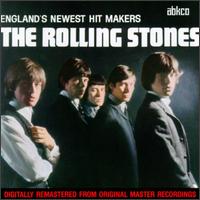
England's Newest Hitmakers - 1964 Abkco
C
(Very Good / Great)
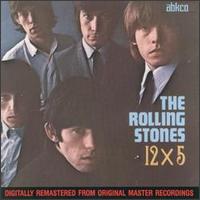
12*5 - 1964 Abkco
8
(Good / Mediocre)

The Rolling Stones, Now! - 1965 Abkco
D
(Great / Very Good)
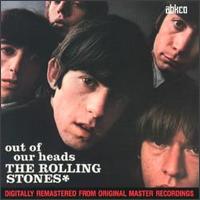
Out Of Our Heads - 1965 Abkco
8
(Good / Mediocre)
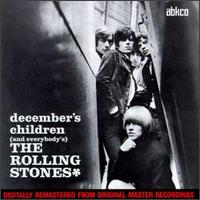
December's Children And Everybody's - 1965 Abkco
8
(Good / Mediocre)

Aftermath - 1966 Abkco
D
(Great / Very Good)
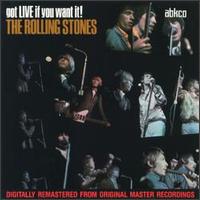
Got Live If You Want It - 1966 Abkco
8
(Good / Mediocre)
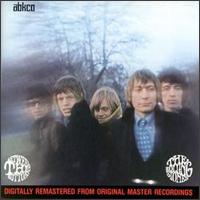
Between The Buttons - 1967 Abkco
E
(Great)
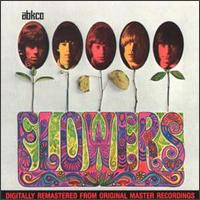
Flowers - 1967 Abkco
E
(Great)
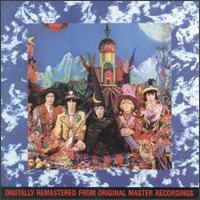
Their Satanic Majesties Request - 1967 Abkco
D
(Great / Very Good)
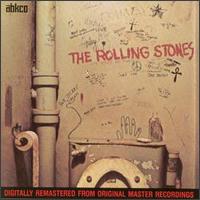
Beggar's Banquet - 1968 Abkco
F
(All-time Great)
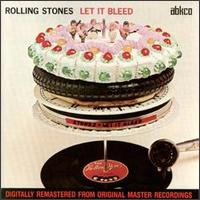
*Let It Bleed - 1969 Abkco*
10
(Olympian)
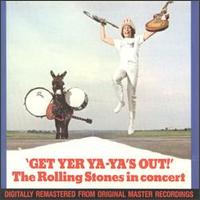
Get Your Ya-Ya's Out! - 1970 Abkco
E
(Great)
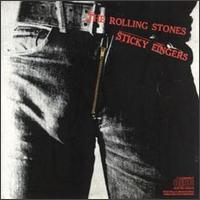
Sticky Fingers - 1971 Virgin
E
(Great)
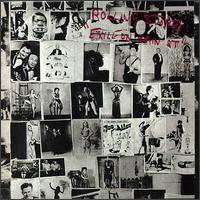
Exile On Main Street - 1973 Virgin
F
(All-time Great)
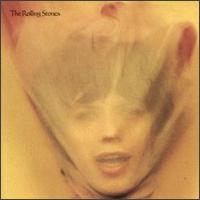
Goat's Head Soup - 1973 Virgin
B
(Very Good)
For that reason I will defend those albums to the last Ditch!
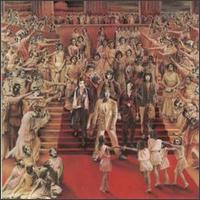
It's Only Rock'n'Roll - 1974 Virgin
8
(Good / Mediocre)
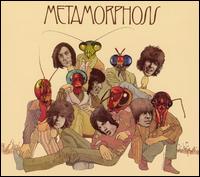
Metamorphosis - 1975 Abkco
8
(Good / Mediocre)
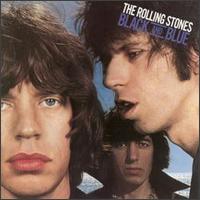
Black And Blue - 1976 Virgin
C
(Very Good / Great)
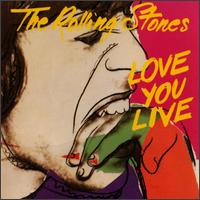
Love You Live - 1977 Virgin
9
(Good)
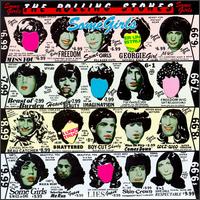
Some Girls - 1978 Virgin
C
(Very Good / Great)
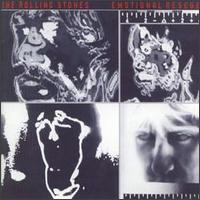
Emotional Rescue - 1980 Virgin
5
(Mediocre / Bad)
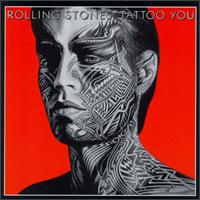
Tattoo You - 1981 Virgin
D
(Great / Very Good)
Still Life (1981 American Concert) - 1981 Virgin
7
(Mediocre / Good)
Undercover - 1983 Virgin
6
(Mediocre)
Dirty Work - 1986 Virgin
4
(Bad / Mediocre)
Singles Collection: The London Years - 1989 ABKCO
D
(Great / Very Good)
Steel Wheels - 1989 Rolling Stones
7
(Mediocre / Good)
Flashpoint - 1991 Rolling Stones
8
(Good / Mediocre)
Voodoo Lounge - 1994 Rolling Stones
9
(Good)
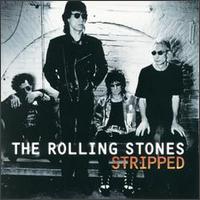
Stripped - 1995 Rolling Stones
8
(Good / Mediocre)
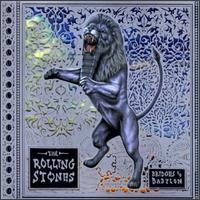
Bridges To Babylon - 1997 Rolling Stones
8
(Good / Mediocre)
No Security - 1998 Rolling Stones
D
(Great / Very Good)
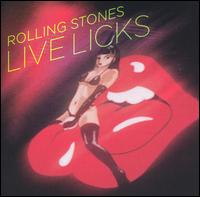
Live Licks - 2004 EMI
9
(Good)
A Bigger Bang - 2005 Virgin
9
(Good)
Shine A Light - 2008 Polydor
8
(Good / Mediocre)
Blue & Lonesome - 2016 Polydor
9
(Good)