By all rights, I should be a Radiohead fanatic. As a teenager growing up in the 1990's, I was the band's target audience; an angsty, disillusioned, awkward teenage male. In an alternate universe, I would have identified with the angst and self-revulsion of "Creep" when that song came out when I was in the 7th grade. I would have gotten swept up in the anthemic stylings of The Bends as a freshman, and I would have grown with the band as they moved into the more epic guitar rock of OK Computer (before my senior year) and then in the direction of electronica with Kid A (junior year of college) and Amnesiac (before my senior year of college). I've known more than a few people for whom Radiohead is an essential part of who they are, both because of the quality of the music and because of when in their lives the various albums came out, and that could have easily been the case with me as well.
Alas, that's not how it happened. I didn't care at all about rock and pop music until late 1995, and even after then I spent a number of years stuck in a "modern music is always inferior to older music" mindset. My high school musical love was The Moody Blues, and my early college years were almost exclusively spent assimilating various classic rock and art rock bands. It wasn't until summer of 2001, after the band had released Amnesiac, that I ever heard a Radiohead album (I had seen Radiohead's infamous performance of "National Anthem" on Saturday Night Live, but at the time it confused me more than anything), and by this time it was pretty much too late for me to form a deep emotional bond with the band. I keep stressing this point because I really can't shake the sense that Radiohead is a band that strongly requires an emotional investment if one is to adore their output on the whole. I mean, I don't have that emotional bond and I still really like them and a lot of their songs, but I don't ever see them making the leap to all-time great status in my musical tastes. It also doesn't help that I really don't get much out of the band's lyrics on the whole. I mean, it's not like they're obviously bad or anything, but few of their songs really connect with me deeply. That said, even though I don't often get a lot out of the lyrics, I do tend to get a lot out of how Yorke sings them, so that certainly helps.
Regardless, the band has a lot of songs I really like, and after their first album (which almost nobody likes anyway), none of their albums fall below the "very good" level in my ears (which says something given that I'm not pre-disposed to music from the 90's and beyond). Furthermore, it's really fascinating to hear how the band has developed stylistically over the years. From the unremarkable generic alternative rock stylings of Pablo Honey, the band turned itself into kind of a 90's version of the 80's U2, coming up with half an album of first-rate anthemic guitar rock (that other half isn't very impressive, but we'll get to that later). Then instead of doing a retread, the band pushed its guitar rock in a dark, epic direction (with other instruments effectively used as needed) that led to a bunch of totally incredible songs and an album that lots of people I know regard as one of the best of all time (OK Computer).
For a follow-up, the band could have continued to mine the same vein, and they probably would have continued to have some success with it. Instead, though, the band made what must be considered one of the gutsiest decisions in rock music since Dylan went electric, and definitely one of the gutsiest in my lifetime. That decision, of course, was to turn from guitar rock to a weird stew of influences (largely incorporating "electronica" but largely moving beyond categorization) that strayed incredibly far from the music that had given Radiohead their break into the mainstream. I might not have cared one way or another about Radiohead at the time Kid A came out, but I knew several people who liked them, and I remember very clearly the polarizing effect that album had on them when it came out. Some of these people appreciated the new direction and liked the new sonic textures, but a lot of people couldn't get past the relative lack of guitar and the "pointless difficulty" of the songs. Personally, I think it's their masterpiece, and I'm sure it got a good number of people into the band who didn't care about them before, but if the people I knew was a good sample, a lot of the band's existing fans jumped ship and didn't come back (Amnesiac, which largely sounded like a weirder version of Kid A, didn't help matters much along those lines).
The band eventually brought back guitars a little more into the sound, but the band never returned its sound to anything I would call "mainstream," and that's to their credit. One could criticize their later albums for sounding like "Radiohead trying to sound like Radiohead," but they write good songs in this vein, and that's nothing to sneeze at. And that's really what makes Radiohead worthwhile for me; especially starting with OK Computer, the majority of Radiohead songs make me think, "wow, what a great idea" at least once when I'm listening to them. Granted, only Kid A and a few other songs from various albums make me think or feel much more than that, and I rarely feel a compulsion to listen to their music, but good songwriting and good arrangement/production ideas gets you a long way with me.
Before I get to the reviews, I need to point out that I probably know less about the individual members of the band than I do about any band I've reviewed to this point. I know that Thom Yorke is the lead singer and that he plays guitar, and I know that one of the other guitarists is named Jonny Greenwood, but I really don't know anything about the rest of them. I really don't know who's responsible for what general aspect of the band's sound, or who contributes what percentage of the songwriting, or whatever. Like I said before, I guess I just got into the band too late to bother to learn more about it.
What do you think of Radiohead?
nestor eduardo escobar alfonso (nescobar_91.hotmail.com) (06/15/08)
Hi, my name's Nestor, I'm from Colombia, and I'm a big fan of your
site (as well as fan of "non-professional" music reviewers,
particularly of Capn Marvel and yer russian clone), I was too busy to
write anything before, but since I saw you were going to edit your
Radiohead page, I thought it was the right time to start sending my
thoughts on musical matters. OK, so, according to how I see the big
order of music things Radiohead are the most important band of the
last 13 years, since, well, grunge's demise. Personally, as a
teenager that has spent like the last 3 or 4 years of his life loving
their music and admiring them as his one of his favourite bands is
impossible not having some bias towards the band (ala George with CCR
or you with The Moody Blues!). They've released amazingly fillerless,
consistent and well constructed albums with some of the greatest
songs of the last decade. But that's not the only thing that amazes
me. They're quite possibly the most original and diverse band of this
century, quickly evolving from album to album (something true at
least for every album pre-Hail to the Thief) and, as you said,
defying categorisation (they're usually tagged as "alterrnative",
though I can hear electronic, some jazz-fusion, some krautrock
influences, some trip-hop... whatever), although obviously borrowing
a lot of influences from 60's (isn't Karma Police piano intro a
ripoff of Sexy Sadie? Oh, and Yorke acknowledged influences of
Happiness is a Warm Gun for Paranoid Android) and 70's (perhaps the
post-punk scene, although you can hear a lot of the "old Floyd
tricks" in their guitar and atmospheric sound. And, of course, the
acknowledged and aforementioned influnce from krautrock -Like
Spinning Plates = Can's Oh Yeah, isn't it?-). And, for good or bad,
they've exerted a lot of influence over a new breed of music makers.
From me, the band easily gets a ****.
Even with all those praises, I DO understand why someone like you,
who were supposed to be part of the band's audience and main target,
would put A BIT down their stuff, believe me, have I been of your age
in the middle 90's and have discovered so-called "classic rock" at
that time, I would have had problems digging their music. And also I
understand not liking Yorke's lyricism, is may not be any
better, shattering and, at first impression, more emotional than, say
Roger Waters', John Lennon's or Pete Townshend's one, but I guess
that everyone will sort it by themselves (doesn't How to Disappear
Completely strucks you as deeply emotional?). Oh, and guess that you
need some help with the whole band member thing, here is a short
review of them:
Thom Yorke (guitar, lead vocals, piano): One of the most amazing
falsettos in rock history. His singing is so expressive, and his
lyricism, well, is pretty dark yet beautiful. The soul of the band
and an example of a front man for the post-modern world. And perhaps
the master mind behind the band's shift over the turn of the century,
along perhaps with...
Jonny Greenwood (lead guitar, lots of instruments, string
arrangements): the band most trained instrumentalist
(multi-instrumentalist, in fact!), has some classical music
background, and has brought some vital elements to the table (lush
string arrangements, ondes martenot, keyboards), although is an
amazing guitar player too, building upon the "David Gilmouresque
effects" legacy.
Ed O'Brien (guitar, backing vocals): The one on the band who
has struggled the most with the band's move since Kid A and the most
rock-oriented member on the band, although I guess he has
experimented also a bit...
And a solid rhythm section represented by Colin Greenwood (yes,
brother of Jonny) , creator of some amazing basslines (Planet Telex,
How to Disappear..., 15 Step), and Phil Selway on percussion.
I have a lot to write about, but guess that whatever comes next
corresponds to the album reviews... keep on the good work...
Audrey Lively (audreynlively.gmail.com) (04/13/12)
It is always interesting to hear what other people think about things that you love. Unlike you, The Bends was one of my first CDs
purchased. I was in high school, a sensitive girl, prone to living inside my own head and shunning social interaction. I grew up
listening to my parents old music and was bored and hungry for new. In the eighties I loved watching MTV. I loved Madonna, Cyndi
Lauper, The Cure and The Pixies. But, my parents moved to the sticks before middle school and I was left without MTV or radios that
played anything outside country music or Casey Kasem. ( I consider these the dark ages) Now, I can't expect a 7th grade male kid to
understand but to a lonely angst-ridden seventeen year old girl who wrote poetry and drew pen and ink pictures of death and spent
time depressed over Rowanda and later Kosovo, Radiohead resonated. (my parents got Newsweek and Natonal Geographic...it still
astounds me that so many people were ignorant while all this was going on) So imagine being not quite an adult, insecure and
impressionable living in a time where people are being slaughtered around the world and Thom Yorke sings his beautiful and
melancholy lyrics. Maybe you had to be the right age during the time period where everything was upside down and you felt the
weight of the world crushing your spirit. Maybe you needed to be there when Nirvana was screaming pain and anger and Radiohead was
a slower peaceful, and calming option when you neded to escape instead of rage.Who knows. But I do mourn the sounds of Radiohad's
past: The Astoria concert dvd from 1995 sends tears pouring down my face every time I watch it, while the Radiohead concert I went
to a few weeks ago left me feeling sad, old and depressed. It was as if the soul and magic had gone out of the band and it was just
noise to me. Thom was no longer a singer but a ponytailed imp who twitched and danced around like a bum in the thrall of a drug
induced delusion. The sound was loud, staticy, chaotic, unbalanced without melody, without the emotion of guitars. My heart felt
numb.
Best song: Creep I guess
The album more or less gets off to a good start with the first two tracks. "You" seems a bit too saturated with rather pointless heaviness for my tastes (a big problem with much of the album), but I do like the shiny quiet guitar line that opens the song and pops up in bits here and there later, and the song does have some decent (if a little cheap) anthemic qualities to it. "Creep" ended up as a minor hit for the band, and even if I don't feel any real connection with the lyrics, it does have what I consider the album's most fascinating moment. Yup, my favorite part of the album is that bit before the chorus where the heavy guitar sound plays two quick notes in succession, like the song's being shot or something, then pauses, then plays those notes again right before going into the chorus. It doesn't make the song brilliant or anything, but it makes me want to listen to it again.
The rest of the album seems like one mildly bland generic song after another, with maybe one or two exceptions. The songs aren't much worse than the first two of the album, but the first two weren't so hot in the first place, so that's not a compliment. "Stop Whispering" lets up on the heaviness just enough to allow a decent dose of songwriting to shine through (Thom is REALLY going for a Bono-style delivery here, too), and "Prove Yourself" is a decent enough two minute song (however much of an irresponsible call for its listeners to kill themselves it might be), but the other songs don't do much for me. I admit to being intrigued as to the use of a guitar sound in "Anybody Can Play Guitar" that sounds uncannily like it's from the second side of David Bowie's Heroes, but that and the namedrop of Jim Morrison are the only moments in the song that hold my interest.
As with seemingly most Radiohead fans, I just can't enjoy this one so much. I can put it on as background noise, and some of the tracks have aspects I enjoy, but I could never consider this as a lost gem or anything like that. For completists only.
David Andino (davidandino83.msn.com) (06/01/08)
in the u.k., radiohead had a hard time competing against blur and
oasis. oasis are loud brutes while blur are more good guy versions of
a rock band. radiohead struggled with pablo honey. hey, john, do you
play video games? if so creep was used in ROCK BAND! I play so sloppy
on the guitar. the game guitar which makes jimmy page sound like
michael jordan in comparison! strange. have you played rock band on
guitar? anyway the band was haunted forever when the song was a hit
and in live concerts people are requesting it but the band denied.
even george hates the album. why does everybody treat it like a piece
of dirty clothing? I liked it.
"Benjamin Burch" (bbgun_301.yahoo.com) (03/13/11)
It didn't really surprise me that Radiohead started out as kind of a grunge
band. I put off this album for a long time because of all the horrible things I
heard about it. Once I finally bucked up the courage, I found it's a really good
album, and not deserving at all of its reputation. What really surprised me is
that a couple of songs are rather straightforward pop songs. No crappy songs on
here at all, best one is "Blowout."
Best song: The Trickster
While a lot of the band's non-album material is scattered to the four winds, such that I was able to become acquainted with it only through hookup (thanks Jeff!!), this particular slab was one that I actually found at Amoeba Music somewhere along the line, and it's long enough (28 minutes, just a couple of minutes shorter than an early Byrds album) that it deserves its own review. It only contains 8 songs, one of which is a live version of "My Iron Lung" (which, strangely, I find much more enjoyable than the studio version; there's a clear punch to the sound that's not in the Bends version) and another of which is an acoustic "Creep" (which is fine, but it feels a bit like a novelty), but it's interesting in that it sounds a bit like a missing link between Pablo Honey and The Bends. I mean, it's not halfway between them (more like 80% of the way), but it's kinda neat to hear material that could have easily made The Bends stronger while boasting some of the lightness that helped Pablo Honey a bit (the lack of which also hurt The Bends in spots).
The first half of this EP is really, really good. After the opening title track comes "The Trickster," an almost metallic (in spots) number that's anthemic without being overbearing, and which I have to consider one of the best early Radiohead songs. I mean, it's not like it's as walloping as the best parts of "Planet Telex," but if I could choose between this as that album's second track and "The Bends," I'd definitely pick this one. "Lewis (Mistreated)" definitely sounds more like Pablo Honey than The Bends, and I couldn't care less about the lyrics, but there's something rather charming about the pop-punk leanings of the track, whereas much of the similar work on PH just made me shrug my shoulders. And "Punchdrunk Lovesick Singalong" almost sounds like the forefather of "Subterranean Homesick Alien" in spots: it's a trip to hear the band predicting OK Computer this early on.
The second half is where it becomes clear that this is just an EP and not something like a lost Radiohead masterpiece, but as a loose collection of lesser material it's pretty decent. "Permanent Daylight" has interesting back-and-forth between mournful and upbeat guitar lines, and I have to admit that the lyrics are somewhat noteworthy (and I say this who cares little about Radiohead lyrics). "Lozenge of Love" is a silly (as far as Radiohead goes) acoustic number, "You Never Wash Up After Yourself" sounds like a downbeat Bends number, and then it ends with the acoustic "Creep." Nothing special on the whole (though "Permanent Daylight" definitely comes close in spots) but kinda nice nonetheless.
Anyway, this isn't an especially difficult EP to find, and one can also get ahold of the "new" tracks by getting the expanded version of The Bends, so it's probably worth getting these tracks if you're a Radiohead fan. It's not a major addition to their catalogue, but it's definitely more enjoyable than not.
Best song: Street Spirit (Fade Out)
Indeed, as hard as I try, I cannot get excited about the two tracks after the album's opening (and superb) quartet, or about the four tracks between Just and the closing "Street Spirit (Fade Out)." I don't see what's so special about "Bones" (despite all of the guitar effects) or "Nice Dream" (a low key number with an okayish melody but which I keep feeling should have more going for it than it does), and slogging through the four tracks after "Just" is something I never really enjoy. "My Iron Lung" has a pretty nice quiet guitar line in the beginning and throughout, but the other song elements, particularly the noisy section about half way through, don't make me very happy. "Bullet Proof ... I Wish I Was" has some neat effects like what I'd expect from early Pink Floyd, but as pleasant as the song is, it largely passes me by each time (it's probably the best of the album's weaker half, anyway). "Black Star" is the kind of song I could easily see somebody loving, as it has all sorts of strong anthemic elements, but it's never moved me much at all, and the melody isn't that enjoyable to me. And as for "Sulk," well, the only thing I ever remember about it is that I want to start singing "Fireplace" by R.E.M. when I hear the opening measures. So on the whole, these tracks just evoke a strong "meh" and shrug of my shoulders, and that's not something that I can square with the notion of an all-time great album.
The other six tracks are terrific, though, and if the rest had been able to keep pace with these tracks, I'd definitely rate this much higher. Pretty much the only thing I can say bad about them is that they don't mean much to me, even if I can see how they could mean a lot to other people. This isn't to say I don't feel anything while listening to them, but rather that those feelings don't stick around very long past the end of the song/album, and that I don't really feel like they're an essential part of my musical diet.
Otherwise, they're pretty great on the whole. If I had to pick one as noticeably weaker than the others, I'd probably go with the title track, but it's still got some very nice guitar lines and a good enough delivery from Thom. "Planet Telex," which comes before it, is much better, from the effect-laden introduction to the good vocal melody to the various neat guitar textures, ESPECIALLY in the "Everything is broken ..." section. The two ballads (sort of) that come after the title track are also fantastic. "High and Dry" has a marvelous vocal melody in both the verses and the chorus, and "Fake Plastic Trees," as clear an imitation of classic U2 it might be, combines some great moving chord sequences with some really tender singing once again from Thom.
My two favorites, though, are "Just" and "Street Spirit (Fade Out)." I couldn't care less about the lyrical message in "Just," but the way Thom sings "you do it to yourself, you do" is one of the strongest hooks on the album, and the band's approach to heaviness in the guitar parts (which are like a mad scientist's take on typical grunge lines, and I mean that in a good way) makes the song one that I keep coming back to. And finally, "Street Spirit (Fade Out)" features a fascinating rolling guitar line and an interesting layering of arrangements, but more importantly to me it has a very strong atmosphere of darkness that the band hadn't really shown to this point. Obviously the band probably didn't intend this at the time, but this is the track the most strongly points the way to the band's future; a dark, depressing world and sound that far transcends conventional angst. For this reason, I actually think it sounds a little out of place on the album, but it's better for it.
I really think that part of this album's appeal lies in the fact that it follows the classic Who's Next formula: start and end strong, and stuff all the weaker songs into the middle. Unfortunately, the weaker songs really bug me, and the better songs aren't spectacular enough to cover up that impression, so the album's rating suffers. Still, it's quite a nice album, and it's worth picking up.
David Andino (davidandino83.msn.com) (06/01/08)
don't be so hard on yourself! radiohead fans will smite you for this.
a 7??????????! the bends is the G.O.A.T. ha to all you dumb rappers!
the bends has fake plastic trees and the video was so good the the
old mtv show 120 minuets kept playing it. I don't know if you seen
120 minuets befroe mtv fell off a cliff and crashed and bleeding and
never got up and died! 1995 was a great year for rough production.
mellon collie, one hot minute, balance, ozzmosis, foo fighters,
morning glory and the blur album and this record. in terms of sales
the dumb brutes from oasis won the battle for sales but radiohead won
critical respect.
"Benjamin Burch" (bbgun_301.yahoo.com) (03/13/11)
Though not a huge improvement over 'Pablo Honey,' 'The Bends' showed radiohead
to be much more than another alt rock band looking for attention. Songs are much
better this time around, and more diverse. Again, all the songs are good, have a
great atmosphere and the group hasn't started taking itself too seriously. The
album is so consistent it's hard to single out any songs, but I guess my
favorite is "Planet Telex."
"Nicholas Lecchi"(nikilecchi.gmail.com) (06/13/11)
It's definitely a major improvement over Pablo Honey, and I find it to be
Radiohead's most accessible album, but to call it a "masterpiece" is absurd
in my opinion. Sure it has a lot of hooks, and I find myself putting it on
often for a casual listen. But if I'm looking to actually get something out
of an album, then I'd much rather listen to Amnesiac or Hail To The Thief.
Overall an 8(11) is the highest I can give to The Bends.
Best song: Let Down or No Surprises
Personally, I don't think this comes close to an all-time great album (and it didn't save anything in rock music, that's for sure), but I sure don't buy into the inevitable anti-hype either. My main problem with the album comes not from the excessive praise it's received over the years, or the fact that its originality is largely overstated by many of the band's fans, but rather from a stretch in the middle that I enjoy less with each listen. Unless one has a heavy emotional investment in the concept of the album, and views the track as the album's keystone, I don't see how "Fitter, Happier" can be considered anything but a stupefying waste of two minutes. The Stephen Hawking imitation voice, listing all of the various good things to do to keep healthy and sane, always annoys me within fifteen seconds, and the album would be seriously improved without it. The next two tracks aren't much better, either. "Electioneering" is a go-nowhere piece of ear-piercing boogie rock, and "Climbing Up the Walls" just strikes me as deeply unpleasant and ugly (that it's one of the longer songs on the album doesn't help either). So that's almost a full quarter of the album down the drain right there.
I really like the rest of the album, though. I don't feel the kind of reverence towards the songs that many feel, and I don't find myself going out of my way to listen to them very often, but it would be hard for me not to enjoy and respect a bunch of songs this well arranged, produced and written. My two favorites are "Let Down" and "No Surprises," which do the dreamy guitar pop lullaby genre (if such a genre exists outside this album) proud with fantastic melodies, vocal parts that nobody else could do justice, and, in the former, some effective subtle rhythmic unrest. I'm also quite fond of "Subterranean Homesick Alien," whose guitars create one of the more beautifully bizarre atmospheres I've ever heard.
The more intense side of the band is effectively demonstrated in "Paranoid Android," which effortlessly moves from a quiet driving mix of acoustic and electric guitars (all pinned down by subtle percussion that always makes the acoustic parts sound Spanish to me, even though I have no idea why) to a more obviously powerful electric section with a fantastic riff and some good over-the-top soloing. And, of course, it then moves into the amazing "rain down" section, led by some great atmospheric vocals from Yorke, before going back in the heavier direction.
Some of the other songs don't thrill me as much as I'd like, but they have their nice attributes all the same. "Exit Music (for a Film)" is most notable to me for its heavy use of a mellotron (if it's not a mellotron, then it's something that sounds really close to it), and while I don't think it's anywhere near as beautiful or moving as lots of people think, I still find it kinda pretty in its own sad way. I think it would be far exceeded, though, by "How to Disappear Completely," on the next album. "Karma Police" is a little bit boring, but the piano part in the chorus more or less saves it. And finally, "Lucky" is almost nothing but mood and wailing Gilmour-esque guitar parts, but it does well in both of these aspects, so it's a keeper.
Finally, I want to say something about the opening and closing tracks. "Airbag," as many people like to point out, actually feels like a musical interpretation of a car crash, or rather the hallucinogenic experience of the person within the car during and after it (the actual car crashing would sound more like Metal Machine Music, I'm sure). What should stand out most in the song, though, is not so much the music, and also not the main expository line of the song, "I'm amazed that I survived, an airbag saved my life." No, what's most important is the creeped out feeling of elation that comes from it, expressed in the "in an interstellar burst, I'm back to save the universe" line. From surviving this accident comes a momentary feeling of invincibility, a newly found superpower, if you will, and the feeling that this second chance at life suddenly brings with it all sorts of meaning.
"The Tourist," then, brings the album full circle; I am very skeptical of the idea that the tourist in question is somehow not involved in the car accident that prompts "Airbag." The anthemic calls of "hey...man..sloooow down...," underpinned by a fantastic set of chord sequences, create an extremely vivid, almost cinematic set of imagery for me, and that impresses the hell out of me. Maybe the song is actually a call to the listener to slow down the pace of one's life in this busy hectic world, but my interpretation is the one that's going to make me care about the song.
So, while I may not fall in line with the general consensus that says this is one of the best albums ever, I still think it's a really nice album. Cut out the tracks I really don't like, and this could easily be a D (though higher probably wouldn't happen either). And, of course, it's still a necessity for any decent collection of rock music, no matter the era one mainly focuses on.
Andrew Galperin (andrew_galperin.yahoo.com) (06/01/08)
Well, it's been many years since I was first fascinated by this album
and it became my favorite of all time...I loved every aspect of it -
the incredible hooks, how the pseudo-concept came together, the
moods, the textures, etc. Speculation that it was based on the novel
"1984" even prompted me to read that book, which is awesome in its
own right, albeit not really related to the album.
Anyway, since then, I've kind of gotten away from art-rock and moved
in more of a Starostin/McFerrin direction towards appreciating music
(not on purpose, of course)...That is, nowadays I seem to be less
impressed with pure atmosphere and more impressed by catchy
songwriting and things like that. So why am I writing all this BS?
Basically to say that, if you strip away the concept, the lyrics, the
unrelated-to-the-actual-music emotional investment and much of the
other stuff from OK Computer and just keep the songwriting and the
production, it's still one of the best all-time handful of albums,
IMO. "Lucky is almost nothing but mood and wailing Gilmour-esque
guitar parts"? Seriously?? Isn't the "We're standing on the edge"
part one of the most amazing simple hooks ever written? The first
time I listened to that song, that segment made my jaw drop, and
still does to an extent. What about "hey, man, slow down?" in The
Tourist? That has to be tied for the title of "catchiest simple
chorus ever" with ELO's Laredo Tornado. Besides, what a contrast
with the "indifferent" jazz chords the song starts out with.
"Electioneering is a go-nowhere piece of dissonant boogie rock"?
What about The Riff, and the way it skips an octave up for a couple
of notes in the intro? That is an awesome riff right there, partly
because of the way the guitar is tuned...and I love the way the
guitar strings sound "drunk" towards the end. I don't even care that
the vocal melody is so-so.
Anyway, I could go on and on...surprisingly, I think you actually
like "Let Down" more than I do...I think it's one of the weaker songs
on the album, and perhaps the only one that doesn't have a catchy
melody or almost any hooks, at least by your definition of "hooks" as
I understand it. THAT song is pure atmosphere...not Lucky.
Next week, I'll probably be writing about how you OVERrated Kid A,
hehe.
David Sheehan (dawningistheday.yahoo.com) (11/22/08)
John, I've gotta disagree with you here. I mean seriously, OK
Computer is no better than The Present? Really? I do think the album
is slightly overrated (what album with this degree of critical and
popular adulation isn't?), but I still wouldn't give less than a 13
on a bad day, and would pretty safely say it's a 14 if I've ever
heard one. It's one of my top five or so picks from the nineties. My
opinion used to be more like yours (I liked Kid A better), but after
many more listens through Radiohead's catalogue, I find that OK
Computer, to my ears, is simply their most consistently strong work.
I guess it helps that "Fitter Happier" doesn't bother me in the
slightest--I actually find it quite creepy and affecting. I also
think that the first four tracks are the best four-track stretch on a
Radiohead album, hands down. I think before I was doing my usual
"seriously-underrating-a-really-acclaimed-album" routine. I think
that's the same thinking that caused me to "hate" the Beatles for so
long.
"Benjamin Burch" (bbgun_301.yahoo.com) (03/13/11)
Easily radiohead's best album. Every song is excellent, and this is
unfortunately their last album to make it all the way through. Not as
straightforward as the two that came before it, and is therefore not as
accessible. Though not my favorite album of all time, it's pretty damn close. My
favorite song here is "Karma Police," but I'm also extremely fond of "Paranoid
Android," "Airbag," "Electroneering," "No Surprises," and "Lucky."
Thomas Hesser (thesser2018.francisparker.org) (10/13/15)
At least a D in my opinion. I think you’re greatly exaggerating the three “flaws” on this record.
A). Fitter Happier: Sure it’s a little long for a bizarre computer-voice experiment, but that last line GOT me…”a pig, in a cage, on antibiotics…” I laughed out loud at that! And besides, the album is so DENSE and complex, I have nothing against a “breather.” In fact, I usually like compositions that ruin the flow of an album every once in a while (unless they’re absolutely Horrid: ex. “Soul Desert” by Can) to prevent listening fatigue.
B). Electionering: Reminds me of the song “Rip Off” byT. Rex (good band btw) in that it isn’t a very good song, but they play with so much ENERGY. Listen to that SNARL of CONTEMPT when Thom Yorke yells “GONE ELECTIONEEEEEEEERIIIIIING HA! HA! HAAAAA!) like Roger does in “Sheep”. The fact that nothing else on the album is played like this alone is enough to at least justify the song’s existence.
C). Climbing Up The Walls: Interesting. I’m still unsure if I like this one or not. The vocals are deliberately messed up and they’re obviously bitin’ off a lot here if you know what I mean… Aiming for a lot of emotional impact. Some of the instrumentation in the background is cool, and I have a friend who thinks it’s the best song on the album, but I never really got “sucked in” by this song like I did with nearly everything else on this record.
Best song: How To Disappear Completely or Idioteque
I have NEVER gotten the supposed excessive difficulty of this album. I mean, it's certainly a less immediately accessible album than The Bends, as it's far from the guitar rock style of that album, but I don't buy for a second the idea that Kid A is some unlistenable monster. One thing that is obvious is that this album draws from different influences than The Bends and the bulk of OK Computer; this one reeks of Brian Eno, "post-rock"/electronica, Can and even old-school free jazz (the saxophones in "National Anthem"). The thing is, though, with the possible exception of the free jazz influences, I can't buy the notion that any of these sources are really that difficult to absorb. You just have to have a taste for music that relies on more than just strong melodies and immediately understandable lyrical topics to enjoy them. True, many people essentially think that such music has no real emotional power and can only be enjoyed by pretentious people, but I find that mentality somewhere between pitiful and loathsome. I like well-done pop music too, but focusing only on melody as a worthwhile element of music while ignoring mood, texture, and half a dozen other features just seems ridiculous to me.
Why do I rate Kid A so highly? It's simple, really: every track on here works on some level that I can appreciate and enjoy. The melodies aren't usually immediately memorable, which puts off a lot of people, but that's because they aim to succeed in other ways. For instance, take what I consider the album's weakest track (which I still enjoy plenty), "In Limbo." This is actually one of the more guitar-centered tracks on the album, full of quiet arpeggiation, but what makes the track work is the disorienting, chaotic and hazy layering of the vocals. The only easily discernable lyrics in the piece come whenever Thom sings "You're living in a fantasy world," and that's fitting in a track that feels like a weird dream happening close to reality but not quite in it. In other words, it's a track that reminds me of what a limbo state would be like.
I like the album's most controversial track, the ambient instrumental "Treefingers," for a similar reason. A lot of people consider this the quintessential example of the album's problems; a boring, go-nowhere drone that should have been an outtake. The thing is, though, as with the best of Eno's ambient work, I have little difficulty associating this track with a specific mental image. Every time I listen to this track, I envision myself in a forest after dark, surrounded by endlessly tall trees with long branches. As the track develops, the branches of the trees around me bend down and grab me, slowly raising me high above the ground to a giant black mouth in the sky. It is a deeply unsettling set of images that fits a deeply unsettling track, and I wouldn't trade it for the world.
The rest of the album, on the whole, is just fantastic. "Everything in its Right Place" is a perfect introduction, both in terms of establishing the album's sound (the music in the track is driven almost solely by soft, understated keyboards) and in terms of establishing the album's general mood (one of crushing paranoia, confusion and despair). I've noticed that a lot of people are bothered by the fact that the vocal melody isn't strong in any traditional sense, and that the lyrics aren't immediately coherent, and that there are a lot of backwards vocals stuffed into the background. Now, I'm not exactly somebody who automatically loves songs that include elements like this, but I am somebody who likes it when elements of this nature obviously have a point, and this track delivers. The title track, then, must have thrown fans of the band for a complete loop, as it's a total "post-rock" electronica piece that deviates far from any definition of "song" the band had previously used. What fascinates me most about the track is not the main portion, a mix of completely indiscernible processed vocals, synth textures and drum sounds that sound like they're from "Peking-O" (by Can), but rather the simple, somewhat off-kilter piano line that starts the piece and pops up again later. It reminds me a LOT of a computer game from the early 90's called The 7th Guest, which was basically a puzzle game set in a haunted house where a bunch of people died. Aside from the ridiculous upbeat ending (which still seems tacked on to me and which was one of the most shattering disappointments of my youth), that game has one of the creepiest atmospheres I have ever come across, and anything that can remind me of it is ok in my book.
"The National Anthem" is another track that a lot of fans seem to hate, though just as many seem to like it. One thing I think is a mistake is to put too much emphasis, for good or bad, on the chaotic horn soloing that largely takes over the track near the end. I think there are lots of people that basically say, "Oh, a track that has complicated free jazz discord, this automatically makes it a great track," and I also think there are a lot of people that basically say, "Oh, a track that has complicated free jazz discord, this automatically makes it horrible." Well, I know some people will disagree with me, but I really see the sax parts as a finishing touch on the song, and not the main feature (the live version on I Might be Wrong does just fine without it), so pegging one's attitude on the song to one's feeling on the horn parts seems overdone to me. I'm personally more enthralled with the simple, yet powerful bassline, the disorienting vocals, the creepy synths, and the overall paranoid effect of the piece.
"How to Disappear Completely" is the album's most accessible track (at heart it's just a sad acoustic ballad), but that's not the reason I consider it one of the highest points on the album. I mean, this is just a masterful depression anthem, with amazing string parts (I originally thought they might be synth strings but I was alerted that I was mistaken about that) giving an epic sweep as Thom gives an amazing performance, culminating in each repetition of the line, "I'm not here, this isn't happening." And don't forget the way the sound just kinda dissolves in the end. It's probably my favorite Radiohead song, for what it's worth. Then, after "Treefingers," we come to "Optimistic," which probably would have been a more accessible track had it been made five years previous. It's a nice piece of discordant guitar rock, with guitars that (for whatever reason) remind me a lot of The Velvet Underground and a memorable melody that gets catchier with each listen.
Upon my first listen to "Idioteque," I really had no idea what I thought of it. Part of me had the reaction that I'm sure occurred in some form with a lot of listeners, namely that I didn't really like the idea of Radiohead making a song that so resembled dance pop, what with its emphasis on electronic beats. Well, in thinking that, I think I completely missed the point of the song, and I'm not just talking about the lyrics (which have a very apocalyptic feel). What the song captures perfectly for me, and I'm serious here, is a sense of utter despair at the disconnect I feel with those around me when I watch other people enjoying themselves dancing, particularly to beat-heavy music. You have to understand: I don't like dancing (in the "clubbing" sort of way) at all, but more than that I hate being around people who are enjoying themselves dancing, because it reinforces to me that I am fundamentally different from everybody else who is enjoying themselves, and watching people dance always triggers a deep (if temporary) fit of depression within me. Well, everything about this song properly captures that feeling, from the mournful chords playing over and over, to the fact that it's nearly impossible to actually dance to the song, to the weird clanging breakdown in the middle, to the paranoid, frightening vocals. This is the only song I can think of that properly captures and articulates my feelings on this, and even if this wasn't part of the intended point from the band, and even if I have other reasons to enjoy the song, this is enough to make it seem like a classic to me.
The closing two tracks always seem like a comedown to me after "Idioteque," but I still like them a lot. "Morning Bell," when you cut through the arrangements (heavily based in keyboards), is basically a pretty standard pop song, albeit one with Thom repeatedly singing "Cut the kids in half" or "Release me." And finally, "Motion Picture Soundtrack" might have started its life as an acoustic number (which Thom wanted on OK Computer), but I really like the way it's presented here. I like the idea of a song about death prominently featuring an organ (or something sounding like it), and I especially like the idea of a song with the lines, "Stop sending letters/Letters always get burned/It's not like the movies/They fed us on little white lies" including a bunch of cheesy Hollywood-style harps (in a sharp dose of irony). This is a sad, bitter, bleak song, and the fact that it ends on so much silence (I guess symbolizing death) is only appropriate.
I guess it really ends up coming down to what you want from Radiohead, and what you think they do best. I'm actually (still) a little surprised that I enjoy this album as much as I do, since I'm certainly more inclined towards guitar rock than this kind of music, but the fact remains that I feel that Radiohead do this kind of music better than they did guitar rock. Simply put, I consider this one of the most essential albums to come after 1990, and it's an absolute must for any collection.
Pete Anderson (stevehoweisking.hotmail.com) (02/13/09)
Your review of Radiohead's Kid A is spot on - it could be the best,
um, rock/pop/whatever album since Remain in Light (though whether or
not it counts as a rock album is open to debate). What strikes me
most is that, despite the album's wintry feel, there's somethng very
alluring about it too, which really makes it all the more
terrifying. It's like the album cover: cold, bleak, hostile and at
the same time sooo beautiful. 10(14).
PS. You didn't mention the hidden track!
"matt faris" (7headedchicken.gmail.com) (01/13/11)
I was reading your Radiohead page while being poked with pitchforks, and I
was intrigued by your story about "Idioteque" and your feelings of
discontent towards groups of people dancing. I don't necessarily share the
same differentiation, and I don't know when you wrote the review, but I
honestly hope you still feel the same way. Not because I wish you
unhappiness or anything like that, but because I like to see people not only
retain, but stand up for their individuality. In today's world, the
pressure to conform is higher than ever, and when you're an exception, it
can be depressing on an abstract level. Fortunately, we have bands like
Radiohead making music to accompany such feelings. I wouldn't doubt the
open space of "Treefingers" has done its share of healing for you. Oh, and
did you know that if you put *Amnesiac* in the microwave, it comes out as *Kid
A*? Conversely, if you marinate *Kid A* in snail sweat and then send it
through a car wash, it comes out in rainbows
"Benjamin Burch" (bbgun_301.yahoo.com) (03/13/11)
This is where radiohead kind of starts to lose it. Sure its full of great
songs, but this is the start of their "electronic" phase. I do like this album,
but I don't think of it as a masterpiece or anything. My favorites are
"Everything in its Right Place," "The National Anthem," "How to Disappear
Completely, "Morning Bell" and "Idioteque.".
Cameren Lee (cameren_lee.yahoo.com) (06/13/12)
This is an esoteric, imaginative album whose commercial success is both inspiring and shocking. Yes, Radiohead are popular, but
this could've easily been their Tusk. Thankfully, it didn't tear them apart like the aforementioned Fleetwood Mac album did to its
makers.
Your review does it justice. This is why you're the only Internet critic I really listen to (yes, we disagree, but at least I
understand your views on the bands I like and you don't and vice versa).
Edward J Gorski (egorski13.mail.bw.edu) (08/13/17)
Kid A might be one of the most aurally satisfying albums ever released. It rewards the careful listener with its compulsive electronic style. However, I do think that this is something of an album that people have to "get" in order to fully appreciate its excellence. It takes a few listens to truly understand it.
Best track is easily "How To Disappear Completely," which is ironic because it is one of the more accessible tracks (Optimistic being the other).
Best song: I Might Be Wrong or Knives Out
The album bunches all of the "normal" songs into the middle, in a move that seems a little odd to me. Despite how much I enjoyed the experimentation on the last album, these are easily my favorites of Amnesiac. "I Might be Wrong" boasts an extremely effective riff that plays well off of the various "modern" (circa 2001) percussion rhythms, and Thom delivers a performance that reeks (in a good way) of snide cynicism. "Knives Out" sounds just like a typical OK Computer track, with a great set of guitar lines and a hell of a dark vibe (it appears to be about cannibalism), and because of that it's not surprising that so many fans clamored for this track to make it onto a proper studio album. And finally, "Amnesiac/Morning Bell" is a reworking of the Kid A version of the track, as the arrangement now centers around slow guitars instead of keyboards, and it's quite nice.
The other eight tracks, though, are all over the map. Quite a few of them, as has been pointed out by some others, work better as ideas than as completed tracks, and don't feel quite done yet. The most obvious offender is "Hunting Bears," a two minute guitar (mostly) instrumental that basically keeps playing a single line (that's not that great) over and over again, and it clearly should have been left off the album. "Pyramid Song" works more as a mood song than anything else, as the piano chords and various synth wails sound pretty and sad, and largely cover up the seemingly directionless nature of the song. I guess it would help if I could figure out exactly what mood the band tried to convey here. Some tracks, like the opening "Packt Like Sardines in a Crushd Tin Box," or "Pull/Pulk Revolving Doors," or "Like Spinning Plates," basically take a few off-kilter electronic rhythms and textures and build an entire song around them, with some singing that doesn't really have much of an effect one way or the other. I mean, I basically like these tracks, but I still find them a little off-putting, and I don't "get" them the way I do a lot of the Kid A material. I do like the closing "Life in a Glass House," with some effective and unexpected use of big band sounds, but the other two ("You and Whose Army?," "Dollars and Cents") more or less pass me by every time I hear them.
So basically, I still don't really know what to think of this album. My inclination is that I quite like the album overall, and that parts of it are great, but it still confuses me in a lot of places. I'd rather listen to this album straight through than The Bends, which is why it gets a slightly higher grade, but I can't go higher than that. Fans of the band will definitely want this, but others should probably make sure they like Kid A a lot before getting this one.
Best song: Idioteque
"True Love Waits," the unreleased track, is very much a stripped-down, "traditional" Radiohead song, featuring only an acoustic guitar and Thom's voice, and it's quite lovely. I initially didn't know if this was written earlier than the Kid A sessions, or if it was just one of the few bits of straight-ahead normalcy they put together then, but either way it's quite a lovely song, and I'd take it over any of the weaker Bends songs (FYI: I eventually learned that it came from 1995, so there you go). If there's any reason for people who prefer the more mainstream Radiohead to give this a listen, this is it.
The album's target audience, though, is people who enjoyed the last two albums, and who'd be curious to see how on earth they'd perform such intricate and meticulous material on stage. Well, they did it, and incredibly well. The Amnesiac material is practically revelatory, especially "Like Spinning Plates," which gets remade as a piano/vocal duet (with some light synth touches here and there) that sounds like something Brian Eno would have come up with on a good day. "Dollars and Cents," which I never really noticed on Amnesiac, suddenly strikes me as a neat little dark moody ditty, and "I Might be Wrong" rides the main groove way better than even on the great studio version.
Of the Kid A material, "Morning Bell" is done close to the original version, but with noticeably more intensity (especially in the drums), and the other three tracks are just mind-blowing. This version of "The National Anthem" conclusively proves to me that the track works without any of the dissonant saxophones that people harp over, and the main features (the riff, the trippy guitar and synth noises, Thom's energetic vocal breathings and grunts) work amazingly. "Everything in its Right Place" gets stretched out to almost eight minutes, and it's packed with trippy sampling that magnifies Thom's passionate delivery and the moody electric piano. Best of all is Idioteque, where Thom gives one of the most intense vocal workouts I've ever heard from him, and where the mid-song noise freak-out (with some effective processed guitar noise over the keyboard clanging) is one of the great things I've ever heard from the band.
Unfortunately that's it, but the experience is both short and sweet, so I can't complain. As of this writing this is the only officially released live Radiohead, and it shows that the band really has a great sound on stage, so that makes it seem worthwhile to me.
Best song: 2+2=5 or A Punchup At A Wedding
WHAT a collection of songs, though. The band brought back the guitars to its sound in full force, but they also make liberal use of keyboards, "modern" rhythms and various neat production effects, and these combine into one of the most intriguing sonic palettes I can think of post-70's. And, well, I really like the melodies on here. Of the fourteen tracks on the album, only two really make me drift off in any significant way. One of them, "We Suck Young Blood," has a dirgey piano atmosphere not unlike what one would find on some early Procol Harum songs, as well as amusingly morbid handclaps, but five minutes is certainly too long for a track of this nature, and I can see how it would annoy the living hell out of people. I'm also not too fond of "The Gloaming," which relies on a monotonous loop that's a little too inhumane and ugly even for my tastes.
But that's only two tracks, leaving a dozen goodies in their wake. The opening "2+2=5" is one of the band's strongest ever tracks, not just for the lyrics (like the "YOU HAVE NOT BEEN PAYING ATTENTION" chorus) but for the way it builds the band's traditional dark, arpeggiated guitar lines (set to non-traditional electronic rhythms, of course) into a rocking monster the likes of which the band hadn't done since The Bends. Plus, kudos should be given to the band for shutting down the song after three minutes; they could have easily extended it to five, and it would have been ok that way, but cutting it off when they do makes it seem that much stronger and more intense.
"Sit Down Stand Up" seems to have divided fans pretty strongly over the years, particularly for the fact that Thom seemingly says the words "little raindrops" in the frantic coda at least 20 times (I didn't count), but I find it extremely strong. I do admit that it's a little suspicious of the band to have a coda that features the words "little raindrops" when they already had a song ("Paranoid Android") that had a section that centered around Thom singing "Rain down ...," but the songs are plenty different otherwise (this is basically a more up-tempo and aggressive version of an average Amnesiac track). Plus, um, the electronic bits sound more than a bit like rain pouring down anyway, so it seems like Thom's singing is a nice atmospheric touch to me.
"Sail to the Moon" kinda strikes me as a cross between "Pyramid Song" (the atmospheric, directionless piano foundation) and "Subterranean Homesick Alien" (the synth line that sounds like the upward guitar line from that song), but that only bothers me a little bit, and the atmosphere matches its title perfectly. "Backdrifts" has an excellent build from the almost white-noise synth introduction, and combines a great vocal melody with a bunch of other fantastic arrangements. "Go to Sleep" starts off as a dark acoustic guitar number, before building into an effective "normal" electric rocker, and strikes me as one of the album's standouts.
"Where I End and You Begin" takes a great quiet bassline and a hypnotic (acoustic) drum rhythm, piles a bunch of synth (and eventually guitar) sounds on top, and features yet ANOTHER great vocal melody and performance from Thom (I'll say it again; I may not care much about what he's singing about most of the time, but I sure tend to like what he's singing). After the standstill of the two weaker tracks, we come to "There There," which probably sums up the album's overall sound better than any other track here (that's probably why it was chosen as a single). It starts as yet another hypnotic percussion rhythm, adds an effective set of guitar lines, features yet another fantastic vocal melody, and rides this groove well for over five minutes (picking up intensity in the last minute or so). It passed me by the first couple of times I listened to it, but I don't really get that now.
After the quiet beauty of "I Will" (a bit of a throwaway at 1:59, but a nice track nonetheless), we come to my other favorite track of the album, "A Punchup at a Wedding." What can I say, I absolutely love the interplay of the moody piano lines with the drums and bass, and I especially love the tense vocal line. Plus, I'm absolutely fascinated by the mix of grumbly guitar pounding in the left speaker and the quiet plinky guitar (synth? I dunno) line that pops up midway through the song.
"Myxomatosis" might annoy some people, but I totally love the over-the-top distortion of the weird bassline, and it makes me like the song even if the rest of it doesn't have anything I find extremely notable. "Scatterbrain" sounds a bit like an OK Computer outtake, especially in the guitars, but I like it; I'd have been thrilled to have this track on there instead of one of that album's weaker tracks. And finally, the closing "A Wolf at the Door" features yet another fascinating Yorke delivery, with him delivering really disturbing and disorienting imagery at a very fast pace, while all the while the guitars are playing a perfect set of lines. Plus, the "chorus" melody is uplifting and heartwarming in its own way, even if the lyrics are just as disturbing as ever.
I really don't know how many people would agree with rating this higher than OK Computer, but to me it's pretty much a no-brainer. This one may borrow some ideas from that one, but I really think this has more interesting arrangements and a deeper sonic texture, and this one doesn't tightly tie itself to a concept that I never found that interesting in the first place. I know that my opinions on music from this era probably aren't worth much, but this is one of the more enjoyable albums I've heard from the 1990's onward, and I heartily recommend it.
Allan Blueyonder (allan.todd.blueyonder.co.uk) (10/13/14)
Great website, always fun to read other people's rantings (or do I mean rankings?).
My take on Hail to the Thief is -
When I first had this album in fact I used to start at The Gloaming (what I've labelled as the 'genius' section above) and just listen
to the end... then gradually worked my way back to the beginning. I still think Go To Sleep is probably the weakest song on the album -
though still good - but Where I End And You Begin is one of the strongest from Radiohead's entire catalogue. But there is something
about the combination of those last 4 songs that I just cannot get out of my head.
Best song: It's very even
The result both impresses me and leaves me feeling a little let down. All ten tracks are pretty interesting, and well-developed, and make the album worthy of a very high grade. On the other hand, though, while none of the individual tracks shows this strongly, the album feels a little bit half-assed to me. Before I learned this wasn't true, I'd been told that a good number of the tracks on here had been live staples for quite some time, meaning that Radiohead hadn't so much made a new album as they'd put together a collection of outtakes from older sessions. This formula wouldn't have necessarily spelled doom, of course; the Rolling Stones album Tattoo You follows much the same principal, and that's one of my favorite albums of all time. I can't help but shake the feeling when listening to this, though, that I'm just listening to a solid b-sides compilation, and I can't change that feeling even after learning that, despite rumors, most of these tracks actually were written within a couple of years of this album's release (only "Nude" was from a past epoch).
Well, I can't help but feel that Radiohead could have done better than this. The analogy that comes to my mind is being a teacher where you have one student who should absolutely be acing all of his homework and tests, but instead ends up finishing the class with a B+ because he just didn't put in enough effort to get it done (I should know, I practically made a career out of being that student, years ago). It's hard to accept that Radiohead, after not a tremendous number of albums, would have already entered the "coasting" part of their career, but this album suggests just that, and does so rather strongly. Nothing sounds like a direct rip off of any specific songs, but almost all of the elements feel like they've been used at least a few times already, and it wears me down a bit.
This is an awful lot of complaining for an album that I still insist deserves a B, though (it's a really low one, though, one I keep wanting to change to an A until I realize that I'd be giving this the same grade as Amnesiac). Few of the individual songs leave a significant mark in my mind, and none of them feel like they're an essential part of the band's career, but every single track has at least something really neat going for it. "15 Step" starts off driven by Thom singing falsetto over what feels like a somewhat generic "tricky" electronic rhythm, but instruments just keep getting layered on top slowly and the sound just keeps getting richer until it turns into some sort of 2008 version of late 60's psychedelic symphonic pop. "Bodysnatchers" kinda sounds like an undercooked Hail to the Thief track, with a rather simplistic, cacophonous riff that's not that terrific, but the song does a good job of integrating weird guitar sounds into the fold, so it can stick around, too. Plus, the melody kinda completely changes in the second half, and it's a drastic improvement.
"Nude" would mostly pass me by, as it's a pretty dull slow ballad, were it not for the way some of the guitar and synth noodling at the beginning (and in parts of the middle) sounds so much like Robert Fripp messing around with Frippertronics, and that's at least novel for the band. "Weird Fishes/Arpeggi" pretty much takes the band's quiet arpeggiated guitar shtick and milks it for all it's worth, but I won't lie and pretend I don't find the song very pretty from start to finish. "All I Need" (not so much lyrically, but definitely musically) kinda reminds me of a bunch of the songs from Brian Eno's Another Day on Earth, and while that's not very much to the band's credit (the band sounds like late period Brian Eno??), it's a rather intriguing listen, especially when the atmospheric piano chords pop up in the middle. The lyrics and the vocal delivery are pretty passionate, anyway.
"Faust Arp" is a quiet two-minute mix of acoustic balladry and somebody playing around on an Arp, but it's a decent enough track, and it has nice development to its melody for its length. "Reckoner" features a strong (acoustic) percussion part providing a good foundation for a decent Yorke vocal part and some nice bits of quiet guitar and keyboard. It's totally Radiohead-by-numbers, but Radiohead is a good enough band where that can work. "House of Cards" starts off seeming extremely, almost insultingly simple, with lyrics that would probably drive a lot of fans of the band nuts if they thought Yorke's lyrics on OK Computer were deep, but the vocal melody is absolutely ace, and there are some extremely nice production effects.
"Jigsaw Falling Into Place" is driven by the same paranoid acoustic-guitar/percussion groove we've heard from the band again and again, and it doesn't stand up to earlier instances of it, but the song is still quite ok. And finally, "Videotape" is a quiet piano ballad (with eerie percussion and some unsettling lyrics) that almost reminds me of something I'd expect from a Peter Gabriel album, and it's really not possible for me to dislike a ballad that fits that description.
So, in the end, while I'd definitely recommend this album in a heartbeat, I also really hope, as of this writing, that Radiohead avoids making another album like this for a good while. I mean, this is really nice and all, but this can't be the best they can do at this point, can it?
Chris Ray (chris.ray.hunterlink.net.au) (09/14/08)
This is one very even album, no particular highlights, but no
lowlights either. I do have a more favourable impression of the album
than you (Radiohead are my favourite band after all), and prefer it
slightly to Hail To The Thief. Although weirdly it wasn't until I
heard this album that I felt compelled to go back to Hail To The
Thief and listen to it more, gaining a new appreciation of it (a
similar thing occuring only once before with Tool's album 10000 Days
making me go back to Undertow in a new light).
Though it isn't true that this is an album of outtakes, with only the
track Nude dating back to an earlier album session (OK Computer),
which they didn't record at the time due to them not being able to
find the right sound for the song up until now. All the other songs
were written around 2005/06 and played live in 2006 on a brief tour
to test out the new material before they went back into the studio
and honed the sound of the songs to what they are like now.
Fernie Canto (cfern.canto.gmail.com) (11/28/08)
Funny, I don't think my impression of this album was too different
from yours upon first listen. I think the album's bold, laudable
release hyped the musical content a bit too much, and my listening
was far too prejudiced by what I expected it to be. But eventually,
the expectation wore down and guess what? I easily rank this as the
third best Radiohead album so far - just below OK Computer and Kid A.
The reason is everything that comes from track 3 onwards. I really
like '15 Steps', but 'Bodysnatchers' sounds almost like the band is
merely warming up the equipment. Yes, it's intense and heavy, but
they've done that before! The melody ain't quite excellent, it's just
barely good. But then? Then the real stuff starts. I don't know, but
all of these ballads really grip me and push me against the wall -
yes, even 'Nude'. The way the instruments come and go like that make
the song range from absolutely vulnerable and sad to strangely
reaching-out and gripping. Great dynamics! The song moves and grows
and leads to a very, very, very nice finale. It's just winner after
winner after that, and I don't wanna go on a track-by-track rave. The
faster ones like 'Arpeggi' and 'Jigsaw Falling Into Place' achieve
that strong, aching kind of beauty, while 'All I Need' is a massive
overload of emotional intensity or some crap. By the way, I've read a
commentary that the synthesized bass line on that song was inspired
by Boards of Canada, more specifically the song 'Roygbiv'. I don't
know if it's true, but it makes sense - and a goshdarned fucking
great thing Radiohead is being influenced by music as wonderful as
'Roygbiv'. I really like 'House of Cards', too, as it's quite
unsettling to see Radiohead going for such a stripped down and almost
naïve pop tune, and especially combining it with that freaky video
and a collaboration with Google. Did you see that?! I knew Google
would take over the world already, but joining forces with Radiohead
is a bit too much. "Oh, we filmed the whole video with laser camera
and spent a wad of money in it, but, here, you can just download the
whole thing and play around with it. Have fun!". Creepy. Glad to see
your praise of 'Videotape', though (and, heh, with a Peter Gabriel
comparison). I think it sort of raises from the burnt ashes of the
Kid A sessions, as a rather disfigured, haunting monster. It's great!
Rather heavy after an album like this, but I like it.
I'm not sure about the "B sides" idea, though... I don't think you
could call those songs B sides. Yes, they've been hanging around for
a long time without making it into albums, but Radiohead isn't quite
a band of albums. They have lots of spare songs on EPs and singles
and stuff, and these songs are more like selected gems that spent a
long time in the polishing; maybe a bit like the untitled third album
by Sigur Rós (which is incidentally my favourite Sigur Rós LP). Maybe
those who already knew those songs were a bit dissatisfied, but as
for me, colour me impressed. I love this record. And for the feeling
of "B sides", I could use that for the extra CD that came in that
limited issue. I don't even remember most of the songs. Heh. Also,
this album makes me feel weirdly romantic. I like that.
Fernie Canto (cfern.canto.gmail.com) (04/13/09)
Sorry to bug you again with this thing, but I've went through a
period of relative "obsession" with this album ("relative" because I
AM a man of obsessions, I mean -- for the last few months, 75% of the
times I went through choosing an album to listen to, I ended up going
back to Stereolab. Fuck me!), and you know what suddenly jumped at
me? Just how amazing the PRODUCTION in this album is. Just try giving
it a SOLID listen to the sound of the instruments, for a moment,
abstracting just the music and the notes: the SOUND, the incredible
sound. It's like Nigel Godrich and the band spent four times as much
time producing each song than recording it, and I wouldn't doubt
that's the case! Each song is completely distinctive, finds its own
niche, its own purpose and intent. Pay attention to how the
percussion is slammed towards the absolute front of all instruments
in 'Reckoner', and the tambourine and shaker pretty much physically
rattle your eardrums; listen to the absurd entwining of guitars in
'Weird Fishes' (no wonder why the song is subtitled 'Arpeggi');
notice the unexpected wash of noise at the end of 'All I Need'; pay
attention to the extremely ragged guitar in 'Bodysnatchers' -- it's
not merely distorted, it's like they slammed the guitar sound
headfirst into a wall. Pay attention to the tiny little arrangement
details, the completely wicked liked Jonny Greenwood pulls out of the
ondes Martenot, the strings, the intro of 'Nude' which consists of
the ending sections played backwards; and so on and on. By the way, I
take back my indifference towards '15 Step': that song drives me
crazy, to the point of me wanting to consider it, hands down, the
best track in the album. But like you said: the album is very even,
so it's a hard pick. To me, it's a sort of toss between '15 Steps',
'Weird Fishes/Arpeggi' and 'Nude'.
My conclusion is that Radiohead purposefully settled down for this
album. The overall sound and mood is not a result of the mish-mash of
songs, but a carefully constructed thing: they stepped down to Earth
and showed themselves as human beings, far from the "androidism" and
strangeness of OK Computer and on. And I far prefer this one to the
"middling" feeling that Hail to the Thief gives me. In Rainbows is
very bold, because it's different: the band is still willing to be
different and try new things, but in more subtle ways, working behind
the curtains. As much as, for example, 'Pull/Pulk Revolving Doors'
was shocking in its use of loops, '15 Step' ups the ante by using the
"gimmick" loops as a necessary, essential part of the ensemble. It's
all about subtlety: and until now, I don't think Radiohead was
particularly famous for that.
(funny fact: for a long while I tortured myself because of the
Stereolab song 'Interlock', which has a bass riff VERY similar to a
riff I remembered from some other song whose identity I just couldn't
remember. I kept trying to find out which song Stereolab stole that
bass riff from, until one day I casually found it: it's 'Bangers and
Mash', from the In Rainbows bonus CD. And since the Radiohead song
was only put out two years after 'Interlock', I think Tim Gane is
innocent.)
Nicholas Lecchi (nikilecchi.gmail.com) (04/13/12)
This is probably my favorite album that the band has done next to Kid A and OK Computer (though Hail To The Thief has been sounding
really good to my ears as of late) so I’d personally rate it a bit higher then you do (I’d give it a C perhaps). I agree with your
assessment that it’s a very even album, all these songs have something interesting about them, and I’d be hard pressed to find a
tune I don’t like. However I believe that some of the B-sides found on the bonus disc (Which I really do hope you get around to
reviewing eventually) are more deserving of inclusion. If they included some of those tracks I’d think that it would be a D grade
album.
Best song: Morning Mr. Magpie I guess
What's especially fascinating to me is how much better In Rainbows sounds right after a listen to this album. There was a big todo in leadup to this album about how the band wasn't about making full albums again as they'd done them before, but this isn't an EP, and while this may only be 37 minutes, In Rainbows was only 42. In Rainbows might have been the ultimate Radiohead-by-numbers album, but it still felt finished and polished and was only disappointing in relation to my own sense that they should have been reaching higher. If the difference between In Rainbows and this isn't so much the length, then do comments made by Yorke and others about not wanting to make another album "like that" tacitly amount to an admission of not bothering to finish and polish the songs they were working on? Does it mean not caring about creating an album flow that makes sense? Maybe that's not what was meant at all, but it sure feels that way a lot of the time in listening to this.
After more than a few listens, I like this album enough to give it a decent grade, but it took a whole lot of effort to get there. This is a much more confused feeling album than even, say, Amnesiac, yet it manages to be a good deal more boring than that album as well (which is a shame, because an album more confused than Amnesiac should be bizarre enough to work off that alone). The tracks tend to have interesting (if very familiar in spots) ideas, but the ideas don't always work together to make the track better, and the tracks don't work together to make the album better. And yet, when I look at the track listing, I can't think of a track on here that I come close to actively disliking or that I'd ever skip. After all, "Bloom" does have that haunting synth bloop covering and that drum loop, and Yorke's vocal part is atmospheric (though I don't know to what end). "Morning Mr. Magpie" has that up-tempo skittish guitar part and a pleasantly warm chorus (nice enough that it's probably my favorite of the album). "Little by Little" does have all of those familiar elements in the guitars and production that probably could have made it fit on Hail to the Thief (and no, the lyrics don't bother me; if you were ever dependent on Radiohead lyrics for life meaning, you deserve what you get from "I'm such a tease and you're such a flirt"). "Feral" does have that decent drum loop and some well-crafted synthesized vocal processing. "Lotus Flower," well, has lots of elements you'd want and expect to hear in a Radiohead track. "Codex" does have some haunting echoey piano (a la "Videotape" and others) that makes for nice atmosphere. "Give up the Ghost" does have a fascinating vibe thanks to Thom's repeated "don't hurt me" backing vocal part and the lulling acoustic lines under the standard instrumentation. And "Separator" is fairly uplifting when Thom is singing, "Wake me up, wake me up."
As you can see, I just namechecked all eight of the album's tracks, and found something positive about all of them. The problem is that only about half of them could even approach the possibility of entering the second tier of the band's material (and even then it's debatable), and they don't work in aggregate in a way that would elevate all of them. There's just nothing necessary about this album, and when even a maddening album like In Rainbows could seem necessary just because of how good the material was despite itself, that makes this all the more frustrating. If I were more of a fan and more in love with the band's sound, I could probably find more enjoyment in this album than I do, but because Radiohead has always been somewhat on the outside looking in with my tastes, this is an irritating development more than anything. It's really far from a bad album, and it's not even a mediocre album, but meticulous craftsmanship of this kind of sound can't really win me over.
Nicholas Lecchi (nikilecchi.gmail.com) (03/13/12)
I think the length of the album isn’t anywhere near as big a problem as some make it out to be. Nick Drake’s Pink Moon is only 28
minutes long and I absolutely love that album. The biggest problem I have with TKOL is that as you said, John, It feels unfinished.
While I do feel that both Lotus Flower, and Separator are both potential 2nd tier classics, they aren’t enough to make this a great
album. Now if the band had released this album shortly after In Rainbows or just released the album as 2 separate EP’s then I don’t
think I’d be this disappointed. However, when you have a 3 year gap between albums, and you happen to be one of the best bands of
the last 20 years, then you’re bound to produce high expectations. I also believe that Radiohead had some better material they
could have put on here. Recently they debuted 2 songs by the name of the “Daily Mail” and “Staircase” and I find both tracks to be
far better than anything currently on the album. I wouldn’t have minded if the band waited a few more months to add those two
tracks and polish the others. Overall, it’s by no means a bad album, but considering how much I enjoyed In Rainbows, I was
expecting a lot more.
Best song: Daydreaming or Ful Stop
One particular aspect that this album has in common with In Rainbows is that it contains recordings of material that the band had written many years earlier but had never recorded to their satisfaction. The biggest news along these lines concerns the closing "True Love Waits," which had been sparsely played live since its creation in 1995 (and which had previously closed I Might Be Wrong as a ballad for solo acoustic guitar) and finally gets its long-awaited studio release here. This time around, guitar is replaced by overdubbed pianos each playing a simple phrase (but layered and staggered in a way to make the arrangement sound much thicker and more intricate than would any one part), and the end result is quite different from the acoustic version but equally affecting. Honestly, I wouldn't know that this song had any sort of "long-awaited legend" status associated with it if I hadn't gone out of my way to read this, and I don't see this as one of the main highlights of the album, but it's still rather lovely. The leftover that interests me most is the one that starts off the album; "Burn the Witch" originated in the Kid A sessions, and the band had dabbled with it in subsequent sessions, but it wasn't until now that they settled on the right way to approach it. Unlike other typical cases where the band had made use of strings, where they were a decorative flourish (albeit often an important one), this song centers around strings, both in terms of carrying the underpinning harmonies (courtesy of the low strings) and in terms of providing a percussive element (instead of bowing the notes they are struck with the bow, and this incessant striking creates a jittery feel not unlike that of the guitars in early Talking Heads or something like that). The third leftover is "Present Tense," which the band wrote in 2008 but didn't make the cut when the band got around to recording King of Limbs; it's an ok song, featuring acoustic guitars over a Latin beat and ghostly harmonies, and while it probably wouldn't have fit well with the other numbers on King of Limbs, that wouldn't necessarily have been a bad thing.
Of the remaining eight tracks, two clearly stand out from the pack for me. The first is "Daydreaming," which marks the closest the band has come to ambient music since "Treefingers" 16 years earlier; 6+ minutes might seem like much for a track that's basically nothing but sparse singing over a simple piano line with bits of various additional effects (like the eerily just-out-of-tune bits of synth playing something similar to the main piano line), but the time flies by, and when the angry strings swoop in at about the five minute mark, the effect of it is terrific. I should note that I'm not inclined to make a huge deal out of the warped and reversed vocals tucked near the end, with Yorke making various allusions to the end of his long-term relationship; I genuinely thought the first half dozen times I listened that the last 30 seconds was supposed to be snoring and then cellos imitating snoring, and that's kinda the way I prefer it. The other one that wows me is "Ful Stop," which the band had first played on the King of Limbs tour but that (according to my understanding) hadn't been written in time for possible inclusion on that album. It's an incredible exercise in layering arrangements gradually, starting off as a creepy bassline over a pulsating electronic drum part, then adding an incredibly atmospheric slow synth line and bits of production curiosities. By the middle of the song, it becomes something resembling a top-notch Hail to the Thief guitar-heavy number (with all of the previous elements still going strong), and it's in this song especially that I find myself understanding why so many people gush over this album.
Beyond the previously mentioned highlights, the only one that really jumps out at me is the gloriously titled "Tinker Tailor Soldier Sailor Rich Man Poor Man Beggar Man Thief," which starts off sounding exactly like a high-quality leftover from Kid A/Amensiac but eventually takes on some aspects in the piano and especially the strings that give it a personality distinct from the typical material from those sessions. The other five tracks are ... fine. It would be a lie for me to say that they all sound alike ("Desert Island Disk" starts off with acoustic guitar while the others don't, and "Glass Eyes" has a false start that leads into a lovely sounding bit of treated piano), and I know that they each have their own interesting details when I bother to pay attention closely, but I have listened to this album a very reasonable amount of times and I could not tell you which track was which (if you played me a 15 second clip from the middle of any of them) even with my family's life on the line. I enjoy every single one of them when on, and when the album is off the only lasting impression that any of them leaves with me is "yup, that was a track from Radiohead's 2016 album A Moon Shaped Pool alright, at least I think it was, wait that wasn't from In Rainbows or King of Limbs right ok just checking."
Truth be told, after three listens, I thought about giving this a lower grade, but on the fourth listen "Daydreaming" and "Ful Stop" emerged from the morass as unmistakable highlights (when I already liked the opening "Burn the Witch" a lot, almost certainly because it was first), and they helped me make the case to myself to bump this up. For a serious Radiohead fan, this will probably seem like another message from the gods, and there's no reason for them not to own and like this. For the more casual Radiohead fans among us, this is still a delight, and it's a relief to hear that King of Limbs was just a bump and not a pivot towards clear decline, but it's not a critical part of their career, "True Love Waits" notwithstanding.
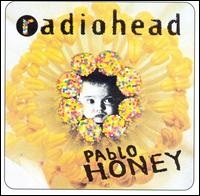
Pablo Honey - 1993 Capitol
6
(Mediocre)
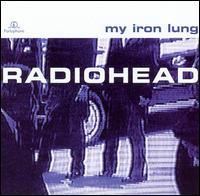
My Iron Lung (EP) - 1994 Capitol
8
(Good / Mediocre)
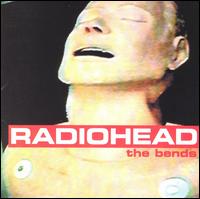
The Bends - 1995 Capitol
9
(Good)
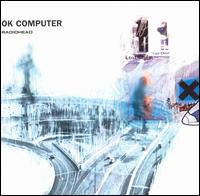
OK Computer - 1997 Capitol
B
(Very Good)
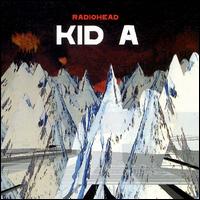
*Kid A - 2000 Capitol*
D
(Great / Very Good)

Amnesiac - 2001 Capitol
A
(Very Good / Good)
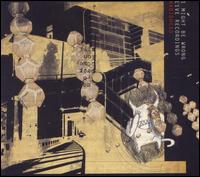
I Might Be Wrong (Live Recordings) - 2001 Capitol
C
(Very Good / Great)
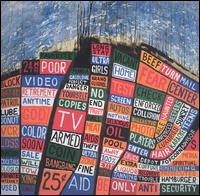
Hail To The Thief - 2003 Capitol
D
(Great / Very Good)
* opening 2 tracks: spectacular
* next 5: takes a bit of getting used to
* next 3: genius
* last 4 songs: absolute frickin' genius. Quite possibly A Punch-up..., Myxomatosis, Scatterbrain and A Wolf at the Door is the greatest
4 song closing sequence of any album since Abbey Road.
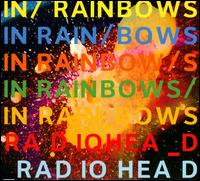
In Rainbows - 2007 Radiohead
B
(Very Good)
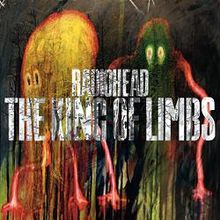
King Of Limbs - 2011 Radiohead
8
(Good / Mediocre)
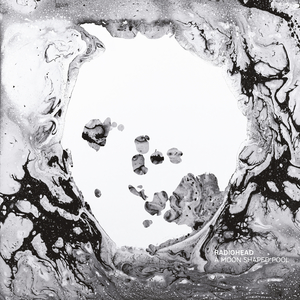
A Moon Shaped Pool - 2016 XL
A
(Very Good / Good)