For a brief period of time in the early 70's, Deep Purple was not just one of my favorite hard-rock or heavy-metal bands of all time (here in the present day, not back then, when I hadn't been born yet); they were my platonic ideal for a great metal band. The songwriting could vary a bit in quality, sure, but the sound, oh the sound. Stupid juvenile pseudo-mystical lyrics? Nope! Perfunctory references to Satanism or the occult? Nope! Power chords masking a lack of creative riffs? Nope! Just solid rock'n'roll, only with a heavier bottom, done at blazing speeds, with awesomely entertaining guitar and keyboard solos, and a louder-than-hell, oozing-with-confidence singer that could hit amazingly high notes in tune and with power to spare. And no pocketbook fantasy in the lyrics either - just girls, cars, buildings burning down and one instance of a person's fear during war. In short, excuse me while I fawn just a bit over In Rock through Made in Japan ...
Unfortunately, assessing Deep Purple means I also have to take into account all of the other years and albums of the band's life, and there's a lot of them. It's not as if all of the band's material outside their brief stretch of glory is bad, of course - they've done some very good albums in those times, and even the weaker albums have some good tracks. Despite the stretches of quality, though, and the surprising resurgence of the band from the mid-90's onward, I'd be quite surprised by the notion that somebody who hadn't heard any of the "classic" material but that had instead been introduced to the band through another avenue would have an immediate desire to get as much Purple as possible. Whether through making ill-advised replacements of "classic"-era members, or through a replacement guitarist accidentally making one of his arms numb from bad heroin, or the classic lineup members demonstrating their increasing inability over time to do classic material at classic quality, Deep Purple has done a fairly good job of ripping up a once-impeccable reputation. It's little wonder that the band is cited so often as one of the primary influences for This is Spinal Tap (though 80's Black Sabbath will always reign #1 in that department) - aside from lots of member turnover, there have been just a few too many albums where the band seems to think that it's hip and cool but really just sounds laughably lame and out-of-touch.
Still, why dwell on negatives? The fact is, when I think of Deep Purple, my mind does not instinctively associate them with all of their eventual shortcomings, but instead associates with them the first time I ever heard the first notes of "Speed King," and how within a minute-and-a-half of that track I had fallen in love with the band. Considering that I am nothing close to a habitual headbanger, and that something like Led Zeppelin II wears down my ears and psyche like nobody's business, that is one incredible accomplishment on the part of the group. I can only give them *** out of 5, since even the most incredible of 70's metal tires me out more other kinds of music can (give me a break, my first music love was the friggin' Moody Blues), but make no mistake, this is a special ***.
PS: You know what? Years upon years later, I've realized that the classic era of Deep Purple is still near and dear to my heart, and I enjoy Made in Japan as much as I ever did if not more. It may well be that I've become a fool for even considering this, but I am raising my grade of Made in Japan one notch, and thus Deep Purple is now a **** band for me. Yes, I like them that much more than Led Zeppelin, even if Deep Purple made so many bad albums and the worst Led Zeppelin ever did was "pretty good." So sue me.
PPS: I want to address in advance this notion, seemingly held by many, that classic Deep Purple is "not heavy metal." Defenders of this notion often cite the fact that Purple keyboardist Jon Lord says that he had never heard the term "heavy metal" until the early 80's. Fact is, heavy metal is a term that has been around in music circles since the writeup of a '67 or '68 Jimi Hendrix show. Furthermore, it was used very early in Led Zeppelin's career to distinguish between their sound and the brand of hard rock that had come before it, mainly because the first two Led Zeppelin albums were, in many ways, fundamentally different from previous brands of hard rock (e.g. Cream). Bands before this never had such wake-the-dead drumming or operatic wailing or such an emphasis on the bass "weighing down" the main guitar sound as existed on, say, "Dazed and Confused."
As for the notion that heavy metal only came into existence with Metallica et al in the early 80's, please - they helped develop thrash metal, a subset of heavy metal, not metal itself. That thrash metal became one of the preferred forms of metal should not be confused with saying that thrash metal is the same as all metal. Frankly, saying that, because of the existence of Metallica, previous bands such as Zep, Purple and Sabbath can't be classified as metal, is only a few steps away from saying that Chuck Berry can't be considered a rock musician because of the existence of Hendrix. Furthermore, saying that Deep Purple isn't metal because you like Purple but don't like thrash metal (or hair metal, for that matter) is very sloppy thinking - using genre divisions as a substitute for "good" and "bad" is a just waste of vocabulary.
What do you think of Deep Purple?
Eric B. (sonicdeath10.hotmail.com) (1/26/04)
yessssssssssssss deep purple is great. i haven't heard their early stuff,
stuff from in rock to machine head. ian gillian is one of the best
singers i've ever heard. not just in the metal genre. EVER. he's got so
much power. and his tone is amazing. i never heard their other singer
though, except for hush and he sounds quite good. i really need to pick
up many more of their albums. as it is, i've only heard all of machine
head and some of in rock.
Barry Stoller (barrystoller.utopia2000.org) (10/11/04)
Anyone interested in or impressed by DP should definitely give
mid-period Bloodrock a spin. Emphasis on twisted' lead guitar and
flailing' Hammond B-3, rough rockin' vocals, tough-ass drumming - and,
above all, seriously better songwriting. Made In Japan pales in
comparison to Bloodrock Live! And, here's the best part: after 1974,
they called it quits; no embarrassing reunions to endure.
jdickson (jed.dickson171.fsnet.co.uk) (10/19/04)
I agree very much with your critique of Deep purple. I was a huge fan of
them in my final school year in 1988. Machine Head was truly a revelation
the first time I heard it. After each song I thought that there must be a
stumbling block somehwere. No way could an album be this good! Then after
Lazy I resigned myself to what must be an anticlimax. But no, they
perform Space truckin'... and do they deliver. I have been truly blown
away. And hearing the guitar fenzy intro to Speed King (on the Uk version
anyway) is something that I don't believe anyone could forget.
Great , except that was in 1988. These days I can hear Deep Purples
flaws. For my money they only made 2 truly great albums, In Rock and
Machine Head. (I never was all that keen on Made In Japan myself.) Of
course they'be made some great songs after that in their career, but
those songs sandwiched between some real bog standard schlock rock.
Firstly Ritchie Blackmore is easily my favouruite guitarist. For a while
I hought it was Hendrix, but then I realised that I was really following
the herd - you're supposed to think Hendrix is the best. Hendrix is still
great, but Blackmore is the kind of guitarist that makes you save up so
that you can buy a better hi fi system to better appreciate him. He can
wring so much emotion out Iof that strat. Every solo sounds spontaneous.
Some guitarists sound as if they're just reading off a music sheet as
they play but Blackmore often sounds as if he's conjuring something out
from his subconcious. Blackmore is the keystone of Deep Purple to me.
In all truth I never thought Gillan was that great myself, but he gets
the job done. You can do worse.
Live they could be fascinating, with Blackmore and Gillan almost seeming
to join forces and battle against John Lord. But often their jams are
too long and pointless for my taste. (For my money the best live band is
Iron Maiden, but that's another story...) I could take a concert of
theirs and cut it down by a third and not miss anything. Well 70s Deep
Purple was good. 1988s Nobody's Perfect remains one of the most
disapponting albums I've ever bought
Smoke On The Water is one of the best riffs of all time. I can't explain
why. It's so simple, but it's literally unforgettable. I'd bet Beethoven
had wished he'd thought of it! And there are many other great riffs
sprinkled throughout the albums.
Those are the pros. Now the cons...
Deep Purple lyrcis are AWFUL. In some ways it must take a genius to come
up with stuff as bad as that. "The Rolling Truck Stones"??? "Got a black
breast Chinese eyes"??? "yeah yeah yeah the freak said man those cats can
really swing"??? That's hilariously bad. But having said that lyrics
don't really matter much to me. I'm much more concerned with the music.
I hate Coverdales smug overblown vocal technique. If Covedale ever wrote
an autobiography I bet he'd title it "Diaries of A Rock God" or
something. He strikes me as the type who would listen to a playback of
his vocals and say in a deadpan voice "My God I can sing" The whole
Coverdale era is ego soaked silly funk rock. it's relieved by the great
solo of "A" 200 though. The Coverdale era reamins my least favourite Deep
Purple. I'd even take the hit and miss Mk 1 Deep Purple over it. At
least it could be interesting at times.
And often their albums were marred with stupid attempts to sound current,
especially when it came to keyboards. I used to Love House Of Blue Light but now the synths sound almost laughable. In some ways it's as annoying
as Boticelli making a great painting and then deciding on painting in
some Andy Warhol-esque Campbell soup cans somewhere because he'd heard
that they were all the rage. I can listen to 80s Deep Purple and enjoy
it a lot of the time, but I have to keep telling my self that I'm
imagining the keyboards.
Overall a band that coud achieve absolute GREATNESS at their best, but
too often bogged down in badly judged career moves. They're a real
revolving door of a band. They remain one of the most interesting bands
of all time to me, even if it's not pondering on what they've done , but
what they could have done...
SID GRUBBS (08/25/06)
I am THEMOJOMAN (reg.ustm) air personality from 1958 up thru the
70's--so many have tried to get me to go back--if I did I'd surely be
on a CLASSIC ROCKER playing all the HEAVY STUFF. I've loved DEEP
PURPLE since I was on WCEF Parkersburg,W.Va. back in 68. Worked 9
stations got out because ROCK RADIO became a machine and THE
REVOLVING DOOR OR ROCK RADIO KEPT HITTING ME IN THE BUTT. Keep On
Keepin' On Sid Grubbs--THEMOJOMAN.
Suldog.aol.com (10/05/08)
Excellent job on the Deep Purple reviews. As one of their most ardent
fans, I can tell you that you fairly much hit the nail on the head
most times.
(I enjoy Paice's drum solos, but I won't argue that point with you.)
Just thought that I'd turn you on to a couple of things, in return
for the excellent work.
One - There is a version of the "Rapture Of The Deep" CD that
consists of TWO CDs, as opposed to the one you reviewed. The second
CD contains a couple of studio cuts and a short live set. Two tracks
to recommend it: "The Well-Dressed Guitar" is a magnificent
guitar-keyboard showcase for Morse and Airey. Neo-Classical, with
some very intricate lines. From the live set, I particularly enjoyed
"Highway Star." The intro, with Glover and Morse jamming while
building up to the Gillan scream, is wonderful. The Gillan scream, of
course, is not what it once was :-(
Two - There is a 2-CD live set from 1971 (as I recall) and it is
called "Scandinavian Nights." It was recorded in (duh) Denmark with
the Mk II line-up. I'm fairly certain you'd enjoy this one. The track
listing:
Wring That Neck 34.33 Speed King 11.01 Into The Fire 4.39 Paint It
Black 9.29 (Yes, The Stones' song. Really, just an excuse for Paice's
solo, though...) Mandrake Root 29.42 Child In Time 19.18 Black Night
7.29
As you can readily tell by the times, lots of jamming going on here.
Hope you have a chance to enjoy these.
Also, there is a DVD available, chronicling a different concert in
Denmark. The title is also "Scandinavian Nights." Believe me, it is a
different concert, perhaps from '72. Well worth having. The camera
work, for the first couple of songs, is hideous. Obviously, the
Danish TV guys had no idea who was playing what - they focus on
Gillan during a Blackmore solo, for instance - but it gets
straightened out after a few minutes and then - WOW! Watching
Blackmore and Lord and Paice do their things - amazing.
Track listing:
1. Highway star (Blackmore/Gillan/Glover/Lord/Paice) 6.24
So glad to find a man who appreciates Deep Purple, as I do, without
going all ga-ga fanboy (even though I've been known to do that when
I've seen them live...)
Mark Nieuweboer (ismaninb.teacher.com) (06/13/09)
Like many people when I write Deep Purple I mean Mark II
of the seventies. For the short period of four years Mark
II was very hard hitting; in 1972 it managed to blow away
anyone. So all my remarks are addressed to this line-up.
Did I write that Led Zeppelin was the best rockband ever?
Of course Deep Purple was. I mean - Gillan vs Plant,
Blackmore vs Page, Lord vs Jones (on keyboards), that's a
no-brainer, isn't it? Not quite.
When it comes to instrumentation Led Zeppelin has to be
favoured. The five members of Deep Purple hardly ever
contributed equally. A Deep Purple composition almost
always has a strict separation between the accompaniment
and the solist. So while Led Zeppelin rewards polyphonic
listening Deep Purple does not. One has to focus on the
leading instrument. Which one is my favourite rockband
then? Why, Uriah Heep of course. No band ever combined
complex vocal harmonies, stomping metallic riffs and
melodic bass play like UH did. Never mind, I am getting
too old for questions like this.
Fortunately Deep Purple had three excellent solists and
made full use of them. Someone claimed that Led Zeppelin
could do ten different versions of the same song with the
same quality. That's not true; Deep Purple could. From
that glorious period there must be almost ten versions of
Child in Time indeed and they all rule. I can see why the
true fan wants them all. For me three suffice and that is
highly exceptional. Usually I have one clear favourite. I
mean, I don't have three recordings of any Tchaikovsky or
Shostakovitch symphony either.
The Lord/Blackmore dispute on musical direction was not
really a conflict. The band had suffered from non-selling
and had to decide which musical direction to take. Lord
and Blackmore agreed to try two: symphonic rock and
hardrock. Blackmore once said that he was willing to play
Concerto stuff for the rest of his life if In Rock had
been a failure. We know now it wasn't, but that does not
mean that all classical influences were removed. The
vocal part of Child in Time essentially consists of
variations on a theme. Blackmore's astonishing solo on
Highway Star is set on a chord progression of JS Bach.
The climax are his ascending arpeggio's - a technique
also used by Vivaldi and Schumann. There is more, besides
the Concerto and the Suite; if you ask me no band, not
even ELP, succeeded in incorporating classical music and
making it rock like Deep Purple. Blackmore continued this
for the rest of his career; one of his very last
rocksongs was an adaptation of Grieg's Hall of the
Mountain King. On stage it ruled as ever. Remember the
videoclip? How Blackmore's fingers danced all over the
fretboard?
Blackmore is my favourite guitarist. He was very
aggressive, though not the most aggressive of all. I
think of the S** Pistols and of contemporary
hardrock/metal bands. He was very fast, though not the
fastest of all. Even in the early 70's Alvin Lee was
faster. Blackmore was highly skilled, but not the most
skilled of them all. It's the combination of these three
qualities that made him exceptional. But what made him
truelly outstanding are his esthetical values.
The violin is the instrument that comes closest to the
human voice. A violin has to sing. That's exactly what
Blackmore did. He is about the only one whose solo's I
can reproduce in my head, humming them all day. Try that
with Hendrix, Clapton or even Page. Blackmore did not
make his guitar sing to please the ear though, like the
violin player. He sung a song of aggression, often mixed
with the related emotions of anger, despair, melancholy
and rebellion. It was him against the rest of the world.
No guitar player has expressed aggression with so much
skill as Blackmore, still always remaining melodic.
Being from 1963 I can witness that around 1975 hardrock
and heavy metal were synonymous. You see, by then only
four bands in the genre had made it really big: Black
Sabbath, Deep Purple, Led Zeppelin and Uriah Heep. Only
later, when lots of bands drew inspiration from one of
the founding four separating hardrock from heavy metal
made sense. So the whole discussion whether Deep Purple
made hardrock or heavy metal only shows wisdom in
retrospect. As Forsyth wrote, that quality is far more
common than foresight.
As I basically agree with McFerrin's reviews on the six
regular albums of Mark II and also on Made in Europe I
will mainly comment on the bonus material. I have noticed
that his ratings are influenced by the muffled
production, especially on Fireball and Machine Head. I
strongly recommend to purchase the remastered/remixed
CD's. I only did 1½ year ago and I regret not having done
it ten years earlier. It appears that those two albums
are on par with In Rock.
Tim Light (timlight99.hotmail.com) (8/13/11)
My gut reaction to this questions is "Deep Purple. Yeah. One of my favorite bands.". But actually, I only really like two of their
albums - In Rock and Machine Head.
My first exposure was Into The Fire, played very loud in the 6th form common room. I loved the catchy riff and deep base. Later I
grew to like the rest of the album, with its stunning vocals and clever interplay between Blackmore, Glover and Lord.
Then came Machine Head, on which the group achieved their peak of inventiveness. Highway Star starts off like any other rock
song, but then it goes wild. So many different things happen in the next 6 minutes that I'm left breathless, and grateful that
Maybe I'm a Leo is just like any other rocker. the brain doesn't get much rest, because Pictures of Home picks up where Highway
Star left off. It's not the pace of these tracks, it's the inventiveness, tightness and togetherness, all achieved at break-neck
speed. Smoke on the Water and Space Truckin are basically good rock songs with catchy riffs, neat solos and fine vocals. Good,
but maybe a bit overrated. I prefer Lazy, which has one of the most fabulous intros on any rock track, longer than the actual
song. I never get tired of this album.
What happened after that is well documented, but from my point of view it all went pear-shaped. In Rock and Machine Head are the
only Purple albums that I ever play, and they stand head and shoulders above anything else in the genre. Only Paranoid comes
close.
simon ross (ross378.live.co.uk) (05/13/13)
Googling for a review of the new album I came to your site;
The lyrics are AWFUL ...truly grindingly awful!!!!...but apart from that it's a great sound...
Still a fan of over 40 years
Damien Odell (damieno.bevisco.com.au) (05/13/13)
Hi mate,
Have you had a chance to review the new Deep Purple album ‘Now What’ as yet?
I’m kinda looking forward to hearing it....
I agree with your reviews of their recent efforts. I enjoyed Bananas, though for some weird reason it’s not available on itunes.
Perpendicular – Loved it for the most part.
Abandon to me was so unspectacular that I don’t think I ever listened through it more than twice.
Rapture of the Deep was equally bad, I think I may have even thrown it away along with its tin CD case.
The more I listen to Steve Morse though, the less I like him. I listened through Perfect Strangers album last week and there are
guitar solos in there that stick in my head and have done for years, it was very lyrical playing....I don’t get that with Steve
Morse. Regardless, I’m sure DP wouldn’t be around now if RB had stayed on.
Kurt Sherrick (volgasrotten.gmail.com) (12/13/16)
I grew up in Memphis and I have seen all the greats live except Hendrix. On stage no one compared to DP and Blackmore had no living peer. All bands had albums that didn't compare to their others like In Through the Back Door by LZ surprised it was released in my opinion it ruined their reputation as one of the greatest bands also a live album that could not pull off the songs from Houses of the Holy and Physical Graffiti. Hard to play all the dubbed guitar pieces live.But great studio albums.But DP on Made in Japan just made their songs better and contains two of the best live guitar solos ever recorded on Highway Star and Child in Time.The In Rock album changed the direction of Rock and Roll and millions of lives and I was one of them. I love Sabbath,Uriaheep,and early LZ all had strengths. But Deep Purple was the band that had the courage to forget the Memphis sound these guys grew up on and that's hard for me to say being Memphis born and raised
Uriaheep changed their music and name because they were listening through the walls while DP was recording In Rock and wow Heep put out a great first album thanks to DP Heep had great vocals and that sound they heard through the walls of the old school building. I have argued for 45 years why Deep Purple was a better band than LZ but I don't have a week to tell my case.
Best song: Hush
Ian Paice is behind the drums, and from the beginning proves to be the absolute perfect drummer for this group. Why is that, you may ask? It is because he has the technical skills and creativity to keep up with the rest of the group and follow the non-trivial rhythms that come with Blackmore and Lord solos, but also has the restraint to keep his drumming as the support of the band and to not attempt to dominate the sound (except, of course, for the occasional drum solo, sigh). In other words, none of this nonstop "Me Bonzo! Me see drum! Bonzo smash!" stuff that gets on my nerves with Led Zeppelin. But I digress. Rounding out the group are bassist Nick Simper, who is ok but largely indistinguishable, and Rod Evans, the lead singer, who sure does a good croon when the songs finally come around to vocal parts.
So what do all these parts add up to? They add up, in my opinion, to a band that's both quite impressive and quite average all at once. On the positive side, this band can play just fine - not only do the band members have solid technical skills, they sound and seem confident in their abilities to pull off their styles, not too creative amalgamations of other sources they may sometimes be, with a good understanding of what the hell it is they're doing, as well as with a nice amount of flair. On the minus side, both the originals and covers often feel a bit too much like exercises in style and technique; the originals sound like the band thought that having a song in a "poppy style" or "rock style" is enough, and the covers sound like the band just wanted to show off the cool things they could do with other people's tracks. This isn't to say the covers are necessarily bad exercises, of course - their cover of "Hush" by some guy named Joe South is freaking great, a nice upbeat pop song turned into a cross between a nice upbeat pop song and a trippy-as-hell anthem with all sorts of cool keyboard sounds and guitar wails and all those other things that make Purple Purple. Their cover of Cream's "I'm So Glad" is also quite enjoyable, even though it requires sitting through a lengthy Lord-driven introduction, which isn't awful but doesn't hold my attention long beyond a minute or so. The song itself kinda rules, though, if only because it's so faithful to the feel and vibe of the original, even though it doesn't sound like a carbon copy at all.
The other two covers are a little worse, though. "Help!," by John Lennon (of course), gets a pleasant-but-not-really-necessary intro and outro (consisting of the band slowly puttering on a quiet guitar theme), while the actual song is turned into a slooooooooow ballad climaxed by (of course) Jon and Ritchie each getting a chance at an anthemic solo. It's not bad, but six minutes is a bit much for such a thing, in my opinion. A bit much would be an understatement for the closing "Hey Joe," though, which starts off with a two-minute+ introduction that works off the rhythm of Ravel's "Bolero" (with all sorts of usual organ and guitar puttering - not that it's bad, just a bit aimless), before finally getting into the song, done at a slooooooow tempo as a soul ballad. Except for the parts that work off the themes of the introduction, of course. In other words, it takes 7:29 to get through freakin' "Hey Joe."
As for the originals, well, they're ok in their own way. "And the Address" is an alright opener, an instrumental that opens with a minute of organ effects before turning into acres of solos based around an occasional riff and subsequent groove. Fortunately, the riff is ok, and the solos are as entertaining as anything else on the record, so while this "song" is a bit too self-indulgent wanky, it's at least a decently done self-indulgent wanky. "Mandrake Root" is a straightup ripoff of "Foxy Lady," but a disturbingly enjoyable ripoff nontheless. And hey, the surf-rocker "Love Help Me" has some more great guitar wailing to go with the standard surf elements. On the other hand, "One More Rainy Day" is too sappy and flacid for my tastes, especially in the vocal parts, and definitely shows that the band didn't really know what it was doing in "conventional" songwriting.
For all that, I wouldn't want to give this less than an 8. For all the ripoffs and unrestrained soloing, there's nevertheless a great deal of enthusiasm coming out of this album, and competent enthusiasm at that, that's quite infectious to yours truly. They kinda remind me, at this point, of the very first incarnation of Yes that would come into being a year later, albeit with their songwriting skills a little less developed, and that can't help but make me smile. At least a bit. Don't go running out to get this, but if you've filled up on Mk. II and want more Purple, this is a good place to turn.
trfesok.aol.com (09/13/11)
Well, this album is rather derivative, but loads of fun anyway. Blackmore is the worst offender in this regard in terms of playing
(although the shortage of originals was also problematic), but he did have ability right from the start. I think that Rod was a
great singer. Lord was the most accomplished musician at this point -- his organ solo is what turns "Hush" into a powerhouse. At
this point, he hadn't bitten off more than he could chew. "One More Rainy Day" is the oddes track, indeed (Beach Boys type
harmonies from Deep Purple?), but it is a cute little pop song. I agree with you -- the enthusiasm makes up for the gaps in
originality.
Best song: Listen, Learn, Read On
The rest of it, though, just sounds like the first album gone slightly sour, only forgetting to rock. Except for the good instrumental "Wring that Neck," based around a nice organ riff, there isn't a single piece here that can keep my mind from wandering more than, say, 50% of the time of the given track. Lessee, we have a Neil Diamond cover, "Kentucky Woman," which is ... ok. We have an extremely mediocre Beatles cover, "We Can Work it Out," preceded by an introduction that sounds to me (probably because I just finished reviewing them previous to this album) like Jon had decided that keyboard parts that would sound like the blueprint for the more mediocre Van Der Graaf Generator organ breaks would be a good idea. It also shows Paice, in a rare lapse of judgement, trying to make his drum parts more "profound" by making them as loud and echoey as possible. Meh.
Lessee, then there's "Shield," which starts off with a nice bassline, decent minimalist guitar, a decent vocal melody ... and just gets insanely tedious over six minutes. Then there's "Anthem," which is actually quite pleasant, even though it's dripping with schmaltz (and since it's over six minutes, naturally, this becomes a problem, which isn't really remedied by the sudden appearance of a string section in the middle). At least it has a pretty guitar solo, one of very few on the album. And finally, there's the band's cover of "River Deep, Mountain High" (by whom, I have no clue), which, excluding yet another silly, tedious, long organ-based introduction, is ... ok. Not memorable at all (except for the chorus), but pleasant in the slow parts and amusing in the fast parts.
You know, looking back at this review, I'm amazed that I give it as high a rating as I do - some reviewers absolutely trash the hell out of this album, and I can definitely see where they're coming from. Still, I don't outright hate anything on this album, except the disgraceful Beatles cover, and besides, the total hilarious naivety of the band in regards to what actually consists "good" music is at least somewhat charming. At the same time, it's still a rather tepid massacre of good taste, so I can't really put it in the "so awful it's great" category, like I do with ELP's Pictures at an Exhibition. If you see it in a cutout bin, consider it, but otherwise, don't bother.
trfesok.aol.com (09/13/11)
More or less of a clone of the first album, with a bit of stretching into new areas. For instance, I disagree about "Anthem". I
find it a very emotional and moving song, and the string arrangement which comes in actually complements the song nicely. However,
the attempt to become mystic utterly fails. I can't believe you picked "LLRO"as the best track! For me, it's the worst. The tempo
of the backing track is so frenetic that they're barely holding it together, and then Rod intones his silly lyrics invoking the
spirit of Taliesyn. Taliesyn was supposedly the poet in King Arthur's court, but I can't really imagine him regaling the king with
lyrics like "Kentucky woman shines with her own kind of light." Nonetheless, they do a good job with it, the best of three covers
(even if it is an obvious attempt to rehash "Hush"). I don't hate "We Can Work it Out" as much as you do, but it's not as inspired
as "Help", and the "Exposition" intro (supposedly a ripoff of Rimsky-Korsakov) is pointless filler.
And you don't know who did "River Deep, Mountain High"? For shame! It's the last, and best of Phil Spector's famous "Wall of Sound"
singles, featuring a fantastic lead vocal from Tina Turner. Not surprised, actually, that you don't know it, since it flopped in
the U.S., but was a huge hit in the UK. But Spector packs more majesty and power in his three minute single than Purple does in
their entire ten minutes of tedium. They really beat it to death, again coming off as filler.
On the other hand, "The Shield" succeeds where "LLRO" fails in evoking a strange, otherworldly atmosphere, and "Wring That Neck" is really the first important showcase for Blackmore as well as Lord. On the whole, though, I have to agree that this is a bit of a
downturn from the first album. DP had yet to hit their stride.
Best song: No real clue
The opening "Chasing Shadows," for instance, combines a very crisp, punchy pop song with an incredible percussion rhythm, the first real sign that Paice had developed a style of his own (as opposed to being a really good imitator of Mitch Mitchell). I'd like a little more Ritchie here, who's basically shoved into the background except for one nice solo, but what's here is fine, and Lord's organ solos show that he'd figured out how to make his endless solos go somewhere. Besides, Rod Evans sounds more convincing as a "rocker" on this track than he had on any part of the first two albums, so that's definitely something.
"Blind" is a pop ballad doesn't entertain that much (except for the harpsichord throughout - hey, if a good melody was attached, it could pass for Kinks! Well, maybe not), but the cover of the Donovan track "Lalena" is plenty entertaining, thanks to Evans' delivery. Oh sure, the lyrics have some lousy rhymes, but Evans makes the track emotional despite them almost by his lonesome; sure, the soft melody and organ solo help, too, yet it's definitely Rod's show here. No significant Ritchie dose, but I only notice that after the fact, as I'm too busy enjoying the track when it's on.
Up next is the traditional instrumental-leading-to-a-pop-song track, this time breaking the pattern by doing an original instead of a cover for the track. It also somewhat breaks the pattern by making the instrumental section really interesting - what the hell are these backwards cymbal noises (I think that's what it is, correct me if I'm wrong) doing back in 1969?? Add in a great fuzzy bass riff, some eerie organ noises and a quiet, menacing guitar part (before ending in a really whacky way), and you have something a hundred times as interesting as the corresponding instrumentals on the last two albums. The main song, "The Painter," then manages to rock like a mother in parts, with a fine groove augmented by (you guessed it) great guitar and organ solos that preview the entertaining work of Mk. II well, albeit at about half-speed.
And then ... more rock! "Why Didn't Rosemary?" is a fine fine piece of blues rock, a practically textbook example of how to make generic mid-tempo rock entertaining. Great guitar solos (Ritchie was getting ready to explode, you see)? Check. Great singing? Check. Great organ? Check. Great drum groove? Check. "Bird Has Flown" is a bit weaker to my ears, since I don't dig Evans' singing here as much as before, but it's definitely worth it if only for the background wah-wah.
Finally, there's "April," the big classical-meets-rock suite. Well, sorta - it's more a band-plays-moody-theme/leaves/orchestra-plays-classical-theme/leaves/band-comes-in-and-rocks suite. The ending "rock" part is a bit too tepid for my tastes (that is, it ostensibly "rocks out," but I can definitely agree with the assessment of some that there's not enough real fire to be found), but the initial theme that the band plays is extremely interesting - that is, if you're into slow, moody electric guitar notes over a somewhat martial acoustic-guitar+organ theme. The choir is a bit of a tacky touch, if you ask me, but whatever. The orchestra section is ok, too.
So that's the end of Deep Purple Mk. 1 - very, very good in some places, no worse than ok in others. Evans and Simper got fired sometime after this album was released, which is probably a good thing (considering that the "classic" Purple albums would hardly be possible with them in the lineup), but it should definitely not be said that they exited after a poor album. Unless, of course, you reeeeeally crave headbanging, in which case you should probably stay away for a while.
Joseph Scott (joebscott.msn.com) (02/11/06)
Deep Purple's eponymous 1969 album, good call, it's a classic.
Love the web-site.
trfesok.aol.com (09/13/11)
The Deep Purple album for people who don't like Deep Purple. For me, it's the end of the line for the group, not being much into
the metal that came afterwards. The weakest track, for me, is the boring, silly "Lalena". I never quite understood the fascination
rock bands had for covering Donovan (King Crimson???), and DP is unable to alleviate the tedium of the original.
The rest, though -- very cool. Not just the songwriting and the performances, but the production and sound quality have also made a
big jump from the first two albums. Jon Lord gives the rest of the band a lot more room -- the dark percussion of "Chasing
Shadows", complementing the dark lyrics (about one of Lord's nightmares) perfectly. I actually think "Blind" has a good melody to
go with the harpsichord arrangement, something else not found on the first two albums. According to the liner notes, "Fault Line"
is indeed underpinned by a backward tape loop of cymbals, meant to evoke a California earthquake! The next two tracks are
enjoyable, if somewhat derivative, examples of blues rock, but at least they have unusual lyrics (a blues song about birth
control?).
Finally, "April" is the best of Lord's rock-meets-classical attempts, although the ending lyrics are rather ordinary and
unnecessary (like in the Concerto). Unlike the Concerto, the variations on the themes work well.
An album more for prog and art rock fans than Purple's usual fan base. The former will find it excellent, but I'm not sure what the
latter made of it, once they were eventually able to find it.
Best song: Hush
The "Concerto" itself, which makes up the last two thirds of the album, is ridiculous. The "classical" portions are mediocre movie soundtrack quality at best; I guess the same thing could be said about the orchestrations on Days of Future Passed, an album I love, but those orchestrations existed to augment the moods of the actual songs and provide segues. The orchestrations here are meant to be treated as crucial portions of large-scale composition, and they're just not interesting enough to work that way. Parts go loud, parts go soft, and above all parts go nowhere. And the portions where the band joins in, gah ... There's an ok song buried inside the second movement (though the thought of Ian Gillan being forced to sing pretentious, meaningless prog lyrics is one I find bothersome; aren't lyrics like this anathema to Ian's purpose of existence?), but the rest is a bunch of alarmingly uninteresting group jamming interspersed with what sounds like Blackmore playing warmups. No thanks.
Oh, and did I mention that the central feature of the third movement is a drum solo? Did I also mention that the "encore" involves the band and orchestra going through the section with the drum solo a second time? Sheesh ...
The thing that redeems this album, at least slightly, is that the expanded version includes the band's opening set, sans orchestra, which is actually pretty decent. The opening performance of "Hush" is flat out great, with Gillan putting more gusto into his vocals than Evans did, and the band is super tight. "Wring that Neck" and "Child in Time" aren't done at their very best, as the band doesn't yet have the telepathic chemistry that would make the band so amazing within a couple of years, but they're decent enough, at least if your wank-tolerance is at a reasonable level.
Still, that's not a ringing endorsement, is it. That 5 is awfully close to a 4, and should be regarded accordingly. At least the band didn't make this sort of thing its primary focus in the future ...
Trfesok.aol.com (06/01/08)
Jon Lord must have had incredible powers of persuasion, since he
somehow convinced both his band and Sir Malcolm Arnold, one of the
most respected names in British classical music, to go along with
this thing. I'm afraid it doesn't quite work for me, either. I do
like the classical sections a bit better than you do. They probably
could have worked well enough on their own. But the band's sections
are quite unfocused, and I find the drum solo intolerable. Ian Gillan
sounds more like Rod Evans than himself in his portion. The rock and
classical blend not only doesn't happen -- the orchestra and the band
pretty much clash with each other. Another example of prog biting off
more than it could chew. Lord should have left well enough alone with
"April".
Best song: Child In Time (honorable mention: Speed King)
The greatest improvement for the band from the previous studio albums, of course, comes from picking up Gillan to sing. As alluded to in the band introduction, Gillan, in his prime, was one of the greatest vocalists in all of rock music, and certainly at or near the top among all heavy metal singers ever. Not only did he have a great "normal" voice, a solid tenor with ever-present low-key power, but he also had one of the best "screaming" voices I've ever heard. It's difficult for me to fathom that anybody in rock could hit high notes the way he could (often in vibrato, no less), not only showing a range that could rival Jon Anderson but also staying totally in tune, all the while maintaining a resonant force in the sound (as opposed to merely hitting the high notes for their own sake). In short, he was the perfect metal vocalist.
That said, making In Rock was not merely a function of taking the sound on previous DP albums and slightly modifying it to account for a new vocalist. In particular, Ritchie sounds completely reborn on this album, as he amply demonstrates that his reduced role in the last two albums was not a function of reduced ability but rather of impaired judgement on the part of Lord and other relevant parties. His solos and riffage are given the prominent place in the mix that they deserve, as opposed to seemingly disappearing for minutes at a time as before, and they're well worth it - the guitarwork on this album is some of the most entertaining I've ever heard in my life, combining well-conceived "show-off" shredding with just enough sloppiness to give it an edge (and in the process make it that much more entertaining, much like Hendrix used to do). Jon reduces his role from before a bit in order to make room for Ritchie, but that just means he's conceded enough to become an equal partner with Blackmore - he gets his fair share of incredible keyboard solos and sounds on this album, and what's most impressive is how so many of them interact so tightly with the guitar parts that it seems they came from the same mind. Add in that Paice could do whatever the heck was required of him, and that Glover had no limit to how low he wanted the bottom of the sound to go, and you have the workings of one hell of a metal band and album.
The end result of all this is an amazing combination of songwriting and showmanship, a collection of seemingly a zillion notes with only a few wasted, and a band that can balance incredible chops with a tightness that few have ever rivaled. If pressed for "weak" tracks, I could single out side two's "Into the Fire" and "Living Wreck" as somewhat weaker than the rest. The former does seemingly "plod" a bit too much, especially in comparison to the speed-of-sound tempos of the rest of the album, but on the other hand it has a GREAT introductory riff, and the mid-tempo rhythm stomps SO much on each beat that it really becomes fascinating. In other words, it may seem like a weak DP track, but it would make a GREAT Black Sabbath track. The latter also seems like a bit of a toss-off in comparison to the rest of the album, but again these things are only relative; the slightly "airy" production helps give the drum intro a nice effect, the "screaming" sound Lord coaxes out of his organ at times is disturbing as hell, the lyrics are amusing, the riff is perfectly decent ... in short, it's weak compared to the high points of the album, but still plenty fine on its own.
The other five tracks, then, range from "excellent" to "indescribably awesome." The only one that I consider just "excellent" is the album closer, "Hard Loving Man," and that's largely an effect of me getting tired by album's end. It's also partially an effect of the song being based a little too much on the blazing speed of the main rhythm track, as opposed to a particularly interesting riff, than I'd prefer, but that's just the nerdy nitpicker in me talking. The headbanger in me has a blast when it's on, as my foot doesn't stop twitching (as opposed to tapping, which is impossible because the song's too fast) for almost the entire time as the rhythm is covered with ear-piercing organ and guitar solos, before ending with Ritchie having some feedback and stereo-panning fun.
And then there's the first four tracks. Honestly, I don't think the opening "Speed King" gets its proper dues in general - I often (at least, more than I'd prefer) see reviews of the album refer to the lyrics as "stupid" or "immature," (they're based around cliches from 50's lyrics) and from time to time this seemingly causes people to think of the opening track as a bit of a tossoff. Personally, I think nothing could be further from the truth. Simply put, I think of this track as one of the best "calling card" numbers with which I've ever heard a band open an album. This is basic, primal, gut-instinct rock'n'roll that just happens to be faster, heavier and louder than what people had previously thought basic, primal, gut-instinct rock'n'roll could be. The first minute of the track seemingly screams out, "Hey! You don't necessarily need to make rock music more complicated or more vulgar or more serious to make it better; if you want, you can just make it kick more ass!" Of course, the song doesn't just contain that awesome series of heavy riffs and glorious Gillan singing that makes up the first minute - within a minute-and-a-half after that, Blackmore and Lord have presented us with jazzy/neo-classical/whatever interplay that practically makes all their interplay of the first three albums irrelevant. And then, more glorious screams, more glorious riffage, a spooky laugh ... damn, what a song.
The argument could be made, though, that the next track, "Bloodsucker," is even better. Holy cow, WHAT AN OPENING RIFF. Listen to how tight these guys are, working their way through all sorts of starts-and-stops that don't seem forced at all, with Ritchie and Jon trading off solos over a rhythm section that sounds like it could go until the end of time. Ian is the main star of the song, though, as his "OOH NO NO NOOOOOO!!" screams beat the crap out of anything Robert Plant could pull off even in his best days. Sheesh, and then there's the side two opener, "Flight of the Rat," which is basically garage rock (with another fabulous main riff) done at an unstoppably fast tempo, replete with enough brief ass-kicking solos to fill an entire side of a normal band's album. Man, if you're not sold on the band by the time you've gone through that amazing Lord part in the fourth minute, followed by Ritchie soloing like a madman in the fifth, capped by those funky-as-hell wah-wah's starting at the 4:48 Mk., there's just no hope for you with this band.
Yet for all that, it's the amazing side-one closer that ensures the album of such a high grade. "Child in Time" is arguably the first prog-metal piece ever, and while that genre has definitely had its fair share of ups and downs, few pieces of that type can match the original. The main slow organ theme is a welcome respite from the speed of the first two tracks, the main verse melody (with lyrics about being in a war, scared of the seeming inevitability of dying) is freaking gorgeous, and the whole thing just seemingly oozes a sense of majesty. Yet what is most impressive about it is how natural the majesty sounds - it's not the result of an artificial atmosphere, created by automated strumming of some simple chords and singing about various pot-induced fantasies, but instead comes straight from the performances themselves and not from the band jumping out of its skin to go "you're supposed to catch the atmosphere now." (Not that I necessarily dislike this approach, you see - Yes does it all the time - but it is definitely novel to see a band pull off majesty in the way DP does so here). This especially becomes obvious when Ian starts singing his "ooh's" and "aah's" in his falsetto, before stepping it up a notch (both in octave and performance) and belting out some of the most blood-chilling high-pitched in-tune screams I've ever heard. And, oh man, I really cannot explain how much in awe I am of the band as they slowly crescendo to match Gillan, before going into that brief sequence starting at 3:21 that has got to be one of the most grandiose stretches I've ever heard from any rock band ever.
And sheesh, it's just beginning at this point. Blackmore does some excellent slow, "heavenly" soloing over the verse theme for a bit, until the 4:07 Mk. when he breaks out his hyper-speedy, hyper-moving "apocalyptic" guitar parts for a couple of minutes, before Lord synchs up with him and the band plays off of Ritchie before crashing to a halt exactly two minutes later. Then the "main" part starts again, the Gillan-led catharsis re-enters, and it's all capped off with a (TIGHT AS HELL) race-to-the-finish climax (with a bunch of anguished Gillan screams) that ends on a giant, loud, long chord. I mean, damn.
In short, as far as I'm concerned, this is close to as perfect as heavy metal can get. I can't give it higher than a D because I tend to get exhausted when my brain spends a whole album getting bashed in with a sledgehammer (as all "pure" metal albums, even this one, tend to do), but that's my problem. If you're a headbanger who doesn't like this album, well, I guess I just don't understand headbangers at all. DP would come close to the quality of this in some songs, but never again would they make an entire album this close to immaculate.
PS: I finally heard the "full" version of "Speed King" everybody below was raving about. It really is as great as it's cracked up to be. Truth be told, I think the abrupt cut-in works better in the context of the album, but for the song by itself, the introduction makes a big positive difference.
Frank H. Walters (hunter.walters.juno.com) (2/02/04)
Hello John,
As a quick introduction, I have been digesting yours and George's sites
for quite some time now(about a year and a half), and both were the
primary sparks that ignited my interest in music. I have seen that you
both share very similar musical philosophies, and I am in darn near
total agreement with both. So just be comforted that I'm right there in
spirit backing y'all up every step of the way.
Anyway, since yer on Deep Purple, what's this thing about "speed king"
having some mind-boggling intro that was lopped off of the album version.
I have the album, where it just starts with the riff, but I noticed that
on the tracklist of that "deepest purple" comp that the "speed king" on
there has a longer running time of 5:03. Have you heard this and is it
anything special?
Have a nice day, and carry on!
(author's note): Note to self: FIND THIS TRACK.
Nathan (nator9999.comcast.net) (2/11/04)
This is more of a response to the other reader comment on this page: I
heard this version of Speed King and it is actually a lot different, with
an organ solo, and it seems faster, and all a bunch of little studio
tweaks. I'm not sure it's actually better, but it's definitely worth
checking out.
Ratko H. (stormbrew2020.yahoo.com) (2/11/04)
Great reviews, as usual. I've been keeping an eye on this site for a long
time, but this is the first time I felt I should comment on any of the
reviews.
Anyway, I agree with your review and I just wanted to put in my two cents
worth about this whole 'Speed King' business. I think the regular album
version of this track clocks around the 4:20 Mk., and indeed, I just had
a look at what AMG had to say about "Deepest Purple" and sure enough,
that version is a bit longer, clocking at 5:03. Funny thing is, way back
before I bought any of Deep Purple's albums I bought a stellar 2CD
compilation called "30: Years: The Very Best Of". That particular
compilation had an even longer version of 'Speed King', clocking at 5:50.
The liner notes claimed that it's the original, non-edited track.
Now, I haven't heard the version on "Deepest Purple", but between the
album version and this "original", I'd prefer the latter by far. I mean,
I'm not that great on describing songs but I really love this "storming"
intro to the song. It pretty much sounds like a Hendrix-like feedback
blast. It lasts about 50 seconds or so and it's followed by a subtle,
rather pretty organ part (about 40 seconds in length). I dunno, maybe I
like this original so much because I've heard it before the edited album
version, but, anyway, I think it's great.
Btw, I'm eagerly awaiting more Deep Purple reviews and I hope you'll get
around reviewing their 90's output as well. I think it's amazingly solid.
Have a nice day!
Federico Fernández (fede_fer.fibertel.com.ar) (2/24/04)
Dear John
I know two versions of the song "Speed King".
The one I have as track n°1 in "In Rock" is really long, it clocks at
5:53 and it boasts a FEROCIOUS pure noise-metal intro that probably even
Hendrix would have drooled over. Then, the noise resolves in a short but
cool as hell organ intermezzo by Lord (in which he resolves a disonant
mistake with complete mastery), and the real song doesn't start until the
1:31 Mk.. Note that this version has NO PIANO at all, and the break
features a jazzy organ / guitar interplay by Lord and Ritchie.
The other one clocks at 4:15 and I have it in the compilation "30: The
Very Best Of" put as "single version", but I also have it as a bonus
track in my "In Rock" edition, together with some other singles of the
era like "Black Night". This version has Lord on PIANO and the
intrumental break showcases the same theme that in the original version,
but far tighter and more developed. On the other hand, there's no
introduction at all, just the singing from the very begining.
Which one I prefer... It depends. The original album version (the
longest) is considerably rawer, meaner, messier and sounds like a total
chaos for me... I like it, but I'd say I prefer the single version (the
shortest), just because is tighter and cleaner and the piano sounds
utterly great. But the original version has that COOL AS SHIT powerhouse
intro that leaves me in awe every time. Combine that intro with the piano
version and I have a top5 metal song.
I'd like to know which is the version that you're talking about in your
review... I suppose it has to be the original album version (5:13) but as
you don't describe the intro, I have my doubts. Hope this helps.
(author's note): My CD has the 4:18 version. Strange.
The album? Right, it's awesome. I love all the tracks and I'd give it a
9, even when this is not the kind of rock and roll that I love the most.
Bye John
Andy Thompson (andy.thompson.virgin.net) (4/07/04)
Hi John
For some unknown (and moronic) reason, Purple's US label decided to lop
off the song's intro for its American release - incredibly, it seems that
this is the version that's made it to CD on your side of the pond. The
UK/European release has the intro intact on all versions. You need to
hear this!
brian.math.ucsb.edu (5/12/04)
Great review, as usual. When I heard "Machine Head", I thought that it was very
good, though I was never completely blown away. That is definitely not a
problem for "In Rock". However, just rocking hard is not the reason I hold this
album in such a high regard. The songwriting is more than adequate here. And,
the riffs within are very memorable.
It is funny you mention that you feel a bit worn out toward the end of this
album; that is exactly how I felt the first few times I heard this album. My
pick for best song is "Child In Time", which coincdentally holds my favorite
Blackmore solo (both parts really) as well. Score: 10(13). [If I were more of
a 'metalhead', a 14 would not be out of the question.]
Edgar Dexter (mredgar47.yahoo.com) (02/27/07)
Just thought I'd elaborate for those who're unaware - the full,
unedited studio version of "Speed King" begins with a approximately a
minute-and-a-half of raucous instrumentation titled by the band, "The
Woffle". This was cut off the beginning on the original Warner
Brothers U.S. album releases of "In Rock" for what are & were,
basically, unknown reasons.
Mark Nieuweboer (ismaninb.teacher.com) (06/13/09)
The bonus tracks Black Night and Cry Free are important.
They fit very well on the album. It's a pity Gillan did
not provide vocals for the nameless song. It would have
been great. The piano version of Speed King ramshackles.
The remix of Flight of the Rat does not make any
difference. I can do without all the chatting. Being a
Blackmore worshipper I prefer the extended version of
Black Night - I don't want to miss a single note!
I have added Hush and Wring that Neck (Powerhouse; these
days the Concerto) to fill the CD. The latter could have
been called Variations on a Blues Theme and I like it
very much. The Jingle Bell quotation at the end is very
funny. The version on Scandinavian Nights, recorded in
Stockholm 1970, is way too long to my taste.
Into the Fire gets an excellent performance on
Scandinavian Nights and is turned into a really great
song.
Gary Milligan (gmilligan.atlasrestoration.com) (01/13/14)
This is my fav DP album.Still love Machine Head,but this I raw and refined at the same time.best DP track of all time Child In Time
with a close Speed King on it's tails.A Great album from start to finish.
Kurt Sherrick (volgasrotten.gmail.com) (12/13/16)
Who is this Brian math who says In Rock is over rated. Obviously he doesn't know that album changed rock from blues based Rock to something that no other band had done to real hard Rock with five guys that could play their instruments (Ian's voice was a instrument) better than any band as a whole in Rock History Led Zeppelin is the only band that could come close but they didn't have a classically trained Jon Lord and he perfected rhythm organ that matched a guitarist that loved classical music and performed Beethoven's ninth rock style live.Jon wrote the music for every instrument for The Royal Philharmonic. Only people that don't have a ear for classical music don't appreciate what a talent Jon Lord was talk that down. I have a question Who else in rock had that kind of musical mind. It was a first and stop and think how many bands started mixing their music with a symphony.Back to In Rock, Child in Time was what LZ tried to emulate with Stairway to Heaven. And other bands tried to incorporate a song like Child in Time.Freebird is another attempt to use that format and those two songs are what people remember the most when Led Zeppelin and Skynard are mentioned .In Rock is the reason millions of guitars were sold and drum sets. Rockers wanted to play like Deep Purple but Deep Purple was the hardest band to cover because the talent at each instrument and DP recorded In Rock and Machine Head were recorded in old buildings not a studio.and am going to Quote Brian May on Blackmore.(You may be fast and good and all but you aren't Ritchie Blackmore. He also said every one says Smoke on the Water is easy to play but no one can play it like Ritchie.)
Best song: Speed King
The album starts off somewhat conventionally, with "Speed King" (complete with rousing noisy introduction) stretched out in a way that feels "natural," if that makes sense. That is, it's made into an 11-minute piece (when the original was well less than half of that), but it does so by expanding the glorious midsection that already featured interplay between Lord and Blackmore. Ian gets in a fun interlude as well, and he clearly has a lot of enjoyment doing his own interplay with Ritchie. "Into the Fire" gets a slight expansion, but it's mostly done fairly close to the original, albeit with some fierce intensity (the only thing that bothers me is that Ian is very noticably flat through the entire song). "Child in Time," though, probably crosses a line of excess that it shouldn't. I mean, the usual "main" parts of the song are still as great and rousing as usual, but I kinda feel like part of the greatness of that section was the relative efficiency of it. Stretching the track to almost 20 minutes seems like a mistake to me, even if it's hard to identify a point where the playing becomes tedious, and I still genuinely enjoy this version (this is miles away from the mechanical, soul-less versions of the 80's and 90's).
Where the album predictably loses me is in the next three tracks. "Wring That Neck" and "Mandrake Root" are each stretched out to half an hour, and they sandwich (of course) a Paice drum solo (this time with "Paint it Black" serving as the intro and outro music). "Wring That Neck" could reasonably last a good 10 to 15 minutes (a pretty impressive feat, I think), but by the end it really feels like we're listening to warmup exercises by the guys as individuals and as a unit. "Mandrake Root" contains a lot of aspects that would later get reconstituted in the awesome live "Space Truckin'" performances, and there's some nice jamming beyond that, but again, how is somebody supposed to feel like listening to this for half an hour?
Fortunately, things end on a really rousing note with a fantastic rendition of the great single, "Black Night," done in a mere seven minutes. All in all, then, this is a really up-and-down album, and I'm not sure I'd recommend it as a whole to most Purple fans, but I'd definitely recommend the best parts. And, well, there's so much historical value that somebody with significant interest in the band will almost certainly want to hear all of it.
Best song: Strange Kind Of Woman
It starts out on a high note, of course, and a fairly expected one at that. "Fireball" would fit in perfectly well on In Rock, propelled by an awesome drum groove (kicking off the song), Ritchie's typically speedy riffage, Ian's typically great singing and some more goofily fast organ and guitar solos. Of course, I can barely hear Ian's great singing, but again, that's just a general flaw to be accepted about the album. That is, except on track three (of the US version, which I have), a single that was obviously recorded in a completely different session from everything else on here. "Strange Kind of Woman" is just about the perfect pop-blues-rock piece, one that packages the crrrrunch that Ritchie and the rhythm players could deliver into a melody that is just about impossible to stop singing for hours after the track is over. And, naturally, it also has the best guitar solo on the album. This track would get better live, but believe me, this version deserves all the credit it can get.
The other five tracks, though, are a bit puzzling to hear on a Mk. 2 Deep Purple album. "No No No" is the worst of these, acting almost as a parody of the band's successes on In Rock. It starts off as an ok mid-tempo stomping rocker, kinda like "Into the Fire," but not only does it not have as much crunchy power as its predecessor, it makes the mistake of going almost seven minutes without the various solos doing much interesting. Ritchie more or less succeeds in creating some trippy, "moody" guitar sounds in his part before moving into some rather mundane soloing, but Jon is largely intolerable as he plays a slooooow, boooooooring part using Tarkus noises but forgetting to make them fast or interesting. Meh. If you can make it through seven minutes of this, you're a better man than I.
Beyond this, we come to a country number ("Anyone's Daughter"), with an introduction featuring some beautiful slide work in places, before settling into the actual song. It isn't bad, but it won't knock "Dead Flowers" off its pedestal as my favorite country song anytime soon. The piano work is a nice touch, though. Then we come to a more-or-less psychedelic (!) number in "The Mule," which features a fantastic percussion groove combined with Easterny guitar lines. In theory, it should probably get boring, but it really doesn't - Ritchie gets an awesome solo in the middle, and the bulk of the rest manages to be so hypnotic, and the ending so percussion intense, that I can't honestly say that I don't enjoy the heck out of it.
The last two tracks are each quite long, and my feelings are mixed for them. I kinda like the quiet Gillan vocals over the quiet organ introduction to "Fools," but I'm not sure I'd stretch it out quite so long if it were up to me. The song itself ends up rocking pretty well in places, but danged if I don't notice the weak production here more than elsewhere on this album. And needless to say, making it more than eight minutes, where many stretches are slow guitar noodling over a (nice nevertheless) percussion pattern, is a bit excessive. Finally, the album ends with another well-written, well-arranged, badly produced rocker in "No One Came." On the one hand, the vocals are mixed hideously on this track; on the other, Gillan's delivery is hilarious (I love the way he says "And said man your music is really funky"), Lord's solos are interesting, and the "meat" of the track is plenty tight and crunchy for my tastes.
It may seem from reading that an A is a bit high for the description I've given. Maybe. Then again, there's only one track that I actively dislike, a couple I really enjoy, and the rest is intriguing at the worst. In other words, I may not be thrilled by this the way I am by In Rock, but I definitely don't dislike the album enough to give it less than a very good grade. An A it is.
PS: As mentioned before, I have the US version of the album. The UK version has a track called "Demon's Eye" (which I have not yet heard) in place of "Strange Kind of Woman."
PPS: The liner notes for the US version make reference to "bassist Ian Gillan and vocalist Roger Glover." Amazing.
ADDENDUM: The above review is for the un-remastered US version. The remastered UK version sounds great and, amazingly enough, is a better album with "Demon's Eye" than with "Strange Kind of Woman." The originally reviewed version gets a grade of A, the remastered UK version gets a grade of B.
brian.math.ucsb.edu (5/12/04)
"Strange Kind of Woman" is included as a bonus track to the copy of the album I
have. I am not too sure if this was a regular track to the original version of
the album (unless it is another one of those US/UK things). I really benjoy the
flow of this track. Oh, the rest is okay as well, though not quite as enjoyable
as "In Rock". And, I get the impression I don't like the title track as much as
I'm supposed to... 8(11)
Rob McNeil (rmcneil.pi-securities.com) (8/11/05)
You should get the UK version or "Deepest Purple" because "Demon's
Eye" is by far the best track they did during those sessions.Don't
know why they left it off the US copy,but when I finally got "Deepest
Purple" I was totally blown away by Ritchie's guitar playing on this
one.It's a Hendrix-like riff which drives the song and the solo has
Blackmore bending the notes all over the place.The solo is absolutely
one of Ritchie's finest ever."Fireball" is probably my least played
DP cd-wasn't focused enough for me guitarwise,but I like the reissue
with the extra tracks.
Mark Nieuweboer (ismaninb.teacher.com) (06/13/09)
Glover has done a very good job remastering this album.
McFerrin's main complaint is addressed at; Gillan sounds
as clear as on the previous album.
There is quite a lot of bonus material here and I like it
all. Strange kind of Woman was released as a single when
the recording of the album did not make good progress, so
it belongs here for certain. The jam contains a hilarious
interpretation of Rossini's Overture for the Barber of
Sevilla; not to be missed. The remix of No One Came is
better than the original, stressing the strong points of
the song. Of course I also prefer the extended version of
Demon's Eye.
No No No is a real stinker. Adding to McFerrin's
objections I want to remark that the verses and choruses
are way too similar and hardly distinguishable.
Best song: Highway Star or Smoke on the Water
Fortunately, several listens eventually brought me to my senses. I still think it's a little overrated (in other words, it doesn't make it to In Rock level for me), but only a little. The biggest problem for me, as on the last album, is the production; it's an improvement over Fireball, for sure, as there's way more crunch and grit here, but nothing blasts out of the speakers the way the opening of "Speed King" did, and Ian's voice is still mixed annoyingly low for my tastes. Otherwise, though, except for the slight monotony of the sound (they returned to the "basics" on this album, which on the one hand means the band does what it does best, but on the other means I get worn down the way I eventually do even on In Rock), and a couple of slightly less inspired numbers, this is friggin' glorious.
The megahit, of course, was "Smoke on the Water," which even I knew plenty well before getting into Purple, which says something considering that, as a rule, I avoid classic rock radio like the plague. I suppose there's no real use in describing the song, as the great simplistic riff and the story-telling lyrics are as essential to 70's rock as the parting of the Red Sea is to the Old Testament, but I will point out something that was brought to my attention by CapnMarvel (ie Ryan Atkinson): Paice, Glover and Lord basically set the standard here on how to turn a midtempo rocker into an immortal classic. And, oh man, is Ryan ever right to go nuts over the ending fadeout, where those three start playing an entirely different groove from the rest of the track, which may rock even harder than what they'd been doing previously. Simply glorious.
That said, while "Smoke" is midtempo Purple bliss, I tend to lean more to the faster Purple numbers, which is why "Highway Star" shares the best song title with Smoke. The Made in Japan version of this may be where I get most of my jollies, but let's not give short-shrift to the studio version of this, one of the most glorious speedy, heavy rock songs I've ever come across in my life. Lessee, we have brilliant singing, starting with an incredible scream. We have lyrics as unpretentious as can be ("Nobody gonna beat my car, gonna race it to the ground"). We have the instruments chugging along at a pace suitable to In Rock. We have insanely interesting solos (Lord's organ solo may be his peak moment with the band) from both key members, with Ritchie taking full advantage of the wonderful invention known as the whammy bar. We have heaven.
Almost rising to the same level is the album closer, "Space Truckin'." Holy cow, I don't know what I love most: the "main" riff that opens and drives the song (which I especially adore when Ritchie starts shaking the rhythm of it), the riff that pops when Ian's singing the chorus, or the great screams that Ian pulls out. Man, I know that most "classic" DP songs end up getting broken down into great Ian singing and great, tight riffage, which might make the reviews seem repetitive, but I can't help it - even when I know they're doing basically the same style every time, I'm just so floored at how well they do it that I can't help but mention it for the n'th time. So sue me - I'm too busy trying to figure out how the hell Ian hits those notes near the end of this song.
Beyond these three classics, the rest of the album kinda pales in comparison, but not terribly. I'm not that thrilled by "Lazy," which is just a bit too heavy on the "decent guitar jam" for my tastes (not to mention the synth introduction, where it sounds like Jon is channelling his Mk. 1 self), or by "Never Before," which is an ok slightly up-tempo rocker, but I don't hate them either. The former, after all, does have some good soloing, and the latter has decent enough rhythm work to make it worth not hitting the >> button to get to "Smoke on the Water." Besides, quite a few fans like these, so what do I know? I do, however, freely enjoy the crunchy mid-tempo riff of "Maybe I'm a Leo," as well as the vibe of desperation that comes out of the riffage and solos of "Pictures of Home." So yeah, they're fine contributions.
And there, once again, is a great slab of rock'n'roll done as heavy metal. If you are a headbanger that doesn't own this, you should be ashamed of yourself. If you're not, this can still turn you into one for about 40 minutes and not make you regret it in the meantime.
ADDENDUM: The above review is for the un-remastered version, which merits a B. The remastered version sounds every bit as powerful as In Rock does as its best, and "When a Blind Man Cries" is a really great slow anthemic ballad that would have made a great closer. The remixed version is also a blast. The 2-CD reissue with the remastered and remixed versions of the album is an easy D.
brian.math.ucsb.edu (5/12/04)
The first DP album I purchased (basically because I had a hard time finding a
copy of "In Rock" in the local stores at the time). Overall, I find its
reputation a bit overrated, no matter how much I like "Smoke On the Water"
(thank Ritchie Blackmore for a riff that even I could pick up in a few minutes!
I guess that's not saying too much about my playing abilities...) , "Highway
Star", and "Space Truckin'". This is primarily due to the rest of the album not
scaling these heights, though I should give "Pictures of Home" special mention
as well. Oh, and "Highway Star" is among my all-time favorite FAST songs (with
more wonderful solos that are ... fast). Overall, a 9(12).
Mark Nieuweboer (ismaninb.teacher.com) (06/13/09)
When Machine Head was released on CD I did not buy it
because of the bad production; I had it on vinyl. Once
again Glover has done a fantastic job. All of McFerrin's
objections can be put in the dustbin; all the strong
points have become crystal clear. The album perhaps is
better than In Rock because there are no relative
weaklings like Into the Fire and Living Wreck. All songs
are excellent and sound excellent. The only bonus track
is When a Blind Man Cries. It proves that Soldier of
Fortune is just an inferior rip-off and that Gillan could
sing this genre better than Coverdale. WaBMC is a logical
conclusion after Space Truckin'.
The only question is: CD-1 or CD-2? I prefer the first as
the interpretations of the four songs that made it to
Made in Japan are quite different. Pictures of Home has a
ferocious drum intro and of course I don't want to miss
"Break a leg, Frank" (Zappa).
As there is still room for 25 minutes or so I suggest to
add the best stuff from Mark II's last album.
Gary Milligan (gmilligan.atlasrestoration.com) (01/13/14)
This us the album that changed my musical world.Up to then I had only listened to top 40 radio.I loved Smoke On The Water so much
I finally got the album.From the opening track of Highway Star I knew this us the kind of music I needed to hear.The whole album is
fantastic.Progressive an accessable.Like alot of bands,it's such a shame this line up had a short run and fizzled out so quickly.
Best song: Highway Star or Space Truckin'
I'm really at a loss to describe how incredible most of these songs are. Ok, so I'm peeved that "The Mule" turns into a nine-minute excuse for Paice to have a drum solo (I'm sorry, but I just don't jive that well with endless drum solos). And I guess Lazy could stand some trimming - it's better than the studio version, since the organ intro (while slightly overlong) is eerie as hell in places (but also amusing, like in that place where those distorted organ chords blast out the riff to Louis Louis), and the jams that come out of the "main" part of the song give a nice dose of upbeat boogie, but ten minutes was certainly a bit much for such a piece. It's still really fun, though.
But the rest, oh man. I only have the 1-CD, seven-track version, even though there's apparently a 2-CD version that has the encores of the shows from which this CD was taken, but suffice it to say that the other five tracks justify the rating. As much as I enjoy the studio "Highway Star," there's no question which rendition I'd take with me to my island. Oh man, it's so fast, and so energetic, and so tight, and Ian's screaming is so perfect, and Lord's organ sounds like he staked his own life force to how cool he could make his solo, and Ritchie is divebombing and soloing like a madman and playing with his whammy bar like *insert Prindlesque self-abuse metaphor here* ... I'm simply in awe. Man, if ever there was a justification for the whole metal genre, this might well be it.
Next is "Child in Time," where the solos seemingly go on for an eternity but never come within a solar system's reach of tedious, where every iota of the majestic tension of the original is preserved, and where Ian replicates the ridiculously high, ridiculously in-tune wails of the original so dead-on perfectly that I'm surprised the engineers didn't have to clean up a giant thudding sound from all the Japanese jaws hitting the ground at once. "Smoke on the Water" actually has Ritchie screwing up the initial riff, only to cover his tracks with perfect aplomb and make it almost seem intentional, after which the band basically rips down the house. And then, after the tedium of "The Mule," we get 9:50 of "A Strange Kind of Woman." How do you take a perfect blues-rock pop single and make it work at a length of ten minutes, you may ask? Well, the answer is let the rhythm section enter a tight mid-tempo groove, let Ritchie intermittently play lines over it, and let IAN IMITATE THEM PERFECTLY, NO MATTER HOW NON-TRIVIAL THEY ARE. Kinda like those imitations of Jimmy Page that Robert Plant would try in early Zep albums, except instead of just sorta matching the sound and largely just contributing an "eerie" mood, actually doing a dead-on imitation.
And then there's the closing "Space Truckin'," which actually gives "Highway Star" a run for its money as best of an amazing lot. Ok, we have the "main" portion of the song, done faster and more intensely than before, kicking more ass, etc. But does it end with Ian's "yeah yeah yeah" screams and a bit of repetition of the main riff? Not on your life! There's 15 minutes of jamming left, and it friggin' RULES. Paice and Glover enter into a mindblowingly intense rhythmic groove that seems like it could last forever without petering out (and I mean it - give me Ian Paice's pounding here over anything in John Bonham's whole career), Lord proceeds to coax every decent noise (and maybe some non-decent ones, depending on your perspective) possible out of his organ (before quoting the "Mandrake Root" jam), Ritchie does all sorts of whacky things, the band shuts down, the band starts up again and pounds its way to the finish ... yup, that's one hell of a jam right there.
In short, if you care about rock'n'roll or heavy metal at all, you need this. If you've ever wondered why heavy metal shows in general became so ridiculously wanky in so many ways, it is because this album showed that it was possible for heavy metal to wank this much and still kick so much ass that it doesn't matter.
PS: My attitude towards this album actually improved over the years, and I have bumped it a notch from where it once was. Yes, even with the drum solo.
brian.math.ucsb.edu (5/12/04)
I currently hold the 1 CD version. Regrettably, it does not contain "Black
Night" on it (a great single from the "In Rock" era, I think). As for the songs
I do have, they're perfomed very well, with very long solos! 9(12).
(Matti.Alakulju.upm-kymmene.com) (09/20/06)
This was the first record I ever bought, it was in '81 I guess, and it's
still one of my desert island discs. There are countless moments of glory
in here, but one of my favourites you didn't mention: Space Truckin'
Hammond organ solo is the best keyboard solo you'll ever hear, it's just
amazing! Only years later I've found out that the Paice / Glover groove
behind this section is far from original. It's an exact copy of Sabre Dance
(Dave Edmunds / Love Sculpture / Khachaturian) and Rondo (The Nice / ELP ).
But this notion doesn't make this album any less enjoyable. This is
definitely The Metal Album Of All Times.
Mark Nieuweboer (ismaninb.teacher.com) (06/13/09)
The quintessential Deep Purple. Buy Live in Denmark too.
Smoke on the Water is missing and the two openers Highway
Star and Strange Kind of Woman are both inferior to the
versions of Made in Japan, but the other songs rule,
sometimes even more than on Made in Japan. Child in Time
in addition to Blackmore's solo gets a duet/duel of
Blackmore and Lord that nobody should miss. The Mule not
only has a tolerable drumsolo, but also an excellent solo
by Glover. Paice's drumming on Space Truckin' is
exceptional. Neither do you want to miss the live version
of Fireball. Lucille is superior to the bonus track on
Made in Japan, mainly because Gillan can keep pace. If my
memory serves me well the version on In Concert is even
better, but I heard it only once on radio a very long
time ago.
From the bonustracks on Made in Japan I only really enjoy
Black Night, also to be found on 24 Carat. I have
replaced The Mule, the absolute weakling on this album,
by Black Night. Gillan sounds exhausted on both Speed
King and Lucille.
Again if I remember well there is are excellent versions
of the latter two on In Concert.
Otherwise I do not see any reason to add to or comment on
McFerrin's excellent review.
Gary Milligan (gmilligan.atlasrestoration.com) (01/13/14)
One of my all time if not all time fav live album.The band cooks at their peak.I try to keep studio and live albums separate in
saying favorite for a band because live albums have an advantage of being a quasi best of.
I never got to see this MK version live as I was a bit too young during their run.But this album cemented them as my favorite band
of my youth.I still consider thus line up as first choice to see if I could get in the way back machine!
Best song: Highway Star
Actually, there is a method to my madness, namely that this acts as a fine companion piece to Japan. The first disc is taken from a 1970 BBC session with John Peel, showing an underground jam band that hadn't yet released In Rock, while the second is taken from a 1972 session done a month or so before the release of Machine Head, showing a well-established band promoting a fabulous album. In addition to friggin' marvelous renditions of "Speed King" and "Child in Time" (the latter of which has an interesting moment where Gillan almost falters in the high-pitched wails, only to effortlessly pull back into his normal range long enough to collect himself and nail the screams), the first disc also features 18 minutes of "Wring that Neck" and 17 minutes of "Mandrake Root." Truth be told, I start to droop a bit around the 10-minute marks of each of these, as there's really only so much of this kind of jam that I can take at one time, but that's definitely not to say they're totally unenjoyable. They each kick a good deal of booty for a very solid while, after all.
Disc 2 is a bit more interesting to me as a whole, mainly because it gives a chance to hear prime DP play MH numbers in a bit of a different way than on Japan. The emphasis is much less on "Let's see just how fast and insane we can make these numbers without falling apart" and more on "Let's just make sure these numbers kick a lot of ass," but that's sure not a bad thing. Six of the seven Machine Head numbers are done here ("Pictures of Home" is left out), in addition to "Strange Kind of Woman" and an awesome cover of "Lucille" by Little Richard, and while they may not be as otherworldly at times as Japan, they nevertheless chug along as unstoppable crunchy machines. Heck, I'd definitely say that this is my favorite version of "Lazy" that I've thus far heard, perhaps because of the clarity of the sound, and "Never Before" reveals a potential to me that I didn't really see before. And needless to say, the other tracks rock me into the ground, just as always.
For some reason, I put off getting this for a good while, but that was silly of me. It's not quite as revelatory perhaps as Japan, but it's still a rip-rolling good time for the prime DP consumer that I am. If that's you, you should swipe this up faster than Ritchie's "Highway Star" solo.
Best song: Woman From Tokyo
In all fairness, though, I really like the album's most famous song, the hit "Woman from Tokyo." Ok, so it's basically mid-tempo generic heavy pop rock, which can understandably drive many people away from it (honestly, I remembered it as not so good until I started listening to this album in earnest for reviewing purposes). But dang it, the riff is nice, the hooks are well-established, Gillan gets in some delightfully dorky "OW!!" screams in the verses, the mid-section is lovely, the coda is fun ... It's a bit disappointing as an opener to a DP album, since it doesn't blaze like we've come to expect from DP openers, but as a song unto itself, it's quite a nice little ditty.
Unfortunately, there's the rest of the album to deal with, which I find extremely disappointing. The thing that bugs me the most when listening to a lot of these songs is that I can tell that this is a band that is instinctively comfortable with making heavy music, yet it almost seems as if, once they'd sense that a song was veering in that direction, that they'd intentionally try to shift the mode away from ass-kicking and into poppier modes. Only problem is, the attempts to put poppier aspects in the songs just aren't that good - the lukewarm "rocking out" is compounded by the lukewarm hooks, and the result just seems incredibly lifeless and mediocre to me. It also doesn't help that some of the "rock out" attempts use older classics as crib notes - "Super Trouper" is based off of "Bloodsucker" (before aborting the riffage and turning into some sort of stupid poppy psychedelic thing), and "Smooth Dancer" reminds me just a little bit too much of "Speed King" for my comfort.
Of the other four tracks, "Rat Bat Blue" is undoubtedly the best, as it boasts a ferocious funky riff (over which Ian throws some stupid singing) that eventually gives way to a great organ jam. Alas, "Mary Long" tries to rock but doesn't (and has stupid lyrics to boot), "Place in Line" is a lazy attempt at a blues jam, and the closing "Our Lady" goes in one of my ears and out the other, leaving no trace of its attempt at majesty or whatever.
In short, mediocrity abounds. Glover and Gillan left in disgust (or did Ritchie push them out? Ah, the mysteries of life), and thus ended Mk. 2. So sad that such a great band went out on such a non-great note.
Andy Thompson (andy.thompson.virgin.net) (4/07/04)
Hi again John
The lyrics to 'Mary Long' are about idiotic British 'moral campaigner'
Mary Whitehouse, who finally had the decency to drop off her perch a few
years back. Ditto verse 3 of 'Pigs (Three Different Ones)' from Pnk
Floyd's 'Animals'.
Mark Nieuweboer (ismaninb.teacher.com) (06/13/09)
Only two songs are really good: Woman from Tokyo and the
bonustrack Painted Horse. That's not a coincidence as
these two were recorded in July 1972, when the band still
enjoyed composing. Painted Horse was orignally rejected
due to the Blackmore-Gillan conflict and around 1980
released on Powerhouse. That one is not available
anymore, as its content is used as bonus material on the
regular albums. It's special with Gillan's beautiful
falsetto and Blackmore's moody play. Once again I prefer
the extended version of WfT. My advise is to add them to
Machine Head and forget the rest.
The other six songs were recorded in October 1972. Some
of them could have been saved if the members had put more
effort in them. Note Glover's monotonous play on Mary
Long. Our Lady might have been nice if it only had two
verses plus an elaborated coda, somewhat like Uriah
Heep's July Morning. Now it's just tedious.
Best song: Burn
Ok, ok, so the band once again managed to include a major classic as the opening track. Yup, the title track is basically a lock for best DP Mk. 3 number, combining an utterly awesome speedy guitar/organ riff with what can actually be considered a decent singing performance from David and Glenn. Ok, so Dave's voice is a little dull for my heart, and Glenn's voice tends to sound like a cross between bad hair-metal vocals and mediocre soul-vocals, but at least on this track, they combine into something that sounds halfway decent. Then again, though, one doesn't exactly look to a song like this for the vocals - it's for the riff and energetic solos, which easily live up to the reputation that Ritchie and Jon built up for themselves in Mk. 2. I could live without some of the synths near the end, but that's just a slight complaint.
Unfortunately, the opening is extremely deceptive, and not just because none of the other songs are fast rockers. The title track exudes power and inspiration and all sorts of good things, while most of the other tracks simply don't. There are some exceptions, of course; the most notable is the bluesy "Mistreated," which makes good use of David's vocals, which augment the power of Ritchie's riff and moody solos quite well. "Sail Away" is alright thanks to a fine funky guitar riff (too often augmented by some awful synth sounds, though), even though the vocals strike me as obnoxious in more than a couple of places. And, er, "Might Just Take Your Life" at least has a couple of decent hooks to go with its generic cock-rockitude.
But sheesh, the rest of the album? "Lay Down Stay Down" is basically David and Glenn screaming/wailing/whatever over instrumental parts that never enter an involving or memorable groove, "You Fool No One" only interests me in terms of the funky drumming, "What's Going On Here" comes closer to the definition of generic cock-rock than I knew was possible, and the closing instrumental ... Ugh. Behold Jon Lord tying a rondo rhythm to a bunch of awful synth noises and an ok guitar solo. Is this supposed to be majestic? "Artistic?" Whatever.
I can't believe I've listened to this album as many times as I have this week. Just find the title track and "Mistreated," and screw the rest.
svaran.paradise.net.nz (9/20/04)
What is it with guys like you, Burn is a great Song and rightly accorded
as the best song of the Album by you. But as good as the guitar work and
keyboards are, as excellent a debut on vocals for Coverdale and Hughes,
the hight of the song is the drumming of Ian Paice, I've come across many
players who do a good enough job on the vocals, gutiars and keyboards but
the drumming? No! its a phenomenal piece!
Blackmore, Lord and Paice were the reasons why Purple made it big, or
don't you think Paicey's playing on songs like Black Night, Highway Star,
Burn, Space Truckin', Speed king, Woman from Tokyo, Smooth
Dancer, means anything.
Aside from that nice review.
Ernst Meyer (ernstmeyer64.hotmail.com) (07/19/07)
When I bought Burn on LP 15, 20 years ago I found that I didn't like
it much. A few weeks ago I bought the remastered 30th anniversary
edition which includes a few remixes, and all of a sudden this album
is a totally different cattle of fish. The sound is crystal clear,
the drums seem to be everywhere, Coverdale and Hughes sound fresh and
convincing. Maybe it took me all this time to realise the one just
can't compare Mk 2 with Mk 3. I've you forget about In Rock and
Machine Head and think of Burn as a non-Deep Purple album then all of
a sudden it is damned good. In fact I like it more than any of the Mk
2 studio albums these days.
SSmith.swtimes.com (08/16/07)
Great reviews on your Deep Purple web site, but why does everyone say
David Coverdale sounds like a jerk on all the Mark III an IV
recordings? Are you getting Coverdale mixed up with Glenn Hughes? I
saw the California Jam DVD and Glenn talked 600 percent more into the
microphone than David in between songs.
Thanks.
Long live the Purple!
John P (dalecroverstoms.yahoo.com) (06/13/14)
I have to disagree here. This is one of Deep Purple's most consistent albums of the Seventies. The production and energy are top-notch(as
compared with Machine Head and Fireball, where they just don't sound like they're putting their best foot forward. Agree with that one guy about
Paice's drumming, I think he makes better use of his drums than Bonham(not necessarily better, mind you) Also, Hughes' singing is definitely an
acquired taste for those that aren't used to seemingly pointless screeching but I've listened to a few solo songs of his on Last.fm, and it's
good stuff. Coverdale's early solo material isn't half-bad either, from what I can tell.
Peter Kisfaludy (peterkisfaludy.meryldiamondltd.com) (05/13/16)
I always thought that, your assessment of the Mark III lineup was very unfair, and blown out of proportion. You constantly degraded, humiliated, and mocked especially Coverdale and Hughes. How they ruined Purple’s sound, how weak the material they put out was, belittled their singing abilities, basically questioned their mere existence. There was no real proof to combat your words, though a lot of people disagreed with you, including myself. Then, a funny thing happened. Deep Purple got inducted in the Rock and Roll Hall Of Fame. Since there was a lot of carnation of this band, the Hall decided to pick the most successful ones. And so they picked Mark I, MarkI II and Mark III. Yes Mark III, with Coverdale and Hughes! Which based on your reviews surprised the heck out of me. I mean the Hall didn’t even like Deep Purple in the first place. John, my question to you is; Do you think a band, or a certain line up of it that comes out with two lousy albums – mediocre at best – could be voted in the Rock and Roll Hall Of Fame?
(author's note): They also left out Steve Morse which is just stupid. So while I'm happy that Deep Purple made the Hall, I will not suddenly start putting any weight on their opinions in shaping my own.
Best song: Stormbringer
I wish I could say that about the rest of the album. The thing that just drives me nuts is how ordinary the band sounds on this album; Ritchie doesn't sound like he's enjoying himself at all, Jon doesn't add the least bit of spark to the sound, and Ian never gets the chance to go beyond regular r&b and mid-tempo boogie rock. As for the songs themselves, the bulk of the album is basically a bunch of tenth-rate Stevie Wonder funk imitations, with David and Glenn making total asses of themselves. Good golly, I cannot believe I forced myself to repeatedly sit through an album that has a song with David Coverdale singing the line, "I'm gonna take you home and give you all I can, baby, I'll prove to you woman that, really, I'm a man." There's a couple of "purer" rockers that seem a little better to my ears, though "Gypsy" really isn't much more than somewhat interesting (somebody wake Ritchie up!), and the riffage of "Lady Double Dealer" is nowhere as thick and satisfying as Ritchie and Co. had shown they could make similar sounding parts in the past.
Oh, and there's a couple of ballads, one of which is alright and one of which is basically atrocious. "Holy Man" (with just Glenn on vocals) is a bit pompous lyrically, but it's at least pretty in the verses, largely thanks to some uncharacteristic slide guitar (we last had that on Anyone's Daughter, right?). The closing "Soldier of Fortune," however, is every bit as bad as one can imagine a power ballad sung by David Coverdale could be. PULL OUT YER LIGHTERS, EVERYONE!!! And dig one of the tackiest uses of mellotron ever conjured up by mortal man!
I wrote more about this album than it deserves. Ritchie left in disgust as soon as touring for this album was over, and it's hard to blame him; in just a couple of years, DP had gone from one of the most interesting and unique heavy rock bands in the world to ordinary in every sense of the word. If you're REALLY in the mood for an inferior, more funkified version of Burn, go for it, otherwise just keep walking.
Best song: Burn
"Mistreated" is also a major highlight, as it lets David shine in the one song where I consider his vocals an asset, as well as letting Ritchie stretch out and express his moody pissitude in a constructive manner. Hey, it's not "Child in Time," but what is? As a great moody blues workout, this is easily the equal of, I dunno, "Since I've Been Loving You."
Of course, there's the other two tracks to deal with, and that's where things start to fall apart. Well, ok, "Lady Double Dealer" is alright (though not that much of an improvement from before), but "You Fool No One" takes almost 17 friggin' minutes. I do appreciate how the funky drumming stands out even more here than before, but the song itself was never that enjoyable, and it certainly doesn't help that Ian uses the track as, you guessed, his chance to solo. Ah man, if I considered the big drum solo a drawback on Made in Japan, how am I supposed to feel about it on a lesser live album?
Still, it's quite alright. I don't rate it extremely highly because I can't think of it as really essential (nothing from Mk. 3 is), but it's good for a couple of listens. Which is definitely more than can be said for Stormbringer.
"Mark Nieuweboer" (ismaninb.gmail.com) (05/13/11)
Who brought the greatest rock'n'roll band ever (albeit for two years at the
max) down? The understandable, obvious and common answer is Coverdale. I
don't entirely agree. Sure his stage banter is stupid beyond measure. Sure
Coverdale couldn't tell the difference between a good and a bad song if his
life were at stake. If you want to torture yourself I recommend you to wade
through the entire White Snake output. It lifts the meaning of generic to an
entire new level. Until you get at 1987; no matter how I despise Here I go
again and Is this Love, on Still of the Night Coverdale outPlants Robert. So
the guy does have vocal talent; it shows on Made in Europe as well.
Jon Lord is not free from blame either. His synthesizers were already
intolerable on Who do we think we are and didn't improve the decade
afterwards. On Made in Europe though his options are much more limited; as a
result his play is much more effective. Then there is Glenn Hughes. I have
heard a few songs of his previous band Trapeze and I don't like his voice.
Most of the stupid screaming is his; eg the irritating hi hi hi on Burn. But
who again fired Roger Glover and brought Coverdale and Hughes in? Exactly,
Mr. Moody Blackmore.
So I wonder what he exactly had in mind in 1973. A slight change in
direction, something Gillan also wanted btw. Anyhow he was already
disappointed in August 1974, when Stormbringer was recorded. Maybe Made in
Europe is most representative after all, as Blackmore's play already hints
at Rainbow concerts at a lot of places.
Blackmore shines. Coverdale shines at Mistreated; imo this is the definite
version. I have heard four or five other versions, three of them with Dio,
and he only once comes close, in Munich 1978. Being on the level of Since
I've been lovin' you - I understand that comparison - is no mean feat. But
there is more. Two of the fast songs are excellent; the third one is good
enough. And I also think high of You fool know no One. The riff is
fantastic; Paice excels - even his solo is tolerable; Lord provides a
fascinating intro; Blackmore outPages Jimmy in the bluessection, which
became a live stable for Rainbow as well. It ended as the intro for Gypsy's
Kiss Still the main feature are the vocals. Coverdale and Hughes here
justify their double vocals with the untrivial, slightly estranged melody.
My conclusion is that Made in Europe is essential indeed.
Rainbow's debut was recorded in March 1975; Made in Europe in April. When
Blackmore left he took a few months off and only assembled his new band in
August. So he did not storm out of Deep Purple and did not ruin Elf. The
fact that he never defended himself in public does not mean that all the
accusations are justified. Not that he cares.
Stay away from the other Mark III live recordings; either the songs suck
(Gypsy) or Mark II material is butchered.
Best song: Mistreated
Fortunately, it's no worse than Made in Europe, and even better in some ways. The first version of "Mistreated" is absolutely astounding, as Ritchie slowly works into the introduction and then just WAILS that slow, emotional guitar line (missing some notes, but to good effect) in a way that outdoes just about every other power-metal ballad that would be made afterwards. Plus, David continues to prove that there is one song in the world that justifies his existence; I could do without the parts where David is basically whaling solo, but they could be worse, and everything else in the performance is just dandy.
Elsewhere, the other songs that also had renditions on Europe work just as well here as there (heck, I'd say "Lady Double Dealer" works better), and even "Gypsy" sounds better live than in the studio. Come to think of it, the only significant problems (aside from that "You Fool No One" endless drum solo) on here come when the band decides to tackle Mk. 2 material. "Smoke on the Water" is really limp here (tasty introductory licks from "Lazy" aside), done too fast to preserve the intensity that was always its strongest point (not to mention that Dave and Glenn can't sound convincing when singing here). "Space Truckin'," despite some twists in the jam that I appreciate (the quick quote of "Child in Time" especially), has some seriously ugly synth noises, not to mention that Dave isn't at all in tune when he's singing in the verses. And "Highway Star," you may ask? "She's got big fat tits, big fat tits and everything." Enough said, shut your mouth Dave.
Still, it all could be a lot worse. Throw in alternate versions of "Mistreated" (which rules, naturally) and "You Fool No One" (which doesn't really, but whatever), and this can honestly function as all the Mk. 3 Purple you need. Which more or less makes it worth having, I guess.
Best song: buh?
It's largely for that reason that I somewhat prefer this, the only studio release of Mk. 4, to the two Mk. 3 albums. Tommy may not be quite the guitar god that Ritchie is often considered, but given the choice between an apathetic Ritchie (who seemed to loathe the funk cliches forced upon him) and an enthusiastic Tommy, I'll go with the latter any day. The other band members may not be that much better at making funk rock interesting than they were before, but at least now the guitarist and bassist are obviously happy with each other and with the band's direction, as opposed to the guitarist wanting to chop the bassist's balls off.
Still, it's hard to give the album too high of a rating when that's the main thrust of my arguments in defense of the album. This album is actually reasonably enjoyable when it's on, but I just can't get my mind to treat Deep Purple playing 45 minutes of funk as much more than background noise, and that's a tough hurdle to get over. Once again, Lord and Paice may as well be any of a billion session musicians, not making any truly interesting or unique contributions, and Dave's still Dave.
That said, Tommy does his best to keep everybody enthused, and that at least somewhat rubs off on me. The opening "Comin' Home" is kind enough to start with cool feedback noises, and at least is a fairly up-tempo funk number (nothing like the metallic blasts we've become accustomed to as openers, though). "Lady Luck" has a hook or two, "Gettin' Tighter" manages to occasionally get my booty shaking (a MAJOR accomplishment), and ... well, the rest of them are enjoyable when on, even though I haven't the slightest idea which song is which from looking at song names, or how any of them go. Oh, wait, I remember that "This Time Around" is a fairly low point, with Glenn trying to deliver a moving, anthemic soul ballad, and sounding just as horrible as that prospect looks on paper. And come to think of it, the closing "You Keep on Moving," atmospheric and anthemic as it could have been with some other bands, just makes me giggle when I think that it's Dave and Glenn trying to be atmospheric and anthemic.
In short, if you can get past the fact that the only improvement here is that the guitarist actually cares, while all the previous flaws are still in place, you might actually enjoy giving this a whirl. Don't pay too much, though.
Best song: Burn
So naturally somebody decided that what the world needed was for one of the most poorly regarded live albums ever to be remastered and expanded. This Time Around is that 2-CD expansion, and while the sound quality is decent enough, it also shows quite clearly that the main problems weren't cosmetic, but rather the fact that the gig was mediocre at best. There are actually a few relatively high points, but there are so many embarrassing moments that I can't listen to most of this without fidgeting. In terms of Spinal Tap-level absurdity, I would be hardpressed to think of anything more absurd than the band's segue out of the funky "I Need Love" (from CTTB) into Soldier of Fortune, which makes the latter just seem even more ridiculous than before. That said, a very close second would be the band following its (absolutely wretched) rendition of "Smoke on the Water" with Glenn singing "Georgia on my Mind."
And sheesh, if you thought there was a lot of wanking on Japan, you'll be amazed at the amount here. Lessee, we have a 9:43 John Lord solo (in which he includes an instrumental version of "Woman from Tokyo," which is actually kinda cool). We have "Lazy" culminating in ANOTHER seven minute drum solo. We have seven minutes of a Tommy Bolin guitar solo, and given that he couldn't really feel his fretting hand, I'm sure you can imagine just how tedious that is.
And then there's David. Lessee, he tries to get the crowd going in the beginning with screams that show him trying to do an imitation of Gillan - a noble effort, and the crowd buys it, but I sure don't. He repeatedly says "Domo Arigato" to the crowd, which I know is probably some sort of Japanese greeting, but you'd better believe that my brain instantly thinks, "Mr. Roboto." He doesn't bother to sing the third verse of "Smoke." In "Highway Star," instead of, "She's got a moving mouth, body control and everything," he sings, "She's got big fat knockers, big fat knockers and everything." And, of course, there's the aforementioned "I Need Love"/"Soldier of Fortune" segue.
Still, for all of that, there are some positives to be found. "Burn" is a great opener as usual, despite Lord's organ being the loudest instrument when playing the glorious riff. "Stormbringer" also kicks as much ass as ever (just like on Made in Europe, it's helped by the keyboard tones not sucking like on the original), even though ten minutes is a bit excessive. Also, a lot of the CTTB band material is extremely likable here - "Love Child"'s opening phased riff is much more impressive here than before, and this 16:52 version of "Gettin' Tighter" is massively entertaining for at least 10 or so minutes of its running time. And hey, there's a Bolin solo composition, a guitar-heavy ballad called "Wild Dogs," with Bolin's vocals showing more real passion than Glenn or Dave ever showed in their time in Purple.
Overall, though, this is hardly an essential pickup for a Purple fan. I've seen more used copies of this than any other Purple album, and it's not hard for me to tell why. If you find it reeeeeeally cheap, get it for some of the highlights, but be prepared for some massive lows as well. Especially when David and Tommy end up butchering "Highway Star" at the end, arrgh.
"Alakulju, Matti" (Matti.Alakulju.SWTP.RU) (4/14/04)
Let me give a small correction note first: Actually Deep Purple broke up
after a very bad gig in Liverpool, in February '76. As legend has it,
Dave, Jon and Ian got totally pissed off with Glenn and Tommy funkying
around, and called it a day. I have given some very nasty comments about
Glenn's contribution on Prindle's page, and I don't regret. I still
believe that he destroyed DP, not Tommy.
Tommy Bolin had some very active months after this. He actually started a
good solo career with very capable musicians (Narada Walden, Norma Bell
etc.) to support him. He died in December '76 after a pretty good gig in
Miami.
There are some faithful people in the midwest, running a Tommy Bolin fan
club. They have a nice web site with chat board, they keep releasing
Tommy's work from various sources. Through those releases I've found out
that DP was just a small, and unhappy, episode in Tommy's career. The
guy really was a good guitar player, talented songwriter, and a
pretty cool singer, too. But DP was a totally wrong place for him,
music-wise, career-wise and health-wise.
But this album sucks, it sucks badly. Every word of critics you said is
true. Don't play this album. If you have some good opinions about DP, or
Tommy, this album will only piss you off. And somebody unplug that
asshole of a bass player, please!!
Frank Aziza (faz200.optonline.net) (5/20/04)
You have to stop anyalyzing these guys.. They are too off the wall to put
under a microscope. They are amazingly talented, but live..they don't
care. They just lay back and go for things. The only disapoint ment in
the "This Time Around CD" is Tommy Bolins lack of guitar playing due to
hand problems(His playing is great on the Russian Foxbat CD). Listen to
Coverdale and Hughes vocals in Japan, it could be their greatest live
vocals ever, that is if you don't anyalyze them. They are demented at
times but thats what makes it special. They aren't this boring
mainstream band...U want a band that sounds like the studio songs when u
see them live, then i would say go see the eagles.
Everything these guys do, even parts that sound strange live, if u listen
closely..u can hear greatness
Peter Kisfaludy (Peterkisfaludy.meryldiamondltd.com) (08/13/11)
I read your review, and decided to get this cd anyway. Let me tell you, the way you described this concert I thought it was going
to be horrendous.After hearing it, my opinion is that, Deep Purple on a horrid day is stillbetter than 99% of the other bands
around. Yeah you’re right about Tommy, he can’t do crap in Highway star, and amazingly the song still sounds great! Frank is
absolutely right, you’re over analyzing this band. This is still very high quality music. Wild Dog is a revelation! And yes Deep
Purple with Tommy Bolin was a very intriguing and entertaining outfit, though the music was far removed from early Mark II stuff.
It was still asskicking! I understand your point though from the critic’s point of view,you can’t say it was great, when there are
some obvious flaws in there,but forgive me I just loved it, flaws and all.
Best song: Whatever
Heck, even the lengthy, wanky Bolin guitar solo, as self-indulgent it may be, is a lot of fun. Bolin is clearly enjoying himself immensely, going from funk to country to blues to fusion freakouts to whatever, and while some of the stop-starts near the beginning get a little irritating, the entirety of it is awfully entertaining. Maybe it stops the momentum of the show a bit, but it's a heck of a lot more fun to listen to a guitarist at the top of his game than when he's missing the use of a hand ...
Yes, the album has a lot of problems. Yes, Dave sings "She's got big fat tits" during "Highway Star" (though the way the band splices in Buddy Holly's "Not Fade Away" during the second half kinda makes up for it) again. Yes, Glenn sounds like a pompous ass in "This Time Around." Yes, there's another stupid drum solo in "Lazy" (you know, for a drummer that I otherwise like a lot, Ian manages to piss me off quite a bit with his love of drum solos). But you know, I generally enjoyed listening to this album despite all these usual negatives. It's really too bad Tommy couldn't have been paired with a better vocalist and a less idiotic bassist ...
Best song: Perfect Strangers
Plenty wrong, that's what. Glover didn't really lose anything of note over time (though he isn't immune from blame for this album - he was the main producer, after all), but a lot happened to Ritchie and Ian in the previous decade, not all of which was for the better. Ritchie had some success with Rainbow, but supposedly (I say that because I haven't heard any 80's Rainbow) the band got far too cheezily mainstream in the 80's, the blame of which could be primarily placed on Ritchie's shoulders. As for Ian, well, as was first demonstrated in a disastrous '83 stint with Black Sabbath, he simply lost his voice. The low-key power he'd had in his 'normal' range before had largely dissipated by this time into creakiness, and when he'd try to go loud, or, heaven help us, high, it could be downright painful to listen to. In other words, what was once one of the band's greatest assets was now, sadly, one of the band's greatest liabilities.
Not that it really matters on this album. The band largely chooses to follow instead of lead with this album, and given both that it was 1984 and what Ritchie's goals in Rainbow had been the past few years, that basically spells disaster. The band tries hard to get in with the pop-metal crowd of 1984, and that means tepid riffs and melodies that aren't hard enough to drive away the average consumer, and not poppy enough to drive away the average metalhead. This also means that the drums are largely electronic, the keyboards are set to cheezy-synth mode, and the guitars are only there as much as they need to be. All this and sung by a guy who lost his voice. Whee!
The situation isn't completely hopeless, fortunately. The opening "epic" "Knocking at Your Back Door" has the band making the best of all the crappy ingredients listed above; the guitar line that pops up in the introduction and during the "chorus" section is fairly nice, there's a halfway decent solo in the middle, and I'm almost able to forget that I'm listening to an 80's hair-metal piece about anal sex. I gotta say, though, that that kinda pisses me off; early 70's DP weren't choir boys, of course, but the band always seemed much "cleaner" than other heavy bands of the era, largely because Gillan didn't revel in the kinds of lyrical excesses that Led Zeppelin and Black Sabbath soaked themselves in. So of course they IMMEDIATELY blow that image by making a thinly veiled anthem about butt-sex (note that I'm bothered by this not because of anything against the act itself, but rather because the band seemed to think that in order to get noticed in the 80's, they had to try and ruffle the moral feathers of society). Meh.
The title track, on the other hand, sounds to my ears like a complete success. Supposedly, Ritchie milked this "Kashmir"-style sound to death in his time in Rainbow, so it might not sound that great to longtime followers of all of Ritchie's work, but it sure sounds great to me. For one thing, the opening has Lord bringing out the distorted Hammond organ of old and putting away the synths, which is a rare thing on this album for sure. However, when he brings out the synths again, he puts them to good use, playing a hypnotic "Eastern" riff that pops up from time to time. The rest of the band gets into the same act effectively, from Ian 'bending' his vocal notes in largely the same way Plant did on "Kashmir," to Ian's monotonous rhythms actually functioning as hypnotic instead of boring, to ... whatever. Point is, this is the one track here that really oozes inspiration, even if it's somewhat secondhand.
The other six tracks (seven if you count a bonus on the CD, which isn't any better than the rest), though, just don't appeal to my ears at all. "Under the Gun" is only memorable for the INCREDIBLY cheezy use of "Pomp and Circumstance" at one point near the end (a move comparable only to Spinal Tap's use of a classical quote at the end of "Heavy Duty"), "Nobody's Home" starts with a ridiculous cheezy synth introduction and moves into a set of riffs presented in the lamest way possible, "A Gypsy's Kiss" is fast without having any of the classic DP power ... it just goes on. "Mean Streak" has a little guilty-pleasure appeal for me, but not much more; "Wasted Sunsets" is an average terrible mid-80's power ballad (with terrible singing - the way Ian sings "sunseeeeeets" is downright painful); "Hungry Daze" has a slightly interesting (but dorky) synth-guitar pattern that pops up from time to time, but completely loses me otherwise (except for those TERRIBLE synth *konk* noises that sound like something from Jethro Tull's A). MEH.
Strangely enough, there are some fans that consider this comeback a success. All I can say is that, if you're one of those people, you have a far greater tolerance of and love for 80's metal in all its various forms than I do. For me personally, this kind of music is one of my inner circles of rock'n'roll hell. I give it a 5 because I like a couple of the songs, and there are some *parts* in the other tracks that slightly catch my ear in a good way (such as the occasional good Ritchie passage), but I simply cannot go any higher than this. It's a looong way from here to "Speed King," I'll tell you what.
john hope (johnnyhope.hotmail.com) (10/13/09)
you are a dick!!!!
in actual fact perfect strangers is a very good album
so what's the fuss about a song referencing anal fun.???.............what
about anyone's daughter.?..............highway star etc etc
etc.?...........surely they are just as simple minded????
i would like to punch you on the nose several times
ian gillan is an extremely hard working talented vocalist, writer, thinker,
and stalwart of rock and he would piss all over you ..........?
John P (dalecroverstoms.yahoo.com) (06/13/14)
And again......this album's a gajillion times better than all the follow-up albums leading up to Purpendicular. I wouldn't call it a comeback
effort in teh strict sense of the word, but there's still some chemistry remaining. There's a similarity in the atmosphere contemporary Yes was
using, but they put their own spin on it. Plus, most of the songs have some identity, whereas you could barely say that of the songs on 90215.
Finally, I almost made a Born Again comparison, but thinking of that albums' INCREDIBLY shoddy production, I decided that didn't make sense.
(beyond I think that made have had a faster tempo overall, whatever, I seriously thought it sucked)
Best song: Whatever
It's not just a competent Gillan that makes me give this a very good grade. The band is extremely tight, and furthermore shows that it hadn't lost the spirit of its peak 70's performances. In other words, whereas in a few years, "Space Truckin'" would be reduced to a five-minute "greatest hits" runthrough, here it's a good fifteen minutes, with a snippet of Ravel's "Bolero" thrown into the extended coda for good measure. "Speed King" also gets a surprising extension, with Ritchie pulling out the riffs to "Burn" and "Land of a Thousand Dances" (!) while Ian sings "Not Fade Away." Heck, they even do an instrumental version of an old Rainbow number ("Difficult to Cure"), and while I'm largely unfamiliar with Rainbow and thus am not completely sure which parts are faithful to the number and which parts are the band goofing around, I'm moderately amused at the way they throw in a snippet of "Ode to Joy."
Sheesh, and did I mention yet that Ritchie is on fire in this concert? I don't mean it in the technically great but sterile way of Nobody's Perfect either, I mean on a level that's at least, I dunno, 80% of the intensity level found on Japan, which is sufficient to make this one hell of a Ritchie performance. And heck, this is the second best "Lazy" I've ever heard (first is from the In Concert double CD), not in the least because of Ritchie (it also helps that the obligatory Paice solo is short, heh).
Basically, this is just a fun, spirited performance. Ian can't keep a straight face, for instance, when he tries to introduce "Speed King" as a ballad and as the slowest, most agonizingly depressing song they'd ever done; that feeling of goofy levity, staring in the face of non-stop rain and gloomy weather, is something I can feel throughout the concert, and that's a positive. What it kinda reminds me of, actually, is a bootleg I have of the first Yes concert of the Rabin era; the band is mildly uncertain and on edge, but this translates into the band working its collective tail off, and that ever-present sense of effort makes the album a very fun listen. Undoubtedly, this is my favorite post-70's release of the Mk 2.x lineup, and I happily recommend it.
(Matti.Alakulju.upm-kymmene.com) (09/20/06)
Just for info: Rainbow's Difficult To Cure is a rock version of Beethoven's
9th, also known as Ode To Joy.
ismaninb.gmail.com (11/13/11)
Due to Starostin and McFerrin it took me a very, very long time before I dared to try post 1984 Deep Purple. I did not want to risk
my love for Mark 2 by listening to crap. By now (after taking a detour via Steve Morse and Rainbow of the 90's) I have tried their
favourite songs of the three studio albums with Gillan (I never have liked Turner) and I am honestly not impressed. So here is my
statement: after Graham Bonnett left Rainbow and Blackmore decided to further commercialize his sound one should avoid his studio
recordings - all of them. His live performances are something different though and always have been. I have a bootleg of a Rainbow
concert in the 90's (Rockpalast). Blackmore rules. So sooner or later I had to check Deep Purple live too. He couldn't be that
worse between 1984 and 1994, could he?
At Knebworth Deep Purple rules almost as the band did back in 1972. I'm not that impressed by Highway Star, Strange kind of Woman
and Speed King. Gillan can't really handle them anymore and Blackmore lacks creativity a bit. The Lord/Blackmore jam in Speed King
is great fun though.
Knocking at your back door is excellent. Great riff, great melodic slide play by Blackmore, Lord still knows how to use his
Hammond, Paice (lacks fantasy somewhat) and Glover still sound tight as .... well, see the lyrical subject. Gillan sounds quite
good. The song shows what the band should have done after Machine Head and Made in Japan. The Lord/Gillan duet at the end is a bit
clumsy, but that doesn't spoil the fun. Gillan's scream is perfect as in the old days and that's exceptional.
Perfect Street Rangers is a tad slow. Rainbow would play it faster and with more energy in the 90's. Lord loves the song and that
shows, so I'm happy enough.
Nobody's Home and Gypsy's Kiss show the band's talent to lift mediocre songs to a higher level. They are messy, but that provides
charm. Which middle aged rock band manages to play messy music without completely going off the rails? Difficult to Cure is a total
gas. It's 1985 and where Yes and ELP are at a loss Deep Purple fuses hardrock and classical music in a way that only few times has
been more exciting. That must count for a lot.
What really amazes me is how good Lazy and Space Trucking are. Perhaps the bad weather inspired the guys to compensate the audience
with stunning play. My, I even dare to say here that the band outtrashes perhaps Metallica and certainly all the other trash bands.
The frantic speed of both songs is unimaginable until you have actually heard it. Heck, they even did not do that on Made in Japan.
The instrumental parts also are quite different.
Black Night is less impressive and Smoke on the Water is Smoke on the Water, which is more than sufficient. I mean, if even funky
Coverdale/Hughes couldn't ruin the song nobody can.
So this is a fine live album indeed. My main gripe is the somewhat inferior sound quality, but the circumstances are to be blamed,
I suppose.
Best song: Mad Dog
Just as I've accepted that I'm about to sit through one of the worst albums of my life, though, on comes the opening riffage of "Mad Dog," and I'm nearly knocked out of my chair. Holy crap, what a great, gruff riff that piece has - the rest of the song is mostly built of the usual 80's pop-metal ingredients (terrible synths, electronic drums, etc), but if this song had been made 15 years earlier, it would've been absolutely killer.
Thus begins a pattern that largely dominates the rest of the album. EVERY song from that point onward has some aspect that sounds extremely good to me, even if that aspect usually ends up getting covered by everything else. "Black and White" has a cool harmonica/guitar duel in the middle! "Hard Lovin' Woman" has a terrific pair of riffs (one of which is unfortunately doubled on synth horns at times), and some solid (albeit kinda 80's) soloing from Ritchie in the middle! "The Spanish Archer" has Ritchie's guitar truly dominating the sound for the first time in forever! "Strangeways" has a synth riff so goofy that it's actually entertaining, and almost makes me forget that it's over seven minutes long! "Mitzi Dupree" is a goofily slow, almost jazzy rocker, with some actual Hammond in the background! "Dead or Alive" has great messy riffage, just like old times!
Of course, all of these songs have other things that bug me. Ian G. sounds terrible, Jon's obsession with bad synth tones is both frightening and omnipresent, Ian P.'s drums have the same electronic robotic sound as before, the band is writing melodies that can easily serve as a textbook of bad 80's metal tendencies, etc. But you see, the difference between this and Perfect Strangers is that PS had all these same problems, but didn't have the glimmers of hope that exist in so many of these tracks.
Hence this album gets a significantly better grade than its predecessor. I don't really like it, of course, but I definitely don't hate it either. Many fans do hate it, though, and apparently so does the band, so it's pretty likely that you can find this at a cheap price somewhere.
Best song: Knocking At Your Back Door
Strangely enough, it is by far the 2.1 tracks that come across best on this album. I liked the studio version of "Perfect Strangers" a lot, but I'd take a good guess that this is the definitive version, as there's just enough of an increase in tempo (at least, I think so - maybe it's just the live vibe, who knows) to add a lot of energy and intensity to an already tense piece. "Hard Lovin' Woman" also works very well live, and I almost don't even mind the song morphing into "Under the Gun" halfway through (I can't believe that Ritchie and Co. had so little shame that they could play that "Pomp and Circumstance" snippet in front of people). Best of all, though, is "Knocking at Your Back Door," largely because it's introduced by Lord having fun on his keyboards in the sort of way Keith Emerson would back in the 70's (ie piano improvisations where he would reference all sorts of pieces from all sorts of styles). And hey, let's not minimize the song itself, which benefits a ton from the live vibe.
Unfortunately, these three recent tracks are chunked together in the middle of the album, surrounded on both sides by mediocre (and worse, sometimes MUCH MUCH WORSE) renditions of the old classics. If you, like me, didn't care for Ian's singing on the last two studio albums, you'll be horrified by how he single-handedly destroys the first two tracks on this album. "Highway Star" starts off fine instrumentally, and the verse singing is at first passable (Ian sounds older, but not in a horrid way), but when he tries to scream "I love it! I need it!" it no longer sounds like a masterful singer going into the upper register. Instead, it sounds like a man with no upper register squealing like a pig, hoping that nobody notices and calls him on it. Arguably, however, what happens to "Strange Kind of Woman" is even worse. Remember how he could do those perfect imitations of Ritchie's guitar lines in the mid-section? Well, to put it nicely, you don't get that here. Instead you get Ian yelping indiscriminately in response to Ritchie, only somewhat in tune with him, pretending that he's doing the imitations that he once could, but instead making a total fool of himself. Heck, I'm not even that glad to hear Ian singing blurbs from Jesus Christ Superstar - it's just more material that he once could sing well that he can't sing well anymore.
Ian is not the sole responsible party for making this album such a pain to listen to, however. If you don't believe, just check out the agonizing version of "Child in Time" that comes after the 2.1 chunk. Ian tries his best here, and some credit has to be given for that; the lower range sounds thinner than I'd like, but that's a given now, and while the upper-level screams don't get the perfect power they once had, the energy and effort put into trying to get to that level at least gives a slight boost to Ian's singing here (slight, mind you). No, what mostly hurts the piece is everybody else, particularly Ritchie; the cathartic mid-section is denigrated into Ritchie playing generic hair-metal "shredder" scales, without an ounce of the moody, passionate creativity that made this piece one of my favorite pieces ever made by a metal band. There is NO WAY I would regard "Child in Time" as highly as I do if this was what the soloing in the original consisted of - that was shredding with purpose, this is just shredding to shred. Besides, Ritchie doesn't even bother to shut up when the rest of the band does, like he's supposed to in that section! And the rush to the finish? LAME.
The last four live tracks aren't anywhere near as bad as this, but hardly very inspiring. "Lazy" is straight-forward, uninspired and short - enough said. The ending "Smoke on the Water" is at least better than it was when sung by Coverdale, but I'm bothered by the way the band sped it up, as if to get it over with; by doing so, it loses a lot of the pounding intensity that made it so attractive in the first place. On the other hand, I'm pretty happy to have another live version of "Black Night," a non-LP track from the early 70's (I eventually obtained versions from the band's prime, so this version isn't quite as a revelation for me anymore, but it's still nice), and "Woman from Tokyo" is as mindlessly fun as ever (and there's Buddy Holly quotes at the end!), so that's at least something.
As a strange bonus, the band ends this live album with a new re-recording of "Hush," and from a certain twisted perspective, it kinda rules. But one nice studio surprise isn't enough to totally undo the effect of so many mediocre live "interpretations" of classic material. Consider the grade an extremely generous reward for the band making me like the 2.1 material as much as I do here, and don't hurry out to look for it.
ismaninb.gmail.com (11/13/11)
Never ever completely trust reviewers who come from the Beatles or the Moody Blues. The post 1984 live stuff is much better than I
had expected. Starostin and McFerrin all too often give good advise as well and say the performances of the old songs are inferior.
Concerning this album I have to agree, though it's not as bad as they suggest. The incredible speed of Highway Star and Lazy
compensates for instance, though it leads to a rare but grave mistake by Blackmore in the famous Highway Star solo. Still it's
better to neglect the golden oldies here. McFerrin simply should chase Black Night from Made in Japan (bonus). It's telling that he
doesn't give the version here a bad press - he can't compare and as a result thinks relatively positive of it. Well, it isn't as
good as the classic performances of the song either.
I will also comment on the other regular live album here and even place some comments on a bootleg from Rotterdam 1991 with Turner.
That's convenient, as Come Hell or High Water is missing on this page, let alone the complete recordings of the Stuttgart and
Birmingham concerts.
The NP version of Knocking on your Back Door rules again. Lord's play is lovely - take that, Rick Emerson! Note how smoothly he
incorporates Für Elise (the old pervert, regarding the subject of the lyrics later) and then turns to ragtime, where he includes a
few dissonants to spice things up. The song itself also comes off good enough, but I miss Blackmore's slide play in the beginning.
It returns at the end. His first solo is fine too. The coda is improved, so overall this version is my favourite.
The R'dam bootleg version sounds worst of course, though it's not too bad. Turner can handle this, he doesn't scream at the end.
The classic Rainbow stuff (a bootleg from Cardiff 1983 or 1984) was too much for him. It's Lord who sounds most uninspired, not
Blackmore. The Stuttgart version (Gillan is back; he sounds even shriller) begins with some nice almost funky bass play; kudo's to
Glover. Paice decides to hit them hard again. Blackmore and Lord duel a bit with each other, resulting in an excellent coda - in
fact the best of the three. All in all this is a good second.
Regarding Perfect Strangers I prefer the Knebworth version this time, mainly because Paice drums so tediously and Blackmore
produces a few overtones too many. The version by Rainbow (Rockpalast 1995) is slightly superior, even if Lord can't be beaten.
McFerrin is right that Hard lovin' Woman smokes. Of course I enjoy the interlude; it rocks your pants off and only that matters. If
we are to believe Starostin Dead or Alive and Bad Attitude are worth chasing as well. McFerrin is possibly wrong here: the latter
smokes. Alas I haven't found Dead or Alive (yet?).
On to R'dam 1991. Indeed, King of Dreams isn't that bad; it just plods along. Paice, Glover and Lord are not enthusiastic at all,
they probably long back for Gillan. Blackmore can't save the day. At least Turner tries to prove himself and doesn't even fail. He
doesn't really impress either; he never does.
The Stuttgart leg from Live in Europe (Come Hell or High Water extended) is good again, at least concerning the non-classics.
Blackmore and Gillan have temporarily come to terms. A Twist in the Tale, The Battle rages On and Anya are done very well; lots of
energy (Paice is better than on the previous live albums and Glover blazes) and fine riffage is all the band needs to give a good
performance. The snippet from Hall of the Mountain King is the highlight for me. Finally there is Anyone's Daughter from the
Birmingham concert. It's a really nice surprise. I can't believe how the band plays it that good, knowing how the concert started
with an especially nasty quarrel. Blackmore would quit the band only 8 days later.
Literally every post 1984 song done on stage is good and sometimes excellent! There must be some compilation hidden there that can
compete with the entire 1969-1972 output. It looks like I'm developing the same attitude towards Deep Purple as McFerrin has
towards Yes.
Yes, I regret not hurrying to look out for it - because of the good stuff.
Best song: Bite me
You have to forgive me, oh faithful reader; I just don't know how to adequately review an album like this, mostly because I tend to avoid music like this like the plague. I know that some people like this sort of music - I've even read somebody's claim that "Love Conquers All," a generic power-ballad that makes me puke up food that doesn't yet exist, is one of the best ballads ever written. I guess the rest of the album isn't as bad as it could be - once I get past the Final Fantasy synths and "evil" ominous vocal sounds that open the album, "King of Dreams" isn't that bad, "The Cut Runs Deep" is ok (I kinda like the segue from the generic Renaissance-like opening to the generic metallic riffage), and ... uh ... well, I don't passionately hate any single track on here (except for the aforementioned power ballad). "Fire in the Basement" actually has a decent opening riff, albeit a rip of "Wring that Neck." But sheesh, even those little details don't really save these songs, and there's not much I can figure out to say otherwise in the plus column. The album, as a whole, isn't that heavy, it's not that memorable, it's ... just a smoother, less awkward, slightly less artificial-sounding version of Blue Light, except without a couple of cool riffs or great guitar solo passages.
I guess I just can't understand why Ritchie thought the world needed more generic hair metal with stupid "mystical" album covers, or why the rest of the band members decided to shed all bits of individuality they might have had left. And honestly, I just don't understand how this could have ever been what "cool" people listened to. If ever there was an album that could remind me why Nirvana was a good and necessary thing for the music world, this is it. This isn't the worst music experience of my life, but it's hardly a time I'll look back on and cherish.
Peter Kisfaludy (peterkisfaludy.meryldiamondltd.com) (09/13/12)
Hey John, I see your points on this review, but I hardly agree with any of them. I think it’s a fantastic album, doesn’t have a bad
note in it. Love Conquers all? Yeah it’s a love song, and I noticed you don’t like those. The only other song I would skip here is
Too Much Is Not Enough. The rest? The rest is great! This is melodic rock at it’s best, and it has it’s heavy moments here and
there, but the emphasis should be on the MELODIES. Sounds like RAINBOW, and that’s exactly the problem. It does NOT sound like Deep
Purple at all. Can’t even compare the two. And Ritchie doesn’t have any memorable solos, because he didn’t need them. The melodies
were already great. I remember when I put this on the first time, I couldn’t believe my ears. It was so good, so pleasant. Now
here’s a word PLEASANT, that’s exactly what this album is. Joe is a great singer, I would have him in my band in a heartbeat. And
his voice is just perfect with this music. What was that? Cool people listen to what? Not this? Maybe I’m the most uncoolest dude
in the universe, but if you put a gun to my head, I prefer this over Genesis; Selling England By The Pound. And what’s more, I know
I’m not alone in that sentiment. Thank you for your great reviews (even if I don’t always agree with them) they’re greatly
appreciated.
Best song: The Battle Rages On or One Man's Meat
Actually, truth be told, Ian's voice doesn't really bother me on this album, largely because his contributions were mostly an afterthought (the album was originally recorded with Turner still singing), and as such he's kinda buried in the mix. What bothers me about this album is that it amply demonstrates that this particular Purple lineup (we're up to Mk. 2.2!) simply had nothing left to say that it hadn't already said. Truth be told, it's not offensively dumb like the Mk. 3 albums sounded to me so much of the time, and it's not offensively 80's like the worst moments of Mk. 2.1. It's just boring, or at least it is if you don't live for mid-tempo, "heavy" riff-rock. The reason I enjoyed Mk. 2 so much was that they did heavy rock with a flair; lots of energy, lots of cool guitar/organ duels, often lots of speed, lots of amazing riffs, and so on. This is heavy on the surface, but done in such a way that suggests the band only cared about writing the material, without putting enough of an emphasis on playing and producing the album in a clever manner. The riffs are ok, but mostly uninspiring, the guitar solos don't tend to interest me, there isn't a single organ passage that I can remember catching my interest, and every single song sounds the same to me texture-wise. Whee!
In the album's defense, I can say there are a couple of tracks where the riffs are sufficiently great to merit my praise. The main riff of the opening title track got my hopes for the album up quite a bit, as I can honestly say I like it more than any Purple riff since that to "Burn." In addition, while the "main" melody isn't that hot, the "counter"-melody that climaxes in Ian yelling out "THE BATTLE RAGES ON" with conviction is a hoot and a half, and helps make the track into a classic. Another classic closes out the album, with Ritchie pounding out an effective heavy riff and the band dabbling in funk (in a good way, not in an icky "Hold On" way) with "One Man's Meat." Heck, it even has a bit of harmonica at the end, adding some nice instrumental diversity to the mix.
Unfortunately, the middle eight tracks don't live up to this standard. Things seemingly start ok with "Lick It Up;" I'm not a big fan of the song (largely because I just can't get myself to totally freely enjoy a track with that name), but I kinda like the way the ok riff alternates occasionally with a chiming upward guitar line in the background, and it seems like a passable mid-tempo stomper when I'm listening to it. But then "Anya," this album's version of "Perfect Strangers," comes in. Aside from the ok Spanish guitar opening, there is nothing I can think of in the track that would make me ever want to listen to this instead of its predecessor. It's just more mid-tempo gloppy stomping, only this time with a bit more emphasis on the synths than on the rest of the album.
At the very least, though, "Anya" is ear-raising for a bit. Tracks four through nine may as well be one big track four to me, because it all sounds the same to my ears, and that same sure isn't a very entertaining same. They each tend to entertain me for about five seconds, as I hear the opening riff for the first time, but my brain seemingly goes into "Oh no, not again" vapor lock, and the music goes right into the "background listening" part of my mind. It's not the worst background listening in the world, and in the occasional moments where I force my brain to focus, I sorta enjoy hearing the band's half-hearted heaviness, but as you can tell, that's not exactly the biggest compliment I've given the band on this site.
In short, it's just kinda sad what happened to Ritchie and Co. over time. Somehow, Ritchie boxed himself into a very small set of ideas, only able to repeat these few tricks ad nauseum, and the rest of the band didn't have the means or guts to try and fight him. Alas, this just isn't a set of ideas that really excites me at all, and consequently the band, at this point, doesn't excite me at all. Some artists that were great as youngsters can age and adapt well over time, and some simply cannot; Deep Purple Mk. 2.x certainly belonged to the latter in 1993, a group that just about defined "washed up," and only a major shakeup could have any chance of fixing that.
Best song: Vavoom (Ted The Mechanic)
No, what made Morse such a perfect replacement for Blackmore was that he brought a ton of new ideas to the table, which I'm sure the band was only too happy to embrace after 10+ years of Blackmore's maddening conservatism. Sure, Deep Purple sounds good again on this album, but more important to me, Deep Purple actually sounds RELEVANT again, and believe you me, that's something that could never be written again had Ritchie remained in the band. All of the stupid hair metal cliches and everything that went with them have been pushed away, replaced with a style in the rockers that's a bit grungey, a bit funky, and a lot Purple. The last of these traits is largely brought about by the long-awaited resurgence of Jon Lord, who actually sounds like a living, breathing, autonomous musical force for the first time in seemingly forever. The weird organ chordings in "Soon Forgotten" show him getting to do something other than latch onto Ritchie's boring patterns, and the energetic keyboards in "Rosa's Cantina" and "Hey Cisco" (to name a couple) show more verve than anything since Machine Head.
As for the other band members, they also thrive in this new approach and recording environment. Ian's voice obviously isn't any better than it used to be, but he did figure out how to mostly keep it out of squealing territory, so that's a big positive right there. And Roger and Ian P., well, they just sound awesome here, and not like the anonymous studio musicians they may as well have been to that point in the second era of Deep Purple. It helps also that the production is great here, which means that I can both feel and hear just how tight and interesting and heavy the rhythm section is on this album.
So why only an A? Well, it's because, truth be told, this album is easier and a lot more interesting to talk about on a general level than on a song-by-song basis. For me, only a few tracks standout as major highlights, namely the ones that rock the hardest. The opening "Vavoom: Ted the Mechanic" is probably the best, with an unstoppable, chugging-riffage funky groove, over which Ian preaches it (not really singing, except in the chorus) in the verses, and over which Steve is able to get his ya-ya's out in a great way. But the aforementioned "Rosa's Cantina" and "Hey Cisco" certainly come close, with chugging grooves of their own, all the while laced with a good job by Gillan, good guitar/organ breaks and the aforementioned great rhythm section plugging away as if the last 20 years had never happened. The closing "Purpendicular Waltz" also falls in the same category, and is aptly named - the style of the other heavier numbers of the album, only done in large parts as a "waltz."
As for the other eight tracks, I enjoy them, but I like them more in terms of "framing" the album than as individual songs. So for instance, I'm thrilled that there are a couple of nice poppy numbers on here ("The Aviator," "A Touch Away"), but that's largely just because I'm glad they allow a breather from the heavy riffage of the better numbers. In other words, I like them (I'm quite fond of the chimey poppy guitar line that drives forward "The Aviator"), but more within the context of the album than as songs that I'll be flipping back to once I'm done reviewing this. Likewise, the "anthemic" ballads, "Loosen My Strings" and "Sometimes I Feel Like Screaming," sound fairly nice, but again, I'm not gonna flip back to them repeatedly. Besides, "Screaming" could definitely stand some trimming - I can tolerate it even though it's a power ballad (actually, truth be told, the idea of a modern-day Gillan trying to sing a power ballad scared me before I listened to it, but he does a good job by staying quiet when he needs to), and I like the fast chorus, but more than seven minutes??!! I'm just not convinced that I need this "heavenly" soloing to go on for so long, and I can definitely see how it could get on somebody's nerves.
Elsewhere, "Soon Forgotten" is interestingly disturbing, and "Cascades - I'm Not Your Lover," "A Castle Full of Rascals" and "Somebody Stole My Guitar" are amusing "dumb" (not really in a bad way) rockers with decent enough work from everybody. They're not as mindblowing as the highlights, but they're still ok, and definitely work well in the context of the album. Put another way, next time I put in the album, I won't be skipping any of the tracks - and that's the first time I can say that about a Purple album since Machine Head.
In short, I can't guarantee that every Purple fan will love this (somebody coming straight from Mk. 2 without any exposure to intermediate albums will probably be horrified by Ian's voice - at least, that was my experience, as I first listened to tracks from this long before I ever listened to Perfect Strangers and the like), but for somebody who's gone in chronological order, this will be one of the biggest reliefs I can imagine. And hey, if you're a big fan of 90's metal in general, this will probably blow you away.
Best song: Any Fule Kno That
The really good news is that, in small doses, this album often tends to rule. Despite its poor spelling, the opening "Any Fule Kno That" is an awesome successor to "Vavoom et. al.," with Ian basically rapping over an ultra-intense set of guitar-organ riffage, with (I love writing this, no matter how many times I do it) an absolutely wonderful organ break in the middle and some nice (albeit generic, but whatever) guitar shreddage at the end. I'm also a big fan of "'69" (heh), which is driven by an awesome riff that combines complexity and intensity in the way something like, I dunno, "Hard Loving Man" did back on In Rock (don't forget about the quiet, ringing introduction though). "Watching the Sky" also stands out, alternating a creepily mellow, atmospheric Ian vocal in the verses (which tends to build in intensity from time to time) with some more heavy groove. And ... hey! "Bludsucker" (sic)!!! Obviously, it's not as good as the original, as Ian can't get the notes in any way that resembles the original, but it's such a nice psychological boost at album's end that I can't help but smile. Besides, Lord reinvents his organ solo, Steve does some neat stuff, and that riff is still that riff.
So that's four songs, leaving a whole mess of other tracks to sort through. The thing to bear in mind about them is that, except for a couple (the slooooow, boring "Don't Make Me Happy "in particular), they're mostly pretty good listens. Unfortunately, while they probably don't fall that much short of the average Purpendicular numbers, they don't work on the "album-framing" level I mentioned in the review for that album. To me, Abandon and Purpendicular are an excellent pair to illustrate why I feel that diversity can have a positive impact on an album's quality, and why a lack of diversity can act as a detriment (despite the protests of many that diversity should never be considered when deciding whether one likes an album or not). As weird as it may seem to read this, I don't feel that the quality of an individual track is the only important factor in deciding how good it is; rather, I also feel that it's important for a track to "stand out" in some way. In music, as in life, one of the best ways to stand out in a crowd is to either do something better than others around you do it, or at least to do it in a way that seems novel compared to what others around you may do. I mean, something like "The Aviator" isn't the most brilliant soft pop ballad ever written, but it sounds soooo nice on Purpendicular, simply because of the contrast it provides to the other songs. On Abandon, alas, everything is *POUND* *POUND* *POUND*, and after a while all of the pounding kinda starts to sound the same.
Still, I don't want give the wrong impression. I like this album more than not, and won't give it a low rating. More than anything, it sounds like the work of a young band that's figured out its ideal sound, but hasn't totally mastered the various nuances of songwriting yet ... which is ironic given that the band is 30 years old by now. If you like the idea of Purple sounding great, even if it's great in a tough-to-listen way, pick this up.
Best song: I dunno, but there sure isn't a worst song either
Seriously, for all of the positive reviews that I read regarding this album upon release, hailing it as an astonishing comeback, I still had my doubts before I finally got this nice and cheap. So imagine my surprise when I ended up loving the first track so much that I just kept playing it over and over. I mean, I'm not Mr. Mid-Tempo-Rocker-Lover over here, but I just friggin' adore "House of Pain." It honestly reminds me more of AC/DC than Purple (thanks both to the silly backing vocals and the fact that Gillan sounds eerily like Brian Johnson), but the great organ and guitar passages in conjunction with the awesome riff are enough to remind me completely that it's Purple I'm listening to. Yeah, it's sorta nostalgic, sounding just like a high-quality generic 70's rocker would, but let's remember that Purple wasn't that great at generic mid-tempo rockers even in their heyday (their specialty was speed, after all), so it's a remarkable accomplishment nonetheless.
Now, a cynical person might assume from the opening track that the rest of the album is just cheap nostalgia, a way to cash in on the sound of 70's Purple and that era of hard rock in general. Amazingly enough, this isn't the case at all, but it's not a limp attempt to keep up with modern trends either. It's "just" a solid effort that shows the band realizing something that I've mentioned before on this site: the best way to make a good album is to avoid making a bad one. The band knows exactly what it can and cannot do, and acts accordingly; it maximizes the band's strengths, it doesn't write any checks the band can't cash, and it never lets up its moderately entertaining level. Now, to be fair, I guess that one could almost consider that a case of the band "cheating" by aiming lower, but let's be serious here - exactly what were the chances of the band being able to revolutionize and redefine the metal world again, like they had with In Rock? Abandon was arguably an attempt to do just that, and I sure remember how that turned out. I like quality, and Bananas sure qualifies.
For the hard-rocker in me, there's plenty of quality selections to be found, to be sure. "Sun Goes Down," with its good share of ominous, discordant organ over the alternately funky and Abandonesque guitar lines, is one, where even the occasional silly lyric blends in well. "Razzle-Dazzle" is another (fun fun rock), "Silver Tongue" and "Picture of Innocence" would have knocked Purpendicular up a notch at least, as could "I Got Your Number," and the title track is such a ridiculously enjoyable fun groove (despite the guitar-organ interplay sounding pretty ominous on its own) that it's nearly impossible for me to get tired of it. None of these are "Speed King," but none of them are "Lick it Up" either, and that says something right there. Sheesh, even a song as hilariously titled as "Doing It Tonight" is fun to listen to on this album!
Of course, the band isn't made up of a bunch of young men, so it's only natural that there would be some softer numbers to remind us that they're kinda old. The good news is that the numbers in this regard remind me only that the band is mature, and not that they're a bunch of old men who wish they weren't. "Haunted" would probably be a rotten song if it weren't so good, a song that succeeds with Ian's worn vocals where it might have failed with a 'better' singer. Then again, it might not have failed anyway, as it ends up moving me in a way that "Sometimes I Feel Like Screaming" never could. In any case, I'm also a big fan of the smoky, slinky blues of "Walk On." It's funny, really - I remembered the AMG mentioning in its review of this album saying about one of the songs that it is, "downright smoky-bar slinky-sexy, and if the band doesn't add it to every one of their encores for the rest of their career they're nuts." Now, it turns out that the song they were talking about was "Doing it Tonight," yet when I listened to the album, I assumed that they had to be talking about "Walk On." Old man white blues, yes, but of the highest calibre, and that's good enough for me.
Throw in a nice quiet near-instrumental ("Never a Word") and a short instrumental ("Contact Lost"), and I have everything I could want out of a late-period Purple album: a bunch of good songs in a bunch of good styles. Heck, even Gillan doesn't annoy me! Perfect!
Best song: Kiss Tomorrow Goodbye
Part of the problem is that, for the first time since Slaves and Masters, the opening track isn't an obvious highlight. Once the ominous distorted organ chords that introduce "Money Talks" are out of the way, and the actual song is playing, I just can't help but think, "Yup, the magic's gone." The band tightly plays a crunchy, kinda intricate riff, Ian half-sings, half-speaks, and occasionally bends his voice in an Eastern way a la "Perfect Strangers," there are ok solo passages, and every single moment feels completely rote. Same goes for the rest of the first side; I can't accuse the band of turning every track into gloppy formula, like on Battle, but for the first time I feel like the Morse version of the band doesn't have much of a purpose in this here world of ours (whereas Bananas was practically a textbook example of the proper way for old people to rock without sounding like idiots). To be fair, though, the only track in the first half that I out-and-out hate is the mushy ballad "Clearly Quite Absurd" ("Haunted" this is not), and if I want to I can ignore the laziness of the songwriting or the perfunctory nature of the guitar pyrotechnics and focus on the rhythm section, still banging away as well as ever.
The second half is markedly better, though certainly no great shakes. "Back to Back" is a perfectly decent funky hard-rocker that could even be a minor classic were it not for Don Airey using some awfully 80's-sounding synths to underpin the instrumental parts in the intro and chorus, and then inexplicably turning into post-70's Rick Wakeman in the lengthy guitar-keyboard wank passage. "Kiss Tomorrow Goodbye" is another funky hard-rocker that's much better, one that sounds an awful lot like it could have come from the band's 70's hey-day (think "Pictures of Home"), which might lead to me griping about cheap nostalgia were it not for the fact that it sounds twice as inspired as pretty much anything else on the album. MTV is an amusing ranting, not against the song's namesake as you might suspect, but against all of the problems with classic rock radio in general (not playing any new stuff by the artists it features, not bothering to even learn how to pronounce the names of the people in the band, being mostly concerned with getting good ID soundbites, annoyingly narrow playlists); it would be a great song if the actual instrumental parts didn't sound as awkward as they do. "Junkyard Blues" is a decent blues jam with some nice piano parts, and the closing epic Before Time Began, while nothing to write home about, at least manages to more or less not embarrass itself too badly.
All in all, then, while there are almost no songs that I'd call bad, there's just so many songs that give me a feeling of "meh" that I really can't give it anything above a 7. I'm glad that the band is still putting out albums, and that they don't yet sound completely incompetent, but that's not exactly the highest compliment I can dish out.
sebastian fernandez (sebaf_07.hotmail.com) (03/26/06)
Rapture of the Deep, is the best album of the Airey era because they
finally found their style
The album deserves an 8(12) minimum
Best song: Hell To Pay or All The Time In The World
A much more accurate statement would be "Wow, this sounds EXACTLY like the two Mk 8 albums that came before it." It's not like the three albums are exact matches in terms of ebb-and-flow or of tracks being clearly derivative of each other, but the general style and sound hasn't changed a bit, even for the hoopla of bringing in Bob Ezrin (of Alice Cooper and The Wall fame) as the producer. In sounding basically the same as Bananas and Rapture of the Deep, it also manages, to my ears, to average out the quality of those albums, meaning that it's neither as surprisingly lively and hook-filled as Bananas was, nor as irritatingly stale and rote as so much of Rapture was. It's just a consistently good album, rarely rising far above that level, but rarely, except in some synth tones that displease me, falling below that level. Paice and Glover still sound like one of rock's greatest rhythm sections (in their late 60s!!!), Airey (aside from a couple of indiscretions here and there) channels his inner Jon Lord (who died in 2012, RIP) with many inspired hammond organ passages, Morse (no longer the "young guy" of the group) is still bringing the same tricks as ever, and Gillan ... well, Gillan sounds no worse than he has since Morse came into the group, so that's at least something.
Two tracks stand out enough for me to clearly like them a notch above the rest. "Hell to Pay" is a churning up-tempo rocker with lots of prominent organ, especially enjoyable guitar work, and a rousing build into the "It's gonna be HELL ... HELL TO PAY!" chorus. I'm also fond of the surprisingly gentle "All the Time in the World," which sorta has a Dire Straits vibe in the verses and has noticable acoustic and steel guitar in the chorus and in the breaks (it also a great "so stupid that it might be really clever" lyric in "Sometimes on a good day I sit and think/Sometimes I just sit"). I also really like "Weirdistan," an Eastern-tinged riff rocker with an overly cheezy synth solo (which keeps me from naming the song as my favorite on the album) but which also has the album's best moment in the rising organ part under the "It's beautiful ..." part. The album bookends are also pretty strong; the opening "A Simple Song" (which starts off surprisingly moody for a Deep Purple album opener before it rawks out) isn't classic but isn't terribly far off either, and the closing "Vincent Price" is a chance to bring a little Alice Cooper into the Deep Purple world, with lyrics about horror movies and "spooky" guitar lines over low growling bass parts.
Of course, that's only five tracks, and the other six, as decent as they are in aggregate, don't really justify making the album an hour long. The lengthy moody introduction of "Uncommon Man" is nice and all, but the synth riff that caps it (apparently inspired by "Fanfare for the Common Man") and which serves as the main base for the song is all full of cheese, and seven minutes is too long for it. Still, anybody still paying attention to Deep Purple as of 2013 (which would mean they'd accepted and embraced the Morse/Airey lineup) would probably find this a worthwhile addition to their collection. Set your expectations correctly, but if you do so you'll enjoy it.
robert chaundy (robchaundy.yahoo.com) (02/13/14)
I can't say whether the lyrics of "All The Time In The World" are clever or stupid, but they're certainly not original - they're a
cut-and-paste from "Soon Forgotten"!
Best song: One Night In Vegas
In terms of standout tracks, I find myself leaning towards "One Night in Vegas" as my favorite, thanks to a groove that's a little more intense than usual, with great boogie piano work scattered throughout to lend some variety beyond the standard set of passages that inevitably come in. Another relative highlight is the opening "Time For Bedlam," which starts and ends with a bonkers encoded spoken sci-fi Gillan monologue but otherwise kinda strikes me as a sequel to "Pictures of Home" (not in any particular musical elements but rather in vibe and spirit). "Hip Boots" has one of the best opening lines to a DP song ever ("Well you can bury me up to my knees in shit" sung with a sort of Elvis swagger), and if somebody had told me it was based on an old rejected In Rock outtake I wouldn't have been surprised. Other tracks I feel worth mentioning for the better are "The Surprising" (which starts with an eerie vibe along the lines of "Vincent Price" before becoming a gentle ballad with loud mellotron patches, then in turn becoming a more standard set of instrumental passages, all to decent effect), "On Top of the World" (one of the better grooves of the album, with the organ asserting itself primarily as a member of the rhythm section like in the good old days, and with a bizarre spoken monologue that makes me snicker every time I hear it because I'm an idiot), and "Birds of Prey" (which weirdly almost sounds like something Ween might have done during the White Pepper sessions, and that's a compliment).
The other four tracks are all okayish but not much more, topped off by a closing cover of "Roadhouse Blues" that I enjoy when on but that I will probably forget exists except when it pops up every couple of years on a day when I shuffle my iPod. This summarizes the album pretty well, actually; it's quite decent (and it's way better than one might have expected from a 2017 version of the band if one had speculated on such things back in 1992 or so), and as a potential career closer one could do worse, but it's also pretty forgettable. Glover and Paice are still intoxicating, though.
2. Strange kind of woman (Blackmore/Gillan/Glover/Lord/Paice) 8.55
3. Child in time (Blackmore/Gillan/Glover/Lord/Paice) 16.34
4. The mule (Blackmore/Gillan/Glover/Lord/Paice) 8.55
5. Lazy (Blackmore/Gillan/Glover/Lord/Paice) 10.38
6. Space truckin' (Blackmore/Gillan/Glover/Lord/Paice) 21.39
7. Fireball (Blackmore/Gillan/Glover/Lord/Paice) 4.04
8. Lucille (Collins/Penniman) 5.31
9. Black night (Blackmore/Gillan/Glover/Lord/Paice) 5.54
Now the albums I have of DP are on vinyl and 'in rock' was my first album purchase all those years ago;
So, I buy Purpendicular recently and I like the sound but I get agitated every time I hear the lyrics about some Spanish bird
leaving a message in Spanish (the audacity of it!...leaving it in Spanish!!!)
...anyway I shall read some more stuff on your site....thank you..
Just to say...you are so right..

Shades Of Deep Purple - 1968 Tetragrammaton
8
(Good / Mediocre)

The Book Of Taliesyn - 1968 Tetragrammaton
6
(Mediocre)
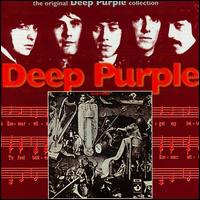
Deep Purple - 1969 Tetragrammaton
A
(Very Good / Good)

Concerto For Group And Orchestra - 1969 EMI
5
(Mediocre / Bad)

Deep Purple In Rock - 1970 Warner Brothers
D
(Great / Very Good)
Take care!!!

Live In Stockholm (1970) - 1988/2003 Purple Records Ltd.
9
(Good)

Fireball - 1971 Warner Brothers
B
(Very Good)

Machine Head - 1972 Warner Brothers
D
(Great / Very Good)

*Made In Japan - 1973 Warner Brothers*
E
(Great)

In Concert 1970-1972 - 2001 Spitfire
D
(Great / Very Good)

Who Do We Think We Are? - 1973 Warner Brothers
6
(Mediocre)

Burn - 1974 Warner Brothers
6
(Mediocre)

Stormbringer - 1974 Warner Brothers
5
(Mediocre / Bad)

Made In Europe - 1975 Warner Brothers
8
(Good / Mediocre)

Mk III - The Final Concerts - 1996 Connoisseur
8
(Good / Mediocre)

Come Taste The Band - 1975 Warner Brothers
7
(Mediocre / Good)

This Time Around - 2001 CMC
6
(Mediocre)

On The Wings Of A Russian Foxbat - 1995 Connoisseur
8
(Good / Mediocre)

Perfect Strangers - 1984 Polygram
5
(Mediocre / Bad)
.........sure you'd agree since you're so fuckin' smart

Knebworth '85 - 1991 Connoisseur
A
(Very Good / Good)

The House Of Blue Light - 1987 Polygram
7
(Mediocre / Good)

Nobody's Perfect - 1988 Mercury
7
(Mediocre / Good)

Slaves And Masters - 1990 Polydor
5
(Mediocre / Bad)

The Battle Rages On - 1993 Polydor
6
(Mediocre)

Purpendicular - 1996 Prominent
A
(Very Good / Good)

Abandon - 1998 CMC International
8
(Good / Mediocre)

Bananas - 2003 Sanctuary
B
(Very Good)

Rapture of the Deep - 2005 Eagle
7
(Mediocre / Good)

Now What?! - 2013 earMusic
9
(Good)
Infinite - 2017 earMusic
8
(Good / Mediocre)