Emerson, Lake and Palmer are quite possibly the world's most reviled band. Now, they were extremely popular in the early 70's among those who 'took themselves seriously' (especially college students), and even today they maintain a sizable cult following, so it would be unfair to say that absolutely nobody likes them. Regardless, however, this is a perfectly legitimate statement on the general level. Fans of punk have always detested them as they would any prog band, but this extended far beyond normal levels of loathing; as an example, one of the staples of late 70's Sex Pistols shows was to burn life-size statues of Keith Emerson in effigy (or so the legend goes, and I really hope it's true because it's a hilarious legend).
Now, this normally wouldn't be such a bad thing, since after all hatred of art-rock and prog-rock was one of the most important principles upon which the punk movement was founded. No, what distinguished ELP was the amount of venom spewed upon them by other "high-brow" artists and their various followers. Fans of classical music absolutely despised them (sometimes) for "butchering" various well-known pieces in their attempts to interpret these standards in a rock idiom. There is a nugget of truth to this, of course (Pictures at an Exhibition is often quite a stretch from the original Mussorgsky piece, to put it mildly), but ... I dunno. I'm sure that a good number of the band's fans became fans of classical music due to their efforts, so that should be worth something. Or maybe the older generation was just mad about all these young whippersnappers infiltrating
their societal niche ....
(AUTHOR'S NOTE): There used to be a paragraph here where I made some asinine statements about the borders of what exactly constitutes prog rock. Some comments below reference that paragraph, but I'm so tired of looking at it that I don't even care about making them anachronistic at this point.
The greatest insult of all, of course, is that even among some prog lovers, they're hated like crazy! Among the list of widely acknowledged "classic" prog rock groups (note that "widely acknowledged" ends up excluding a lot of the major players in prog rock, such as Gentle Giant and Van Der Graaf Generator; by widely acknowledged I basically mean bands that somebody who knows older music solely through classic rock radio or games like Rock Band or Guitar Hero might be familiar with) they often tend to be rated near the bottom, even below some bands that I despise (like Styx or Kansas). Now, for many, a sufficient explanation of this is simply, "ELP sucks!". Needless to say, I think that is a grave mistake, but I think I can make a good estimation on the real reasons people despise this band. The first, and the most obvious, was the group's relatively heavy emphasis on classical music in their sound. Yes, progressive rock almost always has at least a tinge of some classical elements, but ELP's music had the greatest concentration of it in their music, BY FAR. Now, it's not as if that was the only type of music they did, not at all, but among their discography you can find covers of Copland, Holst, Bartok, and they even did a full album rendition of Mussorgsky's Pictures at an Exhibition. Their self-penned material would also sometimes have a
pure 'orchestral' feel as well, and they even managed to help create a new and totally bizarre genre, the 'rock-symphony.'
The band's classical leanings, however, are not the only significant difference between ELP and the others on the list. A key thing to note about ELP is that, besides King Crimson, most other widely known prog rock groups weren't prog-groups from the get-go. Yes started as a jazzy, psychedelic rock band, and it wasn't until their third LP that they really became Yes as we know them. Rush began as a hard-rock garage band, modeling themselves after Led Zeppelin and Cream. And Genesis, well, Genesis started as a bunch of teenagers trying to sell pop songs to the public and not succeeding one iota (which is a shame, seeing as there are tons of great melodies on their debut). ELP, however, was "pretentious" and progressive from the very beginning, which makes sense. Both Keith Emerson (The Nice) and Greg Lake (King Crimson) were former key members of groups that had pretty much created the genre, and as such one could only expect them to continue what they seemed to have a knack for. Add in Carl Palmer's technically perfect drumming, and you have a group created for pretentiousness and lots of it.
There is one more aspect that sets ELP apart from the other groups, and that deals with the center of the band's sound. Rush focused on the blistering chops of their guitar and bass players. Yes, regardless of Wakeman's presence, rotated around their amazing bassist, Chris Squire. Genesis tried to emphasize Peter Gabriel's vocals and his bizarre fantasies over the chops of the group, which were definitely fine overall but hardly in the super-elite level of the rock world. In the Court of the Crimson King, regardless of all of the mellotrons, was extremely guitar heavy, not to mention the saxophones and other reed instruments. ELP, however, did not revolve around a guitar or bass player like the others. ELP was always centered on the keyboards of Keith Emerson (the songwriting and guitar work of Lake was an essential counterweight to Keith's keyboards, but it was still secondary). Now, it's not that he was a bad player, FAR from it. It's just that, well, he could be a bit too showoffy. Plus the fact that he often employed some extremely bizarre and occasionally annoying synth tones that few others would even touch. And since most people would rather hear guitar wanking than synth wanking, it's only natural that there would be a huge turn-away from this group.
I think I have made it sufficiently clear that ELP is not for everyone. The thing is, for the longest time I refused to give them even the
slightest chance, and that's a shame, because they're really quite good! For starters, each of them was a highly talented and extremely professional musician, and even haters of the band have to give them that. Keith Emerson, let's face it, was almost indisputably the greatest keyboardist on earth, hands down (I think he was officially given the title by some renowned magazine twenty five times in a period of thirty years). Hence, he was often able to make large parts of the group's compositions come alive by the sheer force of his talent alone, whereas in the hands of any lesser player it might have been deadly boring. Meanwhile, just as important for the group was vocalist/guitarist/bassist Greg Lake. With the exception of Justin Hayward and a few others, almost nobody was a better rock singer than him in the 70's. He was always able to add incredible power and powerful emotional content to the highly abstract and bizarre lyrics that always accompanied the group's music. And one should certainly not minimize his guitar and bass playing, not at all. And finally, there was drummer Carl Palmer, as fine a prog drummer as one could find in the world; with an impeccably fluid and solid playing technique, his playing abilities in the prog universe were surpassed only by Bill Bruford
himself.
The fact remains, however, that impeccable instrumental technique is not the only requirement for being a good and distinctive progressive rock band. After all, if all I cared about was great playing abilities, I would be sitting here reviewing various jazz recordings rather than talking about rock and its various forms. You see, it's a common misconception that the band was primarily a medium for the grandiose ambitions of Emerson. Now, don't get me wrong, the man could write an excellent and
supremely catchy synth passage (Karn Evil 9.1 in particular), but in no way was Keith the sole creative epicenter of the band's music (at least, most of the time, when the band was at its best). No, that honor fell just as much to Lake, who was an extremely talented pop song and ballad writer. I mean, grandiose and overblown as Tarkus is, it's really just three short, very catchy Lake numbers whose various musical themes are expanded upon with the help of Keith's synths and are reprised in just the right
amounts. And that's hardly the only example, as great songs like Lucky Man or Still, You Turn Me On will show.
In any case, the point I'm trying to make is that the music of ELP, in general, is nowhere near as intimidating as it is often made out to be. If you're looking for solid pop and rock embellished with a bit of jazz and a healthy amount of classical and symphonic aspirations, you shouldn't be afraid to give them a try. I used to rate them as a two-star band, but surprisingly found that my enjoyment of the band has only increased over time (in particular, the debut REALLY grew on me, as you'll see in a bit), so a three-star rating (out of five) seems appropriate enough. Now go ahead and flame me for liking them as much as, say, Led Zeppelin. Barry Allen Schnorr (bas29.cornell.edu)
Also, I'd like to respond to a few things on your general discussion of
ELP...right or wrong, King Crimson is my favorite band, and I hope that by
the time you get around to reviewing them, I will have forgotten who you
were and say "John McFerrin? He was the quarterback for the Baltimore
Orioles back in the 90's, wasn't he?" What on earth were you thinking when
you called '80s crimson "primarily New Age"? It bears no more similarity
to
New Age (author's note: that's WAVE Barry, New WAVE) nonsense than
Yes's foray into '80s pop, and maintains the band's
old artistic sense. As to the latest incarnation, THRAK included
Soundscapes and songs like "Inner Garden"--not their best work, I admit,
but to call it "progressive-*gasp*-punk"...I can't ask what you were
thinking, I must ask what you were _smoking_.
And limiting the number of aceepted progressive groups to 5? I can
understand your leaving out the Moody Blues and Procul Harum and even
Jethro Tull (though I don't) but calling Pink Floyd not-prog? I simply
cannot agree with you there, and neither can the people who compiled The
Progressive Rock Era. When people ask me for examples of prog, I always
mention Pink Floyd because they may be the only group the ignoramuses have
heard of. Gentle Giant is too obscure to make the list? What about early
period Alan Parsons Project, which even Dr. Evil's kid knew was a
progressive rock band? Well, my point is not to disagree with what you
said
about the bands, it's just that to say there was only 5 "widely
acknowledged" progressive rock groups sounds kind of silly. And, of
course,
just to contradict for the sake of it, because I'm an agressive,
objectionable prick, just like all ELP fans.
George Starostin (gstarst.yahoo.com)
I'd just like to mail an objection to Barry Allen Schnorr...
I think, Barry, that it all boils down to what one actually calls
'progressive' music (or progressive rock). Why argue about the term with
foam at your mouth when it's obvious that you and John mean different
things under it? Apparently, you use it in the broader term, that's
rather the equivalent of 'art-rock' in general. John, on the other hand,
is limiting the term to a specific genre of music - rock music with a
very heavy classical influence and an overall obscure, mystical, and
most often bombastic atmosphere around it. That's what I usually
understand as 'progressive' as well; it's better to limit the term so
that it wouldn't be confused with 'art-rock' in general, which, in my
understanding, is a far wider sphere of music (basically, 'prog' is one
of the numerous form of 'art-rock').
In this respect, Pink Floyd are certainly NOT prog-rock: they had glimpses
of prog in the early Seventies around them, like with Atom Heart
Mother,
for instance, but since Dark Side, they abandoned all prog in
favour of a more commercial, simplified approach. I do not make any
positive/negative statements here, mind you, just telling facts as they
are.
Also, John is right in saying there are only five 'widely acknowledged'
prog bands. If you are a prog lover, you'll be offended by this, of
course; but I'm sorry, the name 'Gentle Giant' says nothing to the
general public (a shame, but so it is), and Alan Parsons Project is
crap, so it SHOULD say nothing. As for Jethro Tull, they certainly were
a prog-rock band, too, but only somewhere in between 1972-79.
And, of course, it's ridiculous that you should confuse 'New Age' with
'New Wave'. And what do you mean by 'New Age nonsense'? Have you ever
listened to Brian Eno?
George Starostin
Barry Allen Schnorr (bas29.cornell.edu)
OK, I'm sorry I parsed "New Wave" as "New Age". I don't use the term
"New
Wave" very often, even though I do like some New Wave music and, now that
I
think about it, '80s King Crimson could definitely be said to be New Wave.
When I originally read your site, I had King Crimson's Three of a
Perfect
Pair in my CD player with "That Which Passes, Passes Like Clouds"
playing
and I parsed your phrase as "New Age" and thought, "This song for one is
kind of ambient and a half assed attempt to be trippy, kind of like Enya,
so maybe you could call this version of Crimson New Age BUT ONLY BY AN
EXTREME STRETCH OF THE IMAGINATION. Which is true. But irrelevant. I
missed
the boat on that one.
Then again, I may have a completely wrong idea of what the definition of
New Age is, but I don't care.
By the way, I'm not budging on this "progressive punk" thing. Whether
you
use a more narrow definition of 'prog' or a broader one, I think you have
to agree that prog and punk are not only opposites but mortal enemies.
(author's note): In theory yes, but on the other hand, we did have
groups like Metallica, who in their early days could certainly have been
called both a progressive and a punk (well, thrash actually, but
thrash is more or less descended from punk) band. Also, Barry, you should
know that before I said anything about Crimson, I made sure to
consult with my brother, a HUGE fan of the Fripper gang, and it was he who
proposed the punk-prog idea. I merely agreed with him.
Maybe Fripp has said that he admires punk, but that is just one more
reason
why I cannot take seriously anything he has said since about 1989.
Fleetwood the Artistite (fleetwoodwm.yahoo.com)
We, as with anyone else agree and disagree on ceratin
points, such as what we like and dislike about
particular ELP songs. I shan't argue that. Opinions
are opinions. However there are a few factual flaws
and points that need mentioning:
- "various tones he could coax out of his mellotrons
and keyboards"
Keith Emerson never played a mellotron - it would be
interesting to know why he never did
jesusmyth.arabia.com
Ich habbe gelost ein fohrtz. I had one grunch but the eggplant over
there. Close cover before striking. 5 years or 50,000 miles. No
interest until February. Accept credit cards at your website! Toora
Loora Loora, it's an Irish melody.
Your opinions ain't worth shit, buddy.
ELP and Brain Salad Surgery is up there among the gods of
Rock.
Kerry Canfield (keriz.teleport.com)
Don't know how long your site's been going, so I don't know if this is new
news or not.
While we were listening to "Emerson, Lake & Palmer" (that is, the
first album) at my parents' house, my mom told me that much of "The
Barbarian" is adapted from Bela Bartok's piece called "Allegro Barbaro"
(seems I had even played the original at one time myself and had forgotten
about it!). Then a year or so later I happened to check out of a library
a classical album with a Hindemith piece on one side and some piece called
"Sinfonietta" by some Hungarian guy named Janacek of whom I'd never heard.
Just for the heck of it I listened to the Janacek first. When I heard the
first few chords, my jaw dropped--it sounded like the opening to "Knife
Edge." The further I listened, though, I realized it was definitely not
coincidence; except for the Bach excerpt in the middle and the organ
soloing, the entirety of "Knife Edge" was lifted--melody, harmony, and
rhythm--from the first section of the Janacek piece.
And yet Mr. Best Rock Keyboardist never gave these composers he RIPPED OFF
(and how can one call it anything else?) until years later in "Keyboard"
magazine, where he admitted when questioned by a reviewer that, yes, he'd
used someone else's music, but he'd thought his "borrowings" were
sufficiently removed from the originals not to be plagiarism.
Interesting, though, that he credited Copland on other recordings, and
Mr. Copland happened to be alive at the time--whereas Bartok and Janacek
were definitely long dead (and presumably their estates lacked the
international clout to claim their due).
It gets worse (though going back in time). Emerson had the unmitigated
gall to state in the same interview that he "thought" that "Rondo" by the
Nice had "contained some quotes." Not even one oblique reference to the
fact that the core of the piece (and the unfortunate excuse for several
minutes of additional keyboard wankery) was an unabashed reworking into
12/8 meter of Dave Brubeck's "Blue Rondo a la Turk," which was in 9/8
time. To add insult to injury, then, not only did he not credit the true
composer, he turned a piece with a truly captivating meter and rhythm
(especially when considered in the context of most jazz of the time) into
a pointless, heavy handed 4/4 jig!
I've been an Emerson fan ever since the first LP, but this business always
sat wrong with me, and since I've seen no one else mention it on this
page, I felt compelled to do so. Thanks for listening.
Eric Williamson (erwill.suitandtieguy.com)
I think that one of the things your forget to mention is that ELP had a
shameless sloppiness about them that was not present in any other prog bands,
the exception being the Islands-period King Crimson.
The sloppiness is one of the things I find charming about the band. The other
is
their extreme emotional dynamic, half the time super-serious and half the time
super-ridiculous.
John Capogreco (capogreco.CIDTEC.COM)
You were correct when you stated that Keith Emerson has played a
Mellotron. If anyone doubts this, just check out the intro to
"Eruption" on Tarkus. Those layered human voice "ahhh's" that slowly
fade in are indeed played on a Mellotron. Besides, the instrument is
listed in the liner notes along with all the other keyboards used.
For what it's worth, I think that it's impossible for anyone who doesn't
personally know Keith to say with certainty that he "has never played"
any particular instrument.
rob kipp (rkipp.si.rr.com) (8/25/01)
Firstly, Keith Emerson has NOT used a Mellotron. Tarkus was recorded in
1971, there were no choir sounds on the Mellotron at that time (The M400
came out at the end of 1971, Tarkus was recorded at the beginning).
Keith has said that he does not use it because it is playing playing back
what someone else recorded, which would go against his "principles." (I
don't understand why, that's what he said though). However, Greg Lake
used one on stage only once or twice in 1972 when they tried to play
"Abaddon's Bolero" live, which obviously did not work. All of the choir
or string sounds used up until "Works" (where he used a whole orchestra)
came from the Modular Moog or Minimoog.
Having said that, some people have complained about the narrowing down of
the important prog groups to only five. I think the list is pretty
good. These five band have had the most commerical influence on other
groups, so they are the most important, but not necessarily the best.
(My favorite is Genesis personally). I could not count Pink Floyd under
the criteria of quasi-orchestral fullness and bombast, but in terms of
sheer ambition, I don't think any other band has released FIVE concept
albums, one a double! Lyrically, their scope is as far-reaching as the
"real" prog groups, if a little more direct. Jethro Tull I wouldn't
consider as well, because their influences came not from European
classical music of the 19th and 20th century, but from folk and
Renaissance music influences, which is not classical in the sense that we
use it in now.
I do enjoy ELP's music, but I think their instrumental virtuosity was
definitely overpowering, and sometimes overbearing, when compared with
the virtuosity of Genesis and Gentle Giant (sort of middle-ground) and
Pink Floyd (no real virtuousity, though I love David Gilmour as a
guitarist). They were the most directly classically influenced-group,
and were very important in bringing some classical music to a mainstream
audience. Keith Emerson, like it or not, has to be regarded as the best
keyboard player ever to emerge from the rock era, no "rock" musician has
ever attempted anything like their own piano concerto!? Greg Lake is a
distinctive bassist and unbelievable singer (though I still believe he
never sounded as good as he did on "In the Court of the Crimson King")
and Carl Palmer is an unbelievable drummer. It's a shame their output
since 1977 has been so spotty, unlike Crimson or Yes or Genesis. They
are very much an important part of prog-rock who deserve respect at least
if not the adoration of music fans or prog fans alike.
Steven Knowlton (knowstev.med.umich.edu) (10/11/01)
To weigh in on the "is a mellotron a keyboard instrument" issue, I'd like to
say:
The mellotron is not a musical instrument at all - it's a form of tape
recorder. The playback function is controlled by a keyboard, and the tapes can
be arranged to play a pattern like that of a keyboard instrument, but
technologically, it's still a tape recorder. The same effect could be
achieved, much more laboriously, by splicing tape together.
john sieber (oneofakind151.hotmail.com) (10/15/01)
Mr. Knowlton:
No offense intended here, but... please.
TheeRubberCow.aol.com (12/28/01)
It is a shame that they get so much hatred. I don't like when they do
classical pieces like "Fanfare For the Common Man" and stuff like that,
but they have got some great stuff! "From the Beginning" has some of the
best sounds I've ever heard on the radio, and the really electronic
sounds that Keith uses on "Brain Salad Surgery" are awesome. Not to
mention some good songwriting, and a great singer....esp. on "The Enless
Enigma."
splazo.telus.net (1/08/03)
I often hear the claim that Keith Emerson is the best rock keyboard player
of all time, but I have yet to figure out why people say such things. For
starters, he can't really play a decent solo. Perhaps the fact that he's
tone deaf is the thing holding him back. Just listen to the rubbish solo in
lucky man. He's sliding the pitch bend on his synth allover the place and
never really hitting an in tune note. I'd always figured that being the
petulent wanker that he is, he was simply trying to sabotage Lake's pretty
little ballad, but maybe that's just really the best he can play.
Another serious shortcoming of his playing is that he can't really play all
that quickly. Not that I put much stock in sheer speed as a redeeming
feature of music, but it seems a fairly objective measure of chops. It's
pretty obvious that when he's getting himself all worked up into a lather in
one of his frenzied wankathons that he's playing as quickly as his big dorky
hands will carry him, and that speed simply isn't up to par compared to the
competition.
Also, his melodic sense is more than a little lacking. Just listen to the
solo in Tiger In A Spotlight for instance. It's like he's used up everything
he meant to play before the allotted number of bars had elapsed and he's
just stuck there without a plan running down the clock. Best keyboard player
in the world and he can't count to 16. Then consider all the sheer crap that
he dared to slap on a record and try to pass off as music on Pictures At An
Exhibition. Shameless meowling without metre melody or chops.
I'm not saying he outright sucks. Just that he's far from head and shoulders
above the competition. Rick Wakeman at full gallop is easily 50% faster than
Emerson at full throttle. Compare the solos from White Rock to those on Karn
Evil 9. No contest. Also notice that Wakeman can bend the pitch all over the
place and land on in tune notes at will. That's the difference that having
an ear makes. ( White Rock, imho, isn't an especially good Wakeman record,
just one where his synth soloing admits of direct comparison to those of
Emerson, much to the disadvantage of the latter. Almost any Wakeman album
will have solos beyond the technical abilities of Emerson.)
Tony Banks can only play a solo at about the same speed as Emerson, but his
melodic sense and ability to ration his chops evenly over the time allotted
for the solo similarly leaves him as an overall more impressive soloist. As
an accompianist his chops put those of Emerson to shame. ( Well, not really
since Emerson is totally shameless, but if he were capable of shame they
would. ) Check out the intricate overhanded tremello chording throughout
The Lamb Lies Down On Broadway for instance. A truly amazing display of
virtuosity if you take the time to notice. The nice thing is though, that
you don't have to notice, because the song works just fine without drawing
your attention to the incredible workout that Banks is getting on the song.
What strikes the listener is a richly textured song rather than some
hyperactive prima dona who has to keep his hands busy.
Given that Emerson simply doesn't measure up when compared to either of his
chief prog rival keyboardist, I'd have to conclude that the wildly
hyperbolic claims as to his abilities arise more from the manner in which
his sub par skills have been packaged. While Wakeman ( even on his solo
outings ) and Banks are generally presented in the context of a full 5+
piece band, Emerson was only able to hog the amount of ice time he wanted by
dispensing with all other treble clef instruments in his band. ( In fact,
when Lake left King Crimson to join ELP, Fripp offered to come along too,
but Emerson nixed that proposal on the grounds that he wasn't interested in
working with a guitarist. ) It's pretty easy for a keyboard player to shine
when he's just working with bass and drums, even a tone deaf noodler like
Emerson.
phil robertson (philrobertson.shaw.ca) (9/02/03)
haha man you sure put a lot of energy into hating a band! Whatever,
thats your perogative I guess. They were pretentious yes but at least
Keith Emerson was a great musician on a technical level, you have to give
him that. They had a few nice accoustic ballads too here and there.
Marie (marie.xpressweb.com) (9/08/03)
"Styx, Journey, Kansas ... all are talentless buffoons with large egos
but little else,"
I'll grant you Styx, but Journey and Kansas talentless? Steve Parry is
possibly the greatest male vocalist of the late 70s and early
80s. Journey's talent wasn't in the writing, it was in the execution.
They were excellent on stage, and their playing was about as perfect as
any artists could hope.
Kansas was the opposite. Not that they were bad musicians, but their
talent was in their songwriting. They were superb song-smiths. From
simple pieces like "Dust in the Wind" to complex creations like "The
Wall" and "Play the Game Tonight," listening to Kansas was always an
emotional experience.
You may not like the mainstream rock musicians from the late 70s and
early 80's, but please give credit where credit is due. Were Journey and
Kansas over-hyped? Probably. Talentless? Not even close.
PAUL RASANEN (rasanenp.gte.net) (8/07/04)
I saw ELP in 1977 at the coliseum in Seattle. I believe their concert
was about a month after I saw Led Zep in the Kingdome. ELP was a far
better concert than Zep put on that year. Actually it was one of the
best I've seen. How you can rate Bill Bruford over Carl Palmer is
beyond me. I have not seen a better drummer ever! Emerson, well, lets
just leave that! There's no one close to him. Lake is awesome. Why do
you think the Who used him for their latest release! There's my two
cents! I like their music! I like a hell of a lot of other rock music.
I'd probly say The Who is my favorite.
Joshua Raisen (joshuaraisen.comcast.net) (12/09/04)
Stumbled across your page on them, and I bet you wrote all that ten years
ago, but hope you don't mind if I felt like writing.
Wouldn't know a mellotron if it bit me in the ass, but I always thought
Wakeman was a better keyboard player than Emerson, and never thought Greg
Lake was anything better than an average guitarist. I dug some of his
bass lines, though, and I have to mention the little screeching fills in
"Stones of Years," probably the most gut-wrenching thing he ever played.
Loved Tarkus. Fucking loved it. Man that album is great alll the way
through, and I like side one better than side two. When I was like 19 or
20 I once played side one all the way through and then dd it again before
playing side two. Wouldn't even do that with Close to the Edge.
Trilogy and Pics at an Exhibition are excellent in my bag, too, but the
first one is only OK, and everything else is totally boring. ELP sucked
in 1977 like Yes wouldn't suck until 1984, and King Crimson has never
sucked that bad, unless maybe 1971.
Kansas were a great prog band who rocked like none other (coz they
weren't English Art School wankers, of course).
I always thought Genesis were more boring than golf.
Great story about the Sex Pistols burning effigies of Keith Emerson (and
I'm sure you know that John Lydon wore (I Hate) Pink Floyd T-shirts as
early as 1975), but in the end ELP made three great records and the
Pistols made one.
I liked those stupid Eglish pub rockers like "Are you Ready Eddie" and
"Jeremy Bender. Didn't you?
Listened to all this prog stuff in high school, when I ranked them Yes,
Kansas, ELP, King Crimson, then got into Iron Maiden and Metallica, and
did up the punk and hardcore thing in college. Listen to Godpeed you
Black Emperor and 90 Day men now. But I'll still pull out Trilogy from
time to time.
sailing2427 (sailing2427.rogers.com) (12/16/04)
Bill Bruford a better drummer than Carl Palmer; man you are out to
lunch!!!!
Steve Winkler (spwinkler.hotmail.com) (03/06/04)
So you don't like prog rock as a style of modern music? Fine, but what I'd
like to know is how many of you are serious musicians? What I have
typically found is that those who are the most critical of prog rock
musicians can't even play chopsticks on the piano. Back in the day, prog
rock groups tended to be the favorites of a lot of serious rock musicians
because of the technical structure of the music and the challenge it
presents to write and play it. Look, Led Zeppelin was a great rock band but
you gotta admit, the stuff that Zeppelin wrote was a heck of a lot easier to
write and play than say what ELP, Yes, Kansas or Rush wrote. And speaking
of groups like Kansas, have you lost your (#$%#*.$) mind? Give a listen
once again to songs like "Spider" or "Paradox". Prog rock players/writers
like Keith Emerson, Steve Howe, Greg Lake, Steve Walsh, Bill Bruford, Alex
Lifeson, Rick Wakeman, Kerry Livgren, Chris Squire etc. could WRITE AND OR
PLAY "circles, squares, rectangles etc." around 95% of the NO TALENT feces
of today who try to pass themselves off as musicians. I mean you have got
to be kidding me! Let any one of your suck ass punk band no-counts come to
one of my rehearsals and just see how lost they would be. "duhhhhhh, what's
a DMaj7? Sharp, what's that mean?". "I'll tell you what it means, it means
get the (#$^%) outta' here and go get yourself some lessons or a chord book
and learn how to play your ($#%&*#.) intrument!"
SolomonsOther.aol.com (03/15/05)
I admit it. Keith Emerson can PLAY! Greg Lake can SING! Carl Palmer
can DRUM!
I just... god, I just get bored with Emerson's technique so quickly.
The man has a lot of energy and can write seriously complicated
music... I just wish he'd have been more interested in jazz and not
classical music. That rapid fire style of his would've done wonders.
Procol Harum and the Moody Blues (two awesome yet underrated bands)
have proven than you can blend classical and popular influences and
yet not overwhelm the listener. The thing about Emerson is that he
rarely takes the time to write out interesting melodies and instead
piles layers of keyboards on eachother. Works some of the time, but
usually I feel the need to put on Simon and Garfunkel to remind
myself of the power of simplicity or something really nasty by Zappa
to remind me great art doesn't need to be grandiose... just
interesting.
Oh, and I wish Greg Lake would play something more often. He's shown
himself to be a pretty decent instrumentalist, whenever Emerson is
too tired to more or less perform EVERYTHING in a particular song.
Pedro Andino (pedroandino.msn.com) (06/25/05)
why don't ya' shut your fucking mouth fagwads! buncha 50 cent loving
cocklicking fags! nothing like a little prindle styled humor to start
your fucking day, bitches! I say the 5 synth players it had to be
wakeman! I like wakeman! and trust me his goofy soloing in the song
golden age was pretty funny! but when songs like and you and I came
out his solos are tastefuly done. tony banks is the best. the intro
to firth of fifth was the most beautiful intro by tony. emerson was
good but guys I'm sorry I must say love beach is better than failed
flops like black moon and calling all stations and union. I like the
sound of mellotrons. journey rocks you fag! kansas rocks to! 50 cett
is a faggoty CONSUCKING PIECE OF
SHIT!!!!!!!!!!!!!!!!!!!!!!!!!!!!!!!!!!!!!!!!!!!!!!!!! fuck off ya'
trendwhores!
Trfesok.aol.com (06/07/06)
The thing about ELP, I think, is that they became victims of their
own ambitions. Particularly Emerson's. They were willing to try
anything at least once, continually pushing at the boundaries between
rock, classical and jazz. Part of the problem is that most of the
fans were not willing to go the distance. Not everybody wanted to
hear a full length piano concerto on one of their albums, for
instance. They were bound to, sooner or later, run up against the
limits of their deep talents sooner or later, and unable to go
backwards into standard pop territory too well. Nonetheless, they did
come up with some music that still is mind-boggling today.
You do point out one thing -- that they steered a lot of listeners
towards the classics. By starting to look for "real" versions of the
pieces that ELP used, I began to develop appreciation for and
enjoyment of classical music. Even today, I'm still seeking out some
of the more obscure ones!
delettao.peoplepc.com (06/07/06)
ELP was/is the absolute pinnacle of ostentatiousness and pretention!
I find all of their material to be thoroughly unlistenable and
almost everyone I knew back in the seventies that was a big fan of
this band was a pen clicking self-important quasi-intellectual
blacklight poster trip art bongbrain asshole as well. I find their
keyboard oriented progressive rock approach to be sterile, boring,
extremely condescending and just basically full of shit. I also agree
with your estimations of Kansas, Journey and Styx, three other
godawful reasons to avoid classic rock radio stations. Give me the
Circle Jerks or something, please! This band was never any good or
any fun. And I don't want to be "coaxed" into listening to revamped
classical music compositions by Mr. Emerson either...go to hell!
Pedro Andino (pedroandino.msn.com) (07/24/06)
shut the fuck up!!!!!!!!!!!!!!!!!!!!!!!!!!!!!!!!! goddamn I am tired
of faggots like you insulting my band. hey! faggot just bought the
new 50 cent album! eat cock you fucking trendwhores!!!!!!!!!!!
Ray Worden (rworden.inebraska.com) (01/30/07)
Well I just stumbled across this site. So I will offer my opinion on
Emerson Lake and Palmer as band, and how this band impacted my life
and musical career. I should say at this point that I am a
professional musician, and I earn my living making music. I was
exposed to Emerson Lake and Palmer in the 70's. I must tell you that
I had never heard music like this before. It just blew me away, it
was so different than anything I had heard before. I had been
listening to the Beatles and the Stones which I really love to this
day. Yet in the 70's we were exposed to all that disco crap ! When I
heard Emerson lake and Palmer it was breath of fresh air !
Trilogy and Brain Salad Surgury just blew me away ! I wore out those
records because I listened to them so many times. I really think that
was their best work. So Creative ! Lucky Man, well that was their big
hit, yet not my favorite song.
Maybe these guys were not the best musicians on the planet, yet they
created something special for us back then. One of the reasons that I
do what I do now is because of that band !! And Maybe that is the
endless enigma !! :-)
Steve Winkler (spwinkler.hotmail.com) (04/29/08)
You are a pathetic, clueless "buffoon with a huge ego" and have
little or no idea of how to judge musical talent. I'd like to know
how YOU define prog rock because your opinion of who is and who isn't
a true prog rock band does not square with the general consensus from
the late 60's and 70's. Aside from YOUR narrow opinion of what
constitutes prog rock and or talent, prog rock came to be known as a
style of music which drew mainly upon classical, jazz, and other
influences. It was typified by the variety of time signatures,
syncopation, counterpoint, modal chord progressions, allusions
(or direct "ripoffs" as you would probably say) from well known and
not so known Baroque, Classical and Romantic pieces, atonal and even
at times expressionist music styles which were totally alien to pop
rock and heavier rock of the time. Granted, most fans and self
appointed music critics of prog rock may not have known the
nomenclature which I just mentioned, but it was not as "open ended"
as what you are trying to imply. Although Fan and critic alike may
not have been able to define the exact musical definitions, their ear
recognized the concepts and so there was a real consensus between fan
and music critic alike as to which bands were in the progressive rock
genre and which were not. I remember this well because I became a
big fan of prog rock in the mid 70's, a musical style which played a
part in shaping my identity as a musician.
Now you may hate ELP, and question why Kansas, Jethro Tull and Rush
should even be included in the genre of prog rock but all of these
bands drew on the use of some or all of the musical styles listed
above and were AT THE TIME widely considered to be and included in
the genre of prog rock. In 1975 Kansas was rightly considered to be
the hottest up and coming prog rock band at the time with their use
of different time signatures, counterpoint, a violin which at the
time was unheard of in a rock band, syncopation, modality, snippets
from baroque and classical pieces. Just because they didn't use the
dissonant and expressionist style of a prog band like Genesis or King
Crimson doesn't mean they were any less "prog rock".
Kansas talentless? For you to say they were "talentless buffoons" is
laughable! Kerry Livgren was a prolific song writer who, on many
songs they performed live, would switch back and forth from guitar to
keyboards in the course of one song. Both Kerry and Steve Walsh
brought their strong classical influences to bear on keyboards as
well as Robby Steinhardt on violin. Kansas was WIDELY known at the
time by fan and critic alike as one of the tightest bands who were
nothing short of phenomenal in concert. What they accomplished is
astounding when you consider the level to which they were able to
take a prog rock style of music mainstream while staying true to
their prog rock roots.
john erickson (jcerickson1005.msn.com) (12/13/08)
Emerson Lake & Palmer as a group is very much a product of the time
with the aspirations to bring classical and rock together. I don't
think you could have done it to the effect they did in another time.
As such, it is hard for those who come to ELP now with out the
background to have an understanding of the band. Much of the music
does stand on it's own merit, some does not translate to today's
musical ideals since rock music and pop music has shattered into
genres that do not allow for the experimentation we saw with ELP.
For all that shattering we are not better off today musically, music
is divisive not inclusive today.
I give the 4 stars, often brilliant sometimes simpering but they
tended to give it all they had every time what ever they were trying
to do and that counts for much also. Today there is too much playing
it safe with the usual offerings and a lot less ballsy chances being
taken.
ELP stands alone in their music as pioneers.
"Bruce" (Bruxxx.ValleyBeat.Com) (09/13/10)
Wow, lots of nasty stuff here to read. It's boring and stupid
when people have to argue about this kind of thing.
I like Yes and Rick Wakeman, "Six Wives Of Henry The Eighth"
used to be one of my favorites of his ... but, as technical
as it was, I never hung on to that record because when I played
it after a while, it just lacking life. I really don't mean
this in a bad way, but there was not vibrancy to it.
I contrast that with Keith Emerson, say playing "America".
I can listen to it over and over and still as undone as the
recording is, and apparently a rehearsal session of that song
was released accidentally, it has life in it.
But I like Yes and I like Rich Wakeman, and there are really
very few musicians, actors or people or whatever that I
say I like and associate my ego with so that I want to go
all over the Internet arguing with people about it. I sure
hope people get tired of this at some point.
I liked the classical ELP, and the music, the improvisation
of the songs. One thing that bothered me was the pomposity
of it. On the one side there was "Take a Pebble" for example,
a sort classical kind of instrumental (mostly) piece and
many others that are just fun to listen to. Then there are
the classical wanna-be type songs, Enigma, that are done sort
jazz-rocky ... I love that stuff.
There is always something about most music except some
instrumentals that I have a problem with. Most musicians
really have nothing much interesting to say, so the lyrics
are just boring stuff, like "Still You Turn Me On" ... and
"someone get me a ladder", or "Trilogy" the lyrics really
make me cringe, but I liked the driving beat and emotion
to it. I can't get past those lyrics anymore.
> We tried to lie
But ... when I was a kid I loved ELP, and the sci-fi
aspects of Karn Evil 9, was so much fun, and that steel
drum interlude solo, fantastic. Iconoclastic, and just
energetic. I really liked it. Their later stuff I just
found boring. I don't know what accounts for why I thought
ELP's early stuff was so remarkable, and I still listen to
it today. I pretty much stopped with "Fanfare For The Common
Man" which is the last thing they did that I really loved.
Now ... me, I have really nothing to say much about
the Sex Pistols. I just found that whole scene to be
negative, ugly, pointless, self-destructive ... kind of
like rap. Guess that just makes me uncool and boring.
That's OK, I'd rather outlive the cool people anyway.
Jethro Tull is probably my favorite band, so maybe that
makes me a progressive fan ... I never really thought of
it that way, I just like music that seems interesting and
has energy to it.
Music does not mean the same thing to me now that it
once did. I don't listen to too much music anymore, I
just get tired of it everywhere and all of it used to
sell stuff as well.
Keep arguing! ;-)
ismaninb.teacher.com (12/13/10)
I am a fan of classical music and not thanks to ELP. In fact I don't clearly
remember which music I listened first to in my life, Tchaikovsky or ELP. I have
never been a fan of ELP in the real meaning of the world, ie being a fanatic. But I
certainly did never despise the band; until today I find ELP highly interesting. And
that's mainly because of the efforts to fuse classical music and rock. Still I am
going to argue that exactly in thisrespect ELP was inferior to Ritchie Blackmore.
ELP's music is based on three pillars. Besides (1) the (pseudo)classical stuff
(Emerson plays synthesizers) there is (2) Lake's balladry and(3) the goofy stuff:
jazz, country, ragtime, boogie etcetera which revolves around Emerson's piano. And
here we meet the first problem with ELP: the band usually strictly separated the
three. I think that's a shame as ELP wanted to be a fusion band. Indeed the songs
that try to integrate these three aspects are usually the best. It's a pity that
there are so few of them, which makes me conclude that overall ELP as a project was
a failure.
What a huge difference with Blackmore's career! When he was inspired by classical
influences he invariably managed to make those rock in a way Emerson and co hardly
ever could. It's no coincidence that Blackmore's adaptation of Beethoven's Ode to
Joy was artistically far more successful than ELP's adaptation of Pictures at an
Exhibition. Blackmore always remained much more independent from the original.
Blackmore wanted classical music to rock as hard as possible, often successfully
hiding the classical source.
From the opposite angle I come to exactly the same conclusion: ELP as a project was
a failure. The more obscure Gentle Giant wanted pop/rock music to approach classical
standards as much as possible by applying classical composing techniques to poppy
themes. One can wonder if GG actually wrote pop music. ELP never went that extreme.
Their attempt to write a rock symphony was almost as clumsy as Deep Purple's effort.
Compare that to the perfect fugue called On Reflection (live, not the lame and tame
studio version) which matches any fugue by Bach and Beethoven! So from an artistical
point of view also GG was more successfull than ELP.
Still the fans don't need to desperate. Certainly fans of classical music should
know that failures can be extremely interesting - even more interesting than
successful projects, which always carry an element of predictability. A failed
project can produce excellent, first class music and ELP is a perfect example of
this statement. And first class music is what matters in the end. Compository
perfection is not always a pre or Rimsky-Korsakov would be the most praised composer
in history.
I agree with McFerrin that the three members were perfectly equipped for their band.
Emerson was a virtuoso, superior to everybody on keyboards except to Jon Lord on the
Hammond. Jon Lord on synthesizers way too often is a horreur. In contrast Emerson
generally had an excellent feel for what sounds suited the songs best, at least
during ELP's heighdays. Palmer was also a virtuoso, but somehow manages to remain
unremarkable. He never spoils a song, but I can't name even a fragment either where
his drumming actually adds to the music. Alas I have to disagree with McFerrin about
Lake. I can understand why he is so fond of his singing; his voice is very familiar
to his beloved Moody Blues indeed. That also means that Lake's singing, with
precious few exceptions, is very limited in expression. I know it is a bit of an
exaggeration, but I maintain that Lake specialized in tickling the underbelly.
That's the kind of perverted romanticism I despise indeed. While recognizing it's
qualities, I think Nights in White Satin a very dubious song. Lake's ballads have
the same tendencies. This kind of stuff neglects the darker side of human nature,
something 19th Century romanticism never did. Fortunately when Lake threatened to
become too corny there was usually Emerson's synth arrangement to compensate. The
contrast worked very well, so still Lake was the right vocalist for the band. I also
maintain that McFerrin overrates Lake's vocal qualities. Sure he had a powerful
voice, but it's range was by far not as wide as Gillan's in his prime or Dio's. No
way Lake ever could sing stuff like Child in Time or Catch the Rainbow, while
neither young Gillan nor Dio would have had any problem with any of ELP's songs.
Neither would David Byron of Uriah Heep. Fortunately for ELP prog in general does
not require as much from a vocalist as early hardrock did, something which I always
have found peculiar, as prog rock demands so much from the instrumentalists.
So this is how I evaluate ELP's output. Did they manage to merge the three
influences, while making best use of their technical skills? When yes, the songs are
excellent.
PS: I don't get Kerry Canfield. It was 1979 or 1980 that I listened to ELP for the
first time and I knew from the very beginning that The Barbarian and Knife Edge were
adaptations from Bartok and Janacek respectively. So what the heck is he complaining
about?!
PPS: not ELP is the most reviled successfull band in the history of rock,
Uriah Heep is. Even ELP did not receive a comment like "If this band is
gonna make it I'll have to commit suicide." This quote is a Rolling Stone
Magazine classic.
"Alpine Professional Answering Service" (apas.heritagetelecom.net) (01/13/11)
Lucky Man, Jerusalem, Still....You Turn Me On, Karn Evil 9 3rd Impression, The Sage,
Pictures at an Exhibition, Nobody Loves You Like I Do, From the Beginning ....sure
I'm skipping around albums but those are GREAT songs! I'm 36 years old and just
recently discovered ELP when a friend let me listen to Still....You Turn Me On from
Cal Jam 74 (which, coincidentally, was the same year I was born). Greg Lake's voice
is powerful, haunting, breath taking even and if you doubt me, just listen to Turn
Me On from Cal Jam. It's him all alone, no Keith, no Carl, nothing to make his
voice anything it isn't. I'm not a huge fan of Keith Emerson although I must admit
he's talented. And Carl Palmer...to say anyone compares to him is sheer nonsense.
No one then or now even comes close. The band WAS progressive! They pushed
boundaries that I've never seen another band push. So maybe they did drag out some
songs or even sample classical music through channels that weren't completely legal.
They were and are magnificent! THEY were REAL music and musicians....and I will
always be a fan! Long live ELP and their fans!
"Greg Hill" (ghill003.neo.rr.com) (03/13/11)
Emerson Lake and Palmer was a great band with faults just like any other
band. Some of the music is good and some of it is not. Emerson to me was
actually the first punk rocker with the Nice. Throwing knives, burning flags
and destroying organs if that isn't a punk rock act then explain to me what
is? They did overdo the classics but that was expected of them by fans. I
personally liked their own stuff over re-do classical or other music. It is
sad they always get the bum rap. Speaking of rap, hip hop, pop I can
honestly say I'll take any ELP album over any of those forms of music.
Marco González (magonzalez.malaga.es) (04/13/11)
Sorry for my english, I'm spanish.
Yes, ELP are one of the best bands in the history of popular music. And the fact
that even today people keep talking about the old things: pretentiousness,
pomposity, and so on, is not important at all. It is just another sample of
majority's stupidity. And what, if they are pretentious? Any musical video from any
band is pretentious (they think they're so modern, so handsome, who do they think
they are?, many songs from early rock'n'roll or early Beatles are silly, a lot of
great bands have flaws, and not for that they must be despised.
Long live MUSIC. Fuck fashion, long/short hair, hips movement and all the rest.
John (duroby.gmail.com) (01/13/13)
Hello John.
Thank you for your site.
I find some of the comments to be interesting, others quite abusive; and for what reason? The most unfortunate aspect of the
comments, to me, is how many comments make absolute statements in the form "I think xxx is best, so yyy is crap."
To me it does not matter if ELP, or the performers in the band, were the very best. The simple thing is that they had a vision for
a style of music, brought it to us, and I enjoyed their music when I was introduced to them. When I listen all these years later,
I usually find that same enjoyment. I am quite cautious when it comes to listening to new material, and I first heard Tarkus at
the friend's home. It was interesting, and I ended up buying a few ELP LPs. It was quite interesting to hear what Greg Lake had
moved to after King Crimson. Nevertheless, over the years I have to say ELP are not a band I listen to all that often.
There do seem to be a few things unstated on your site. Around the time ELP formed, there were several other bands and musicians
working around the various different ways that pop or rock music could be merged with various classical music elements - so Pete
Townsend was using a bow on his guitar, and creating rock operas. Led Zeppelin did rather similar things, particularly in creating
something like a rock opera movie. Orchestral instruments were finding their way back into the backing elements (this is a
repeating process, for instance Buddy Holly had used them). Genesis' Lamb Lies Down On Broadway was mentioned, but it was also
Gabriel trying to create a kind of rock opera. Magna Carta was trying to create something along those lines with Lord Of The Ages.
Brian Eno was working through his fascination with Pachelbel, and much later working with David Bowie on Philip Glass' Low and
Heroes symphonies. Sky was a merge of classical, jazz and rock musicians, and so their music followed that mix. These groups and
performers are very far from a complete list.
So I viewed ELP's efforts within the context of a lot of experimenting with this overarching approach, and over quite a few years.
Did all of it succeed for me? Not really, despite the good work by most of them, the main thing it achieved was to encourage me to
listen to more classical music.
But I hasten to add that this is my appreciation, nobody else's. Equally, I do not care if Emerson was/is better than Wakeman;
they are both very good, but I do not happen to like everything either did. Is Greg Lake the best singer? I do not care, he is
very good, and his singing has provided me with many hours of enjoyment. Is Carl Palmer a better drummer than Bill Bruford?
Again, I do not care, I like material from both, and from Keith Moon and Phil Collins. I could inject another comparison, between
guitarists; and again, I do not really care who is the best. I enjoy Fripp, Howe, Zappa... etc etc. They all bring something
different to the world of music, they tend to influence each other, and it would be a lesser place without all of them. RIP Frank.
There are genres of music where I have not found much I like - rap for instance. But I am far too old to have come to rap when
young, and that seems necessary for any genre of music. I do not have the sort of background that spawned rap either, that
background provided so many people with an expression they have made their own. So, even as I now choose not to listen to it, I do
not criticise the music.
I hope this does not start a flame war against me; but the fact is that I try to accept the songs I like regardless of who writes
or performs them. Despite being drawn back to my progressive rock collection all the time, I also have punk in there, and all
sorts of other genres in between. I try to open myself up more as I get older, not criticise the musicians and bands I have not
personally found interesting.
I hope this might encourage such an approach in some of the other visitors to your site.
Means Johnston (meansiii.me.com) (05/13/16)
I was able to see ELP on their Trilogy tour in 1972. They were still playing "America/ Rondo" as the encore. Mr Emerson liked to have fun at this point in the show and rocked that Hammond B3 organ. He was emulating Mr Hendrix only on the organ.
I saw the Brain Salad Surgery tour and it was quite a show!
I saw subsequent tours and they were always good.
I really appreciate their studio work as well. I do not have to listen to the recordings. I can just think of a recording and it comes to mind!
Gael Prigent (gael.t.prigent.gmail.com) (05/13/16)
I have been re-listening to some of their albums since Keith Emerson just pasted away (RIP Keith, you will be missed).
After thinking about bands, composing, and reading about their internal politics (being an amateur musician/songwriter myself) something struck me about this band: every subsequent album was less interesting than the one before. And this for a simple reason: they couldn't write material together.
Emerson came from the Nice where he eventually became the dominant figure and was doing overblown symphonic music, interesting in form but lacking substance (aka melodies). After partnering with Lake, they managed to integrate their qualities and that gave us the first ELP album and the song Tarkus afterward. I believe this was their more interesting period and what made ELP a band to revisit.
See how Take a Pebble, Knife Edge and Tarkus have both great vocal parts/melodies, merged with proggy instrumentals. Nothing is too long, just the right balance and both aspects fairly complement each other regarding musical themes. Even the Lake song Lucky Man has some proggy Emerson development.
Then internal dissension comes (Lake almost quit during the recording of Trilogy) and more and more you have Lake doing its ballad, and Emerson doing Emerson Extravaganza. You start to feel Lake sings a song (i.e. Trilogy) and then you have Emerson soloing without much connection with the vocal part. Compare this to Close to the Edge where every new theme is feels like a natural progression, coming full circle eventually.
This becomes very obvious in Brain Salad Surgery where the only collaboration is in some part of Karn Evil in the first Impression, and that's it. I do enjoy the album, I do feel the material itself is a bit stronger than Trilogy, but it is already Emerson doing its thing like it is his solo album, and Lake doing its thing (being covering an English classic or his own ballad). And then you get Works where each member has it's own side!
So I think the problem with the band, like many other, was that they discovered they couldn't work very closely together. A very real and difficult issue, and I find it fascinating to see how important the human factor can be.
Nathan McCue (superquizzie.gmail.com) (07/13/16)
Thanks so much for putting that review up there. It is really detailed and It is cool to see someone else's opinion on my favorite band right now. I remember when I read through it (quite a few months ago) and I really disagreed with some things, but I really appreciate all of the information. Thanks!
James Rinehart (amtmachining.outlook.com) (12/13/16)
Thanks for your review.
I was there, most every tour in the US from the early days to the final days. I was there to watch the cathartic and almost hypnotic effects of the music they instilled upon the masses, including the California Jam where they were the headliner that played to near 400K music lovers. I saw tears streaming down faces of young and old as they played their enhanced version of Pictures at an Exhibition, and yes, their enhancements to some may be perversion, but the fact that millions found a new way to listen to those tired old tunes helped to reinvigorate classical music that very few bands ever had the balls to do.
To insult any musical entity, whether it be classical, big band, rock, punk, metal, rap, or prog, shows a basic lack of the mental capacity to understand the nuances and depth(whatever that may be) that the musician, artist or composer has attempted to display, whether in the moment, or in their struggle to impart some meaningful offerings. People don’t have to like it as a daily diet, but for those of you calling it crap shows ignorance and the inability to understand music as one the most powerful forces in the human consciousness.
Best song: Rondo (minus the drum solo)
The thing that irritates me most about this album is the fact that, despite lots of leftover space, it heavily abridges this performance from the 1970 Isle of Wight Festival. There apparently used to be a limited release version of this concert, with full performances of The Barbarian (conspicuously absent here), Take a Pebble and Pictures at an Exhibition, and I'd have really appreciated having a chance to hear them. On the other hand, that album lacked the band's performance of Rondo, so I guess this isn't a total loss. It's done just as it was when Emerson was with The Nice, and aside from the rather pointless drum solo (though done in Palmer's usual technically immaculate manner), it's a lot of fun to listen to. It's not quite on the level of The Barbarian in the realm of rock adaptations of non-rock numbers, but it's close, and Emerson's keyboards are always entertaining when they're angry-sounding (the original Nice version is amazing, this version is good but doesn't have quite the same apocalyptic charm).
The bulk of the album is taken up by the opening rendition of Pictures at an Exhibition, which is cut from its actual length by about a third, but is edited fairly well. Unlike the much later Works Live edit, this at least touches on all the parts that show up on Pictures at an Exhibition (The Sage is here, as is The Old Castle/Blues Variations), and it ends up working well as an effective 'timesaver' version of PaaE. And actually, Nutrocker is here too, so I guess that, were one so inclined, one could opt for purchasing this instead of PaaE, even if I definitely wouldn't recommend it.
What's here of Take a Pebble is nice as well, but unfortunately that's the only other track here. In the end, then, I'm kinda disappointed by the sparseness of this release, even if it is one of those dualdisc albums that also features a 5.1 mix of the audio. It's a neat historical document (it was the band's second performance, predating the release of its fabulous debut album), and it's fun to imagine the cannons going off at the end of The Great Gates of Kiev, but except for the rousing Rondo, I can't highly recommend it.
Daniel Bosch (bicycle_legs.optusnet.com.au) (09/29/07)
Couldn't agree more. Thankfully I picked this up cheap. I think it's
a matter of expectation - I was expecting a concert DVD, what I got
was a documentary. There is a CD version of the actual concert, and
it's pretty neat, but I would love to see ALL the footage of the
performance. It must exist.
"Graham Berrisford" (grahamberrisford.gmail.com) (09/13/10)
On their first four or five albums and on Black Moon, most ELP tracks are
interesting and enjoyable; and some are thrilling in a way it is hard to find
elsewhere. Some lyrics are naive or nonsensical, but who cares are about the words
when Keith's keyboards and Greg's voice are so briliant? I do wonder at people
taking such a dislike to them, and wonder if you need to have learnt to play a
musical instrument to appreciate the complexity of the music?
Best song: Lucky Man or anything on side one
Boy, did THIS album ever grow on me. When I first reviewed it, I basically liked it, but only gave it the equivalent of an 8 (which explains a shocked email below). Then a couple of days later, I realized I was being a bit of a hardass and upped it a smidge. Then when I thought it would go no further, I eventually found something that basically shocked me - not only had this album managed to sneak its way into my top 100 overall (for a while, anyway), it had managed to be an important reason in my upgraded opinion of ELP as a great band. Brain Salad Surgery may be the focus of ELP's fame (for better or for worse), but THIS is the album that makes them deserving of that fame.
Indeed, the first half of this album is just about PERFECT, one of the best sides of any prog album I own. The Barbarian is an astounding opener, an update of an old Bartok piece that takes on a life of its own here. If you're a cynic who says that Emerson's playing is merely self-indulgent tripe that cannot be easily enjoyed by a casual listener, you really need to give this track a listen or three. It took me a while to get into the rest of the album (to varying degrees, anyway), but this track sucked me in right away. The opening distorted bassline/guitarline is much moodier and "tougher" than one would stereotypically expect out of ELP, and once Emerson jumps in with his keyboards and begins driving forward theme after theme with his whole array of piano and organ tricks, any expectation of archetypical British "wussiness" on the album should fly right out the window. All three are at their very best throughout this track, managing to both demonstrate their huge talent AND make sure that the listener actually cares about what they can do with that talent, with the final result an unabashed prog classic.
The next track is no slouch either, and quite possibly even better. Take a Pebble is based around an absolutely gorgeous ballad courtesy of Greg, and what truly makes the song magnificent is the soaring and powerful vocal effort that Lake graces it with. Now, I appreciate Jon Anderson's vocal approach as much as anybody, but I will admit that prog tunes benefit when
the vocalist is able to (almost) convince the listener that the bombastic and meaningless ravings are actually relevant and, well, emotionally move the listener. And Lake does just that; not that the lyrics are all bad ("the sadness on your shoulders like a wornout overcoat, in pockets greased and tattered hang the rags of your hopes," there's a good line), but they really need that extra oomph in order to make them work. In any case, there's also a really nice middle instrumental section. Parts are in typically bombastic classical motifs, but they really sound interesting (once again, Emerson is at his beautiful best, this time on piano), especially after we get to be enchanted with, of all things, a nice Mississippi-style acoustic ditty (which once again provides a perfect example of ELP's ability to deflate itself at needed times, at least in the early days of the band). As you might imagine, when they performed it in concert, they would stick tons of music between the bookends of the piece, often sticking several of their other tunes in the middle, but this 'miniature' seven or eight minute middle section is wonderful in and of itself.
Next up is Knife Edge, which I once disliked for whatever reason, but I was a F-O-O-L. An adapation of a classical piece (the name and author of which escapes me at the moment), this track is a nearly perfect summary of all of ELP's talents, with almost none of the flaws (except possibly "self-indulgence," but that's just something you have to accept with ELP, and besides, nothing about this track is particularly self-indulgent). The basslines RULE, Lake's vocal delivery is aggressive and forceful in a manner that he didn't use nearly enough in the rest of the band's career (yup, I actually prefer aggressive Lake to bombastic Lake, even though the latter is just great), Emerson's playing is a perfect mix of jarring organ dissonance and blazing organ solos (ALL of which are interesting), and of course Palmer is Palmer. I tell you, when Lake blasts out his, "CAN YOU STILL KEEP YOUR BALANCE?!!" vocal near the end, it's absolute meaningless (but not imageless, make the distinction people) bombastic prog bliss for me, and when taken all together, it's little wonder that this is the track (along with The Barbarian, heh) that I use to try to introduce people to ELP (and with a decent level of success, considering that it's ELP, heh).
Unfortunately, the majority of the second half of the album doesn't come close to matching the sheer brilliance of the first, and for many people this is what causes the rating of this to come crashing down like a ton of bricks. The first two tracks of this side, you see, comprise a lengthy (about 15 minutes) instrumental suite, consisting of a multi-part classically-influenced keyboard piece (The Three Fates) and a drum solo (Tank). Upon first (and possibly second, and third) listen, these will come across as a completely self-indulgent mess, and it's possible you may want to dismiss them outright (I know I basically did). On the other hand, though, by making the three sections of The Three Fates distinctive from each other in both sound and mood, not to mention actually somewhat memorable (even for somebody who doesn't spend all day listening to this sort of thing), Emerson found a way to make me enjoy the piece much more than theory says I should, and as such I'm not at all offended by its inclusion on this album. As for Tank, well, it's a drum solo, and I don't much like drum solos, so it does somewhat offend me. That said, I'm amused that the band employs one significant variation on virtually every other drum solo ever recorded, namely that the main riff of the piece is played by keyboards and not by guitar, and as far as the actual solo goes, I think that Palmer is better suited for "show-off" soloing than most others I've heard (just because of his incredible technical ability), so I don't hate it as much as I do other solos.
Fortunately for all, the album ends not on an ambivalent note (regarding my attitude towards it), but rather on an extremely strong one, courtesy of the radio hit Lucky Man. The song does a wonderful job of reminding the listener that the foundation of the band's greatness lay not with all their instrumental pyrotechnics, but with their ability to create solid "normal" songs, with their playing abilities serving as an augmentation and not as a replacement for true inspiration and creativity. The ultimately tragic lyrics work well with the sea chanty-style melody, and while some might gripe that the ending synth solo (filled with all sorts of cool pitch-bending) is tacked on and completely inappropriate (not me, though), there can be no question that it leaves a major impression (for better or worse, depending) on the listener come album's end, and I'm all for leaving strong impressions. Besides, it functions well on a symbolic level as well, a sort of trumpet's call proclaiming the band's entrance into the pantheon of significant artists (at least for a couple of years).
In short, this is a solid D, and without a doubt my very very favorite ELP album. It's the one that entertains me the most, and furthermore it's the one that interests me the most - after all, even if it doesn't define an entire genre like In the Court of the Crimson King does, it does represent an intriguing projection of modern-classical values onto conventional rock ideas, and that's definitely worth something in my book.
Barry Allen Schnorr (bas29.cornell.edu)
You gave ELP a 7? A mere 7? Is that the same 7 that you gave to
Octave?
The Three Fates is an interesting piece and does not drag the album down
as
much as you say. And Tank kicks ass! I'm not a fan of drum solos either,
and I love it! C'mon, borrow another point off of Pictures at an
Exhibition
and give it to this album. I'd give it a high 8, maybe even a 9.
Daniel and Corine Bosch (dcbosch.optusnet.com.au) (6/17/02)
A good debut, but they would do better. To be honest, it has a feeling of
"we need to get something into the marketplace to establish our new group
in the public eye". Still, some great stuff here. "The Barbarian" is a
fantastic opening, and still my favourite on the album. "Take A Pebble"
does drag in the middle a bit but the piano is wonderful - one of these
days I would love to hear an album of Keith Emerson solo piano pieces.
"Knife Edge" rocks, "The Three Fates" is indulgent but still cool and
"Tank" rocks - Carl's drums solo is relatively brief and very tasteful,
if a little uninventive. "Lucky Man" is typical Greg Lake - a nice
acoustic ballad with Keith just coming in on the end. I'd give it 8 out
of 10.
Meldrain.aol.com (9/15/03)
Wow, a 13 for the debut? Can't say I agree with that one. To me their
eponymous debut is an exercise in frustration, featuring the best and
worst sides of the band (the latter, predictably, manifesting itself in
the forms of extreme self-indulgence and unbearable pretentiousness,
elements inherent to prog yet not so noxious if a band can control them).
Three songs are undeniably (well, technically anything can be denied, so
don't take it literally) amongst the trio's best; obviously I'm referring
to Lucky Man, Take a Pebble and (especially) Knife Edge. These three
alone guarantee a high rating (and Barbarian's good too, of course) but
the rest of the album conspires to consign the CD to the chthonic abyss
of prog hell, a much nastier representation of it than the mild Vangelis
version. The Three Fates suite isn't bad per se, but it is rather
tedious. If I want to hear Emerson noodle around I'll listen to the
awesome Rondo, or, well, anything that cultivates at least a modicum of
excitement. Tank is, of course, atrocious, as is par for the course for
drum solos. It's depressing that such an abomination can exist on an
album that contains sporadic instances of prog nirvana. In other words, a
bipolar album, and Lithium wouldn't help because grunge is incompatible
with prog anyway. If the entire album were up to the standards of the
three peaks I'd give it at least a thirteen (bad movie, haven't played
the videogame). As it is it barely manages to secure a twelve. I'd say
their best album is the uber pretentious but immensely enjoyable Brain
Salad Surgery, followed by Tarkus. Speaking of that, if you see him would
you ask Carl Palmer who'd win in a fight between Tarkus and an Atomic
Rooster?
"Akis Katsman" (watta502.yahoo.gr) (2/11/04)
Excellent debut. Not 'perfect' by any means (perhaps the two instrumental
tracks on side B should have been shorter), but there are some real gems
here. "Take A Pebble" might be my second favourite ELP composition ever
(after KE9), awesome. Greg Lake is a godlike singer. And what about the
notorious epics "The Barbarian" and "Knife Edge"? Essential for any
serious prog fan. There's also "Lucky Man", a great ballad which was one
of the first songs ever to have a synth solo on it. Second best ELP
album, after Brain Salad Surgery. 9/10.
Finbar Conlon (finbar.conlon.gmail.com) (10/12/05)
On your review of ELP's first
album, (http://www.johnmcferrinmusicreviews.org/elp.html) I agree
with your rating of 10 out of 10. Everything you said about side 1 is
right on the money, and your review of Lucky Man, couldn't have said
it better myself. A good friend of mine, who got me into ELP (and
prog) in the first place, despises that song and anything that has
"Greg Lake" and "ballad" in the same sentence. As such, when he was
originally getting me into the band, it was with prog-themed mix
CD's, and I got a very skewed picture of the awesomeness of ELP. (Not
to mention hearing Karn Evil 9 out of context in a whole new way!
Third impression alone!) But yes, bravo. Everything you say about
Lucky Man and side one, right on the money.
The difference here, I guess, is I loved the CD instantly, track to
track, more so with each note. Particularly the Three Fates, which is
probably my favourite track, and Tank. We'll get to Tank in a second,
but first, c'mon! What exactly is everybody's problem with the Three
Fates!? That track is pure evil! (Which I mean in a good way.) Sure
it's long, but I think the length can be savoured rather than sighed
through much like the deserved length of a Pink Floyd solo section or
Bach dabbliness. You just gotta listen right, and it's
sweeter than sugar.
Tank, I think, is actually the balancing track of this album. It's
unmatched here, or on any of the other definitive ELP albums, for
that matter, in structure. If it isn't to your taste, I guess that
really can't be helped, but it's awesome for what it is, plain and
simple.
I take issue with you commending Keith's "organ solos" on Knife
Edge. If the "organ solo" that I'm supposing is in question is the
Bach-ish stuff over the cowbell in the bridge, it's not an organ solo
at all. It's Bach-ish because, well, it IS Bach. Knife Edge, being
one of the first ELP tracks I ever heard was, I thought, an amazing
example of creativity. It is. Just, Janacek's and Bach's. Not
Emerson's.
All in all, yes, production-wise and creativity-wise, the album
sounds rushed, which it is. But it's the good kind of rushed.
dsn2.Lehigh.EDU (04/25/06)
With regards to the extensive ELP review, the author says in the review of
the
first side of ELP's first album:
"an adapation of a classical piece (the name and author of which escapes me
at
the moment), this track is a nearly perfect summary of all of ELP's
talents..."
that piece is a Bach French Suite. It's the first half of the Allemande
that
opens the piece. I just learned it in my piano studies.
Trfesok.aol.com (08/28/08)
It is indeed a solid, high quality release, although I wouldn't say
everything quite works. However, two tracks that do work are the ones
that "adapt" classical pieces. The band did get a lot of heat for
initially not crediting their classical sources, but at least they
are very creative in rearranging them. For instance, Bartok's
original "Allegro Barbaro" is a brief, frenetic dance played on solo
piano. What they do with the intro to "The Barbarian" is brilliant --
they slow down the tempo for the organ/guitar intro, conjuring images
of the barbarians slowly creeping up on their victims for conquest.
Then Keith goes into the original piano, accompanied by the rhythm
section, and the barbarians invade and cause havoc. Very cool.
To be exact (on the verge of anality!), the verses on "Knife-Edge"
use the main theme from Leos Janacek's "Sinfonietta", while the
bridge is indeed the "Allemande" from Bach's first French Suite.
"Sinfonietta" is a slow, ominous military march, and the group slows
the tempo even more to make it sound even more menacing. On the other
hand, the "Allemande" is a gentle, sad piano piece that Keith
totally changes, speeding it up and making it extremely violent. The
dark lyrics by Lake and roadie Richard Fraser match the music
perfectly.
"Take a Pebble", on the other hand, qualifies as filler, but highly
entertaining filler. The actual song portion is really quite slight
(my guess is that it's a King Crimson reject), and that middle guitar
jam threatens to disintegrate into "Moonchild"-type ambience. What
saves the track is Keith's creative piano variations on Greg's
melody, although I wonder if he did that to pad time on the album.
"Lucky Man" was no doubt so popular at the time because it dove
tailed with the anti-Vietnam war movement. Today, it comes off as a
bit melodramatic lyrically, but it is a beautiful song, great vocals,
great Moog solo.
"The Three Fates" has proven to be the most obscure piece here (was
it ever played live?). I can hear why -- the first portion with the
organ really rambles, although the jazzy piano section at the end
with L & P joining in adds some diversity to the album. Finally,
"Tank" is nothing but two Keith themes linked by a drum solo
"composed" by Carl (just to get him more songwriting royalties, no
doubt). I used to find it really annoying (I find drum solos recorded
in the studio to be quite pointless), but it has grown on me over
time (the Works Live version, with the orchestra, better emphasizes
the jazzy sounds of the music).
Although it certainly is part of the band's classic period, I would
not vote it the best from ELP. For one thing, the band hasn't really
gelled yet -- Keith's keyboard noodlings don't sit entirely
comfortably along Lake's folky tendencies. As far as prog rock albums
go, there's a little bit too much "prog" and not quite enough "rock."
The tone is deadly serious -- there aren't any of the more "fun",
lightweight tracks or enough of the heavier rockers alongside of the
classical and jazz influences. Still, it's a must once someone starts
getting into ELP. Just don't make it the first stop.
"Robert Oglesby" (robert_o1971.sbcglobal.net) (07/13/10)
I just listened to the debut album for the first time in decades and was amazed
at how much I did not appreciate what they played when I listened to them when I
was 15-18 years old. We just thought it was cool and turned it up real loud!
ismaninb.teacher.com (12/13/10)
Progression means going forward, pushing limits. So progressive rock means pushing
the limits of rock. ELP certainly did rock now and then, more or less, but I never
have noticed much progression after their debut. All the elements I mentioned are
already here. Afterwards they would be applied better, but essentially the band
never went any further. So is ELP a progressive rock band? For two albums (Tarkus
being the other one) at the most. That is as much as Black Sabbath and Deep Purple,
to put things in perspective.
All this is just labeling and nothing more. I won't make the mistakes of the
progsnobs. What counts is if the music works. Alas in my opinion it doesn't always
on this album. The three Fates, Tank and the Barbarian all leave me unimpressed.
Lake's acoustic noodling in Just take a Pebble bores me the pants off. Is he
inferior to Geddy Lee and Ken Hensley. Even Jimmy Page and Steve Howe are on
acoustic guitar more tolerable.
On to the highlights. Knife Edge is a perfect rockadaptation of a classical theme.by
Janacek. Compare Knife Edge with the original and realize how dirty it sounds. Add
some mean guitar and it would fit in Deep Purple's catalogue; still it's good as it
is. Emerson's Bach paraphrase also rules.
Lucky Man has a tendency to drag; fortunately Emerson's almost sardonic play just
prevents it from cheap sentimentalism. This kind of tightrope walking is highly
fascinating.
Something similar is true for the vocal parts of Take a Pebble. Lake's voice gives
the first example of pseudoromanticism. It is saved by Emerson's play. This time
Emerson choses a couple of somewhat stereotypal loops with a lot of notes. He
reaches his aim though: crystalclear beauty. McFerrin forgot to mention the first
instrumental part. The contrast that the jazzy interplay provides works perfectly.
Essentially in those first five minutes ELP strives for beauty from at least three
different angles: Lake's vocals, Emerson's piano arrangement and the delicate jazzy
piece immediately after the second verse.
One last remark Usually I don't give a (fill in your favourite abusive word) about
ratings. They are subjective anyway and thus far less important than the content of
the reviews. But here I notice an inconsistency. McFerrin criticizes this debut
album more heavily than In Rock and Machine Head, still rates it with a 10, but not
the two Deep Purple albums. Must have to do something with his Moody Blues past, I
guess. Never mind, it is quite unimportant.
No Witty Moniker (11/13/13)
I feel that one must look at an album both as a stand-alone achievement and how it ranks within the context of a band’s entire
output. As far as first albums go it is exceptional. It has a world-wide hit and their hands-down strongest rocking track. I’m
not an exceptional Lucky Man fan though I like it. But Knife Edge? Wow. My all-time favorite ELP rocker. I wasn’t able to
decipher all the lyrics back in the day but now that I know them (by heart, alas) I don’t rate the lyrics as meaningless; just
very, very dark. And that gets into that whole liberal-conservative philosophy with resulting viewpoints. Liberals see them as
meaningless whereas conservatives feel that the images, like 1984 as very possibly prophetic. Greg was even warning us about the
incredible things celebrities will say, think & do: Theatre kings of silver wings fly beyond reason. His use of the word ‘talents’
near the end is a wonderful double-entendre: talents meaning that we are wrapped up in our occupations as opposed to our lives as
well as loaded down with a great weight of wealth we will not let go of.
Per Wikipedia:
I also like the way he purposely butchered the word “balance” by multitracking himself saying the word out of sync 3 (4?) times.
When I was younger I wasn’t crazy about this album (but alas, all my 8track mix tapes were tossed in the late 80s which would be
the only way to tell today which tracks I liked enough to commit to tape). But today I rate it as almost entirely listenable. Tank
is a far better drum solo than Moby Dick. But then Carl is the best drummer I ever saw and was able to make a drum solo something
to stay for instead of the signal for a run to the bathroom or concession stands. The Three Fates and The Barbarian rate 3 out of
5 but only coz they lack Greg’s voice and lyrical touch, the music is great. If you really like Lucky Man there are other versions
available though I like Keith’s solo on the original as it was one of the few things he did that sounded like something he might do
at a party to appease the host as opposed to his usual ‘I got an entire studio at my disposal and I am going to nuke your ears…und
you vill like it!!’
Best song: Tarkus
Look at that cover! That, my friends, is an ARMADILLO TANK. Now, there have been many weird, weird album covers in the history of rock music, but for sheer psycho and bizarre effect, Tarkus has to take the cake. Plus, the theme extends to the pictures on the inner sleeve, which apparently are supposed to illustrate the 'epic story' told by the
side-long title track. Basically, this creature is born on the side of a volcano, kills a giant grasshopper with a ... something-shaped head and a large robot pterodactyl, does battle with a metal manticore, and afterwards retreats into the safety of a nearby river....
But never mind all of the weird imagery and insane story, one that confused Lake so much that he came close to quitting during the album's sessions. What matters is that ELP solidifed their greatness amongst early prog bands by immediately following their best ever album with their best ever song, one that has had a longtime solid hold as my favorite ELP track. And it wouldn't be if it were totally faithful to this story (well, maybe it would, but I'm trying to make a point here). See, although the seven sections of the track have names like Eruption, Manticore, and AquaTarkus (?), the lyrics have almost nothing to do with the 'story.' Rather, the whole piece, when you get down to it, is (as stated in the intro) nothing more than three Lake ballads and pop songs highly augmented by complex and VERY interesting arrangments. Not that the instrumental themes are bad either. For instance, the opening Eruption has a terrific groove, with highly aggressive drum playing and Emerson's amazing keyboards leading the way and setting the tone for the rest of the piece.
Following that, we get the very solid Stones of Years, which has yet another great melody, good singing, and of course lots more of Keith. Actually, come to think of it, that's probably what bothers people most about this song. The playing is fantastic, sure, but Emerson was in a highly experimental mode when it came to the various tones he could coax out of his mellotrons and other keyboards. This unfortunately causes many to denounce the piece as dated as anything can possibly be - I mean, these keyboard tones really have no equivalent to anything that had ever come in ANY format of music to that point. But dagnabbit, they're novel, and if you're a dork, they're so freakin' fun to listen to. And speaking of fun to listen to, next comes the instrumental Iconoclast, which it does a great job of creating in your mind the image of a psychotic tank moving through the countryside and blowing things to bits (all of those tight rolling keyboard lines with fast martial drumming actually can create imagery, fancy that). Plus, it's short, so one can never accuse it of becoming boring vis a vis an overstay of welcome.
But then ... what the heck?? Mass has NOTHING to do with the story, but that's just fine with me. It's too bad that Greg couldn't be in a band with less, um, ambition, since with a less intimidating arrangment it could have at least been a novelty hit. I mean, that melody, regardless of how annoying Keith's synth tones might be at times, is SO CATCHY AND SO MUCH FUN. And besides, I don't want to give the impression that this part is an otherwise great track marred by Keith, because that's not how I feel at all; the insane amount of energy and intensity and energy that goes into the keyboard playing is quite a sight to behold, weird tones or no, and that gives it a license to stick around me as much as it would like. And besides, Lake gets in some really nice guitar licks in the middle (ah, Lake's guitar, the great forgotten ELP asset), so you can choose to listen to those instead.
After yet another solid instrumental reprise of Eruption (Manticore), we get piece number three, the majestic Battlefield. The lyrics rule, Lake's voice makes them come to life, and his guitar (dig that weeping solo in the middle, especially when it doubles up!) complements Emerson's organ and piano chords perfectly, which present an enjoyable sort of bizarro dignity to the proceedings (a compliment, of course). Yup, Lake makes the words come to life in that good ole Take a Pebble and Epitaph manner once more, making total nonsense find a way to resonate in a way only he can.
And, of course, no symphony (heh, rock-symphony) would be complete without an extended, grandiose finale, and for that we get the synth-fest AquaTarkus. Now, if you want to punch a hole through your stereo while listening to Keith conjure up all of the most annoying synth tones possible (while Palmer plays his military rhythms, heh), I won't blame you in the slightest. I myself once felt that way, but now I wouldn't think of it. Maybe my tastes have just down the drain through the years, I dunno, but it's so funny. Genuinely funny. Besides, it ends eventually, and we close out with another short reprise of Eruption and the huge, important-sounding conclusion. And there you go; seven entertaining and short parts, with a good balance of original themes and timely reprisals, showing all of ELP's good sides and none of the bad (except for the key tones, but that's not so much bad as it is "just part of ELP.")
Oh, by the way, there's a second side to this album too. And it's good! The opening Jeremy Bender introduces to us a side of the band that we hadn't heard before, the lightweight cabaret-style piano band. I used to not be very fond of it, considering it too lightweight and even bland, but now I don't see much reason for that; the lyrics are amusing, talking about a guy who decides to become a nun, among other things, while the vocal melody and piano lines are perfectly enjoyable during its two minutes, so what else should I ask for? Well, actually, I guess I'd want something that sounds like a Tarkus outtake, like the very next track, Bitches Crystal. Yup, the synth-drum-bass pattern is quite like Eruption, but is also augmented with much more piano than the majority of Tarkus has, and whenever Lake brings out that insane Knife Edge belting, it's just ELP heaven for me.
Unfortunately, we finally crash into a low point of the album with the next two tracks. The seven minute Only Way/Infinite Space suite is quite on the dull side (though Prindle really likes it), and the anti-religion lyrics are absolutely pathetic and childish. In fact, I feel no choice but to subtract a full point from the album for this lame and dreary piece of crud. Sorry, Greg, you should've known better - if you want to put together an anti-religion rant, that's fine, but you'd better avoid such tasteless lines like the one about six million Jews. Give me Aqualung RIGHT NOW... To be fair, though, the Infinite Space part is alright on its own, with some low key discordant piano wanking that's pretty moody, so this part isn't as much a black hole as it could potentially be.
Let us forget the bad things of this world, though, and think of the good. The next track, Time and a Place, RULES. Greg is belting his lyrics like there's no tomorrow, and Keith is playing his synths and organs LOUD and AGGRESSIVE (of course Palmer is great, but that just goes without saying). Like I've inferred before, I like the majestic Lake as much as anybody does, but when the band gets into a Knife Edge mode like this, giving Lake a chance to have screaming moments like "Show me those that underSTAAAAAAAAAAAND!" this is when ELP becomes a great band for me. Three minutes of aural bliss.
And finally, to remind us that they're not all serious, though, they close out with the absolutely HILARIOUS 50's R&B parody, Are You Ready Eddy?. It's just neat to hear one of the most serious and majestic singers in rock belting "Bop me Eddy, bop
me all night long." Or maybe it's just me. "Sock it to me"!
A great album this is. An acquired taste, yeah, and a VERY guilty pleasure, but once you can realize just how funny the title track is despite all of its pomp, and how neat these second half tracks mostly are, you should have a blast. Unless, of course, you can't get past all of those weird synths, in which case you should just give up ELP for good.
Mike DeFabio (defab4.earthlink.net)
Wow! Somebody out there actually likes Tarkus! I'm sure there are
plenty
of people out there who love this song, but besides me, I haven't come
across one. The thing is that people are simply scared by
pretentiousness, which makes no sense. I love bombast, as long as the
songs are good (it's the song quality, not the pomposity, of Tales from
Topographic Oceans that make it a bad album.) I'm not sure why, but I
just have an uncanny affection for songs in danger of sinking under
their own weight. I enjoy a speedy punk number as much as anyone, but I
just love it when a song jumps out at you in an overly-theatrical
manner. This is quite definitely my favorite ELP album after Brain
Salad
Surgery. I absolutely love all those crazy noises Keith squeezes out
of
those keyboards. Aquatarkus, for example. I LOVE that synthline. It
actually sounds like it's underwater. He even makes typical everyday
organs sound bizarre. In Eruption and Iconoclast, the organ sounds less
like an organ and more like bones hitting each other. The song parts are
good too.
And hey! There's a whole nother side! Those songs are pretty good too,
INCLUDING Are You Ready Eddy?. It's a perfectly good boogyin' rock song
that closes the album in a completely different way than it began. And
that's Tarkus.
And how bout that cover, huh? Gotta love it!
Echo Albarn (whoneedsthisreality.hotmail.com)
"Are You Ready, Eddy?" is an ode to the sound engineer/sometime producer
Eddy Offord, who's worked with both Yes and ELP, in addition to some other
bands whom I've forgotten just now.
Robert Grazer (xeernoflax.jack-the-ripper.com)
Is that the greatest album cover or what? I mean I love the covers of
Atom
Heart Mother, Sgt. Pepper, and most Iron Maiden and Yes albums,
but Tarkus
is my all time favorite. The inner art is also great.
But there is more than great artwork on this album, we got some good
songs
too. The "Only Way" and "Infinite Space" thing is great, containing some
great
bass by Lake.
BEST TRACK: "Tarkus" is, of course, the greatest thing on this
album. However
my experience with this song differs very little from everyone else's so I
will
not comment too much on it. It's great.
COMPLAINTS: This may be the only album that I like that I will end up
spending more of the review writing in this section than the others. You
see, the problem with Tarkus is that after such a spectacular
opener (apart from "Only Way" and Infinite Space") the rest of the album
ends up sounding like filler. It might not be, but that is how it sounds.
Even though I like a lot of these little songs like "Jeremy Bender," I
still get the feeling that ELP was rushing to make the album full length
and show the world how great "Tarkus" the song is. Think about it,
"Bitches Crystal" and "Are You Ready Eddie?" are really pretty stupid.
They aren't terrible, but it is a rather big let down to hear those cheap
attempts at songs after such a spectacular side-long. It doesn't ruin the
album, but if the entire second side came out as good as "Only Way" and
"Infinite Space," this could have been an easy 14.
RATING: My Scale: John McFerrin's Scale: 9(12) Maybe a *10(12)*
Awake600.aol.com
I think your review here is pretty much right on the money. "Tarkus" is
an absolutely great epic, mainly because it merges a few awesome pop songs
('Mass' especially - how could anyone NOT love that one to death??)
together with gripping instrumental 'battle' interludes to create an
impressive experience that even me, who's not really a great fan of Keith
Emerson's style, can appreciate. Plus, the whole piece has a humorous
concept behind it that many epics just don't have. In fact, I enjoy this
album as a whole a lot because of the entertainment it provides. "Jeremy
Bender", though later eclipsed by "Benny The Bouncer" in the department of
'bizarre lightweight songs', is quite amusing, and "Are You Ready Eddy?"
is even more so - you're not the only one that can get such a kick out of
a serious vocalist singing parody-ish stuff like this. To a lesser
extent, "Bitches Crystal" and "A Time And A Place" are impressively
energetic listening experiences. I'd give this a 9, but I'm forced to
drop it a point because, like you, I'm also very bored with "The Only
Way/Infinite Space" suite. A high 8 it is though. I'm also in possession
of Brain Salad Surgery, but I don't know about that one yet - it
seems to
be really good (possibly also 8 worthy), but one thing's for sure, it very
much lacks the excitement of Tarkus at the expense of overly
bloated
songwriting.
"O'Brien, Mike" (mobrien.JJC.CC.IL.US)
The very first thing that attracted me to the "Tarkus" album was the cover
art, which is highly unusual for me. The very first time I listened to it,
I thought it to be nothing more then noise. As you put it, it is definately
an aquired taste. But it did not take ma long at all to be totaly into it.
I was a sophmore in High School when I first clapped eyes on the ARMIDILLO
TANK on the front cover. Since then, "Tarkus" had been some what of an
inigma to me. I finaly did tind a web site that had the lyrics printed to
the different songs, and as you said, they had nothing to do with this
'epic' about these animal cyborgs that terrorize the world. At first I
thought it was an anti war statement. Then I thought it was a dig against
technology and how it's taking over the world. The third theory I thougt up
is how we became so advanced in our machines, yet socialy we are still in
the stone age. Perhaps it's about all three, or maybe it's just an attempt
at originaly. Originaly is certainly the order of the day where "Tarkus" is
concerned.
Upon reading your opening paragraph, I finaly did figure out the 'epic'
about the great struggle between all these animal cyborgs. The only thing
that still evades me is t he very word "TARKUS" itself. I hav enot seen it
in any dictionary. Is it suposed to have some specific meaning, or was it
contrived by ELP in order to lend more originality (or mystery) to the
album. What, prey tell, is a "TARKUS?"
TheeRubberCow.aol.com (12/28/01)
I can understand you saying "Tarkus" is your favorite ELP track. It's so
good that it actually makes me a big fan of an album that I would
otherwise really not like. I don't like side two much at all, except
"Bitches Crystal," which is very exciting. I think some of the reason,
though, is that it sounds like it was recorded really bad. But the title
track, yes, that is one o' their best. There's just so many good things
about it, I feel helpless trying to explain, besides, some people here
already have.
Daniel and Corine Bosch (dcbosch.optusnet.com.au) (6/17/02)
Well, they sure hit their stride here! "Tarkus" is still MY favourite ELP
track (there you go John, you're not alone!), it is the perfect sidelong
epic. Great songs, great instrumentals, Some of Keith's best playing
ever, it is majestic, ambitious, and absolutely perfectly executed. As
with so many albums with an epic on one side and short stuff on the
other, the 2nd side pales in comparison. I share your sentiments about
the lyrics of "The Only Way" but Greg is entitled to his opinion, even if
it is absolutely not mine. 9 out of 10 from me.
"Fernando H. Canto" (sirmustapha.ig.com.br) (2/26/03)
Alriht, I admit I never heard the B-side of this LP, but I did get the title
track. And I must be very frank... It doesn't entertain me that much. I mean,
the Eruption intro is absolutely fantastic, very energetic and very
important-sounding. But aside from that, I don't really see much. Stones Of
Years is rather boring. The melody doesn't thrill me that much, and the organ
break doesn't do anything to me, either. Mass is kinda good, but doesn't really
thrill me that much. Know what? I think the problem here is that the sound is
way TOO EMPTY. I mean, drums, bass and one or two quiet layers of synths/organs
aren't enough! Come on, Greg, gimme some guitars, or tell Keith to wake up and
make those organs and synths sound fuller. The organ break in Mass is cool, but
that empty sound on the verses annoy me. The same thing with Stones Of Years,
and it's boring. But the instrumental breaks are great, because there's a lot of
movement. And I *love* those melodies on Battlefield - the chimes and that
*buzz-buzz-buz-buzz* synth melody, though the verses also go back to the
"empty" thing again. But yeah, the instrumentals are cool, but the
rest... ehhn, doesn't justify its length. It's interesting that George Starostin
says Tarkus justifies its length, while Close To The Edge doesn't. But I think
the exact opposite. Ain't it weird? Anyway, I don't know about the B side, so I
shouldn't rate it. I think I won't even bother about the B-side, I'll just jump
right into Brain Salad Surgery... or To The Power Of 3 - Just kidding! :-) I
rate Tarkus a 6 out of 10, and that's it.
"Akis Katsman" (watta502.yahoo.gr) (2/11/04)
Alright, what can be said about the infamous prog suite "Tarkus" that
hasn't already been said? Not much. A lot of people complain that it
relies too much of keyboards, but as a keyboard fan, I adore it. Too bad
the rest of the album isn't as good. I like "The Only Way" and "Infinite
Space", but the rest isn't among ELP's best work. "Are You Ready Eddy?"
is a little funny, but it has no place on an album with the "Tarkus"
suite on it. Maybe it should have been on Works Vol. 2 instead. Anyways,
I'd rate Tarkus a high 8 overall.
mgpickens (mgp1205.chilitech.com) (4/29/04)
Tarkus is definitely the best song of all time. From the first time i
heard it i was thinking of how funny this song was and the art drives me
crazy man. Its freakin awesome. SUBMIT TO THE
TARKUS!!!!
Mit (micromooge.comcast.net) (09/05/05)
This album was definatley Keith Emerson evolved. I liked your review
on this one.
I always thought Tarkus was an amazing composition , however; once I
learned how to play it ( on keys) I came to appreciate it that much
more. Although the band tends to jam around on a few figures here and
there, the overall piece is extroardinary and takes mucho chops to
play.
This is the definative ELP whose roots were being planted and
developed for their ultimate commercial success..Brain Salad Surgery.
Steve (sdh45.hotmail.com) (04/13/09)
Tarkus?, The epitome of prog rock and to this reviewer, signature ELP
ismaninb.teacher.com (12/13/10)
One of my two ELP-favourites, the main reason of course being the title track. It's
a rock-version of the good old 19th Century symphonic poem. That means that it is
composed following a written program, no matter how vague or silly. Famous examples
are Tchaikovsky's Ouverture 1812 and Smetana's Ma Vlast cycle. In my opinion the
almost meaningless program actually is an advantage. It allowed ELP to create a
consistent form for the composition, something their 19th Century predecessors had
huge problems with. The result is sheer perfection and if you have read my comment
in the introductory section you will understand that this is exceptional. Indeed,
ELP also manages to create precisely the right balance between balladry and
classical influenced arrangement. Tarkus is topped off with an excellent light
weighted, but never goofy coda called AquaTarkus.
The two sides should have been switched. Tarkus being the absolute highlight, the
rest inevitably pales. I especially like Are you ready Eddy: short, goofy, speedy,
energetic and a hilarious piano solo by Emerson. The first line can't be more
stereotyped; the second line races through more tonescales a normal human being can
handle.
As an atheist teenager I enjoyed the infamous line of The only Way. Not so long ago
I decided to read the entire lyrics - when listening to music I ignore them - and
only can say this: it does not represent the atheist view on life and the world
well. I do like the music very much with the completely different arrangements of
the same melody. The following jazzy Infite Space is nice, but nothing more. It runs
quite short of ideas. A Time and a Place has never done much for me and I find
Jeremy Bender boring, despite it's so short. Several years later Emerson would
improve very much on this silly stuff.
Again by far not a perfect album - it has a perfect A-side though.
No Witty Moniker (11/13/13)
I have always liked all of Tarkus side one, except for the lyrics of Mass. And I fully agree with you: the gatefold art insinuates
that Tarkus is a concept album (or at least a concept album side) but except for Eruption & Aquatarkus there is no tie-in
whatsoever. Ah well...it was the early 70s and one must alway recall that Greg warned us on the first album: Theatre kings on
silver wings fly beyond reason. I also agree with you about Aqualung: it was a far better protest against organized religion and
the soulless bureauracy that accompanies entities that become too large.
Side 2. Hmmm. I have always (even as a 15 year old) been offended by Only Way lyrics. I have to wonder if a 66 year old Greg
feels the same way now. I agree with you on A Time and A Place. 4 out 5 stars. Second maybe only to Kinfe Edge. Most of the
rest of side 2 is forgettable - I couldn't see a reason to buy one of the new CD releases to get other versions.
Best song: The Sage or The Curse of Baba Yaga
This is where I proudly make my stand. Prindle gave this album a 1/10, and even solid ELP fans often wrinkle their noses at this one. But you know what? I LOVE this album. It's tasteless, it's ear-destructive at more than a few points, and it bleeds white-bred anglophile academic pomposity throughout. In short, it's a complete and utter massacre of a great, well-known classical piece. Man I love this album.
If you're not familiar with the circumstances surrounding this album, allow me to fill you in. One of the most infamous features of early ELP live shows was that, at some point in the middle, the band would perform its own, um, "interpretation" of the Modest Mussorgsky (a 19th century Russian composer) classical piece of the same name as this album. Hence, this is a live recording of one of these performances, which may or may not have been one of the better renditions the band ever did, but is interesting as hell nonetheless. It's more or less built around the same structure of the original classical piece, albeit lacking several themes from the original (for time considerations, I suppose), but it's the differences that really raise eyebrows throughout.
So ok, we start out with the standard Promenade introduction of the original, played majestically and close to the vest on a churchy sounding organ. But then The Gnome comes in, with the same general themes as Mussorgsky's Gnomus, but with a decidedly different and rawer texture than one would be used to in a 'normal' rendition, with clever placements of each of the three's instruments as the primary theme carrier at any one moment. Not to mention, of course, that Keith provides an interesting mix of dirty hammond sounds and 'futuristic' moog sounds that may make you twitch a bit but that are nevertheless quite interesting to listen to ... if you're in the mood. The end effect is that it is easily recognizable as Mussorgsky's piece, but with enough changes to definitely warrant an extra composition credit to Palmer. But whatever, it's still quite neat, and yet only a prelude to the storm to come.
Faithful to the original, the Promenade theme comes up again, but this time, instead of being a rote copy of the introduction, it features Lake singing a bunch of meaningless lyrics in his heavenly voice to the melody. At this point, though, the album diverges into an acoustic ballad (after a short moog interlude, of course) that has no connection whatsoever to the original, but that I'm dreadfully glad is here nonetheless. The Sage is yet another example of Lake at his songwriting best, with a lovely set of simple acoustic lines underpinning a BEAUTIFUL vocal melody with some more totally meaningless (yet nice to listen to) lyrics. And besides, it gives the listener a chance to have a slight rest from Keith and Carl, if by chance their sonic choices for this album aren't your cup of tea.
Up next is The Old Castle, where the album starts to REALLY diverge from the original and causes even some ELP fans to fidget like mad. There's a vague, vague resemblence to Mussorgsky's piece of the same name, in parts, but that's largely obfuscated by the band's, um, *creativity* (not to mention the Moog, nyarrgh) ... and then all resemblance to the original totally evaporates into a blues jam. Man, this is a complete, total massacre of what "good" music is supposed to be; a rock band, adapting a classical piece, by sticking in a blues jam, and then doing the jam all wrong by having the primary instruments be a Moog and a Hammond. IT'S SO GROTESQUE. WOW THIS IS AWESOME.
After another Promenade (the last, don't worry), we hit the part where people start running away screaming. The original piece here goes into The Hut on Chicken's Legs, which in legend was the home of a witch named Baba Yaga. A fine piece of eerie, majestic discord this is, with all sorts of great volume and mood shifts in the course of three-and-a-half minutes. Well, ELP decided to expand on this a bit, all the while preserving the mood and essence of the original. There are two sections called, appropriately enough, The Hut of Baba Yaga, where the melodies of the original are kept, but between these is the AMAZING original The Curse of Baba Yaga. There's Lake screaming out all sorts of incomprehensibilities, his guitar distorted as hell when carrying some parts of the original melodies, there's Palmer keeping a solid groove, and above all there's Keith beating the living daylights out of his Hammond when not squeezing every possible sound out of his Moog. Maybe it's unlistenable, but dagnabbit, I just look at it as some prog S&M, because this is a pain that I definitely enjoy listening to. Not every day or every week, of course, but definitely once in a while.
Finally, we hit The Great Gates of Kiev, the grand finale of both the original and of ELP's rendition. In some ways, this part is actually a bit too pompous for me, as the only major modification to the original (aside from arrangement changes, of coruse) is Lake adding a bunch of grandiose lyrics. Still, I enjoy it, right up until the end where Lake belts out his "DEEEEEEAAAAATH IIIIIIIIIIIS LIIIIIIIIIIIIFE!!" line, albeit with less oomph than I'd like, heh. I gotta say, though, that my favorite moment of the track is probably the kitchiest, the one where the feedback coming out of the keyboards sounds like the buzzer one might hear in a high school gymnasium at the end of a basketball game.
So that's your album, (except for the closing 'encore' - a rendition of the Kim Fowley piece Nutrocker, which is funny but kinda stupid even by the standards of ELP), one which doesn't deserve anywhere near the hatred it so often seems to breed. I can't give it a higher grade than this, if only because while I enjoy it a lot, it's also one of the albums I'd be most embarrassed to play in front of friends, which tells me that my enjoyment is largely a function of my own geekiness. Regardless, though, it's a fine addition to ELP's catalogue, and a nice reminder of the cultural impact, for better or for worse, that ELP had on the music scene in the early 70's.
Barry Allen Schnorr (bas29.cornell.edu)
I gave Pictures at an Exhibition a few more spins, and maybe it's
not
the
piece of unpolished garbage that I originally thought, but I still think
you're overrating it.
What's there to like about The Sage? It's a very deceptive song--you get
all these zany synths kicking around and sounding great at the beginning,
and they go building up to a climax that sounds as if it's going to kick
off the song--and suddenly everything goes quiet and Lake starts singing
rather tiredly with a very thin instrumental backup which adds nothing to
the song, a big disappointment in my opinion. It doesn't stack up to his
other ballads.
(author's note): I disagree here. Sure, from a pure complexity standpoint
it's lame, but the vocal melody is BEAUTIFUL.
With the exception of the Sage, the other tracks which Mussorgsky had
no
part in writing are the best songs on the album. The Blues Variations
which
they spin into from Mussorgsky's "The Old Castle" are surprisingly groovy,
and I love The Curse of Baba Yaga--its fiery energy and scary, coming out
of nowhere lyrics and changes in sound remind me of 21st Century Schizoid
Man or The Barbarian, and the 2 speedy performances before and after it
are
also excellent. Also, The Nutrocker sounds like a quintessential ELP
classical adaptation--lively, not-very-true to the original--it's
surprising that it's not their own arrangement, they were covering a
version originally performed by Bumble B. & the Stingers.
But the rest of the album isn't the greatest. My ears can't follow The
Gnome, adding lyrics to Procession didn't help it much (although I admit,
they were trying to do something to add variation.) And as to The great
Gates of Kiev...I like ELP enough to have a VERY high tolerance for
bombast
and pretentiousness, but hearing this drag on and Lake bellow "deeeeeaath
iiiiiisss liiifffe" is too much for me.
(author's note: I actually disagree on the last comment; I wish Lake would
have really BELTED that last line, and in fact that is one of the aspects
of the album that slightly disappoints me).
Still, it's not a truly bad album. The Curse of Baba Yaga alone makes it
worthwhile. I don't think it's as enjoyable as any of their first four
studio albums, though. Then again, I may be prejudiced against live
albums,
while you may be prejudiced towards them.
Echo Albarn (whoneedsthisreality.hotmail.com)
I wish to take a moment and disagree with the commenter who said that
Modest Mussorgsky had nothing to do with "The Curse of Baba Yaga". Let it
be noted that Lake's solo at the beginning (before the bass line that goes
into Carl & Keith's part) is a mostly-direct transcription of the bassoon
solo from Modest's "The Hut on Hen's Legs".
Steve Barber (drumrolls1.aol.com)
I just checked out your website. Pretty Cool!! I was pretty amazed at
the
guys who like "The curse of Bab Yaga".
I was wondering if anyone of these people might have tried eciphering the
lyrics to it?
I only cannot make out two parts of it, and will leave a blank where I
cannot figure out that lyric or lyrics.
"Terrible faces try defense talk a lot but talk no sense_____smiling lies
cut us up with smiling knives!"
"_____to raise the dead, feeding those who are fed, drain the blood
from
hearts of stone, whores and hustlers pick the bones!"
Can you or anyone fill in those blanks? This is very frustrating!
Kerry Canfield (keriz.teleport.com)
I don't object to the general idea of ELP doing even a half-faithless
adaptation of Mussorgsky nearly so much as I object to Lake actually
making up "lyrics" to "The Great Gate of Kiev"--and then not even singing
the complete melody correctly! Did he jot those insipid high-school
rhymes down a few minutes before the band took the stage? Aauugghh!
What a WASTE of good music!
Daniel and Corine Bosch (dcbosch.optusnet.com.au) (6/17/02)
Good, but not great. And, in support of your general comments about ELP
at the top of the page, it was through this album that I discovered
Mussorgsky's original as a teenager, and my CD with both original piano
and orchestral versions is one of my prized possessions. Back to ELP's
version, I would have preferred if they used one or two more of
Mussorgsky's original Pictures, but this is nit-picking. "The Sage" is
the best Lake ballad of all, I don't care what you all think! You agree
with me, don't you John? It is an exquisite melody, evocative lyrics, it
is a great calm before the storm that comes in the form of the noise-fest
of "The Old Castle" (can't see what Keith's synth squiggles have to do
with Mussorgsky's piece of the same name, they bear no relation to each
other whatsoever!) and the really cool jam of "Blues Variation". Side two
isn't as good for mine, "The Curse Of Baba Yaga" is OK and "The Great
Gates Of Kiev" has the majesty of the original. The encore, "Nutrocker"
takes me back to my childhood - here in Australia (Brisbane to be
precise) there was in the 70's a show called "Boris' Breakfast Club" and
it used "Nutrocker" as its theme. 7 out of 10
m (coyote-1.rocketmail.com) (10/29/02)
Hi,
It should be noted that Deep Purple produced the first
piece written specifically for a rock group+orchestra;
the Jon Lord-penned "Concerto for Group & Orchestra"
preceded Emerson & The Nice's "Five Bridges Suite" by
a few months.
Paul Escamilla (peskypesky.earthlink.net) (11/20/02)
I really dig ELP's "Pictures at an Exhibition" too. In fact, it's probably
my favorite ELP album. Don't ask me why, but I like it. Mussorgsky is one of
my all-time favorite Classical composers and I just love the way ELP rock
his shit up.
Call us dorks, but we're right about this one.
-Paul
P.S. I have to disagree with you about King Crimson's "Lizard" and
"Islands". I really enjoy both of those albums. Even more so than "Red".
Yep, it's true. I mean, "Red" is a monster, but it's too dark and metallic
and menacing for my tastes. I like my discord with a bit of sugar, thank
you. :)
Ethan Rasmussen (ethanrsmssn.yahoo.com) (02/28/07)
I think that I might know the first line from The Curse of Baba Yaga,
I think it says:
"Terrible faces try defense, talk a lot but talk no sense, caught up
in those smiling lies, cut us up with smiling knives!"
Sorry, but to me the second line sounds like it says:
"Try to put you into bed, feeding those who are fed, drain the blood
from hearts of stone, whores and hustlers pick the bones!"
Doesn't make much sense, but that's what I heard.
Hope I could help!
ismaninb.teacher.com (12/13/10)
Anatoly Lyadov wrote: "It is easy enough to correct Mussorgsky's irregularities. The
only trouble is that when this is done, the character and originality of the music
are done away with, and the composer's individuality vanishes." If experienced
composers like Rimsky-Korsakov and Maurice Ravel weren't able to handle this
dilemma, what did three young English wimps think?
At the unripe age of 17 I was introduced to this album by a classmate, who was an
avid fan of ELP. Within two weeks I had heard Ravel's orchestration, which was so
much better. Within very few months I had laid my hand on the original piano
version. And I never looked back. As I at that age already was heavily interested in
Tchaikovsky's music, a contemporary of Mussorgsky, I would have soon learned about
this genius and amateur as well. Since then I have developed a passion for the two
great Russians. As a result there are not that many people left who know their
output better than I do. Indeed I know all the other famous Russian composers from
the 19th Century as well plus several most of the readers here never have heard of.
If you have the choice - and that's not always the case - between Mussorgsky's
original and some adaptation, always chose the first. That follows logically from
Lyadov's maxim. If you don't have that choice, always prefer an adaptation that
stays as close to Mussorgsky's intentions as possible. Eg for the opera Khovantchina
(the Khovansky Affair) I prefer Shostakovich' orchestration based on the edition of
Pavel Lamm.
This ELP attempt was a predictable failure. Emerson's virtuosity doesn't matter here
- he simple doesn't have the instinctive feel for non-standard melodies and peculiar
dissonants the Russian genius and amateur had. Listen to the original piano version
and you will realize that Emerson as a keyboardist was no match for Mussorgsky when
it comes to sheer expression and independent thinking. Not a single moment Emerson
and co manage to reproduce the devilish character of the witch Baba Yaga. They only
manage to turn it into cheap bombast. No matter how sensitive and tender Lake sings
his ballads, he never even approaches Mussorgsky's sensitivity and tenderness. And
Palmer's drumming? Adds less than nothing.
To make things worse Mussorgsky anno 2010 sounds much more modern than ELP. So this
album was bound to be inferior from the moment ELP began thinking about it..
Emerson's adaptation of Tchaikovsky's ballet music (a scene from The Nutcracker, as
any musically educated person should have guessed) doesn't help either. It is nice
to hear a stately theme turned into pure fast boogie-woogie. The original is much
slower. Emerson stretches it way beyond boredom as he has to repeat the main theme
over and over again.
As an overall result the three guys represent themselves on this album as unskilled
(when it comes to composing and arranging) unoriginal (when it comes to musical
ideas) retro's. Which they weren't.
No Witty Moniker (11/13/13)
I believe this was the first ELP album I bought when new. Nutrocker received some airplay on (the sadly defunct & now a Spanish
language station) KLOL in Houston, TX. I liked the album even then. As a result of Pix I acquired both the first album & Tarkus.
My second complaint is that the individual tracks were not given separation grooves during mastering so I was never entirely
certain about the title of the section being played for some of the album. My greatest complaint is that ELP did not supply lyrics
on the first 3 albums. And it was only recently (2013) that I took the time to actually learn them. The lyrics on Promenade are
awfully dark. I would like to for Greg to write new, non-dark lyrics and release Promenade as a full length song. It is beautiful
melody and given the similarities between Promenade and The Sage (I never knew they were separate songs back in the day) it should
be a relatively simple project to use The Sage as a bridge in an expanded song. The 1993 studio version would provide all the
needed music.
Having not understood the lyrics to The Great Gates of Kiev until just recently I must say I am disappointed. These are possibly
the very lyrics that gave rise to the ‘pretentious’ label so many critics assigned to ELP. In ‘Gates’ Greg is claiming that all
the excitement is really not that we’re young and doing the two-back-monster but that we are creating new life to carry on. Greg
delighted in obfuscating lyrics but the ‘Gates’ lyrics seem to clearly be about, uh, the physical process of two half sets of DNA
creating new life. Pretentious indeed. 'Gates' is another song that should benefit from new lyrics from the viewpoint of 66 year
old man looking back on his life, not a 20something experiencing the thrill of the strong burn of the 2nd stage of his career
rocket. (King Crimson being the 1st stage.)
Like: Promenade, The Sage, The Great Gate (run them together with new lyrics over the 1993 studio version music)
(followup)
The lyrics to Promenade are hands-down the most technically superior lyrics in all of Rock. I just wish that Promenade was not such a short song. The structure with asymmetrical rhyming strikes me as incredibly complex. Do you know of other Rock songs with such a complicated rhyme structure that has great music and sung by someone with Greg’s vocal talent?
Best song: Abaddon's Bolero
Y'know, the concept of 'fandom' is strange. It's not enough to more or less like an artist's work as a whole, and the fact that most of ELP's early albums get high grades certainly suggests that I'm quite fond of this band. No, there are also certain 'standards' of the band that one must love to be a true fan. And among ELP fans, Trilogy is certainly one of these albums that are required to be adored to some degree. Unfortunately, I just can't share that point of view, no matter
how hard I try.
Don't get me wrong, I'm not calling the album bad, not by any stretch of the imagination. There really isn't a single song on here that I would call crap (although the stupid Living Sin might come close). The problem is that, far too often, this album is extremely dull. The opening ten-minute Endless Enigma suite, for instance. Parts of the vocal melody are nice, sure, but the instrumental passages really drag the song down (especially since it seems too much to me that the band is trying to make all their instrumental tricks replace the main 'song' part, which raises a definite prog red flag for me, as opposed to having them augment the main 'song' part, which is what I love in my prog). And the man to blame for that is, unfortunately, Keith. On the surface, his keyboards sound just the same as they always did, but the energy, the pulsating power that made Barbarian, Tarkus, and Time and a Place come to life just isn't there. The same thing can be said about the title track as well; the first three minutes are beautiful (courtesy of Lake, as well as some very beautiful piano from Keith), but the last five are a real bore (courtesy of Emerson going through all the synth/organ/piano tricks that he already showed quite prominently elsewhere). In short, the form remains intact, but the fire is dwindling at an alarming rate.
Even the 'normal' songs suffer from the boredom factor. I actually did finally come around to enjoying From the Beginning quite a bit, as opposed to before when I thought of it as just another piece of boring filler; it's too mellow, just like everything else on the album, but the main melody is very nice, and I do like the atmosphere created by Keith's keys in the end quite a bit. In any case, there's also The Sheriff, which is little more than an 'old-west' version of Jeremy Bender. It's nice, a pleasant and slightly amusing diversion from the 'serious' parts of the album, but the lyrics aren't as funny as their predecessor's, and let's face it, that was the main appeal of the song. It's not that much of a comedown, though - I do dig the accelerated ragtime piano solos at the end, after all.
So why do I give it an 8 if all I've really done is complain about it so far? Well, the band's attempts at staying in their established 'formula' don't really succeed, but when they shifted their mindset into a 'pure' classical mode, they struck gold. Exhibit A is the group's cover of Copeland's Hoedown, known in pop culture as the "Beef: it's what's for
dinner" theme. The synth arrangement here is FABULOUS, and while the energy is still slightly lacking, it's still enough to really get your blood pumping. And closing the album, we have Exhibit B, an Emerson classical number entitled Abaddon's Bolero. I find it highly ironic that the catchiest number on the whole album was probably envisioned as the most pompous and "elite" song of them all, but that's life. This piece really gets you into a foot-tapping groove, and there are all sorts of little symphonic trappings in the background that are enough to vary the sound. I can honestly say that it does not get boring in the entirety of its eight minutes, and I would be perfectly happy if it went on for another ten if Keith could continue to find enough background notes to fill in the time and keep it interesting (which he definitely succeeds at here).
Again, this is not a bad album. It's just that, well, it doesn't do enough to really be considered a very good album. This is just me talking, of course; the people who write reviews on the Amazon.com site love this album, and I won't hold it against you if you're one of them. As for me, though, I'll stick to the other standards of the era. I actually raised the grade from a 7 to a low 8, if only because of the lack of immediately offensive material, but that's largely the effect of digging the ELP approach, even when it's just them doing "ELP by Numbers."
KZ1000PS.aol.com
I think that you just explained what I've been trying to figure out for a
while. I couldn't quite figure out why I didn't like Trilogy as
much as Tarkus or ELP, and it's because it lacks the energy
and more or less the freshness of the previous two. Granted, I like most
of the congs on there, but there's nothing new. Keith's only new sounds
from the Moogs are the spacey, atmospheric stuff you hear in Endless
Enigma suite and From the Beginning.
Speaking of the Endless Enigma, I'm glad it does end. It's pretty and
won't offend anyone, but then again I like the stuff that might offend
someone else (i.e. AquaTarkus). From the Beginning I think is very pretty
and don't mind it at all. The Sheriff is alright, nothing great, but I
like the warp speed rag time segment at the end. Hoedown I feel the same
about as with the previous few, although I think it lasts about a minute
too long. And then there's Trilogy. Although it's a little too long, I
like this song. The opening third is delicate and Lake sounds very sincere
in his lyrics. The other two parts are ok, but again last about a minute
too long each. However, I love the closing coda to it, adds a nice little
touch. Now I don't know why people hate Living Sin so much. Greg tries
something different with his voice, and although it sucks, I don't think
the nstrumental part of the song is bad at all. This perhaps has the most
energy of all the songs on this album (Hoedown could be the one exception)
and I like the beat. And lastly, I agree fully with you on Abbadon's
Bolero. I myself am a classically trained percussionist/drummer and love
the little details and nuances that are added on to that basic synth line.
It almost always has my interest, and it does get you stomping along at
the beginning of every new phrase.
If there's one thing that I notice looking at the album as a whole,
it's that, although Keith doesn't do much new, and Greg and Carl don't
expand their ideas much either, this album has a sense of better quality
and refinement (not so much sound-wise) than the previous two did. Just
listen to the Endless Enigma. And this is then taken another step further
with Brain Salad Surgery.
nicholas.green.ntl.com
completely disagree with you re:Trilogy i'm afraid....Abaddons
Bolero is one of the most stupefying wastes of vinyl ever..utterly dull
and worthless where as the Endless Enigma is a bombastic
masterpiece...fantastically unsubtle and all the better for it!!!
Art Jones (ajones.saatchiny.com) (7/17/01)
To quote Greg Lake, 'You just couldn't be more wrong.' Trilogy( and especially
The
Endless Enigma) is ELP's finest hour. The lyrics, for once, read like spoken
English, in
spite of the ubiquitous rhyming couplets. There is no ' Someone get me a
ladder' to be
found on any of the tracks, with the possible exception of 'Living Sin', the
one throw-away
on this disk ( I agree with you on that).
Melodically, it's accessible without being too simple, and the production,
even by today's
standards, is absolutely transparent. The band sounds full, but at the same
time ( except for
'Abaddon's Bolero' and parts of 'Trilogy') it still sounds like a three-piece
band-- an
exceptional three-piece band.
Even the order of the tracks and the amount of 'dead-air ' between each track
is perfect on
this album / CD.
'Brain-Salad Surgery' by comparison, sounds muddy and overdubbed, and Lake's
voice sounded
over-processed and too low in the mix throughout. While I liked the first
movement of 'Karn Evil 9',
the subject matter and lyrics of the 3rd movement were when I realized that
possibly ELP weren't the
geniuses I thought-- a disappointing moment for me. The third movement sounds
like a tinny, toy-soldier march,
and it's too lyrically dense to be sung, which is why Lake always sounds like
he's struggling to catch up.
Even in the 70's, the concept read like a corny-rehashed sci-fi B movie. It
was the beginning of didactic,
preachy lyrics instead of lyrics that expressed feeling simply, directly and
seemingly un self-consciously.
I've never understood the fuss over BSS.
TheeRubberCow.aol.com (12/28/01)
hmmmm.......I don't know if I can explain why this is my favorite. "The
Endless Enigma" is just so emotional and dramatic, especially pt. 2.
Doesn't the hair raise on the back of your neck when it slows down as
Greg is singing "Ive begun to see the reason why I'm heeeeeere!!!!"
and they play that last dramatic chord with the heralding synth notes at
the end? I will always be devoted to "Supper's Ready" as having my
favorite ending, but this one actually makes me think twice. I like "In
the Beginning" because first of all, it's a good song, and secondly, it
has one of the best guitar solos I've ever heard. The tone is so
"green" if that makes any since. I love hearding that old 60's reverb
with the way he's playing, and the keyboard sound afterwards alyways
makes me picture an alien, or a space level from a MegaMan game or
something. The only thing! I'm really bored by on this album is your
favorite, "Abadon's Bolero." I usually even like long songs, even if
they're repetitive, and I think it does sound good by the time it gets to
the end, but for some reason it reminds me of music from the Andy
Griffith show.
Daniel and Corine Bosch (dcbosch.optusnet.com.au) (6/17/02)
I thought you were a little harsh with this one. No, it's not their best
(that's Brain Salad Surgery for mine) but it is worthy. "The Endless
Enigma" is cool, I like the piano and bongos intro, but the best part of
the piece is "Fugue" for mine. "From The Beginning" is pleasant but, like
any of Lake's acoustic pieces ("The Sage" and "Still.... You Turn Me On"
possibly excepted), not essential. "The Sheriff" is ELP having fun, which
is cool but, again, not essential ELP for mine. "Hoedown" is great, and I
think it has plenty of energy. I love all of "Trilogy", especially the
piano Keith plays after Greg's ballady bit at the beginning, and in the
bit where Greg is singing "Goodbye" there is a synth that sounds so much
like a French Horn that it fooled me at first. And I LOVE the corny
ending, after such a serious piece to just take the starch out, as it
were, just fantastic. Believe it or not, these guys could laugh at
themselves. "Living Sin" is a throwaway, and as for "Abbadon's Bolero"
well, if you like the bolero form you will love this piece, if you don't
it will bore you silly. This is how boleros work people, they have a
melody and then build, and build, and build on it. It is as much an
arranger's art form as a composer's and I think Keith pulls it off with
style. 8 out of 10.
"Akis Katsman" (watta502.yahoo.gr) (2/11/04)
This is, for me, the worst 'classic' ELP album. There's nothing here I
can say I adore (although the first part of "The Endless Enigma" comes
close). "From The Beginning" is cool, but somewhat overrated. I don't
care too much for "The Sheriff" or "Hoedown", they're just ok. The title
track has some very good moments, but the 'overproduced' part is somewhat
annoying. As for "Living Sin" and "Abaddon's Bolero", they're just
filler. Especially the latter, which is this album's "Moonchild" (on King
Crimson's debut). I give this album a very very low 7.
Mit (micromooge.comcast.net) (09/05/05)
I agree with you to the point that this album (Trilogy) was a bit
self indulgent and that they recklessly ruined some good material
with those inflated repetative synth jams.
However, on the other hand..listen to the end of the Endless Enigma (
from the fanfare on ) and that has to be one of the best and
most exciting analog synth arrangements ever recorded. Besides
compositional brilliance and taste, it marked the final step to the
creation of their next work..Brain Salad Surgery.
Abbadins Bolero also enters into the realm of brilliant synth
arrangement. Just to note..Keith Emerson is a classically great
composer.
ismaninb.teacher.com (12/13/10)
Trilogy is my second favourite album by ELP. How I disagree with McFerrin! OK,
Living Sin is total crap. The Sheriff is as uninteresting as Jeremy Bender. But the
rest is good till excellent. Why McFerrin thinks the second part of Trilogy (the
song) lacks energy is beyond my comprehension. The riff with its four notes is quite
simple, but all the variations put upon it, including the vocal melody, are quite
complicated. And there are many of them. It's one of my ELP favourites. Still it's
no progression compared to Take a Pebble
Abaddon's Bolero obviously is modelled after Ravel's famous composition. A couple of
years ago it was orchestrated by Emerson and performed by the London Philharmonic.
It's clear that Emerson grasped Ravel's fundamental idea; not that it is too hard.
At the other hand Jeff Beck didn't. It's the only song on the album that shows us
something ELP hadn't done before. From the Beginning is rather modelled after Lucky
Man. Fortunately Emerson once again shows that he knows how to prevent such a ballad
from becoming too corny with a beautiful and tender arrangement. Hoedown is good,
but it would rule more on stage. The problem with it is that Knife Edge is at least
as good and has more input from the band itself. In the end Hoedown is nothing but a
new arrangement of Copland's original with more testosteron in the performance.
Good, but no progress.
Remains The endless Enigma. The instrumental part in the middle is not a fugue of
course. It's a bit of a let down; I like the way more modern introduction much
better. The composition lacks coherence though. It typically illustrates my point
that ELP was a highly interesting failure.
Quite a few songs are better than Tarkus side B. As a whole though Trilogy makes
clear that ELP lacked any progression.
Best song: Karn Evil 9 1st Impression
This used to be ELP's peak album on this page (back when they were a 2-star band), but as you can see, even after losing that distinction, I still hold this album in high regard. Well, sort of. It's a fine album, but over time, I've come to this conclusion: no album is a better summary of the good sides and the bad sides of British prog rock, and I almost shudder to guess whether the band could keep walking this dangerous line without falling into a total lack of quality control.
The biggest thing I notice is that, in a lot of ways, this album is less "ELP's take on prog" than "ELP does a generic prog album." The surface elements are the same as before, of course - same immaculate keyboard technique, same Lake singing and guitars, same Palmer as ever - but there's a crucial difference here from previous albums. However "overblown" or "pretentious" or whatever epithets one might have thrown at the band in the past, one could not deny that the core of much of the band's work was solid, no BS "normal" songwriting, albeit surrounded with all sorts of abnormal trappings. On this album, though, it's increasingly difficult to isolate Lake's impact, apart from Still ... You Turn Me On (it's no coincidence, I think, that Emerson gets the sole music credit for almost everything else); this album is very heavy on the synth jam aspect of ELP's shtick, and while the band members are certainly just fine when playing in that mode, they also lose much of that special something that made them so fascinating from the very beginning.
It also doesn't help that the album, in terms of pretense, is bloated even by ELP standards. Part of the blame for this comes from bringing in Pete Sinfield as the band's lyricist (though he actually only contributes on two parts of the album); I'm sorry, but while he is the clever dude who came up with lyrics to 21st Century Schizoid Man and Epitaph, he's also the idiot who came up with lyrics to Cirkus and In the Wake of Poseidon, and his contribution to part 3 of KE9 is definitely one of the greatest negative factors here. Even disregarding lyrical pomp, though, there's something about the production that has come to bother me quite a bit over the years; all that overdubbing and echo and whatnot may make things sound more important than otherwise, but I'd much prefer it if the music itself were the driving impressive force instead of the production trying to tell me when I'm supposed to be in awe. As mentioned earlier, this sort of approach to prog makes me uncomfortable, as it's the approach taken by far too many bands that have destroyed prog far more effectively than any punk revolution could.
And yet, for all of that, the album gets a high grade; I did, after all, say that the album also represents the good sides of prog. ELP may have lost some of their restraint and discipline when making BSS, but what they didn't lose was their talent. However misdirected their efforts may be in some aspects of the album, the power of the band members' talent was such that they couldn't help but still entertain the listener a good portion of the time (how large a portion would depend greatly on one's already determined attitude towards prog, whereas the first two albums could possibly be enjoyable even to a non-prog-devotee). Funny how certain bands can still produce good works even when largely on creative autopilot ...
Anyway, the album kicks off with Jerusalem, a cover of an old British hymn with lyrics by William Blake that's sort of an unofficial British national anthem (kinda the UK equivalent of God Bless America). Truth be told, I'm not entirely sure what the point of this track is in this album's context. The band seemingly knew that to try and do anything 'creative' with such a well-known and revered number would lead to the British political establishment falling on their necks, and as such the arrangement is very conservative for ELP. This unfortunately isn't a good thing, as the regal and majestic nature of this performance involves a lack of novel keyboard parts or creative adjustment of tempos or, I dunno, interesting thematic overlays. Even Lake's voice isn't given much of a chance to shine here, buried as it is beneath the keyboards. However, I don't want to convey the idea that I dislike this track, because I don't - it's perfectly ok, and actually works in a sense (for me) if I think of it as the band warming up for the remainder of the set.
Besides, Toccata is next, and this is where the album truly begins its greatness. An adaptation of the 4th movement of the 1st Piano Concerto by an Argentine composer by the name of Alberto Ginastera, this may or may not be the best of ELP's classical adaptations, but aside from a couple of parts of Pictures, it's certainly their most creative. This is an incredible piece of modern-classical discord, driven forward in the first half by some of Emerson's best ever playing for the band (best defined not in terms of speed, but rather in aggression and well-made choices for keyboard types and sounds). Then Carl manages to do the unthinkable, to begin playing an ostensible drum solo but one that I didn't even conciously notice was a drum solo the first ten times I heard it, if only because it doesn't exist solely to draw attention to technique. No, this is a very deep, low-pitched solo, one that you feel more than you hear ... until, that is, he starts triggering all sorts of cool and nutty electronic swooping noises with his drumset, creating a disorienting wall of sound until Keith chimes back in with the main theme and we close it out. Now THAT's the sort of thing I'm talking about when I justify giving this album a C.
The next two tracks are also excellent, and each represent the continuation of a niche that fans had come to expect on ELP albums. The first is the album's obligatory beautiful, excellent ballad, here called Still ... You Turn Me On. While it has one of the worst lines EVER (I'm sorry, but "every day a little sadder, a little madder, someone get me a ladder" is unforgivably bad), the lyrics are quite nice otherwise, and while the porno wah-wah guitar in the chorus is totally out of place, the melody is incredibly beautiful. Maybe songs like this weren't where the band wanted to go, as if they thought they had become too good for such pittance, but man, Lake was GOOD at writing these sorts of things. Ah well, c'est la vie (which isn't a good song, but that's for later). Closing out the album's "introductory set" is part three in the band's goofy keyboard ragtime series, the ever so hilarious Benny the Bouncer. The horrifying lyrics about Benny getting in a fight, getting his head chopped up and ending up as the bouncer at St. Peter's gate are delivered with aplomb in Greg's nastiest voice, and even though I didn't come around to Jeremy Bender and The Sheriff right away, this was an instantaneous success with me when I first heard it.
As good as the first four numbers are, though, the crux of this album's reputation lies not with them, but rather with the behemoth that occupies the remainder of the album. This is the Karn Evil 9 suite, taking up just short of half an hour and the entirety of the second side (as well as the last eight minutes or so of the first). It is divided into three parts (or "impressions," the pretentious boobs), with the first impression split over the two sides and the second half of this impression serving as one of the band's radio hits (unlikely as it may be). Both musically and lyrically, it is unbeLIEVably bombastic and overblown - I kinda get the feeling the band (particularly Emerson) aimed to create the most grandiose, important, epic piece of music the world had ever seen, but since they weren't the earthly incarnation of Apollo, God of Music, but instead 'just' a nicely talented trio, they of course fall very short. The lyric theme tries to be deep and scary (all about a future where the 'bad' things of today only exist as spectator attractions, and where machines rebel against their human masters in the end), but while sometimes they're amusing, other times the lyrics are just so stupid that I can't take them seriously without feeling extremely ashamed of myself. So yeah, it's kinda freakin' flawed.
But dagnabbit, this suite may be a failure on a certain level, but what an INCREDIBLY entertaining failure in several parts. I just can't help it, I am still passionately in love with the whole 1st impression, even as the better parts of my nature assail me for being such a dweeb. I love how it starts as this menacing tense epic prog anthem, with Lake not really singing anything neat melody-wise but still making it come alive, and then becomes a GREAT synth-led jam which in turn becomes a GREAT bombastic pop song. I love that incredible "epic" guitar line Lake plays at various intervals between verses. I love how the music stops when Lake sings the word "shocks." I love the break into "WELCOME BACK MY FRIENDS TO THE SHOW THAT NEVER ENDS" and how the song just keeps grooving on that melody and how these cool jams that exist only for the sake of having jams are so entertaining anyway. Pure dorky prog bliss for 13 or so minutes, that's what this is.
The suite starts to lose people a bit in the 2nd impression, a lengthy instrumental focused around (of course) Keith's keyboards, but I enjoy it just fine. There's no discernable structure to it, and it's probably overlong, but I can honestly say that the 'boredom sensors' within me don't begin reacting during its ramblings. It varies well in mood, texture and speed, so monotony is hardly a problem, and overall it's the closest that ELP have come (for me) to making a "sit back, relax, listen" piece. However, while the 2nd impression does me no harm, the 3rd impression has most definitely grown off me over the years, and while in some sense I get a bit of dorky pleasure from it, it's much harder for me to enjoy it than before. There's a decent sci-fi vibe running through the music, but it gets really difficult to enjoy them after the lyrics turn into "Star Trek: The Musical." Add in that the jamming here isn't anywhere near as enthralling as the jamming in impression the 1st, and you have a serious nine minute let down at the end of the album, one that unfortunately slightly spoils my impression of the whole. That said, though, the ending up-and-down synth arpeggio is pretty amusing, so that's at least something.
So there you have it, the prog album that simultaneously makes me want to praise and curse the entire genre. I apologize to worshippers of the album if I seemed overly mean throughout - I really do enjoy and respect a great deal of it, and a C is definitely nothing to sneeze at. But there's no question that I prefer the debut now, heh ...
Galvao (Danibabi.correionet.com.br)
(Jerusalem) - Milton, from Willian Blake and not a hymn as you thought.
It is even
credited in the sleeve, "Jerusalem: Lyrics by Blake Arrangement by
Emerson" or something like that.
(author's note): Actually, we are both correct here. According to
the expanded liner notes in the reissue, "Brain Salad Surgery opens
with ELP's take on Jerusalem, 'which is basically a hymn that everybody
sang in school and is played at the end of every Royal Albert Hall
Promenade concert in England,' notes Keith Emerson. With suitably
Anglo-centric, Christian mythic lyrics by poet William Blake, it had long
since become a revered British anthem second only to God Save The King."
Echo Albarn (whoneedsthisreality.hotmail.com)
The album cover, it should be noted, was done by H.R. Giger, Oscar-winning
designer (Alien, 1979). Yes, *that* Alien.
Lee Smith (LeeS.portlandoutdoor.com)
Just a quick note - the "Up and down synth arpeggio" is percussion Moog. I
have a bootleg which features Karn Evil 9 which finishes with Carl playing
a lot faster than the album.
Daniel and Corine Bosch (dcbosch.optusnet.com.au) (6/17/02)
This is their masterpiece. "Jerusalem" is an intriguing start, a
religious song sung by the same guy who wrote the lyrics to "The Only
Way"?!!? I like it, but it hardly prepares you for what's to come. Maybe
that's the point. "Toccata" is possibly their best classical adaptation,
it certainly impressed the original composer. Carl shines here. He is
normally an excellent technical drummer without the inventiveness of a
Bill Bruford but on "Toccata" he has possibly his finest hour."Still....
You Turn Me On" is one of Greg's best, and it is nice to hear the
keyboards integrated through one of his songs rather than just tacked on
at the end like normal. "Benny The Bouncer" is cheerful fluff. And "Karn
Evil 9"? Well, what to say, this still takes my breath away. "1st
Impression" is the best amalgamation of Keith and Greg's talents, as
writers and musicians, that ever there was, the most "group" piece ELP
ever did I feel. Greg's guitar soloing is revelatory - that guy could
play! "2nd Impression" is a typical Emerson instrumental piece, and that
suits me just fine! As much as the Hammond was his primary piece, I'm
always a sucker for Keith on piano (you may have noticed that by now in
my reviews!) and this piece has that by the barrelful. "3rd Impression"
is the weakest of the lot, but still a good piece. The sci-fi lyrics
don't really work, but the music is well played (as always) and Greg
sings the bad lyrics really well. 10 out of 10!
"Akis Katsman" (watta502.yahoo.gr) (2/11/04)
Wow! Excellent album! ELP's best, hands down! Well, I could live without
"Benny The Bouncer" (which sounds like Super Mario Brothers Nintendo
music) or the so-so ballad "Still... You Turn Me On", but the rest is
just AWESOME! The cover of "Jerusalem" is overlooked for some reason, but
I love it. The melody is great and Lake sounds like an ancient God (okay,
I'm stretching here). "Toccatta" is an instrumental I hated at the first
listen, but then I realised it's genius. Nobody plays the keyboard like
Keith Emerson! And what about Palmer's synth drums at the middle? Weird,
eh? Sure! After "Toccatta" we get the two songs mentioned above, which
are not bad, but they sound totally out of place on this album, and
then... Hooray! A prog rock suite! And what prog rock suite!!! "Karn Evil
9", the BEST composition of the trio, and it totally kicks ass! I like
all the three 'impressions', especially the first with the great grooves.
The second 'impression' is a GODLIKE piano solo from Emerson, from which
I don't want to remove or add even a single note. Then comes the third
impression, which many people seem to hate, but I love it. It has a
sci-fi style with the cold synths and the 'computerised' voices, that
remind me of... maybe Star Trek? Cool! Not a boring moment in the entire
suite and it was almost 30 minutes!!! Brain Salad Surgery gets an easy 10
from me.
Sales (Sales.HYPACK.com) (6/16/04)
Go listen to the DVD-AUDIO of Brain Salad Surgery
Best Regards,
Pedro Andino (pedroandino.msn.com) (07/19/07)
beautiful album. beautiful production. revolutionary stuff right
there. let me do this track by track. JERUSALEM. THE BRITISH NATIONAL
ANTHEM DONE BY THE 3 KINGS OF ROCK. TOCCATA. THE SONG IS AN
ADAPTATION OF THE PIANO CONCERTO AND DONE BY THE 3 KINGS OF ROCK.
BLAZING ORGAN SOLOS AND A DRUM MACHINE. YES AN ELECTRIC DRUM KIT THAT
GOES BOOM. THIS REMINDS ME OF THE OLD VIDEO GAME I USED TO PLAY AS A
KID BUT WITH A KEYBOARD BACKING IT UP. CRAZY STUFF. STILL YOU TURN ME
ON. CUTE BALLAD. THIS IS THE 3 KINGS OF ROCK AT IT'S MOST SOFT AND I
AM NOT TALKING ABOUT JOHN DENVER!. BENNY THE BOUNCER. COWBOY SONG
THAT SHOULD HAVE BEEN IN... BLAZING SADDLES! HA HA HA HA HA HA HA HA
HA HA HA!. FIRST IMPRESSION PART 1. WE BEGIN THE SECOND SIDE WITH AN
ORGAN WARMING UP THEN ALL HELL BREAKS LOOSE AS THE SPEED OF THE
KEYBOARDS ZOOM AND THE MANIA THAT GOES AROUND. THEN CAME FIRST
IMPRESSION PART 2. WELCOME BACK MY FRIENDS TO THE SHOW THAT NEVER
ENDS. I WISH I WILL CREATE BRACE YOURSELF............ AN ANIME
MUSICAL! BASED UPON THIS ALBUM BUT WITHOUT THE STUPID TALKING AND
SHIT AND MAKE IT A BEAUTIFUL PICTURE. ANYWAY HERE COMES THE SECOND
IMPRESSION. IT IS LIKE THE MOVIE CHICAGO WITH ALL THE PIANO PARTS.
THEN CAME THE THIRD IMPRESSION. CALL THIS A ODD TRACK BUT IT REMINDS
ME OF STAR TREK OR PERHAPS THE ONE ANIME YOU HAVE NOT SEEN. GHOST IN
THE SHELL. THE THEME MAYBE A BIT STRANGE BUT THE JAM DOES NOT AFTER
THE JAM ENDS WE GET AN ODD DRUM MACHINE SPUTTERING WEIRD SOUNDS AND
STOPS!.
YOU MAY CURSE THE ENTIRE GENRE AS PRETENTIOUS BUT WHO GIVES A SHIT! I
GIVE THIS A 10 UNLIKE ASSHOLES LIKE BRAD WHO GAVE IT A FOUR I CHOP
HIS DICK OFF NOW!!!. ANYWAY I LIKE THE ALBUM MORE THAN YOU SO I HOP
THIS WILL GO DOWN ON YOUR PERMANENT RECORD AND LET THE OTHER
REVIEWERS DECIDE. THANK YOU.
Trfesok.aol.com (08/28/08)
I'm in the majority here, for the most part. Most fans seem to think
this is the best, and I must agree. Their most consistently
entertaining. A nearly perfect balance between the prog and the rock,
wonderful melodic hooks just about everywhere. And even if the lyrics
get to be a bit much, the music almost always compensates.
"Jerusalem" is an excellent choice of a cover for this band -- far
out lyrics from a British poet (better than a lot of what Lake and
Sinfield wrote themselves) and classical music once again given a
huge arrangement. "Still..You Turn Me On" has a lovely melody with
Keith's harpsichord perfectly complimenting the acoustic guitar. I
don't think the electric "wah-wah" guitar sounds too porno (I think
it would have to go "wah-wah-chicka-chicka" for that, or something)
and adds something special to the studio version, although I do agree
that the lyrics are a bit much nowadays, with Greg talking about
crystallizing flesh and needing a ladder.
"Benny the Bouncer" is the fun track that makes sure, once again,
that we know that ELP didn't take themselves too seriously (at least
up to this point). Greg's vocal delivery in a Cockney accent is
hilarious. As for "Karn Evil 9", it really is engaging just about the
whole way through. The first Impression conveys the atmosphere of a
demented, frightening circus quite convincingly. The second
Impression is really two pieces. The first part is really helped out
by Carl's steel drums, and the second part starts off quietly, but
with menace, then speeds up to provide a smooth lead in to the final
part. The third Impression does come off a bit like a pre-Star Wars
sci-fi B-movie, but at least it's a watchable movie. Gloriously
pompous Keith fanfares everywhere, and it rocks.
As for "Toccata", I seem to be in a minority of one on this. I really
have never liked it. The original Ginastera arrangement is indeed
dark and somewhat dissonant, but it's held together by the piano and
orchestration so that the melodies come through. Keith's noisy
keyboards and Carl's even noisier synth drums push their version from
"dissonance" over into "cacophony." Quite unpleasant. However,
Ginastera himself loved it, so what do I know?
Definitely the place to start with ELP, anyway. The entire album
(with the exception of "Benny the Bouncer") is also included on their
boxed set, which also seems to vindicate the majority opinion.
ismaninb.teacher.com (12/13/10)
ELP definitely stagnated on this album. It's no coincidence the band decided to take
a break after this. Benny the Bounce is Jeremy Bender/The Sheriff part three and is
equally boring. Still you turn me on is saved by Emerson's clever arrangement once
again; this time he strives for a decadent sound. So the porno guitar in the chorus
nicely hits the nail on its head. The song almost sounds like a hymn for a
whorehopper, which puts Lake's ultrasappy vocals in yet another perspective. That's
why I prefer this to the live version, even though it can't be better than Take a
Pebble. For the other songs I refer to Welcome back my Friends.
Madan Mohan (madwiz.gmail.com) (07/13/11)
Very good review and it indeed represents the good and bad side of prog. The thing with ELP is their live act then was as sought
after as Led Zeppelin or The Who, at least that's what old timers who saw it all in the 70s say. This meant a certain amount of
spectacle was necessarily built into their music. Whether you call it California Jam or 1st/2nd impression, the idea was to play
and play on. Their fatal mistake was to arrange even this studio album like the music they meant to play live. They would have
been better served making more substantial music and then expanding on it live. Yes, substantial (or lack thereof) is the key for
me. This is not necessarily all that intimidating or overpowering. Actually, I haven't heard that from any prog listeners I have
talked to that they find ELP intimidating. But it's indeed just a show that never ends when all is said and done and not much
more. ELP sorely lacks strong emotional pull per se and especially on the Karn Evil 9 suite.
I'd agree with anybody who says that singing about banging girls or getting stoned isn't the most emotional expressive thing either
but, irrespective of whether it's right or wrong, a) it is now deeply embedded in rock culture and is accepted unquestioningly so
you won't find much criticism targeted at bands playing boring hard-rock-by-the-numbers ...and b) said hard rock is all guitar
based and remember, guitar is God in rock. More specifically, riff is God. You can have the most rotten melodies and most one
dimensional singing over it but if you have so-called kicka** riffs, all is forgiven. That's how it goes.
Yes, revisionism has not been fair to ELP and there's no reason to single them out for the brickbats in times when Freebird is
often called the best rock guitar solo (er, what?). But ELP did not make the most of their talent and missed the opportunity to do
something that would be better remembered and more timeless. Proghead that I am, I'd take Karn Evil 9 every day of the week over
Freebird, but I'd much rather listen to Abbey Road or Red so it's not at the top of my favourites and generally isn't for all but
the most devoted prog fanatics.
Henry Kujawa (hkujawa.comcast.net) (07/13/13)
Just read your review of BSS. I used to refer to the album as "audio
LSD", meaning, once you got used to it, everything else, no matter how
off-the-wall, starts to sound normal by comparison.
Re: "Star Trek The Musical"... well... LONG ago I noticed that the
lyrics of "Karn Evil 9" seem to relate very, VERY stronly to Glen Larson's
series BATTLESTAR GALACTICA. Really. It's as though Larson o.d.'d on the
album, and its lyrics wound up as one of several major inspirations for
his (sadly unfinished) TV epic. I'm not kidding!
You know, I really used to HATE, and I mean REALLY HATE "Karn Evil 9".
it was just too F****** weird for me. But slowly, it grew on me. As an
aside, that bizarre keyboard thing Keith does in the 1st Impression, in
the back of my mind, reminded me of something... but for years, I culdn't
for the life of me remember what. Then I found out... it was The Monkees'
"Star Collector". (Yep-- THEY did it first.)
John Bailo (jabailo.texeme.com) (10/13/13)
I just finished listening to Brain Salad Surgery for the second time this week on speakers (first on head phones). Though
inexpensive both audio systems are far superior to the cheap phonograph stereo I had as teenager listening to them. Back then I
rarely listened to the whole thing all the way through, skipping to the "good parts".
Now having listened twice I really appreciate what a brilliant and continuous album work it is. Part of the problem with rock
criticism is that it approaches music by dividing and conquering and comparing. It slices out the keyboard and then says, well,
it's not quite this and it's not quite that. Rock, any popular music, is a convergent art. Like a collage. It doesn't matter
what ingredients go into the cake, so long as it tastes good.
I think Brain Salad Surgery tastes great! It can be called bombastic, or grandiose...but I term it grandeloquent! It's a
magnificent statement that begins with Blake and ends with Dante. Here you have a saga about mankind, from early civilization of
man under religion, Jerusalem, towards his romantic-man and nature (Still You Turn..) period, and then the Renaissance -- man as
the center...and finally, Man with Machine and Man vs. Machine.
The effect is very overwhelming if you take it in as it was meant to be...as a singular piece with a theme, and yes one that asks
for sympathy and emotion which it pulls out of you with the said "bombast". Here we have these classicists pulling out emotion
and intelligence from its young audience like dentists...no wonder it has to be played loud!
Also you say Star Trek: The Musical...funny, because as I listened to Karn Evil I was thinking more of Star Wars. (And here it may
have been John Williams who did some borrowing, or maybe drawing from the same source). But part of the drama of the entire work
is this build up. However, unlike Star Wars, and much of Sci-FI, Brain Salad Surgery has a significant theme, a thinking person's
drama played out musically, and in a very compressed form, yet again, drawing out great emotion.
Tancredo Neto (tanbra.gmail.com) (10/13/15)
Well, I am reading again the book Endless Enigma, by Edward Macan.
I think your opinion is a matter of taste, of course. But Edward Macan took a lot of time to explain why BSS is so good in his opinion.
Best song: Tarkus
Considered by many to be the very definition of excess, even
more so than the previous year's Yessongs, another triple live
album released after an ultra-pompous and ultra-good work of art. The
thing is, I very rarely see any complaints about the length of
Yessongs, but with this here album, it's always, "it's too long, I
can't sit through it, blah blah blah." Well, forget that. This is a great
live album, and I'm perfectly happy to have it in my collection.
For one thing, it's very, very short for a triple album, and is about half
an hour less than Yessongs. Hence, if you can sit through that, you
can sit through this. More than that, though, is that the song selection
is very, very strong. There's heavy emphasis on Brain Salad
Surgery, and little from Trilogy, so that works just fine for
me. We also get both of the epics, and both are longer than before, but
they're also improved, so I'm not about to complain. Tarkus has even more
energy than the original, and there are two aspects of the performance
that please me in particular. One is that at the end of Battlefield, Lake
throws in a few lines from one of my favorite King Crimson songs,
Epitaph, and that makes me feel good all over. The other is that
AquaTarkus is highly extended, and it rules. The synth tones are much less
annoying than before, and Emerson is absolutely on fire throughout. Get
this album, if for no other reason than this performance.
I'm not about to forget the rest, though. Their rendition of Hoedown here
absolutely blows the original away, with Keith playing his keys so quickly
that you'll think that they HAD to be pre-programmed (but of course
they're not). After that, we get Jerusalem, which is just as stately as
ever, and then a version of Tocatta that, as much as I love the BSS version, rips the original to
shreds. The level of energy is magnificent, and Palmer's synthesized drum
parts will jump you out of your seat even more than before. Great stuff,
this is.
From the debut, we get the terrific Take a Pebble, but it's not quite the
same as before. You see, where we would normally have the little
clap-along acoustic ditty, we get to be serenaded with lovely performances
of Still ... You Turn Me On and Lucky Man. You might miss the keys, but
I think it's nice to just have Greg's lovely voice wooing us for a while.
And after that, Keith gets a chance to go nuts on his pianos for twelve
minutes, before the Take a Pebble suite finally comes to a beautiful
close.
After Jeremy Bender/The Sheriff lighten things up a bit, we finally close
with 35 minutes of Karn Evil 9, and most of it is quite good. The main
change is that Carl's short drum solo from the original is substantially
lengthened, but strangely enough, I don't mind it. Actually, what the
heck, I'd say that I love it! I mean, his technique is impeccable, and his
occasional heavy emphasis on the cymbals provides an eerie sense of
variation to the usual *digga digga thump thump* or whatever. And finally, the last two impressions don't particularly improve upon the original, but they're no worse than before either.
A good album, this is. I used to penalize it a point because Emerson's piano improvisations last for twelve minutes, but dangit, his piano playing is so good and so colorful that the excessive length just can't bother me anymore. I'm also a little sad that Benny the Bouncer didn't make it on, but on the other hand, doing so would've made
BSS almost completely expendable, so it's understandable. In any case, get this if you're new to the band and want a good overview of the glory days of ELP.
Robert Shave (beau.rshave.fsnet.co.uk)
Hi,
Just read your words on the ring about 'welcome back my friends..' by
ELP.
I agree with you whole heartedly except for one major thing...
the sound is APPALING.
I have never heard such a terrible mix,which was an extreme
dissappointment to me as I went to see this tour.
In fact I had 2nd row seats in Wembley Empire Pool (as it was then).
Anyway,just thought I'd let you know.
Otherwise they were and still are in my mind probably the best band that
ever was (except maybe for Yes)
R. Cat and Roxanne Conrad (rcatconrad.home.com) (10/27/01)
You may not be aware of this, but the "Welcome Back..." release uses
some of the very same performances recorded during the '74 Tulsa show
that King Bisquit recorded for FM radio! I had trouble believing this
myself, because the "Welcome Back..." recordings were so badly mic'd on
every version I've ever owned of this live tour (3 LP & 2 CD sets
respectively) that the two versions seemed irreconcilable. However, if
you compare specific nuances, like Greg's vocal inflections, crowd
noises and the occasional gaff or unique instrument variations which
certainly varied from show to show, you'll reach the same unavoidable
conclusion I did that both King Bisquit and the band's record company
were recording the performance that night. The most astounding aspect
of this is how superior King Bisquit's recording and engineering skills
were to those of the Atlantic/Cotillion/Manticore label! Karn Evil 9 may
be a rather pompous exercise, but it's one of the most majestic moving
pieces of all their repetoire which I listen to from the progressive
side of my collection (i.e., at least as strong as say, "Heart of the
Sunrise" from Yes). Over a good system the King Bisquit release is
almost audiophile quality, which unfortunately, is something I'm unable
to say about "Welcome Back My Friends...!" Oh well, perhaps I'm rather
pompous myself! ;^)
Daniel and Corine Bosch (dcbosch.optusnet.com.au) (6/17/02)
Yes, OK, a three album live album is indulgent (still, Chicago did a 4
album set in 1971!) but, hey, this is ELP!!! They are great live for the
most part. "Hoedown" is ruined, though, by the fact that Keith is just
showing off by going too darned fast and poor ol' Carl just can't keep
up! "Tarkus" is cool live, as is "Toccata". Me being me, I love Keith's
"Piano Improvisations" and "Karn Evil 9" is lively. 8 out of 10.
Simon Brigham (slb23.shaw.ca) (4/07/04)
ELP's "Welcome Back My Friends . . ." isn't bad, but Yessongs by Yes is
better (IMHO). The sound quality isn't the best, but the song
selection is generally good.
Best Tracks: "Hoedown", "Still You Turn Me On", "Lucky Man", "parts of
"Tarkus" and part one of "Karn Evil 9".
Rating: 6 (10)
Trfesok.aol.com (08/28/08)
They are basically presenting an entire concert here, so the charge
of excess is really only partially justifiable. Partially, of course,
because excess is in part was ELP was about (they themselves admitted
it). My main problems with this, of course, is the endless version of
"Aquatarkus" and the piano improvs. Emerson's technique is always
impressive, but these just seem to go on and on, crossing into the
realm of tedium.
My other beef is the lousy recording quality. As Mr. Cat has pointed
out, it sounds like there are screwups in miking on both instruments
and vocals. There's too much ambient echo, which actually makes it
hard to hear things at times. This is unfortunate, because the actual
performances are terrific. "Tarkus", excluding that final section,
is indeed better than the studio version. Stripped down of all those
overdubs, this version rocks more. Greg's vocal on the "First
Impression" also sounds better, even if it's harder to hear.
"Toccata" is not a favorite, but, otherwise, the rest of the album is
a fun listen. But I don't know if I'd recommend it over the previous
studio albums.
ismaninb.teacher.com (12/13/10)
To me expression comes first. So I don't mind that the sound quality is not optimal.
It's obvious that the three members believed in their music and wanted to entertain,
move, excite and impress their audience. Overall they succeed. Jerusalem, Toccata
and Karn Evil 9 are clearly superior than the originals, which sound quite sterile.
But not on stage! Jerusalem is the perfect expression of English chauvinism. For its
three minutes the band convinces the listener that England is the most beautiful
place in the world. This arrangement of the Toccata is by far the most successfull
adaptation of classical music ever. It's based on the fourth movement of a Piano
Concerto by Ginastera. The composer himself commented that "this is how my music
should be played." ELP's performance makes the original superfluous.
Karn Evil 9 is an interesting attempt to write a rocksymphony. The theme of the
first movement is nice, but Emerson lacks the skills to compose a decent
development. It's just repeat after repeat with some slight changes in the
arrangement. The slow parts are beautiful in themselves, but again not enough
happens to justify their lengths. I suppose the imitation of stealdrums is meant as
a scherzo. It's not really dance-like though. The final is beautiful again, but also
lacks structure. So as a symphony it fails; still it remains an enjoyable listening
experience.
On Tarkus I agree completely with McFerrin.
Just take a Pebble is as good as the original. I am very fond of Emerson's piano
noodling, because he spends more attention to melodies than usual. Lake's balladry
is a complete bore. Yes, do I miss the keyboards. These versions of Lucky Man and
Still you turn me on may work for middle aged women who long for their lost youth,
but not for me.
Jeremy Bender and The Sheriff are as boring as the originals.
As these weak points are completely overshadowed by the strong ones I think very
high of Welcome back my Friends. I prefer this to Yessongs actually. Still ELP and
this album particularly had one nasty consequence. It made pseudoprog possible:
Styx, Journey and all those other talentless bands who thought they could call
themselve progressive just because they used more keyboards than the average
rockband. No, all you dumb pretenders, writing standard chorus/verse songs and
adding a lot of synths is not progressive. Indeed, ELP was as bad an influence as
Led Zeppelin. That was not their fault.
Edward J Gorski (egorski13.mail.bw.edu) (02/13/18)
This is pretty much exactly what you'd expect from a live ELP album. It's long, it's, at times, indulgent, but for the vast majority of it, it absolutely rocks.
While Karn Evil 9 is my favorite ELP studio track, the live version of Tarkus here is easily my favorite recording of them overall. The whole of the song kicks major ass, but the extended Aquatarkus section is completely sublime, and I miss it when I don't hear it in the studio. My other big highlights are the Take a Pebble suite, Karn Evil 9, the manic version of Toccata, and the significantly more fun sounding Hoedown.
Best song: Piano Concerto No. 1 almost by default
I really hate reviewing albums like this. Despite the success
of Brain Salad Surgery, which conclusively proved that the band was
at its best when all members pooled their composing talents together
instead of working seperately, each of them nevertheless felt the
overwhelming and inevitable urge to do solo work. The thing is, Yes had
done the same thing after the Relayer tour had ended, and while
their solo albums weren't complete flops, they failed to collectively sell
anywhere near the amount that Relayer had. In other words, ELP had to balance
their own creative egos against the harsh reality that even solid fans
weren't about to splurge on Emerson, Lake or Palmer solo albums. So the
band decided to do the next best thing; they would do a double album, with
three sides devoted to solo efforts and a fourth 'common' side.
Alas, the only thing this album ended up doing was exposing the weaknesses
of each of the guys individually. For instance, take Lake's side. Where
once upon a time twenty minutes of Greg serenades would have been
terrific, by this time his songwriting abilities were extremely
weak. Two of the ballads (a third, Closer to Believing, is actually
quite nice - I love the way Greg sings the line, "I need you, you
need me") are little more than bland, highly generic and
over-orchestrated 4/4 pop numbers with occasionally interesting lyrics.
What's interesting is that most of them are religiously oriented in
nature, much more so than in even his Only Way days. Regardless of the
lyrical matter, however, the fact remains that his melodic abilities had
waned considerably, and as such the songs are either extremely boring
(C'est la Vie) or trashy disco (Hallowed Be Thy Name).
Meanwhile, Palmer's side is extremely bizarre, and while I do appreciate
a good dose of creativity, this stuff is just too weird and experimental
for my tastes. It's basically twenty minutes of drumming with strange,
exotic orchestral arrangements. At first, it's more or less enjoyable,
but after the eighth minute or so, the novelty factor wears off, and you
just want it to end. But no, it keeps going, and we even get a
rearrangement of Tank at the end. I guess it's interesting to hear a
string and brass section taking the place of Keith's synths, but other
than that nothing in it draws me in anymore than the original did.
In other words, it's all just pointless wankery.
Fortunately, Emerson's side, the first one of the bunch, is quite good; at
least, it's enjoyable. It's a three part classical number (with an actual
orchestra, no less), entitled, naturally, Piano Concerto No. 1. It's
solid, and at several points sounds like vintage Stravinsky (that's a
definite compliment, by the way). And, of course, Keith's playing
is impeccable as usual, and it's nice to hear him back on a piano and away
from his synths. In any case, if you're really looking for a reason to buy
this CD, this side is your best bet.
Oh, and we have the common side. The first is a band cover of Copeland's
Fanfare For the Common Man, and it's ... ehn, good enough. It gets a
little tedious at points (not very many points, but they're there), but
the rest of the time it's definitely bouncy, and Keith really comes close
to making the song come alive. Unfortunately, the band proceeds to
seriously screw up with the 13 minute Pirates. Apparently, the
number actually started off as the soundtrack to a movie, and it
definitely shows. The lyrics (courtesy of Pete Sinfield, no less) are
ferociously banal, not to mention the way Greg sings them, and the music
bores to the extreme. Yeah, I know that they're trying to set a realistic
(at least by Hollywood standards) 15th century Caribbeany atmosphere, but
they put so much effort into creating that atmosphere that they forget
make it interesting. I mean, for all of Karn Evil 9's pomposity and
instrumental self-indulgence, it was supremely catchy, and for that reason
relatively easy to love. But Pirates ... no. It's nothing more than dumb,
generic, typical "arr matey" music.
Surprisingly, though, many on the web more or less enjoy this album. The
All-music Guide gave it four stars out of five (although they pretty much
shot their credibility with me long ago), and even Prindle, not
much of an ELP fan, gave it a 6/10. And to be fair, the playing is mostly
solid, the singing good, and it's certainly diverse. But none of this can
hide the fact that, overall, the songs on here blow. If you really want to
hear Emerson's classical piece, then I can understand purchasing the
album, but other than that, there's no reason to get it.
Echo Albarn (whoneedsthisreality.hotmail.com)
I'm not going to argue with you on your review (I believe arguing is
futile), other than to say that "Hallowed be thy Name" is not trashy
disco. If you want to hear a good band doing trashy disco, dig out
"Trampled Underfoot", by Led Zeppelin.
When originally released on LP, Works One had a very nice black
trifold with embossed ELP logo, and Works Two had the same
treatment, only in white. It was only during the late 80s-early 90s, when
the first CD rereleases came out, that Works 1 turned white. Don't
ask me why.
Daniel and Corine Bosch (dcbosch.optusnet.com.au) (6/17/02)
Man, that's a low rating for a very good but not superb album. Keith's
"Piano Concerto No 1" is superb, showing the true talents of this man.
Rock, Jazz, Classical, this guy could write and play it all! As for
Lake's side, "Hallowed Be Thy Name" disco?!!? Are you insane? It's not
the best song on the side (Closer To Believing is) but it's OK. I also
really like "Lend Your Love To Me Tonight", the other songs are nice too,
I don't hate any of them. And I think Pete Sinfield's presence does help
in the lyric department. Carl's side is pleasant. The opening to "The
Enemy God" always reminds me of Jaws! "Two Part Invention" is very
pretty. The rest is just an excuse for Carl to play drums really, and he
plays well, but his side is disposable (especially the revamp of "Tank")
And now the group side. "Fanfare For The Common Man" is, I agree, good
but not great. But I will disagree with you on "Pirates". Don't ask me
why but I love it! It goes through some good instrumental movements, Greg
sings really well, I like the lyrics... we're just not going to see eye
to eye on this one methinks! 7.5 out of 10.
Eric B. (sonicdeath10.hotmail.com) (2/17/04)
many moons ago i was pretty strongly into ELP to the point of owning all
their albums. as i write the debut album is on right in the middle of
three fates.
now i'm going to disaree with you slightly on this album. it's pretty
good to me. i really like Emerson's piece: oh sure he probably rips off a
bunch of ideas but i enjoy it tremendously. the guy's a great keyboardist
and it's fun to listen to.
Greg's side is the weakest i agree. the ballads are the weakest he ever
had and although the melodies are nice they are pretty banal over all.
Carl's side is the best in my opinion. his bizarre drumming backed up by
the weird music (that he wrote amazingly enough) ratches up the
diversity: in many ways this is the most diverse ELP album. probably
because it's the longest. ;) but i really enjoy the creativity he shows
on his side.
the group side is weird. i enjoy fanfare for the common man up to a point
but after awhile it gets repetitive. it's just "hey guys quit". and
pirates... it's been so long since i listened to it i don't remember what
it sounds like. i remember thinking it was decent but not an ELP standard
by any stretch of the imagination.
overall i'd give it a 6-7 out of 10. by no means a perfect album but
enjoyable for whatever insane reason.
David Andino (davidandino83.msn.com) (10/05/08)
after hearing it for the first time, I was speechless. the first disc
begins with a classical piece called piano concerto. I guess my
brother is more a lupe fiasco/foo fighters kinda guy than an elp guy
but I dig all the classical influences of it all. he may scoff at
this as not being a rock album but hey we gotta grow up sometimes
huh? beautiful epic. side 2 is greg lake and his romance ballads and
I liked closer to believing better than any of his stuff that remind
me of john lennon without the nasty stuff. I belive this sounds like
a john lennon-double fantasy kinda side than neil diamond. on works
2, watching over you is so sweet but I belive in father christmas is
so tender. better than the weak still you turn me on. the first disc
is a soft album. the second disc is more hard rocking with the drum
orchestra by carl palmer and his drum jams are awsome. I liked it
when they remade tank by turning it into a demented tom & jerry
theme. the group side is mor bombastic with the olympic anthem
fanfare for the common man. next is the song that made me want to do
movies. if karn evil 9 is space battleship yamato or robotech or star
trek depending on your point of view. then pirates is like an errol
flynn movie. gorgeous stuff. I cannot see why you hate it. it is a
good mix. 14.
"Graham Berrisford" (grahamberrisford.gmail.com) (09/13/10)
Can't understand your dislike of Pirates - a favourite of many who like ELP.
Cameren Lee (cameren_lee.yahoo.com) (09/13/12)
I like the first three minutes of "Pirates." After that...ehh...
Damien Browning (damienbrowning.hotmail.com) (01/13/13)
I listened to works volume 1 and thought some songs were ok especially hallowed be thy name.By the way did you know Aimee Mann
copied that song on the magnolia soundtrack? By the way fanfare is the best song as well as the one i already mentioned.
Best song: Watching Over You
Imagine the following hypothetical situation; despite my mostly
negative review of Works 1, you decide that your life just can't be
complete without a recorded copy of Keith Emerson's Piano Concerto No. 1
lying around somewhere, and you set out to your local CD shop to acquire
said album. Sure enough, you see a white album cover that says
Works
in the middle of it, and you grab the CD. You look at the price and see
that it's only about 10 bucks, which is odd considering that I said it was
a double album, but you just decide that it must be one of those reissues
that puts double albums on one disc. So anyways, you get home and stick
the CD in your player, expecting to hear some complex orchestral
composition. Instead, though, you hear a gradual synth fade-in that
quickly turns into ... a boogie-woogie tune! "WHAT??" you cry, "What's
going on here?". So you look at the track listing on the back and are
SHOCKED at what you see. 12 tracks? None of them longer than 5 minutes?
This is ELP??!!!
Well, yes, it is. Just a couple of months after releasing the
ultra-bombastic and crappy Works 1, the band chose to release an
album with an almost identical cover that happened to have a small
volume 2 in the upper righthand corner. BUT, regardless of
the similarities in appearance, Works 2 is absolutely nothing like
its predecessor. It's an outtake compilation, dating back to the
BSS sessions, and it emphasizes the fun side of ELP rather
than the Tarkus side. And that's why this album is so great; the thought
of such a 'serious' band as ELP doing an entire album of lighthearted
songs is absolutely, completely fun. Plus, there's no more of this
separation into 'member chunks'; ballads are followed by drum jams are
followed by ragtime boogie-woogie, so you never get tired.
Now, normally I'm not a really huge fan of generic boogie-woogie, but
BELIEVE me, you've never heard boogie-woogie this bizarre before. Tiger
in a Spotlight and Barrelhouse Shakedown are both great numbers, and the
synths really give the song an edge that no rag track had ever had before.
And the two ragtime covers, Maple Leaf Rag and Honky Tonk Train Blues,
certainly live up to the standard and maybe even surpass the group's
originals.
But that's not all, not by any means. We get a couple of Palmer jams that
are TONS better than his contributions to Works 1 (Bullfrog and
especially Close but Not Touching) and group-composed numbers in the same
vein. And besides, how can you not love a title like When the Apple
Blossoms Bloom in the Windmills of Your Mind I'll Be Your Valentine? Oh
yeah, and there's also the long lost title-track from BSS, which
certainly confirms that the phrase refers to oral sex (just look at the
lyrics, you'll see what I mean). Hilarious, fun, completely enjoyable
songs, these are.
What really amazes me, though, is the quality of Lake's ballads here. His
cover of Show Me the Way to Go Home is decent enough, but it's his
original material that really stands out. Watching Over You is absolutely
gorgeous, with quiet acoustic strumming and the beautiful vocals we love
so much. And none of this over-orchestration to try and make the song
seem more worthwhile than it is (not that it's not worthwhile; I'm bashing
the 1 ballads here, you understand). And, of course, we have the
wonderful I Believe in Father Christmas. I don't care too much for his
anti-religion lyrics, but I can't deny that great melody, and the song is
truly beautiful regardless.
Maybe I should give it a higher grade; after all, I really do like most every
track on here. On the other hand, it is just a bunch of
boogie-woogie, and while there are certainly great ideas on here, I just
don't get the same pioneering spirit that we had on the first few albums
(in other words, I'd feel funny about giving it as high of a grade as Tarkus). Regardless, this is a terrific album, and you REALLY should
have it in your collection. Even though most fans prefer to ignore it.
Just because this stuff isn't prog. Or, I guess, because it isn't
'serious.' Whatever; I know good music when I hear it, and this
qualifies.
"Hoffmann, Bernd" (Bernd.Hoffmann.EBCo.de)
hello, i am from germany i had read your reviews of works 2. im am great fan
of elp, but no, it´s a horryfing album, the sound is so bad, so undynamic
and a song like so far to fall is a desaster. i can´t unterstand, why this
group could make such a record. it was a big disappointment. but i think the
creative periode of elp ended with works volume 1 and pirates. love beach,
black moon and in the hot seat are .. i don´t know how i write it in
english.. a sad statement of a supergroup. and the concert sin 97 and 98,
too
TheeRubberCow.aol.com (12/28/01)
ok, you've done it. You've made me drag out my ELP records. This album
is great, and much better than volume one. Ok, maybe not great, but it
could be considered very good. I don't think I remember liking every
song, but all the ones you mentioned are good, "Father Christmas", "When
the Apple..." and one other one I can't remember the name of being the
best.
Daniel and Corine Bosch (dcbosch.optusnet.com.au) (6/17/02)
This IS an outtakes album, and I can't ever consider it better than Vol.
1 but it certainly has it's moments. All of Keith's stuff is fantastic
("Barrelhouse Shakedown", "Maple Leaf Rag", "Honky Tonk Train Blues") and
Greg's "Watching Over You" is gorgeous, "I Believe In Father Christmas"
is good musically but silly lyrically (an atheist Christmas song?!? What
next, a song for Ramadan saying "I hate Allah"?!?) and "Show Me The Way
To Go Home" is a good album closer. Carl's pieces are helped by the fact
that: 1. There are only two of them; 2. they are not all together; and 3.
They are top tunes. As for the group stuff, "Tiger In A Spotlight" is a
slight tune that they flog to death (you may have guessed I don't like
it!), " When the Apple Blossoms Bloom in the Windmills of Your Mind I'll
Be Your Valentine" is a cool title but the meandering instrumental does
not live up to it, "Brain Salad Surgery" is ordinary. The best group song
is "So Far To Fall", very brassy! 6.5 out of 10.
splazo.telus.net (1/08/03)
The catchy little melody in the middle of Father Xmas is in fact an
uncredited theft from Prokofief's Sgt Kije suite.
Cameren Lee (cameren_lee.yahoo.com) (09/13/12)
I always heard the lyrics to "I Believe In Father Christmas" to be more of a sarcastic attack at the commercial hallmark Christmas
has become than anytihng concerning the Christian connotations of the holiday. That's just my ears, though.
Best song: All I Want Is You
Ah, yes, Love Beach, the most consistently bashed album
in the history of mankind. My grade will probably upset the ELP faithful,
but not because it's too low; anything above a 1 would probably infuriate
a fan. And while I certainly agree that it's a bad album, there's no way
I'd consider it the worst in my collection. I mean, it's better than
Sur la Mer, that's for sure.
The biggest problem with this album, as I see it, is that from a pure
artistic standpoint, it should never have happened. After the Works
projects and tour, the guys had simply had enough. It's not that they were
getting along any worse than usual, it's just that they were
exhausted. They didn't want to officially disband, but they did
want to take a break from each other for a few years and dabble in solo
projects. But Atlantic wanted, nay, demanded a new album from the gang.
And we all know what happens when artists are forced to create something
solely to please those who are signing their paychecks - half-hearted
garbage is almost always the result.
So the guys headed down to the Bahamas and quickly discovered that they
cared even less than they had previously thought, and that they just
couldn't find it within themselves to 'pioneer' and 'trailblaze' anymore.
Hence, rather than the aggressive rock-classical fusion that the world had
become accustomed to, they recorded ... late 70's cheese-pop. Huh. I'll leave it to
the reader to guess the reaction of their hardcore fans.
The thing is ... the songs really aren't that bad. They're not that
good either, but I'd hardly call them completely crappy. In fact,
the only real flaw is that Keith's synths are REALLY annoying throughout.
And I don't mean in the experimental Tarkus manner, I mean in the
overwhelmingly cheezy Tormato manner. He really hits a low point in
the the corny Taste of my Love, especially with his *do do do do do do do
do do* after the "with your face to the east" line. But other than that,
the songs could be worse. All I Want is You is a very good opener, with a
solid melody and terrific singing on the part of Greg. Even the Adult-pop
title track and For You are decent. The Gambler is a good continuation of
the whole Jeremy Bender/Benny the Bouncer theme, and their cover of a
classical snippet called Canario is extremely enjoyable while it's on.
Alas, they just couldn't find it within themselves to fill an entire forty
minute album with short pop songs, and in desperation they cobbled
together a side-long entitled Memoirs of an Officer and a Gentleman. But
oh what a bad side-long this is. When Greg sings, it's reasonably pretty,
but it's extremely boring, and the vocal melody really doesn't change at
any time. And Keith ... ugh, he doesn't even attempt to liven
things up a bit. Some decent, but completely unnoteworthy piano playing
are what dominate here. That is, of course, until they fill up the last
five minutes with a REALLY boring synth march. If you're looking for a
reason to hate the album, here it is.
In any case, after this album completely tanked, Atlantic finally allowed
the group members to go their separate ways. I don't know what Greg and
Keith did for the next couple of years, but I know Carl hooked up with
former King Crimson and Yes members to form Asia. Whatever. Don't be
afraid to buy this album if you're a completist.
Echo Albarn (whoneedsthisreality.hotmail.com)
Morning.
Just a few brief notes.
After the banality that is "Love Beach", yes, Carl did play for
Asia
(along with Steve Howe of Yes), but here's what else happened.
Greg formed The Greg Lake Band, and released two albums, both of which
did nil.
Keith went and wrote film soundtracks, most notably "Nighthawks"
(starring Sylvester Stallone), and the Japanese anime epic "Harmageddon"
[sic].
Just figured I'd letya know.
Daniel and Corine Bosch (dcbosch.optusnet.com.au) (6/17/02)
Why do people hate this album so? No, it is no classic, to be sure, but
it is hardly rubbish. Well, let me clarify that. "All I Want Is You" is a
nice pop song but that is all, "Love Beach" and "Taste Of My Love" ARE
rubbish! "The Gambler" is a nothing song. "For You" is better. "Canario"
is very cool, much more like it, I even like the guitar synth Greg plays.
Now for the disagreement. I LOVE "Memoirs Of An Officer And A
Gentleman"!!! OK, The lyrics are occasionally corny (but that is due more
to the subject matter itself, they were corny times!) but the music is
lovely. I like "Honourable Company (A March)", for the most part it is in
3/4 time. A march in 3/4 time! You'd have to have three legs to march to
it!! Tell me that's not cool! 6 out of 10.
Trfesok.aol.com (05/03/07)
Although Renaissance and Jethro Tull fared fairly well in 1978, most
of the big art rock bands (Moodies, Yes) seemed to really founder,
and this may be the worst of the lot. It's not quite as bad in
retrospect, but at the time everyone was quite appalled. Part of the
problem was their timing. On the past two albums, the group was
really pushing the limits and their fans' patience with experimental
music, weird lyrics and solo stuff, all while punk madness was going
on around them. So, it was, to say the least, jarring when they, on
Side 1, tried to become a pop band. Still, I think the music is just
fine. Sinfield's lyrics are really the bigger problem. The 21st
Century Schizoid Man clearly had no clue at this point how to write a
normal pop song . "We loved so hard, we shook the stars above?" Really! "Taste of My
Love" is the low point, yes. It's amazing how Pete at least treated
the same subject with a bit of wit on "Ladies of the Road" and yet is
so crass and stupid here. But Lake's melodies are at least catchy.
"Canario" is another winner as a classical adaptation, and while the
epic on Side 2 is simplistic by earlier Keith standards, it's
enjoyable enough. The arrangements, with the keyboards toned down and
some unusual guitar synth by Greg,are not nearly as intimidating as
earlier work. This stuff is all that far removed form what Asia did a
few years later, but it's unfortunate that both fans and critics both
blew them out of the water after this.
By the way, no one seems to notice, but it sounds to me like "Love
at First Sight" is a direct rip from Chopin's "Etude, Opus 10, #1" C
Major." Any thoughts from the classical music buffs out there?
Best song: Peter Gunn
Despite the 1993 copyright date, this isn't exactly an archive
release; rather, in 1979, it was released as In Concert, and only
as a single LP. Of course, knowing record companies as we do, it was only
inevitable that an expanded rendition of this album be issued,
incorporating a name (Works) that all ELP fans were familiar
with.
And it's pretty good! It mostly consists of material from (surprise) the
two Works albums, but beyond that, the most distinguishing feature
of this recording is that all of these performances were done with the aid
of a full symphony orchestra, and seeing as how ELP was always
pseudo-classical anyways, this definitely helps matters. Hence, stuff like
Abaddon's Bolero, Fanfare, Knife Edge, and Enemy God (one of Palmer's
Works 1 jams which, according to the credits, was an adaptation of
the second movement of Prokokiev's Scythian Suite) all sound GREAT, giving
the sound a powerful dimension that was just never attempted before (or,
at least, to this extent). The listener also gets the third movement of
Emerson's concerto (cool) as well as a highly abridged Pictures at an
Exhibition. Now, I'm not about to say that I prefer this one to the
original, because I don't (I miss The Sage and the Blues Variations), but
I will be the first to admit that the aid of the orchestra helps make
Great Gates of Kiev sound really, really powerful, much more so
than before. Of course, I still wish Lake would have gone more into the
upper register and belted the "death is life" line at the
end with more oomph, but hey, I
guess we can only expect so much from one man. Even if he is one of the
greatest vocalists ever. Hmmph.
Oh yeah, we also get a bunch of the 'simpler' ballads and boogie tracks of
the Works pair. C'est La Vie still sounds slightly dull and
overblown to my ears, but hey, Watching Over You and Closer to Believing
just can't stop being beautiful, and sometimes, sometimes mind you, I'd dare say I like them more than
Lucky Man (*gasp*). Plus, Show Me the Way to Go Home is an
extremely solid number in this context, especially as a closer to
disc one. Somehow, the female backing vocals seem less annoying in a live
performance, for some reason that currently escapes me. In any case, both
Tiger in a Spotlight and (a very short) Maple Leaf Rag are on here, and
there's a great performance of the theme to Peter Gunn at the
beginning. I'm not sure if it's better than Hoedown, but it comes very,
very close.
All in all, a very good live album. The only track that really annoys me
at all is, you guessed it, the closing Tank. WHOOPEE! A thirteen minute
drum solo! Just what I've always wanted to hear, oh wait, I already have
longer live drum solos from Led Zeppelin and Cream, and they bore me just
as much! Blech. Still, I can just shut the album off right after the Piano
Concerto and feel perfectly content with my ELP listening experience.
Regardless, if you own Welcome Back, you may as well get this as
well, seeing as all of the tracks are different and the performances just
as solid. I mean, what's the difference really between a high B and a low C? Nothing, really.
Trfesok.aol.com (10/27/06)
Trying to carry an orchestra with them on tour turned out to be a big
mistake, in terms of finances. It's too bad that they didn't hit upon
the solution that the Moody Blues did -- hire local orchestras on
each stop on the tour. So, since this portion of the tour was brief,
it's good to have this document. The sound is pretty good. How much
you like it depends, of course, on how much you like the Works era
material, which a lot of non-hardcore fans detest. "Tank" is
interesting, but a bit too long. I actually like "Pictures.." and
"Abaddon's Bolero" much better than the original versions. I also
miss "The Sage", but I don't miss the fat ("Blues Variation"), and
the orchestration adds variety to the latter, which was really
monotonous on Trilogy. Listening to "Fanfare..", it strikes me
that Keith was ahead of his time. These Yamaha synth sounds were
pretty standard in the 1982-1988 era, but new in 1977. Unfortunately,
not everybody enjoyed these harsher, colder tones. The sequencing of
the album is pretty scattershot -- I'm pretty sure that "Fanfare.."
and "Show Me the Way to Go Home" were actually the encore. And,
finally, rumor has it that some of the tracks were not actually from
the orchestral shows. Stuff like "Tiger in the Spotlight" and "The
Enemy God.." may even be the same versions as on KBFH. Nonetheless,
this is a good summary of the Works period, without all the excess. A
good next stop if you like Welcome Back..
Matti.Alakulju.upm-kymmene.com (12/02/07)
Did you notice that the 3rd movement of Keith's concerto includes a theme
which was recirculated on Lord Of The Rings as the "Fellowship Theme"?
Shame on you, Howard Shore, shame on you!!!
DOCTORTRISTESSE.aol.com (01/13/10)
This may be an awful bore, but, being a fanatic for this group since the
early '80s, I've always been curious, not to mention extremely disappointed,
that PIRATES was not included on WORKS LIVE... I have it on the video they
released from the '77 show in Montreal with the orchestra... but, (here's
my query):
Do you have any knowledge concerning why PIRATES was not included on the
WORKS LIVE CD? As far as I'm concerned this was the pinnacle of the WORKS
set... I believe PIRATES is part of the crucial axis including KARN EVIL #9,
and TARKUS, ranking among their best work...
My fantasy is that an eventual DELUXE version will be released (triple
disc, presumably) which will include PIRATES...
Any information regarding this subject would be most welcomed...
(a little later)
Didn't read further to discover you're not too keen on PIRATES...
Why?
I think, musically, they beautifully conjure that sinister Cutty Sark
bouncing over the waves... Lake and Sinfield wrote some nice prose about that
era, only to reveal it's all in a wealthy (and bored man's) fantasy (ha ha
ha)...
ismaninb.teacher.com (12/13/10)
Overall the 1977 reunion was not such a good idea. OK, I do like Fanfare of the
Common man, but it doesn't really add much to the original. And this live
registration is not that good either. With two notable exceptions the band lacks
energy. Does Knife Edge sound tame compared to the studio version! Is C'est la Vie
lame! Emerson has ran out of clever ideas how to arrange Lake's oversweet ballads.
The Enemy God lacks the darkness of Prokofiev's original. And so forth, and so
forth.
The two exceptions are the first two songs, Peter Gunn and Tiger in a Spotlight. The
first one, including the introductory Fanfare, was a huge hit in The Netherlands.
Tiger shows why Jeremy Bender etcetera fail. Emerson's hilarious play provides the
perfect comment to the stereotypal melody. The interplay with Lake's bass and
Palmer's drums is perfect.
Overall though this album shows that ELP already in 1977 belonged to the past.
Best song: Peter Gunn
If you're in the market for one and only one ELP album, this
may as well be it. It's an archive release of two of the band's
appearances on the famed King Biscuit Flower Hour, with one from November
of '77 and the other from March of '74. In other words, from the
BSS and Works tours, meaning that the material is basically
the same as that on Welcome Back and Works Live. But, that's
actually an advantage, since it essentially allows you to have both albums
at once. Of course, if you already have the other two, there's really no
point in getting it unless you can get it cheap (15 bucks from BMG, as
opposed to 22) and/or are a music reviewer like me.
Plus, the performances are good. The one and only major annoyance
is the inclusion of Pirates, which is every note as dull and uninspiring
as the original, but they make up for it with a very, very solid Fanfare
right after it. And the Peter Gunn rendition at the beginning is MUCH
better than the Works Live version, and that was definitely no
slouch. Other points of interest are that there are two, shorter piano
improvs (one from each performance) and they're mostly different from
Welcome Back and fairly interesting, as well as that we finally get
to hear Cest La Vie and Enemy God without any orchestral accompaniment at
all. And I can't ever get enough of Watching Over You, and I'm perfectly
happy to hear it again.
Oh, from the '74 show, we get the usual Hoedown (always cool), Still You
Turn Me On (figures) and Lucky Man (of course) and another full
rendition of Karn Evil 9. Now, the All-music Guide goes nuts over this
here version, saying that it blows away the Welcome Back version
and even the original, and while I won't necessarily agree with that, it's
certainly not any worse than before. It does seem to be played at a
slightly faster tempo, and come to think of it, Impression 3 does come
across better here than before. Besides, I enjoy Karn Evil 9 a bunch,
and don't mind hearing it again.
In any case, if you're relatively short on money, feel free to get this
album. The disadvantages are obvious (nothing from Tarkus, no Take
a Pebble suite) but this is as close to a decent 'greatest hits' package
as you will find for the group.
Echo Albarn (whoneedsthisreality.hotmail.com)
Don't pay attention to the back of the case when they tell you that
there's two piano improvs here, the first one (from the Works-era
performance) is the cadenza of the first movement of Keith's Piano
Concerto. (Carl playing the chimes part-way through should tip you off.)
The mix on this album is very bass heavy, and in some ways, a little too
modern for my tastes. I enjoy it, though, and have scared some of my
friends who are heavy into techno with this version of "Enemy God...".
Hoedown (if at all possible) goes even *faster* than before. Use this
version to scare music teachers.
Also, during Karn Evil 9 (3rd Impression), Keith doesn't pull out the
fancy synth voices for the part of the computer, instead relegating that
to (what sounds like) a bunch of backup vocalists. I do like the addition
of a healthy "klunk" at the end of the KE9-3 arpeggio, however.
Lucky Man is acoustic. Anyone who's ever complained about the solo and
drum parts should enjoy this version.
Still...You Turn Me On is also acoustic. I think it comes across better
this way without the porno wah-wah breaks from the BSS version.
There are three videos on the second CD- playable on computer using the
self-enclosed program- from either the Black Moon or In the Hot
Seat tours. First, we have "Paper Blood". I'm not impressed as Greg
growls, Carl plays his 80s-style drums, and Keith...actually, I rather
like the thick Hammond sound he uses here. Slightly Nice-ish. Second,
we've got the full version of Lucky Man. Greg's voice and singing rhythm
seem to be slightly off. Carl's dead-on. Keith plays it well enough, but
he uses these large 88-note controllers instead of his old ribbon
controller on the Moog. Oh, yeah. Keith also plays the bass line, along
with some string pads during the verses, as Greg's busy with the acoustic.
That means no guitar solo, other than a few notes coming through during
the bridge. Still, not overly bad. The tempo drags slightly during the
solo, but I've heard worse. Lastly, an acoustic "From the Beginning", is
the 'worse' I was talking about in the previous sentence. Greg's voice is
completely shot, though his guitar is dead on. I was rather a fan of the
solo, and attempt to replicate it by whistling and humming at the same
time. It works, sometimes.
Steven A. Sullivan (sullivan.gwu.edu)
Actaully, the earlier performance in this CD set is the *same* one used
for Welcome Back. The mix makes it sound different, but if you
listen carefully (to the piano improv, for example), it's the same show.
I think they even mention this in the booklet accompanying the CD.
Trfesok.aol.com (10/27/06)
Well, if this is the exact same 1974 performance as Welcome Back..,
then I say release the whole concert with this mix. I agree it's
lacking in dynamic range, but it's so much more listenable without
all the echo.
As for the 1977 performance, I saw the band about 3 months after this
show (in a February snowstorm), so I had to get this. Of course, it's
much more typical of a concert from the tour, without the orchestra.
I would also prefer that the complete show be released -- KBFH must
have all of the tapes. Also in the setlist was "Hoedown", which
followed "Peter Gunn"; followed by an abbreviated "Tarkus" (no
"Iconoclast" or "Battlefield", unfortunately); "Lucky Man" played
solo by Greg, after "C'est la Vie", with the final refrain repeated
properly; the excerpts from the "Piano Concerto" and "Maple Leaf Rag"
were bracketed by the two parts of "Take a Pebble."; the Works Live
shortened "Pictures.." ; "Nutrocker"; and "Show Me the Way to Go
Home," the final song of the encore, after "Fanfare..". BSS, however,
was totally skipped, which was maybe a subconscious
acknowledgment from them that they knew that the Works material
couldn't compete. However, with all of the visual pyrotechnics
(strobe lights during "The Enemy God..", Keith's flying keyboard
panels) and the fantastic musicianship, it was still an amazing
experience, totally memorable all of these years later. It's great to
at least have this album as a souvenir.
Best song: Touch and Go
The 80's sure had a weird way of enticing 70's art-rock bands into remaking themselves (at least, to a large degree) as relatively mainstream groups. Yes put out 90125 and Big Generator; Genesis retained some artsy aspects, but rocketed to popularity along with Phil Collins; even King Crimson, doing a weird New-wave update of their sound, still had songs like Matte Kudasai under their 80's belt. And so, Keith and Greg decided one day that it would be pretty cool
to attempt a comeback of their own, except there was one big problem. Carl
Palmer was still in the service of Asia (ick), and wasn't currently free
to engage in other projects.
To try and get around this, Emerson and Lake set out to find a competent
drummer that satisfied one basic requirement; have a P as one of your
initials. The result of this, though, was thoroughly unpredictable. Their
choice ended up being one Cozy Powell, a well-known studio musician that
spent the majority of his time playing for various heavy-metal
bands, ie late-period Black Sabbath. Hence, rather than the prog-rolls
that we have grown to know and love, we basically get our drums being
played as loudly as John Bonham ever pulled off. Hmm.
There's also the fact that, being the 80's and all, Keith naturally made
every effort to make his various keyboards and synthesizers up-to-date.
Unfortunately, the result is nowhere near as exciting as one would hope
for; whereas Rick Wakeman's playing on the later Anderson Bruford
Wakeman Howe is flabbergastingly good (if full of cheese), here the playing is just kinda
ehn. There's also the fact that if there was any guitar on this
album, I completely missed it.
Still, there are some really good songs on here. Learning to Fly (released
before Gilmour's same-named composition) is an extremely solid pop anthem,
buoyed mainly by Lake's still-amazing vocal chords. The seven-minute The
Miracle sags in a couple of places, but the chorus is stupendous,
and by itself makes the whole song worthwhile. Of course, the opening The
Score somewhat blows, not to mention that the, "Welcome back my friends to
the show that never ends" lines are about on the same cheeziness level as
when Anderson references a bunch of Yes titles in Quartet a couple of
years later. Ick.
There's also the catchy synth anthem Touch and Go, which I believe was a
minor hit for the band, and it definitely deserves it. The rhythm is
strangely intriguing, and the rhymes are pretty funny, come to think of
it. Of course, the next two songs are a little duller, but they're still
nice. One of them, Step Aside, features real pianos, of all things,
and it's definitely a nice change from before. And, of course, Lay Down
Your Guns is a hopelessly cheezy gospelish anthem, but it's somewhat
tolerable, thanks to the great singing.
What distinguishes this album the most, though, is the final track, a
cover of Gustav Holst's "Mars, The Bringer of War" from "The Planets" (a
really good piece of music, by the way; you should listen to it
even if you're not a classical fan). It's really, really neat to hear
these updated synth noises applied to such a great, ominous, menacing
piece, and even Cozy comes up with some good ideas here. There's also the
fact that they stay very faithful to the original version in their
arrangements, so even if you didn't like Pictures and the like, you
should enjoy this. A great way to finish off an album.
Anyway, I don't believe this incarnation of ELP toured this album (note: I've been corrected twice on this, and the only reason I don't change this is that I don't want to make the reader comments anachronistic), and
within a few years ELP was back together in their original form (of
course, in between, Emerson and Palmer got together with some guy named
Robert Berry to release a critically panned album entitled To the Power
of Three, reviewed below). And, alas, Cozy Powell died in a car crash some
years back. Oh well.
CHFDX.aol.com
Are you kidding? Emerson, Lake , and Powell was fantastic!!!
It
was certainly better than the Yes albums of th 80's, or the Genesis
albums.
As a matter of fact, it was more progressive than whatever those
aforementioned groups put out in the `80's. And the 80's (although decent
)
was the beginning of the end for good music. This album stood out from
the
mediocrities surrounding it. And the sound was more up to date than their
previousalbums. As wonderful as their early albums were, the Hammond
organ
sounds dated. Listen to ` Tarkus ' . It's great, but it is dated!!!
Emerson ,
Lake and Powell is a much maligned album and a hidden gem.
Daniel and Corine Bosch (dcbosch.optusnet.com.au) (6/17/02)
Firstly, whaddaya mean Asia (ick)??? I Like Asia, even the post-Wetton
stuff with John Payne. Actually, even if you don't like early Asia, check
out their last two studio albums - Arena and Aura - they are far more
"prog" than their other stuff, you may be pleasantly surprised. But I
digress! I think this is an excellent album. I love "The Score",
regardless of the history quoting. The vocals are only there as
punctuation, it is essentially an instrumental piece, and a fine one at
that. "Learning To Fly" is a great song, Greg's voice soars and swoops,
giving a flying sensation. "The Miracle" is bloated and therefore
wonderful! "Touch And Go" is powerful. Throughout this album Cozy's
drumming does not have the technicality of Carl's but it makes up for it
in sheer power, and I feel, for the most part, it is a good fit with the
music. "Step Aside" is cool, "Lay Down Your Guns" is lame. "Mars, The
Bringer Of War", this is classic ELP - literally! A fantastic adaptation.
It is interesting they should choose to do this piece, as King Crimson
used to do a piece based on it in 1969 when Greg was part of the band
(find the wonderful 2CD King Crimson live set "Epitaph"). 7.5 out of 10.
splazo.telus.net (1/08/03)
Mars was a staple of the Lake era King Crimson shows. More versions of it
than you'd ever want to hear are there for the listening on King Crimson's
live archive box set Epitaph.
Dyster (dyster.cfl.rr.com) (5/15/05)
Actually, EL & Powell did tour. I saw them in Lakeland, FL on 4 Oct,
86 just hours after a friend's wedding. I must say while I have seen
all three band incarnations in concert, (Powell, 3, and ELP) these
guys were awesome! (RIP Cozy). I just felt bad that they played a 9k
seat arena and had about 700 seats filled. Most of us sat in folding
chairs right in front of the stage. I still think if you don't
write/arrange complex music, it's harder to appreciate it. I've
written and performed live songs that were on par with "Natural
Science" and Achilles' Last Stand", so that's were my reference
derives.
No offense, but a majority of the posters here wouldn't know an ax
from an oboe or a Phrygian from a Lydian.
BTW, if Hendrix had lived to join HELP, we would ALL bow....
Mit (micromooge.comcast.net) (09/05/05)
Just a couple of things. Emerson, Lake and Powell did tour their
album ( I saw them at the Greek Theatre in Los Angeles). I had seen
Emerson Lake and Palmer many times before that and quite honestly,
Cozy Powell was incredibly good with Keith and Greg and in my
opinion..the best and tightest ELP concert I'd ever seen up to that
point.
Not to take away from a giant talent like Carl Palmer.. but Cozy
Powell gave the group a groove that Palmer was never quite able to
do. Part of which is probably do to the fact that Powell wasn't as
technical a drummer as Palmer ( although he was quite technically
proficient) and laid down more traditional rhythms in a less
traditional music style.
I'm a huge fan of ELP in all its various changes ( with the exception
of Love Beach and that Berry guy) and I think musically and
compositionally, no other group can touch them in their genre.
Rick Ray (rray.lxdinc.com) (06/07/07)
They did tour for this album, I went to see it and have a video of
it. This album released in '86 stayed on my turntable and in the car
stereo for a year and a half. That was all I listened to (besides
reheasal and concert performance of my own band) and I can't say that
about any other album by anyone! This not only rivals ELP's Brain
Salad Surgery as their best album...but one of the best albums ever
recorded! It picks up (with 'The Score) right where Brain salad left
off (with Karn Evil 9 - 3rd Impression). This album is a flawless
effort - 100% perfection.
Trfesok.aol.com (08/28/08)
I would indeed bet that Emerson and Lake had looked at the 80's
success of several of their peers (Yes, Moodies, Genesis) and thought
that they could revive their own careers. What they overlooked is
that the aforementioned groups, for better or worse, had incorporated
some New Wave pop elements into their music. Not these guys. With the
exception of what sounds like a little bit of sequencer and drum
programming on "The Score" and "Touch and Go", you wouldn't know any
time had passed since Love Beach. The album could have been recorded
only one year later instead of eight. It's not that Keith had
modernized his synth sounds -- it's just that the rest of the world
had caught up with him. He sounded like this during the Works period.
That's not so bad. I do think that this thing sounds more like
classic ELP than anything since BSS, despite the lack of Hammond
organ or guitar in the arrangements. (Lake wrote no music here, only
lyrics). Keith is pretty strong, and the lyrics are much better with
Sinfield out of the picture. The shorter numbers were clearly aimed
at airplay, but they do incorporate classical, jazz, and rock
influences, just as all the best ELP albums do. Powell
is surprisingly compatible with the group, considering his prior
history. He was more of a "drummer" and less of a "percussionist"
than Palmer, but was able to negotiate tricky time signatures well
enough. "Mars" is a nice throwback to both ELP and King Crimson
history. The only semi-dogs are "Love Blind" (clumsy lyrics, but a
nice tune) and "Step Aside" (sort of lounge-lizardy, but decent
lyrics), but even these are listenable. On the whole, this isn't the
best place to start with ELP (no Palmer, of course, plus the synths
are still somewhat cold, as on Works). However, this isn't a bad next
stop if you thoroughly enjoy the group's first four studio albums.
Best song: WHATEVER!
YUCK! Apparently, after ELPowell, Palmer was finally
released from his Asia obligations, but then Greg decided he wanted out
(come to think of it, I think he joined Asia for a little while).
Well, Carl and Keith decided that Lake or no Lake, they wanted to make an
album, so they recruited one Robert Berry. Unfortunately, Robert had neither the
distinguishing voice (in fact, it wasn't distinguishing at all; take
Trevor Rabin's singing voice and make it slightly more 80's generic, and
there you go) nor the solid pop-writing skills of Greg. The result was a
finished product that successfully makes Love Beach sound like a
complete and total masterpiece. I spent $4.99 on this thing and overpaid;
I could've gotten a personal-pan Meat Lover's value meal from Pizza Hut
for that!
Actually, I knew that I was in trouble when I looked at the credits here.
Did anybody else notice that nobody is actually given credit for playing
any instruments? Berry and Palmer are listed under Producing, while Keith
is given credit for Arranging and Mixing. There is virtually NO indication
that either the greatest keyboardist in the world or one of the best
drummers around are on this album (except for a little snippet of nice,
but somewhat generic piano in the seven minute Desde La Vida). I will not
go through individual songs on here, simply because they all sound
exactly the same to me. It's just a bunch of crappy, electronically
processed, overly-synthesized generic 80's pop, and with an air of bombastic pretension to boot. They even went out of
their way to ruin The Byrds' Eight Miles High! UGH! In any case, I've sat
through this twice for reviewing purposes, and there is NO WAY I'm
listening again.
(many years later):
I decided to listen to this again, and it was even worse than I remembered. Except for some brief moments of semi-decency, this is basically the worst possible combination of music elements I could come up with. And thus it gets the lowest grade I can give.
"Macfarland,Karen" (kmacfarland1.home.com)
I enjoyed your ELP reviews! For 3:The Power of Three, I absolutely love
one track on the album: Desde La Vida. It has some great keyboard and
drum moments. The lyrics are extremely forgettable, though.
Ben Stein
Daniel and Corine Bosch (dcbosch.optusnet.com.au) (6/17/02)
Yes, this is a disaster for the most part. "Desde La Vida" is kinda cool,
most of the rest is generic, up until the end. "On My Way Home" is a
simple but rather moving track, dedicated to Charisma Records boss Tony
Stratton-Smith who had recently died (Keith's band The Nice recorded
their last two albums for Charisma). It would be a much better song,
though, if Greg was singing it and not this Robert Berry loser. 2 out of
10, and that is being generous!
Trfesok.aol.com (12/02/07)
Well, my LP was free, so I wasn't ripped off as badly as you. On the
other hand, it certainly wasn't worth more than that.
Given the circumstances, though, how could it be? Y'see, when the
original version of Asia broke up, the group members were still
obligated to deliver product to Geffen. So, Geoff Downes did a solo
album of instrumentals, and John Wetton did a (supposedly, really
bad) album with Phil Manzenara. Palmer was sort of stuck, until
Polydor dropped ELPowell. This freed up Keith and Greg to team again
with Carl, but, once again, Greg wasn't willing to play nicely. It
was then that Keith and Carl were linked up with Berry, through
manager Brian Lane (who had contrived the formation of GTR) and A&R
guy John Kalodner at Geffen, for whom Berry had recorded a solo album
that (gee, what a surprise) bombed.
Although I agree that Berry gets the lion's share of the blame for
this fiasco, I think the problem is a bit more complicated. Trying to
apply Keith's big, British prog arrangements to Berry's
oh-so-American 80's pop rock -- which would have been more suitable
for a band like Foreigner or Journey -- could only lead to the
proverbial oil-and-water thing. Absolutely incompatible. On top of
that, while Keith's use of these synths were groundbreaking in the
late 70's, by 1988 they were old hat, used by everybody, sounding
hopelessly dated. "Eight Miles High", for example. While I admire
what Keith was trying to do -- translate Roger McGuinn's guitar ideas
to keyboards -- his choice of synth tones makes the track sound
incredibly tacky.
Like everyone else, I only care for the two "proggiest" tracks. The
three part "Desde La Vida" had some cool, pretentious pseudo-Spanish
lyrics and interesting instrumental passages, and "On the Way Home"
is a nice classical stylization. Not surprisingly, these are the two
tracks that were primarily Keith. "Chains" was provided by an outside
writer familiar to Geffen, and Berry wrote the rest. Toss 'em all out
the window. ELP completists will want the two good songs, but only if
you can find them really cheap!
The group actually did a club tour, which I managed to catch. The
show started of promisingly with "Fanfare for the Common Man" and
"Hoedown"." Unfortunately, those were the only ELP songs in the set.
3 then expanded to 5 with the addition of a lead guitarist and a
female backing vocalist who was obviously chosen more for her
willingness to wear a halter top on stage than for her singing
ability. They then proceeded to plow through the entire album, except
for "Chains." Keith's solo in the middle of the set included a cover
of Ginastera's "Creole Dance" (which he said inspired "Desde la
Vida"), which included flying keyboard panels at the end. Quite a
thing to see in a small club. There was also a jam that included, for
some reason, a cover of the Four Tops' "Standing in the Shadows of
Love." The set proper ended with the Nice's "America", onto which
was tacked the end of "Rondo." A relief from 3's music! The encore --
and this is hard to describe -- had Palmer coming out wearing a shirt
of electronic touch pads. These he used to play the percussion parts
on "Eight Miles High." Very flashy, but that didn't overcome the
badness of 3's version of the song.
Best song: Footprints In The Snow
Back in 1992, an ELP tribute group called Black Moon decided to
get together and make an album in the style of the group called Emerson
Lake and Palmer. Of course, the lead singer's got a really hoarse
voice, the keyboardist, while throwing some pretentious stuff on here,
doesn't seem to grab the essence of Emerson, and the drummer isn't doing
anything interesting. Keith, Greg and Carl would not approve ... er, um,
wait. My bad. Unfortunately, the album is entitled Black Moon, and
believe it or not, this swill actually is by Emerson Lake and
Palmer.
Ok, for starters, Greg's golden voice is gone, possibly due to too much
smoking. Next, Emerson does little to excite us throughout, sticking to
his boring ELPowell style of a quasi-majestic synth background just
sitting there, doing nothing. And finally, the drumming on here is dull
beyond words, as Palmer chooses to stick to rhythms that I could
play, and I've never drummed in my life!
Worst of all, the songs are little better than on 3. There are a
couple of exceptions, fortunately - both Affairs of the Heart and the
closing Footprints in the Snow are pretty Lake ballads in his grand old
style, though I bet they would've sounded better with Greg's old voice.
But other than that .. ugh, ugh, ugh. There's an extremely pointless
six-minute instrumental entitled Changing States, as well as a stupid
cover from Prokofiev's Romeo and Juliet that doesn't do a single thing to
try and make itself into a 'definitive' version like Hoedown does. The
rest of the songs are just one plodding, generic, waste-of-tape
'synth-rocker' or syrupy ballad after another, with nary a good idea in
sight. And topped with mediocre singing to boot. Ugh.
Don't buy this album. Unless, of course, you can get it on E-bay like I
did for 6 bucks.
Richard Savill (dreklind.btinternet.com)
Alright, I haven't heard Black Moon. I generally shy away from any 60s -
70s groups that still put out material beyond the 80s. But I really have
liked ELP throughout the years - they bring back those good ol' summer
nights listening to FM and From the Beginning is playing in the
background on while you're out on the patio with friends. Ahhh...
memories.
So, I was reading your reviews of my old favorites (BSS, Trilogy, etc.)
and came across the more recent Black Moon. Decided to give it a try -
despite your warning 'don't buy this album'.
This recording violates the rule that an album with any Geoff Downes
involvement (He co-wrote 'Affairs of the Heart') must be at least average
or better.
It's well below average. How upsetting. Greg Lake sounds like a cross
between Peter Townshend and Roger Whittaker. For this reason, my mother
would like this album - therefore I protest against its existence!
I was hoping you'd be wrong in your review like you were with your
underrated 'Trilogy' review, but you got this one right.
Now, let me say I don't think the album is a total loss or even a flop -
but there's no superior tracks outside of the instrumentals really. It's
pleasant enough to listen to generally speaking, but nothing really grabs
you. Your word 'ughh' is apt for many of the tracks.
If 'In The Hot Seat' is better than this - I must give it a shot. I must
not let this album be the last ELP album I ever purchase.
Brian Davis (keykrazy.earthlink.net) (10/31/01)
While I'll agree that "Black Moon" ain't that great of an album, I must
confess to really admiring the track "Changing States". "Close to Home"
ain't too bad, either. Saw Keith playing it on some rockumentary-type
video a few years back. None of the rest of this release impressed me
much. When it comes to "Changing States", however, I'd be happy to find
that track on any band's latest release.
Hearing ELP do their version of Moussorgsky's "Pictures at an
Exhibition" prompted me to run out and buy a replacement copy of the
sheet music. (Heck, I started college as a Music Education major soon
after that.)
And I gotta take issue with you on Genesis' musicianship. [Genesis
tried to emphasize Peter Gabriel's vocals and his bizarre fantasies over
the less-than-stellar chops of the rest of the group.] Tony Banks alone
got me interested in playing keyboards (and playing in/with bands). And
when I started getting into J.S. Bach, I recognized where the first two
bars of "Horizons" (Hackett) came from. In all fairness though, I always
thought of Phil's solo stuff as musically benign -- but still
interesting.
Daniel and Corine Bosch (dcbosch.optusnet.com.au) (6/17/02)
I thought you were harsh on this album. ELP will probably NEVER be what
they were in the 70s (especially as they have broken up again!) but this
album is no disaster. Yes, Greg's voice is shot, Carl's drumming seems to
have stagnated somewhat and keith is holding back for the most part. But
the album does have its moments. "Black Moon" is powerful. "Paper Blood"
has an interesting lyric but is musically unadventurous. So you like
"Affairs Of The Heart" Mr Asia-hater you?? I do too, it has a nice melody
from Asia-mastermind Geoff Downes. As for the rest, I like "Changing
States" and adore "Close To Home" (solo Keith on piano - surprise
surprise, this is my favourite track on the album!!). "Better Days" is
cool but not very prog. Ah well, Yes seem to be the only band who have
the guts to do new prog music in the 90s and beyond (sigh). 6 out of 10.
Satcom2 (svenhard.mindspring.com) (10/29/02)
I just picked up Black Moon for 8 bucks. I would rather listen to it than
99% of "alternative" crap around. If this album popped up by a different
group I think it would seem more impressive. I would like to give my
impressions of each song, after the awesome intro, Black Moon hit me, at
first, as trying to be ELP's take on Big Generator (the song) by Yes, in
other words, shameful. However, once I let myself listen to it despite
itself, I started to notice that there was definitely something
worthwhile going on. Eventually I noticed that the song had evolved, into
a menacing atmospheric thing, and I was surprised that it improved as
much. The last minute or two was hypnotic. Paper Blood. Tarkus it ain't,
but Keith is totally hyper active with the keyboard-slide-riffs. Dorky
lyrics, but meaningful. Affairs of the Heart is a beautiful ballad with
beautiful lyrics. Romeo and Juliet I liked a lot for some reason.
Farewell to Arms shocked me, because nobody talked about it here, and I
thought it was super nice. And Lake's voice is verging on back to normal
here, I think he was having a good voice day on this track. The
keyboard/acoustic guitar ending here is a highlight of the whole album.
Changing states was a weak instrumental. Burning Bridges reminds me of
something poppy off of Yes "Talk", which isn't that good a thing. Close
to Home started to put me to sleep, building into something that
wasn't putting me to sleep. Better Days gets the award for ickiest intro.
Remember Dangerous by Yes? Then I was treated to Greg Lake's disturbingly
realistic imitation of a guy with smoker's cough, or maybe an actual
coughing spell set to music? That part is utterly prideless. This song is
beyond filler, it's torture. It has a dorky "hook" that's repeated about
11 million times. A 5 1/2 minute stomach twister. Last is the incredibly
beautiful Footprints in the Snow. It sounds like a cross
between Roger Whittaker and Pete Townshend vocally, which is weird, but
nonetheless it's beautiful.
Trfesok.aol.com (10/27/06)
I also thought that you underrated this one. I don't particularly
like Palmer's reduced role here or Lake's deteriorated voice, I must
agree. But what saves the album is Keith's arrangements, with the
Hammond organ, in particular, returned to prominence. I think the
album does sound like classic ELP in places, cut into smaller chunks
for the more commercial 90's. "Changing States" and "Romeo and
Juliet" are energetic instrumentals, and Keith does provide some nice
textures to Greg's two ballads. Lake's lyrics are much more
interesting and creative than those on Love Beach, that's for sure.
Producer Mark Mancina's "Burning Bridges" is sort of generic, but not
too bad. It's not an ELP classic album (not with those vocals!), but
it did give enough of the ELP hardcore fans hope for the future.
Jim Matteson (mattjsac.yahoo.com)
i saw your review of black moon. i couldn't disagree more although
itis not a concept album i thought black moon was a very underated
piece of music. farewell to arms was a great song and even though
lake lost the voice he used to have he was excellent on this tune. i
also loved the title track black moon and changing states
instrumental i've been an elp fan for more than 35 years. sorry i
think you're dead wrong!
"Graham Berrisford" (grahamberrisford.gmail.com) (09/13/10)
Black Moon is a fine ELP album, contrary to your review.
john fitzgerald (johnfitzgerald-npt.hotmail.com) (01/13/13)
ELP tarnished their (already damaged) reputations with these two albums of absolute drivel (Love Beach, In a Hot Seat). I think
they were contractually bound to make these albums. The band always said they never really had a bust-up.
If they didn’t they could barely tolerate one another after 1977 and this reflects in the impression that they would rather be
anywhere rather than recording music together.
I would not bracket Black Moon with the other two monstrosities. there were good moments, Affairs of the Heart, Burning Bridges and
Farewell to Arms were decent pieces of music, and although much maligned by other, Prokofiev’s Romeo & Juliet still ranks as
technically the best piece of music I have ever seen live.
On a positive note, in their heyday they were absolutely magnificent and their first 5 albums were testimony to that. They are a
band generally reviled in their lifetime, but I believe, in years to come, will be lauded as brilliant musicians and pioneers of
European 70’s rock.
Best song: Man In The Long Black Coat
Better! Of course, it's not a really a 'traditional' ELP album
in any way, but perhaps that's for the best. After all, like it or not,
they really haven't been writing in their classic style since, man,
Brain Salad Surgery? So they decided to put together an album of
unpretentious pop songs, like on the first side of Love Beach, but
for the most part better.
One of the advantages, ironically, is that Emerson had to get surgery for
carpal tunnel syndrome in the middle of the sessions, and while there is
certainly some pleasant playing on his part, he is relatively low-key and
as such does not get the chance to make things really cheezy like he had a
tendency to do on LB. To compensate, there's a lot more
guitar than one might expect on an ELP album, and it definitely helps that
Lake is actually pretty good on the instrument.
There's also the fact that while Lake's voice is still pretty mediocre, he
at least managed to avoid writing songs that could only work well with his
'classic' voice, so he at least sounds passable. But most importantly of
all, there are actually good songs on here, and not just one or two! The
main highlight is a Dylan cover entitled Man in the Long Black Coat, a
solid pop number with quiet synth work in the background, a terrific riff
in the verses, and a good vocal melody (and Emerson wrote the arrangment.
Go figure!). The album also starts and ends
strong with the anthemic Hand of Truth and 'rockin' Street War,
respectively. The former has a terrific intro courtesy of Emerson, while
Street War, while sounding NOTHING like regular ELP, works extremely well
with Lake's grizzled vocals.
There's also Daddy, a horrifically sad story about a man whose daughter is
kidnapped and murdered and who wants to brings her home so she can be
buried properly. The melody doesn't really exist, but the atmospherics
work perfectly, and the lyrics are terrific. Oh, and there's another great
pop song on side one entitled Heart on Ice, which may seem overly syrupy
on first listen, but upon further listen, never seems to cross the line of
good taste.
Of course, the rest of the album isn't that great - after all, I'm only
giving it a 7. But in general, I'm pleased. Plus, they're kind
enough to attach a studio rendition of the boys' Pictures at an Exhibition
for their artsier fans, and it's pretty good. Of course, Lake's voice
sounds out of place, but the musical skeleton is basically the same as
it's ever been, and they even make some little changes here and there to
keep it fresh. It's not as good as the original, in my opinion, but
apparently there are many fans who appreciate it more than its
predecessor, and you might turn out to be one of them.
Daniel and Corine Bosch (dcbosch.optusnet.com.au) (6/17/02)
This better than Black Moon?!!? Surely you jest! This is a bloody mess.
Keith can hardly play (he had something wrong with his hands at the time
I believe), Greg dominates and that, for me, is not what ELP is about -
it's about Keith dominating!!! Very few redeeming features here at all.
"Daddy" is heart-felt, and Keith manages to pull a little of the old
magic out on "Hand Of Truth" but overall this is only better than To the
Power Of..., and only just. 3 out of 10.
Trfesok.aol.com (10/27/06)
I have to agree with Dan -- ELP made one studio album too many with
this one. This screams '"CONTRACTUAL OBLIGATION" even louder than
Love Beach, starting with the cover, that chintzy little toy train.
The inlay photo is from the shoot for the "Black Moon" video -- they
evidently couldn't even bother showing up for new photos! But the
most telling clue is that almost all of the tracks are written or
co-written by outsiders, including producer Keith OIsen. "Hand of
Truth" and "Street War" do possess some of that old ELP energy, if
not musicianship. And I agree that both "Daddy" and "Man in the Long
Black Coat" make it because of the atmospherics and really good
lyrics. However, most of the rest sound like throwaways. The worst
are "Heart on Ice" and the absolutely dreadful "Give Me a Reason to
Stay," which sound like the overdone adult contemporary crap Lake
indulged in on his solo albums. With that voice, Greg was not about
to stake a claim to Phil Collins wimpy ballad territory. As for
"Pictures..", this version originally came out a year earlier on
their boxed set, and is by far the most listenable stuff here, if
inferior to the live versions. Add to this Olsen's weak production
(he did OK with Fleetwood Mac and Pat Benatar, but ELP is NOT them!)
and Palmer's lack of presence in the arrangements (he might as well
not have shown up at all), and you've got the worst ELP studio album
ever.
On their following tours, the band evidently pretended that this
album and the last one didn't exist. Small wonder.
- besides, you're not the first person to metion
mellotrons sepaearately from keyboards. On King
Crimson's first album, Ian McDonald is credited with
playing "keyboards and mellotron" I thought the
mellotron is, without doubt, a keyboard instrument,
and therefore needn't be mentioned sepearately.
- I never before thought of "The Three Fates" and
"Tank" as being one large piece, but as sepearate
tracks. I listened to the CD and realised that the
continuity and lack of space (which exists between
most tracks on CDs) would suggest such. The fact that
a CD is divided into distinct tracks
emphasises...anyway
- the clavinet on "Tank" has a fantastic sound!
A Mellotron is indeed a tape recorder. And both the Synthesizer and Hammond
organ are computers. And the piano and pipe organ are machines. Please.
> But you and I
> Know better than to let each other lie
> The thought of lying to you makes me cry
> Counting up the time that's passed us by
Still, they're millionaires celebrity musicians that
get all the girls and I'm just a dude that used to
buy their music.
a.. Elvis is overrated. When I listen to music I don't mind about hips movement.
Buddy holly is much better, more genuine.
b.. U-2, Nirvana, Radiohead, Sex Pistols are overrated. Any 60's or 70's group is
better.
c.. Guitar is overrated. People are obssesed with guitar. Is like if you play a
trio with piano/bass/drums, they say "are you mad?".
d.. People are dumb. It's not that ELP or Genesis are complicated or pretentious,
is just that people is not capable of listening to complicated music. Or maybe
they don't mind about it, they are so simple that just want to listen to 3 minutes
guitar/bass/drums songs.
e.. And is sad, very sad, because they are even proud of being dumb or simple (the
exact word in spanish for what I mean is "simplón").
f.. The only people that have the right to critisize ELP are the real experts in
classical music. The rest, shut up.
50 years from now, Elvis, U-2, Radiohead, Police will be forgotten (and they are
great bands!!). Just the likes of Beatles, Rolling, Zeppelin or ELP will resist the
passing of time (of course, just among the music experts; the rest will be listening
to what is in fashion then).
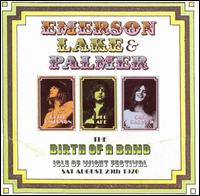
Birth Of A Band - Isle Of Wight Festival - 2006 Eagle Vision
8
(Good / Mediocre)
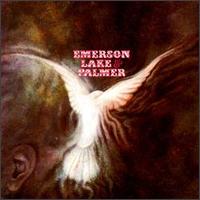
*Emerson Lake And Palmer - 1970 Atlantic*
D
(Great / Very Good)
(On your system, I'd rate them: ELP-8, Tarkus-7 (maybe high
6),
Trilogy-10, PaaE-4, BSS-9, don't have any albums from
then on, I'm told
they're so-so, I might get them eventually but not before finishing off
the
Moodies' first 7)
A Greek, or Attic talent, was 26 kilograms (57 lb), a Roman talent was 32.3 kilograms (71 lb), an Egyptian talent was 27 kilograms
(60 lb), and a Babylonian talent was 30.3 kilograms (67 lb). Ancient Israel, and other Levantine countries, adopted the Babylonian
talent, but later revised the mass. The heavy common talent, used in New Testament times, was 58.9 kilograms (130 lb).
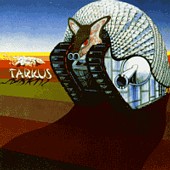
Tarkus - 1971 Atlantic
B
(Very Good)
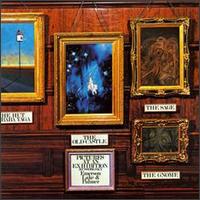
Pictures At An Exhibition - Atlantic 1972
A
(Very Good / Good)
Fair: The Gnome, The Hut, The Old Castle are just Keith being Keith
Not So Much: Blues Variation (but it is waaaaaaaaaaaaay better than Rondo) & Nutrocker
Ick: The Curse
Even though half of it is unwatchable I recommend acquiring the DVD of the Lyceum show. Seeing Keith play up close is very
interesting. Seeing Greg’s fur collar shirt is just surprising given that it must have been really hip & cool back in ’71.
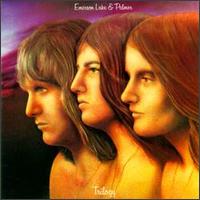
Trilogy - 1972 Atlantic
8
(Good / Mediocre)
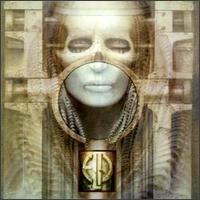
Brain Salad Surgery - 1973 Atlantic
C
(Very Good / Great)
Rik
It's a very good book. It's not "official".
He says that BSS, Impressions, has some of the best work of ELP.
For instance, at page 294: "... Karn Evil 9, First Impression, may well mark the zenith of ELP's entire output."
I love this band and I'm in 98% agreement with everything Edward Macan says.
I agree with him.
Welcome Back My Friends to the Show That Never Ends - Ladies
and Gentleman Emerson Lake and Palmer - 1974 Atlantic
C
(Very Good / Great)
Works Volume 1 - 1977 Atlantic
5
(Mediocre / Bad)
Works Volume 2 - 1977 Atlantic
A
(Very Good / Good)
Love Beach - Atlantic 1978
6
(Mediocre)
Works Live - 1993 Victory
B
(Very Good)
The King Biscuit Flower Hour - 1997
A
(Very Good / Good)
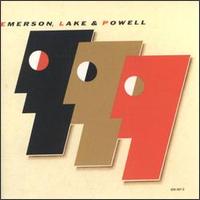
Emerson Lake and Powell - 1987 Polydor
7
(Mediocre / Good)
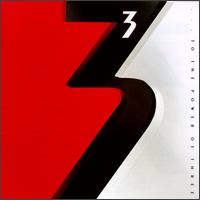
To the Power of Three (By 3) - 1988 Geffen
1
(Beyond Horrible)
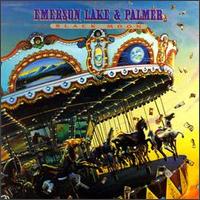
Black Moon - 1992 Victory
4
(Bad / Mediocre)
I agree the the Prokofiev piece is pointless, and for me the title track riff is
boring, but much of the rest is up to the standard of the early albums.
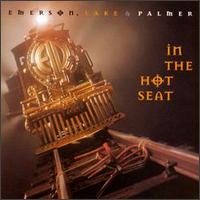
In The Hot Seat - 1994 Victory
7
(Mediocre / Good)