No artist better exemplifies the above ancient platitude, and I fully believe that the attitude of anybody towards Robert Zimmerman as a whole is strongly correlated to the degree one agrees with it. There are many people in this world for whom music is mostly based in technical features, and they think of music as merely a collection of notes, chord progressions, time signatures, whatever. If you take this approach, I'd estimate that there's a good 90-95% chance that you despise Dylan and consider him a talentless hack. You probably hate his "unlistenable" voice, you hate the fact that most of his songs are based in "simplistic" patterns, you hate his lyrics that don't make any real sense, and you hate the fact that he opened the door for anybody with a guitar and a desire to sing to make music, even if they weren't talented in a technical sense. You also probably think that Dylan songs are always made better when other people cover them, and while you admire the Byrds' version of "Mr. Tambourine Man" or Hendrix's version of "All Along the Watchtower," you couldn't care less about Dylan's takes.
I do NOT fall into this category. This may surprise you - from my experiences, most people who enjoy art rock tend to despise Dylan, yet while a primary focus of this website is prog rock and the like, I have a GREAT love of Dylan as a whole. While I dislike a good number of Dylan's albums, particularly in the latter half of Dylan's career, my decision to give Bob the coveted five-star artist rating (which only the Beatles, the Rolling Stones, the Who, and Sly & the Family Stone can claim in addition to Bob) is one of the easiest ones I have ever made with regards to this website. The question must then be raised - why??!!!
It all comes back to the beginning. For all my love (sometimes) of high technical proficiency or complexity or various things like that, I ultimately see music as more than just notes on a page. To me, music is primarily a medium by which an emotion, or a thought, or an atmosphere, or a mood (or whatever) is conveyed from the artist to the listener. Please note that I am not just talking about lyrics - while I do often find Dylan's lyrics fascinating, they are not the only aspect of Bob that draw me to him. What draws me (and I'm sure countless others) to Dylan is that he is able to span the whole spectrum of human emotion better and more completely than any other artist of whom I'm aware. Somehow, the combination of his every-person voice and his every-person melodies and, above all, his every-person unfettered emotive power elevate Dylan to a level that no other singer-songwriter could ever hope to reach, simply because he makes it so easy to empathize with him. Whether he's angry or happy or sad or giggly or just lazy or stoned, he manages to open up the vault of his soul in such a way that I completely understand where he's coming from. Moreover, when he does this, I feel like he is in the same room as me, going through the same experiences as I am, and this makes the experience of a Dylan album that much more poigniant.
This being said, I want to make it clear that I do NOT treat Dylan as infallible, and I do not go out of my way to convince myself of the greatness of every Dylan album by always arguing "well, it's emotional, therefore I need to consider it good." What differentiates a good Dylan album from a not-so-good Dylan album, for me at least, is what I can best refer to as "emotional independence." For me, Dylan is at his best when he shows a high level of inner strength and power, an ability to let his artistic direction come solely from within and NOT from outside sources or influences. Examples of albums I consider weak for this reason would be The Times They are A'Changing (where it sounds like he's completely beholden to the protest scene), Street Legal (where it seems he finally let his spirit be crushed by virtue of his advanced age, and let himself become a weak-willed old man) and Saved (where it sounds like he's become an automaton for Billy Graham). On the other hand, I find myself able to greatly enjoy some albums that are considered weak by the general Dylan fandom, such as Self-Portrait or New Morning, simply because he's making albums that fit his inner-inspired mood at the time and don't cave into conventional expectations (or whatever you want to call it).
In any case, you will find that I prefer much of the more obfuscated Dylan material to the more straightforward (in other words, Blonde on Blonde is getting a perfect score, and Blood on the Tracks isn't, though it will still get a very high grade). Dylan, for me, is at his best when he's messing with his fans' minds, taking his basic emotions and wrapping them in enigmatic imagery, rather than delivering more straightforward lyrics. Lyrics like those to "Ballad of a Thin Man" may not seem more powerful and piercing initially than those to, say, "Idiot Wind" (a great track in its own right), but unless you have a complete aversion to exerting the slightest bit of effort to gain greater enjoyment from a work of art, they will eventually dig under your skin like few other things can.
This, in turn, can be extrapolated to Dylan's whole career. It is entirely possible to dismiss Dylan for the "obvious" reasons - his voice, his lyrics, his simple melodies - but if you are willing to accept the possibility that he might be a good artist anyway, you will realize that his greatness comes from the fact that he's such a wonderful musician DESPITE these obvious flaws. If you don't believe this, well, that's your loss.
PS: Longtime readers of this site and of other review sites will likely have noticed that, of all of the pages I've written, this is probably the one that most closely mirrors the corresponding page from the old George Starostin page. Our takes on Dylan are nearly identical; we both prefer Blonde most, we both like Blood a little below general consenus, we both like Self Portrait a lot, and many other details line up, in both album preferences and song preferences.
Overall, this is probably the page where the "George clone" accusations of my site have the strongest merit. While I read Mark Prindle's reviews of Bob Dylan well before I read George's reviews, I found myself inclined to agree with George's far more readily, and this held up pretty much every time I bought a Dylan album and compared Prindle's thoughts to George's. Inevitably, this led to many phrasings from George's reviews seeping into my subconscious, and when it came time write my own Dylan reviews back in 2002, this match in opinion in both general and specific aspects of Dylan's career ended up splattered all over the place.
This match in opinion ended up manifesting in ways that even I find a little creepy. Case in point: back in early 2003, I decided to review Dylan's Live 1975 album, which I had bought with Christmas/graduation money in late 2002. I wrote a review of it and some other album that's been lost to the winds of time (this was back when I wrote 2 reviews a week), with the intent of uploading the reviews on my standard upload day (Wednesday). I was very surprised that day to stop by George's site in the afternoon and see that he had just uploaded a review of that album that had nearly the same grade and shared many of the same sentiments (while namechecking many of the same songs) that I had mentioned in the review I had already written but hadn't uploaded. Needless to say, I was a little irritated, but it confirmed to me that, like it or not, I was so on the same page with George's Dylan opinions that I could write a closely matching review without previously seeing his review.
Now, should I go back and rewrite some of the old reviews that match George's to an uncomfortable degree? Perhaps, but part of the disincentive is that I don't really disagree with anything I wrote; my Dylan opinion has remained fairly static over the years. And so, while I feel that this page does offer some insights that won't be found elsewhere, a great deal of it will continue to mirror George's, and ultimately I'm ok with that, more or less.
What do you think of Bob Dylan?
TheRubberCow.aol.com (6/25/02)
I was pleasantly surprised to see that you put Bob Dylan on your site,
not because I love him, and not because of any insult to you, but because
I think it takes a special person to appreciate both prog and Dylan. I
initially (well, technically not initially) come from the former's side,
and my first impression of Bob was bad. I didn't like how he sang off
key or without regard for melody, and I HATED his hamonica playing. It
wasn't as sophisticated as the folk I had heard before his, and it just
seemed to raw, sometimes in a hillbilly sort of way. I then was forced
to listen to over time, much of his catalogue, and was impressed (kind of
slowly, with some pain) by his lyrics and the overall final product of
some of his stuff. "Girl From the North Country" is one of my favorites,
along with the whole Desire album, but my favorite has to be "It! 's
Alright Ma." Even if I was determined to hate Dylan, I would not be able
to resist falling into this song. So I have grown to respect him very
much, and even enjoy some of this. But he is someone I cannot listen to
all the time. Not my cup of tea, but that doesn't mean it's not
drinkable tea.
Barry Stoller (barrystoller.utopia2000.org) (10/11/04)
Regarding Bob Dylan, you state 'The Most Important Part Of Music Is What
Isn't The Notes.' More so than even John Lennon, Dylan exemplifies the
trend, begun in the mid-60s and peaking in the early 70s, of youngsters
going to record stores to buy ... heroes. Dylan is certainly more hero
than music (thus the 'love em or hate em' response elicited from so
many). As it turned out, he was too cynical to have really merited the
hero worship thrown at him (which he so willingly cultivated). Alas,
going from 'Masters of War' to 'Neighborhood Bully,' Dylan shows what a
poor hero he was.
Of course, Dylan invented much that is popular music; the 20th century
wouldn't be the same without his many contributions. Unfortunately, many
of his inventions (embraced by so many other artists) were artistic
shortcuts and set-backs: meaningless 'poetics' masquerading as profundity
(ever read his novel Tarantula?), blatant plagarisms of obscure folk
melodies (Dylan didn't really write the music to Freelwheelin'), hostility
and self-centeredness disguised as hipness (the famous electric albums)
and, most importantly, a reactionary impulse in much his music (rejecting
psychedelic, heavy and prog tendencies in favor of ... Nashville). And,
of course, his politics - as his religious beliefs - reek of opportunism.
I would heartily suggest a better - and more musically adventurous - hero
in Dylan's place. Phil Ochs. Listen to his folk masterpiece Phil Ochs In
Concert and then his pyschedelic-art-prog tour-de-force Pleasures of the
Harbor - those two albums surpass the entire Dylan canon. And... he'll
never be seen on a Victoria's Secret advertisement, either.
RyanM2251.aol.com (07/21/05)
Bob Dylan is a great, and very well known musician, for good reason.
I love his early folk work when he was more acoustic folk-rock. I
have never heard a lot of his stuff from the mid seventies onward,
because like a lot of artists I believe his earlier work is much
better, but that is just my opinion. After Dylan went electric he
still had his touch ( Just listen to Blonde on Blonde, in which
Dylan lays down some of his finest harmonica work ). Anyway, Dylan is
a skilled song writer and talented musician, no matter what anyone
says. These facts are clear. While some people may criticize the way
that Dylan sings, anyone who has real taste and is not just caught up
in cheap pop music can truly appreciate soulfull way that Dylans
singing perfectly compliments his words and music. This is my own
opinion of the music of the man known as Bob Dylan.
Calculon (calculon.interfree.it) (07/15/06)
Hi, I don't know you but I'd like to write my thought.
I'm Italian, and I grew up with Dylan's voic in my head (as Bono Vox
said once).
At the age of one, my family and I travelled in Europe with a
caravan.
The car-musciplayer played Dylan.
During my first 10 years of life I was used to falling asleep with a
Bob Dylan song (maybe Desolation Row ;-)) during a journey in
Scotland or Norway.
My father has always been a bloody fan of dylan and the musci was
that one.
I received an imprinting.
Comin'up the age of "ribellion", at 14 years old I started to listen
to punk rock, hard rock and heavy metal.
WoW :-DDDD!!!! What a power! What a hard sound! What a breaking of
rules!!!! :-DDDDDD
No no no no I was older then..........
5 years later, tired to listen to celebrations of the genius of the
person who I listen to just born,
I really started to study Bob Dylan.
Beginning from The Freewheelin' I listened to all his songs reading
the lyrics.
I'm a '78 class.
Today I'm 28 and I still can't understand how he managed to make what
he made.
People tell me: Yes but have you ever listen to Neil Young, to the
Beatles, to this and that...."
I smile.
Everyone of those great artists, songwriters, musiscians has started
to make his job because before them there was been Bob Dylan, with
his dynamic changing uncatchable ideas and inventions.
I'm sorry Frank Zappa.........you didn't invented nothing of so great
and revolutionary.
I put up a band to play a "replica" of '65-'66 Dylan songs to make
italian people to know that sound: THE SOUND.
Bye
Tim Light (timlight99.hotmail.com) (8/13/11)
Dylan is one of my all time favorite artists, despite the fact that I can't stomach two thirds of his material. Sometime around
the mid-late 1970s his already fragile voice gave way completely. From then onwards I found it impossible to listen to anything he
produced, however good the tune or lyrics. And mostly the songs were uninteresting or downright stupid. People tell me that such
and such an album is Dylan's latest comeback, but the fact is that he is physically incapable of producing a vocal sound that
doesn't grate in my ears. How Adele came to recognise the merit of To make You Feel My Love, I'll never know. But this is just my
take on Dylan's later work. His albums are bought in large numbers, so there must be people out there with a different audio-
tolerance.
Having dismissed everything after Desire, let me also dismiss his debut album. As a collection of rustic folk songs it's OK, but
his singing is exagerated. He's trying too hard to sound like some of his nitty gritty folk heroes, and it sounds ugly and false.
The best tracks by far are his own compositions, especially Talking New York.
So it's that golden period from Freewheelin' to Desire where I believe his greatest work is to be found. I didn't get into Dylan
until much later, so I wasn't offended by his switch to electric. Having seen the movie, I can see how his fans would feel ripped
off by the live performances, but I think the albums are superb. What do I like about all this stuff? It's hard to put my finger
on it. I think there are a few different ingredients, one of which is the immense variety of moods and subjects on some of his
albums.
Imagery - not sure if that's a real word - many of Dylans songs create a stream of images in my mind, a bit like taking a mental
trip around some very surprising places. The best example is Desolation Row, which in my mind creates images of a post-apocalyptic
police state, where the liberal ghetto (Desolation Row) is the only place where the thought police are frightened to go. Probably
my all time favourite Dylan song.
Conscience - his early protest songs are exceptionally powerful, and are sung with immense passion and sadness. And some of them
are quite tuneful too. Like My Back Pages (which is a protest against protest), Hattie Carroll, With God On Our Side.
Humour - there's a lot of humour in his early work, either self-mocking (Motopsycho Nightmare) or having a dig at American life
(Bob Dylan's Dream). These might not be his most adored songs, but they give the albums a bit of light relief in between his
protest and his epics.
Epics - he did quite a few of these and I find them entralling. Jack of Hearts is extraodinary, but then they all are in their own
way.
As for his voice, for the most part I think it was perfect for the mood of his songs. He sounded far more mature than his age, and
I guess that was a combination of thrashing his voice and chain smoking. But the effect, until it broke completely, was both
unique and addictive. I don't mind that he broke all the rules, didn't stay in tune, didn't scan, etc.. That was part of the
appeal. Here was a guy who gave the finger to convention and authority.
OK, later he sold out, jumped on and off bandwagons, joined the establishment, made a Christmas record. Who cares. He gave me a
ten years worth of truly outstanding and unique albums that I still listen to with reverence.
One of my hobbies is singing. I take my guitar to the local pub once a week and join in a singaround. Of my 127-song repertoire,
24 are Dylan songs. They are great songs to sing, as well as to listen to.
Best song: House Of The Rising Sun
As nice an album of folk and blues covers as one can probably find from the early 60's. It's always an interesting proposition to rate early albums of prominent 60's artists, since they're often cover-heavy, and there's always a sneering naysayer around to say I'm overrating such albums on the grounds that, if the famous artist in question hadn't recorded the album, I wouldn't care much about it. In a way, this critic would be right in regard to this album, though not in the way he/she probably intended. The track listing, after all, is very nice and all (if you like traditional folk and blues, of course), but were I to just get a compilation with these songs done by other artists, I'd regard it as ok, but nothing particularly special.
The fact remains, though, that it is Dylan who is doing these songs here, and the way he tackles them really brings a smile to my face. The instrumentation, of course, is very simple, with just harmonica and acoustic (plus, and I don't know if this is just from the remastering or if it was always this way, but the vocals and harmonica are always in my left speaker and the acoustic is in the right), but Dylan's vocal approach is anything but "typical." He sounds OLD and GRIZZLED and GRUFF, and the "unlistenablity" of his voice adds an unbelievable amount of power to the proceedings.
Two of the songs, in particular, jump out at me in such a way that I enjoy them far more than the more famous covers by other artists. One, his runthrough of "In My Time of Dyin'" (later done by Led Zeppelin on Physical Graffiti, there stretched out into oblivion with an awful interminable jam), really takes me to an old prospector in an old mining town in Appalachia, waiting for Jesus to grab his spirit. Again, I must ask how any other 20-something singer at the time could have pulled off such a perfect imitation of an old dying man (the way he sings "in my time of DYIN'" really freaks me out in this respect).
My favorite by far, though, is his cover of "House of the Rising Sun," which for me blows away the Animals' cover. Sure, the Animals made it into a nice, memorable pop song, but they made it singalongey and relatively happy and all that. That doesn't fit the song, though! No, it's an utterly depressing number, focusing on unbelievable regret with bad decisions made in life and only wanting to keep others from meeting the same fate. In his delivery, Bob seemingly takes on all the pain and depression of the whole world on his shoulders, and he makes no attempt to mask the crippling bitterness shown within the lyrics. It's utterly incredible in its cathartic power, in case you haven't gathered yet.
Elsewhere, the songs aren't quite as striking, but they're all nice. "Freight Train Blues" stands out from the rest, thanks to a neat vocal trick that Dylan pulls off (I can only imagine what people's reactions were when they first heard that sound in 1962), but I can basically say that I enjoy all the numbers on here to some degree. Some are particularly depressing ("Fixin' to Die," "See That My Grave is Kept Clean"), some are particularly happy and bouncy ("You're No Good"), but at worst they're pleasant. The only song that doesn't really strike me as great is the original composition "Song to Woodie," but even then Bob makes it up with the brilliantly funny "Talkin' New York," so I won't gripe.
In any case, this is a solid debut, and while it doesn't have as many instant classics as do later albums, it has enough to make you come back to it repeatedly. At the very least, it gives good insight into the sort of songs from which Bob drew his later creative influence, and that gives it a nice historical edge in addition.
Nicolas De Lille (nicolas.de.lille.pandora.be) (10/27/06)
Aha, you missed the positive, light-hearted Baby Let Me Follow You
Down. It has an uncommon folk chord progression (think of Lyle
Lovett-style) that Dylan can pull off easily. Musically it's really
a gem that gives the album an extra spark. it also shows another,
more sunny side of Dylan, often neglected. It also has a sexual
connotation, which is funny coming from a reverend. Just a
"not-so-simple" but "simple" love song.
David Andino (davidandino83.msn.com) (10/13/07)
hey it's me again. in 1962 the year in which nobody recorded an album
worth of material that was dominating the singles market it was
all.... shall we say ELVIS PRESLEY!!!!!!!!. but not to dismiss the
king of rock and roll but ever since he went into movies he lost his
audience. bob was a 20 year old guy with an acoustic guitar and no
experience in recording until the record company singed him. even
though the man was just getting started he was shy but boy he was
ready to rock. this album is a history in the making. 12. remember I
told you about the mob rules review? well I am here.
"Alainna Earl" (lainnakate.yahoo.com) (02/13/11)
I do not think that the Animals took anything from Bob Dylan's song
and made it less emotional / heartrenching / or less than it's
original purpose. Eric Burdon sang it with so much of his God given
soul, that think it's one of those rare Dylan covers, that surpass the
original. P.S. You left out 'Man Of Constant Sorrow', which is a VERY
Goood early Bob Dylan with excellent harmonicas.
Ben (benburch500.hotmail.com) (02/13/12)
Not much of a fan of this one. I'll give this a 6/10. Bob did so many other things that were far better than the best songs on
here. The only one here that really stands out is "Song to Woody" (shame you don't like that one) and even my second favorite
("Baby Let Me Follow You Down") has a much better version on "Live 1966." This is a pleasant but pretty unconventional album here.
Even Dylan himself doesn't think too much of this album.
Best song: A Hard Rain's A'Gonna Fall
Dylan's debut may have been very good, but it was still more of a prelude, an introduction to the world than anything else. On this album, Dylan springs forth in all his splendor, bursting with confidence and a demeanor that suggests he can take on the whole world with nothing but an acoustic guitar and a harmonica. Almost unquestionably, this is one of the greatest (if not THE greatest) "singer-songwriter" albums ever, and it's so flabbergasting that I have no problems giving it the second highest overall score available.
The most common complaint people have with regards to this album, as you might imagine, is the "monotony" of it all. After all, this album does consist of 50 minutes of only the most basic instrumentation (with the exception of a bit fuller arrangement in his cover of "Corrina Corrina"), and if you have a weak attention span, this will make the album difficult to sit through. My opinion, though, is that criticizing this album for this is kinda like bashing clam chowder for consisting of nothing but soup and seafood - you KNOW what you're getting in advance, and if you're in the mood for plugged-in music, listen to something else. As far as 50 minutes of acoustic goes, I can't think of anything I'd take in place of this album.
Besides, the "it's too montonous" argument really doesn't work on this album, because this is by far the most diverse monotonous album I've ever heard. Sure, sure, the instrumentation is constant throughout, but this album is unquestionably diverse in terms of mood and (I insist) style. For all its monotony, Freewheelin manages to provide a sort of encapsulation of Dylan's future career, touching on many of the modes of which Dylan would prove himself a master. We have anthemic Dylan ("Blowin' in the Wind"), epic Dylan ("A Hard Rain's A'Gonna Fall"), angry protest Dylan ("Masters of War"), soft protest Dylan ("Oxford Town"), soft mysoginist Dylan ("Don't Think Twice, It's Alright"), storyteller Dylan ("Talking World War III Blues"), creative folk-rearranger Dylan ("Down the Highway"), moody rambler Dylan ("Bob Dylan's Blues"), folk love song Dylan ("Girl From the North Country"), really introspective Dylan ("Bob Dylan's Dream") and silly Dylan ("Honey, Just Allow Me One More Chance, I Shall Be Free"). Not bad for a "montonous" album, huh?
Now, with all these styles, there's bound to be something on the album you don't really like. Many people tend towards disliking the opening "Blowin' in the Wind," dismissing with epithets like "cliche," but the reason it's at all cliche is because it created the cliche. I'd be very hardpressed to find any folk song before this that provided imagery like this to stir the listener, imagery that seems like it's been in your mind forever yet has never been introduced to it beforehand. In other words, the fact that bazillions of street musicians have taken it upon themselves to try and squeeze money out of pedestrians by playing this on their acoustic guitar should not be taken as an indictment against the song.
Another popular choice for bashing is the protest anthem "Masters of War," which some dismiss as dated and/or overly mean. I find the former argument somewhat difficult to understand - yes, I'm sure it was inspired by specific events of the early 60's, but Bob doesn't specifically mention them or the players involved by name. By not doing so, he takes the song from the realm of specific event protest and brings it into railing all of those who create and use war as a means to further their own desires and ambitions. In this way, the song is actually timeless - you could never convince me that the "Masters of War" no longer exist, not in this day and age. Now, as for the second argument, there is a point - after all, in no other song would Bob ever sing a lyric so blatant as "And I hope that you die, and your death will come soon." Then again, he's set up the song in such a way that he's not wishing for the death of any individual, but rather ALL of the unnamed MoW's, and that with their death the world will be a better place. I, for one, see nothing dated or excessive about that sentiment.
Fortunately, Bob is not all about heavyhanded and bitter protest on this album (a good thing - see the next album for what happens when he is). The other sides explored on this album, after all, are no less valid in their artistry, and certainly provide a great deal of relief to the listener. "A Hard Rain's A'Gonna Fall" introduces us to the wonderful world of Dylan epics, where Bob manages to combine beautiful imagery, simple (yet lovely) melodies and the power of his voice into a magic-filled concoction unlike anything else in the music world. Can you even begin to imagine what an effect this piece must have had on the music world back in 1963?? It has no respect for standard notions of ideal time limit, its muse is more Shakespeare than Seeger, and it hypnotizes the listener like nothing else to date. I could go through the lyrics, but why? This is truly one of the songs that cannot receive justice through a line-by-line analytical critique.
Elsewhere, pretty much everything has something particularly interesting to offer. "Girl From the North Country," for instance, does borrow a line from "Scarborough Fair," but the mood is much different from that piece - there's a subtle arrogance hidden throughout, a tinge of disdain to go along with the superficial longing of the verses. Likewise, "Don't Think Twice, It's Alright" manages to take on a substantially different mood than renditions by others - according to the liner notes, most singers of the day treated it as a regular love song, but Dylan manages to come through with a small dose of bitterness in his address to the unnamed woman, making lines like "I wanted her heart, she wanted my soul. Don't think twice - it's alright" more vitriolic than they might seem on first glance.
It's not just suprises in mood and demeanor that characterize all of the songs, though. "Down the Highway," as an example, manages to take a standard blues pattern and make it interesting through Bob's inventive singing and strumming. Between each verse, he throws in a non-standard fast fill, and at the end of each stanza he uses his voice as a vehicle of dissonance (see: "I really miss my babyyEEEEEEEEEEEEEEEEEE"). Tracks like this, you see, do a good job of demonstrating Dylan's genius - he manages to take trivial music patterns, augment them with other seemingly "obvious" ideas, and create music that merely makes you scratch your head and go "hmm, that's pretty obvious, so WHY didn't anybody else come up with it first??!" Take that all you Dylan bashers ...
Oh, where was I? Ah yes - the three "funny" tracks on this album are gutbusting, and amply show that Dylan was good for more than just condemming "Masters of War" to death. "Talking World War III Blues" is a man relating a bad dream he had to his psychiatrist, and it conveys the general paranoia people had about nuclear war and communism to a tee. It manages to take "normal" events and make them surreal, just like in a typical dream, and the way Bob intones lines like "thought I was a communist" just makes the experience that much more intriguing. A cynical person will find this dated, of course, but I don't mind - social paranoia is as fascinating now as ever, and besides, Dr. Strangelove is one of my favorite movies, so there.
I also find it interesting and symbolic that Bob decided to close out the album with two funnier numbers, rather than something like the perfectly acceptable protest cover "Oxford Town." On "Honey, Just Allow Me One More Chance," Bob takes on a sort of "clown" persona, making an upbeat number that much more ear-catching by making his intonations as goofy as possible. Of course, this probably bugged the hell out protest folkies - I can only imagine the eyebrows raised when they heard their "folk champion" singing the line "just a one-time favor I-uh ask of YOUUUUUUUUUU" - but I say to hell with them. Likewise, the closing "I Shall Be Free" is about as perfect a close as one could ask for in this case, if only because it is virtualy guaranteed to leave a smile on your face. Indeed, I'd hardly be able to think of a more surreal and humorous way to close an album than "I hunt dinosaurs, make love to Elizabeth Taylor, catch hell from Richard Burton."
And there's your album. It's certainly brave of me to give this album a near perfect score - I could have chickened out and settled on an E, but I simply can't. This is simply the Bible of singer-songwriting, an album that aptly demonstrates all the possibilities of acoustic folk and then some. I can understand that some will see too many potential weaknesses, but as far as I'm concerned, most of those weaknesses can easily be disregarded, and once I remove any biases, it's hard not to love the finished product.
J Mickel (jmickel1.austin.rr.com) (4/07/04)
This was the first album I ever bought. In 1982 at the age of twelve I
bought freewheelin on cassette tape for a mere $5.00. My older brother had
a Dylan hits album with blowin in the wind on it and I liked the song.
Little did I know that this album was such a masterpiece (my opinion). I
loved it. Sad to say that it finally died recently. That cassette
convinced many college friends that Dylan was indeed great.
James Mickel
Trfesok.aol.com (05/12/06)
The most telling comment, for me, is when I played it for an old
roommate, who asked if it was a greatest hits record! I agree, the
amazing range of moods more than comprensates for the sparse
instrumentation. The album takes a bit of a dip after "Don't Think
Twice..", mainly because the melodies sound somewhat more derivative
of his folk influences. Still, it is indeed his first classic album.
Ben (benburch500.hotmail.com) (02/13/12)
I think you summed this one up pretty well. Sure this was ahead of its time when it came out, but there's nothing on here I would
ever really go back to. "Hard Rain" (my favorite here) would be dramatically improved on "Live 1975". When this album is good it's
really good ("North Country", "Don't Think Twice", "Masters of War") and when it's bad it's so boring ("I Shall Be Free", "Down the
Highway"). I really liked "Blowin in the Wind" when I first heard it. Then I heard Stevie Wonder's version and I came to the
conclusion that Bob's version is overplayed. I'll give this a 7.5.
Tommy LoBue (tommylobue08.icloud.com) (12/13/17)
I love Blowin in the wind and I dislike the people that don't like it.
Best song: The Times They Are A-Changin'
An unexpected, unfortunate and unncessary disappointment after the last one. See, the protest movement was big at the time, and they (the bigshots of protest music) made no secret of their preference of "protest Dylan" over, say, "epic Dylan." Well, the people running Bob's label made this fact loud and clear to him, and they cajoled him into giving up that "art crap" and "needless humor" for more songs in the vein of "Blowin' in the Wind." Unfortunately, as I mentioned in my introduction, Dylan has never been anywhere near as powerful or enjoyable when he allows himself to be buffetted by outside forces, and this is no exception. The songs are as uniform as can be (no humor or love balladry or introspection here), the lyrics are DUMB and totally cliched in their straight-forward nature, and the music doesn't make any serious attempt at doing anything interesting, since the emphasis is obviously on the lyrics.
After all this, then, it's astounding that I give the album as high a grade as I do, but I have my reasons. For all the uniformity, only a couple of the songs are outright ROTTEN (the excessively self-righteous "With God On Our Side," "Only A Pawn In Their Game"), and some are halfway decent. The title track, of course, is an all-time protest classic, one of the truly defining songs of the mid 1960's, and while it certainly hasn't aged well, it's a fine way to start off the album. Elsewhere, there's the nice, downbeat (but in a good way) "One Too Many Mornings," a song that would only really come to life on stage but is still ok here, and the decent "Boots of Spanish Leather" (where the music sounds suspiciously like a straight ripoff of "Girl From the North Country") is a decent reprieve from the endless depression. And hey, "When the Ship Comes In" at least mixes the depressing lyrics with upbeat instrumentation, providing a badly needed dose of wry irony.
Elsewhere, though, it's all just standard folkie protest fare. Were they mixed in with other Dylan numbers (read: some non-protest oriented Dylan numbers), they'd probably stand out that much more. In this case, though, the songs all sound so much alike and so dreary that I can't get myself to care about them. And please note that my problem is not so much with the fact that the album is all protest songs - it's the fact that protest folk was only ONE SIDE of Bob Dylan, and the record company bosses created an artificial representation of Dylan by only showing this one side of Dylan on this LP. Few things are more obnoxious then somebody other than the artist himself/herself determining what should be presented to the public, and given the fact that Bob would return to Freewheelin' mode immediately after this album, I will never be convinced that Bob was an actively willing party in this charade. No thank you.
Ben (benburch500.hotmail.com) (02/13/12)
First and foremost, thanks for dissing "With God on our Side". I really don't like that song, and it seems to be quite popular.
Anyway, I really don't like this album at all. It's so boring and self promoting. There's only two songs I like here, but once
again there are better versions. The title track and "When the Ship Comes in" sound better in their "Bootleg Series" incarnations.
This is one of those albums where I liked it a lot when I first heard it and now I find it pretty abysmal. I'll give this a solid
3.
Best song: My Back Pages
Now that's more like it. If you look upon Times as one of the great albums of all time, chances are pretty good that you'll despise this one - goodness knows that releasing this album was an extremely brave move on the part of Dylan back in '64, as it contains virtually nothing in the way of generic folkie protest. To that, though, I say "yippee" - Times has always sounded like a mistake to me, and I'm glad that this album, which shows Bob turning his back on that legacy, shows Dylan following the natural course of his instincts. The album was actually recorded in the course of one evening, and the resulting product, aside from having an expected feeling of spontaneity throughout, has a very warm, cozy and inviting feel. There are some bits of seriousness, sure, but they are interspersed with giddiness and silliness and sadness, and as a result the bleak tedium of Times never rears its ugly head here.
Indeed, the opening "All I Really Want To Do" sets the tone of enjoyability right off, and immediately gets a smile on the listener's face. The rhymes are hilarious, as Dylan is often purposefully mocking his power over the English language, and the chorus basically says it all - "All I really wanna doOOOOOOOOOOO is, baby, be friends with you." He doesn't want to preach or make people mad or get their blood boiling with this album - he just wants them to come over, sit down, and have a fun giggle with him for a few minutes. Again, not what fans of "With God On Our Side" were looking for, but I guess they never reckoned that their 'protest hero' would have a sense of humor ...
Speaking of humor, I'd like to call everybody's attention to the utterly gut-busting "I Shall Be Free No. 10." Yes, yes, the melody is simpler than simple can be, I'll give possible detractors that. But the lyrics, oh my goodness, the lyrics. "I set my monkey on the log in order for him to do the dog - he looked at me and shook his head and went and did the cat instead. He's a weird monkey, very funky." There are other incredible gems within, of course, but if I write them all, I'll kinda be giving away the entire song - it is, after all, basically poetry spoken over some acoustic guitar with bits of harmonica between 'verses.' Yet it's the best comedic poetry I've heard in my life, and you'll have to pardon me if I have the overwhelming urge to listen to it again very soon.
And then there's "Motopsycho Nightmare," the story of a man's encounter with a farmer and his escape from the wiles of the farmer's daughter thanks to communist paranoia. This is certainly one of the best examples of black humor I've ever heard in music, and given that dark comedy is my favorite movie genre, this track can't help but be an utter favorite of mine. I of course have my favorite lines ("I like Fidel Castro and his beard," hehe) but they're all gems and a half. Utter hilarity, that's what this is.
The album isn't ALL straightforward humor, though - as wonderful a side of Dylan his sense of humor is, the man could do other things as well. In particular, the epic power first showed in "A Hard Rain's ..." (that unfortunately vanished on Times) has returned with a vengeance, and as a result both "Chimes of Freedom" and "My Back Pages" are enough to make this album an utter necessity all by their lonesome. I'm normally very skeptical about songs that have 'Freedom' in their title, as they usually manage to sound ridiculously pompous and boring at the same time (see Yes: "On the Silent Wings of Freedom" or Pink Floyd: "A Great Day For Freedom" for two examples), but "Chimes" manages to be the exception that proves the rule. The lyrics are simply incredible, calling on clever wordplay and powerfully epic imagery without losing touch with reality, with Dylan delivering them with a sense of "I'm only the messenger, not the creator." Kinda like Moses, actually - I've always liked Moses more than other OT figures because he managed to be part of so many powerful events and miracles while almost always remaining ridiculously humble, and Dylan really strikes me in a similar way. But I digress ...
The monster epic of the album, you see, is "My Back Pages." It's so powerful, so moving, that I'm really at a loss of how to describe my feelings about it. The chorus "but I was so much older then - I'm younger than that now" opens up a floodgate of irony and meta-irony about looking back on one's past that I find quite overwhelming, and the implications it holds about youthful idealism vs. accepting the 'status quo' as an old, 'mature' member of society are only just the beginning. And once again, it has that air of bombastic humility that makes Dylan so overwhelmingly appealing in the first place - I adore the cover that The Byrds did on Younger Than Yesterday, but Dylan's rough singing and voice give just that much extra oomph to the proceedings to make it simply amazing.
Another side of Dylan to be found on the album is a nod towards love balladry, but these are not typical love songs. "I Don't Believe You" manages to have the best melody on the album, but the main appeal is the lyrics, which are completely bitter towards the woman who now pretends nothing happened between her and him. Sure, the thematics are a bit 'primitive' for Dylan, but the track is a well-done look at a well-worn genre. Besides, if you aren't satisfied with this, but want a sad love song with a heavy Dylan tinge nonetheless, you can just flip to the closing "It Ain't Me, Babe." There's a strong sense of despair in the song, but it's not the result of Dylan being mad at the woman in question - rather, Dylan seems mad at himself for being unable to be the person the woman wants him to be and the person HE wants to be for the woman. He knows he's gonna lose her, and he knows that it's for the best, but it still eats him up a bit. Or something.
Anyway, that's seven tracks, mostly spectacular, but the other four are a bit of a letdown. Two of them are ok - "Black Crow Blues," with an interesting piano part, and "Spanish Harlem Incident," which is good but also improved by The Byrds (one of the very few times you'll see me saying I prefer a Dylan cover to the original) - and two just kinda stink. "To Ramona" continues to elude me each time I hear it, and the eight-minute "Ballad in Plain D" is just a total bore through and through. The lyrics are ok, but the music is so primitive and dragging that the track would require divine lyrics to save it, and that just doesn't happen.
Still, a VERY good album. It's on the low end of a D, but the high points are so unbelievably high that I can't help but give a grade like this. And also - if you prefer the covers of "All I Really Want To Do" and "Chimes of Freedom" to the originals, that's fine for you, but I will never agree. The harsh, strident vocals are a necessity, giving the songs a power and edge that's lacking in the (still excellent) Byrds' covers. But that's just a minor aside. Onto the electric Dylan era!
Trfesok.aol.com (09/20/06)
It''s really more of a lyrics album than a music album, and does
require a fair amount of attention. But it's worth the effort. It
reminds me of Freewheeling, with some moody breakup songs ("To
Ramona", "Ballad in Plain D", "It Ain't Me, Babe", "I Don't Believe
You"), humor ("Motorpsycho Nitemare", "I Shall Be Free No. 10", which
is musically identical to No. 1 on Freewheeling -- wonder what
happened to 2 through 9?) and social commentary ("Chimes of Freedom",
"My Back Pages"), but handled in a much more poetic and surrealistic
fashion. Really a radical change lyrically, but it was a good thing
that he held off trying to change the music, or he might have lost
too many fans too soon. With the wonderful covers by the Byrds and
the Turtles emphasizing the melodies more, this did give the album
more attention. But you do need this one to get all the great lyrics.
But it's clear that, muscially, he was at a dead end, so
change was coming.
Ben (benburch500.hotmail.com) (02/13/12)
When I first heard this, I thought it was better than "Freewheelin'" and now I think the opposite. At this point "Times..." was way
in the past, and even though it's only been seven months, Dylan's really come along way. Probably the biggest improvement he made
in such a short amount of time. Sure this isn't a great album (6.5), but like "Freewheelin'" the material ranges from really good
to atrocious. Though my favorite song here is "I Don't Believe You" the live electric versions are better. "My Back Pages", "All I
Really Want to Do" and "It Ain't Me Babe" are my other favorites. "Black Crow Blues" and "Motorpsycho Nitemare" are pretty fun too.
The other songs are okay, but I really can't stand "Chimes of Freedom" and "Ballad in Plain D". What a rebound. It would only get
better from here though...
Best song: Impossible To Determine
But first, let's enjoy this terrific summary of Bob's early acoustic work. This is yet another great entry in the Bootleg Series, a recording of Bob's 1964 Halloween show, and proof that even an hour and a half of just vocals, guitar and harmonica can be made enjoyable if done the right way. Bob makes a joke early on about him wearing his "Bob Dylan mask," and it's actually quite good symbolism of how he performs on this album. He isn't just wearing his silly boy mask, he isn't just wearing his protest folkie mask, and he isn't just wearing his hallucinogenic word-machine mask; he's wearing his Bob Dylan mask, which encapsulates all of these and so much more.
Now, unlike on later live albums, where he'd mess with the arrangements of pretty much all of his songs and turn albums into "Name That Tune" games, there isn't a tremendous amount of deviation from the studio arrangements, so if you're into that aspect of his live albums, you won't be particularly thrilled here. But that's not to say he makes these songs into carbon copies of the originals, either. The yet-to-be-released (at the time) "It's Alright, Ma (I'm Only Bleeding)" is slowed down significantly, giving Bob the chance to make sure the audience caught every single last one of the syllables pouring out of his amazing yapper. "Don't Think Twice, It's Alright" takes the low-key bitterness and vitriol of the original and intersperses it with nearly screaming vocals at the end of each line. And so on; for all of the predictability in the arrangements, there's actually a solid dose of spontaneity in the vocals, and that helps things a lot.
What really makes the show great, though, is the overall feeling that Bob is in complete control, and that he's already mastered his ability to play his listeners like puppets. He throws in just enough protest songs (five out of nineteen) to conceal the fact that he is no longer the "Great Protest Hero" (and he leads in with "Times They Are A'Changin'" to cover his tracks all the more), even as he leaves out "Blowin' in the Wind" (ha!). He constantly takes witty jabs at himself, his songs and his image, all of which leave the audience in stitches (an accomplishment given how earnest most of his audience was reputed to be back then), even as it becomes obvious decades later that he was making fun of the audience with every one of those barbs. And heck, he manages to be funny even when he has Joan Baez, Ms. Hyper-Earnest herself, come on stage with him for four songs (one of which only has Bob on harmonica and Joan singing, and one of which is, unfortunately, "With God On Our Side"). If you're interested in hearing just one track from this album before listening to the whole, head over to disc 2 and take in the duet of "It Ain't Me, Babe"; the contrast between Dylan and Baez is amazing.
In the end, this may not have the historical importance of the 1966 album, and it may not have quite as much power as the 1975 album, but it's still one heck of a good time and a necessity for any Dylan fan. Grab it the next time you see it.
Best song: Subterranean Homesick Blues or It's Alright, Ma (I'm Only Bleeding)
It finally happened. Maybe Bob just got bored with traditional folk music, or maybe he wanted to piss off his former fans as much as possible, or maybe the Almighty himself came to Bob in a dream, who knows. Whatever may be, Dylan decided to pick up an electric guitar and record an entire side of plugged-in music, death threats be damned, and as a result the music world has never been the same since. To put it simply - without this album, The Beatles would not have done Rubber Soul. Without RS, The Beach Boys would not have done Pet Sounds. Without PS, The Beatles would not have made Sgt. Pepper, and I don't think I need to say what the impact would have been with no Pepper. If any single album can claim to be the most important revolutionary breakthrough in rock history, then Bringing It All Back Home can make as legitimate a claim to that title as anything else.
That said, I must confess - my incredible admiration of the electric side is somewhat more based in respect than in actual enjoyment. The songs are based around electric guitar, sure, but in a VERY primitive and conservative way. For the most part, the songs are basically the simplest level of garage rock, and the actual melodies seem virtually naught at times. For this reason, songs like "Outlaw Blues" and "On the Road Again," which have the most excessively simple melodies of the first side AND don't even necessarily have that great of lyrics, jump out and scream FILLER at me loud and clear.
Ah, but let's be fair - the melodies aren't what make this side so special. No, it's the fact that, for the first time, the utterly brilliant lyrics that Dylan had mastered are set to an electric rather than acoustic backing, showing that 'intelligence' and 'depth' weren't meant to be the product of folkies alone. The other five tracks on the first side indeed have some of the best lyrics of Dylan's career to this point, only with that much more of an 'edge' due to Bob (at least, according to everything I've ever read on the subject) taking up pot around this time. The imagery isn't just powerful, it's downright BIZARRE at times, and this really makes things fascinating.
Indeed, bizarre is pretty much the best way to describe the opening "Subterranean Homesick Blues." Essentially, it's a paranoid rap over occasional bursts of electric guitar, with four long verses each cramming in as much absurd (yet completely vivid) imagery as possible. As usual, I have my favorite lines, which probably differ from your favorite lines ("you don't need a weatherman to know which way the wind blows" is my definite favorite), but there are so dang many brilliant one-liners to be dug out here that I really don't know where to begin.
The next two tracks aren't as frantic in their delivery, but the lyrics are still quite enjoyable. "She Belongs To Me" is a very simple blues-rock tune about a girl, but the lyrics are as far from traditional themes as imaginable, as usual. The verse that begins "Bow down to her on Sunday..." is my favorite, but they're all winners, giving a weird uneasy feeling about the hero's relationship to the girl. As for "Maggie's Farm," it's a great piece of protest rock, with Maggie and all her relatives seemingly representing all manner of oppressive forces in the world. The protagonist is very defiant in his declaration of independence from all these forces, and his putdowns are naturally brilliant. Interestingly enough, it seems that there about a bazillion versions of this song on various live albums, and it gets many interesting looks, but none of them match the simple defiance found here.
Now, the other two tracks on this side couldn't really be more different. "Love Minus Zero/No Limit" is BEAUTIFUL, featuring by far the best melody of the side and lyrics that almost make me cry ("there's no success like failure, and failure's no success at all") and scratch my head at the same time. Strangely, though, I have a great deal of trouble trying to put my finger on the nature of the person about which Dylan is singing, as I want to suspect that he has deep affection for her but I can't say for sure. Ah well.
"Bob Dylan's 115th Dream," on the other hand, is an utter crackup. The melody is basically the same as that for "Motopsycho Nightmare," sure, but the lyrics are even better, and the song even features a false start with Dylan breaking into pot-induced giggling. Essentially, Dylan is comparing himself to Columbus and other New World explorers, thought to be crazy in their venture into the unknown, but the song is filled with enough weird imagery that this main point is simultaneously embellished and obfuscated. That's ok - the part where he takes off his pants in the bank is enough to make the whole thing worth it, heh.
So that's your electric side - great, don't get me wrong, but more for the historical value than for the (still good) music. If it's great music you're in the mood for, I mean REALLY great music, side two is your best bet. The acoustic side on this album is completely and totally BRILLIANT, and by BRILLIANT I mean damn near flawless with incredible acoustic melodies. "Mr. Tambourine Man" is of course the most famous of these, and you probably prefer the cover that The Byrds made so famous. Too bad - I most definitely prefer this original version, as I fully identify with George Starostin's idea of the song conveying a slightly drunk person coming home from an enjoyable party. Bob's slight slurring vocals may hurt your ears, but I got used to those long ago (as I hope you would too), and they help paint the picture that much more clearly. Simply put, regardless, this version is one of those songs that basically defines the term "timeless classic," one of those songs that seems like it's existed forever but only became expressed recently.
The MAJOR highlight of this side, though, is "It's Alright Ma (I'm Only Bleeding)." The melody is based around a wonderful acoustic riff, and the lyrics, oh man, the lyrics. You could practically make an entire chapter of Bartlett's Quotations from this song alone, it's so totally jampacked with one-liners that have long become part of common culture. "Even the president of the United States must sometimes have to stand naked." "Money doesn't talk, it swears." "He not busy being born is busy dying." And there are MORE, dang it.
The other two aren't as immediately powerful for me, but that's only because they're in competition with two of the best songs ever. "Gates of Eden" has Bob at his best in terms of spilling Biblical imagery, taking a bunch of disparate images that are actually much more cohesive than on first listen and weaving them together under the Eden motif. Of course, it's possible you might not like them (Jeff Blehar, for instance, ripped into them harshly on both George Starostin's site AND the amazon.com reviews for this album), but I don't mind them.
Closing things out, then, is the lovely lovely "It's All Over Now, Baby Blue." I could REALLY see where a hater of Dylan's voice would consider this song almost unlistenable, as his whining almost gets to even me at times, but the melody is simply pretty beyond words. Besides, as many have pointed out, it works symbolically too, like he's saying goodbye to his life of being a folkie. The line, "Forget the dead, they will not follow you," in particular, strikes me as Dylan acknowledging the need to make a clean break, and it's fascinating to listen and realize that he had what was coming next at least somewhat planned out.
Anyway, that's your great great album. It's a VERY high D, and while I don't want to give it anything higher because of the annoying level of rawness at times on the first side, it's still a necessity in the collection of any decent rock historian. And besides, it provided a springboard to two of the greatest albums of all time, so that should be worth something.
Ryan Boyce (rboyce73.hotmail.com) (6/25/02)
Excellent review.
I always thought this was a little bit inferior to the next two
masterpieces. But historically, it is huge. Did Dylan invent rap/rock with
Subterranean Homesick Blues?? Sounds silly, but think about it!
A couple of things:
At the end of Easy Rider, Roger McGuinn sings "It's Alright Ma" and it
perfectly sums up the movie.
Nice work,
Simon B. (slb23.shaw.ca) (10/26/04)
A lot of people compare this album to Highway 61 Revisited, but i think
it's nowhere near as good as HWY 61 Rev. except for...
Best songs: "Subterranean Homesick Blues", "Mr. Tambourine Man" and "Bob
Dylan's 115th Dream".
Ben Valerius (brv.uwm.edu) (08/06/06)
Before I get the subject at hand, there are a couple things I must say
first; I
LOVE your site. I've been reading it for over a year, and return to it
frequently. Your factual, long-form approach works very well, and you put a
lot
of thought into your writing.
I generally agree with you on your review of Bringing it all Back Home. To
me,
it's one of the most powerful statements ever put together. I can only
imagine
what a *shock* this must have been in 1965. Not only was it an exellent
collection of songs in itself, it was a sneer of derision to the
folkie-crowd
that Dylan used to run with. That being said (by many others, indeed), there
are a couple of things I want to say about it. I disagree with you when you
call "On the Road Again" and "Outlaw Blues" filler. True, both songs are
basic
12-bar garage rock. Yes, there isn't much of a melody in those two songs.
BUT,
"On the Road Again" has some of the funniest lines I've ever heard in a
Dylan
song, or ANY song for that matter. "There's fist-fights in the kitchen/it's
enough to make me cry/the mailman steps in, even he's got to take a side"
cracks me up every time I hear it. Not only that, but the bizarre life of
the
girlfriend's family get me every time.
"Outlaw Blues" shows that Dylan could rock out like the Stones and still
deliver
with his trademark wit. "Don't ask me nothing about nothing, I just might
tell
you the truth."
In context of the album though, I will agree that "Outlaw" and "Road," when
compared the the MONUMENTAL "Subterranean Homesick Blues," "It's All Right,
Ma"
(or hell, the whole second side), do seem to be pretty slight, lesser songs.
But
they are funny, and they do rock. Perhaps that's the point, they're joke
songs.
In the end, I love BIABH. It's responsible for my Dylan addiction, and I
listen
to frequently. It's one of the most quotable, serious, and humorous albums
I've
come across. I love it.
Ben (benburch500.hotmail.com) (02/13/12)
This may not be as big of an improvement over "Another Side" was over "Times" but this is still a pleasant surprise. Electric
instruments are now added, and the results work wonders. I prefer the electric over the acoustic side (generally I like electric
music more, and I really hate "Gates of Eden"). Great lyrics and music all around, and without a question Dylan's first great
album. Not gonna rave too much about this album, since everyone already did it for me. Best one here is "Subterranean Homesick
Blues" and I'll give it a 9.
Trfesok.aol.com (06/13/12)
In retrospect, a transitional album, but what a transition. Not a loser among the bunch. There's some frightening imagery in "It's
Alright, Ma" and "Gates of Eden", sort of surrealist updates to "A Hard Rain..". "SHB" is truly hilarious -- I'm sure millions of
people broke out in laughter trying to sing the song themselves. "It's All Over, Now, Baby Blue" might have been sad in its initial
take on No Direction Home, but there's an intense anger in the final version that must be there when anyone else performs the song
(Annie Haslam's version, for instance, does NOT work). "..115th Dream" is a throwback to things like "I Shall Be Free", although
electric, so it's good that this was the last time he did a song like this. "She Belongs to Me" is also a very cool song - again,
adding percussion in the background bumped it up considerably from the NDH take. On the other hand, I thought I liked the first
version of "Mr. Tambourine Man" better, until I noticed that Dylan's guitar playing is very crude. The jauntier version here is
indeed better. (I'd also bet that the Byrds heard the first version, since the tempo is closer to their cover).
Despite all the weirdness, the record is far more accessible musically than the last album, putting Dylan on a launching pad to
greatness.
Best song: Like A Rolling Stone or Desolation Row
In some ways, this can be considered Bringing It All Back Home Vol. 2, but this is one of those cases where the sequel is better than the (still great) original (like with Star Wars and The Empire Strikes Back). The basic premise of the album is very much the same, with Dylan setting increasingly psycho lyrics to electric backing, but the main difference from before is that this time around, he's not just using the electric backing in an experimental yet cautious manner. Rather than wading into the pool of rock'n'roll and not letting the water go much past his knees, he's gone over to the deep end and jumped headfirst into a liquid fiesta of organs, guitars and whatever (man, can you tell I'm heavily caffinated for this review?). The songs are still largely in the vein of 60's garage rock, but it's professional and thickly arranged garage rock, thus eliminating much of the rawness that slightly dragged down BIABH.
As for the songs themselves, well, I can stretch myself and name two of the nine tracks as slightly weaker than the rest, and even then they're ridiculously good. "From a Buick 6" is a LOT like the songs on the first side of the last album, but this time there's a rollicking organ in the background interacting with the simple yet effective bassline to create an impeccable groove (topped off by some nice harmonica at the end), and the vocal delivery really brings it all home. There's an incredible level of confidence in the way Dylan sings lines like "She walks like Bo Diddley and she don't need no crutch," and for me the whole piece really matches the title - it strikes me as a man cruising down a highway in his wheels, watching the world go by and feeling like nothing can take away the feeling of exhiliration he feels at that moment.
The other "weaker" track is the title track, which still rules incessantly. My favorite verse of the piece is the first, of course, but they're all winners, and the song itself is just a great piece of thickly arranged garage rock (I LOVE that slide guitar that keeps popping upwards). Overall, it seems to me that Highway 61 itself is, as you might expect, a metaphor for life and the march through time and all that, but with a jaded perspective that meshes nicely with the upbeat music. From the initial encounter with the Old Testament God ("God before he got religion") to all sorts of brief looks at events gone awry, there's the slight feeling of trepidation that seems to come up whenever the character in question is told to go down that road, as if it's known in advance that things won't be all hunky dory. Or something like that - bless Dylan and his oblique imagery.
It should tell you something, then, that I'm able to come up with such praise for these two tracks and still call them the weakest on the album by far. The other seven tracks are utterly stunning, so shattering that to give the album anything less than a perfect score would be a travesty and a half. The only one of these that's musically "raw" is "Tombstone Blues," but even then it still manages to be better than anything off of the electric side of BIABH. It's garage rock to the extreme, but it's "salvaged" by (a) VICIOUS guitar breaks between the verses and (b) more of the greatest lyrics ever penned by mortal man. I mean, it's THIS song that first got me seriously interested in Dylan in the first place - in particular, the brilliant line, "The sun's not yellow, it's CHICKEN" is the pun that sucked me in at all, and probably remains my single favorite Dylan line. But that's hardly the only gem, and if you consider the various lines jibberish, I suggest you step back and listen again. Think of the verse about Paul Revere's horse, and then think about the government telling us to live our lives normally while they go to extreme measures to stop terrorists, and tell me that it doesn't resonate with you then. And of course, there's the BRILLIANT line about "selling roadmaps for the soul to the old-folks home in the college" - I could go on and on and on about just that, but I'd rather not, as that would take up too much of my time.
The rest of the songs, then, aren't just great lyrically - the melodies are utterly super, showing that Dylan could really set his good melodies to solid electric backing. One of the ways in which Dylan shows his newly found musical maturity, oddly enough, is in the way he handles the traditional blues pattern on this album. It may seem very easy to just listen to those tracks once or twice and dismiss them without a second thought as boring, dragging blues, especially if you have a strong disdain for blues as a whole. To be fair, I can understand this approach, but one of the benefits of running a site like this is that, because I have forced myself to try and overcome initial biases and to never dismiss any genre out of hand, and instead try to determine what makes a genre good or bad, merely going by an initial "this isn't exciting, therefore it sucks" reaction has really become something I like to avoid. What makes "It Takes a Lot to Laugh, It Takes a Train to Cry" and "Just Like Tom Thumb's Blues" so fascinating is the way they are so defiantly slow, sluggish and mellow, ESPECIALLY for the blues genre, and while you may hate them, I've found they work astoundingly well. Both have a piano-driven foundation, and if nothing else, they simply sound like no other blues I've ever heard in my life. They both convey a wonderful feeling of wanting to nod off, with "Train" painting a picture of nodding off into pleasant dreams while "Tom Thumb" just shows you wanting to pass out into a deep, dreamless sleep. If you hate them, that's your business, and not mine.
And then there's the other four. "Queen Jane Approximately" might be considered filler by some, but I cannot understand that for even a second - the lyrics are slightly more impenetrable than elsewhere, but the melody is one of the most stunning that had yet come from the mind of Bob, and that should be enough. As is common with the rest of the album, there's a lot of organ, and it does a fine job of giving that much more depth to the piece, bringing tears to my eyes almost by reflex. The only thing tangible that I can really say about the imagery is that it strikes me as melancholy, what with the dying clowns and all, and that the plea, "won't you come see me Queen Jane," really complements the dry sense of hopelessness that subtlely occupies much of the rest of the album. Of course, for all I know, you think the song is happy and bouncy, so what do I know ...
And then there's THE big three. I probably don't need to introduce "Like A Rolling Stone," the powerful album opener that unveils the defiant, angry and plugged-in Dylan in all his glory, all the while sneering at the fall from grace of the main female character. If you haven't heard it, well, no words of mine will do it proper justice - the only thing I'd want to point out is that I continue to find it very interesting that Dylan would have the organ part be played by somebody who'd never before played organ. Supposedly, he would do things like this, as well as prefer to put down his recordings on the first take, to add an extra edge to his songs, and all I can say is that he it most definitely works in this case.
Now, "Ballad of a Thin Man" is one of those songs that (I would imagine, at least) drives Dylan-haters up a wall, causing them to dismiss his lyrics as nothing but disjointed nonsensical meaningless crap. My advice, simply put, is this - listen to the lyrics AS A WHOLE, NOT AS INDIVIDUAL LINES UNCONNECTED WITH EACH OTHER. Suddenly, lines like, "You're a cow! Gimmee some milk or else go home!" will make sense, even though it doesn't seem like vicious protest imagery on the surface. Think about how Mr. Jones is portrayed in this song - an upper-class snob who thinks he has life all figured out but has done nothing but earn the disdain and hatred of those below him. Now, think about what a cow is - a big stupid creature whose purpose in life is basically to provide milk and nothing else (until it dies and becomes beef). Mr. Jones is somebody who is worthless to the underlings in every way but one, some mundane task he performs, and if he doesn't perform that task (ie give milk) then the rest of the people want nothing to do with him, because as far as they're concerned, he has no intrinsic worth in his humanity. THIS is the manner with which you must think if you want to get full utility out of the lyrics here - when you realize how detached Mr. Jones is from the rest of humanity, and consequently how detached the rest of humanity is from Mr. Jones, the sneering derision of the line, "There's something happening but you don't know what it is, do you Mr. Jones?" becomes that much more piercing.
For all the anger and pissitude that Bob shows on the album, it is then fitting that he ends it on a significantly different note. "Desolation Row," of course, isn't a happy piece or anything, but it's not angry either - rather, it's an outside observation of sadness and despair, set to one of the best acoustic melodies you will ever hear in your life. For eleven minutes, Bob pours epic imagery on the heads of his listeners as only he can, pulling out so many perfect lyrics that I don't even know where to begin. Yet as usual, the lyrics are only the capstone, as Bob's slightly worn, slightly grizzled voice brings out an intrinsic power in them that another singer might not be able to find, and the end result is the sort of timeless classic only hinted at with "Mr. Tambourine Man" and "My Back Pages" and the like. And dig those fills too!
I really don't know what else to say, only that it's utterly shocking that as good as this album is, I feel he would top it in a year. Apparently though, Dylan himself considers this his peak, and a strong case can definitely be made for that. Whatever may be, this album represents what "classic rock" is in its purest, greatest form - both raw and polished, obsequious and emotional, with great melodies all about. If you're looking to start a rock collection, this should be one of your first purchases, and that is that.
Trfesok.aol.com (05/12/06)
I recently put on both this one and the next album again for the
first time in quite a while. And I still would vote this one as
Dylan's best 60's album. The next one has a lot more diversity, but
this one just rocks more. Even the slower songs sound more energetic,
particularly "Desolation Row," with Mike Bloomfied's lovely acoustic
leads. The "controlled chaos" of the title track (reminds me a bit of
the Beach Boys' "Heroes and Villains," although that came out much
later) and "Tombstone Blues" is really amazing. Two slightly later
B-sides, "Positively 4th Street" and "Can You Please Crawl Out Your
Window?" share a similar mood to "Like A Rolling Stone" and really
should have been added as bonus tracks, making a truly amazing album
even better.
Ben (benburch500.hotmail.com) (03/13/12)
Dylan is at his very best here, in every respect. Not a single weak track here, and it's also a lot of fun. Though sometimes I do
lose patience with "Desolation Row," there's nothing bad I can say about this album. Perfect 10/10. Favorite here is "Like a
Rolling Stone".
Best song: Sad Eyed Lady Of The Lowlands
Ladies and gentlemen, I give you the best Dylan money can buy. Bob's singing has never been better, his songwriting peaked here, the arrangements are thicker and more complicated than before, and then there's the vibe. On this album, Dylan finds himself taking on the role of a mystic for the first time ever, filling many of the songs with a rich, heavy spirituality, and in doing so he manages to capture the mystic side of Americana better than any other album I've ever heard. In short, Blonde is the absolute epitome of music as more than just notes, and the overall effect is so shattering that I can't help but give the album the highest mark possible.
I could probably stop the review right there, but since not everybody seems to share my instant adoration of the album (most people wouldn't give this the highest grade for some reason or another, and Mark Prindle even once gave it a 6 out of 10), I guess I should go on. Many people seem to like to take issue with the length of the album (it's the first double album in rock, beating out Freak Out! by a couple of months), and claim that there's too much filler, often citing the presence of too much 'generic blues crap' or stuff like that. Statements like these make me sad. Not only is this album a clear example of a piece where the 'sprawl' factor is a definite asset, not a liability, but the album is so dang strong that, when I look at the tracklisting, I can only think of ONE song on the entire album that I could do without. And besides, the whole 'generic blues sucks' argument bugs me especially in the context of an album like this, since the blues and basic rock'n'roll are an ESSENTIAL element of the mythos of America, and that aspect of America is pretty much the point of much of the album. In other words, just going through the album with a hacksaw and saying "this is boring so it sucks, so's this, so's this..." misses the point completely. But I digress.
Now, of the 14 tracks on here, five have significant connections to either blues or blues rock, so it's worth taking a closer look at that aspect of the album. Of these five, only "Temporary Like Achilles" ends up walking and talking like filler, as it has an extremely similar melody and feel to "Tom Thumb's Blues" on the last album. The other four, though, I will brook no criticism for, as every last one of them is a killer. Three of them are in a traditional form, and while many may despise them because of it, there's simply nothing wrong with either "Pledging My Time," "Leopard-Skin Pill-Box Hat" or "Obviously 5 Believers" (assuming, of course, that you're willing to acknowledge the possibility that blues rock isn't inherently bad). On the contrary, "Pledging" sucks you in with booming production and FIERCE harmonica, "Obviously 5 Believers" simply has a fabulous groove, and "Leopard-Skin" combines angry electric-guitar playing by Bob with some of the cleverest put-down misogynist lyrics ever put to tape. In short, if you define filler as doing nothing idiosyncratic to justify one's existence on an album, as you should, then NONE of these three qualify.
The other blues-related piece isn't as obvious a tribute to the form, but "Visions of Johanna" nevertheless has enough trappings in structure (I think, at least) to qualify as blues. And it absolutely rules, successfully introducing the mystical feeling that occupies so much of the rest of the album. What's it about, you may ask? You may think I'm crazy, but my general interpretation of the piece is as follows: for starters, Johanna is not a person that the singer is waiting for. Rather, 'Johanna' is an anglicized bastardization of 'Gehenna,' which is a place in Israel that was used as a symbol of hell and torment. If I think of the song this way, suddenly it becomes a piece about a man in the twilight of his life, waiting to die and knowing he's not gonna see heaven, but not showing any nerves or fear or any real emotion about it. Rather, he's more or less just bored, sitting in a quiet room listening to the radio at a low level while the wind blows outside, waiting for time to come claim him. Again, maybe it's not an obvious interpretation, but try substituting Gehenna for Johanna in each case, and see if you don't think of something similar along those lines (Addendum: much to my surprise, I've discovered that this is actually one of the predominant theories on the meaning of the track. And here I thought I was so clever).
So that leaves nine tracks, most of which are regarded as at least some level of classics. Everybody's heard "Rainy Day Women #12 & 35" (which I guess is also a blues piece in structure, though not in arrangement), and most people want to show how intelligent they are by saying how stupid it is, but it really isn't. It's NOT just a big pot joke, and if you think it is you took it completely the wrong way. It's not a song about people getting stoned in the pot sense - it's a song about people getting stoned in the sense of 'casting stones,' and if people would bother to actually listen to the verses instead of just focusing on the chorus like a bunch of braindead rednecks, they'd notice that. So Bob talks about getting stoned by the government, by folkies, by whomever, and since misery loves company, everybody may as well stone everybody else. Yeah, the song is silly sounding, but why must silliness be a negative issue for people? LIGHTEN UP!
Blonde also has the distinction of featuring three 'pop' songs that not only feature more brilliant imagery but also some of the cleverest and most complicated melodies you will ever find on a Dylan album. "One of Us Must Know (Sooner or Later)" is one of those brilliant songs that moves me an incredible amount everytime I hear it, even though it's very difficult to put my finger on any one particular element that makes it do so. It's just the way everything combines, you know? The organ, the melody, the rough singing - none of them are cathartic on their own, but together, it's pure unadulterated magic. "Most Likely You Go Your Way and I'll Go Mine," on the other hand, is most impressive because of technical features (a rarity for Dylan) - an extremely complicated melody featuring a bizarre harmonica/horn groove throughout (doesn't sound like much, but trust me, I can't think of anything else in the rest of my collection with anything like it). And finally, "Absolutely Sweet Marie," along with the expected lyrical strength, features an utterly brilliant organ pattern, adding a rollicking touch to the proceedings. Some people call these three songs filler, but again, I can't understand that at all.
Two of the other songs, among the most famous of the album, share a common bond of showing an unusual approach towards songs related to the fairer gender. "I Want You," aside from its wonderfully bouncy melody, also has the absolute weirdest lyrics you will EVER find in a love ode, amply demonstrating for the first time that love songs didn't have to incorporate cliches like rhyming true with blue to work. "Just Like A Woman," on the other hand, is pure misogyny, combining another brilliant melody with Dylan's grossest lyrics ever. If you haven't heard these, you really should if only for the novelty of hearing Dylan get away from the traditional view of Dylan as protest-writer as possible.
As we come into the home stretch, one of the songs, "4th Time Around," is justifiably referred to as Dylan's take on "Norwegian Wood," as it does have a similar feel and sound. Still, the guitar line is not the same as in that classic, and the emotional resonance of the song is much less in the way of bitterness than in the classic found on Rubber Soul. In any case, it's pretty if nothing else, and while I don't consider it a major highlight, it's always enjoyable to my ears.
The other two tracks, on the other hand, are major highlights, and safe choices for the best on the album. First, there's the immortal classic "Stuck Inside of Mobile with the Memphis Blues Again," with one of the best combinations of brilliant melody, brilliant lyrics, great vocal delivery and terrific arrangements you will ever get from Dylan. The lyrics are classic psycho Dylan, a great tribute to the power of absurdism, yet there is still a common theme and feel through the whole track. Indeed, the song does a GREAT job of creating the atmosphere described in the title - stuck in a deadend city and a deadend life, watching life unfold in all its mundanity and wondering, "Is this IT??!!!". Trust me, if you listen to the song again, taking for yourself this mindset, the song will suddenly resonate that much more and make that much more sense.
Finally, then, is Dylan's classic of classics, the culmination of his progression from simple folky to brilliant composer and arranger and lyrical mystificator. "Sad Eyed Lady of the Lowlands," simply put, is the greatest, most brilliant piece of monotony you will ever come across in your life, an epic, silky, luxurious ode to his wife Sara. The arrangement is THICK (by Dylan standards, anyway), creating that "mercury" sound that so many use to describe the album as a whole, and the simple melody is one of the loveliest that mortal man could ever conceive. Needless to say, the lyrics are also brilliant, with Dylan using all kinds of drug-addled mystical lyrical imagery in his wonderful voice to create what may be the greatest love song of all time (if you like complicated imagery in your love songs, that is). Yes, it's repetitive as all get-out, with the same melody and arrangement coming up again and again until Dylan's harmonica replaces his voice near the end to help fade it out, and for that reason you might not be able to tolerate 11+ minutes of this. In that case, well, get in the mood for it - it's a piece that only becomes that much more powerful with each iteration of the melody, and I only wish it could be repeated longer.
I could say something profound in closing here, but I'm not sure what else can be said. I leave you only with the most brilliant summation of the album one could ever find, and encourage you to go out and buy it today.
Blonde on Blonde rules.
anlormarechal (anlormarechal.wanadoo.fr) (9/02/03)
I never heard this album, but I heard an atrocious thing about it : on
the original vinyl album, "Sad Eyed Lady Of The Lowlands" was LONGER ! it
was about 18 minutes long, occupying a whole side of the second disk
(that's why Dylan decided to make a double album). It was cut so that the
album would fit in 1 CD ! What a shame !
Simon B. (slb23.shaw.ca) (10/26/04)
In response to the above commenter: while "Sad Eyed Lady of the Lowlands"
did take up the entire side four of Blonde on Blonde, it really was only
11:20. He confined it to the last side because he wanted to make it a
seperate statement of sorts. Thanks for your time.
sports3532.aol.com (04/16/05)
Hey,
I just came across your website, and its awesome. Whether or not I agree
with your writings, its a fresh, honest look at a lot of the best music out
there.
I was drawn to it, through Google, cause I was looking into what other
people say about Sad-Eyed Lady of the Lowlands. I love the song, but I get a
different message than most.
(warning, qualifying statement follows). Now, though I am an admitted Dylan
nut, I haven't really read a lot of his stuff, other than his latest
autobiography, "Chronicles." I haven't read the critiques or the interviews,
so I can't be sure if he actually meant half of what I think he meant. But,
in a way, I don't want to--at least not until I've fleshed out my ideas
about his lyrics on my own.
Anyways, the point of this e-mail is this: Consider the sad-eyed lady as
"the messenger", and he's asking if he should wait for "her." I put her in
quotes, because, despite the song's title, I don't think gender is necessary
for my interpretation of the song. I know it works as a haunting love song,
but I just see more. The haunting love song, for example, fits the physical
imagery, but misses out, I feel, on most of the other imagery.
What if he's asking if he should wait for this messenger. He's got
"warehouse eyes" that can store whatever great truth she is going to
deliver, and he's got "arabian drums", which I see as an image of the most
primitive form of music (Dylan as a musician, the obvious connection). So,
he's got the mind and the music, and he's waiting for the message from
"her."
What if she is supposed to be, in Jackson Browne's words, "The Pretender,"
the "Everyman," or "The Great Song Traveller." What if she, with her
"streetcar visions" and a glass-face that can reflect the inner truth of the
world, is supposed to be the know-all of the Supreme Being, Platonic Truth
with a capital "T." We always expect, it seems, this Great Revealer to be a
man (maybe even Dylan?), but the "sad-eyed prophets say that no man comes"
from the "lowlands"---instead, it must be a woman. And Dylan, for all his
amazingness, would never picture himself to be this Great Revealer, so it
would seem fitting that he, like Jackson Browne and John Lennon and all
other amazing songwriters, is deciding to wait on the "sad-eyed lady"
Now here, with this understanding, I can see the supposed love song. Love is
the answer to all, and he's waiting for her, yada yada. But without placing
her in a role that farmers, the downtrodden, choose to "sympathize with
their side,"----in a role where she is providing a great truth not just for
the one man, Dylan, but for all men and women who are seeking the Great
Answer, I don't think the love song idea stands alone. Its more of a song
about understanding the burden to carry Truth, the "sad-eyes" that most
belong to that bearer, and wondering if this Savior will ever come.
Just my ideas, since I saw that its your favorite song on your favorite
Dylan album. If you're still doing all this, and ever want any help with
Dylan or any other folk/singer-songwriter, just let me know. Hope you found
my comments at least somewhat as enjoyable as I found yours.
Keep writing,
Phillip Martin
John Byrd (jb2533.hotmail.com) (5/15/05)
YES!! FINALLY! Blonde On Blonde, the bloody best thing Bob Dylan has
done! And YES, Blood On The Tracks IS his most overrated album!
Mark Prindle is a great reviewer but I would have to agree with you
on this album, bravo!
Trfesok.aol.com (06/30/08)
Well, time for a dissenting view, I suppose. No one can deny that
it's a classic album worthy of tons of listening. However, I just
don't think it's as good as the last one. The rockers aren't as
rocky, the bluesier songs aren't as good as their counterparts on the
previous album. "Sad Eyed Lady.." has beautiful, evocative imagery,
but musically, it's really just a longer version of "Just Like a
Woman." Which brings me to my next point, that he does retread
himself a bit too much over the length of the record. That said, I do
think that there are some rather obscure songs -- "Absolutely Sweet
Marie", "Obviously Five Believers", "4th Time Around" -- that deserve
more attention than the more famous tracks on here. "Rainy Day
Women", for example. I do like the lyrics (a comment on those folkies
who threw stones at Dylan upon his electric transformation, maybe?),
but that horn arrangement just bugs me. Still, despite my feeling
that there are other candidates for best Dylan, I certainly
understand your choice. Best tune for me: the mind-boggling "Visions
of Johanna". Is this or "Desolation Row" Dylan's best apocalyptic,
surreal epic piece? I can't decide!
Best song: er...
Prior to its official release in 1998, this was probably the most famous live bootleg of all time, and with good cause. As you might be aware, this is a recording of his 1966 performance at the Royal Albert Hall (or at least I THOUGHT it was: silly me, actually believing the FREAKING FULL TITLE OF THE ALBUM. As a commentator points out below, this was recorded in Manchester), a performance ripe with historical importance and symbolism of his falling out with the acoustic scene. The first half consists of totally acoustic renditions of tracks from the last three, "electric" albums, while the second half has electric backing from The Band and a much more 'rocking' approach. The audience is polite but puzzled in the first half, and in the second half they boo and heckle and call Dylan a Judas and a sellout, among other things. All the while, Dylan keeps his cool, purposefully messing with his audience and trying to piss them off, and these dynamics are enough to make the concert worthwhile.
The problem, then, is that the actual performances, while FAR from bad, don't live up to the hype of "greatest live album ever" like some want to call it. During the acoustic set, while Dylan's vocals are often superior to his singing on the studio albums, none of the tracks dominate their studio counterparts. It's interesting to hear totally acoustic transformations of "She Belongs to Me" and "Visions of Johanna," and "Mr. Tambourine Man" has an impressive enough harmonica solo to make it match its normal level, but none of the others particularly stand out. "Fourth Time Around" merely sounds slightly less refined, "It's All Over Now" is just kind of "there," "Desolation Row" loses much of the acoustic frills that made the original so special, and "Just Like a Woman" just sounds weird. Again, all of them are great songs, but the performances are just good.
The second half, then, is even less refined, though the importance of it cannot be overestimated. The opening "Tell Me Momma" is a FINE blues rocker, but the rest is just, again, good. Inventive as hell, sure, with a ton of aggression and pure rockin' energy in the performances, but also with a lot of sloppiness without making the performances intoxicating. It also doesn't help that the production here is sometimes quite poor - it doesn't sound like much effort was made to "clean up" the original bootleg. Hence, while "Ballad of a Thin Man" has an endless level of passion, especially since Dylan could most definitely be said to be directing his words straight towards the audience, it's much harder to hear the vocals than one might wish. Again, though, I don't want to say any of these performances are less than good - I just want to slightly knock the album off its (slightly overdone) pedestal.
Regardless of the griping, though, I still give this album a solid grade, and most definitely encourage you to get it. Just don't confuse its importance with the actual quality, though.
Howard Roddie (howard.hroddie.wanadoo.co.uk) (09/05/05)
Gotta agree with this.
Someone's been re-writing history. The classic gig was at the albert hall -
Just listen to the version of LARS there and compare it to the version on
live 66. Funny how the manchester show wasn't mentioned till '66 came out.
Someone may have cried "judas", but the famous band intro is on the albert
hall version. If you haven't got it let me know.
Keep up the good work
Best song: That's not really the point
This is the soundtrack to a Scorsese-directed documentary of the same name, covering Dylan's evolution over the course of his first seven albums. There's a little bit of previously unreleased material, but most of this set consists of alternate or live versions of familiar material. None of the renditions are superior to the ones that ultimately made it to the regular albums, but none of them are drastically inferior. One thing that's interesting about much of the material on the second disc is that it's done in a more straightforward manner than the original versions; it's kinda bizarre to hear "It Takes a Lot to Laugh, It's Takes a Train to Cry," "Just Like Tom Thumb's Blues" and "Visions of Johanna" in a garage rock, generic blues manner. They're definitely a lot of fun, though. "Stuck Inside of Mobile with the Memphis Blues Again" is also given a noticably different arrangement, featuring a goofy organ riff between each verse, and it's well worth hearing. Otherwise, the alternate/live material is basically what you'd expect; nice, but not revelatory at all. The new material comes from his earliest days, with a track ("When I Got Troubles") from his high school band, some early demos done in his home and in hotels, a live version of "This Land is Your Land," and an ok outtake ("Sally Girl") from the Freewheelin' sessions.
Don't misunderstand me; the shortness of this review is not from a lack of basic enjoyment. Even in alternate or in 90%-finished versions, the tracks here generally feel as classic as ever, and listening to a compilation of them is definitely a nice experience. It's just that, well, it's basically a compilation, and it doesn't even really work as an alternate history (like the later Tell Tale Signs would), since nothing here is superior to the normal versions. Dylan fans should have this, but it's not essential.
Best song: Tears Of Rage
It's not that hard to see why people tend to rate this collection very highly. It's essentially The Bootleg Series Vol. 0; it
captures both Bob Dylan and The Band (who were well established as a beloved act themselves by the time of release) at interesting
periods in their history (Bob in that weird time after his accident but before he made JWH, The Band from just before they started
releasing albums, though there are also several Band tracks post-dating these sessions on the album). The fact that it took so long
for these recordings to be released officially gave them a mythic quality, and until they were released these sessions were heavily
bootlegged and regularly covered (often by The Band themselves, but not exclusively). The songs are also just country-ish enough
(without clearly being pegged into the genre, like the Nashville Skyline material) to lend themselves easily to descriptions like
"the epitome of American music" or "music for the sake of music" or the like.
And yet, while I like this collection slightly more than I used to (I used to rate it at 7, now I rate it at 8, whatever), there's
only one song that consistently grabs me in the version presented on this album. The effect of "Tears of Rage" in context is
astounding, and I'll never forget listening to this album for the first time because of it; there I was, head drooping, struggling
to stay awake while slogging through a countryish bog, when this powerful bolt of pure unadulterated DYLAN comes blasting out of my
stereo. The arrangement and production hark back a bit to Blonde, and that's so much for the better, as it brings out the
power of his sadness that much more. Yup, an album full of tracks of this quality would definitely leave me proclaiming this as an
all-time great, just like so many other people do.
This just doesn't describe the rest, though. There is definitely a lot of potential in some of this material, and it doesn't
surprise me that this album ended up being such a rich source for covers. What does surprise me is that, as somebody who normally
subscribes to the notion that Dylan originals tend to surpass Dylan covers, I find myself much more interested in covers of the
material, like what The Band did with "Wheel's on Fire" or what The Byrds (in their country incarnation) did with "You Ain't Going
Nowhere" or "Nothing Was Delivered." Hearing tracks on this album once in a while is nice enough, but in aggregate it doesn't have the same effect as any of his albums (aside from Times) made before his early 70s hiatus (and yes this includes Self-Portrait). Add
in that the non-Dylan songs by The Band aren't especially impressive (I like the first two Band albums but these seem kinda sub-
par) and I have to consider the album a slight disappointment. Still, the material is pleasant enough for me to squeeze out a
decent grade for it. If you've heard the rest of Dylan's 60s material, this is worth getting.
rm10324.aol.com (06/30/08)
I started reading your site a few days ago. Some of it I like, some
of it I find frustrating, but that's how it is with opinions, right?
Anyway, I don't make it a habit to write to record review
guys...when someone says something I outrageously disagree with, I do
my best to forget it and move on. Life is filled with way more
important things. Besides I read record at work, so the rest of my
life I don't obsess over what someone thinks about Let It Bleed.
Here's the point- I'm no Greil Marcus, but you DID miss the boat on
something. That something is the Basement Tapes. Fuck what Columbia
put out in '75, it is an abortion- a travesty. Robbie Robertson
assembled it, and his arrogance is incredible.
About 10 or so years ago, everything that is known to have been
recorded between Spring through Fall 1967 was put out on a 4 or 5
disc bootleg called The Genuine Bootleg Series. They also assembled
the songs into roughly the order they were recorded. Quite simply,
it is the most comrehensive and beautiful thing I've ever heard in my
life. Dylan not only transcends his own work, but basically the body
of American song. What they achieved in that house is nothing short
of astonishing. Blonde on Blonde can never even begin to approach it.
I treat the Genuine Bootleg Series like one long album, I've spent
entire afternoons drifitng down the incredible musical river.
Ok, the songs are halfway there, not as fully formed as (name
favorite song here), its not in any way produced- but---really
listen, and be swept away by both the amazing range of cover songs
(touching on virtually every style and mood) and originals. The
silliness and incompleteness is part of what makes it so complete-
ok? To paraphrase something Julian Cope once said, the flaw in the
canvas becomes the canvas.
Best song: All Along The Watchtower
As one might imagine, getting into a motorcycle accident and entering a coma proved to be a bit of a life-changing event for Mr. Zimmerman, and this extended into his artistic approach. Whereas Dylan's last few albums each showed a logical progression from the last, John Wesley Harding is a COMPLETE stylistic left turn from Blonde, yet none the worse for it. Complexity is replaced with defiant simplicity, length is replaced with brevity, powerful vocals are replaced with a whine (but not in a bad way), and protest (however obfuscated) is replaced with storytelling and humble role-playing. I can imagine that many of the "new breed" of Dylan fans back in the mid-60's were seriously confused and puzzled, but hey - doing the unexpected is what has made Dylan so fascinating throughout his career, and when one looks at the situation decades later, Dylan comes out a major winner with this album.
What makes this album so great in the end is the overall atmosphere Dylan creates. More than any other album of which I'm aware, it sounds like authentic 19th century music, or at least what music would have sounded like in the 19th century with a rhythm section in the background. These songs really sound like they could have been sung around campfires on the various wagon trails going west, or by immigrant workers after a hard day's work, or in other similar situations. It's not just a case of solid musical mannerism, though - there is an utterly amazing mystical quality flowing throughout most of the album, and the resulting concoction, which I will call "folk mysticsm," is utterly unique in music history.
Not that every song is flawless, though, else I'd have no problem giving the album a perfect score. "The Ballad of Frankie Lee and Judas Priest" does have some fascinating lyrics, much in the mode of something like "I Shall Be Free No. 10," but the lyrics really are the only redeeming quality. The music backing is more primitive than anything else on the album, and the lyrics, while interesting, don't show any of the humorous wit that made something like, again, "ISBF 10" so entertaining. Even worse is that Dylan's vocal delivery is annoyingly monotonous, devoid of any real emotional content.
A couple of tracks near the end also don't strike me as particularly brilliant. "The Wicked Messenger" has very good musical backing, with a solid vocal melody that works well with the nice bassline, but the lyrics don't have any of the epic heroism that make something like the title track (more on that later) so fascinating, and I don't really know what to take as the message of the song. As for "Down Along the Cove," well, that's simply unadulterated filler, a piece of boogie/blues-rock that's much worse than any of the bluesier songs on Blonde. It's vaguely a love song, but ehn, it's not an impressive one.
The other nine tracks, however, are perhaps the most stunning collection of tracks in the entire Dylan discography, not just individually but as a collective whole. They're not particularly sophisticated from a technical perspective, but from the perspective of music as a catalyst for emotional resonance, they are king and ruler over all. Dylan's voice is somewhat "whinier" and more strident than before the accident, but the loss in technical power is more than made up for by the gain in emotive power, which makes the authenticity and mystical qualities of the album come that much more alive. It also helps that Dylan, for the first time, uses his harmonica in the same way one would expect Eric Clapton to use his guitar - not just as part of expected instrumental breaks, but to really carry the song and the mood and use it as a substitute for and continuation of the vocal parts. Needless to say, the increase in emotive power in Dylan's vocals is fully matched by the increase in emotive power in the harmonica, and that makes the album that much more impressive.
Anyway, onto the other songs. The title track, which opens things up, is a tribute to "heroic ballads" of eras past, as it recounts the deeds and life of, well, John Wesley Harding. The lyrics are extremely predictable, of course, but that's not the point - the point is the dead-on authenticity with which Dylan approaches the genre, and the way he's able to teleport the listener back to the "age of outlaws" and of traveling minstrels and stuff like that.
The next three tracks, on the other hand, take the minstrel shtick and apply it not to historical narratives, but rather to historical myth, and this is where the album really begins to take hold of the listener. "As I Went Out One Morning" tells of Dylan heading off to visit Tom Paine, meeting a girl who "meant to do (him) harm," and who subsequently tries to seduce him, and finally being saved by Mr. Paine himself. I guess one could try to look for literal symbolism, but I don't think that the girl really symbolizes the British Empire or anything like that, that would be too easy. Rather, it's just an ode to the power of myth, and Dylan's voice and harmonica really manage to make it all come alive quite well.
Next up is "I Dreamed I Saw St. Augustine," a slow, mystical, silky ballad that (I guess) tries to convey the experiences of St. Augustine trying to save souls. So we have St. Augustine preaching to kings and queens, telling them meekly that even if they reject his message, "know you are not alone," and being rejected by people in the end (which I guess is what Bob means when he sings about putting him out to death - by rejecting Augustine's teaching, people essentially rejected his life, which could be easily metaphorically extended to putting him out to death). And don't forget the ending, with Bob waking up and feeling sad for rejecting him, even if it was just in a dream state - for some reason, I think of Peter crying after denying Christ three times when I hear this, and it makes the sorrow come that much more alive.
And then we have the classic, the amazing "All Along the Watchtower." Yeah, I know, most people (who probably haven't heard the original anyway) prefer Hendrix's cover, but I really wish they wouldn't. Hendrix's cover is an electric psychedelic guitar anthem - an utter classic, don't get me wrong, but absolutely not unique in the world of rock music. The original, however, has no counterpart - the "folk-mysticism" of the album is never felt more prominently than on this song, as Dylan's vocals combined with the soft rhythm work and ESPECIALLY the hypnotic harmonica solos create an uneasy spookiness that can't be topped with even the greatest of guitar solos. I know that few people will like this version better than Hendrix's, but hey, that's everybody else's problem ...
After the slight bore of "Frankie Lee," we hit "Drifter's Escape," another song that was covered by Hendrix. The song topic is basically summed up by the title - a drifter is on trial, people panic during a lightning storm, and the drifter is able to get away - but the vocal delivery, as usual, makes the song work. Dylan takes a VERY peculiar tone on this song, really making his voice sound pathetic and helpless when imitating the drifter, and while it's in many ways a rewrite of the title track, the differences are sufficient as to not bug me.
In comparison to what comes next, though, "Escape" is nothing. The next three tracks are, quite possibly, the three greatest odes to the poor, the weary, the downtrodden masses ever conceived in the realm of rock music. The first of these, "Dear Landlord," is a piano-based plea for the landlord to not kick the protagonist off his land, and shows Dylan at his most humble and self-deprecating and begging yet. To tell the truth, it strikes me as much like a solo John Lennon tune from a few years later, both in the simple piano melody and the pleading delivery, but that's for neither here nor now. Point is, it's hard to believe listening to something like this that Bob hadn't been out of a home at some point in his life ...
Of course, with the next song, it's hard to believe Bob hadn't been a cynical hobo at some point in his life, which makes it that much more amazing. "I Am a Lonesome Hobo" is easily one of the most jaded songs I've ever heard in my life, and the delivery (as usual) drives it all home that much more. My favorite line, "I had 14 carats gold in my mouth and silk upon my back," is (imho) one of the greatest sneering, ironic looks at capitalism ever, but the other lines are certainly not much worse. The overall message, as summed up in the last line, is that the hobo knows people want to judge him for being a "lesser" person, yet he knows just how easily other people can end up on his path, and that there really isn't anything that people can do to stop it. Depressing, eh?
The best of the trilogy, however, comes from the brilliant, BRILLIANT "I Pity the Poor Immigrant," a song so authentic that it's hard to believe Bob didn't somehow unearth it from some, er, 1840's folk collection. More so than any other song on the album, I can see this as an anthem sung by thousands of people toiling through their lives working on the railroad. My favorite line is an obvious one - "Who passionately hates his life, and likewise fears his death," - but they all convey such a sense of bleak hopelessness that it's simply astounding. If you haven't heard this, well, you have no excuse for not picking up the album asap and making yourself cry.
Ironically enough, the last three tracks manage to avoid the whole depression motif (which is good, as it would be bad for Dylan's pocketbook to make all his listeners shoot themselves after the album was over). Unfortunately, two of them are the aforementioned "Wicked Messenger" and "Down Along the Cove," but the good news is that the closing "I'll Be Your Baby Tonight" is a perfectly fine country love song. My favorite aspect of the track is the way he sings the chorus ("Iiiiiiiiiii'll be yoooooooooooour baaby toniiiiiiiiiiiiiiiiight") with the rhythm of the harmonica playing off it perfectly, but the actual melody is genial in its simplicity, the lyrics are heartwarming, and there's all sorts of nice steel guitar. So yeah, it's hard to think of a better way to close out the album, ESPECIALLY since it fades out in one of those beautiful harmonica solos, which really leaves you wanting more in the end.
In the end, this here is simply a great album. Not flawless, but conceptually, it's simultaneously the humblest AND the cleverest Dylan ever got, and a combination like that isn't something you're going to come across every day. It's not the defiant Dylan everybody had grown to love, but the new Dylan is just fine, and it's hard for me to imagine somebody actively disliking this album. Get it asap.
"aagmnr.yahoo.com" (aagmnr.yahoo.com) (12/02/07)
About the Hendrix cover, yes. You absolutely nailed
it. That's completely and exactly the same feeling I have.
trfesok.aol.com (07/13/10)
I resisted getting this for a long time, because the two songs for the album that
the Biograph collection contains are "Dear Landlord" and "I'll Be Your Baby
Tonight", both of which I find rather dull. My mistake, since the balance of the
album is, I agree, terrific. It must have been a real shock at the time, both in
terms of the psychedelic music that other people were releasing, and the total
change from his last album. This album is far less personal (no "Just Like a Woman"
or "Sad Eyed Ladies" here), but I really like the new, (as you put it) mythic
storylines. As for the vocals, I don't think they mess up the songs at all, except
for "I Pity the Poor Immigrant", where his voice is too nasal. Wish he had done a
retake, because the lyrics are really moving. (I first heard Joan Baez's cover. She
sings it better, but the production misses the simplicity of the original).
"..Frankie Lee.." reminds me a bit of "Lily, Rosemary and the Jack of Hearts", which
is a plus. I also like "Down on the Cove" a lot more than you do. It's a fun track
that lightens the mood a bit. "I Dreamed I Saw St. Augustine" is a beautiful track,
if you don't think of it as a literal retelling of the real Augustine's life (he
wasn't martyred like St. Stephen, as the lyrics imply). Hendrix's version of "All
Along the Watchtower" has become almost a cliche (and everyone else since then has
followed his lead -- including Dylan), but the simplicity of the original, I think,
enhances its power. The rest of the songs are great tales, except for the first two
that I mentioned. I don't think that the lyrics of "Dear Landlord" overcome the
boring music, and "..Baby.." has both boring music and lyrics. On the whole, though,
this is indeed a classic album, that, however well it sold at the time, has somehow
become rather obscure.
Best song: Lay Lady Lay
Well THAT was unexpected. So apparently, part of Dylan's motivation for going country on JWH, aside from a change in his life perspective, was to try to alienate and get rid of some of his idolizing fanbase. Problem was, while he might have thrown some for a loop, JWH was simply too good to get most people to dislike it, and he remained as highly regarded as ever. So he decided to strip the uniqueness and powerful humanism out of his countryish sound and go HARDCORE country. Yup, Dylan decided to become a Nashville country star on this album, and the changes from before are utterly jawdropping. First of all, Dylan apparently quit smoking for this album, and all of a sudden, his voice turned into a perfectly pleasant countryish croon. You won't believe it until you hear it, of course, but believe me, if you want to convince a Dylan-hater that Bob could sing nicely, this should be your first stop.
Otherwise, though, most of the changes aren't really for the better. They're not so much for the worse, though, as they are for the more generic. Simply put, you're not about to find much in the way of arrangement idiosyncracy on this album - there's harmonica, drums, acoustic guitar and slide guitar, all like there's been on previous albums, but here they're all used in exactly the manner you'd expect from a country album with the word Nashville in the title. Still, I guess I won't complain too much - everything is very professionally performed, and it's authentic country, as opposed to Garth Brooks-style "nu-country," so I can't gripe too much.
Most importantly, though, is that the actual songs are mostly very good. Except for the somewhat dispensable instrumental "Nashville Skyline Rag," nothing on here is particularly weak - the sound is a bit monotonous, but it's only 29 minutes of monotony, so it doesn't grate as badly as it could. Anyway, though, the classic you might have heard before is "Lay Lady Lay," with its great mix of slide guitars over distant organs that provides the "nighttime atmosphere" that oh so many reviewers have used to describe it. That's hardly the only highlight, though - the opening remake of "Girl From the North Country," featuring a duet with Johnny Cash, is certainly worth the cost of the album in itself, as the great folk love song of before becomes a mini country anthem in their hands.
Elsewhere, there's ... er ... well, for starters, there's the lovely "I Threw It All Away," with some of the most 'non-Dylanish' lyrics you'll ever hear Bob deliver in a totally convincing and resonant manner. There's a fun country groove in "Peggy Day," a more 'rocking' country groove in "Country Pie," and a bunch of nice countryish ballads that I don't want to go over song by song because it's not worth it. They're ALL good, bear in mind - it's just that, well, they're all just good country with nice melodies.
In the end, as difficult as Bob makes this album to review, it's still alarmingly enjoyable. Not brilliant or anything like that, but still one I happily give an A, just because the amount of filler is very low. Just a note, though - its followup is hardly any worse ...
Trfesok.aol.com (06/30/08)
My latest listens have been playing BoB and this one back to back.
The only similar experience would be playing the Beach Boys albums
Pet Sounds and Wild Honey together. An untrained ear might not
believe the pairs of albums are done by the same performers!
Personally, I enjoy this one a lot. I suspect that a lot the album's
negative critical reception was because of the lyrics, going from his
complicated, Beat-influenced weirdness to the simplest love songs you
can imagine. "Country Pie" is just plain goofy, but it's fun. I also
enjoy "Nashville Skyline Rag" more than most people seem to -- it's a
bit of surprise that Dylan could actually play acoustic this way at
this point.
It's obvious that this is a country influenced album, but (unlike,
say, Sweetheart of the Rodeo), it does not sound to me like a generic
country album. The presence of the Hammond organ, the echo of the
steel guitar, and, of course, Bob's strange, but affecting vocals
give the album a very distinct sound. "Lay, Lady, Lay" contains the
best of all of these elements, so I'd also pick it as my favorite.
The rest of the album is a pleasant listen, to be sure, although I'm
not too sure I'd want a double album of this stuff..
Best song: The Mighty Quinn (Quinn The Eskimo)
Most Dylan fans have seemingly been programmed to believe the following without question: Nashville Skyline is good, Selfportrait is abominable. Prindle gave NS an 8 and SP a 2; AMG gave NS ***** and SP **. This pattern continues throughout most of the world, and the mantra is repeated so much that seemingly everybody believes it. As you can see, though, I'll have no part of this charade - Self Portrait is just fine, thank you very much.
Indeed, I'd like you to try a little experiment. Make mp3's of the tracks from NS and from SP. Put them in a giant playlist together, and set it on randomize. Play it for somebody who's not actually familiar with either of the albums. I will bet you dollars to pennies that a set of unbiased ears will NOT, I repeat NOT be able to tell you which tracks are from the "good" album and which are from the "crap" album. The simple reason for this is that there is not a single legitimate reason why the country songs on this album should be any worse than the ones on Skyline, and as a result the album is just as good as its predecessor, no matter what everybody says.
Well, ok, just because there are no good reasons for hating this album doesn't mean that people don't like to give reasons anyway. Basically, the situation was this - Dylan was REALLY getting sick of the Godlike status afforded him by fans and critics, and obviously seemed somewhat dismayed that even the act of switching to hardcore country wasn't able to get fans to leave him be. So he took one more drastic step to get rid of his fans - instead of writing a bunch of country songs himself, he decided to do mostly cover versions of standard country tracks (with just a couple of originals here and there). The result then worked better than he could have imagined - he managed to produce one of the most universally hated albums in the world, one that's generally considered the embarrassment to end all embarrassments.
Problem is, it shouldn't be. Many people hate it because of the presence of so many cover tunes, as opposed to the originals on NS. I don't mind this at all - given the choice between covering other people's material and ripping off other people's material for his "originals," the former seems like a better choice to me. People also hate the fact that, because the songs are mostly covers, the songs lack Dylan's lyrics, which for many people is the main reason to enjoy Dylan. To this I say - where exactly was Bob showing "lyrical genius" on Nashville? Point is, if you want to hate both albums, that's fine, but hating SP while praising NS is simply ridiculous.
As for the album itself, it's simply good. Not stunning or earth-shattering, but that wasn't the point. Every song is performed well, the choice of tunes is clever, Bob further displays his nice country voice, and the mood of the whole thing is just so dang relaxing. Both covers of "Alberta" are swell, the cover of "Days of '49" is simply BRILLIANT (with Bob putting on a fabulous vocal performance), the two takes on "Little Sadie" are simply a joy to listen to ... The list goes on, really. Besides, when it comes to setting the mood for relaxing, one can hardly beat "All The Tired Horses," which kicks off the album - with just two lines ("All the tired horses in the sun, how am I supposed to get any riding done?") sung again and again by a choir of females, while some strings pop up here and there, the effect is that all the cares and stresses of the day wash away in a heartbeat.
The originals aren't half bad, either. The one track on the album that gets consistent praise is "The Mighty Quinn," a weird countryish rocker with some of Bob's goofiest singing on the album and a chorus that will stick with you for hours. There's also a couple of throwaway but enjoyable (come to think of it, that explains the whole album) instrumentals, a nice string-laced ballad in "Belle Isle," and some other stuff I can't think of at the moment but I still enjoy.
Again, this is not an album that has particularly many "highlights" (though it does have some), but I can also tell you that it doesn't contain a single "lowlight." It's lightweight, it's unoriginal, it's banal, yes. But it's professionally done, well-performed, relaxing and thoroughly enjoyable unoriginal banality. If you can accept Dylan as a humble man who needs to relax once in a while (I find it interesting, btw, that he would focus on that side of himself for an album called Selfportrait), there is simply no reason that you can't enjoy this album. Understated doesn't equal bad, after all.
Best song: New Morning
Because Bob was able to finally successfully pull off getting everybody to hate him with Selfportrait (and as such no longer had to concentrate on that particular side project), he now was able to go back to making music that reflected his inner mood and nothing else. What this album shows more than anything else, then, is that Bob was tired and depressed by this time, with a desire to get on with his life but having no idea what to actually do. His melody and lyric writing skills were just as fine as ever, but he really didn't have the motivation to focus them on anything deep or profound.
Honestly, though, that's fine by me. In a lot of ways, it foreshadows Street Legal, as that album finds Bob as puzzled and directionless as on this one, but this is miles better - this album sounds like a strong man in a moment of weakness, whereas that one just sounds like a pathetic old man. There's a vibe of strong spirituality throughout the album, with Bob reflecting on his life and lightly considering religion (though not any specific sect) as a method to find meaning and purpose in his existence. From a musical standpoint, this is brought out that much more in the fact that there's an abnormally high amount of piano on this album - the style is (at the most basic level) the same as on the last two albums, but there's a substantial shift away from using guitar as the foundation of the sound. If nothing else, this alone makes New Morning an interesting addition to Dylan's catalogue.
It also helps, as mentioned earlier, that Dylan's songwriting skills were still working at a high level at this point. Except for the somewhat stupid Scat-laced "If Dogs Run Free," none of the 12 songs on here strike me as filler, and quite a few manage to really entertain me. Some are less interesting than others, but only slightly - "One More Weekend" is still a fine blues piece, and the waltz "Winterlude" still manages to be memorable and moving (for all its banality). Some of the other pieces don't womp me over the head, but that's only because they're SO low-key and humble and soft that I can almost miss them if I'm not careful - regardless, the organy "Three Angels" and the pretty ballad "The Man In Me" both have excellent melodies, and I'm not about to dismiss either one.
The rest, then, is ALL good. "If Not For You" is a lovely opener, although it was done better by George Harrison on his stunning All Things Must Pass, but even then it's only because Harrison gave it a fuller arrangement. Here, though, the sparseness works decently enough, and Dylan's slightly scraggly voice does full justice to wonderful lines like, "If not for you, the winter would hold no spring, I couldn't hear a robin sing." Its followup, "Day of the Locusts," features Bob sitting at his piano (with an organ in the background), and while it may seem that there isn't any real pattern to what Bob's playing, the song turns out be very memorable in the end, with the chorus, "and the locusts sang!" staying with you for a long time afterwards. Similarly, "Time Passes Slowly" features Bob and the piano (with even simpler playing than on the last track), but what it may "lack" in musical substance (though it's still memorable) is more than made up for by the mood. If you've ever been between jobs, or in any other situation where there's really nothing to do but sit and putter, you'll know exactly what Bob is talking about when he sings lines like, "time passes slowly when you're lost in a dream."
Of the remaining four tracks, three touch on the more spiritual side of the album, while one focuses more on the loneliness and depression. "Sign on the Window" is the representative of the latter, as it manages to sum up perfectly what it's like to feel completely alone in the universe, alienated from other people even as they scurry about. Once again, it's mostly just Bob and his piano, with only a bit of female backing vocals here and there and some occasional drums, but for a song about feeling completely alone, this is a perfect arrangement choice (if anything, I'd want it even sparser, but whatever).
The other three, then, are definite highlights, and capture the spirit-searching aspect well. "Went to See the Gypsy" is just what the title says - Bob going to a gypsy, hoping he can give him meaning but not really getting anything from him. The title track, on the other hand, suggests for a brief instant that Dylan has found something, though I suspect that it's meant somewhat ironically (in other words, I suspect this is representative of the sort of thing Bob would think and sing IF he'd found enlightenment, and not necessarily an indication that he HAS). No matter, it's extremely uplifting, and the ecstatic chorus will stick in your head for a good while after shutting the album off, while even the slightly chaotic verse melody manages to be memorable in its own way.
Finally, closing things out, we have an unusual minute-and-a-half "ditty" in "Father of Night," with the best piano riff of the album and some vaguely uncozy yet spiritual lyrics pouring out over it. It really fits the demeanor of the album that Dylan would close with something along these lines - spiritual without being committal, with slight reverence for a higher being but more of a sense of fear and trepidation than anything else. After all, this album is about searching, not discovering.
Anyway, it's dang good. Very downbeat and subdued, even more so than on Selfportrait, but very well-written and resonant as well. It's not as mindblowing as most of Dylan's 60's stuff, but just fine regardless.
ryan boyce (rboyce73.hotmail.com) (7/23/02)
I think this is the perfect album to play on the first snowfall. Quiet,
reflective, pretty. It is also a nice little piano album too.
I actually prefer Dylan's version of "If not for you" to Harrison's. I like
the simple version with the xylophones. Don't get me wrong, George does a
great job.
I first heard "The Man in Me" on the movie "The Big Lebowski." You actually
hear it twice!!
I agree with the rating.
CARPQUIET.aol.com (7/23/02)
I make my debut of reader commenting on this sight with New Morning, a
strange choice, because this, well, is a very strange record. Its not really
country, sorta poppy, I dunno, but it is very good. Any record with "Day of
the Locusts" has gotta be great, and the appearance of the title track and If
Not For You also help this record carry along quite nicely. No real gripes
either, not even with the notorious "If Dogs Run Free." Does anyone else in
the world like this great, funny piece off jazzy piano stuff? I hope so,
because its got scat, and anything with scat has gotta be great, right?
Trfesok.aol.com (06/30/08)
And Bob shifts gears yet again, to, I agree really good effect. The
piano based arrangements create yet another uniquely sounding record.
I was surprisingly familiar with several of the songs before I heard
the complete album. "If Not For You", of course, is the most famous;
the title track also got some airplay; "Time Passes Slowly" is on the
boxset; and I even heard "Father of Night" once on the radio on a
Father's Day special. Great tunes, all of those, even if Harrison's
version of "If Not For You" is a bit better. The rest of the album
covers quite a bit of musical ground, even within the confines of the
simple production. The lyrics are certainly more creative than those
on NS, if less surrealistic than his mid-60's stuff. A couple of the
songs are actually autobiographical - a trip to Princeton ("Day of
the Locusts") and a visit to Elvis (the "Gypsy"). Dylan actually
hadn't really done that before, but the lyrics have a universal
appeal nonetheless. I have to agree that "If Dogs Run Free" is the
low point, but it is a funny song -- I think it's done entirely
tongue-in-cheek, like "Quinn the Eskimo." On the whole, the album is
certainly not for the novice Dylan fan, but more experience with his
real classics will enable one to appreciate this one a bit more.
"matt faris" (7headedchicken.gmail.com) (11/13/10)
To Carpqueit's comment, "Does anyone else in the world like" "If Dogs Run
Free"? Yes, I like that song. *New Morning* was one of the first albums I
listened to after being a smoker of weed, and the initial hearing of
the strange sound of this song, along with "Winterlude", and the album as a
whole stays in my head long after. I love the title track and "If Not for
You."
Best song: Spanish Is The Loving Tongue
Compiling and releasing this collection (official name: The Bootleg Series Vol. 10 (1969-1971) - Another Self Portrait) has to rank as one of the most trollish things Bob Dylan ever did in his career, and that's one competitive list to break into. It wasn't enough for Bob to put together a compilation of alternate and unreleased material that largely drew from Self Portrait, one of the most disliked albums in his catalogue (there's also some material from New Morning, mostly on the second disc, as well as a couple of Nashville Skyline tracks, one Basement Tapes outtake and two more tracks from the 1969 Isle of Wight performance for good measure); he also enlisted Greil Marcus, who wrote the infamous "What is this shit?" review of this for Rolling Stone back in 1971, to write a good chunk of the liner notes, and managed to get him to speak somewhat warmly of the material. And well he should have, because this is a very enjoyable compilation, and it only reinforces my longtime sense that the Self Portrait/New Morning era is drastically underrated by nearly everybody.
As mentioned, there are quite a few alternate versions of Self Portrait tracks here, and I'm very happy to hear tracks like "In Search of Little Sadie," "Days of '49" and "Copper Kettle" again, but the real treats definitely come from the unreleased tracks from these sessions. "Spanish is the Loving Tongue" is a fantastic arrangement of a traditional number into a piano ballad, and while Bob's Spanish in the chorus is a little rough around the edges, it's no worse than Paul McCartney's French was in "Michelle," and the song would have been considered a classic had it been released on the original album. Nothing else makes it to quite that level (though the acoustic "Tattle O'Day" comes pretty close), but "Pretty Saro," "Thirsty Boots," "These Hands" and "House Carpenter" are all essential listens for anybody who considers themselves a Dylan fan (they're all adaptations of traditional material more than they're originals, but that didn't disqualify the songs on Self Portrait and that doesn't disqualify these either).
The New Morning material is nice as well, even if it doesn't reveal hidden masterpieces like the Self Portrait outtakes do. The version of "If Not For You" is done in a much more quiet and contemplative manner than before, with a lovely violin on top of a piano, and it's a nice alternative to the original (still nowhere near the great George Harrison version, though). "Sign on the Window" sounds schmaltzy but nice with orchestral overdubs (the harp might have been a bit much but I kinda like it), and the addition of a horn part on top of "New Morning" makes it sound even more uplifting than it did before. "Went to See the Gypsy" (included both as a demo and a full-fledged alternate version) and the two versions of "Time Passes Slowly" are great inclusions as well. The set closes with a piano demo in much the same vein as the New Morning material, and I don't know how a Dylan fan couldn't find some enjoyment in "When I Paint My Masterpiece."
This collection may be a weird mix of messy and understated, but I like it for the same reasons I like the albums from the era it covers, and the fact that it received such a warm reception makes me feel a fun mix of happiness and smug vindication (since I've liked Self Portrait for as long as I've liked Dylan). The fun sense of Bob using this collection to settle a long-standing score with his critics is enough, as of this writing (in 2013), to make me want him to take a similar approach with other unappreciated albums and eras. After all, wouldn't a Bootleg Series edition devoted to Street Legal or the Christian albums be kinda fun, especially if, despite my own innate skepticism, they managed to make the material from that era sound better than it currently does? May this series go on forever.
PS: This review only covers the standard edition of the set. There is a Deluxe version that contains the full 1969 Isle of Wight performance with The Band, as well as a remastered version of Self Portrait for good measure. If you don't have Self Portrait, you may as well just buy this Deluxe version.
Herve Guerner (hguerner.gmail.com) (02/13/14)
I just read your review for Another Self Portrait from Dylan. I would like to add that I find the Isle of Wight recording brilliant
and definitely worth the deluxe edition: the choice of tunes, Bob's voice and the Band's backing are all outstanding. Robbie
Robbertson is pitch perfect, the harmonies are ragged but beautiful (Minstrel Boy). "I threw It all away" never sounded better. In
my mind, This is Dylan's best live recording ever.
Keep up the good work!
Best song: Final Theme or Knockin' On Heaven's Door
While Bob would end up taking a four year break between "proper" studio albums after New Morning, he also released this soundtrack to a film starring himself in 1973. Since it's mostly instrumental, the vast majority of fans tend to either ignore this or put it down, both of which are serious mistakes. Yes, there's only two actual (by "actual" I mean songs with lyrics) songs on here (one of which is reprised three times, once in instrumental form), with the rest all instrumental, but this hardly turns out to be a fatal flaw. Quite the contrary, actually - without lyrics to "hide" behind, Dylan's composing skills are put front and center, and he shows amply that he is still very strong in this department. In the end, only the fact that the album is quite monotonous (after all, it is just two songs and a bunch of country-western instrumentals) hurts things at all.
So what of these instrumentals? Well, it's like this - Bob proves throughout the album (much as he had in his last couple of albums) that "country-western" does not necessarily have to mean "formulaic" or "boring" or "poorly written." On some of the tracks, Bob contents himself to merely provide solid acoustic foundations that happen to have no lyrics ("Cantina Theme," "Bunkhouse Theme"). On one of them ("River Theme"), he takes another solid acoustic melody, and overlays some wordless chanting over it for a minute and a half. On another ("Main Title Theme"), he takes the "Billy" theme (Billy is one of the two "actual" songs) and plays with its genial melody for six minutes. All good thus far.
The other two instrumentals, though, are where you'll find the most goodness. One of them, "Turkey Chase," mixes a banjo with a really clever and interesting fiddle part - if that doesn't intrigue you, then just imagine Bob singing something to the "vocal" melody provided by the fiddle, and you'll feel better. The other, "Final Theme," distinguishes as one of the two best tracks on the album, laying a gorgeous recorder melody over some slight acoustic strumming to provide a sort of "minimalist gospel" effect. George Starostin raved about this piece on his site, and I must admit I was slightly skeptical; I shouldn't have been. The theme is tweaked every which way for a good five minutes, and every variation turns out an absolute winner.
As for the actual songs, aside from the aforementioned "Billy" (which comes in as "Billy 1," "Billy 4" and "Billy 7," all done slightly different from each other), there's the wonderous "Knockin' On Heaven's Door." It's confession time - I'd managed to never hear Dylan's original until I listened to this album for reviewing purposes (I only knew a myriad of cover versions). Oops. Suffice it to say that I'm a better person for having heard this version.
Anyway, I'd like to write a longer review, but it's not really possible given the nature of the album. Regardless, though, I'd like oh so much for you to give it a shot - for a mostly-instrumental Dylan album, it's better than one would ever expect.
Best song: Forever Young
Bob's "true" comeback album, with The Band backing him up, isn't as good as one would hope. After listening to PGABTK, it's actually a major disappointment, because Dylan had pulled out so many quality acoustic melodies for that album, while the melodies here are, how can I say it, vague. The sharp, well-defined melodies of New Morning and PG are mostly a thing of the past, replaced with a lot of "atmosphere," only without the sorts of things that had made the Dylan atmosphere so intoxicating in the past. The album was apparently recorded in three days time, and while that's not bad in and of itself (Another Side was recorded in one, remember?), Bob doesn't at this time show the vocal power or charisma that he'd once been able to use to make AS into such a bonafide classic.
Now don't get me wrong, the album's not nasty - except for the stupid, overdone closer ("Wedding Song"), not a single song is really offensive. But the songs, for the most part, just seem to take up space. There are exceptions, like the first two tracks (the bouncy "On a Night Like This," the depressing in a good way "Going Going Gone"), or "Dirge" (which mostly stands out because of the nagging, creepy piano line below Dylan's depression lyrics) or the anthemic classic "Forever Young" (both in its "normal" version and the funny dancey followup), but the album is mostly just one big pile of blah. Too much of it points the way to Dylan's typical 80's work, and that's no compliment - lack of well-defined hooks and lyrics that are just ok and that don't manage to lift the songs on their own are much of what characterize that period.
Anyway, it's no coincidence that this is my shortest Dylan review thus far (I think even Times beat this out) - even the "highlights" aren't strong enough to really make me care. I give the album a 7 because, like I said, little on the album actively offends me, and ratings below this level tend to require pissing me off a good deal, but there isn't much to get me excited. That's not to say the album isn't important, though - it did help provide the foundation for Dylan's impending shortlived "comeback."
Peter Jacoby (pjacoby.mbox.com.au) (5/14/03)
I can well remember the impact this album had on me and my fellow Dylan
fans when it came out in 1974, frustrated as we were by his recent
insipid efforts. This was the first time we'd heard him backed by The
Band on a studio album and the combination of Dylan's voice and Robbie
Robertson's guitar on this collection of simple but beautiful love
songs was a revelation to us. We played it to death on our crap little
stereos.
And yet Planet Waves seems to have gone down in history as a bit of a
dud. Oh well....
paul richardson (paulrichardsonbarrister.ntlworld.com) (08/02/07)
Thanks for the effort you have put in to this site. It's not
necessary to agree with the views of others in order to appreciate
them and I have enjoyed reading your reviews (and agrred with most of
them). I would, however, suggest that you give Planet Waves another
chance. The production values are a bit shoddy, but the songs,
including WS are strong and there's a wonderfully lazy country-rock
filthiness (lyrically and musically) to the overall sound that,
whilst clearly not classic Dylan, can really suck you in. These are
love songs about "dirty blonde hair" where the highest compliment you
can pay a woman is to not be ashamed of her anywhere. Yet along side
them you've got the desperately painful love of Dirge and WS. Add to
that the plaintive tones/uplifting anthemic qualities of Forever
Young (depending on which version) and haven't you got a near
classic...
Best song: I Shall Be Released
An aural record of the first nostalgia tour in rock, this isn't actually bad at all. The main disadvantage for a Dylan fan, as you might infer from the credit to Bob Dylan and The Band, is that 8 of the tracks on the album are Band songs (though one of them is a Dylan cover), but even that doesn't particularly drag down the album. The seven Band originals on here aren't really enough to instantly make me a raving Band fan, but they sure aren't enough to turn me off from the band either. They get a little samey after a while, but I have nothing against "The Weight," and I find myself enjoying the initial "Up On Cripple Creek" quite a bit, so whatever. In retrospect, it might have been a good idea to put the performance of The Band on a separate live album, as the flow of the album is disrupted far too significantly, but this isn't a crippling injury to Flood.
Besides, how angry can I be with The Band's presence when they contribute the best performance on the entire album? Their cover of Dylan's "I Shall Be Released" (the original was never released on any Dylan studio album, but is available on compilations - The Band's version was found on their debut) is by far the most stirring, emotionally resonant performance on the whole 2-CD set. It has a sort of sad Gospelish vibe to it, combining majesty with honest self-examination as only Dylan can, yet the vocals of the Band member who sings it manage to give it even more weeping power than even Dylan probably could have pulled off.
Band or no, though, it's Dylan's songs (with Band backing, of course) that give the album as high of a rating as it gets. There are no Waves songs, thank goodness, and the vibe of the concert couldn't possibly be further away from that album. Perhaps Dylan was overdoing it just to make sure to get the point across, that he was back and "ready to rock," but his vocals are really in energetic overdrive throughout the album. Sure, the backing performances of The Band are good enough (not spectacular, but certainly competent, albeit with too many synthesizers), but it's Dylan that really provides the "live note" here. The opening "Most Likely You Go Your Way and I'll Go Mine" and "Highway 61 Revisited" demonstrate this in particular, with Dylan bellowing out lines at the right times, while "Ballad of a Thin Man" has more of a high intensity running throughout than any particular line standing out. Even something like "Lay Lady Lay," orginally a soft country ballad, comes close to being a balls-out rocker in this context.
"It Ain't Me Babe," "Don't Think Twice (It's Alright)" and "It's Alright Ma (I'm Only Bleeding)" also really stand out as highlights, especially the latter with certain lines working the audience into a frenzy. And hey, you really can't go wrong with "Like A Rolling Stone" or "All Along the Watchtower," even if the latter is more along the lines of Hendrix's cover than Dylan's mystical original (then again, I guess that cozy mysticism doesn't translate well to live performance, so that's forgivable).
Not all the performances are spectacular ("Blowin' in the Wind" slightly drags, "Knockin' on Heaven's Door" is only good instead of brilliantly cathartic, and "Rainy Day Women" doesn't have the richness that made it so interesting orignally), but even the ones that aren't breathtaking are entertaining at worst. I put off getting this album for a long time, assuming that the presence of so many Band songs would automatically render the album bad, but that was a mistake - it is indeed very good, and while you should definitely only look for it at a discount, you should seek it out. Quality is quality, after all.
Steven A. Knowlton (steven.knowlton.princeton.edu) (07/13/18)
Richard Manuel sings “I Shall Be Released”
Best song: Simple Twist Of Fate
There is no less envious situation for a web-reviewer than when a good album is overrated. You see, I like Blood on the Tracks a lot - it's an exceptionally good album, and almost certainly among the top 5% I'll ever hear in my life - and the rating I've given the album certainly bears this out. But unfortunately, this is one of those albums I'm not allowed to just like a lot; no, I have to love it, consider it one of the ten best albums ever made, the peak of Dylan's career, etc etc. Hence, I know that, inevitably, somebody is gonna flame me into the ground for daring to suggest that BOTT isn't the greatest artistic achievement of the XXth century. But, I volunteered for this treacherous assignment, so I guess the problem is mine and nobody else's. Sigh.
The thing that jumps at me most with regard to this album is that, in more than a couple of ways, it's sort of a "Cliff Notes" version of "classic" Dylan. The country-western experiment has finally ended, and the general sound of the instrumentation is essentially a slightly "richer" version of Dylan's Freewheeling sound, with some tasteful keyboard, bass and drums arrangements augmenting Dylan's acoustic and harmonica parts. The lyrics are sophisticated and untrivial, yet without the psycho mystifications that occupied so many of his best 60's albums. Likewise, the thematics are emotional and introspective, much like they've always been with Dylan, but it's usually much easier to figure out what Dylan's singing about on first listen than it was before.
Now, I can very easily understand the argument that all of these things are for the better. For lack of a better way to put it, Blood is a VERY "commercial" album (not really meant in a bad way) - he's basically taken what he does well, distilled it for the general populace (ie those who are really confused by calling Mr. Jones a cow), and produced a melodically strong album with some "traditional" Dylan trappings. The result is an album with some catchiness, some lyrical depth, a lot of emotion, and some retro values for those who had missed Dylan the last few years. In other words, he made an album basically designed to be loved and rabidly worshipped by millions of fans to this very day, even by some who aren't necessarily huge Dylan fans. In short, a classic.
So you are probably wondering by now what the hell my problem is, why I've rated this below Blonde on Blonde. Well, the best answer I can give (aside from the fact that the 9 minute "Lily Rosemary and the Jack of Hearts" is a stupefying waste of time, following in the tradition of "Ballad of Frankie Lee and Judas Priest" as a piece that manages to add line after line without setting any tangible mood whatsoever, augmented by extraordinarily monotonous musical backing) is that I don't always consider artistic distillation a good thing. Don't get me wrong, I'm not advocating artists repeating the same exact style until they completely wear it out - I'm all for artistic growth and development. Furthermore, there are plenty of examples on the various pages of this website where I've shown I like more "mainstream" albums of a band than their "hardcore" stuff (Jethro Tull and Stand Up come to mind immediately).
But see, BOTT isn't really growth - it's a slight compromising of Dylan's past, and the price for being able to reach a wider audience is that Dylan loses a lot of his idiosyncracy with this album. The gush of emotions is crushing and undeniable, yes - it's not hard for me to want to cry when listening to much of this album. But crushing emotional masterpieces are not unique to Dylan - Peter Gabriel's Us, John Lennon's Plastic Ono Band and Pete Townshend's Empty Glass (which deserves just as high a rating as BOTT, despite the fact that I originally gave it a lower one and haven't gotten around to rewriting that review due to massive laziness) all immediately come to mind as moving me as much or more than this. Even more significant is that I find myself every bit as moved by Blonde on Blonde and the like as I do with Blood, and considering that BOB is able to create the same net effect on me as Blood while taking a stranger route to get there, it should be no wonder that I rate Blonde higher. Simply put, Blood may be good, but the "Dylan atmosphere" is virtually gone, and that's a rough blow.
However, for all that, I want to repeat that I do NOT dislike this album - "worse than Blonde" sure as heck isn't the same thing as "bad" or even "less than great." As you probably know, Bob had gone through a divorce around the time of the album, and this ended up acting as a catalyst for Bob's emotions pouring out very straightforwardly and powerfully. Most of the album ends up being devoted (in some way) to lost-love thematics, and Dylan addresses the topic in such a wonderful way that it would be hard for me to think of a better album to listen to after a breakup than this one (and actually, that helps explain the monstrous popularity of this album even better). Add in that the melodies are mostly top-notch, and that Bob's singing is quite good on all the tracks (he's singing in his "regular" way again, but he manages to do it in such a way that even a Dylan-voice hater could tolerate his singing), and it's no wonder people love this album so.
Indeed, until we hit the drudgery of "Lily Rosemary," the album cooks with nary a duffer in sight. "Simple Twist of Fate" is my favorite, thanks to Dylan's great singing and the clever twists of melody that he throws in, but they're all winners in their own way. "Tangled Up in Blue" is a brilliant opener, setting the tone for the album with (relatively) complex lyrics telling about love and loss, not to mention that the melody is among the most genial Bob would ever come up with. After "Fate," "You're A Big Girl Now" brings things down into an even sadder mode (that is, musically - basically the whole album is sad lyrically), with a melancholy arrangement that would only need a couple of slight modifications to make it a dead ringer for Blonde, while the plaintive melody will stick with you for a good while.
"Idiot Wind" is next, and it shows the "new" Dylan (for better and worse) better than any other track on the album. Simply put, Dylan is PISSED on this track - pissed at himself, pissed at the world, pissed at his woman - and he doesn't conceal the fact much at all. As you might imagine, this is a very slight bringdown for me, as I find "Ballad of a Thin Man" to be just as pissed but also even more clever, but that's just nitpicking - the force of Dylan's delivery brings out the simpler lyrics in their full resonant glory, and that's enough to make me love the track just fine.
The next two don't quite stand up to the onslaught of the first four, but they're still just fine. "You're Gonna Make Me Lonesome When You Go" reminds me a lot of "I Don't Believe You" (from Another Side), both in vocal delivery and mood, but I don't mind - it manages to be both lightweight and slightly sad, and I always appreciate a good musical dichotomy. "Meet Me in the Morning," on the other hand, adds a tinge of blues to the proceedings, and while I could possibly see generic-blues haters not liking it, I don't mind it at all - it's well-played, and it adds badly needed diversity to the album.
Unfortunately, the album slows down considerably from this point onward. "Shelter From the Storm" is an undeniable, upbeat classic, but the tracks bookending it are just somewhat so-so. "If You See Her Say Hello" is easy to identify with lyrically, and that's as good a reason to enjoy it as any, but it's definitely not among Dylan's better work from a melody or atmosphere standpoint. "Buckets of Rain," which closes the album, isn't any better - so-so lyrics + so-so melody + so-so guitar playing stretching things out = so-so song. It's not bad, of course, but hardly the sort of thing I'd expect to close out "one of the greatest albums of all time."
In short, then, you SHOULD get this album. Furthermore, you should get it before a lot of his other albums - in fact, I could easily see recommending this as a first buy for Dylan, if only because the "distilled" nature of the album makes it a good way to wade into the pool that is Dylan (ie, if you can't tolerate this, you probably shouldn't be around Dylan). However, the downside to getting this first is that it will almost certainly warp your perspective on Dylan, inhibiting you from really getting into the aspects of Bob that make Highway 61 Revisited and Blonde on Blonde two of the greatest albums of all time. Regardless, though, it's undeniably great.
Meldrain.aol.com (8/6/02)
I'd have to agree with you, John; not only do I not like BotT as much as
Blonde, I likewise find it inferior to Highway, Bringing, Freewheelin', John Wesley Harding, Desire and Another Side. It is a great album, don't
get me wrong; now emotionally transparent both lyrically and
atmospherically, it hits you more powerfully than ever before. But the
lyrics, despite being uniformly intelligent and insightful, just can't
measure up to his witty, enigmatic verbal pyrotechnics of the past. By
becoming more accessible he's lost a part of himself; I wouldn't say he's
sold out, but rather that he's made a compromise in mainstreaming his
sound, one not without its advantages but a compromise nonetheless. A
great album at any rate, with Idiot Wind being the stand out track for
me, the closest he came to recapturing the lyrical character of classic
Dylan manifesting itself in the form of minutes of pure, undiluted
vitriol. It may seem strange to moan so much over lyrics that I admit are
intelligent and well thought out, but when one's speaking of the greatest
lyricist in rock any deviation from his peak has a huge impact on the
overall quality of the album. Would you enjoy a Black Sabbath album with
pedestrian riffs? Lyrics are to Dylan what riffs are to Iommi and
Blackmore and their ilk, and a shift in the quality affects all facets of
the album.
Jeanna Eichenbaum (jeannamind.mac.com) (12/9/04)
Well,
I love those earlier albums , and totally give them their props. That
being said, I think BOTT is the culmination of all the crazy wild
genius of the early period tempered by the maturity, sadness, and loss
of the man he had become. I think it's the difference between teenage
work and adult stuff. I think, in terms of country elegance,
simplicity (an undervalued Dylan gift), and melodic richness and
beauty, "If You See Her, Say Hello" is the most beautiful and moving
piece of music Dylan ever wrote. LRATJOH is, to my mind, a real
charmer, TUIB is the great cut of the album, the anthem and farewell
song to everything that was right and wrong with the 60's (the
definitive summing up of the age in 6 plus minutes).
There it is from this end of the world.
Trfesok.aol.com (05/12/06)
The reason why this is my favorite Dylan album is the reason that it
isn't yours -- it's more emotionally direct. It's really becoming
more of a favorite -- I think it has to do with me getting older -- a
lot of the album's themes have to do with the passage of time,
regrets and loss. It suits my mood more now than his crazy weirdness
from '65 and '66, as much as I still enjoy that stuff. But it's not
too direct -- certainly not as straightforward as his previous
post-Blonde.. stuff. It's, too me, at the perfect point between
Blonde.. and Nashville Skyline. "Tangled up in Blue" was my favorite
song from the second I heard it, and "Shelter from the Storm" was the
other instant grabber. But other songs have really grown on me over
time -- the achingly sad "If You See Her.." and the utterly vicious
"Idiot Wind," which, to me, makes "Like a Rolling Stone" seem mild.
I seem to be the only one who likes "Lily..", though, although it's
is a bit out of place here. The narrative is much more surreal than
the rest of the album (except, maybe, "Tangled Up in Blue," but I
like the lyrics, because you can add the missing details to the story
line yourself (again, like "Tangled"..) ! I also like the jaunty
tune, too. "You're Gonna Make Me Lonesome.." is the one song where
Bob injects a little bit of humor -- you can't entirely take a song
seriously when it uses the word "Ashtabula" in a rhyme. I guess
whether you think it's the best Dylan album depends on what you want
from the man's music. After this, he wouldn't ever produce such a
searing album again.
Best song: Throw a dart at the track listing, where it lands is your answer
Thanks to the archive nature of this release, I heard this well after I heard the live album Hard Rain, reviewed a little ways after this. Now, this tour (basically encompassing both the BOTT and Desire tours) has gone down in history as one of the greatest tours in the history of rock music, yet after taking in Hard Rain, I really got the feeling that this title was completely undeserved. Around Christmas 2002, however, I received a rather large influx of funds (thanks to normal Christmas checks from relatives AND the fact that I had just graduated from UIUC), so I decided then was as good a time as any to spend (other people's) money on this release, which heretofore I had been reluctant to give a chance.
And by gum it was worth it! This is EASILY the best live Dylan available on official release, and it definitely gives creedence to all the praise the Rolling Thunder Revue has received down through the ages. If any "fault" can be attributed to the album, it's that it doesn't reflect the "true" nature of the Revue, which had other artists performing their own works in addition to helping out Dylan - on the other hand, I think I just slightly bashed Before the Flood for bothering to include Band performances in addition to Dylan's work, so apparently I'm just a hypocrite looking for ways to fill space for the review. Go me! In any case, the songs are cobbled together from 5 performances, and the producers did a fine job of putting them together in a manner that, while not at all reflective of the actual ebb and flow of a real Revue show, reflects an "ideal" pacing for a rock show of this nature. In other words, it's a farce of sorts, but a damned enjoyable farce that lets me imagine one of the greatest artists ever in his live prime with great musicians working their tails off to help him out.
Indeed, this live album succeeds on so many levels that, even as I write this, I kinda wonder why I don't give it an even higher rating. The track listing is GREAT, though to be fair it almost seems a little TOO perfect - lots of already established classics, but also SIX tracks from the upcoming Desire (reviewed below) and a couple of obscurities here and there. The performances, oh man - the arrangements of the Desire tracks are near identic to how they appear on the album, which slightly bugs me a little, but I guess that's to be expected (there, I just gave my excuse for only giving a D, I am rule), and the rest is just fine. He plays calmly and close to the vest when appropriate (the two BOTT tracks, in the "Blowin' in the Wind" duet with Joan Baez), but goes for solid and ENERGETIC reinventions when the situation calls for it.
"Tonight I'll Be Staying Here with You," for instance, is made into a PERFECT opener, one that manages to give both the expected "HELLO *INSERT CITY HERE*" sort of cry AND provides a sense of coziness in the sound, and as such captures both the adrenaline of an arena show and the intimacy of a smaller venue. "It Ain't Me Babe" is even more of a highlight here than on Flood, "A Hard Rain's A-Gonna Fall" becomes an aggressive stompin' rock machine (and somehow manages to WORK despite sounding totally different from before), and so on and so on. He even revives "It Takes a Lot to Laugh ..." from '61, and while it loses all the "sleepy" characteristics it had before, it totally works in its new "fast, generic rock blues" incarnation, a perfect rip-roaring way to come out of a slew of acoustic songs.
Just as important as the actual songs, for me, is the whole atmosphere this album presents. This album really feels like a big, important event, not just for rock music but even for late 20th century culture overall. Part of it comes from all the special guests (all the beautiful duets with Joan Baez of songs both well-known and obscure, or when Roger McGuinn sings a verse of a TERRIFIC "Knockin' on Heaven's Door"), part comes from announcements before songs (e.g. before "Hurricane" - "This song is called Hurricane; if you have any political pull at all maybe you can help us get this man out of jail!!"), but some of it just comes from that special undefinable something that makes so many Dylan albums so enjoyable. It's strange, but while BOTT seemed to lack much of that defining Dylan spirit, this live album is just OVERFLOWING with it, and it's enough by itself to lift up whatever bits of "boredom" might exist at all (not that there's much anyway).
I don't know what else to say, except that this album grows on you like a blood-gorged leech, and next week I might like it even more (though I won't get around to changing the rating, heh). Live Dylan is always novel, at the very least, but it never really seemed to reach its full potential of enjoyment. Until now.
mzidar.sas.upenn.edu (02/11/06)
I agree with your review of this album. I wouldn't give it the full 15
either,
but it's very enjoyable and overall just fun and great. The Rolling Thunder
Revue is a great backing band for Dylan, and it shows--it just sounds like
the
guy is having fun out there. The band adds a very rollicking country/rock
feel
to the songs. Good set list as well for the album. The album works in lots
of
classic tracks with newer Desire stuff and some more obscure tracks. The
BOTT
tracks work well with the updated lyrics, and the reinterpretation of many
of
the old standards are good as well (A Hard Rain's A-Gonna Fall, The Lonesome
Death of Hattie Caroll). I Shall Be Released isn't as spine chilling
as The
Band's version, but still enjoyable. Dylan puts in a lot of energy for
"Hurricane" as well. Something that stands out for me is how much I love
the
first song on this album. "Tonight I'll Be Staying Here With You" is far
superior to the album version. Dylan fills the song with energy and passion
along with great vocals. A great opener for the album and the concert if
one
happened to be there live
The audience participation in this is good as well. After somewhat of a
down
period for Dylan in the early 70's--at least based on his mid 60's peak
according to most, Dylan is back at it again. Dylan talks to the crowd,
they
offer comments back at him and the like. Something to listen for is on "It
Ain't Me Babe" when Dylan presumably takes off his mask and starts to play
harmonica~Wyou can hear the crowd cheer and applaud as Dylan truly shows
himself
to the audience. It's almost a cathartic cheer as Dylan rips into his old
material and shows the crowd that he's back in business.
A great show, and an album I find myself listening quite often. This also
may
be my favorite Dylan live album and grows on you much like you wrote. Yet
as
said above, I too basically agree with the 13 rating; I'd maybe bump it up
to a
14. Not quite 15 level work, but still amazing nevertheless.
Mike Zidar
Best song: Hurricane
Both Blood and Desire get the same rating, but make no mistake - regardless of Blood's universal popularity and Desire's relative obscurity, I consider Desire the better album. Blood arguably has some better songs, but I review albums and not just collections of songs, and from this perspective, Desire is one of the most interesting accomplishments of Dylan's career. Although the lyrics are often of subpar quality (due to Dylan bringing in author Jacques Levy to write some of the album's lyrics, for whatever reason), Desire is unquestionably the most diverse and arguably the most complex album of his career, with unpredictable styles and instrumentation popping up all over the place.
Of course, diversity and complexity and unpredictability aren't the only elements you need for great music, strange as it is to hear myself say that. Like I inferred earlier, Desire really cooks on a general level, but it does have some annoying flaws on an individual track basis. I'm looking in particular at the 11-minute "Joey," a lament for some NYC gangster. The melody is pretty and rich, and the arrangements help things out well, but 11 minutes is FAR too long for a piece as monotonous and repetitive as this. This is largely due, naturally, to the Levy-penned lyrics, which (in their straightforwardness) virtually dissipate the "Dylan magic" that made the 60's epics ("My Back Pages," "Sad Eyed Lady," etc) so entrancing from start to finish. Without the magic, I find myself focusing on technical factors, and while it IS pretty and even moving at times, it's far too difficult to sit through.
Don't think that all tracks here with non-Dylan lyrics are crap, though. The opening "Hurricane" (whose topic matter was later made into a movie starring Denzel Washington) may have more straightforward lyrics, but it's given a genuinely epic and spooky feel thanks to the interplay between guitar and Scarlet Rivera's violin. Yeah, she contributes her violin to Joey, but it's lost in the din over there; here, though, the arrangement is stripped in such a way as to emphasize only the violin, the guitar and Dylan's powerful singing, and the end effect is utterly stunning. It actually makes me wonder, really, how Times would sound if it were completely remade in these sessions with Rivera's violin helping things out ...
As for the other seven tracks, the feature that jumps out at me the most is the air of confidence and even arrogance that Dylan seems to exude. For the first time since the 60's, Dylan sounds like he believes he can take on the world and change it through the sheer force of his own will and his music, even if he's not singing "topical" songs. Along these lines, he also shows a streak of fearlessness in writing the music for this album, as if he knew that he could try anything his mind desired and that it would work, if only because he was Bob Dylan, musical genius. I don't think it's any coincidence that, to me, he looks like he's wearing an explorer's outfit on the cover - adventure and experimentation are part of the essence of the album, and why shouldn't this reach to even the cover. Point is, on no other album since his 60's heyday does he show quite the level of emotional independence (touched on in the introductory paragraph) that he shows on Desire, and that enough is to make me respect and love the effort.
Of course, not every song is really perfect (the Spanishy "Romance in Durango" and the closing "Sara," while both nice and memorable and resonant, are still a slight cut below the rest), but most of them try. The best of these is the second track, the brilliant "Isis." A bizarre piano-violin anthem where the main character is apparently enamored with the Egyptian goddess Isis, it also manages to combine the genial piano riff and Dylan's sneering vocals sufficiently well as to make you demand that any decent Dylan compilation include it (well, at least it makes me demand it). "Hurricane" edges it out slightly as my favorite of the album, but for a solid representation of what makes Desire so beautifully idiosyncratic, "Isis" is your best bet.
A distinguishing feature of the other four tracks on the album is the significant presence of female backing vocals (I believe from one Emmylou Harris, though I'm too lazy to check right now). Strangely enough, I don't mind them at all - they sound good in this context, bolstering and contrasting Dylan's singing vocals beautifully. This is best demonstrated on the strange Judaic-sounding "One More Cup of Coffee," when in the chorus the female voice is mixed just as loudly as Bob's and probably louder, to a good effect. The presence of the feminine voice gives an interesting sense of crispness to the chorus, which works well in contrast to the controlled "wailing" that Bob provides during the verses (listen to the track and you'll know exactly what I mean). They also pop up during the following "Oh Sister," a weird anthem with more nice violin working with Dylan's harmonica over a lazy beat. It's hardly a highlight, but it's nice nonetheless.
Another weirder track that contains female backing vocals is the controversial "Mozambique," which Bob decides to use as a metaphor for paradise on earth despite the fact that it's a hellhole. Whether Bob was being ironic or ignorant I know not, but I don't mind the track either way. The melody is bouncy in its own way, and the atmosphere it creates is almost enough to make me forget about the horrid condition of Mozambique itself.
The remaining track of the album is somewhat like "Lily Rosemary ..." from Blood, but it's much much better. "Black Diamond Bay" is a seven minute tale about goodness-knows-what, but unlike "Lily," it never gets boring or monotonous or anything less than totally entertaining during its tenure. Undoubtedly, this is largely because of the greater level of complexity in arrangements than on its Blood counterpart, and while I might have gotten sick of this just as much as I had "Lily Rosemary" had the arrangements been similar, the case as is leaves me very pleased.
Overall, then, this is an extraordinarily recommendable album, and there's (in my humble opinion) no real good reason to own Blood but reject this. It's also interesting to note that this is the last time the listener EVER hears Bob showing such vocal power and confidence in studio performance - what exactly happened in '77 is beyond me, but whatever it was, it was profoundly negative. Get this to hear a confident older (but not yet old) man trying to use his wisdom and experience to make a significant impact on the world.
Meldrain.aol.com (8/13/02)
Have a quote for Blood so I'd might as well have one for Desire. This
one'll be short, though. Great album, of course, but I wanted to mention
was Isis. Excellent song, no question, but I just can't get into it as
I'm far too accustomed to the fantastic live version on Biograph. I'm
sure if I'd heard this one first it'd be the other way around, but that's
the way it is. Anyway, the Levy penned lyrics don't mar it too badly, so
a great album on the whole.
Trfesok.aol.com (08/28/08)
No, I really can't agree that this is better than the last one. For
me, it just does not have the same emotional impact. A lot of this
has to do with the lyrics. "Joey" is OK, musically, but the words
just don't make me care about the character at all. "Black Diamond
Bay, "Oh, Sister" and "One More Cup of Coffee" don't leave much of an
impression, although the latter has a pretty good chorus. "Romance in
Durango" is a big snoozer. On the other hand, "Sara" is a perfectly
lovely, sad song (since Bob and Sara would eventually break up).
"Mozambique" is a fun pop song, if you don't think of Dylan's
Mozambique as a real place. I generally find Rivera's violin to be
too prominent, but it does add some extra rocking power to
"Hurricane." "Isis" is probably my favorite her, with that
fascinating story line and the repetitive piano underscoring the
eerieness of the lyrics. Still, since a lot of the lyrics are third
person narratives or, even if first person, delivered with
detachment, this album doesn't have the power of the last one.
However, I do agree that this was the last time he came close to
delivering a classic.
Best song: Stuck Inside Of Mobile With The Memphis Blues Again
A decent, but not particularly revelatory or even interesting live album. The distinguishing characteristic of this live offering, as opposed to others, is that it features a "medium-sized" big band (as opposed to the big big band of Budokan), in line with the fuller and more complex arrangements of Desire. Yet, although a certain degree of arrangement creativity is inevitable in translating the older tracks (only one Desire song makes it onto here - Oh Sister, done virtually the exact same way), Bob doesn't really put a lot of effort into completely reinventing the tracks. In other words, the basic sound is as follows: take older songs and give them a somewhat half-assed big-band rearrangement.
As you can probably gather from the tone of that paragraph, I'm not particularly enamored with this live album, but it's decent enough due to the track listing. Only one track is out and out ruined, thank goodness - "Lay Lady Lay" is made into a generic countryish hick-rocker, one that could turn off even the most ardent lover of the original. But "Maggie's Farm" and "You're A Big Girl Now" come close, with the former losing virtually all of its "protest power" (though it is kinda fun in its own way) and the latter losing much of its quiet subtlety. On the other hand, though, "One Too Many Mornings" is given the bombastic treatment it always deserved, "Idiot Wind" turns out to be perfect for this environment, and as you can see from above, it's hard to ruin a track as great as "Stuck Inside ..."
In short, it's an ok listen buoyed by the fact that every track is, in its essence, between good and great. And besides, if nothing else, THIS is the last time overall that you will hear Dylan so confident, whether live or in studio (he'd regain some confidence and power more than 20 years later, but that was a different kind...).
Simon B. (slb23.shaw.ca) (10/26/04)
This was my first Dylan record. Probably not the greatest to start with,
though. I thought it was okay at first, but I gradually liked it more and
more (except "Lay Lady Lay", I still don't like that song). Best Songs:
Everything except "Lay Lady Lay" and sometimes "Maggie's Farm".
Best song: Is Your Love In Vain?
Shit Legal
...
Ok, that's a bit too snide (not to mention much cruder than I like to be when I write), but there's a grain of truth to that. Street Legal, when you get down to it, is the first truly mediocre Dylan album, and the first of a long, long string of mediocre studio albums (with only a couple of slight improvements here and there). Times sucked, but that was mostly because of executive chicanery (and was followed by a stretch of sheer genius). Planet Waves kinda sucked, but Dylan had the excuse of not having done a "proper" studio album in four years (and sure enough, followed it with two gems). With Street Legal, though, Dylan established for himself an artistic approach so drastically flawed that no real hope for an upside could exist (and sure enough, this would stick with him for years and years).
The single biggest gripe I have, as you can probably guess, regards Dylan's voice. As "unlistenable" as many people made his voice out to be before, I could still respect and enjoy it because of the power and confidence and variety that Dylan could display with such ease. Even as late as Desire, Dylan had incredible power and control over his vocal tones and approaches, so it's not as if one can reasonably say that his vocal capabilities were expected to decline over time. Yet on SL, everything good in Dylan's voice seems to vanish, and what's left is a dull, monotonous whine. Never had Dylan adopted a tone anywhere near this pathetic sounding, and the fact that it seemingly never ever changes doesn't help matters at all.
Were it just a vocal concern, however, I could probably deal with the album just fine. Unfortunately, the album has several other problems to cope with. The melodic crispness of Desire and Blood, with a couple of exceptions, has virtually dissipated, leaving vague atmospheric mush. After more than a few listens, I can only even vaguely hum a couple of songs on the album - I can count the number of interesting melodic twists in the album on one hand, and that's an accusation that (to this point) I could only make on a couple of other Dylan albums. "Baby, Stop Crying" has an alright chorus and a nice bridge (Yoooou know, Iiiii know, the sun will always shine ...), while "Is Your Love in Vain?" has a nice anthemic melody throughout, but the rest is just kinda there. Harmless, but nothing ear-catching whatsoever.
The arrangements are even more disappointing than the melodies, believe it or not. It's like the incredible diversity of Desire never existed - every song has the same "big band" arrangement to it, and it's simply as boring as hell. The saxophones are generic and uninteresting, the female backing vocals are seemingly everywhere and virtually serve as the definition of generic (there's simply nothing striking or interesting about them), the organs are uninspired ... you get the idea. With sadly few exceptions, every song is reduced to the same overblown underinspired mush.
And the lyrics? Simply put, for the first time ever, they are NOTHING SPECIAL. There's lots of banal love thematics, and the general overall feel is "I'm a pathetic old man who can't find love." Well, fine, if that's what you are, run with it, but please please take a novel approach to the topic. ESPECIALLY if the singing, melodies and arrangements are already a major letdown. Some people say the lyrics are oh so great, but I honestly think they're grasping at straws. He hits a new low in "No Time to Think," with all of its Latin words meant to convey an "important" atmosphere but just sounding dumb, and he doesn't do anything in particular elsewhere to redeem himself.
After all that, though, I can still give the album a 6 because, despite the monotony and all of the flaws, nothing (except the aforementioned "No Time to Think") is truly offensive. The atmosphere and air of depression isn't the worst thing in the world, and at the very least it isn't pretentious. In the end, though, if that's the biggest praise I can give an album (aside from, again, a couple of semi-successful runthroughs of the formula), it's hard to call it anything more than mediocre. Sad, truly sad.
Best song: Mr. Tambourine Man
See, this is why I like Bob Dylan. Only Bob Dylan could use a big-band approach to make a studio album as monotonous as hell, and then use the same big band approach to make the following live album the most unpredictable live album of all time. Most Dylan fans despise this album for its supposed butchering of almost two dozen Dylan classics, and in a way they have a point. After all, so the wisdom goes, all the originals were perfect in the first place, so changing them into something else is sheer blasphemy and must be condemmned. ESPECIALLY if the nature of the sound is "big band schlock," so to speak. Thing is, while I do love pretty much all of these songs in their original formats, I don't feel any binding, particular attachment to them - in other words, a rearrangement doesn't mean the end of the world to me, especially if the rearrangement is clever. And believe me, cleverness abounds here.
Some problems do exist, of course. The reggae re-working of "Knocking on Heaven's Door" is simply stupid, and the rendition of "Blowin' in the Wind" found here is a perfect remedy for an insomnia attack. And unfortunately, while the closing "Forever Young" and "Times They are A'Changin'" do have differences from their originals, they're not significant enough to make me really jump up and take noticed of them (or really remember them, for that matter). And, well, "Going Going Gone" didn't really make an impression on me one way or the other here.
But the rest is just cool. The best rearrangements are of three tracks from BIABH - this doesn't surprise me much, as the arrangements on that album were so sparse they had nowhere to really go but up, heh. The opening "Mr. Tambourine Man" has a terrific singing performance from Bob (thank goodness, he brought some life to his vocals after the SL debacle), while the mix of a couple of pretty flutes and some loud jangly guitars are enough to make the song, while not superior to the original, a worthy companion to it. Even better, though, are the arrangements given to "Love Minus Zero/No Limit" and "Maggie's Farm" - the former has another perfectly lovely flute part to accentuate the natural beauty of the melody, while the latter becomes a brass-driven New Orleans big band rock fiesta (or something). Honestly, I prefer each of these to their originals, but to be fair, it's kinda close.
These aren't all the highlights, though. "Oh Sister" is a MAJOR standout on the second disc, transformed into a dark Caribbean-sounding number that simply wallops the original over the head and steals its ATM card. "All Along the Watchtower," while not exactly like the Hendrix version, packs a serious rockin' punch, while even "It's Alright Ma" is given a heavier, faster interpretation. And hey, don't forget the funny rearrangement of "All I Really Want to Do," with it's hilariously bouncy bass and guitar lines!
Naturally, of course, there's no real use in going through every song on here. Some rearrangements are novel enough to warrant mention ("Don't Think Twice, It's Alright" is made into REGGAE, while I can only describe the female backing vocals in "Ballad of a Thin Man" as Bond-like), while others are different but at least more "rational." Regardless, though, I can't imagine a Dylan fan actually hating this - if you want the originals, go listen to the originals! As far as I'm concerned, these are alternate takes on those old numbers, and when I consider that about 75% of these takes are good or better, I can't consider myself at all disappointed by what I've gotten.
Stephen Goldberg (boosingh.aol.com) (06/13/17)
The only Dylan album I don't listen to.
Best song: Gotta Serve Somebody
A funny thing happened to Bob Dylan on the way to the 80's - he became a Christian! Yup, Bob Dylan saw the light and became a born-again fundie, determined at all costs to spread the message of salvation to his legion fans. Hence, this album can most definitely be classified as "Christian Rock," as all of the songs, in some way or another, deal with the idea of coming to the Lord and throwing off the shackles of a sinful past. Now, as a general rule, I HATE "Christian Rock" (more on that later); I consider it offensive to both Christianity and to Rock, which basically puts it on the bottom rung of my enjoyment ladder. Yet as much as I could have ended up hating this album, I don't at all - it's a huge improvement over Street Legal, and it's basically the only Christian Rock album I can claim to almost (dare I say it) love.
The thing that I like most about the album is that, for the most part, Dylan manages to stay out of the trap that ensnares so many other Christian Rock artists. Far too often, CR albums are characterized by a sickening and stunning neglect of the actual music, with hackneyed attempts at melody and no attempts to do anything idiosyncratic in the style. The "justification" given for this, of course, is that the point isn't the music, it's the message, the chance to "spread the word" or some garbage like that. Never mind that the lyrics that convey "the word" are hopelessly cliched, formulaic texts that were much more interesting, moving and powerful when I read them in their original form in Mark or Hebrews. It's a nasty double-whammy, and it disgusts me that there are so many people who are seduced by such swill.
But back to Dylan and Slow Train. It is true that Dylan isn't ALWAYS able to avoid the trap on this album, and the result is two of the worst songs of his career to that point. "I Believe in You" is an acoustic wailing, not unlike a typical Keith Richards ballad, and "When He Returns" is a stupid piano-based ballad whose entire goal is to talk about the subject of the title. The music value of these are virtually nil, and the fact that I fully believe in the divinity of Christ and in the resurrection isn't enough to redeem that.
The rest of the album, however, is different. The feeling the other seven tracks give me is that Bob believed that the best way to honor and show praise to the Lord was to write the best music he possibly could, and not just to write God-oriented lyrics. On the one hand, the melodies are all GOOD, with solid hooks (both instrumental and vocal) to go with tight riffs or resonant themes. On the other, there's a significant level of diversity that, while not reaching the level of Desire, definitely kicks Street Legal in the shins. One major reason for this is the presence of Mark Knopfler, the guitarist and songwriter for Dire Straits, who undoubtedly nudged Bob in the direction of jazz rock and other Dire Straits staples.
It also helps that the lyrics, while undoubtedly devoted to Christian themes, manage to avoid cliches AND manage to mostly focus on aspects not devoted to shoving Christianity down the listener's throat. Take the best song, the opening "Gotta Serve Somebody" (a dead-ringer for, you guesed it, Dire Straits), Bob's initial declaration to the world of his newfound faith. It plays off the "No man can serve two masters" theme first found in Joshua, and the point he tries to make with these lyrics, that at some point everybody must make a firm decision about the direction of his or her life, is one that undoubtedly holds universal appeal. And besides, even with the listing approach in his lyrics, he still manages to be clever (I really like the "You can call me Bobby, or you can call me Zimmy" line).
I'm also a big fan of the title track, with all sorts of great, subtle guitar lines bringing out the power of Bob's delivery that much more. It too has a Christian message, but one that applies to all and even acts as a denunciation of many believers. Indeed, he decries corruption and cruelty and not leading a Christlike life, but instead of just saying, "If you're not a Christian, you're going to HELL," he puts down everybody who preaches the message of Christianity but doesn't actually live it themselves. When he gets to the chorus, "It's a slow, slow train coming, up around the bend," I can see that Bob is elegantly (as only he can) creating the image of a powerful, unstoppable force approaching, ready to take out all that stand in its way, and that not living a correct life (in addition to being a Christian) will spell your doom.
Even amidst all the serious philosophical treatises, though, Bob still manages to throw in something humorous and lightweight. "Man Gave Names to All the Animals" is an amusing reggae piece where Bob sings about Adam seeing various animals for the first time, describing their characteristics, and giving them names (example: "He saw an animal upon a hill, chewing up so much grass until he was filled. He saw milk coming out but he didn't know how. 'Hmmm .... I think I'll call it a cow.'"). To tell you the truth, THIS is the kind of Christian-oriented song that I like - one that tells stories from the Bible in a novel way, without any generic rehashes of doctrine (this explains why I'm such a big fan of From Genesis to Revelation, which features Peter Gabriel on vocals as a young, wide-eyed Adam).
The other songs aren't as stunning as this trio, but they're all very good nonetheless. "Precious Angel" is a little more Christ-oriented than the other tracks, but I'm not bothered, as the verses are very pretty, and the chorus ("shine a light, shine a light on me"), with pretty female backing vocals helping out (oh, that's another advantage of this over Street Legal - the backing vocals here sound GOOD). "Gonna Change My Way of Thinking" is a solid rocker with a fine guitar/brass riff, "Do Right to Me Baby" is a neat slow jazzy thing with Dylan singing about "The Golden Rule," and "When You Gonna Wake Up" is another neat jazzy thing with tempo changes that act as a hook unto themselves (and don't forget the brass-driven coda either!). None of these are among Dylan's very very best work, but ALL of them are good, and that's a fact.
In short, Slow Train shows that, despite what I might have sounded like I said in my Street Legal review, Dylan wasn't TOTALLY used up yet. Sure, it did take a heavy dose of Dire Straits to boost him, but the very fact that he had anything left to boost is something I wouldn't have expected if I had bought this back in '79. Take it from somebody who despises Christian Rock as a general rule - this album is only held back by a couple of really stupid tracks from being the great lost Dylan masterpiece, and undoubtedly one every Dylan fan should own.
Now its followup, on the other hand ....
Niklas Strömberg (niklas.stromberg.gavle.to) (8/27/02)
Thou I agree with you on most part, I just can't see why you dislike "I
believe in You". If I had to choose one Dylan song from this album, this
would be it, and this seems to be the case with most people I have met.
It's deeply emotionally performed and the lyrics is probably the most
secular an the album, concerning the struggles of being different in the
world (being a Christian is of course what Dylan is talking about, but
you can easily imagining anything you want instead) but still holding
true to whatever make you different.
But that's me.
Thanks for a great site!
Best song: You know, Black Sabbath is sounding really good right about now...
What an absolute disgrace this is. You know the "Christian Rock trap" that I mentioned in the last review, the one I said that Bob managed to avoid on Slow Train? Well, he fell into it, and he fell in hard. Apparently Bob was somehow persuaded (or maybe he convinced himself? Who knows) that singing about Christianity in universal terms, in a way that didn't suffocate the listener, wasn't good enough for the Lord, and so he made an album that must have made the Reverend Billy Graham proud. Unfortunately, the rest of us aren't so lucky.
I really don't know where to even begin with this ... this THING. Every song on here is simply atrocious - the ballads have no decent melodies, the "rockers" have nothing resembling decent riffs, there's no interesting variation in the sound, and in short all of the positives of Slow Train are gone. There's not even Mr. Knopfler hanging around anymore to throw in some quality ideas or slow, minimalistic guitar lines to truly take the listener to heaven. It's just a giant mess of low grade gospel, except without ANY legitimate spiritual foundation to make the listener interested (and with Dylan's whiny vocals prominent everywhere).
And the lyrics, ugh Ugh UGH. The cliches abound like mad - there's not a single creative line or idea to be found anywhere, and for somebody like Dylan, that's the ultimate death knell. It's not that I'm against the topics about which Bob's singing in GENERAL or anything like that - I'm quite the faithful follower of Christ, after all. But I really don't see any reason to take such beautiful passages from the Old and New Testaments, genericize them into oblivion, and try to pass them off as good lyrics.
Seriously, I really really don't understand how on earth music like this can appeal to any intelligent Christian. As one person I know expressed it brilliantly, albums like this are "for people who would rather read Chicken Soup for the Christian Soul than Ecclesiastes." If you want spiritual anthems specifically relating to God or Christ and His atonement, why not sing something like How Great Thou Art or Onward Christian Soldiers or Be Still My Soul (which has the melody to Finlandia, one of the greatest musical themes ever)? Those have more compact, more direct and YET less cliched and generic lyrics than ANYTHING on an album like Saved!
Or, alternatively, you can go for spiritual uplift at the GUT level with bazillions of other songs by tons of other artists. It can be from something related to Biblical things (Genesis' Supper's Ready, especially at the end with Hackett's guitar work making me cry as we reach the final verse), or it can be with non-Christian-specific spirituality (lots of Yes songs). It doesn't even have to have ANYTHING to do with actual spirituality - there are plenty of deeply resonant, cathartic moments in the catalogues of pretty much anybody reviewed on this site, and plenty of those who aren't reviewed here. Heck, I wouldn't even have to look very far - last I checked, Dylan himself was the king of musical resonance, and he managed to pull this off well before he ever embraced Christianity.
Anyway, point is, this album is just horrid. I haven't mentioned any songs in specific, and that's because none of them deserve it. The ONLY thing saving this album from a one is the fact that the instrumentation is all real - while there's not a single interesting instrumental part anywhere, the fact that it's not filled with piss-poor attempts at sounding "modern" (like two of the worse-rated albums reviewed elsewhere on the site have) makes it so I could at least play this very quietly in the background and not have anybody turn and go "WHAT IS THIS GARBAGE??!!" Unfortunately, if that's the best thing I can say, that should tell you something.
Stephen Goldberg (boosingh.aol.com) (06/13/17)
For some reason Saved has grown on me. At first I thought as you do, but Pressing On is a great song and a great performance. Saving Grace and What Can I Do For You are beautiful ballads.
Best song: Shot Of Love
Well, it's not brilliant, but Shot of Love is MUCH better than Saved. I can complain about many things - the overly lightweight, undeveloped nature of most of the songs, the total lack of originality, the fact that isn't as cool overall as Slow Train - but I can't call the album stupid like I could Saved. The lyrics are no longer the Christian Coalition Claptrap that they were before, and the music is actually music, not just uninteresting backing for Dylan's wailings.
Indeed, the album shows Dylan still firmly in Christian mode, but the general feel is, well, more Dylanish than ANYTHING on Saved. The neat thing about the album is that Dylan is no longer focusing his mind on "Yay, I'm saved!" but rather on "AAAAAH, I'm a sinner, I'm going to hell!" Hence, Shot of Love has a lot more self-deprecation, frustration and depression than anything remotely found on Saved, and that's all for the better. So where Saved has songs with titles like "Saved" or "Saving Grace," Shot of Love has songs with titles like "Property of Jesus," "Watered-Down Love," "Dead Man Dead Man" and "Trouble."
Of course, self-loathing can only get you so far - the album is only getting a 7, after all. But most of the songs are at least somewhat interesting. The best by far is the opening title track, a wonderfully dark up-tempo number with an aggressive vocal delivery over a really rocking musical foundation. There are easily five times as many ideas in this track as one can find in the entirety of Saved - the beginning sounds like a reeeeeeally drugged-up form of gospel, the rest of the song grooves like mad, and overall it just really gets the whole album off to a great start.
Unfortunately, the rest of the album isn't as immediately striking. None of the songs are BAD, mind you - they're just not, for the most part, anything particularly special. The closing ballad "Every Grain of Sand" is somewhat of an exception, with a decent melody that's very reminiscient of "Shelter From the Storm," but that's more or less the only other completely striking song. Otherwise, the other songs have one or two neat aspects, but nothing much more.
Still, one or two interesting aspects per song isn't bad, and that's definitely better than on Saved. "In the Summertime" is somewhat annoying to me, as the harmonica parts bear more than a little resemblance to those of "I Pity the Poor Immigrant," but none of the rest really offend me. "The Groom's Still Waiting at the Altar" stands out the most with me, as it's a fully passable blues offering, but stuff like the low-key "Troubled" or the hero-epic "Lenny Bruce" are a-ok with me.
Overall, then, it's at least an ok album. Not one I plan to listen to again in the near future, but definitely not one that causes me to lament the wasted moments of my life spent listening to it for the purpose of review. If you're interested in Bob's Christian period, and you already have Slow Train, then feel free to give this a whirl if you liked what you heard.
Best song: Jokerman
Goodbye Christianity. Hello old-fart ultra-conservative Zionism! Two years passed between SoL and this, and apparently Bob lost his newfound faith in Christ, so the Christian Rock period ended. For whatever reason, though, Bob suddenly became ultra-aware of his Jewish heritage, and decided that his new pet cause would be convincing people of Israel's birthright to that area of the world, Palestine and others be damned. Given that he would abandon this cause after only one album, however, I really have to wonder just how serious his convictions were on this - more evidence indeed of becoming increasingly weak-willed in his old age.
So ok, the lyrics are, at least in part, devoted to Zionism. That only covers two tracks ("Jokerman" and "Neighborhood Bully"), though, as the other songs touch on other themes. "Union Sundown" is another example of his newly-found blind conservatism, as much of it is just a "if you don't buy American, you suck" tirade, but the other songs are pretty standard as far as themes go. There are some love-ballads, a random piece of social critique, and even a vague throwback to the Christian period. For the most part, the lyrics on these are pretty good - they're not even remotely on the same level as his 60's stuff, and they don't even measure up to those on Blood, but they're much better than those you'd find on Street Legal, so that's at least something. There aren't really any lines that jump out at me as brilliant, but when I'm listening, I can tell that Bob has at least some force of conviction behind what he's singing. Basically, then, if you're somebody who's into Bob ONLY for the lyrics, you might find Infidels a pretty good listen.
Unfortunately, that does not describe me. Decent lyrics or not, the melodies on this album are so unbelievably sparse, underdeveloped and incoherent that it's all I can do not to fall asleep repeatedly while listening to the album. There are SOME exceptions (the opening "Jokerman," the later "I and I"), but even the exceptions aren't really enough to make me jump up and down for joy. The melody to "Jokerman" is vaguely interesting, although the beginning of the chorus does remind me more than a bit of the chorus to Billy Joel's Piano Man, while I and I at least seems like Bob TRIED to throw in some decent melody twists, but I'm still not too thrilled.
And the other melodies? They're just there, not doing a single thing to entrance the listener into remembering how they go. After more than a few listens, I can only vaguely remember the melodies of two of the other tracks, and that's only because they are blatant ripoffs of other songs. One, "Man of Peace" (the Christian throwback), has the exact same meter in the vocal delivery as "From a Buick 6," while "Union Sundown" takes the riff of the old blues standard "Rollin' and Tumblin'" and does a montonous jam over it for what seems like eternity.
It also doesn't help that the arrangements are almost completely unsatisfactory. While the album does have the benefit of containing Mick Taylor and Mark Knopfler, which in itself guarantees at least some decent guitar work throughout, the other aspects of the sound are generic and annoying in every way. Bob has finally begun to use electronic percussion, and the drummer behind the kit doesn't seem to want to do anything interesting or novel whatsoever. Add in some generic 80's keyboard work, and generic 80's rhythms, and it's no wonder that I consider the music content of the album to lie just a few degrees north of negligible.
Still, I can warily squeeze out a 6 for the album, if only because the album is SO underdeveloped that it hardly has a chance to make any impact on my listening, for better or worse. It's simply background noise with above-average lyrics, with perhaps a (very) minor classic or two, so I would hate to give it a lower grade. Even if I'll never want to listen to it again.
Robert Edney (b.edney.acmeenergy.ca) (06/13/17)
With Blind Willie McTell, the rating of the album would jump from a 6 to at least an 8
Best song: Tombstone Blues
One may call Dylan or his record executives greedy or opportunistic for releasing so many live albums in such a short time (this is his FOURTH in ten years), but give credit where credit is due - Dylan really managed to make them all sound significantly different from each other. Whereas the last few albums had been getting gradually more complex and thickly arranged, Real Live instead finds Bob almost reverting to his 60's live performances. The performances are basically straightup rock'n'roll, and while they're nothing particularly special, they can most definitely work as an occasional alternative to hearing the originals for the millionth time.
It also helps that Bob mostly manages to avoid making the album into a "Greatest Hits Live" affair. It's not that the songs are really obscure or anything like that, but he does manage to avoid throwing on the usual megahits (Blowin' in the Wind et al), which removes a large amount of the predictability that could possibly hurt an album like that. It's like he went through his catalogue and searched out slightly less known alternatives to his greatest hits ("Tombstone Blues" instead of "Like a Rolling Stone," "Maggie's Farm" instead of "Mr. Tambourine Man," "Masters of War" instead of "Blowin'" etc), and that makes the overall sound that much more interesting.
Anyway, the coolest thing about the album is that much of it features good ole Mick Taylor on lead guitar, and he does his best to make a Dylan version of Get Yer Ya-Ya's Out all by himself. The opening "Highway 61 Revisited" really stands out in that regard, while he helps turn "Masters of War" into a fabulous arena rocker that still manages to keep all the power of the original. "Maggie's Farm" returns to its original state of a gritty rocker, and while Dylan's vocals aren't as cool here as they were in the studio, the rendition is still perfectly solid.
If I had to pick out one highlight above the rest, it would probably be the closing "Tombstone Blues," which actually guest-stars Carlos Santana. Dylan belts out the vocals as best he can with his new voice, while Carlos throws in some cool soloing over the REALLY gruff rhythm parts laid down by Mick, and while overall it's probably inferior to the original, this version is worth hearing if only for the cool guitar interplay.
The rest is the rest. "I and I" and "License to Kill" from Infidels cause the album to sag a bit, but Dylan is smart enough to immediately bring things up with a fine runthrough of "It Ain't Me Babe," complete with cheerful backing vocals from the audience. "Tangled Up in Blue" is neat as ever, "Ballad of a Thin Man" continues to prove its total dominance as a live track, and "Girl from the North Country" is a pleasant way to lull the listener into a stooper before ripping into "Tombstone Blues." Again, none of the performances will beat out the originals, but they're still plenty good nonetheless. If you have some money catching fire in your pocket, it might not kill you to put it out with this here live album.
Best song: Tight Connection To My Heart (Has Anybody Seen My Love?)
Aaaaaaah! Dylan goes electronic! Aaaaaaaaaah!
On a certain level, this isn't actually that big of a surprise. On Infidels, Dylan had made use of electronic percussion and 80's synths for the first time, so it's not like the use of these on Empire is entirely without precedent. However, on Infidels, he had used these in the context of trying to create "conventional" ballads and some sort of 80's rock'n'roll, whereas here the synths and percussion become the musical center of attention. Yup, Dylan finally jumped on the synthpop bandwagon here, and I can totally understand that being enough to make a fan of the man vomit on the spot, without giving the songs a real chance.
The question, then, is whether they deserve a chance in the first place. Well ... sort of, in some places. The opening "Tight Connection to My Heart" shows Dylan's whinings forming a cohesive melody, and even the female backing vocals help rather than hurt. I'd also recommend the somewhat lovely "I'll Remember You" - for some reason, parts of it remind me of one of my all-time favorite Stones ballads, "Worried About You," and that at least gives it a remote chance of my ears enjoying it while it's on. I can also say nice things about "Emotionally Yours," if only because my mind is able to focus more on the piano and nice vocally melody than on the generic drum sounds.
There's also a couple of nice slightly throwback tracks that help things out. "Clean Cut Kid" is at least a passable rocker, with a predictable-as-hell melody but also with a direct power that hasn't been heard in a while. Besides, it has Ron Wood contributing some guitar work - go-go-gadget Stones guitarist wars! The closing "Dark Eyes" is another highlight, featuring Bob in his acoustic songwriting sphere of dominance. I don't know if it would compete with the best stuff from Another Side or anything like that, but there's no question that on a mostly electronic album, there's a major psychological boost to finish on a note like that.
Indeed, the boost is necessary, because the other 5 tracks are ... not that good. A couple of them are really nasty - Trust Yourself is dumb as can be, while "When the Night Comes Falling from the Sky" really DOES start off sounding like a disco remake of "All Along the Watchtower" (as previously suggested by some others), before launching into seven minutes of atonal warblings over generic disco music. And the other three, well, they're just there. Background noise with nothing in the way of hooks or idiosyncracy.
Overall, then, while parts of the album are better than Infidels, parts of it are also just as bad or worse, and the overall arrangements are even more obnoxious than on there. So it gets the same grade, and the same caveat that I don't see myself ever pulling this out for a listen again.
Best song: You Wanna Ramble
Arguably, this is the quintessential 80's Dylan album; inarguably, that fact means it can't help but suck. The half-assed attempt at rocking out of Infidels, the bad production and obnoxious electronic drums of Empire, and the usual low level of songwriting and mediocre singing (without, as usual, any interesting lyrics) are all on prominent display. In short, Knocked Out Loaded finds Dylan recycling ideas that had already been recycled into oblivion, and it's hard to understand why anybody would enjoy this album.
If anything positive can be said about the album, it's that some, SOME of the melodies are at least vaguely memorable. They're all derivative and simple as hell, and there's no magic to buoy them up, but it's nice to hear that Dylan made at least some effort to make the album enjoyable for the listener. Unfortunately, whatever good can be drawn from the melodies is quickly drowned in basically every other factor of the album. The production is the worst and most annoying that we've had yet on a Dylan album - heavy reverb plus loud electronic drums trying to play rock'n'roll just doesn't work. Obviously the arrangements are also bad, and there's not even any decent work on the part of the female backing vocalists (like on "Tight Connection" from the previous album).
Anyhoo, the only song I can more or less respect start to finish is the opening "You Wanna Ramble" - don't get me wrong, it sucks, but at least the driving electric rhythm part gives some semblance of a real rocking punch to the song. I could also enjoy the following "They Killed Him," were it not for the fact that, lyrically, it sounds like an outtake of Saved, or for the incredibly annoying children's choir backing vocals. As for the rest, well, there's just nothing to say. There's an 11-minute epic, "Brownsville Girl," but it's so unbelievably pitiful that it's difficult to believe that THIS is the man who once wrote "Desolation Row."
It's really sad to listen to this album and see how far Dylan had fallen. At least Saved had kitsch value, as it was spectacularly and hilariously bad. Knocked Out Loaded is just bad.
Cameren Lee (cameren_lee.yahoo.com) (07/13/13)
"Brownsville Girl" was a disappointment for me, especially considering the
lyrics were a collaboration between Dylan and Sam Shepard (who wrote one
of my favorite movies, Paris, Texas).
Stephen Goldberg (boosingh.aol.com) (06/13/17)
Time to reassess. First of all, great vocals throughout. You Wanna Ramble, Maybe Someday and Drifting To Far are good rockers. They Killed Him and Precious Memories weird but infectious. Got My Mind Made Up is a great piece of rockabilly. (Add to that Band Of The Hand and Jamming Me and you have the genesis of the TP & The Heartbreakers/Dylan album that never was). Brownsville Girl is a classic not because of its length. Its lyrics read like a screenplay and with headphones, for the first time I understand why Dylan has the Queens of Rhythm. Under Your Spell is simply one of the best closers there is. Go ahead, go for a drive, put it on loud and sing along with a smile. You don't have to tell anyone.
Best song: Death Is Not The End
Albums don't get much more irrelevant than this. It's one thing to follow-up a bunch of genius albums with a collection of country cover tunes to get rid of your fans (ie Selfportrait) - it's another thing to follow-up a bunch of crap albums with a collection of generic blues rock covers after all your fans have given up on you anyway. Worse yet, almost none of the performances are inventive or impressive in anyway - few of them are sickening (except maybe "When Did You Leave Heaven?" with its useless synth backing), but so few of them are at all interesting that it's impossible to give the album a decent rating.
Honestly, there's one, ONE song on the album that really impresses me. "Death is Not the End," for all its defiant simplicity, is easily one of Dylan's best 80's songs. The melody is cute, and Dylan graces it with an extremely quiet vocal delivery that calms and lulls the listener into a stupor. Apparently, it has good ole Mark Knopfler playing guitar, so that at least partially explains why the minimalism works so well here.
The rest is the rest. "Ugliest Girl in the World," co-written with a Grateful Dead member, is amusing in a kitcsh way, "Silvio" is a nice poppy piece, and ... whatever. Some albums just aren't meant to have long reviews, especially when they're a low-content album of about 30 minutes. I give it a 5 because "Death is Not the End" is REALLY cool, and little of the rest is actively offensive, but chalk it up as another album I'll never listen to again.
kramer (bkramer2000.hotmail.com) (11/06/02)
Yup, this is pretty bad. Maybe even worse than you say it is. I don't
even like Death Is Not the End. It's just another boring track on here.
There is one song I kind of like. Silvio is far from being a Dylan
classic, but it is fun, and at this point, I'll take any type of
entertainment from Bob. He hadn't produced a great album since Slow
Train Coming, and he hadn't produced a classic since Desire. Overall,
I'd give it a 6/15, but I might be able to raise that a point if it were
cut by 35 minutes. Yup, silence is more entertaining than this. You get
to hear yourself think.
Best song: Slow Train
What do you do when you're old and washed up? You release a live album that, on the surface anyway, is the very definition of old and washed up! Yup, Dylan decided to hook up with the Grateful Dead for some '88 shows, and the result is usually regarded as a disaster, the worst live Dylan (or, for that matter, Dead) album ever. And yeah, it probably is, but the amazing thing is that it's really not bad at all! Maybe it's just my natural predisposition towards live albums, but I enjoy this album just fine.
The album contains but seven tracks, and while three are each making their third appearance on a Dylan live album, the other four aren't expected at all. The standards are done decently enough, for the most part; "All Along The Watchtower" is seemingly tailor-made for peformance by the Dead, and actually turns out to be one of the best tracks on the album. "Knocking on Heaven's Door" isn't anything special but not bad either (no more reggae!), and "I Want You" will never come close to matching the glory of its version on Blonde, but it's ok.
Where this live album really stands out is in two performances from Slow Train, the first (and last) time that material from the Christian era would be available on official release. The opening "Slow Train" is GREAT, and in fact is the version that first converted me to the track in the first place. Dylan sings the anti-hypocrisy lyrics with great passion, and the Dead instrumental-backing grooves along gloriously. The best part for me, though, is the ending coda, with Dylan and the Dead locked in a groove of Bob singing, "Sloooow ... Slow train COMING" in a gradual decrescendo. I can only imagine the roaring an audience would provide in real life after a performance like this - they begin to show their appreciation before it's over, and I can guess that it be much more pronounced on a bootleg.
There's also a nice runthrough of "Gotta Serve Somebody" - it doesn't exceed the original like "Slow Train" does, but it's certainly no worse than the studio version. The Dead backing vocals do an exceptional job throughout, and the backing provides a silky smooth jazz groove that the original lacked. Eventually, it works into a more frenzied, rockin' state, and only serves to highlight that, Christian or no, the best material of Slow Train was really danged good. And it has another cool vocal coda!
Now the other two aren't so great, but I don't mind them. "Queen Jane Approximately" is weaker than its original in almost every way, and I guess on a certain level this runthrough sucks, but it's still freakin' "Queen Jane Approximately." As for "Joey," well, I was never a huge fan of it in the first place, but it sounds ok here. Dunno why.
Anyway, this would hardly be a good choice if you could only buy one Dylan live album. BUT, if you really really have to have a late 80's Dylan album, you should jump at the chance to get this instead of the preceding studio albums.
Jason Motell (JMOTELL.stny.rr.com) (3/25/03)
Excellent review, I agree 100%. I virtually wrote the exact review on
Adrian's website. One thing though...Yes, "I Want You" will never come
close to matching the original, but Garcia's guitar solo is AWESOME!!
Just fantastic. To me this makes it much more than just "ok." Keep up
the good work on this site!
Best song: Everything Is Broken
Well, this may be weak by Dylan's overall standards, but it's definitely his best album of the 80's. The most noticable change between this and the last few albums is that the production is oodles better, thanks to Dylan hooking up with one Daniel Lanois of U2 fame (and of Apollo Atmospheres fame! Whee!). The sound is no longer a "worst of the 80's" summation, like Knocked Out Loaded - instead, the sound is more in line with some of the better attributes of the 80's, including the various dreamy and echoey guitar sounds that The Edge was so fond of. Add in that electronic percussion is a thing of the past, and it's no wonder that the "neo-retro" sound of the album made most critics regard this as a big comeback.
Now, the sound is neat, I won't question that a bit. The important thing to ask about, though, is the actual songwriting - for such a heralded comeback, you'd think that the songs would need to be good-to-great all throughout. Unfortunately, while there IS a nice chunk of really solid material on here, one couldn't very well expect Bob to snap totally out of his lengthy songwriting slump overnight (remember, Down in the Groove was only one year previous). Hence, in many cases, the only difference between the numbers on here and on stuff like Loaded is that this is well-produced mediocrity, as opposed to the poorly produced mediocrity of before. Most of the weak numbers are in the second half of the album - ballads like "What Good Am I," "Disease of Conceit" and "What Was It You Wanted" are no better than the typical stuff on the last few albums, and stuff along those lines isn't exactly headline material if you know what I mean. The ending "Shooting Star" is marginally better, but still, that's not a good 4-song stretch with which to end an album.
Fortunately, the first six songs are incredibly good, especially for late-period Dylan. The biggest surprise is that two of the songs are legitimate rockers - not the half-hearted rock attempts of stuff like "You Wanna Ramble," I mean stuff with real intensity and good vocal melodies and good drive. "Political World" is a GREAT way to open the album, and helps explain why so many critics were so obviously willing to forgive the slide at album's end. Dylan manages to sound like an old, pissed-off punk critic of society, and there's a peculiar growl to his voice that I find very endearing in this track. Add in that the vocal melody is danged good, and that the echo effects put on the acoustic and electric guitars give an added sense of intensity, and you have one of Dylan's finest songs in a very long time.
Oooh, but don't forget "Everything is Broken," where Dylan manages to put together a cohesive gripe against the world to a better degree than he has since the mid 70's. It grooves like nothing else in Dylan's whole catalogue (come to think of it, has Bob ever really "grooved?"), as the rhythm section provide a really cool bassline and a FABULOUS snare tone respectively, while Lanois' guitars manage to combine with Bob's harmonica to provide a sound that you will find nowhere else in your music collection. For me, this is unquestionably Bob's finest contribution to the music world since "Gotta Serve Somebody," and while that won't put it in the top ten or twenty Dylan songs or anything like that, it's definitely in the top 10-20%.
Unfortunately, for all of Bob's rediscovered love of rocking out, those two tracks are the only two non-ballad tracks on the entire album. Hence, the other four songs of this good stretch are stylistically near-identical to the mediocrity of the final chunk, which leaves the album somewhat samey in the end. On the other hand, these four songs have the advantage of actually being danged good, so whatcha gonna do? The best of them is "Man in the Long Black Coat," which had the honor of being covered by ELP on their 1994 album In the Hot Seat (which most ELP fans despise because it's a pop album, but fortunately it's a decent pop album, so I'm not complaining. It's no worse than Oh Mercy, that's for sure). ELP actually improved the number, in my opinion, but that shouldn't be taken as a slight against this runthrough - it's a creative take on the lost love motif, and Dylan makes it into one of the most depressing waltzes I've heard in a good while.
The other three aren't as striking, but they're still pretty cool. They resonate plenty well, they're memorable, and all those other good things that stuff from the last couple of albums just didn't do. I'd namecheck them, but ehn, I don't feel like it. So there, nyah nyah. I will point out that Mark Prindle thought two of them were the only good songs on the album, so take it as you will.
Overall, then, it is a comeback, but only relatively. Truth be told, if I were to split up the album, I'd give the first half a 9 or even an A, while the second half would get nothing more than a high 5. Looking on the bright side of things, though, one can see from this that he wasn't completely used up, and that at least gave some hope for the future. Granted, it would take another eight years before that hope would be validated, but at least it's something.
Trfesok.aol.com (07/15/06)
This one has really grown on me over time. From what I gather, the
last two studio albums were slapped together outtakes. This is a
coherent, well written and well produced piece of work. The album may
be simple, but it is not simplistic. Again, I think the fact that
I'm getting older increases its appeal. The sadness over aging, the
condition of the world and the end of a relationship are recurring
themes, and they resonate. The utter rage of some of Blood on the
Tracks isn't really there, replaced by a hint of resignation. "Man in
the Long Black Coat" is like a 1940's film noir. "Ring Them Bells"
would sound great with a big gospel choir. "Disease of Conceit" seems
to bore a lot of people, but it sounds like an almost Biblical
comment on the sin of hubris, along the lines of "Foot of Pride." The
emotion I hear in "Everything is Broken" and "Political World" seems
more like warning than anger to me. The new, throaty vocals
definitely take some getting used to, but I think the album is a lot
better than your review would suggest. Well worth a purchase.
Best song: Under The Red Sky
Boy oh boy, does Bob know how to frustrate critics. Oh Mercy was supposed to herald a new birth for Bob, and most critics seemed to expect an impending flood of quality material as soon as possible. Unfortunately, this was a false optimism, simply because much of his material on Mercy simply wasn't that good, even if it was somewhat dressed up as better than it was - in other words, Bob was now expected to produce an epochal album when he had (at the time) no epochal power left in him. So Bob probably looked back on his recent Travelling Wilburies experience, decided he'd found a good thing writing lightweight, throwaway songs, and decided to continue in that vein. The result was predictable, as critics gave it a slamming one could only expect from people who had deluded themselves into thinking that a masterpiece was emminent.
Now, I'm not really disagreeing with critics here; the album is very weak, but it doesn't sound that much worse than Mercy to me. The most immediately noticable problem is that Dylan's voice pretty much hit an all-time low on this album, with his 80's whine often graced with an extremely phleghmy sound. Beyond that, though, the album doesn't have anything particularly offensive about it. The melodies are for the most part the same ideas recycled for the nth time, but at least Bob isn't kidding himself anymore, as one honestly senses that he's trying to be as derivative and blatantly unoriginal as possible. In a way, then, the album at least has some novelty factor, which adds a few points.
What must have killed Dylan fans the most upon hearing the album, though, is that the lyrics are deliberately unsubstantial. For many many fans, Dylan is primarily about the lyrics, and while Oh Mercy wasn't a highlight for him in that department, it did contain some interesting ideas and rhymes here and there (see the two up-tempo tracks, or "Man in the Long Black Coat"). For a Dylan album to start with a track like "Wiggle Wiggle," though, would be a good impetus for sepuku on the spot for the devout Dylan lyric worshipper. The only theme of the album is that there is no theme, and in many places the lyrics are like those you'd find on album made specifically for little kids. Quite a far cry from the days of "Desolation Row," dontcha think ...
To tell the truth, though, I'm not bothered that much. All the simplicity adds up into an experience that, while not enlightening or even that enjoyable, is still quite tolerable. The production is a bit cheezy in places, but it's organic for the most part, and the instrumentation is such that it contributes to a nice "Life's too short to always be serious, let's just boogie for half an hour" atmosphere that can be appealing if you're in the right mood. Few of the songs really move beyond that point (except the title track, which manages to be quite pretty in its own right, simple lyrics and all), but it's not the worst thing in the world.
In the end, though, this isn't an album where the songs are worth seriously dissecting. Some are better (like the closing "Cat's in the Well," with some neat guitar work), some are worse ("Handy Dandy," with its gratuitous stealing of the "Like a Rolling Stone" organ line), but it's all basically ok. In the end, it gets a 6, but in a good way - Dylan has made worse.
"Ben" (bbgun_301.yahoo.com) (03/13/11)
I checked this out of my local library back in 2009 (shortly after hearing "Oh
Mercy") expecting to hear the very worst. It didn't take me long to realize I not
only liked this album, but I even grew to like it better than "Oh Mercy."
In terms of the songs themselves, I only have a problem with one of them, the
generic blues song that goes absolutely nowhere "10,000 Men," and the lyrics to
"Wiggle Wiggle" are appaling (but the music is probably the best on the album).
Other than that, my favorites are the pleasant title track, the other blues song
"Unbelievable," the "Like a Rolling Stone" ripoff "Handy Dandy," "God Knows" and "2
X 2."
Best song: ... ... ...
Yay for bootlegs! Some people are opposed to the very idea of the existence of bootlegs, going on and on about how if something isn't "officially" released, nobody has any business getting enjoyment from it. Well, this here 3-CD set is a compilation of 58 tracks scrounged from various bootlegs strewn throughout the world, and all I can say is that these tracks make me glad that Recordings of Intederminate Origin exist. A couple of the tracks are live tracks (though of unreleased songs), but the rest are all either alternate versions of songs we have already or, even better, songs that had never been issued in any form previously. And guess what - some of them are just as terrific as any great Dylan track can be, and all I can say is that I am eternally grateful to have "new" Dylan that comes from the past.
The entire first disc is devoted to songs from the very beginning of Dylan's career, the early acoustic period, and some of them could have easily fit in on Freewheelin' and not reduced the quality one bit. My favorite of all these is the HILARIOUS "Talkin' Bear Mountain Picnic Massacre Blues" (I like early Dylan humor, so sue me), but there's at least one other track on here that every Dylan fan simply MUST have - "Let Me Die in My Footsteps," which would give "A Hard Rain's ..." a good run for its money as the best, most epic, most powerful track on Freewheelin'. Don't get the idea that the other tracks fall short, though - one thing I notice is that few of the songs fall into the monotonous protest vibe of Times (in fact, other than a couple of alternate versions of tracks from there, the number of straightup protest songs is very low), and as such the Freewheelin' spirit freely lives on here. It just so happens that the number of great tracks on this disc is such a pleasant surprise that I'd rather not go over too many of them in detail, lest I spoil the glee of the surprise I gained while listening.
Disc 2 also has a few acoustic songs, but it inevitably goes into electric mode, and while there aren't as many outtakes from this period as I'd like, what's here is neat. "Like a Rolling Stone" was once a waltz! "Subterranean Homesick Blues" has no electric guitar! "Sooner Or Later ..." was once a song called "She's Your Lover Now," which may have been even BETTER in some ways! There's a couple of other nice tracks from the era, but let's leave those for now. Indeed, there's a studio version of "I Shall Be Released" here, and it would have easily been the best track on The Basement Tapes (even better than the brilliant "Tears of Rage"). NS and SP are basically avoided here, but then we have an interesting alternate take on "If Not For You," and then a Planet Waves outtake ("Nobody 'Cept You") which is much better than most of that album. Finally, we get some early versions of Blood tracks - "Tangled Up in Blue" and "Idiot Wind" are both calmer than before, yet in many ways more moving for it, and then we get an early version of "Meet Me in the Morning" ("Call Letter Blues"), that is just as good as what came later ... except for that totally out of place synth at the end.
Now, the third disc is very uneven, as it deals mostly with the Christian/Infidels time period. Sure, it starts off by finishing off with another Blood alternate take and some cool Desire outtakes (just as good, there's no Street Legal tracks, thank goodness), but then it's the shaky era of Dylan from there on out. Strangely enough, though, there's some surprisingly strong material on this disc, saying that Dylan hadn't TOTALLY lost his genius here. Or maybe he had, as he would have to have been a total moron to leave "Blind Willie McTell" off Infidels. Or something as pretty as "Angelina" off of Shot of Love. Or, in the greatest insult of all, this GREAT GREAT GREAT version of "When the Night Comes Falling from the Sky" off Empire. The version on that album is one of the worst disasters of Dylan's career, but THIS version is, in my opinion, the best song Dylan did in the 80's - the melody shines through beautifully, there's some great guitar parts, and there's such a nice build of emotion and momentum throughout that I really can't help but be moved and shocked at how great it is.
Again, this isn't anywhere NEAR all the songs on the album, just a few of the highlights that majorly jump out for me. Let it be clear, though, that there are lots of songs that approach these levels, and while some are definitely of "outtake quality," there's more than a few tracks throughout that most artists would kill for. All Dylan fans need this, regardless of its (understandably) high price.
Trfesok.aol.com (06/30/08)
Even for the average fan, there's a ton of excellent stuff here.
"Farewell, Angelina", "Angelina" and "Blind Wille McTell" alone
qualify for "lost classic" status. "If Not for You" is interesting is
that it sounds more like a demo for George Harrison's version than
Dylan's final take. Although the Christian stuff has a bad
reputation, I do think that "You Shall Be Changed", "You Changed My
Life" and "Need a Woman" are catchy, well done numbers. Just ignore
the lyrics if you think they're too preachy. "Foot of Pride" covers
the same territory, lyrically, as "Disease of Conceit", but more
effectively. The only track I find unlistenable is the overlong
poetry ramble "Last Thoughts on Woody Guthrie". It might have worked
with some musical backing, but, as is it, it's a big bore. That's
the exception, though. Overall, there's certainly plenty here to keep
anyone who's into Dylan at all very entertained.
Best song: Froggie Went A Courtin'
Once upon a time, there was a beautiful, happy relationship between Dylan's music and his fans. The music was tall, dark and handsome, charming to the max, yet with a slight touch of bad-boyishness to sweeten the deal. Dylan's blushing fans couldn't help but swoon over the music, and a torrid romance soon culminated in the marriage of the two. For years, the marriage was full of passion and excitement - there were a couple of lulls here and there, but the marriage always came out of them stronger than ever. Over time, the music grew somewhat out of the bad-boy stage and matured into a rich, hard-working productive member of society, yet this only made the marriage that much stronger.
Yet at some point, things began to go south. The music no longer whispered sweet nothings in the ears of the fans. The music lost its go-get-'em attitude towards life, and soon began to let itself go. The music took up drinking, and next thing you know, was a 300-pound bum with a beer-belly and backhair, wanting to do nothing all day but sit on the couch and watch football and reruns of Welcome Back Kotter. The passion was gone, the music but a shadow of its former self.
One day, though, the music woke up and realized what had become of its life. So it decided to get its act together - it joined a gym, gave up drinking, and went out and passed the CPA exam. Eventually the romance began to flourish in the marriage of the music and the fans, and while it wasn't exactly the same as before, they were able to live happily ever after. The End.
A cliched, somewhat trite summary of Bob's career to this point, yes, but it hits the main points pretty well. At some point between '90 and '92, Bob must have sat down and realized that his current musical direction (which he'd basically been following for TEN ALBUMS) just wasn't working. He wanted to find some way, any way, to get back to the wonderful artist that he'd once been, and it frustrated him to no end that he knew that he just couldn't come up with a way all his own. So he decided to fall back on the one thing he knew just COULDN'T fail - playing folk songs, just Bob and his guitar and his mouth harp. So that's what Bob did; he went out, looked for some mostly obscure folk covers, and recorded unquestionably his best album in more than 15 years.
Now, of course, it's not mind-bogglingly jaw-droppingly great - in its essence, it's just an average album of folk songs covered by Bob Dylan, and really nothing more. He doesn't really transform any of the songs significantly, and there's none of the hilarity that came from a 20 year-old sounding 50 years his senior that made the debut such a treat. But doggone it, it's nice, and from a psychological perspective, it can't be beaten. Bob's acoustic playing is flawless, showing he'd lost none of his technique and expertise (and maybe even gained some), and he just sounds back in his element again.
On the flipside, though, it's really really hard to write a long detailed review of a collection of folk songs with standard folk lyrics. That's not to say that all the songs sound exactly the same, not at all - it's just that there's only so many ways to rewrite "This has a nice melody, a moving vocal from Bob, nice guitar playing, etc." Still, I do have my favorites - I like the "middle eight" (though not really) of "Hard Times" especially, while the closing "Froggie Went A Courtin'" is just so funny that it's impossible to ignore even if you hate folk. I also notice that some really do sound like they could have been penned by the man himself - "Canadee-I-O" or "Tomorrow Night" really do have the "Dylan vibe" in their melodies.
Anyway, if you've forced yourself to sit through Dylan's 80's catalogue, do yourself a favor and treat yourself to this. It's not on par with the best of his 60's stuff, not at all, but the sense of psychological relief is enough to make it all worthwhile. After all, anything that can allow the listener to pretend that 80's Dylan never happened simply can't be all bad.
One last thing, though - am I the only person that thinks Bob looks like a really haggard John Travolta on the cover? Tell me I'm not the only one!
Best song: Jack-A-Roe
Like GAIBTY, this is an all-acoustic covers album, but there are significant differences. Bob apparently decided he wanted a more "serious" album under his belt, and that ends up making the album both better and worse than its predecessor. Better, because the air of depression that saturates the whole album occasionally results in a track that seriously moves the listener in a sad way, and worse, because the non-stop somber atmosphere makes this MUCH tougher to sit through all the way than Good. So it gets the same rating - honestly, I don't know which I end up liking more overall, and I probably couldn't choose even with a gun to my head.
The songs are VERY obscure this time around - at least the last album had Bob covering "Sittin' On Top of the World," which I'd heard covered before on Cream's Wheels of Fire, whereas there's nothing on here I'd ever come across before. No matter, though, as that doesn't affect the quality of the pieces one whit, for better or for worse. The melodies are all nice, the vocals fine, the guitar playing strong as ever ... just the same as on the predecessor.
Fortunately, although there are obviously none of Dylan's lyrics on the album, that doesn't stop him from being able to fill some of the tracks with his classic mystical atmosphere. "Jack-A-Roe" is the standout in that regard, one of those bolts of Dylan that instantly pops your head up no matter how monotonous the previous tracks might have started to become. I'll tell you what, that's one DARK melody, and one that would have fit in well on John Wesley Harding (I'm serious here). To a lesser extent, I could almost say the same about the opening "World Gone Wrong" (though lyrically it wouldn't fit at all), and maybe one or two other tracks that are neat to hear but that I can't distinguish form one another after the fact.
Overall, then, this here is a fine companion to Good As I Been To You, and any Dylan fan that sucked that one up should be happy to have this as well. And kudos to Bob for not trying to piss off his fans for once in his life - 5 years earlier, Bob probably would have followed an album like Good with an Empire clone or something like that. Good for Bob.
Best song: Tombstone Blues
Well, at least part of the name is honest. What is it with these Unplugged deals having plugged-in instruments, especially when the artist involved could easily make a completely unplugged album? Nyargh ... Anyway, this is, for the most part, a very solid live album, and one that amazingly manages not to be totally redundant despite the nth live versions of "Watchtower," "Rolling Stone" et al.
The album has problems, of course, and not just those that naturally come from a venture like this. Bob decided to do two Times tracks for this show, and they are unquestionably the worst of the lot. The title track may have been good back in the day, but this plodding lifeless version only compounds the inate datedness of doing the track in the 90's. Even worse, though, is closing with the "classic" "With God on our Side," which has always sucked and always will suck. Needless to say, that played a large role in downgrading the album from an A to a 9.
The rest, though, has enough positives to warrant a pretty high rating. The other three standards ("Watchtower," "Rolling Stone," "Knockin'") are all done very well, even though it might have been nice if Bob took the opportunity to return "Watchtower" to something similar to the original, rather than just doing an acoustic runthrough of the standard Hendrix cover. No matter, it's still done exceptionally well. Likewise, "Rolling Stone" more than survives the loss of organ, and "Knockin'" has the best live runthrough yet found on a Dylan live album.
Now the other six tracks, that's where the main interest lies. "Shooting Star" probably wasn't the best choice to make, but he could have picked a much worse representative of his 80's work to showcase here. On the other hand, there's a cool blues-rocker from the same sessions named "Dignity," with bits and pieces of great slide guitar, and it really jumps out here at least as a minor (ok, very minor) classic. If this had made it onto Oh Mercy, I even might have been able to give it an A.
As for the other four, the highlight of this group (and of the whole album) is the opening "Tombstone Blues," where the stinging electric guitar is replaced by an army of driving acoustic work. Simply put, if any track on here lives up to the potential of everything one of these Unplugged affairs should be, it's gotta be this. As for the others, the main point of interest lies in an old anti-war folk rarity entitled "John Brown," which has gotta be 10 times better than most anything on Times, and definitely 100 times better than the awful "With God ..."
Good ole "Desolation Row" also makes it on, and while complaints about the stupidity of the audience in this case are justified, that doesn't affect the performance any - just the general atmosphere. A valid complaint, on the other hand, would be the loss of the neat guitar frill between verses - losing them didn't make me happy on Live '66, and it doesn't make me happy now. On the other hand, the all-acoustic "Rainy Day #12 & 35" is much more interesting than the last live version of it (on Flood), so at least I go into "Desolation Row" in a good mood.
Overall, then, it's just a fun, cozy album, and one any Dylan fan should happily own. Supposedly, Dylan's voice is a major flaw on here, but I just don't hear it, and that shouldn't affect your attitude towards this any either. Get it cheap, but get it.
Best song: Love Sick
Is this the greatest comeback in the history of the music industry? Well, I know that it's not a good idea to make any absolute claims in this regard, but I will say that one can easily argue that this album is a legitimate contender for "Most Unexpected Masterpiece Ever." The last couple of studio albums were just fine, but remember, they were all covers - fact is, after Desire, it just became more and more apparent that Dylan could not aspire to the heights which he so easily and effortlessly ascended in his heyday. He could come up with quality material in small doses, but even that was less and less likely to happen. And yet, by taking several years off from recording, and even longer from trying to come up with original songs, he proved that, deep down, he did have a surge left in him.
Now, you may be wondering what makes the difference between this and the studio efforts of the previous 20 years. The main difference, ironically, isn't so much of a difference as it is a more pronounced version of a factor that Bob had made a regular part of his studio work - complete, unfettered depression. It's one thing when somebody just sounds whiny and slightly mopey, it's another when it sounds like somebody is gonna blow their brains out at any given moment. This is a new stage of depression, unlike anything Bob had shown before, and the first major shift in mood since Street Legal; likewise, it means that this is the first album since then where Bob had something new to say (not that he had much to say on Legal, but you get the idea). This isn't just a midlife crisis - this is Bob becoming the poor immigrant he sang about way back when, the one who "passionately hates his life, yet likewise fears his death." This helps create an atmosphere that simply cannot be found on any other rock album of which I'm aware - perhaps on some old blues albums, one could find something similar, but to compare the "AAAAAAAH! DEATH! (Grandpa, that's the cat!)" atmosphere of this album to the "I can conquer the world" atmosphere of the early ones is to give one pause on what happens to one's soul as the aging process runs its course.
A nice side effect of the total acknowledgement of impending death (and likewise, giving up the pretense of youth) is that there isn't a single trace of fake hipness to be found. The sound isn't just 70's retro - it's timeless retro, with only the clarity of the recording betraying the fact that it was made in the late 90's, and not the late 50's or 60's. Simply put, the guitars sound like guitars, the organs sound like organs, the drums sound like drums, and there's simply no trace of anything other than music au natural. Just Bob and a reeeeally high quality bar band, nothing more and nothing less.
The other big, BIG change, and the one that should make every Dylan fan jump for joy, is that Bob's vocal style finally changed again. Face it, the dull, monotonous whine that Bob initiated on Street Legal and kept going through the next bazillion studio albums was a large part of what made those recordings into such obnoxious experiences. Here, though, Bob manages to end up sounding like an old blues-singer, and that helps in more than a few ways. Aside from the fact that (as previously said) it keeps him from sounding as pathetic as before, it also helps him to sound like a wisened sage with real insight into how much life sucks. In other words, instead of, "Please children, gather near me so you can hear me complain about how sad I am," it's "Gather 'round children, and I'll tell you about something wonderful called DEATH." Simply put, he sounds older and more depressed than ever, but the resignation that he's given to his fate has ironically allowed him to face it head on, and he does so exquisitely.
Now mind you, for all of these wonderful attributes, the album is a long way from perfect. While it works incredibly well as an album, the fact remains that the actual songs, while definitely enjoyable for all sorts of reasons, are almost exclusively based in very standard blues patterns. Indeed, the days of coming up with bizarre song structures were long gone - even the closing 16-minute epic "Highlands" (probably the weakest track of the set simply because it can seriously wear down the listener, even if the atmosphere is pretty neat nonetheless) is just a regular blues song repeated ad nauseum. Still, let's give Bob credit - even if the songs aren't that disparate from each other at their cores, he manages to do them all in ways that don't seem like he'd done them a zillion times before. In other words, Down in the Groove this is not - it's blues, but it's not throwaway blues.
Still, good as almost all the tracks are, only a small handful of them stand out in a particular way - I mean, "I like Million Miles" and "Til I Fell In Love With You" and "Standing in the Doorway" as much as anybody, but it's hard to say much more about each of them than "Bob's really depressed, misses his old love, and can see death closing in on him." All of the tracks have good lyrics in that regard, but few of them have real standouts, and overall it's just a really cool general atmosphere that props everything up. Then again, Bob's ability to call down atmosphere is what made him so great in the first place, so that can hardly be regarded as a complaint.
In the end, there are three tracks that reeeally jump out at me and ensure such a high rating for the album. First, there's the opening "Love Sick," a blast of depression so fierce that it can't help but grab the listener right away. The nagging organ line that underpins the whole song is (for me) unquestionably the single most depressing instrumental part to be found in Dylan's catalogue, as it conjures up images of death, darkness and despair like nothing else I can imagine. Bob of course plays up to it with his delivery and the lyrics, and I love the loud pair of guitar chords that repeatedly come before Bob sings, "I'm sick of love ..." or whatever along those lines, but it's ultimately that organ that I remember most.
The other two tracks that I like a lot deal not with love, but with the obsession with death that hangs over the album like a grim spectre. "Not Dark Yet" shows Bob acknowledging with full force of will that death of body and spirit are going to take him down any time now, and that "It's not dark yet, but it's gettin' there." Even better, though, is the slightly more rockin' "Cold Irons Bound," with what I consider to be some really neat rhythm work to go with a really cool naggin' bassline, some more eerie organ and a bunch of drumwork that for some reason reminds me of skeletons more than most anything this side of Tom Waits' Bone Machine (which come to think of it, Bob might have spent some time listening to in order to fuel his obsession with death for this album...). In short, a classic.
Again, while the album might not have that many songs that really stand out as masterpieces, there's simply not a bad song to be found (wow, it's nice to say that about a Dylan album again), and the atmosphere can't be beaten. There's absolutely no reason for a Dylan fan not to have this, and I completely support the decision to give this album the Album of the Year Grammy that year. It's simply good enough to be mindboggling.
geo dude (geodude.ntlworld.com) (3/05/03)
hello stoo
This won't take long. I'd just like to thank you for your trouble. I've
read a lot about Bob of late, and, to be honest, I cannot figure out- or
do not agree- with much of it.
take care my friend
Geo.
Steven Highams (rawdon.lilly.gmail.com) (02/13/14)
This is the finest blues rock I have heard (sincere apologies to Johnny Winter), and it came out in 1997!!! I cannot pin this
sound down at all; it doesn’t sound dated at all (not that I’d care if it did – modern music sucks anyway), even though it could
have been released at any time since the mid-Sixties. Dylan sounds like a ghost, yet he’s very powerful…
When this came out, there was much gloomy symbolism wrapped up in it due to Bob’s recent brush with death, but the songs were
written long before that, which makes it even spookier. Also, when this came out, I was in my early thirties; I loved it, and ‘Not
Dark Yet’ was my favourite from the beginning, but I love it more today because I identify with it more, being a bit of an old boy
myself now with less time ahead of me than I’ve already had – when this realization hits you, it’s a weird feeling, believe me, but
ageing is all about finding peace and learning to accept such realities (which is why ageing is such a valued process in the East),
and there’s nowhere to run. ‘Not Dark Yet’; I’ve felt like this and you will too (I hate to break it to you, but you will). Isn’t
it beautiful though? Stately, majestic, dignified, like Procol Harum transplanted into the swamplands. I can picture Bob sitting
in that room as the last shaft of sunlight slowly dies away; monolithic, ominous, ruminating and having a bitter laugh to himself
about how ridiculous it all is… powerful stuff. And it’s followed by my second favourite, ‘Cold Irons Bound’, which is every bit
as evocative in its completely different way.
Any complaints? Well, it suffers slightly from that big curse of the CD age – over-length. It’s such a powerful record, dripping
with mood, oppressive, with an almost sonic humidity, and it can be a bit overwhelming. But it’s my favourite Dylan album because
it sounds like nothing else and it sounds absolutely bloody great. Sure, it’s depressing, but it has the same paradoxically
uplifting feel about it that Richard and Linda Thompson’s Shoot out the Lights had fifteen years before. And it all worked out
well for Bob, who went on to have so much fun on Love and Theft and put all our minds at rest…
Best song: Mississippi, but the album is reeeally even
Iit's amazing what a little self-therapy can do for one's psyche. Best as I can tell, the explosion of negative emotion that occupied Time had the unexpected side benefit of finally clearing out all the negativism that had saturated his work for years upon years, and leaving Bob in a state of, "Well, that's all straightened out, let's go play some music!" Largely because of that, Love and Theft is the most relaxed, quietly confident album Dylan has made in forever, and in many ways it's an even more impressive achievement than Mind. This is not due to the album itself being an improvement over its predecessor, but rather the fact that Dylan shows that he's still capable of making an average great album. Time HAD to be a minor masterpiece, as the combination of Bob taking so much time off and changing so many attributes of his writing couldn't help but create something brilliant, but it was possible that it could have left Bob completely drained and with nothing left to say. Here, though, Bob just effortlessly scoots out some tunes, few of which are brilliant, but all of which are quite good, and makes a fine album.
Now, the main problem with the album is that he successfully made an album that's almost completely non-conducive to lengthy analysis by yours truly. Well, ok, that's more a problem with the site than with the album, but hopefully you get my point. Basically, the setup of the album is Bob writing a bunch of simple melodies in various old music styles (jazz, blues, etc), with some decent-but-not-particularly-great lyrics on top. Of course, that in itself is no great achievement, and unless you're just a hardcore fan of such stylistics, it would be hard to get really excited in that regard. Fortunately, though, the backing band is GREAT - the instruments all do their best to make everything exciting simply by doing their thing with great flair, and the result is some of the most enjoyable retro-playing I've heard in quite some time. It's like going to a club and hearing a VERY high quality roots-rock band, and I definitely wouldn't complain about that.
Unfortunately, playing is one thing, and songwriting is another - again, none of the songs are bad, but few of them really do much to get me to distinguish between them when they're over (though they're all VERY VERY enjoyable while on). I really dig the opening pair, "Tweedle Dee & Tweedle Dum" and "Mississippi," but that may just be a function of them coming first, allowing my brain to give them precedence before I starting getting lost in a sea of high-quality retro. The lyrics of the first are amusing in their own way, and the guitar interplay is so incredibly neat that it's near impossible to not get sucked into the album right away. "Mississippi," in turn, goes for the type of atmosphere of longing that made much of BOTT enjoyable, and while it is kinda generic (than again, EVERYTHING on the album is generic, so that's kind of a silly complaint), the emotion is authentic and truly moving, so that works for me.
And then? Well, it's ... it's lots and lots of retro! It's hard to remember what's what, but I do seem to recall the closing "Sugar Baby" being particularly lovely, with one of the most beautiful chord sequences Bob has written in a while. For some reason, I can't help but think it would have fit in well on Pat Garrett, but I can't explain why in any rational way. Still, if that chord sequence is how Bob decides to close out his career, count me as a happy man.
Then again, as of this recording, he was just in his early 60's. I figure he's got another 10 years of songwriting to go, especially since the manic suicidal feelings that occupied Time seem to have dissipated. In any case, the album really IS worth most of the hype it received. Calling it Dylan's best is a ridiculous stretch, of course, but as far as average great Dylan albums go, you could definitely do worse than this.
Steven Highams (rawdon.lilly.gmail.com) (02/13/14)
What a late peak this man reached! This is the finest roots-inspired album I have ever heard. And it's so varied too, so many beautiful sounds and melodies on here. It's a music album and the music captures the feel of each track perfectly; the lyrics don't matter so much here, though 'Cry a While' had me rolling on the floor with laughter when I first heard it. The slower ones stand out the most on here, like 'High Water', 'Moonlight' (particularly evocative sound), 'Sugar Baby' and 'Mississippi', but it's a close run thing because all the songs - bar none - are top-notch.
He sings really well given his limitations (he was always limited vocally); not in a pure or clinical way, but in that battered, authentic way, like Billie Holiday on Lady in Satin, which also improves with repeated listens. To complain that this isn't Highway or Blonde - as some have - is to miss the point; those albums were made by a young man with a young man's rage, passion and cynicism, but that man has earned the right to make music for music's sake now, and this album was so nice to hear after the intenseness of Time out of Mind, which was a one-off and a dead-end in as much that he couldn't really go down that road again. I love Time out of Mind, but I didn't want a second volume of it; I'd have joined him on the ledge while the crowd below chanted "Jump!" if he'd done Time out of Mind Vol. 2.
By the way, any idea when the second volume of Chronicles is coming out? I heard there was supposed to be two more in the pipeline. Is Bob being a tease? I mean, Chronicles Vol. 1 was such a great read.
Best song: Ain't Talking
Well, Dylan came back, and this is certainly a worthy inclusion to Dylan's career and to the Old Man trilogy in particular. The essential formula of this album is the same as the last two, except that the general tone is less morbid than Time, on one hand, and less care-free than Theft, on the other. Lyrically, it's very much a general musing (in its own cryptic way) of the good and bad that life as an older man in the 2000's has to offer; while "Modern Times" is certainly a good name for the album, I'd also argue that "Love and Theft" is a much more appropriate name for this album than for this album's predecessor. There are longings for loves in his life, but the lyrics also contain anger towards corruption, unnecessary malice between people and the sad conditions too many people have to live in.
The lyrics, then, are pretty good. Rather than focus solely on them, though, I want to say that there are two things that particularly strike me about the music itself on this album:
1. The general approach taken on this album - sticking to old-timey styles, with a particularly heavy emphasis on guitars - is probably the best approach Dylan could be taking at this point in his career. The backing band continues to be PHENOMENAL, and just as on the last album, it is a huge huge part of making this album as fun to listen to as it is.
2. Dylan's gotten, in my opinion, a little too comfortable with this style for his own good. Ok, yes, I know that stealing old-timey melodies and adding his own lyrics as needed has always been a fundamental part of the Dylan shtick, one that I appreciate a lot, but ... a six minute generic old-timey uptempo cover of "Rollin' and Tumblin'?" A nearly six minute runthrough of "The Levee's Gonna Break" (done awfully similarly to the "Rollin' and Tumblin'" cover)? I mean, they're done ultra-professionally and all that, and they're good background listening, but I have trouble figuring out exactly what these songs contribute to Dylan's career. They're not even that biting lyrically; Dylan adds some of his own lyrics as usual, but he largely whiffs on his opportunity to use this as a chance to really rip into humanity in any serious way (directly or obliquely would have both been fine by me) in the wake of Hurricane Katrina's aftermath. The point is, in the past, Dylan's generic blues-rock always said something in some way or another, whether about the nature of the human spirit or about what he was really feeling or about how humanity's one big pile of crap or whatever; here my reaction is just, "Huh, ok, that was kinda fun, next track please."
The opening "Thunder on the Mountain," though, does do a good job of continuing the Dylan tradition of elevating fast generic blues into a kind of abstract art, making it kind of a 00's version of "Tombstone Blues." A good job, not a great one; some lines, like "Shame on you, shame on your wickedness" have an awkward bluntness that largely mutes whatever power Dylan had in mind with them, and sometimes when he's finishing a stanza, the resulting non-sequitir ends up sounding like, well, Dylan trying to imitate classic Dylan. Some stanzas, though, are pretty eye-opening, and it's awfully neat that Dylan is trying to reach back into a part of himself that I had assumed was long dead.
Much of the rest of the album is enjoyable, but in a "listen with 70% focus" sort of way. "Spirit on the Water" is a track where I have to try and look past the fact that the music would be palatable to my (as of now) 84 year-old grandmother, but I still manage to enjoy it. Some of the tracks are really excellent, though. I initially assumed "When the Deal Goes Down" would be some protest against corporate America, but it turns out to be a totally lovely ballad about feeling joy about the good and bad of life (as long as he's with the person he loves) with a GORGEOUS silky melody. The final stanza of the song is probably my favorite of the album: "Well, I picked up a rose and it poked through my clothes - I followed the winding stream - I heard the deafening noise, I felt transient joys - I know they're not what they seem - In this earthly domain, full of disappointment and pain - You'll never see me frown - I owe my heart to you, and that's saying it's true - And I'll be with you when the deal goes down." I mean, wow. Another classic ballad is "Workingman Blues #2," which actually does trod upon economic topics slightly, but which as a whole is another entry in the general theme of the album. People will inevitably want to focus primarily on the lyrics in this one, but the melody is memorable and gorgeous and all sorts of good things, so that sure shouldn't be overlooked.
Still, what makes the album for me in the end is the closer, the nine-minute "Ain't Talking." It's a solid callback to the world-weary darkness of Time Out of Mind, but it also has a vague mysticism about it that gives it a spiritual power all its own. This is a bolt of darkness, of incredible pessimism that functions as a badly needed counter to the guarded optimism of the rest of the album, and exposes a truly angry side of Dylan that hasn't been shown in seemingly forever. The lyrics in the whole song are absolutely amazing, mixing bluntness with classic Dylan mystification, and if they end up as his parting shot to the world, they'll be a perfect farewell. "The world has lots of good, but let's not fool ourselves into thinking that what I'm leaving behind is a world of good" is the message I get out of it in the end.
Overall, then, I like the album quite a bit, but it doesn't win me over quite as much as it seems to have won over most critics in 2006 (though I kinda suspect that the critical consensus will level off over time at the notion that this is a 4-star album, not a 5-star one; we'll see, anyway). Still, it's wonderful to have another very good Dylan album, and it goes without saying that any fan of the man should have this. Don't buy it before Time or Theft, though.
Pedro Andino (pedroandino.msn.com) (05/03/07)
JOHN, THE 00'S SUCK COCK! HEY DON'T GET ME WRONG BUT I FUCKING HATE
THIS DECADE!. ANYWAY REVIEW SAINT ANGER TO A FUCKING ZERO AND TELL ME
IF IT IS A LOUSY RECORDING!. LARS BANGS HIS DRUMS AS IF 5 BABOONS
CLASH EACH OTHER AND BANGED THE MOST HORRIBLE SOUND EVER! MODERN TIMES IS A GOOD ALBUM BUT THE
MODERN TIMES OF RECORDING SUCKED! DID YOU HEAR VAPOR TRAILS AND ALL
IT'S HORRIBLE CRACKLING NOISE? THAT IS CALLED THE LOUDNESS WARS! WHO
THE FUCK THOUGHT OF THE IDEA
OF MAKING YOUR ALBUMS LOUDER THAN DOGS BARKING???! I give modern
times a 10.
Best song: Someday Baby, maybe
An important technical note: this review is of the 1-CD version of this compilation, which consists of the first disc of the 2-CD version (there's also a very expensive 3-CD version that includes a bonus 7" vinyl). It is entirely possible that, at some point in the future, I will upgrade to one of the larger versions, and an addendum to the review will be posted at that time.
In the meantime, wow, this is a nice collection. This is yet another volume in the Bootleg Series, and it's a collection of unreleased and alternate material from 1989 to 2006, aka the period where Dylan became a no-doubt-about-it old fart. I was actually a little doubtful as to how much I'd enjoy this collection, and I put off buying it for good while; I mean, I'm generally favorable towards this era in Dylan's history, but I didn't see how there was really much of a possibility of terrific unreleased material from the era. I mean, how necessary would it be to have an alternate version of "Mississippi" or "Someday Baby" (one of the Modern Times tracks that always passed me by) or "Most of the Time" (one of the Oh Mercy tracks that I only kinda sorta liked) or other stuff?
Well, I'm never going to doubt the Bootleg Series again. This collection is easily the equal of Love and Theft, and it works perfectly as a sort of "alternate history" retrospective of the albums it spans. The alternate versions tend to be startling: I always liked "Mississippi" and the kind of "silky" sound the Love and Theft version went for, but hearing this song stripped down to just Bob on acoustic guitar with an electric guitar backing him is a practically revelatory experience. The same idea holds, and then some, for "Someday Baby;" before it was a moderately ok up-tempo blues groove, but here it's driven by a slower martial rhythm, and the song ends up having an epic power that was completely missing before. It also helps that Dylan's phrasing is much more expressive here than there, as there's a little more care taken in each syllable than on the Modern Times version. Meanwhile, "Most of the Time" gets reinvented into something that could have been an outtake from the earliest folk days, and it's far more striking than the more "refined" version from that album. There's even an early version of an Under the Red Sky track ("Born in Time"), and it sounds way better here than it did there. A couple other alternate versions make their way on here as well, and they're not really more interesting than the original versions, but they're still definitely good takes that every Dylan fan should hear.
The demo and previously unreleased material is just as fascinating. "Dignity" (not on any studio albums, but on a greatest hits compilation and on the MTV Unplugged album) is presented in its piano demo form, and as the liner notes rightfully suggest, it has a gospelish feel that would get discarded in later versions. Three unreleased tracks ("Red River Shore," "Dreamin' of You," "Marchin' to the City") from the Time Out of Mind sessions make it onto here, and any one of them (especially the first, one of the best songs of mournful longing I've heard) would have been considered among the best tracks from that album. Toss in a couple of songs from soundtracks, as well as a rollicking, roaring live version of "High Water (for Charlie Patton)," and you just have a fantastic listening experience.
If there's any general flaw to the album, it's that it frontloads the best material a little too much, and I find myself starting to get a little tired of the overall sound about 2/3's of the way through, even if I still find myself liking the songs. That's hardly a fatal flaw, though, and any serious Dylan fan needs to hear the songs from this collection at some point.
Best song: Forgetful Heart
Despite the gap of more than two years between Modern Times and this one, Together through Life was a rather hastily-made album. Supposedly, this was exactly what Dylan wanted: it's a throwback to the days when he'd be out touring, and then decide to stop by a recording studio with his backing band for a few weeks to put out another album. So whereas the last three albums sounded like pretty deliberate affairs (perhaps less so with Love and Theft), this album has a lightweight, loosey-goosey feel to it. Dylan and his backing band touch on a lot of different styles, and it really feels like they're just having a lot of fun branching out the "old-timey" approach of the last few albums into directions Dylan hadn't used much lately, if ever.
At this point in Dylan's career, he'd pretty much earned the right to make whatever kind of album he wanted, but I can't help but think that this was a very dangerous album for him to make. By this point, Dylan was well into his late 60's, and this meant that, whether through death or through forced retirement or other means, any album he'd put out would have a strong chance to be the last album of his career. After having gotten a new lease on his musical life, starting in the mid-90's, Dylan's albums all had an appropriate air of dignity to them, and any of the last three (heck, you could have even included the folk cover albums in this too) would have served as a good stopping point. While an album like this could have been an okayish slap-dash effort in the 70's or even 80's, this would make for a terrible end to a career. This album makes for decent background listening, but for the most part these songs will not go down as any level of classics in Dylan's career, and they certainly didn't need Bob Dylan to write them. Yes, Dylan's backing band continues to add as much life to these styles as it can, but at the same time, a backing band capable of doing these kinds of songs well can't be that irreplaceable. I have difficulty imagining why people in general would care about many of these songs were they not recorded under the banner of Bob Dylan, especially given that they don't even reflect a lot of personality in Bob's lyrics or singing.
The only song on here that rewards repeated listens, and thus earns the right to be considered a late-period Dylan classic, is "Forgetful Heart." It seems to be a song about developing Alzheimer's or some other form of late-life memory loss, and it's given an intense, somber performance by Dylan and his players. The slow guitar breaks are especially moving, but Dylan's gravelly voice is a major asset here, too.
The rest is moderately fun when on, filled with diverse instrumentation and diverse styles, but unlike on Love and Theft, there's little about these moderately fun songs that sticks to my ribs afterwards. "If You Ever Go to Houston" and "Jolene" seem to have a little more oomph to them than other tracks, but truth be told I can't tell if that's an observation that I would make given five more listens to the album. Whatever may be, this will certainly go down in history as one of Dylan's middle-of-the-pack albums, not one of his better ones, and it should be rated accordingly.
"Tony Roche" (cosmasroche.yahoo.co.uk) (09/13/09)
Hi John,
Great site, with insightful Dylan reviews. Here's my tuppence worth:
I have to say that I pretty much agree with you on this one. From the
next room it sounds like another great late-period Bob Dylan album. But
if you want to actually sit down with something substantial, this one
just doesn't hold up to closer inspection.
Right from his early days Mr Dylan has proved that he can take the ideas
of others and make them something quite unique. He even managed to take
Dominic Behan's "The Patriot Game", turn it into "With God On Our Side",
and still sound half-ways authentic. But every time I hear "Beyond Here
Lies Nothin'", I just can't get away from the fact that it sounds like a
poor version of Willie Dixon's "All Your Love". Some of the lyrics still
manage to give us a peek at what Bob is capable of, but in general they
come across as filler - merely functioning as a means of filling up
verses, rather than communicating anything convincing ("Every window
made of glass" ?!). As much as I try to enjoy this song, the final nail
on its coffin is the guitar playing. Now, on Bob's last two albums the
musicians have been absolutely top notch, but whoever it is playing lead
here has really no imagination, and even fluffs notes. I mean, if Eric
Clapton can take this same music and play one of the most memorable
guitar riffs and solos of the 1960's, then surely this guy can do better
than what he displays here?! I mean, it's not exactly a new musical
concept is it?!
"Life Is Hard" is one of the best songs on the album. Bob's increasingly
croaky voice matches the loneliness of the song perfectly.
"My Wife's Home Town" suffers from the same malaise as "Beyond Here Lies
Nothin'", being also an inferior rewrite of the Willie Dixon classic "I
Just Wanna Make Love To You". When Bob is in his prime, just one line of
any given lyric would usually be the sum total of a whole song from
another artist (just take a look at "Hard Rain" or "It's Alright, Ma").
But here he drags out a single idea so it lasts the whole song. It's
uninspired.
"If You Ever Go To Houston" starts off as a very promising, catchy song.
The accordion here really makes its presence felt, adding a very
infectious riff to the arrangement. Four minutes later, after having
heard the same riff repeated about a thousand times over another bunch
of second-rate lyrics....it's just disappointing.
"Forgetful Heart" is amongst the better songs, though I don't agree that
it's the best. For me that honour goes to "This Dream Of You".
"Shake Shake Mama" and "It's All Good" are both fine examples of
something Bob does really well: the 12-bar blues, and these two really
have the energy and fire of his similar '60's work, if not necessarily
the lyrical heights.
"I Feel A Change Comin' On" is a real breath of fresh air - it's the
sound of Bob doing something different. Here the music and lyrics really
gel, and he sings like he really means it.
So out of the ten songs, six of them are pretty good. I have to admit
that when Modern Times was released, it just didn't catch me as much as
the previous two albums, mainly due to the opening number, which seemed
fairly lame and Rollin' And Tumblin', which suffers in the same way that
"Beyond Here Lies Nothin'" and "My Wife Home's Town" do. After I'd
listened to Together Through Life 5 or so times, I thought maybe I
should take another look at Modern Times, as I had only listened to it
once or twice. I was shocked at just how good it was when compared to
Together Through Life.
And now we wait for the Christmas album.......!
"Jagon128" (02/13/10)
I have a quick note on Dylan's last two albums I figured you
might care to know. I decided to just e-mail you since I doubt anyone else
in the forums would really care, so this is just for your own edification.
You've probably noticed, but Dylan's last two albums sound *terrible*. Not
to say the music is bad - I'm merely referring to the production.
Everything is mixed way too loudly, you're basically listening to static,
you know, general loudness wars stuff. This is especially true of *Together
Through Life*. At first I wanted to blame Dylan himself, since, well, he
produced them. However, it has come to my attention that this is mostly
Columbia's doing for the CD releases. The vinyl versions of the albums
retain Dylan's original production, and they sound *so* much better. It's
honestly revelatory to hear them. They're also far too expensive to be
justified purchases, though, so find some other means of acquiring them if
you wish to look for them.
Anyways, that's all I had to say. Keep up the good work!
Best song: Must Be Santa
If nothing else, he did it for charity. In the latest baffling decision in a career full of baffling decisions, Dylan did a full-fledged Christmas album, with all proceeds going towards fighting hunger. The album is all covers, with most of the selections as ubiquitous as can only be (though he does avoid the cliche of covering "White Christmas," a fine song that needs no more versions). One could make the argument that on a certain level, covering Christmas songs is no different than covering other kinds of folk music, but at the same time, Dylan's choices of folk songs to cover in the past had been mostly non-obvious, and that doesn't describe this album on the whole. I went into this album without much enthusiasm; I don't mind singing Christmas music or hearing Christmas hymns in church, but my instinct has long been that making a Christmas album is one of the worst career decisions somebody could make (unless they do it in a mostly ironic manner a la Jethro Tull), and I didn't expect this to be much different.
Well, I certainly don't love this album, but I'm glad I listened to it. If you're going to make a Christmas album, you absolutely must make it stand out amongst the thousands of Christmas albums in the world, and for better or worse, this is a different experience than others could possibly provide. Even after listening to Dylan's last few albums, it's impossible to overstate what a fascinating experience it is to hear Dylan, in THAT voice, sing these songs. His has to be among the most horrible vocal performances of these songs from a technical perspective, yes, but what's the use of yet another collection of Christmas songs sung by a technically immaculate man or woman? Plus, Dylan himself provides a handful of memorable moments that others wouldn't have done, like the amusing way he sings, "Until the other kids knock him down" in "Winter Wonderland," or the way he sings the first verse of "O Come All Ye Faithful" in Latin. It's tempting to dismiss Dylan's performances as ironic, but that doesn't seem right: he's completely earnest and serious about these performances, which may provide unintentional irony, but that irony doesn't come from Dylan himself.
Getting away from Dylan's vocals, I'd say that the aspect that most pleases and entertains me is the way the atmosphere and playing makes the album seem straight out of the 1940's. Aside from the lively playing of Dylan's backing band (which I'd actually say shows more personality here than on Together Through Life), the female backing vocals totally strike me as what I'd stereotypically expect to hear in early 40's wartime Christmas broadcasts, and the contrast between those vocals and Dylan's makes for a fascinating experience. Plus, have you noticed the 40's-style Christmas pinup girl on the inside of the CD case?
Looking at the tracks themselves, I'd say three of the more obscure tunes are what help this album most and bump it up to a solid 7. "The Christmas Blues" is given an appropriate moderately downbeat treatment, "Christmas Island" (about getting away from snow by celebrating Christmas on an exotic island) sounds as tropical as something can here, and "Must be Santa" is done as ... a polka. A polka!! It's an absolute blast, accentuating the silliness of the lyrics with a silly performance, and if more Christmas albums did ridiculous things like this I'd probably listen to more Christmas albums.
I wouldn't recommend this to just anybody, and I definitely wouldn't listen to material from this album on a regular basis ... but I could definitely see myself listening to this once every Christmas season for a few years. And you know what, that's probably the best I could hope for.
Best song: Pay In Blood or Roll On John
It's really easy to be cynical about this album. The general approach is essentially identical to that of everything from Love and Theft onwards, with Dylan using his top-notch backing band to try and give life to music based in very retro styles, while his amazing "I don't even give a f**k" gravelly voice spills out imagery about various topics. Love and Theft and Modern Times had been really good, but Together Through Life had been pretty half-baked (I'm ignoring the Christmas album in this assessment), and this stubborn clinging to this general approach couldn't help but irritate me the first couple of times I listened to this. The sense of "here we go again" that comes from listening to the opening "Duquense Whistle," which is a perfectly decent old-timey number but that could have fit seamlessly on any album from the previous ten years, still automatically shifts my mind into "background listening" mode when this album is on.
What's amazing, then, is the way that, despite not deviating from the standard late-period Dylan framework on the surface, this album ends up demanding and getting my attention, almost against my will. Moreover, this is a shockingly ambitious album for somebody in his 70s, and there's a fascinating variety in style and mood for an album that seems monolithic on the surface (I find myself noting that I said something very similar about Freewheelin'). Half of the album's ten tracks exceed 7 minutes in length, culminating in the whopping 14-minute title track, a fascinating ode to the sinking of the Titanic (which had occurred a century previous to this album's recording). It's not exactly the case that length in a Dylan song is necessarily an asset unto itself, but the man still shows a nice knack for creating interesting atmosphere amongst the endless wordplay, and his ability to find just the right set of notes and chords that can exceed their simplistic technical features remains surprisingly well-preserved. "Tempest" (based around an Irish-style melody, featuring accordion and fiddle) gets much of the attention, but I find myself more drawn to the dark religious-tinged melancholy of "Scarlet Town" and the gentle grace of the closing "Roll On John," a nice tribute to John Lennon. "Narrow Way" is basically up-tempo blues boogie for seven minutes, and it probably would have just faded into the background of Together Through Life, but it provides a nice contrast on this album, so I'm glad it's here. "Tin Angel," as much as it sounds like "Man With the Long Black Coat," has an interesting droning atmosphere, though 9 minutes might have been a little too much for it.
The shorter tracks are nice too, especially the up-tempo sorta-rocker "Pay in Blood," which strikes me as having warmth in the same way the Bootleg Series version of "When the Night Comes Falling From the Sky" did way back when (even if the lyrics to this are harsh and biting). "Soon After Midnight" and "Long and Wasted Years" are gentle ballads (the latter has some nice anthemic qualities to it as well), and "Early Roman Kings" is simplistic blues rock that nonetheless becomes compelling thanks to the accordion and the weirdly compelling imagery that ends up being associated with the title. And hey, if I can get beyond the way I instinctively feel like "Duquense Whistle" is a bit of late-period Dylan on auto-pilot, I can like it about as much as "Thunder on the Mountain."
Basically, while this isn't a perfect album, it's easily the equal of Modern Times, and I probably like it a little more (which would make it Dylan's best since Love and Theft, which is a decent accomplishment at his age). It's satisfying to listen to this and find confirmation of my suspicion that the main problem with Together was the way it was made in relative haste instead of an irreversible loss in Dylan's songwriting abilities, and that, with a reasonable amount of time spent on recording, he could create something very enjoyable. And hey, it eliminated the possibility of Christmas in the Heart as his swan-song, so that's something.
Steven Highams (rawdon.lilly.gmail.com) (02/13/14)
I agree with you 100% here. It took me forever to get this because it was rarely in the local record shop and on the two occasions
I saw it I made the mistake of leaving it until I was in the vicinity again. Never do that! Anyway... I love these late-period
Dylan albums (the folk covers, Time Out of Mind, Love and Theft and Modern Times), but after Together Through Life, my expectations
were considerably lowered for this one.
Yeah... I loved 'Thunder on the Mountain' and I love 'Duquense Whistle'; they're great opening tracks, really addictive, and they
pull you right in, so they clearly work. And the title track should be a raging bore at that length and with little or no
variation, but it isn't; it's fantastic. The interesting thing about Bob's voice since Time Out of Mind is that it gets seemingly
weaker and more croaky with each new album and you're taken aback by it, yet with repeated listens to these albums, that voice
becomes more powerful and seems to gain something that is never apparent on the first listen or two. That didn't happen with
Together Through Life, which is maybe why that one didn't work so well. Bob Dylan, along with Sparks (an incongruous
juxtaposition, I know) has enjoyed the finest career autumn renaissance out of all the veteran artists, and The Tempest is a
considerable improvement on Together Through Life.
Best song: Lucky Old Sun
As I'm sure was the case for many people, my first reaction upon learning that Dylan was going to release an album of reworkings of old
Frank Sinatra songs (aside from making a quick follow-up check to make sure it wasn't a hoax) was to stare at my computer screen in an
incredulous stupor. I suppose that, by this time, I had passed the point of feeling surprise at any possible direction Dylan
could take on one of his albums, but I couldn't figure out how such a project could result in anything short of disaster. I envisioned a
bunch of big-band covers of Sinatra's most popular songs, with Dylan's croaking late-period voice on top of it all, and the idea of
subjecting myself to this kind of drunken-grandpa karaoke was enough to make me feel pretty grumpy. At least the Christmas album had
been done for charity and had some comedy baked into it; this would just be a mistake.
Well, I shouldn't have doubted, because this album is pretty swell, and it sounds absolutely nothing like what I initially imagined it
would. First of all, it's improper to merely refer to this as an album of Frank Sinatra covers, simply because Sinatra only had a hand
in writing one of these songs; for the most part, these are old pop standards that had been covered by Sinatra but had also been covered
by other people, and Sinatra's covers hadn't always necessarily been the definitive versions. Second, while there aren't exactly any
"obscure" Sinatra songs in this world of ours, there are songs that more closely represent the "public face" of Sinatra to casual fans,
and the song-selection here mostly stays away from those. Far from reflecting the care-free coolest-man-in-the-room image that Sinatra
so often portrayed, these songs had, for the most part, been recorded in more downbeat periods of Frank's life, and the collection of
songs on here creates a mood of wistful melancholy more than anything else. Third, the instrumentation is completely different from what
I'd evnvisioned; there's no piano and there are no strings, and instead the instrumentation centers around a lot of quiet pedal steel
guitar (Donnie Herron is probably the album's biggest hero, all things considered) and a very low-key horn section. And fourth, Dylan's
singing is great! Ok, he still sounds every bit his 73 years, but the phlegm-in-the-throat voice he'd cultivated since Time Out of
Mind has suddenly disappeared, replaced by something much clearer and much more concerned with hitting notes precisely than he'd
gotten recently.
Of course, even with all of these positives, there is an argument to be made that the "slightness" of this album is too much to overcome
for it to get as high of a grade as I would give it; it is, after all, a 35-minute album consisting of a 73-year-old Dylan doing old
standards, and even if this is done well it wouldn't deserve much more than a single listen. Here's the question I would pose in
response to that: what is the justification for putting this down while praising Self Portrait or the two folk-cover albums he
did in the early 90s? Ok, granted, there are a lot of people that dislike Self Portrait (I don't), but people tend to like
Good As I Been to You and World Gone Wrong pretty well (I do), and I'm not convinced of a good reason to speak positively
of those while disliking this one (beyond, of course, "Deeeuhhhrr musical tastes don't have to be logical"). Good As I Been to
You and World Gone Wrong drew from the world of acoustic folk-songs (some well-known and some very much not well-known), with
good performances and with Dylan's delivery adding an air of mystery and magic; this album draws from the world of old standards (with
clever selections of material), with good performances and with Dylan's delivery adding an air of mystery and magic. Those albums were
generally enjoyable and had some clear highlights; this one is generally enjoyable and has at least one clear highlight (the closing
"That Lucky Old Sun" is absolutely glorious and could work just fine as a career-closer). I guess I could understand an allergy to the
very idea of anything associated with old pop standards in 2015, but again, there's so much more interesting personality in Dylan's
interpretations of the material than I could ever imagine from most performers that I'm not going to hold this against Dylan, even if I
wouldn't usually bother to hunt down other versions of these songs. And yes, maybe this sort of project betrays the perceived ideals of
the younger Dylan from the 60s, but that ship had sailed once he appeared in a Victoria's Secret commercial, so it's not really worth
dwelling on.
If you're a Dylan fan and you've put off getting this based on the assumption that such a project could not possibly succeed, I ask you
to reconsider. No, it's not exactly an album that lends itself well to track-by-track analysis (if you read the earlier description of
the album's general sound and look at the tracklisting, you can probably make a pretty good guess as to how the material will sound even
before hearing it), but it's a delight nonetheless. Maybe it's not quite an "authentic" Dylan album, but I'm not sure that that term
really means anything at this point.
Best song: uh ...
On a song-by-song basis, there's not really a good argument I can make to rate this one lower than Shadows in the Night. Just as on that album, this album features Dylan covering a bunch of songs that Frank Sinatra had covered at some point, and just as on that album, the instrumentation is very classy (it's slightly stripped down from that of the previous album, which itself was rather stripped down) and Dylan's singing is very nice. And yet, while I enjoy every performance on here individually, I find that it falters a little bit as an album. Shadows in the Night worked as well as it did for me largely because it bears many signs of a carefuly conceived and constructed album, whereas this one just feels like a bunch of Sinatra songs that Dylan and his band liked and decided to record. That one has a clear unifying vibe, primarily consisting of songs that Sinatra had covered in fairly downbeat stages of his career (and the tracks weren't generally among the best known from his career), and the decisions regarding which songs to start/end the album and which to put at various points in the middle make sense to me. This one doesn't really have a cohesive mood or signs of carefully conceived album flow, and as such I can't help but have my attention wander a bit when listening to this.
That's not to say it's not enjoyable! It is enjoyable in small doses, every bit as much as Dylan's other albums where he has tackled significant amounts of cover material (including Shadows) are enjoyable in small doses. It's just that, relative to those albums, this one isn't quite as enjoyable in large doses; those other albums all make sense as cohesive experiences, whereas this one just kinda puzzles me. So in the end I can only see giving this one grade; there's absolutely nothing mediocre or worse about this, and yet there's nothing at all exceptional about it either. Maybe there's a whole bunch of depth and context to the choices of material made here and in the approaches to playing it that I'm missing, but there came a point where I just felt like I needed to shut down the process of trying to find it. If you liked Shadows you should get it, and if you didn't like Shadows you shouldn't.
Best song: ha
This album is almost exactly what I expected it to be, and that's not a bad thing. While this gets the same grade as Fallen Angels and not the grade of the better constructed and more successful Shadows in the Night, I nonetheless find myself sucked in by the total commitment Dylan has shown to his American Standards project with this album. As implied by the title, this is a 3-CD album, though it should be noted that that is more of a function of packaging than of content; each of the discs only lasts a tick over 30 minutes, and thus the album comes in at a tidy 1:36 (this isn't Emancipation-era Prince). Each of the three discs (with 10 tracks a piece) is supposedly constructed to form its own self-standing album (disc 1 is titled "'Til the Sun Goes Down," disc 2 is titled "Devil Dolls," and disc 3 is titled "Comin' Home Late"), but certainly none of them has the care in album construction that helped me like Shadows in the Night a little more than this. Rather, I find that the total experience of this, the entertainment of listening to the whole thing in one dose, significantly outweighs the impact of listening to each of the discs individually.
Once again, mentioning song-by-song thoughts is basically pointless. Dylan's singing remains shockingly decent, the playing of his backing band remains (non-shockingly) great for this kind of music, and not a single track on here is an embarrassment to any degree. Moreover, to the extent that material this familiar can be made atmospheric or to bear the sense of deeper meaning, Dylan manages to wring out those aspects in a way that makes these songs, at least to a certain degree, feel like his rather than part of the public domain. Overall, if you enjoyed the last two, there's no reason to think you won't enjoy this one, and I expect that, in the coming years, I will feel a sense of delight whenever anything from here comes up when I put my collection on shuffle.
Best song: Key West (Philosopher Pirate) or Murder Most Foul
During his lengthy dabbling in Sinatra and the Great American Songbook, I generally enjoyed the albums Dylan produced, but I also had a question: "He wouldn't actually end his career this way, would he?" After a few years of these songs playing a significant part in the setlists for his Never Ending Tour performances, the answer eventually became a clear "no," as these songs eventually faded away in favor of a more conventional collection of late-period Dylan (defined here as Time Out of Mind or later) with a handful of classics. When I saw him in late 2019 (the only time I've seen him in concert), his band was in spectacular form, and it seemed clear to me that, if Dylan felt the necessary inspiration, an excellent album (or at least an excellent-sounding album) could potentially emerge. I won't speculate as to how things might have turned out if the band had delayed the recording process by a couple of months (this album was recorded in January and February of 2020, just before COVID shut down so many things), but the recording sessions were fruitful, and the album emerged without much of a hitch in June.
There's a part of me that feels a tinge of skepticism towards my overwhelmingly positive reaction to this album, even as it received almost universal acclaim (as a point of comparison, Love & Theft was another album that received and still receives overwhelmingly positive reactions, and while I still definitely like it I also have always felt a little less exuberance towards it than the general public has), but I've listened to this enough times that I feel satisfied that it will age extremely well beyond the initial dopamine hit it provided to so many music listeners at an especially difficult time. Musically, it certainly has a lot in common with the "world's greatest retro bar band" approach of Love and Theft or Tempest, but it also manages to incorporate a level of delicacy and grace that he and his band assimilated during its American Standards era. There's genuinely a feeling on this album that many of these songs belong in the Great American Songbook every bit as much as did songs like "I'm a Fool to Want You" or "It Had to be You" or "It's Funny to Everyone But Me," but these songs also have a feel, through possessing a grander scope than did many of those, of deserving their own section in that book. As for lyrics, well, Dylan is as simultaneously welcoming and inscrutable as ever, finding a way to present imagery and ideas to the listener that can make them think "I don't entirely get it, but I get it," and while I wouldn't go so far as to say that this is his best form as a lyricist, I would instead say that this absolutely feels like the right form for him as a lyricist for this stage in his career. And finally, in terms of singing, well, he's almost 80, and yet he still manages to deliver the kind of "he's pulling this off even though in theory he shouldn't" performance that he had mastered over the last few years (I suspect that if somebody, for whatever reason, completely bypassed the GAS albums and jumped straight from Tempest to here, they'd feel mildly shocked at how good he sounds on this album).
In terms of individual tracks and how they contribute to my overall impression of the album, something I consistently notice with this album is that, had this been a 45-minute album (that is, finishing up with "Crossing the Rubicon") instead of a 70-minute album, I would still enjoy it a lot and find it highly recommendable, but I wouldn't hold it in quite as high of regard as I ultimately do. Amongst these tracks there are certainly some knockouts, such as the opening "I Contain Multitudes," with its sparse arrangement built around upright bass, acoustic guitars, and a pedal steel guitar, with Dylan gently delivering an endless series of fascinating rhymed phrases like "I'm just like Anne Frank, like Indiana Jones / And them British bad boys, The Rolling Stones" and every so often finding a phrase that will culminate in the title (e.g. "I drive fast cars, and I eat fast foods / I contain multitudes"). Some other real delights are "I've Made Up My Mind to Give Myself to You" (with a 6/8 time signature and which ends up simultaneously feeling in spots like a lullaby and a hymn) and "Goodbye Jimmy Reed" (which 100% sounds like a throwback to "Leopard-Skin Pill-Box Hat" and has fun lyrics about somebody who spends the two halves of his weekend in very different ways), and there's a confident strut to the slow blues of "Crossing the Rubicon" that makes it so that it would have fit in well on Time Out of Mind or Love and Theft (though I'm not sure it would have ended up being 7 minutes on either of those albums). The other four songs in this stretch are by no means weak, but they definitely don't keep my interest to the same degree: "False Prophet" is another slow blues with some interesting (and possibly self-referencing) lyrics that nonetheless doesn't grab me like "Crossing the Rubicon" does; "My Own Version of You" has a macabre atmosphere and some really bizarre lyrics (sample: "I'll take the Scarface Pacino and The Godfather Brando / Mix it up in a tank and get a robot commando") that I'd probably like more if I didn't find myself wanting to sing "Man in the Long Black Coat" along to it every time I hear it; "Black Rider" is delicate and haunting and lovely with the most startling line on the album ("Black rider, black rider, hold it right there / The size of your cock will get you nowhere"), but that I don't like as much as I wish I did; and "Mother of Muses," which I could absolutely understand being somebody's favorite from the album but, for all of its loveliness, feels more to me like a solidly above-average Dylan track than anything resembling a bona-fide classic.
Fortunately, the last two tracks (spanning over 25 minutes in combined length) are both absolute bona-fide classics for me, and they ultimately leave me spellbound in a way that only the best Dylan tracks can. "Key West (Philosopher Pirate)" is a nine-minute, accordion-dominated ballad that has a lot in common lyrically with "Highlands" (in that much of it is the POV character sitting in a restaurant musing about existence) but that, in totality, most evokes "Sad-Eyed Lady of the Lowlands" for me. In its imagery of somebody spending time in Key West (which, near the end, is framed as a form of heaven, with the lines "Key West is the place to be / If you're looking for immortality / Key West is paradise divine"), sitting around and interacting with the events of the world only through a pirate radio station, the song goes absolutely nowhere, and yet the space that it occupies seems nearly perfect to me. For all of the good-to-great songs that come before this on the album, this is the first one that really takes my breath away.
The other, then, is the closing "Murder Most Foul," which took the world by storm with a single release 2 months in advance and which CD versions brazenly place onto a separate CD even though there's plenty of room on the CD with the rest of the album. This song (as of writing in 2021, a likely candidate for the final song on the final Bob Dylan album) is a 17-minute (!!!) musing built around the 1963 assassination of John F Kennedy (interspersed with references to one important music, film, political or other cultural touchstone after another), with Dylan speak-singing over an exceedingly sparse arrangement (primarily based on multiple atmospheric piano parts and bowed acoustic bass, with bits of harmonium and Hammond organ here and there), and I can't help but observe that were I to try and explain this track to somebody who feels neutral or worse towards Dylan, the idea of enjoying it would seem completely insane. And yet, every time I've listened to this, I've felt spellbound by it, and I think the most important reason is that, for all of the recurring lyrical imagery related to Kennedy, the song is actually about Dylan, or at least world that Dylan had lived in for the previous 60 years: after all, the emergence of Dylan as a major cultural figure (as well as the emergence of many other musicians and musical movements that would dominate the following decades) happened roughly around the same time as when Kennedy's death made clear that the world had changed. The cutting back and forth between Kennedy imagery and other imagery is something I find absolutely spellbinding and cinematic: the comparison isn't perfect, but I largely see this track as serving a similar function in Dylan's career as the 2019 film The Irishman serves in the career of Martin Scorsese, as a (possibly overlong in a certain sense) meditation of an era that doesn't seem in a certain sense like it should be that long ago but is quickly receding into the past, and the difficulties in making sense of everything that happened and of realizing that all of those events increasingly feel much more like a dream than relevant reality. As the song keeps going, the figure Wolfman Jack (the famous disc jockey) emerges, and Dylan asks him to play all sorts of classics that seem vital to him but have become ideas more than something vital in the broader culture, before acknowledging (in both a self-aggrandizing way and a self-effacing way) that this song itself, "Murder Most Foul," is part of that list by asking Jack to play this. It's a damned masterpiece of surreal and impressionist imagery, and yet it's built from almost nothing: more than an incredible track in its own right, it's an incredible symbol of why Dylan could mean so much to so many while also seeming like a fraud to so many others, and I 100% mean this is as a compliment.
No, this album isn't quite impeccable, but it accomplishes some things that I don't think anybody else could, including Dylan himself at any other point before this, and that's enough for me to rate it highly. If you gave up on Dylan over the previous decade and find yourself questioning the hype, please give this a shot: as with all Dylan, I can't guarantee enjoyment, but if the idea and sound of old man Dylan doesn't scare you off, then you might find this interesting at least, because this is about as good as old man Dylan could have possibly gotten.
Carlo
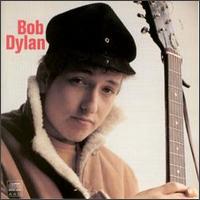
Bob Dylan - 1962 Columbia
A
(Very Good / Good)
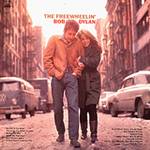
The Freewheelin' Bob Dylan - 1963 Columbia
F
(All-time Great)
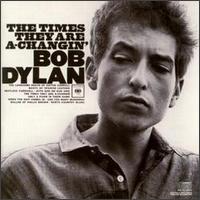
The Times They Are A-Changin' - 1964 Columbia
6
(Mediocre)
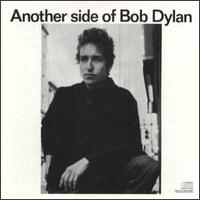
Another Side Of Bob Dylan - 1964 Columbia
D
(Great / Very Good)

Live 1964 - 2004 Columbia
C
(Very Good / Great)

Bringing It All Back Home - 1965 Columbia
D
(Great / Very Good)
I saw Dylan on Valentine's Day a couple of years ago, and he did "Love Minus
Zero" and it killed me and moved me to tears. His guitarist played pedal
steel on that track.
Ryan

Highway 61 Revisted - 1965 Columbia
F
(All-time Great)
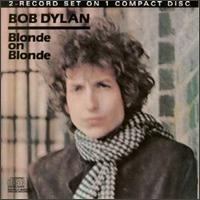
*Blonde On Blonde - 1966 Columbia*
10
(Olympian)
Later
Live 1966 - 1998 Columbia
B
(Very Good)

No Direction Home - 2005 Columbia
A
(Very Good / Good)

The Basement Tapes (Bob Dylan And The Band) - 1975 Columbia
8
(Good / Mediocre)
John Wesley Harding - 1968 Columbia
E
(Great)

Nashville Skyline - 1969 Columbia
A
(Very Good / Good)
Selfportrait - 1970 Columbia
A
(Very Good / Good)

New Morning - 1970 Columbia
B
(Very Good)

Another Self Portrait - 2013 Columbia
B
(Very Good)
Pat Garrett And Billy The Kid - 1973 Columbia
9
(Good)

Planet Waves - 1974 Columbia
7
(Mediocre / Good)

Before The Flood (Bob Dylan And The Band) - 1975 Columbia
9
(Good)
Blood On The Tracks - 1975 Columbia
D
(Great / Very Good)
I've totally agreed on almost everything you've said up to now. Part of
it might be a time issue; I didn't come to Dylan until 1973 (high
school jr.), so I wasn't around for the HUGE all time, music changing
impact the early albums had. By the way, I'd put my list of all time
great Dylan albums, and maybe all time great albums as 1. BOTT 2. H61R
3. BOB 4. TFWBD.

Live 1975 - 2002 Columbia
D
(Great / Very Good)
Desire - 1976 Columbia
D
(Great / Very Good)
Hard Rain - 1976 Columbia
8
(Good / Mediocre)
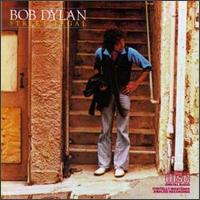
Street Legal - 1978 Columbia
6
(Mediocre)
Live At Budokan - 1978 Columbia
A
(Very Good / Good)
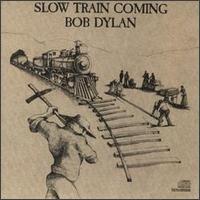
Slow Train Coming - 1979 Columbia
9
(Good)
Saved - 1980 Columbia
3
(Bad)

Shot Of Love - 1981 Columbia
7
(Mediocre / Good)

Infidels - 1983 Columbia
6
(Mediocre)

Real Live - 1984 Columbia
9
(Good)

Empire Burlesque - 1985 Columbia
6
(Mediocre)
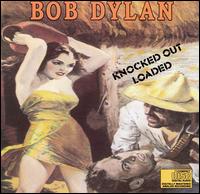
Knocked Out Loaded - 1986 Columbia
4
(Bad / Mediocre)

Down In The Groove - 1988 Columbia
5
(Mediocre / Bad)
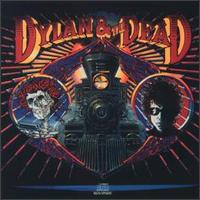
Dylan And The Dead - 1989 Columbia
8
(Good / Mediocre)

Oh Mercy - 1989 Columbia
7
(Mediocre / Good)

Under The Red Sky - 1990 Columbia
6
(Mediocre)

The Bootleg Series Vol. 1-3 - 1991 Columbia
D
(Great / Very Good)

Good As I Been To You - 1992 Columbia
A
(Very Good / Good)

World Gone Wrong - 1993 Budokan
A
(Very Good / Good)
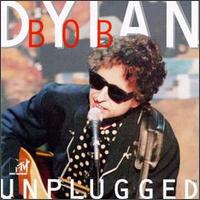
MTV Unplugged - 1995 Columbia
9
(Good)

Time Out Of Mind - 1997 Columbia
D
(Great / Very Good)
I found your stuff refreshingly sincere and unpretentious. I really
should commit some of my own thoughts to...er...disk sometime. I totally
agree with a lot you say regarding Time Out Of Mind and find it
intriguing (?) that you can get so much out of, say for example, the
organ on LoveSick. It reminds me of a time, not so long ago, when I was
so into music that one such detail could send me off into dreamland. The
quality of Bobs last two LPs is something to be awed by- I just wonder
how some of his earlier (80s,90s) albums would have sounded if they were
produced with even a little of the loving care put into these two.

Love And Theft - 2001 Columbia
B
(Very Good)

Modern Times - 2006 Columbia
A
(Very Good / Good)
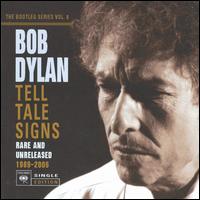
Tell Tale Signs - 2008 Columbia
B
(Very Good)

Together Through Life - 2009 Columbia
7
(Mediocre / Good)

Christmas In The Heart - 2009 Columbia
7
(Mediocre / Good)
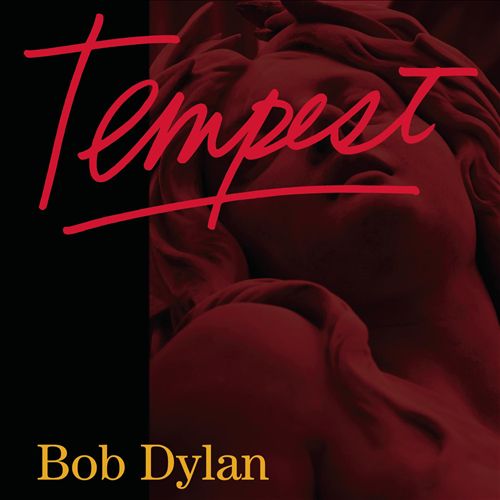
Tempest - 2012 Columbia
A
(Very Good / Good)

Shadows In The Night - 2015 Columbia
A
(Very Good / Good)

Fallen Angels - 2016 Columbia
9
(Good)

Triplicate - 2017 Columbia
9
(Good)

Rough And Rowdy Ways - 2020 Columbia
D
(Great / Very Good)